When Sicily Takes the Lead
Destination Feature
A week across eastern Sicily revealed that the island’s most memorable experiences weren’t the ones we planned. They arrived through generous strangers, fishing villages, volcanic landscapes and tables that always seemed to have room for one more dish.
Words and photograph by JJ Wong
“Some destinations ask you to follow an itinerary. Sicily asked us to follow our curiosity.”
Some places reveal themselves through famous landmarks.
Eastern Sicily does something else.
It introduces itself gradually - through breakfast, fishing harbours, roadside produce, neighbourhood bakeries and conversations that quietly alter the course of an afternoon. Long before Mount Etna appears on the horizon, you begin to realise that the island’s greatest strength isn’t any single attraction. It’s the way every experience seems connected to the next.
Over the course of a week, Sicily repeatedly persuaded us to change direction.
A roadside artichoke seller delayed our journey.
An abandoned tuna factory unexpectedly became one of the most fascinating historical sites we visited.
A fisherman’s village convinced us to linger over lunch far longer than intended.
A third-generation farmer sent us home with two bags of oranges and politely refused to accept payment.
A neighbourhood bakery in Catania quietly replaced the restaurant we thought we wanted.
None of those moments appeared on our itinerary.
Every one of them became part of the story.
Eastern Sicily is often introduced through its UNESCO-listed Baroque towns or the immense presence of Mount Etna. Both deserve their reputation. Yet travelling through this part of the island, I became increasingly interested in the threads that connect them.
The sea that once sustained the tuna industry still shapes coastal communities today.
Volcanic soil continues to nourish oranges, olives, pistachios and vineyards.
Markets overflow because fertile farmland and rich fishing grounds exist side by side.
Even Sicily’s celebrated chocolate carries echoes of Spanish rule and much older traditions that travelled across continents.
History here rarely sits behind museum glass.
It continues to appear on breakfast tables, inside family-fun workshops, beneath orange trees and behind the counters of neighbourhood bakeries.
By the end of the journey, it no longer felt as though we were moving from one destination to another.
It felt as though Sicily itself had decided what to show us.
Sicily Begins at Breakfast
We arrived in eastern Sicily in early December, when orange season had begun, Mount Etna carrried traces of snow and the summer crowds had long disappeared from the coast.
It turned out to be one of the island’s greatest luxuries.
Fishing villages belonged once again to their residents.
Market were busy with local shoppers rather than tour groups.
The cooler air made walking through Baroque towns a pleasure rather than an endurance test.
Most importantly, Sicily felt wonderfully unhurried.
That slower rhythm revealed itself almost immediately.
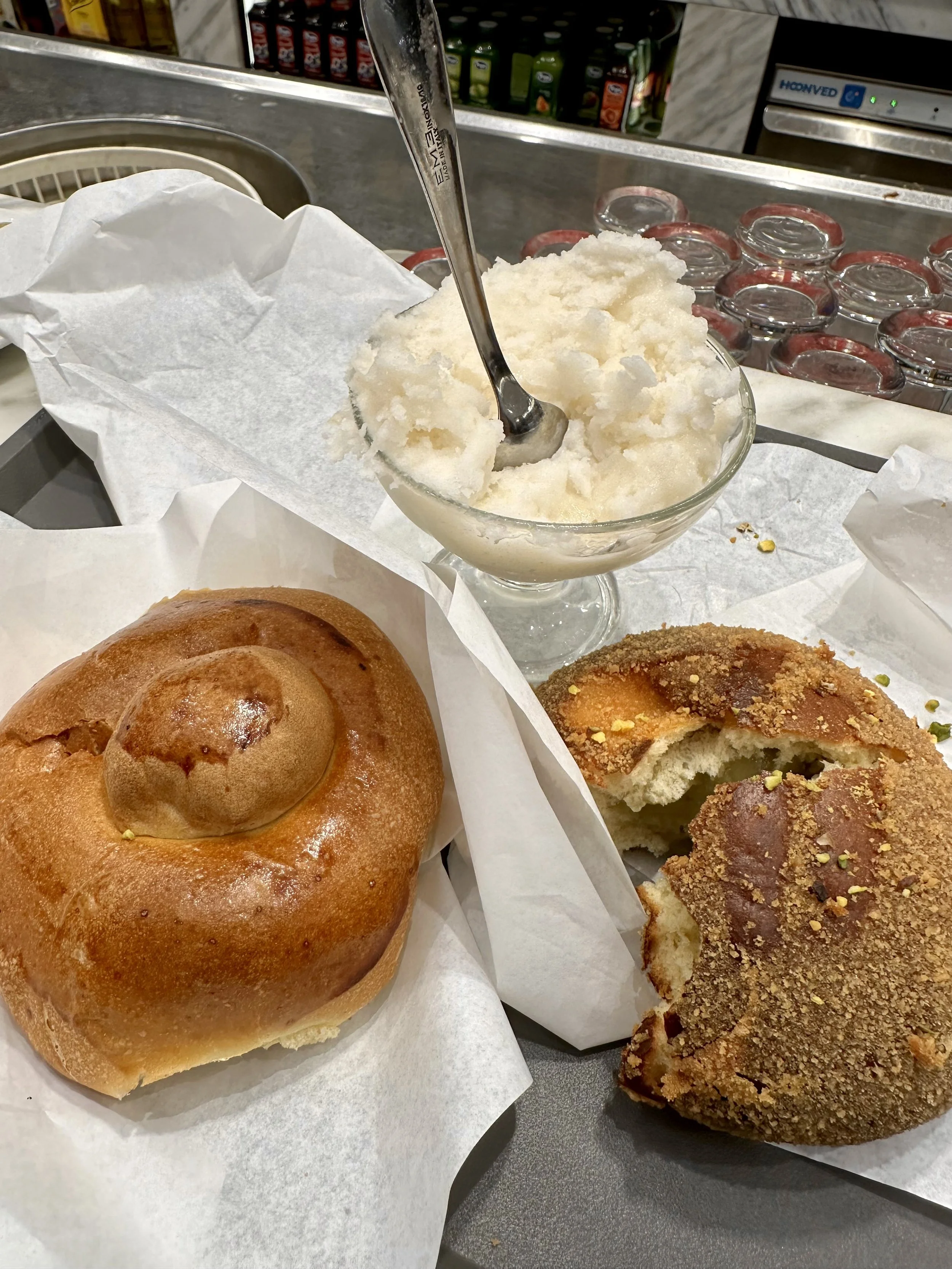
My first Sicilian breakfast wasn’t a cornetto.
It was granita, brioche and Iris.
To anyone unfamiliar with the island, the pairing seems almost mischievous. Granita belongs, in much of the world, firmly in the dessert category. In Sicily, however, it has long been breakfast.
The brioche isn’t simply served alongside it.
It becomes part of the ritual.
Locals tear off pieces of the soft, slightly sweet bread before scooping up the melting granita, transforming breakfast into something halfway between pastry and spoon.
Somewhere else, serving ice for breakfast might raise eyebrows.
In Sicily, it barely raises a menu.
That breakfast also says something about the island itself.
For centuries, Sicily absorbed influences from Greeks, Arabs, Normans, Spaniards and countless merchants crossing the Mediterranean. Rather than replacing one another, those cultures settled into the island layer by layer. Granita is widely believed to trace its origins to the Arab tradition of flavouring mountain snow with fruit syrups - a reminder that even something as ordinary as breakfast carries echoes of Sicily’s remarkably complex past.
It is difficult to think of a better introduction.
Lunch That Explained Sicily
Breakfast was only the beginning.
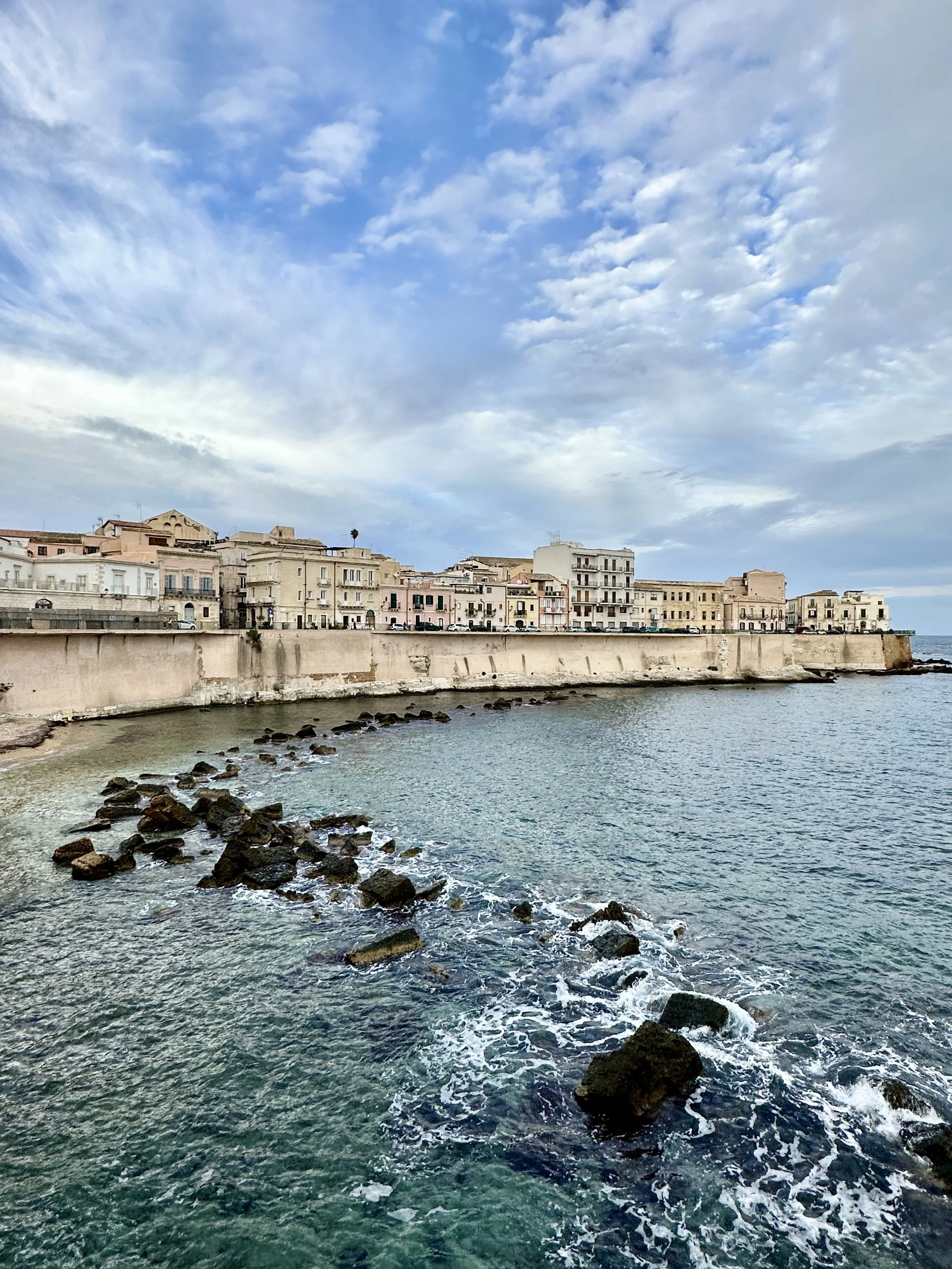
From Catania, we drove south to Ortigia, the historic heart of Syracuse.
Like many of Sicily’s finest towns, Ortigia doesn’t ask visitors to march from monument to monument. It rewards curiosity instead.
One narrow street opens onto the sea.
Another leads towards a sunlit piazza.
Laundry hangs between weathered stone buildings while elegant churches appear almost unexpectedly around the next corner.
Greek foundations.
Baroque facades.
Everyday life.
Everything coexists without demanding attention.
The towns doesn’t feel preserved. It feels lived in. That distinction matters.
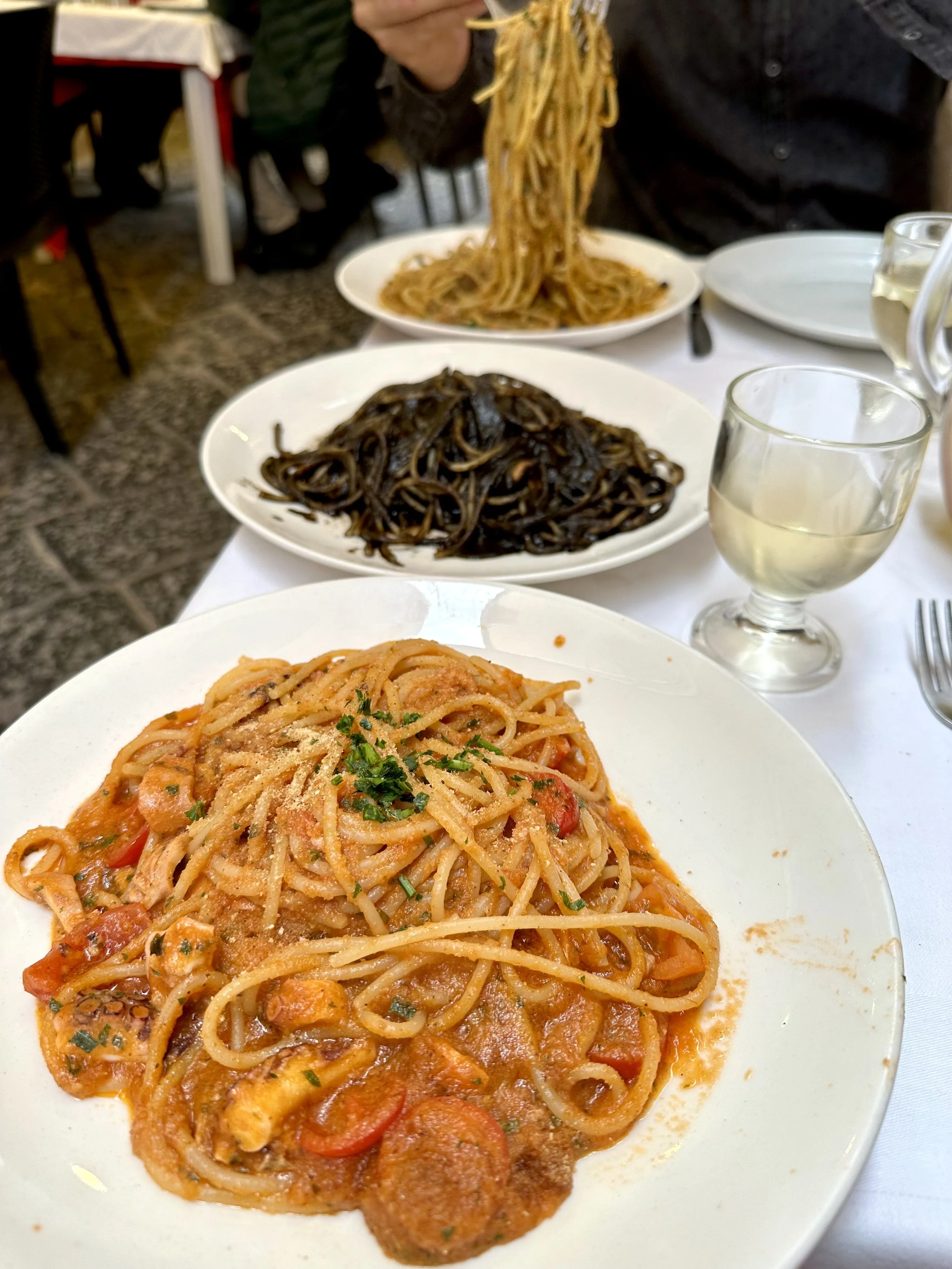
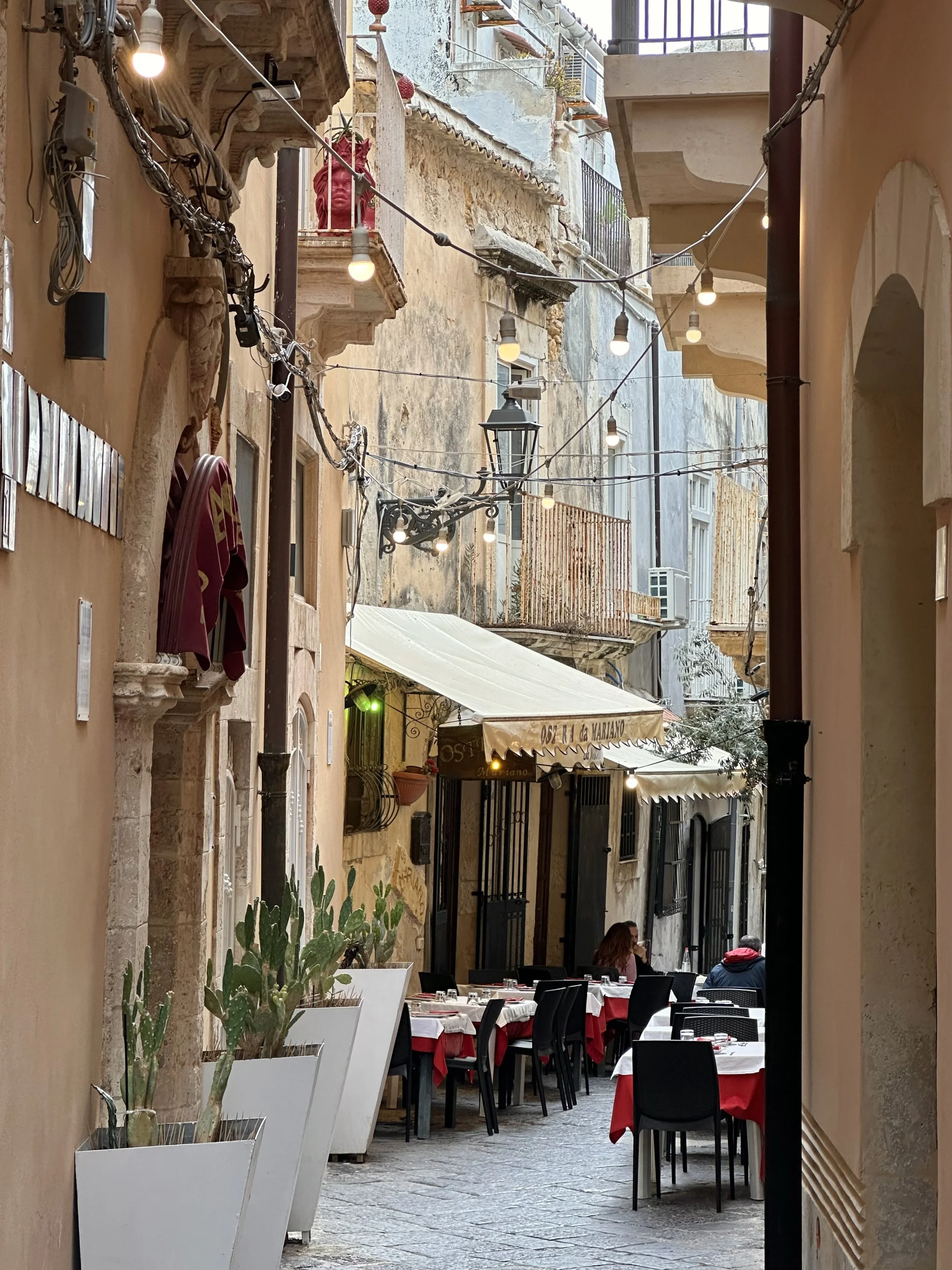
Lunch at Osteria Mariano became our first proper introduction to eastern Sicilian cooking.
Rather than ordering cautiously, we decided to share three completely different pasta dishes.
One arrived dressed in glossy squid ink, its richness balanced by remarkable restraint.
Another celebrated bottarga, adding an intensely savoury depth that lingered long after each bite.
The third paired tomatoes with beautifully tender octopus, bringing together ingredients that have shared Sicilian tables for generations.
Looking back, the meal quietly established a pattern that continued throughout the week.
Eastern Sicily rarely tries to impress through complexity.
Instead, it relies on extraordinary ingredients prepared with confidence.
Fresh seafood. Excellent olive oil. Perfectly ripe tomatoes.
Nothing needs to shout when the produce already speaks so clearly.
A City Best Explored Without A Destination
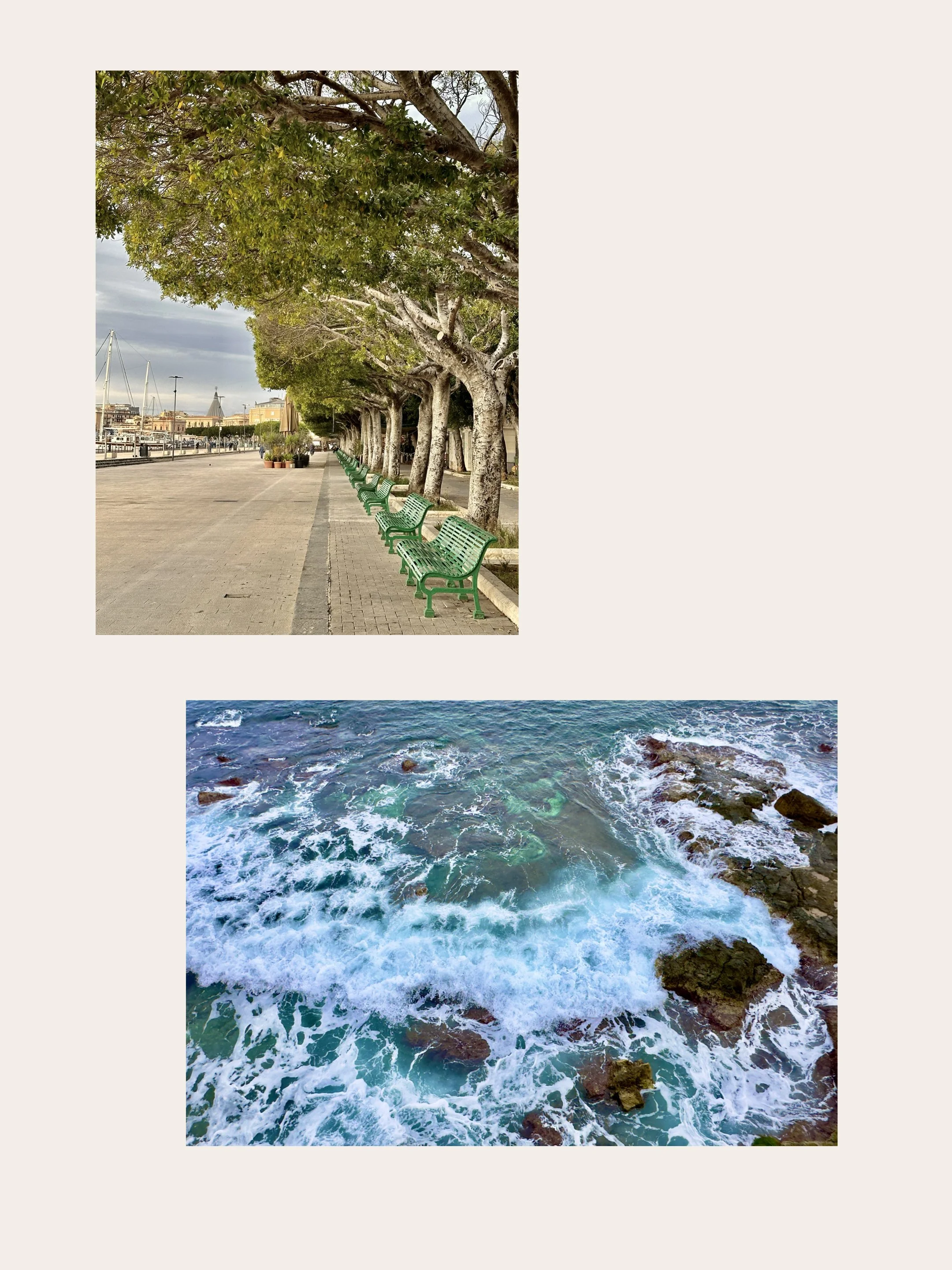
The most memorable moments in Ortigia weren’t attached to famous landmarks.
They happened in between.
A fisherman tending to his boat.
Sea spray breaking against ancient limestone walls.
A quiet alley lined with restaurants preparing for the evening.
An open window carrying the scent of lunch into the street.
Ortigia rewards the kind of traveller who occasionally ignores Google Maps.
The most interesting streets are rarely the ones leading directly to the cathedral.
Sometimes it’s about noticing how somewhere already lives.
The Aperitivo That Cancelled Dinner
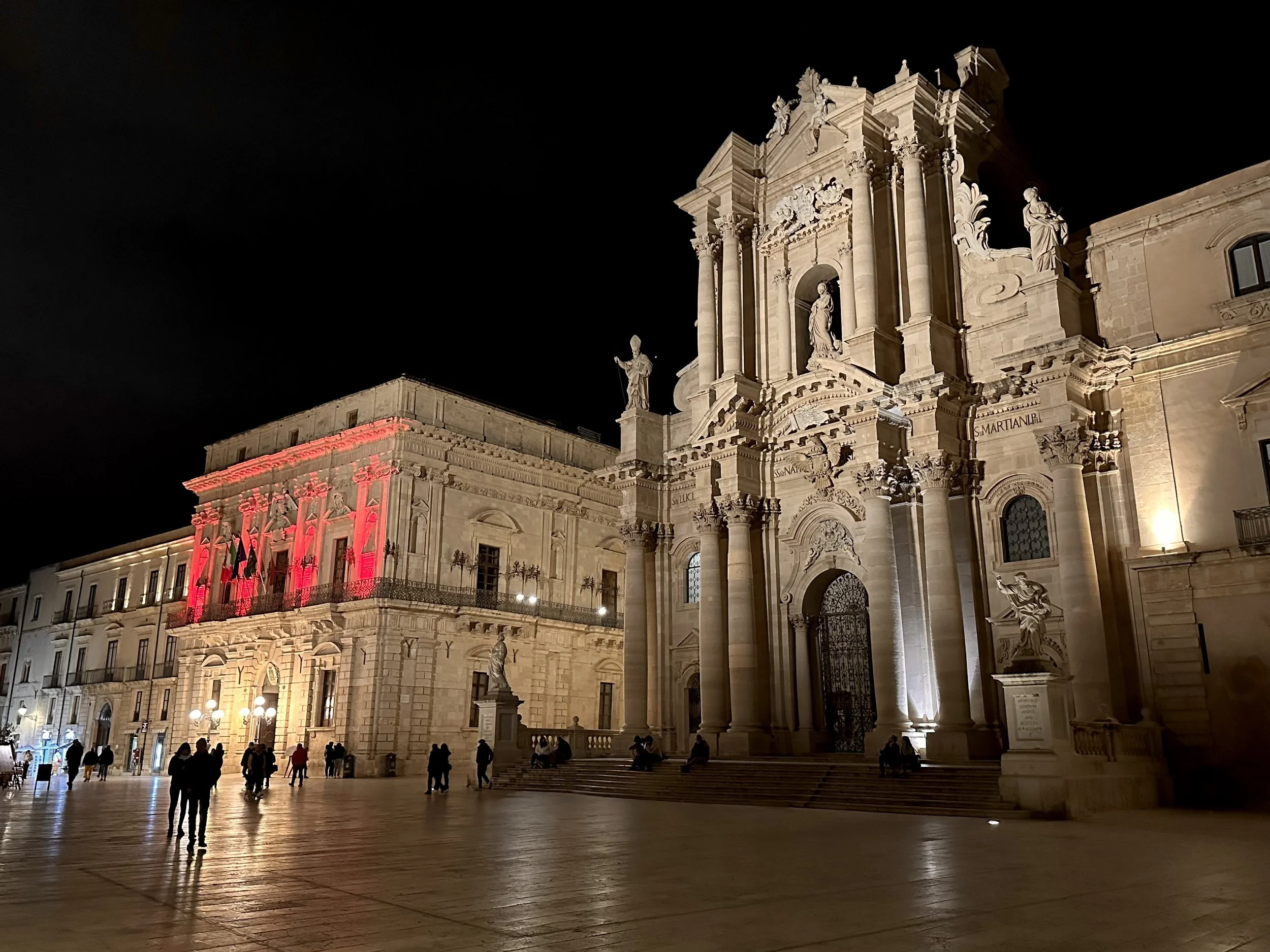
As daylight softened into evening, Ortigia changed mood once again.
The limestone facades glowed beneath warm streetlights.
Tables gradually filled with families and groups of friends gathering for aperitivo.
We decided to join them.
At least, that was the plan.
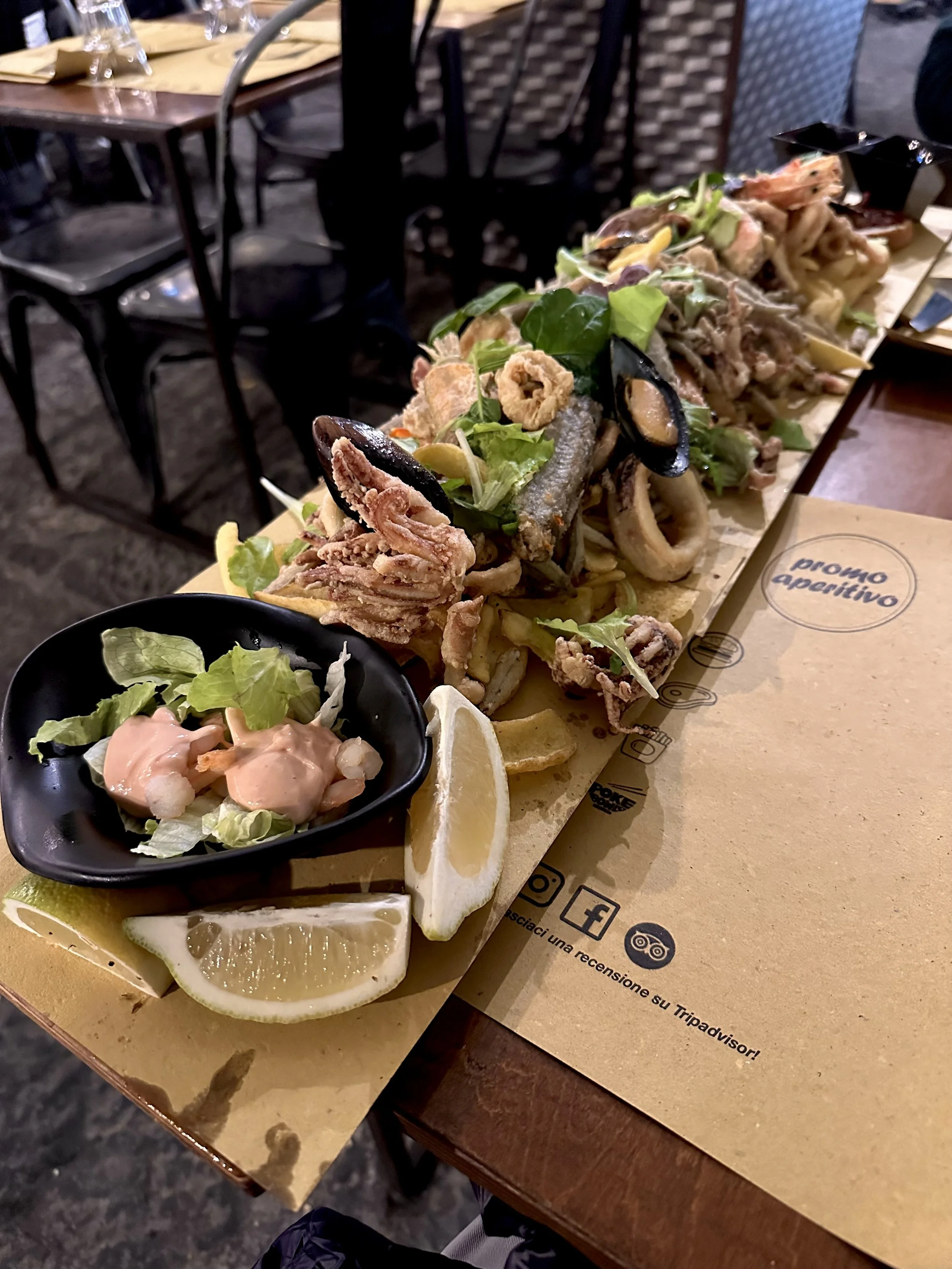
What eventually arrived at the table was less an aperitivo than an unmistakable expression of Sicilian generosity.
A fritto misto stretching to what felt like almost a metre.
Golden calamari.
Whole prawns.
Small fish.
Mussels.
We had ordered an aperitivo.
Sicily interpreted that as a request for seafood.
It was impossible not to laugh!
Nobody appeared remotely surprised by its size.
That may have been the most Sicilian part of the entire meal.
Hospitality here often reveals itself not through ceremony but through instinct. Feed people well. Add another plate. Make sure nobody leaves hungry.
Some place express generosity through grand gestures.
Sicily often expresses it through lunch that becomes dinner.
And we had only just arrived…
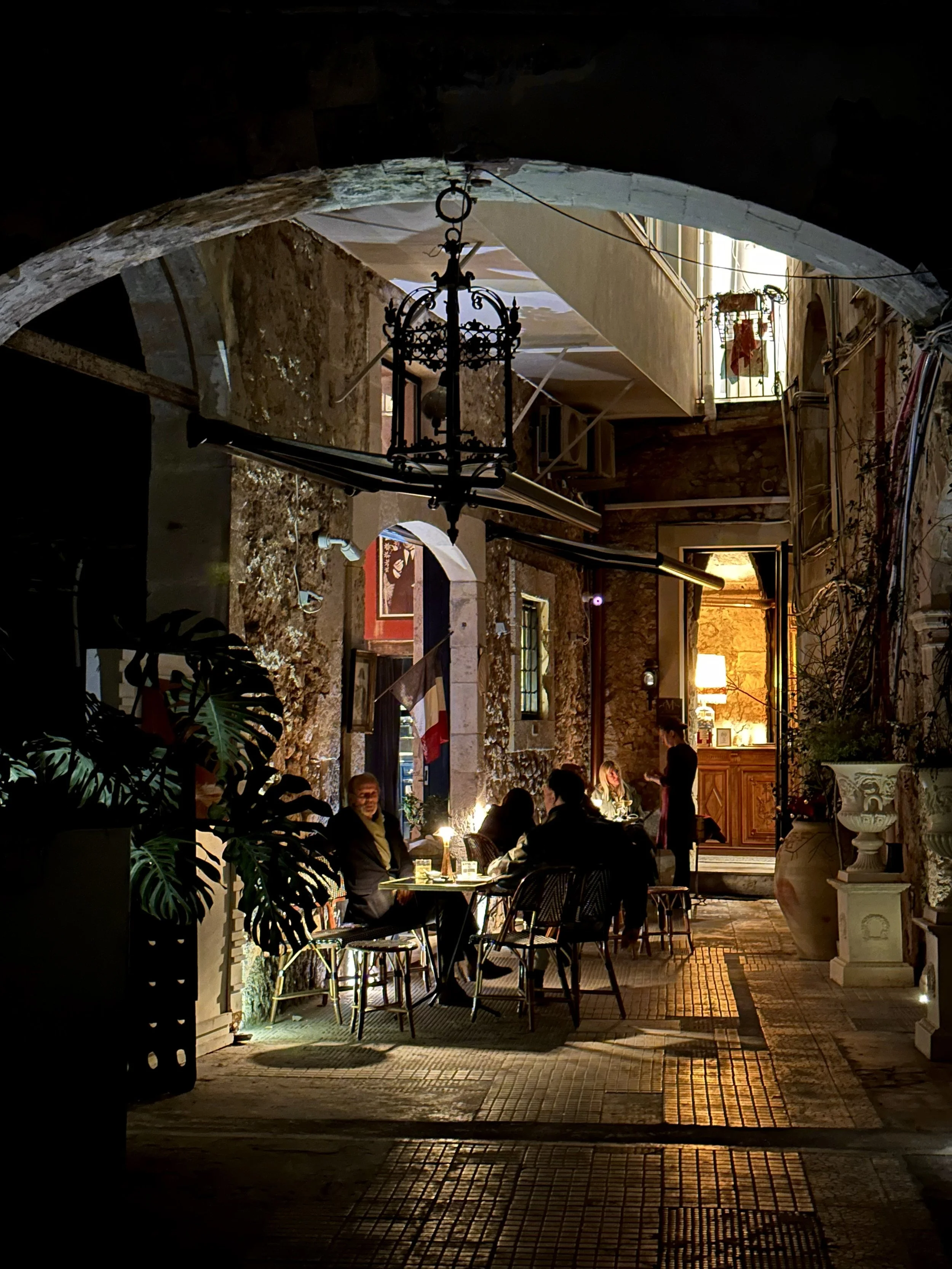
The following morning, the sea would tell a very different story.
Not through restaurants or fishing boats, but through the weathered stone walls of La Tonnara di Vendicari o di Bajuto, where eastern Sicily’s relationship with tuna was once measured not in menus, but in livelihoods.
Where Tuna Once Built Coastal Towns
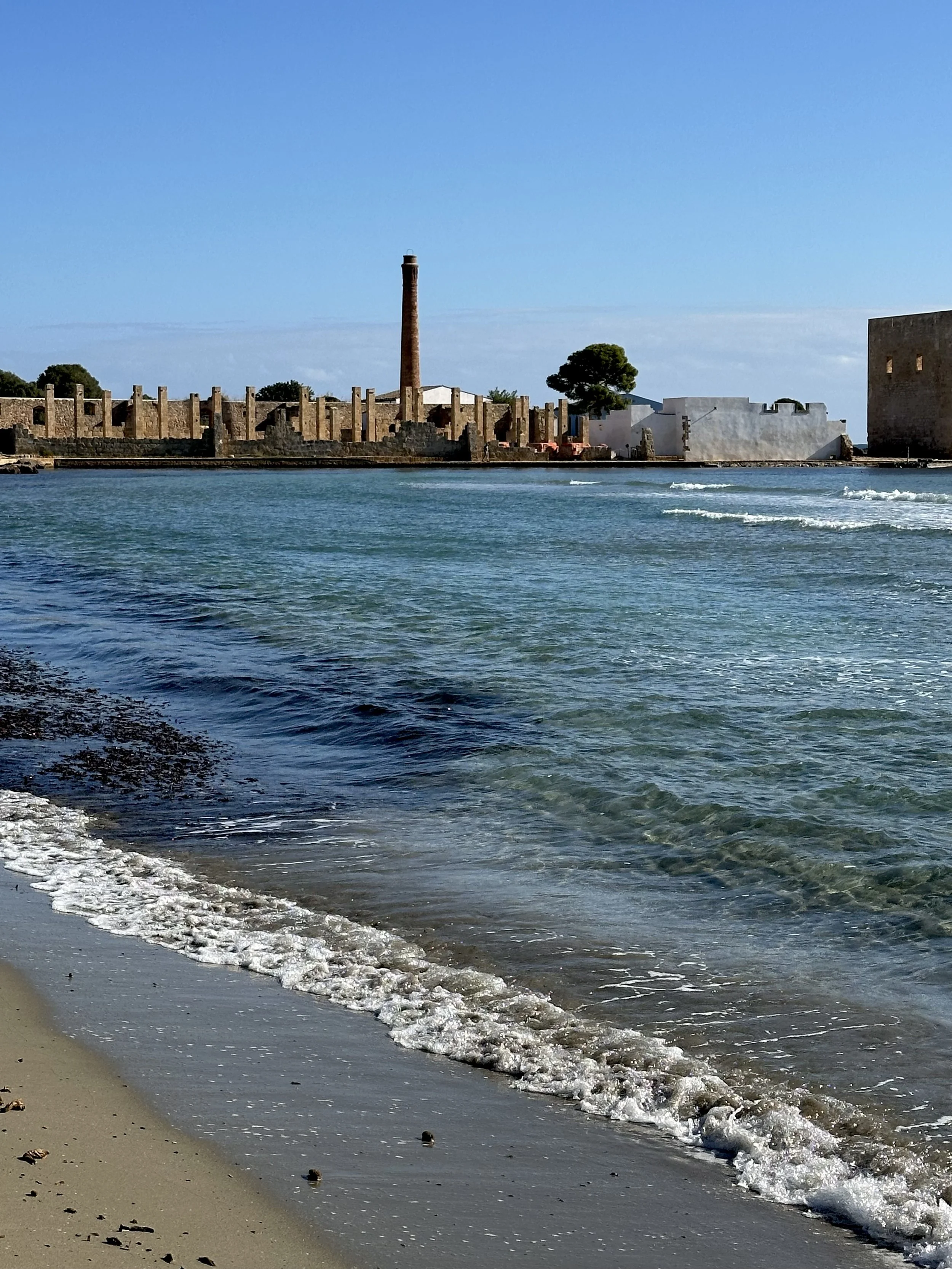
The following morning, Sicily reminded us that before seafood became something ordered in restaurants, it was the foundation of entire communities.
Hidden within the Vendicari Nature Reserve, La Tonnara di Vendicari o di Bajuto is easy to miss if you don’t know it’s there.
There are no dramatic entrances or carefully reconstructed exhibitions waiting behind its stone walls. Instead, visitors arrive at a landscape that has largely been left to time.
A solitary brick chimney still rises above the shoreline.
Weathered limestone buildings sit quietly beside shallow pools reflecting the December sky.
Beyond them, the Mediterranean continues exactly as it always has.
At first glance, it feels abandoned.
Spend a little longer here and something else begins to happen.
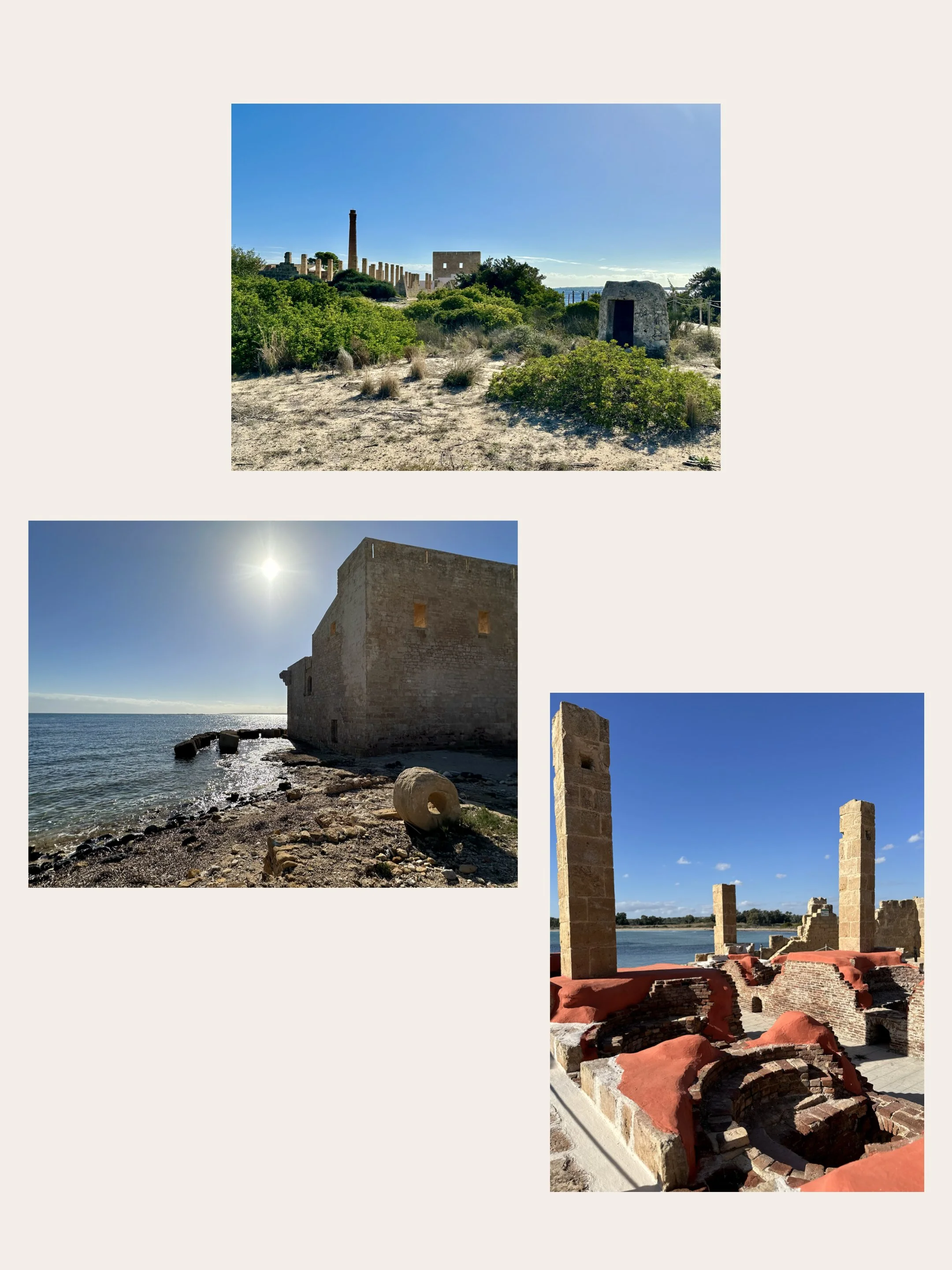
The imagination quietly gets to work.
You begin picturing fishing boats approaching the shore before sunrise.
Workers hauling enormous bluefin tuna from the water.
Smoke rising from the chimney.
Voices echoing through courtyards that now stand almost silent.
The buildings themselves reveal surprisingly little.
Which is precisely why they reveal so much.
Unlike restored industrial museums, Vendicari asks visitors to reconstruct its story for themselves.
I found that infinitely more powerful.
The eastern coast of Sicily has lived alongside tuna for centuries.
Every spring, migrating bluefin passed through these waters on their way into the Mediterranean. Coastal communities developed increasingly sophisticated systems for intercepting them, eventually giving rise to the tonnare - large tuna fisheries that became economic engines for entire stretches of coastline.
Vendicari wasn’t simply a place where fish were landed.
It was where an entire industry unfolded.
Fishing.
Processing.
Preserving.
Packing.
Exporting.
Standing among the ruins, it becomes easier to understand why seafood remains so deeply woven into Sicilian identity today.
The restaurants we had enjoyed the previous afternoon suddenly felt connected to something much older.
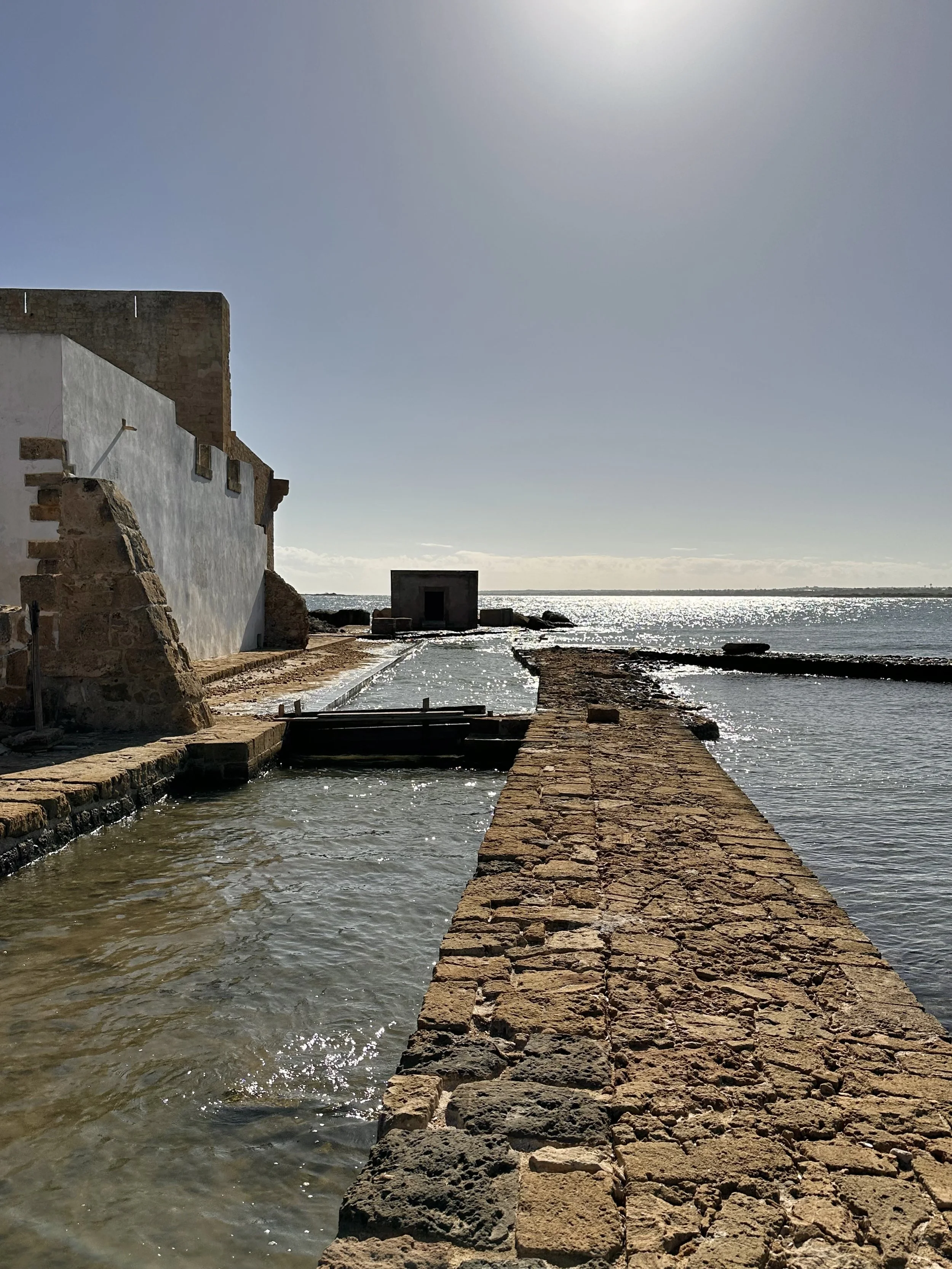
The setting itself is extraordinary.
Unlike many historical sites, nature has never really left this place.
Saltwater channels shimmer between the old buildings.
Reeds sway gently in the breeze.
Migratory birds return to the reserve every year.
The sea that once sustained the factory now softens its ruins.
Rather than competing with history, the landscape seems to have reclaimed it.
There is something deeply Sicilian about that.
History rarely disappears here. It simply settles into another chapter.
The Village I Still Think About
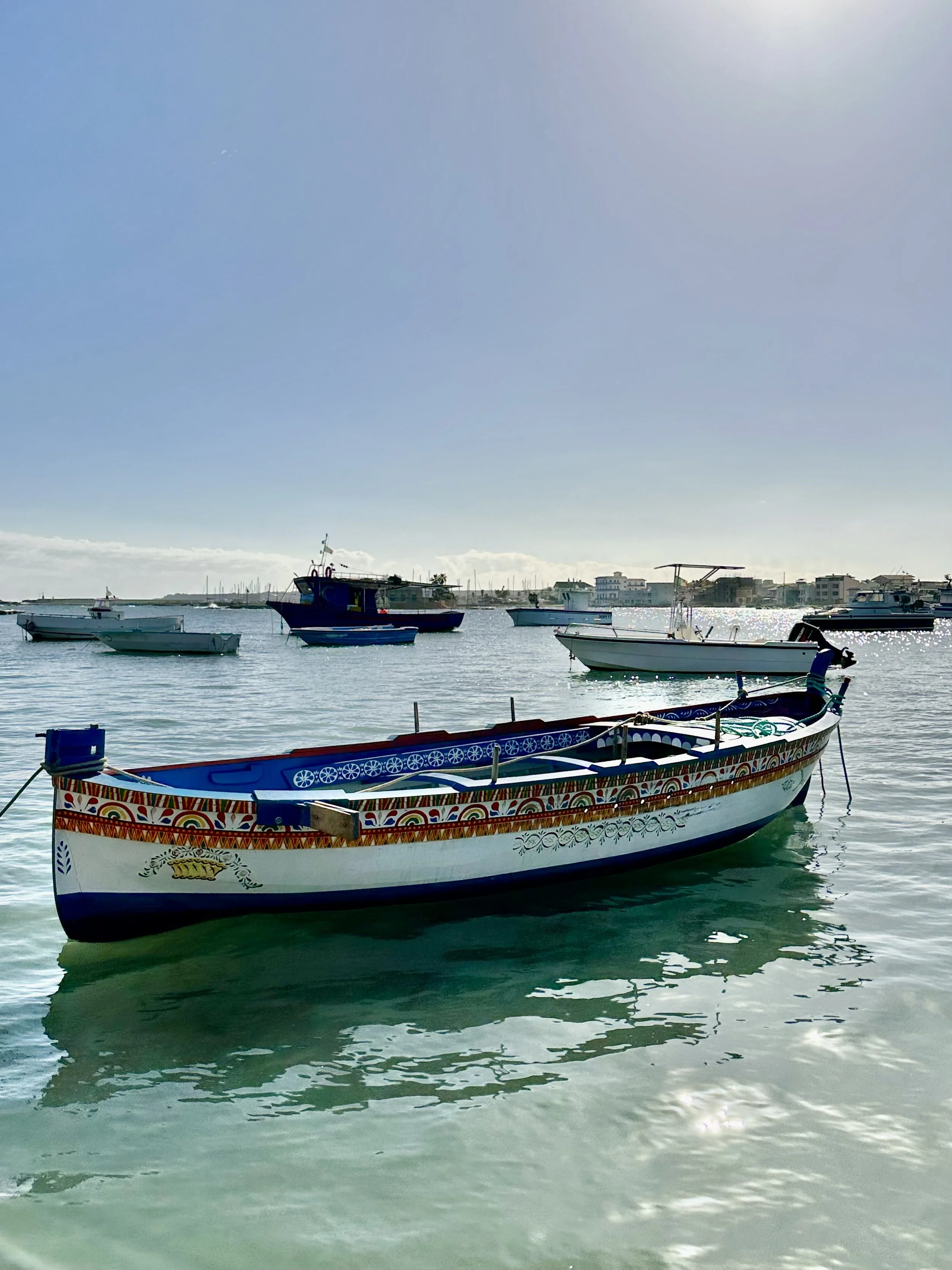
From Vendicari, the road follows the coast south towards Marzamemi.
If the morning belonged to history, the afternoon belonged entirely to atmosphere.
There are villages that become famous because people talk about them.
Then there are villages people talk about because they simply feel good to be in.
Marzamemi belongs firmly in the second category.
We arrived in early December.
Summer had long gone.
The harbour had settled back into its own rhythm.
Fishing boats rested quietly on water so clear that every reflection appeared almost painted.
Very few residents gathered at the small piazza. There wasn’t much happening.
That was exactly the point.
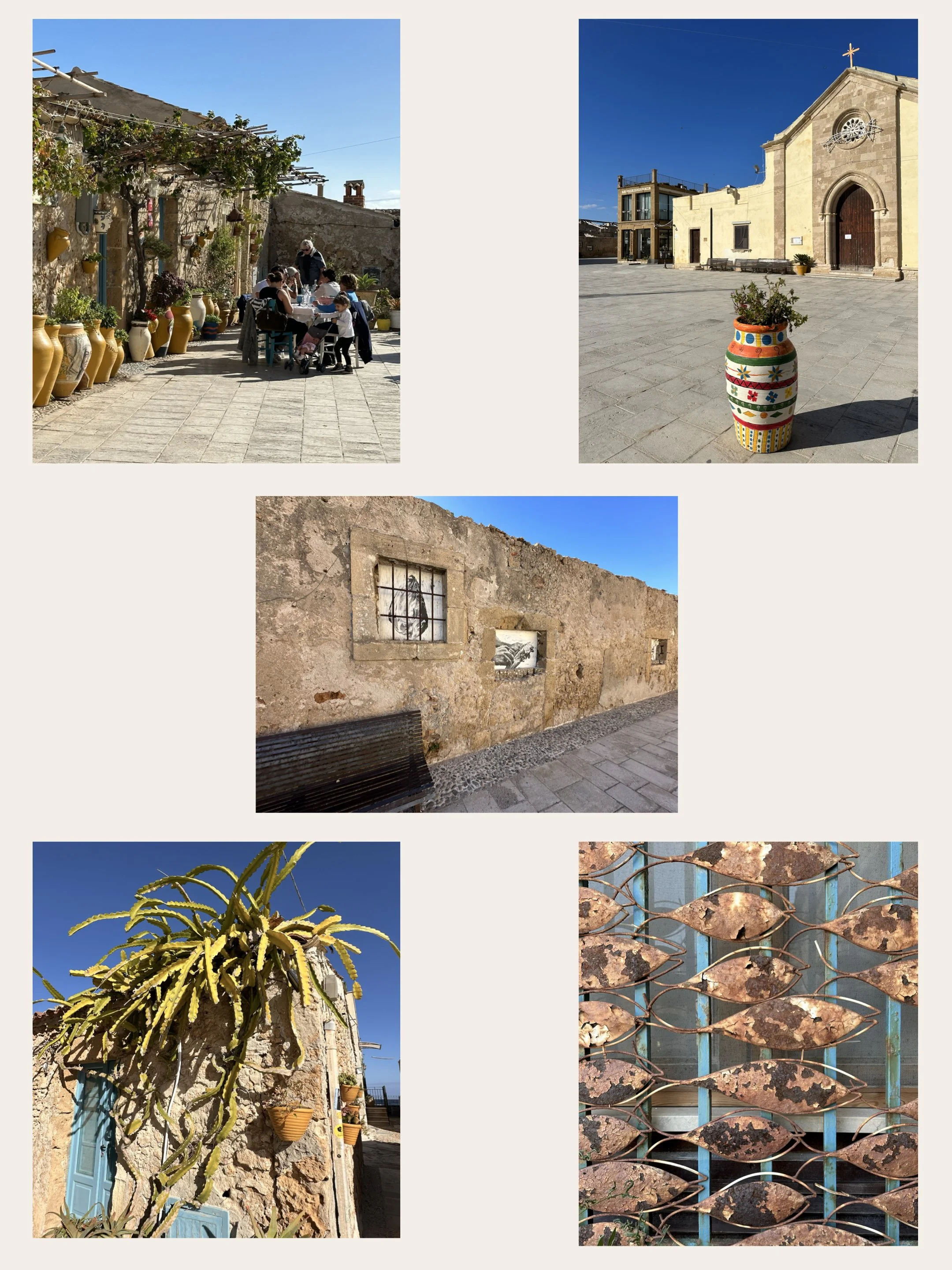
Marzamemi owes its existence to the sea.
Like Vendicari, it grew around the tuna industry, with warehouses, fisherman’s houses and its central piazza developing to support a thriving maritime economy. Today, the nets and processing rooms have largely given way to cafes and restaurants, yet the village never feels as though it has reinvented itself for tourism.
It still feels like somewhere people happen to live.
Visitors are simply invited to share it for a while.
Lunch was served only a few metres from the water.
No dramatic soundtrack.
No elaborate setting.
Just the gentle movement of boats against the harbour wall and the occasional conversation drifting across neighbouring tables.
Sometimes restaurants become memorable because of technical brilliance.
Others become memorable because every element arrives at exactly the right moment.
This was the latter.
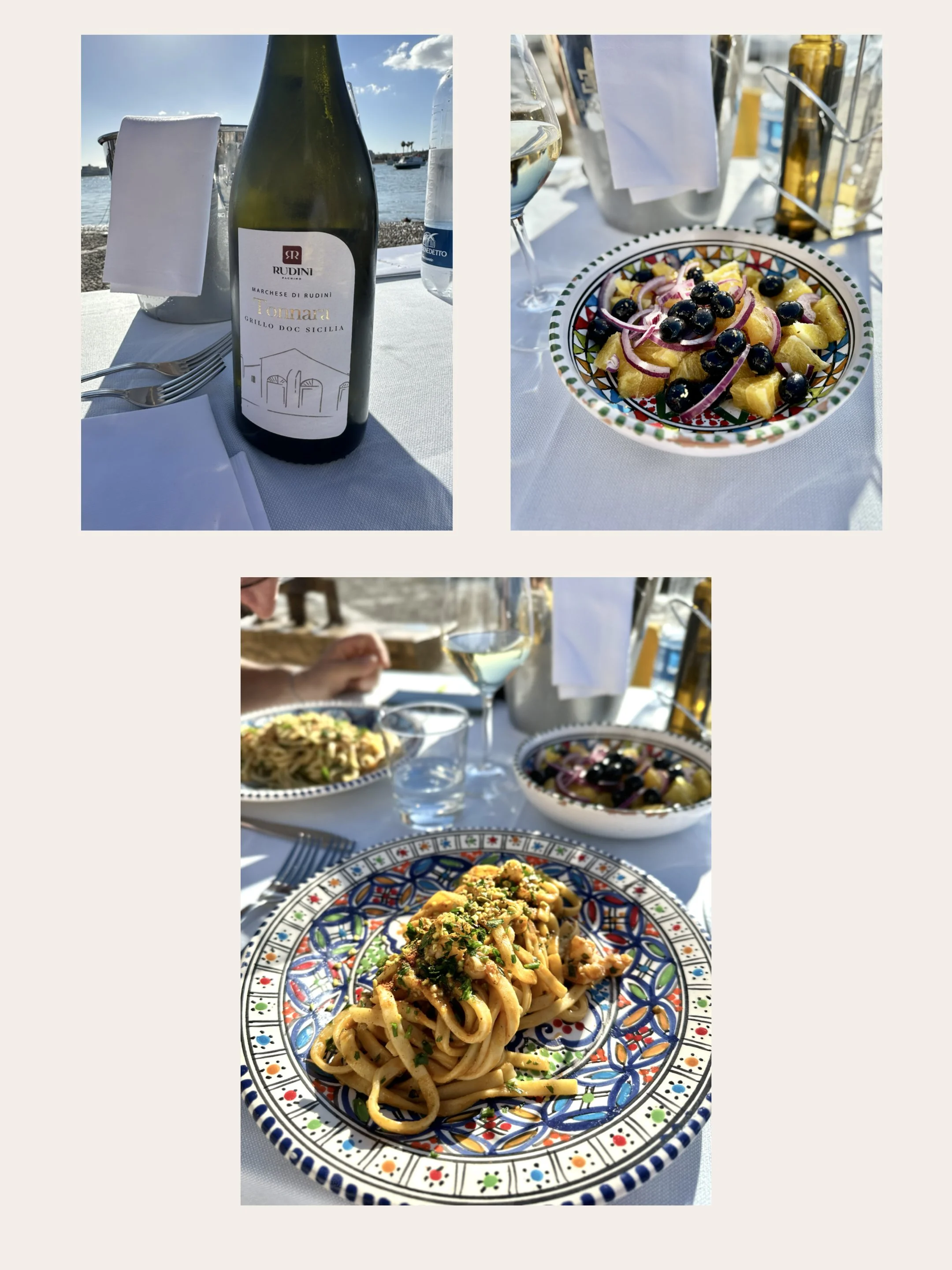
The pasta was exceptional.
Fresh seafood.
Perfectly cooked.
Confidently simple.
Alongside it came a salad of oranges, red onion and black olives - a combination that could only really make sense on an island where citrus is as fundamental to the landscape as olive trees.
On the table stood a bottle of Grillo from the nearby producer Rudinì.
Its name?
Tonnara.
After spending the morning exploring an abandoned tuna factory, the coincidence felt almost too perfect.
In Sicily, one story seems forever flowing into the next.
I still think, in fact, dream about that lunch.
Not because it was the most elaborate meal of the trip.
Quite the opposite.
If somebody recreated exactly the same pasta somewhere else, I doubt it would leave the same impression.
It was the harbour.
The December light.
The fishing boats rocking gently against the quay.
The knowledge that the village’s relationship with the sea stretched back centuries.
Those became ingredients too.
Perhaps the most important ones.
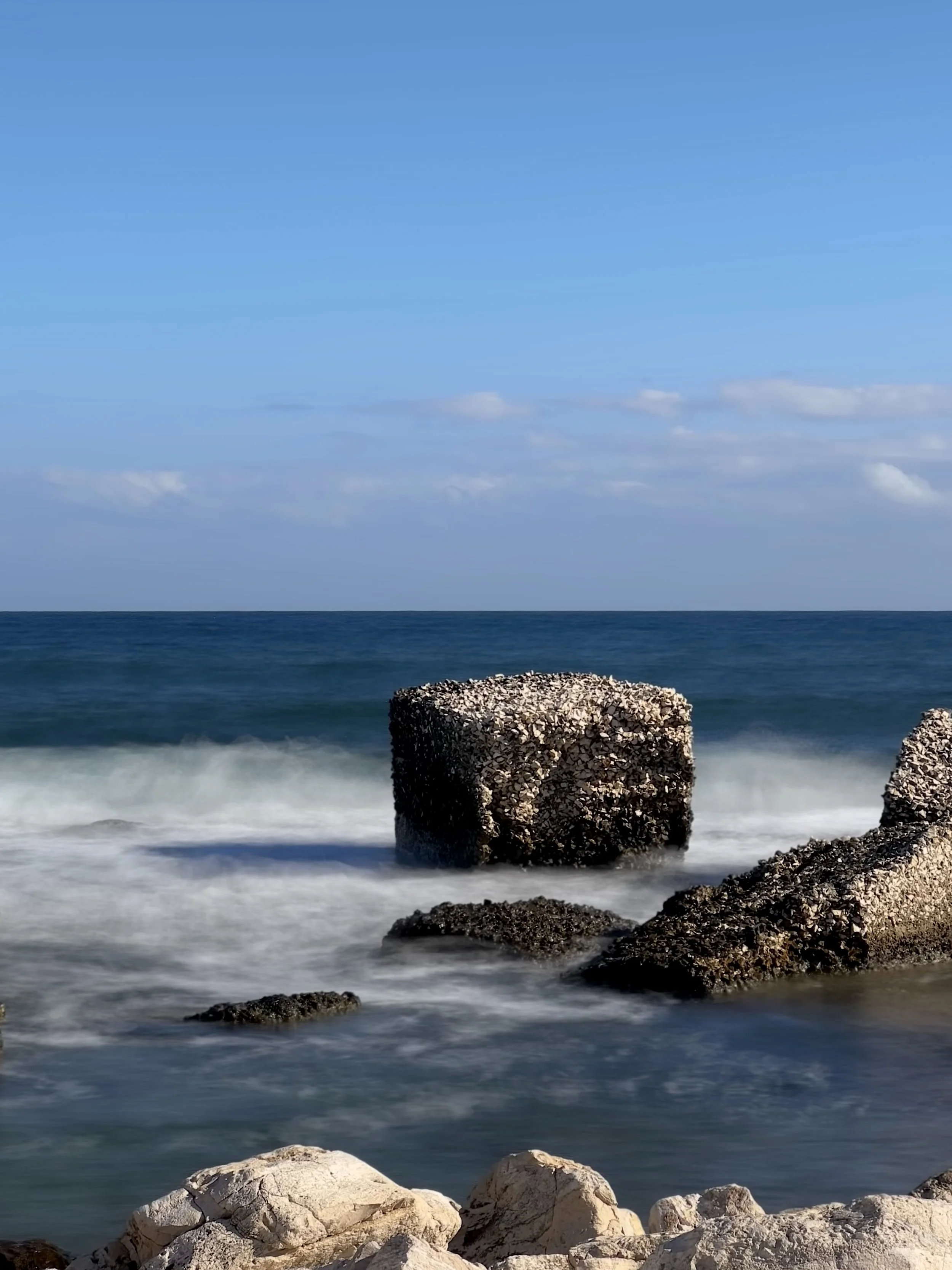
Walking through Marzamemi afterwards, I found myself slowing down almost unconsciously.
There was no checklist.
No landmark demanding attention.
Just weathered stone houses, colourful fishing boats, cactus growing from old walls and streets that seemed content simply to exist.
Looking back, I realised something.
Of every place we visited in eastern Sicily, Marzamemi was the one I least expected to love.
It was also the one I found hardest to leave.
The following day, the sea would finally give way to stone as we travelled inland towards Noto, where one of Europe’s most devastating earthquakes would unexpectedly become the beginning of one of Sicily’s most beautiful cities.
A City Rebuilt in Honey-Coloured Stone
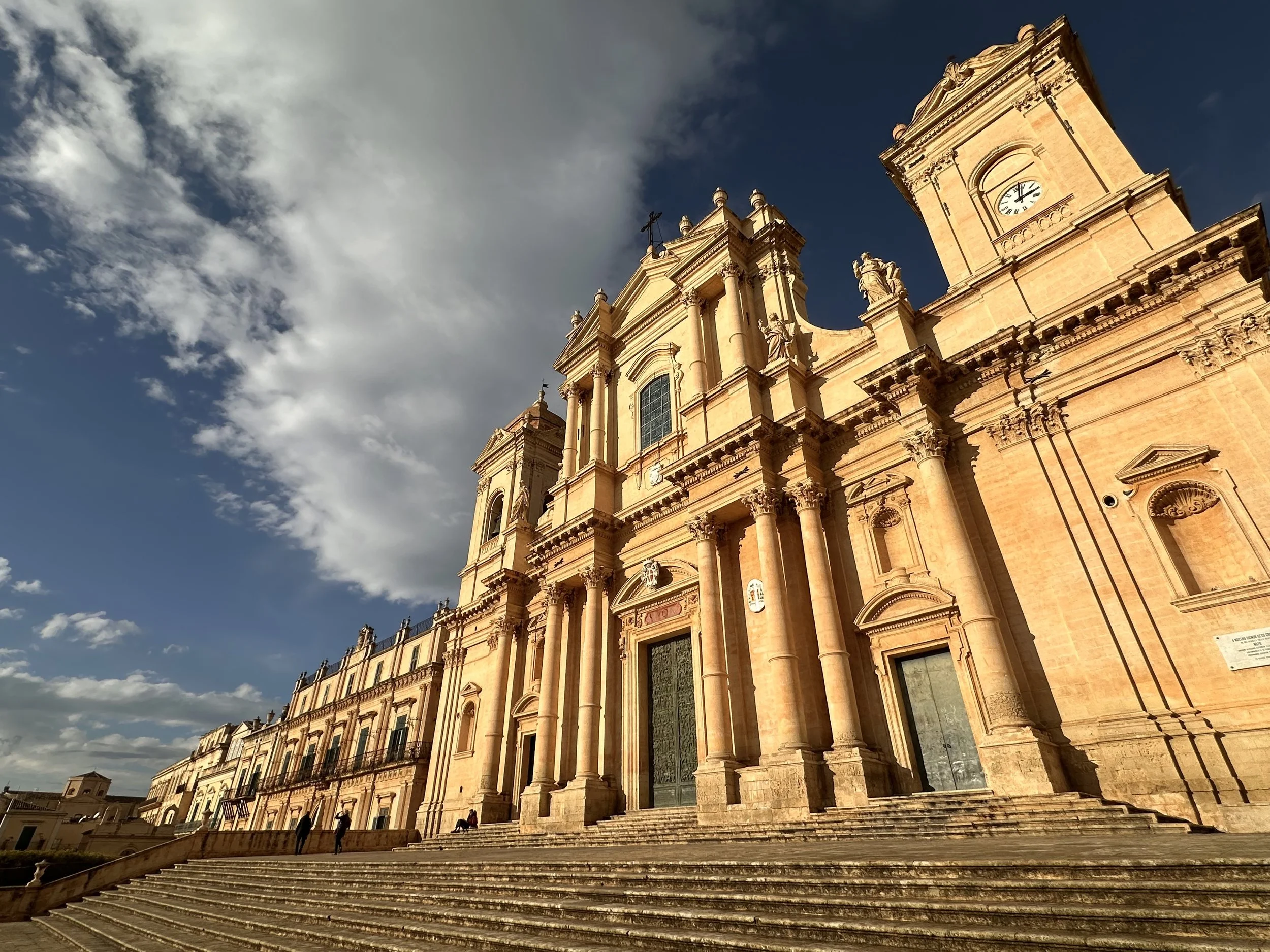
There is something strangely calming about arriving in Noto after the coast.
The sea disappears.
Fishing boats give way to church domes.
The sound of waves is replaced by footsteps echoing across limestone streets.
Even the light seems different.
If Marzamemi invited us to linger by the harbour, Noto encouraged us simply to walk.
Noto is often described as one of the finest examples of Sicilian Baroque.
The description is entirely justified, although it only tells part of the story.
Much of the town we see today exists because of tragedy.
In 1693, a devastating earthquake struck southeastern Sicily, destroying towns across the region. Rather than rebuilding on exactly the same site, Noto was recreated nearby according to an ambitious urban plan. Broad streets replaced medieval lanes. Churches, palazzi and monasteries were designed as a harmonious whole rather than as isolated monuments.
More than three centuries later, that remarkable consistency still defines the town.
Noto doesn’t feel like a collection of beautiful buildings.
It feels like one beautifully composed idea.
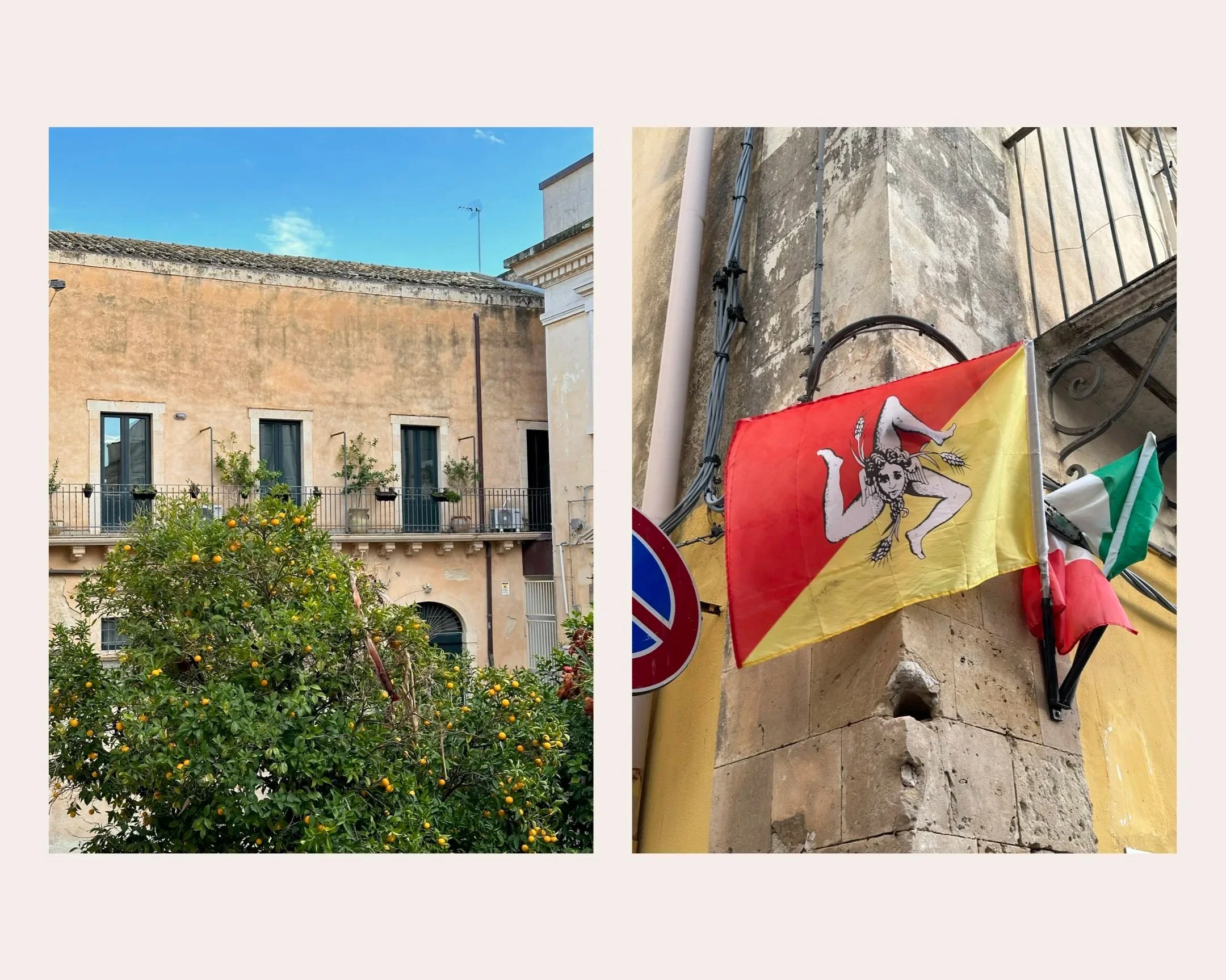
The details became just as rewarding as the landmarks.
An orange tree growing inside a quiet courtyard.
A Sicilian flag catching the afternoon breeze.
The worn steps polished smooth by generations of footsteps.
Unlike cities that overwhelm visitors with constant spectacle, Noto seems content allowing small moments to carry equal importance.
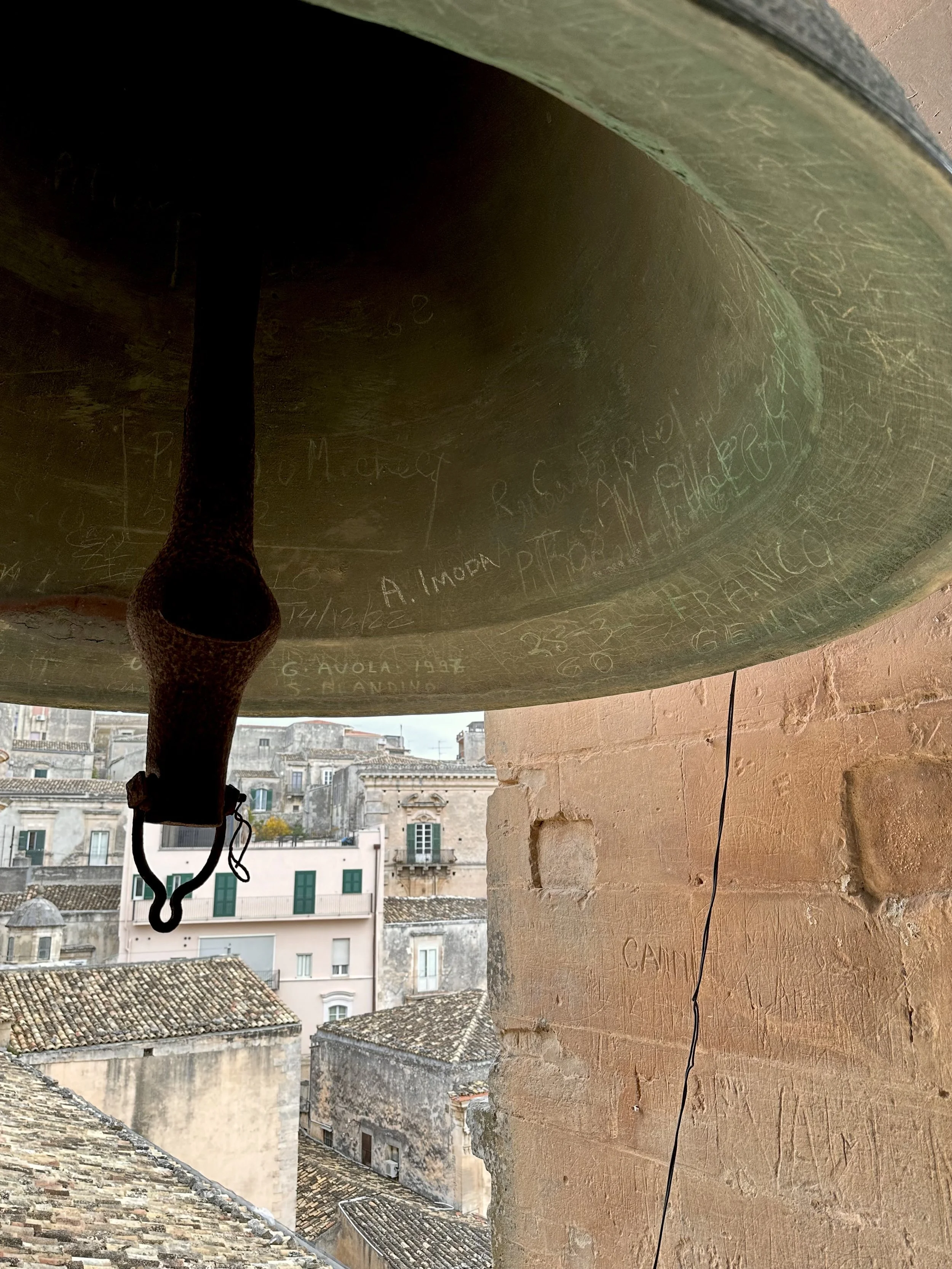
That evening we climbed to the rooftop of the church overlooking the city.
The timing wasn’t accidental.
We were waiting for the light.
Throughout the day, Noto’s limestone shifts almost imperceptibly in colour. Morning gives it a soft cream tone. By late afternoon it begins to glow, reflecting warm shades of honey and amber that seem to spread across the entire town.
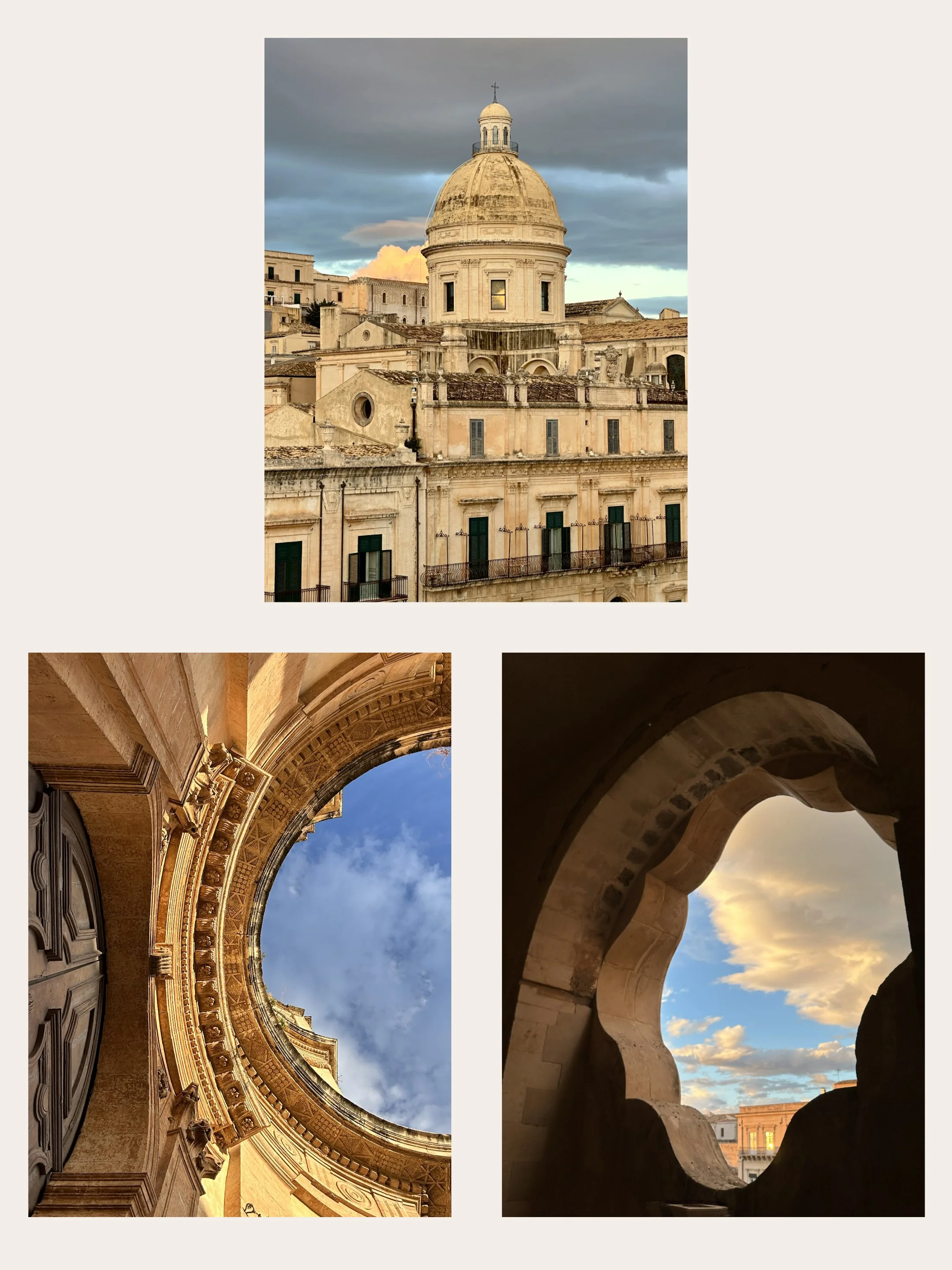
Standing above the rooftops, I realised that Noto is perhaps best appreciated from two perspectives.
Street level allows you to admire the extraordinary craftsmanship carved into every facade.
The rooftop reveals something else entirely.
Balance.
Domes.
Bell towers.
Terracotta roofs.
The careful geometry of a town rebuilt with remarkable confidence after disaster.
It is difficult not to admire that optimism.
As the sun disappeared, eastern Sicily had prepared another surprise for us.
The following morning, the language of architecture would give way to something completely different.
Chocolate.
Chocolate That Carries a Memory
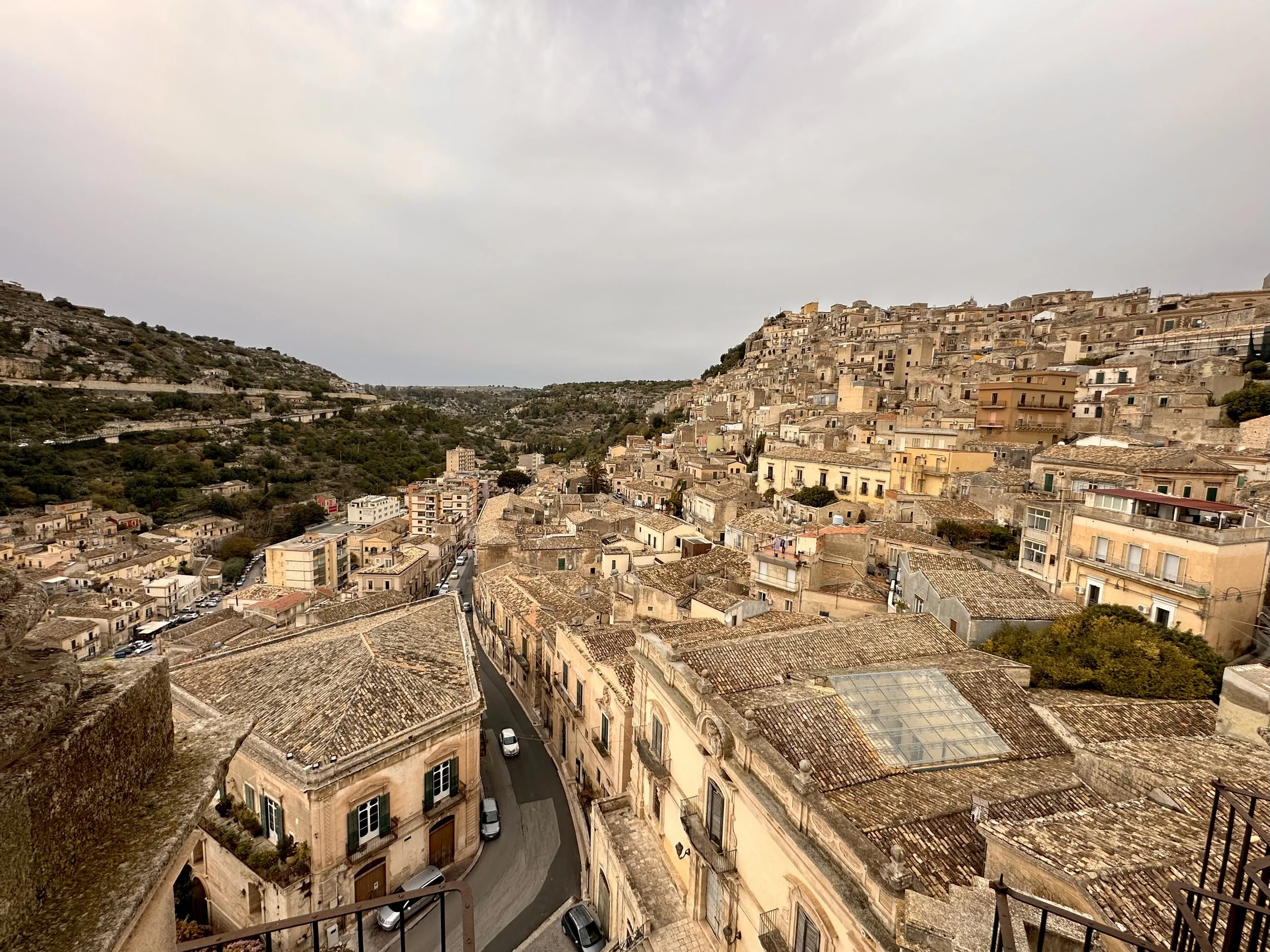
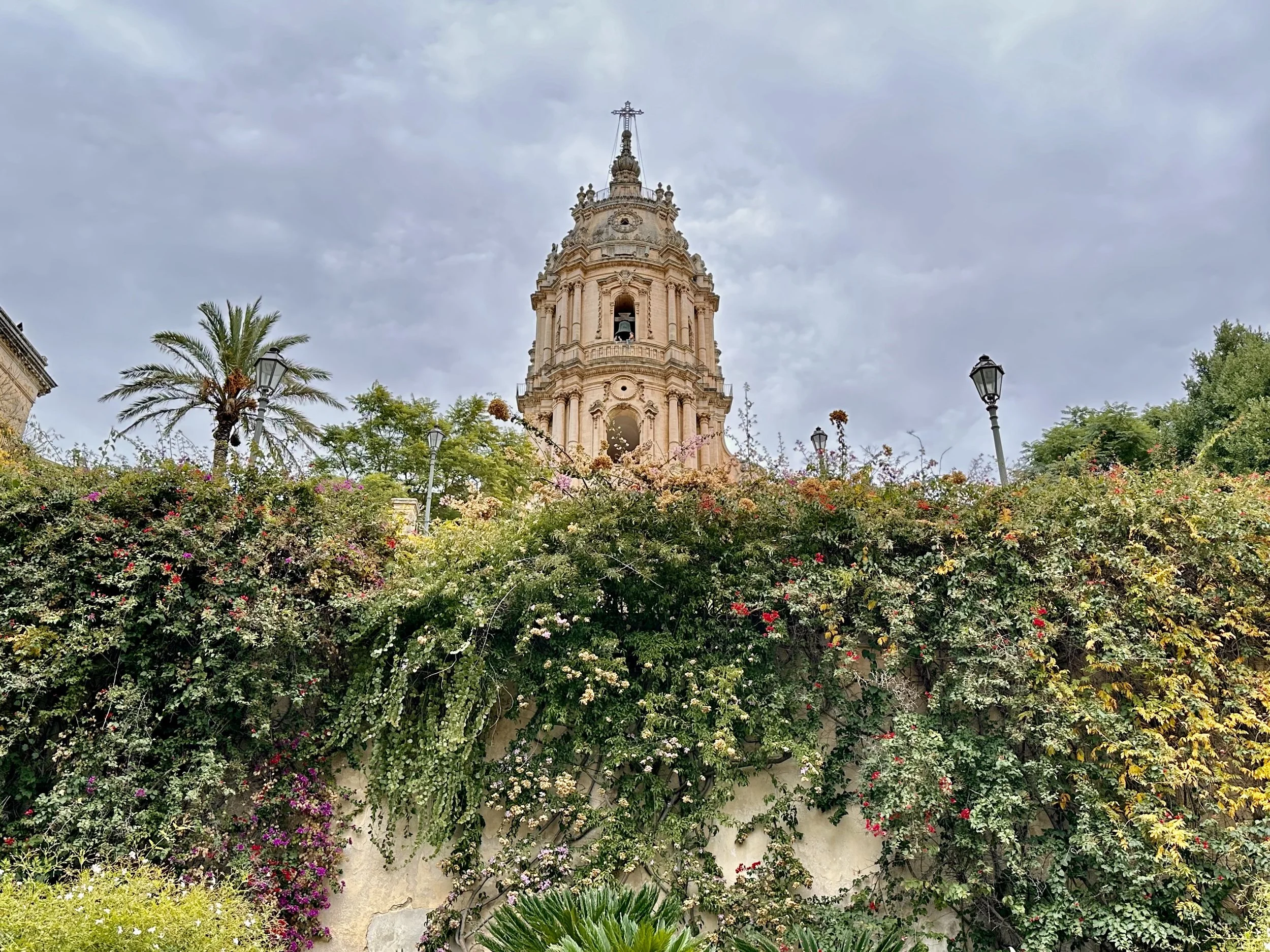
If Noto is shaped by stone, Modica is shaped by flavour.
The town rises dramatically across a steep valley, its churches and houses climbing the hillsides as though every available piece of land had eventually found a purpose.
From a distance, the rooftops appear almost continuous.
Closer up, staircases weave between churches, balconies and narrow streets that constantly invite another detour.
Like Noto, Modica belongs to the UNESCO-listed towns of the Val di Noto.
Yet it possesses an identity entirely its own.
Ask almost anyone what comes to mind when Modica is mentioned.
The answer is usually chocolate.
What makes Modica’s chocolate remarkable isn’t simply that it has become famous.
It’s that it still tastes unlike almost any other chocolate.
While most modern chocolate is refined until perfectly smooth, Modica follows an older technique introduced during the centuries of Spanish rule, itself inspired by methods developed by the Aztecs in Central America. Cocoa is processed at relatively low temperatures, allowing the sugar crystals to remain intact rather than dissolve completely.
The result surprises almost anyone.
The first thing you notice isn’t the flavour.
It’s the texture.
The chocolate crunches.
That alone would have made the visit worthwhile.
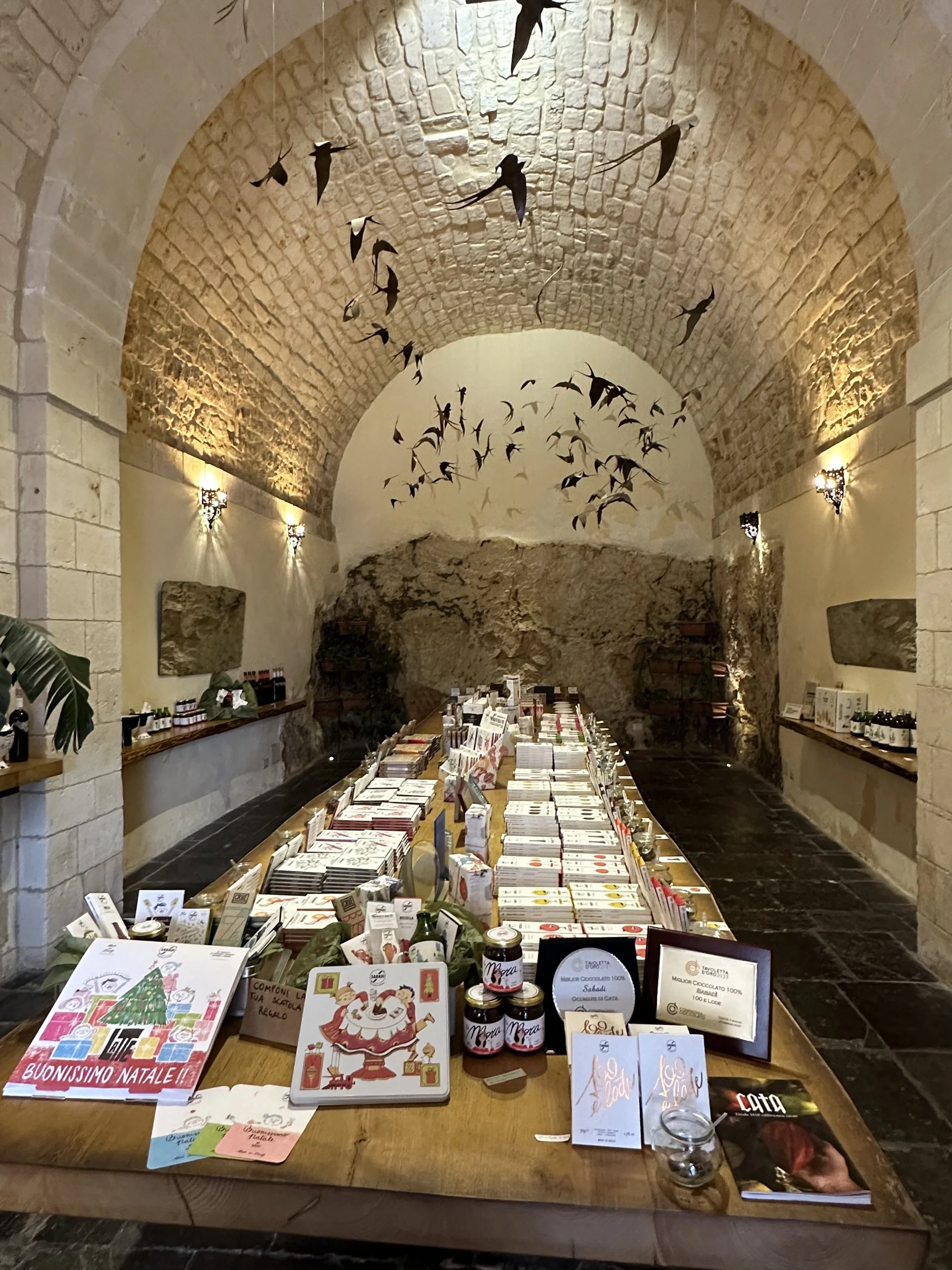
Then we arrived at Sabadì.
Rather than simply selling chocolate, Sabadì approaches it with the curiosity of an artisan workshop.
Our tasting began as expected.
Different percentages of cocoa.
Different origins.
Different flavours.
Then something entirely unexpected happened.
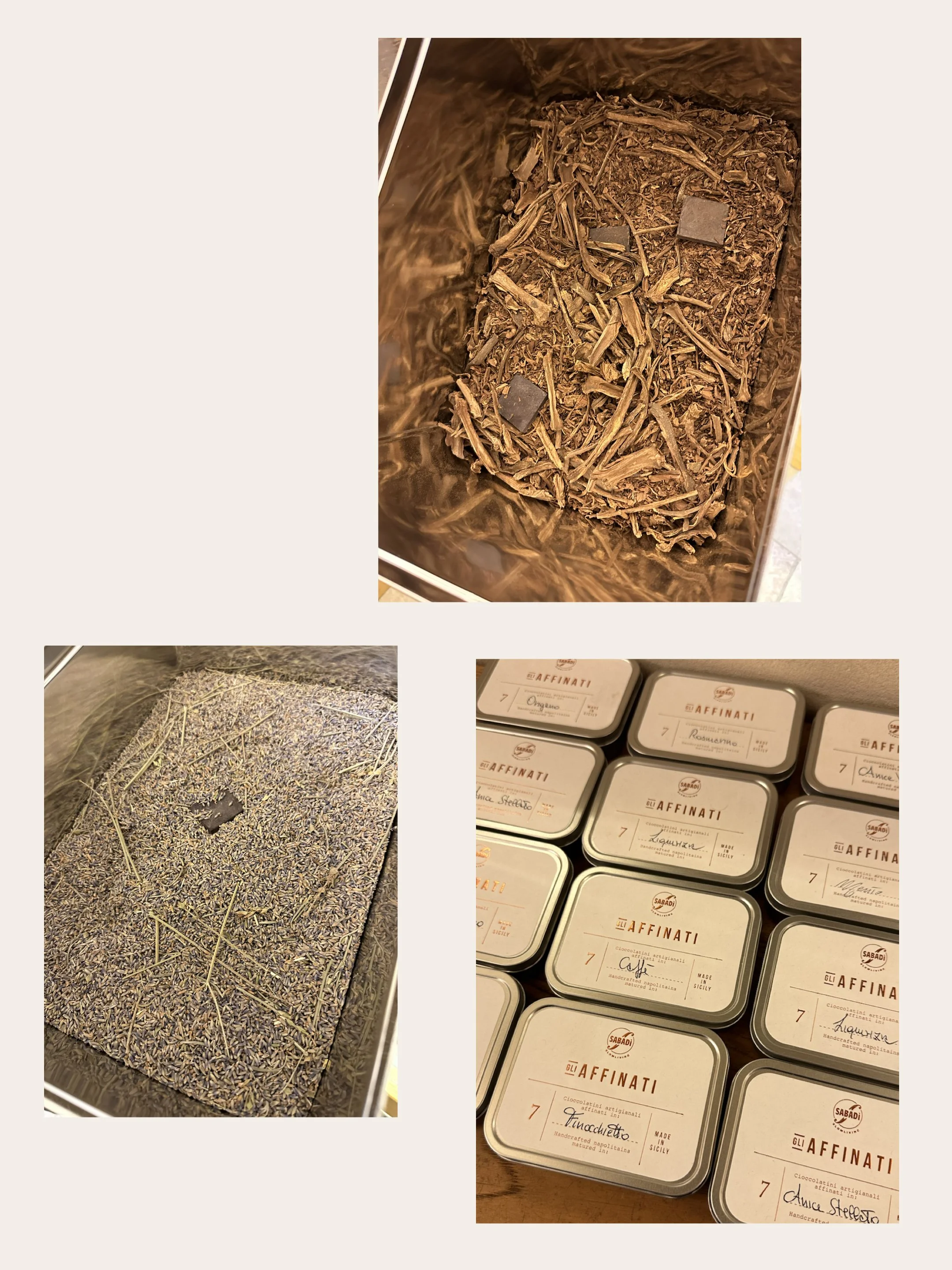
Instead of mixing herbs, flowers or spices directly into the chocolate, Sabadì places finished chocolate inside sealed tins filled with aromatic botanicals.
Lavender.
Liquorice.
Coffee.
Citrus peel.
Wild herbs.
The ingredients never touch the chocolate itself.
Instead, over time, the chocolate slowly absorbs their fragrance.
It is less like cooking.
More like perfumery.
The next morning, another another unexpected invitation awaited.
Not in a museum.
Nor a famous landmark.
But behind the doors of a private members’ club in Ragusa Ibla, where conversation itself had become part of Sicily’s cultural heritage.
Behind Closed Doors
Every destination has places that welcome visitors.
Some reserve their stories for members.
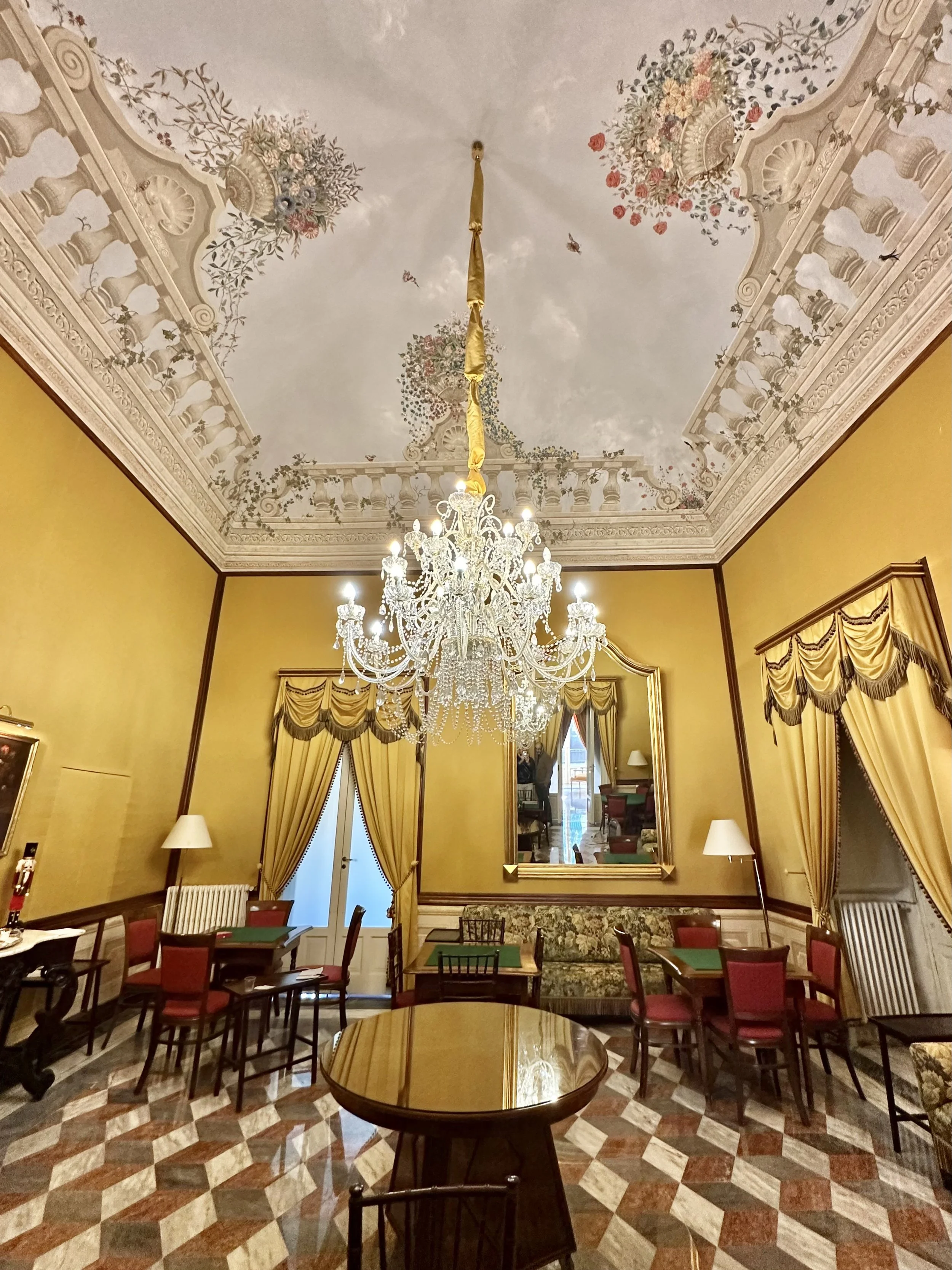
In the heart of Ragusa Ibla, behind an elegant nineteenth-century facade overlooking Piazza Duomo, stands the Circolo di Conversazione. At first glance, it resembles another historic building among many. Only after stepping inside do you realise it was never intended as a tourist attraction.
It was built as a place for conversation.
That simple idea has endured for nearly two centuries.
Founded in the mid-nineteenth century, the Circolo became the meeting place of Ragusa’s aristocratic families. Politics, business, cards and conversations unfolded beneath painted ceilings while life in the piazza continued outside.
Remarkably, descendants of many of those original families still use the club today.
It has never become a museum.
It has simply continued being itself.
The room immediately draws your eyes upward.
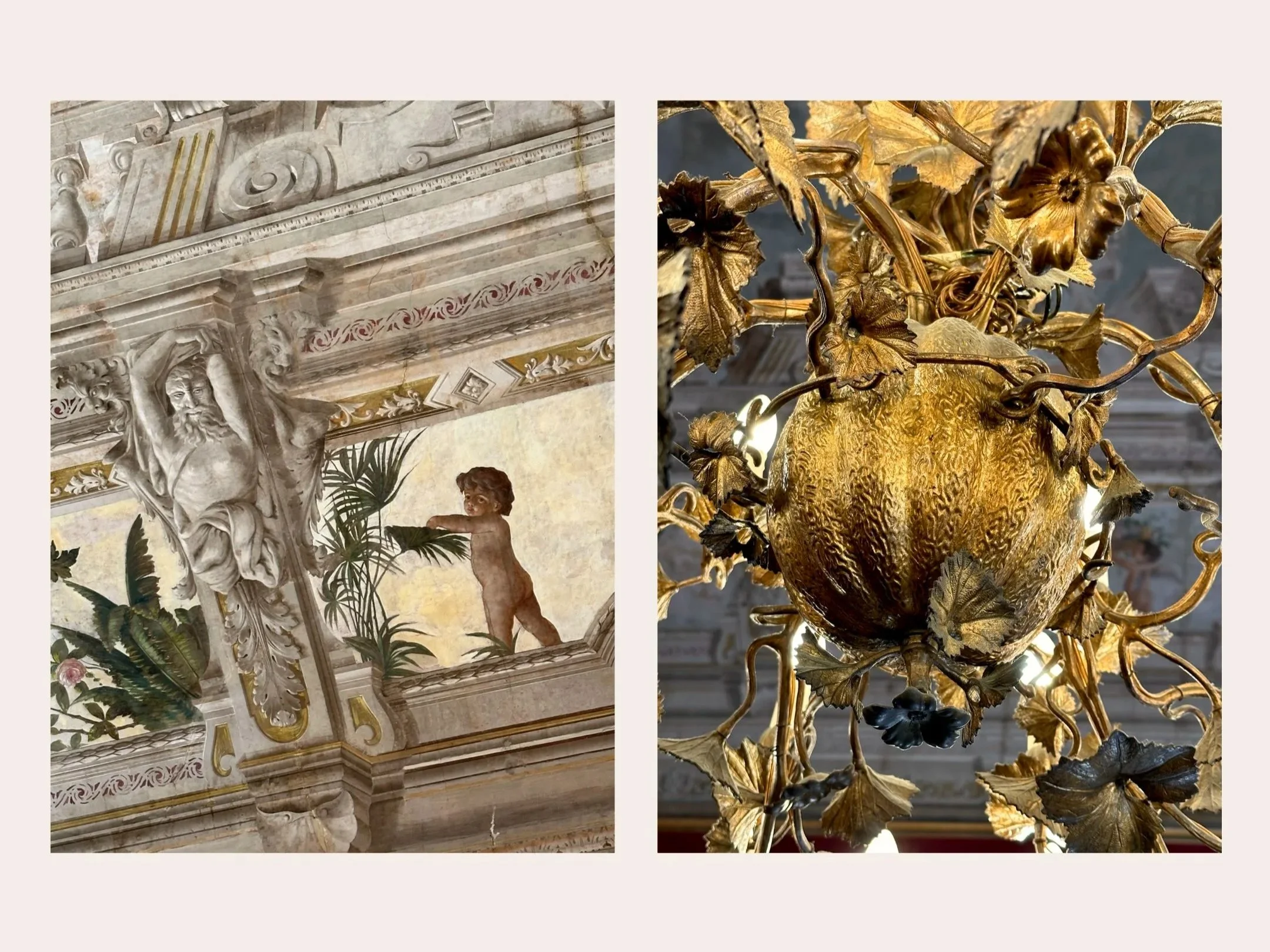
Frescoes stretch across the ceiling, framed by elaborate plasterwork that celebrates abundance rather than restraint. One detail in particular caught my attention.
Suspended beneath the chandelier hangs a gilded pumpkin.
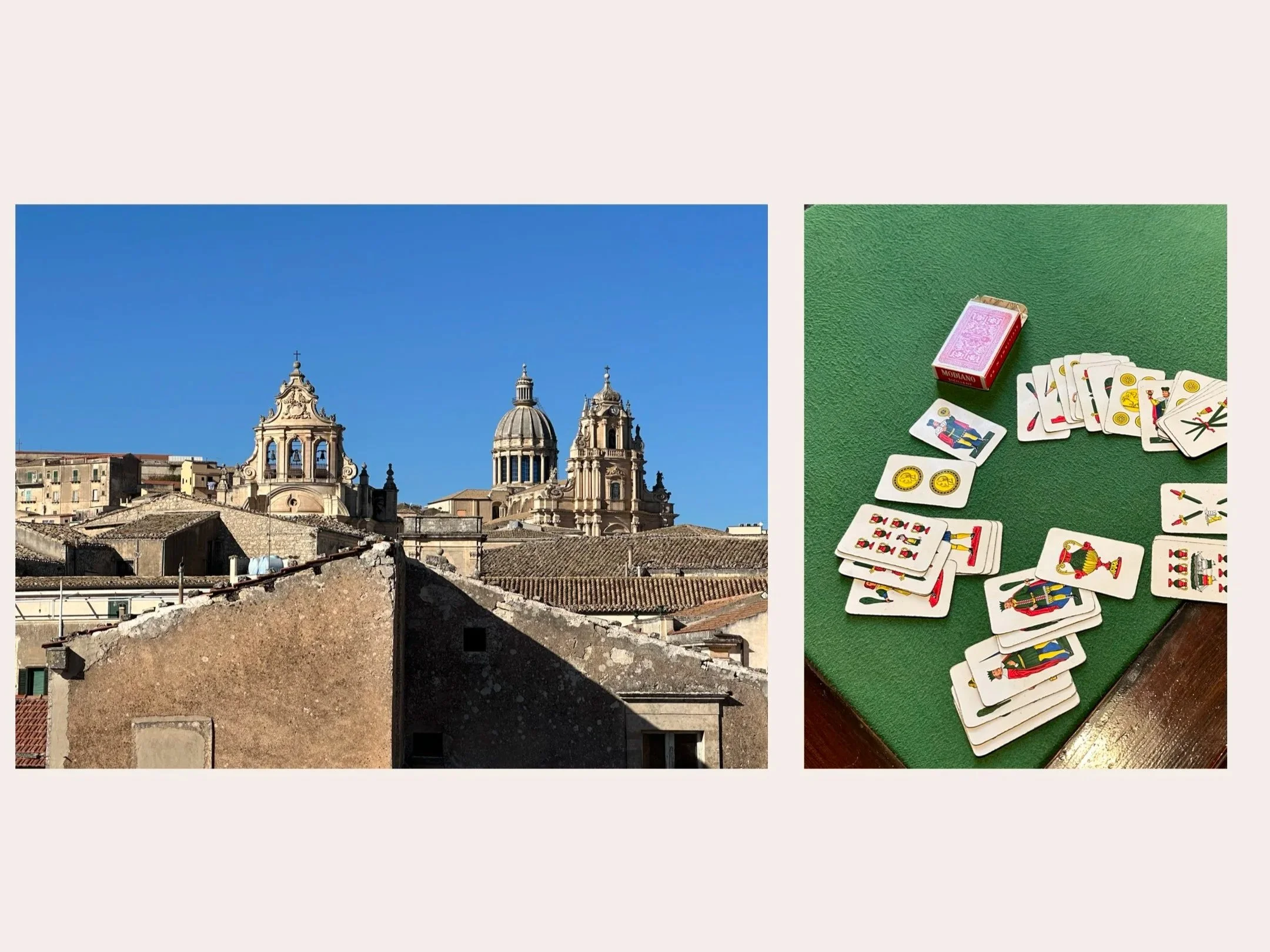
A deck of Sicilian playing cards was resting on a green felt table.
Nobody was using them.
Yet they somehow made the room feel occupied.
It’s a curious thing. Historic interiors often become lifeless once they stop being lived in. The playing cards suggested the opposite.
Someone would probably return after lunch. The conversation would continue.
That ordinary thought made the room feel far more alive than any velvet rope or museum display ever could.
Stepping on the balcony, Ragusa unfolded beneath an impossibly clear December sky.
Church domes rose above a sea of limestone rooftops, their warm colours sharpened by winter light.
It was one of those views that make you pause and admire.
A City Best Measured on Foot
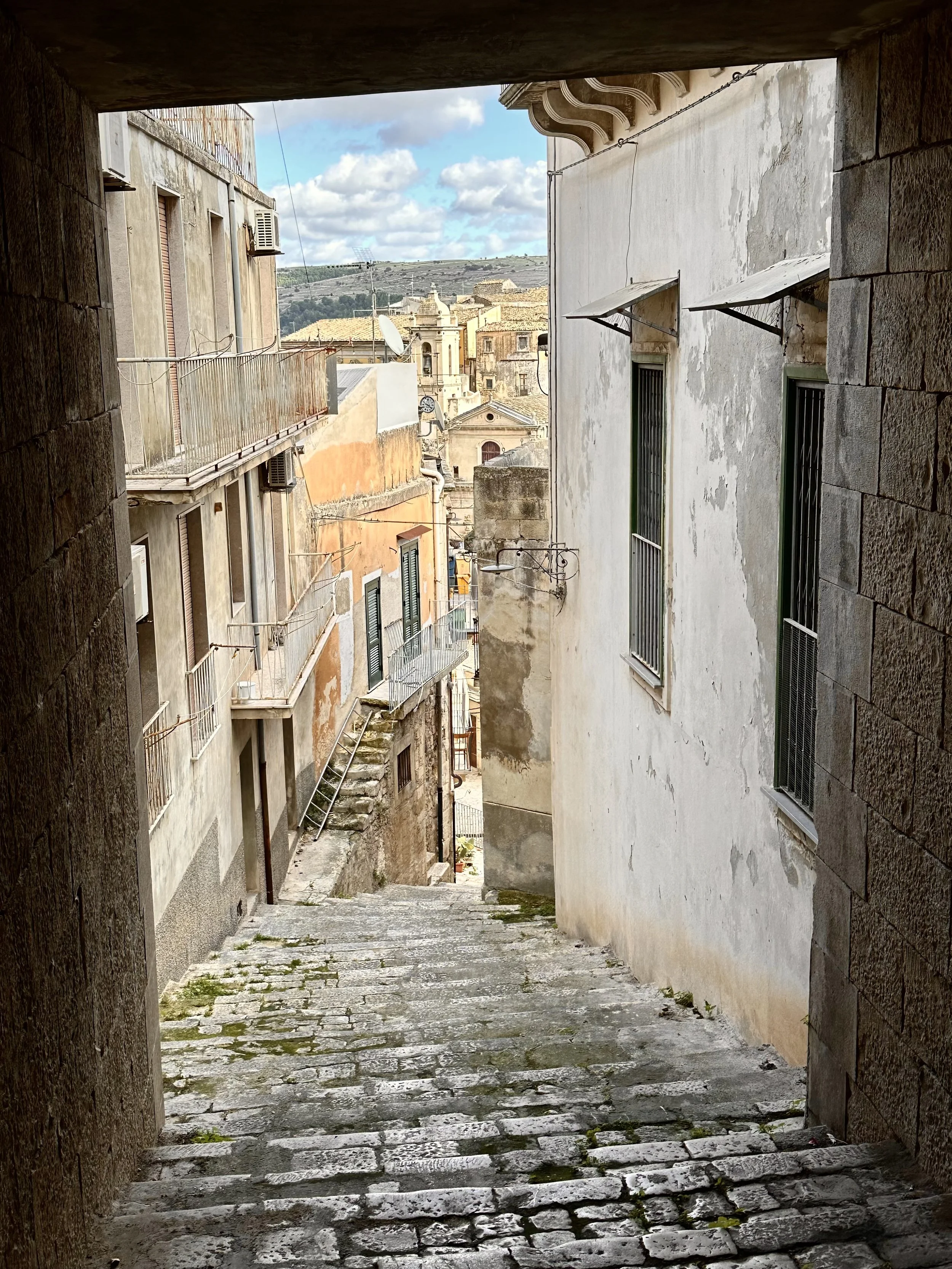
Leaving Circolo, we spent the afternoon walking.
Ragusa is often described as two cities in one.
The upper town spreads confidently across the plateau.
Below it, Ragusa Ibla seems to tumble gentle down the hillside, its streets stitched together by staircases, archways and narrow lanes that reveal themselves one turn at a time.
Maps are useful.
But curiosity is better.
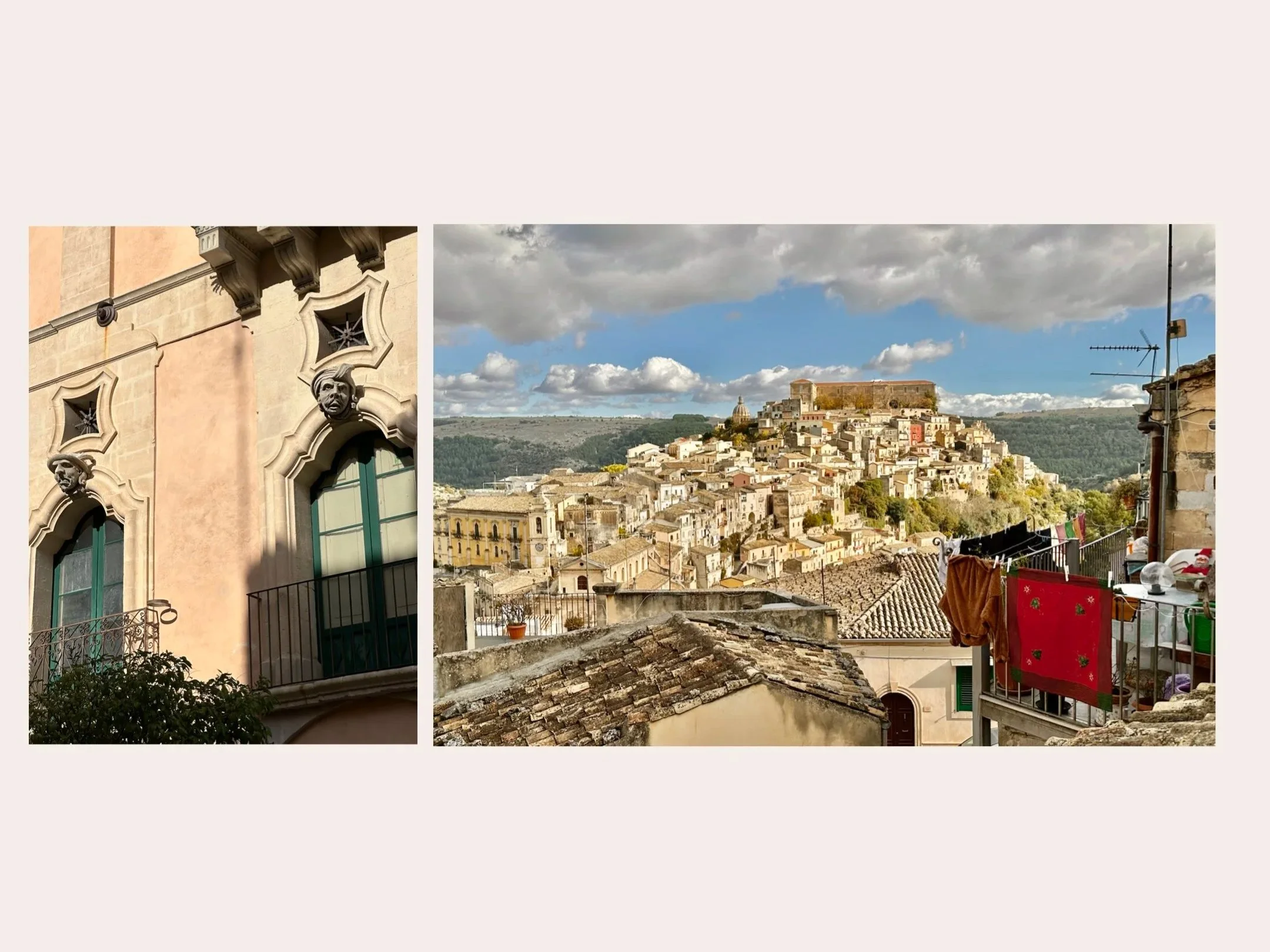
One photograph from that afternoon still makes me smile.
In the foreground, washing hangs from a balcony exactly as it might have done fifty years ago.
Beyond it rises one of Sicily’s most celebrated Baroque skylines.
The composition captures something I increasingly appreciate about Italy.
Historic cities remain beautiful not because everyday life disappeared.
They remain beautiful because everyday life never left.
Laundry belongs here just as much as churches do.
The Best Stop Wasn’t on the Map
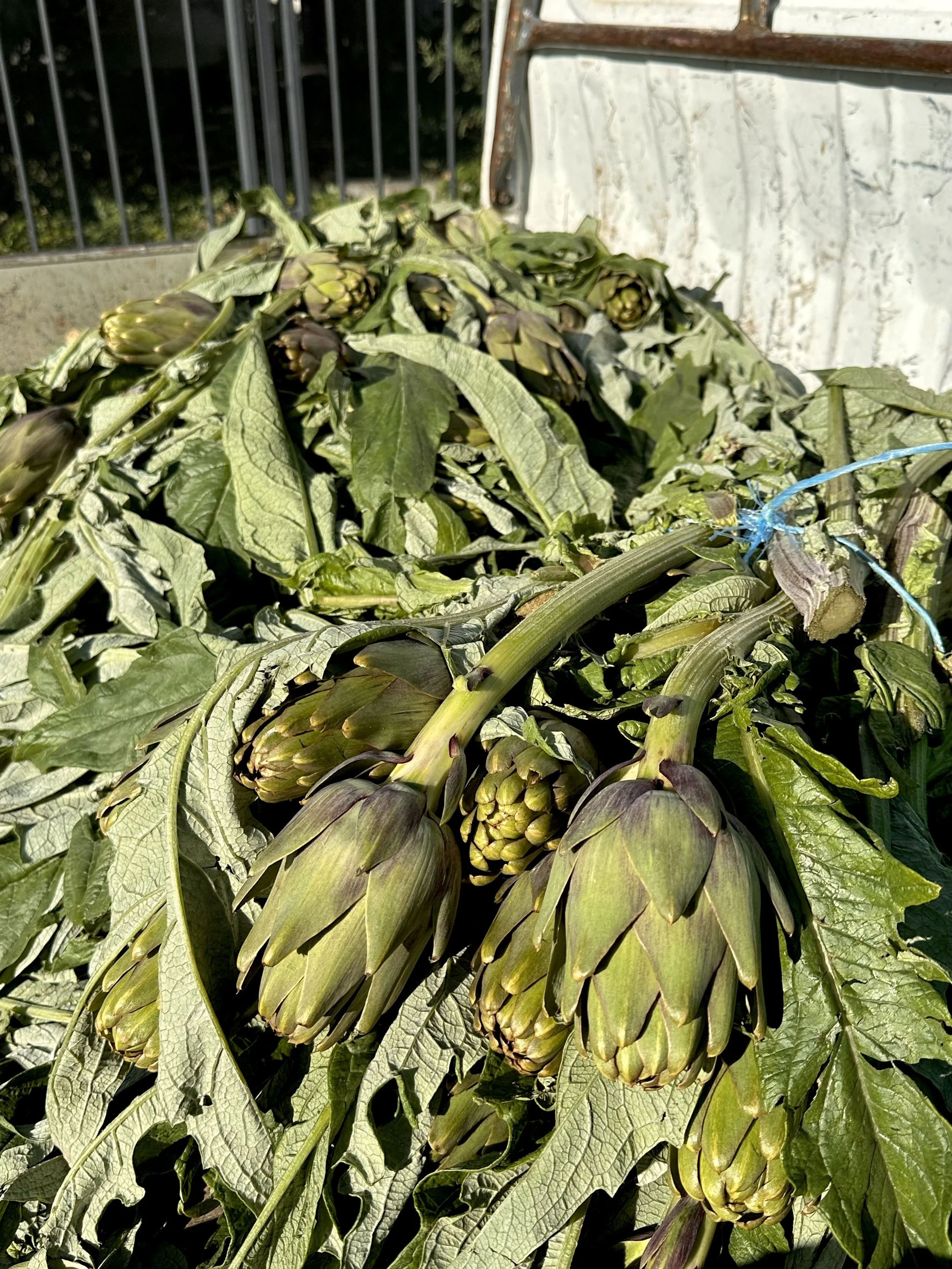
The following morning began with a reminder that some of the best travel experiences are impossible to reserve.
Driving towards Melilli, we noticed a small roadside stall stacked with freshly harvested artichokes.
There was no sign announcing an award.
No online reviews.
No carefully designed branding.
Just someone selling what had recently come out of the ground.
So we stopped.
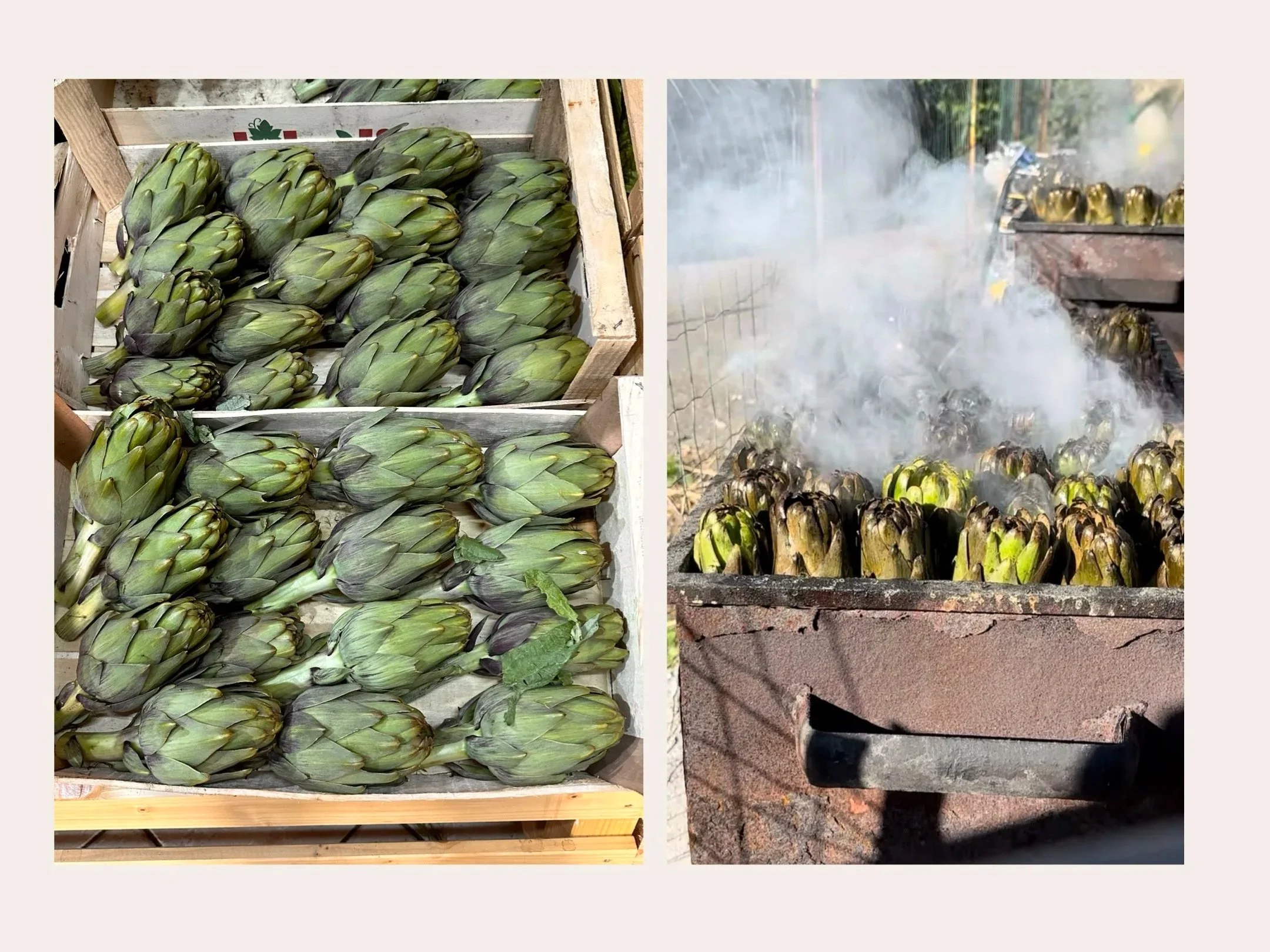
In Sicily, winter belongs to artichokes.
Their tightly packed leaves carry subtle shades of green and violet, signaling they have been harvested at precisely the right moment.
Preparation, however, is wonderfully uncomplicated.
Each artichoke is gently opened by hand before being filled with sliced garlic, chopped fresh mint and generous olive oil.
Then comes the fire.
As the outer leaves blacken over hot coals, the inside slowly steams until the heart becomes impossibly tender.
Leaf by leaf, the meal gradually reveals itself.
Nothing is rushed. Nothing is wasted.
The simplicity says something important about Sicilian cooking.
When produce arrives this fresh, recipes often become remarkably short.
Two Bags of Oranges
Originally, we had only wanted to watch the olive harvest.
That single idea eventually led us to one of the most memorable afternoons of the journey.
Near Carlentini, we arranged to visit a family-run orchard cared for by a young passionate man in his twenties.
The owner belonged to the third generation to work this land, yet spoke about farming with the curiosity of someone still discovering it.
Questions rarely received brief answers.
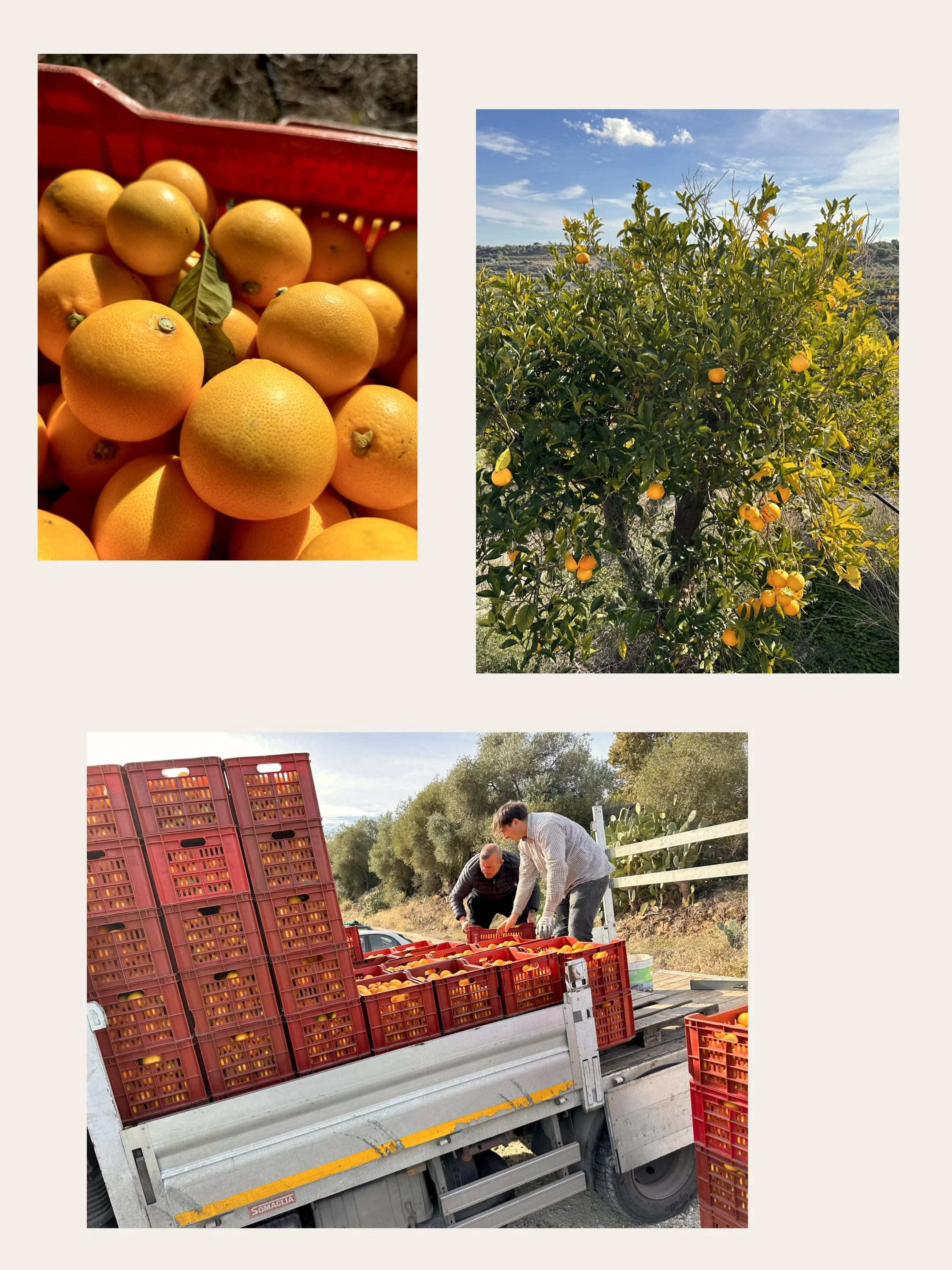
December is the beginning of Sicily’s citrus season.
Workers moved steadily between the trees, clipping oranges into baskets before emptying them into waiting crates.
The process felt almost choreographed.
Fruit travelled from branch to hand, from hand to crate, from crate towards markets that would soon scatter Sicily’s harvest across Italy and abroad.
We picked a few ourselves.
Warm from the afternoon sun, the oranges carried an aroma no supermarket could ever reproduce.
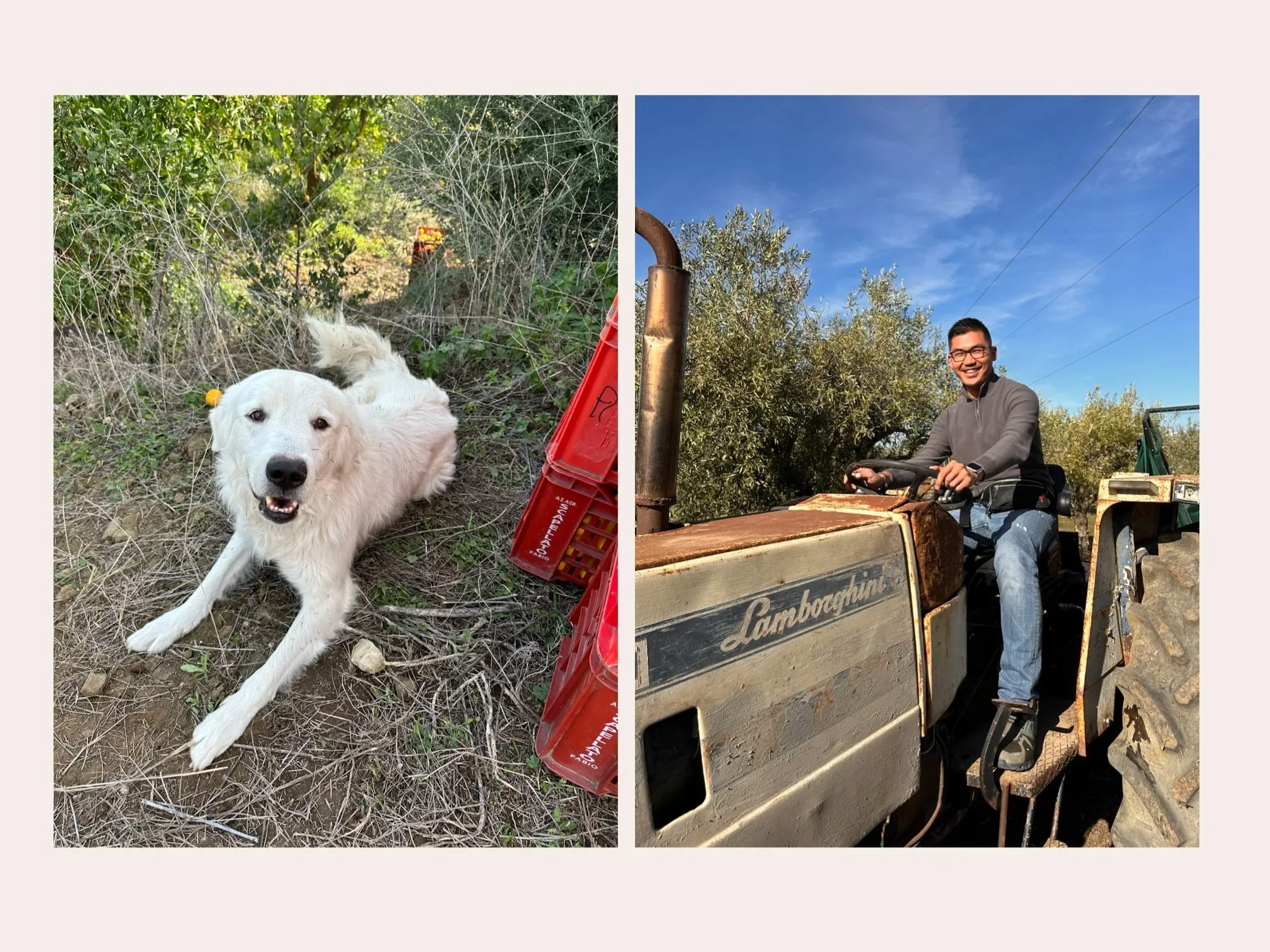
Not every member of the welcoming committee had two legs.
The family’s white dog appointed himself our guide almost immediately, accompanying us from grove to grove with the quiet confidence of someone convinced we had arrived purely for his company.
Nearby stood another unexpected discovery.
An old Lamborghini tractor.
Long before the marque became associated with supercars, it built agricultural machinery that helped modernise farms across post-war Italy.
As we prepared to leave, our host returned carrying two large bags of oranges.
We reached for our wallets.
He waved them away.
We tried again.
Another smile.
Another refusal.
The oranges eventually found their way into the boot of the car anyway.
It remains one of the simplest acts of hospitality I’ve experienced while travelling.
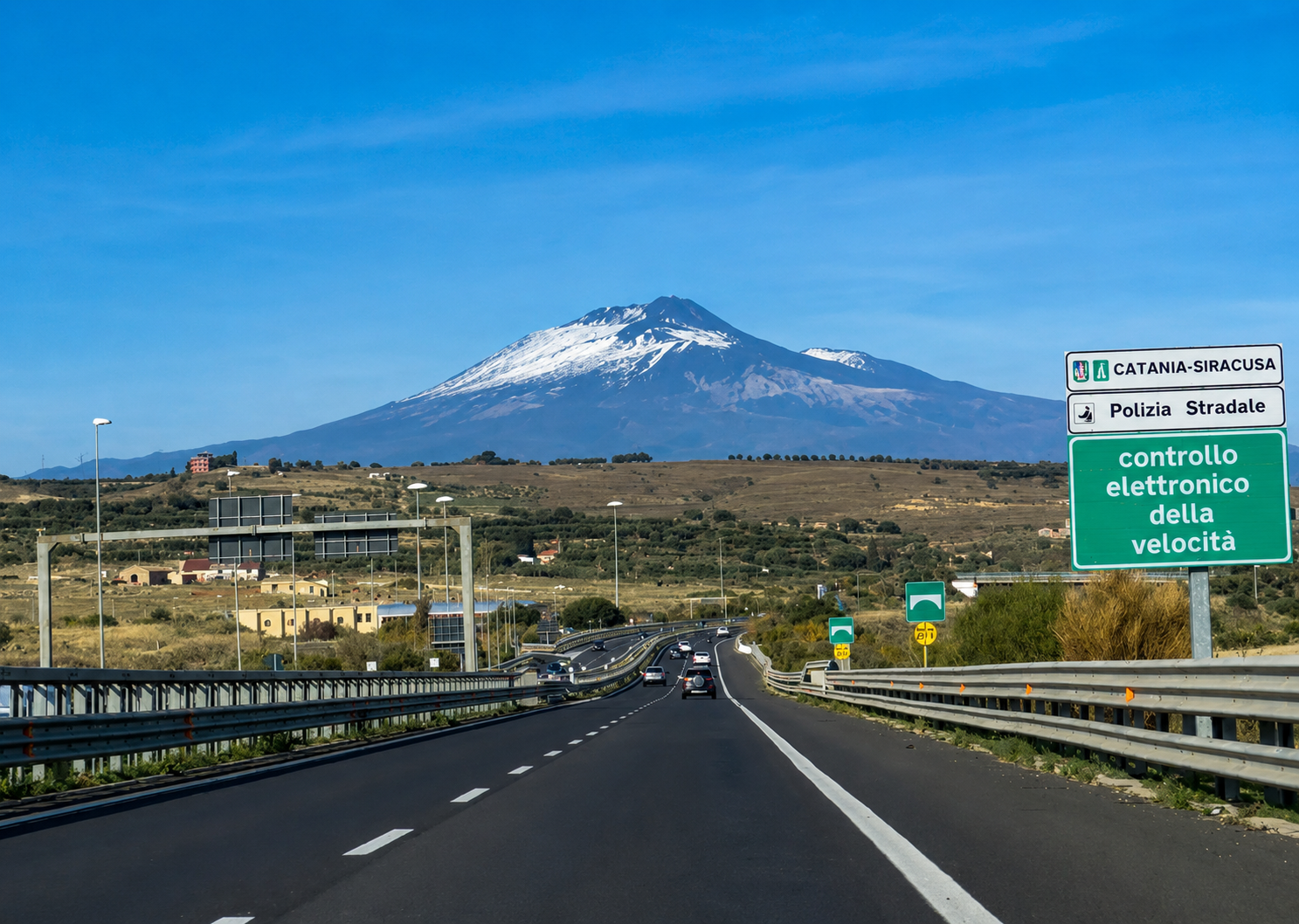
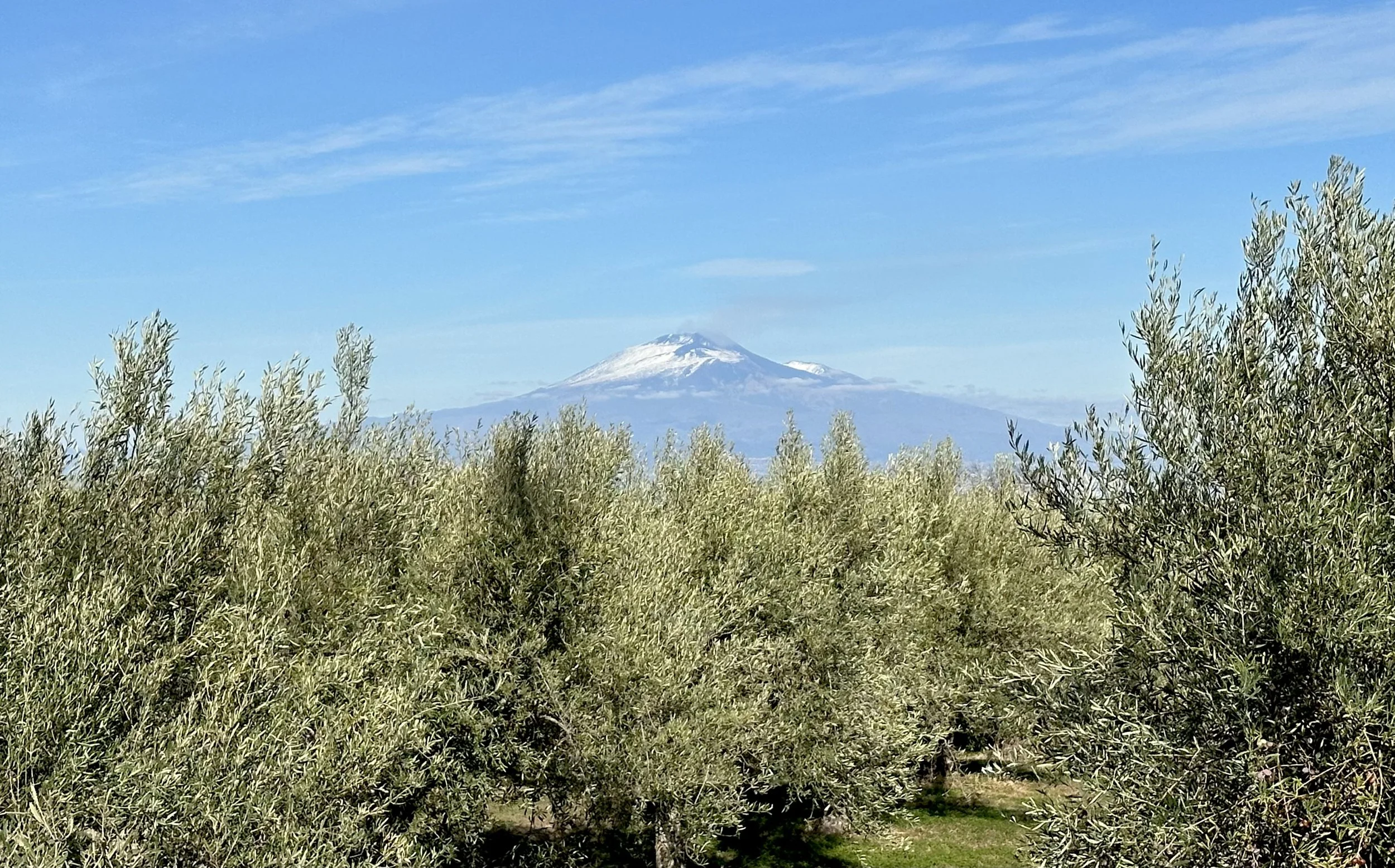
As we drove away from Carlentini, the road began climbing steadily.
Ahead of us, the outline of Mount Etna grew larger with every passing kilometre.
Only then did it become obvious that the fertile orchards we had just left owed so much to the volcano waiting in the distance.
The following stop would reveal the source of it all.
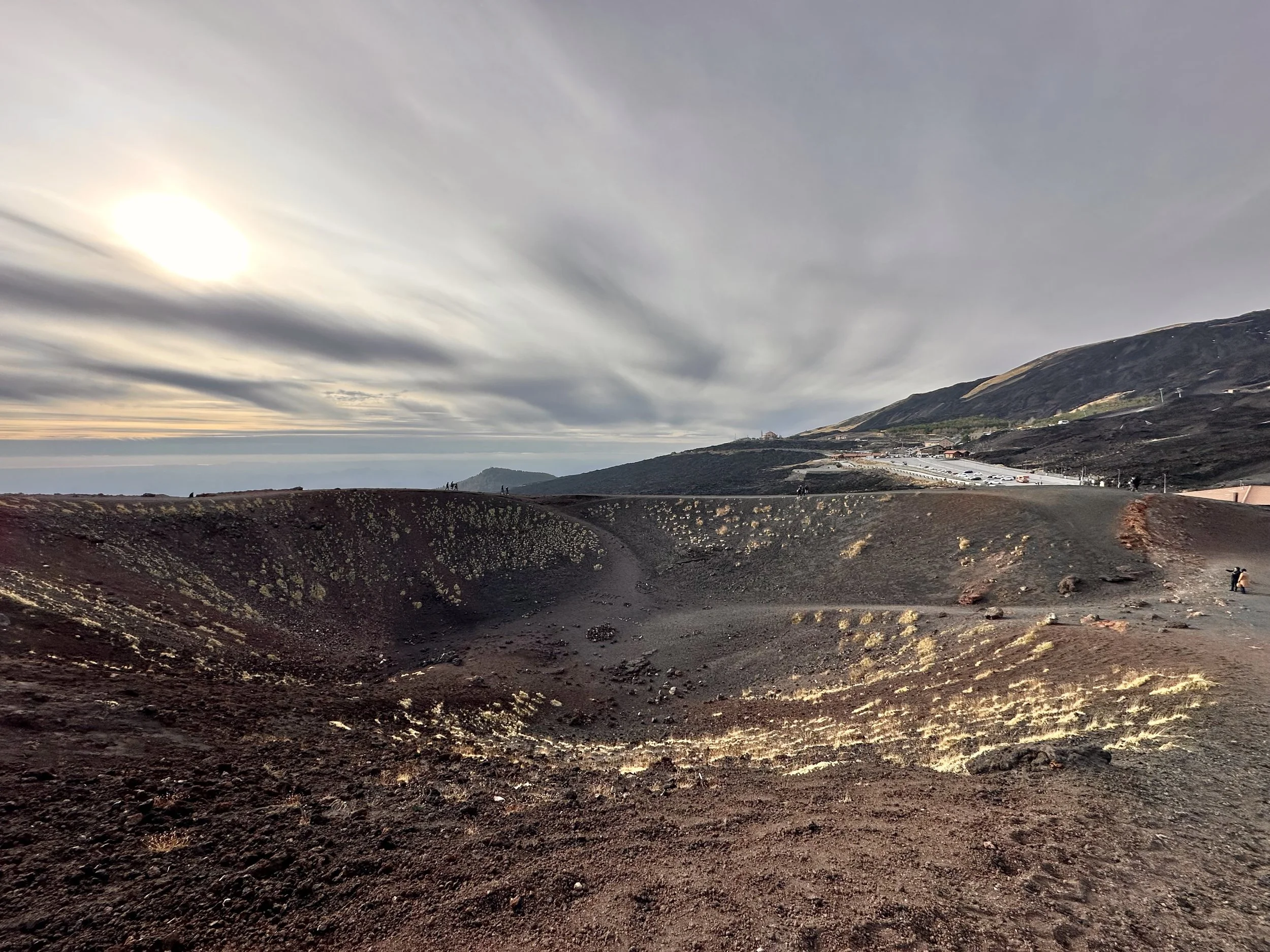
The Mountain That Feeds an Island
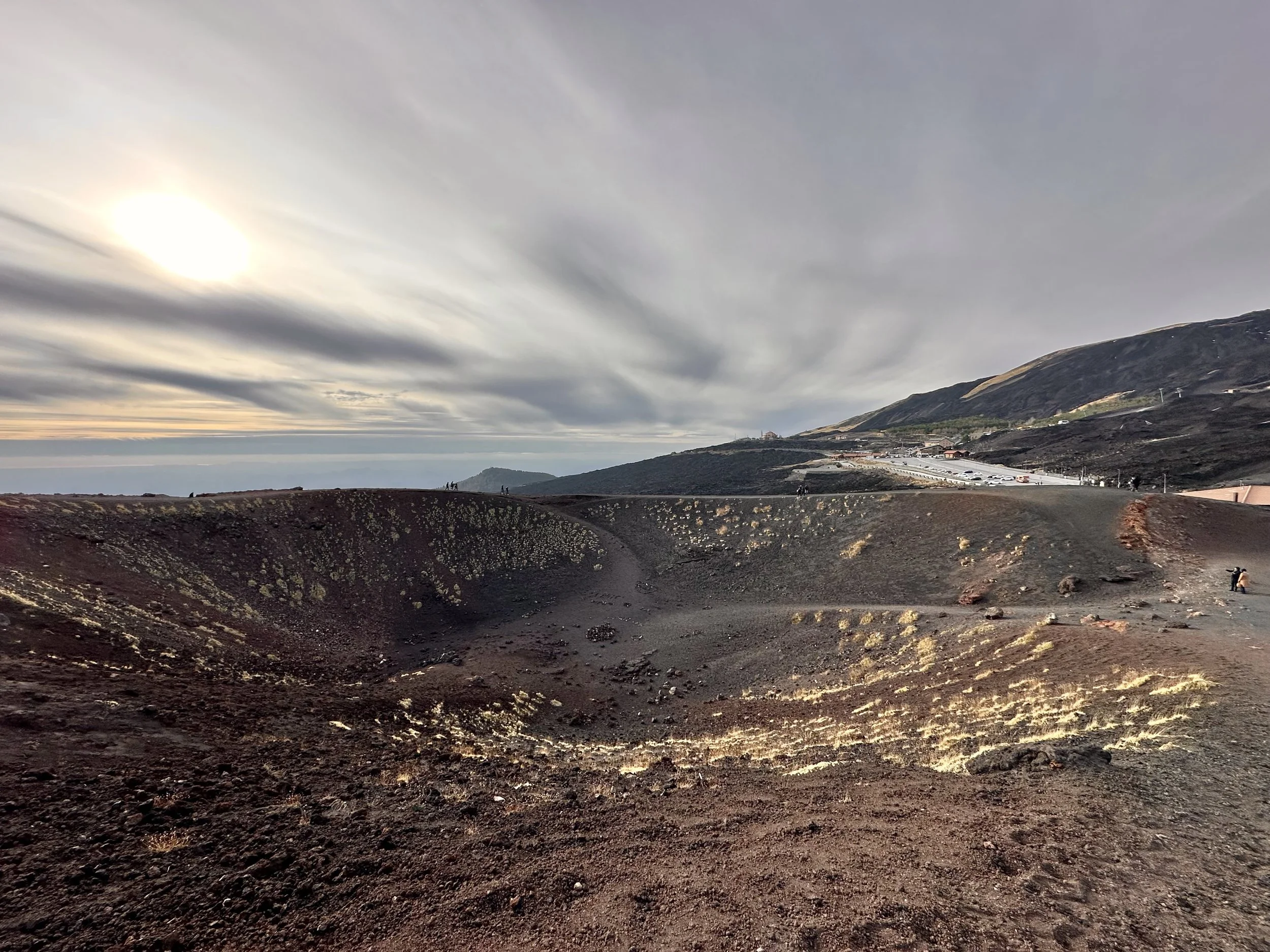
By the time we reached Mount Etna, eastern Sicily had already introduced itself through the sea, through Baroque towns and through family farms.
The volcano was different.
It explained everything that had come before.
The road climbed steadily through changing landscapes until the vegetation began to thin.
Trees gave way to volcanic rock.
The colours became almost impossible to describe.
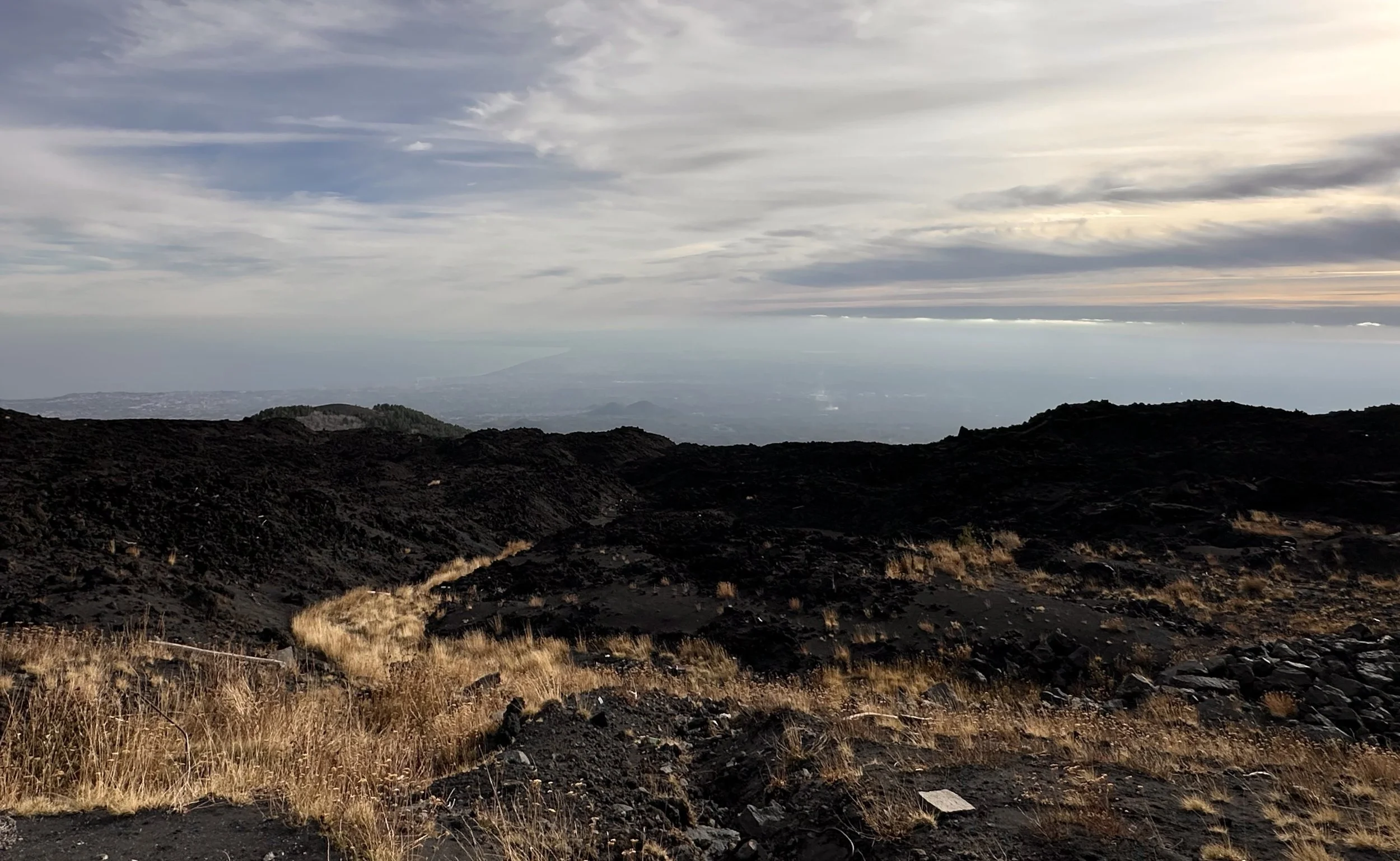
Black lava.
Soft pink stone.
Amber grasses catching the late afternoon light.
Patches of yellow scattered across the mountainside.
It looked less like a mountain than an enormous artist’s palette.
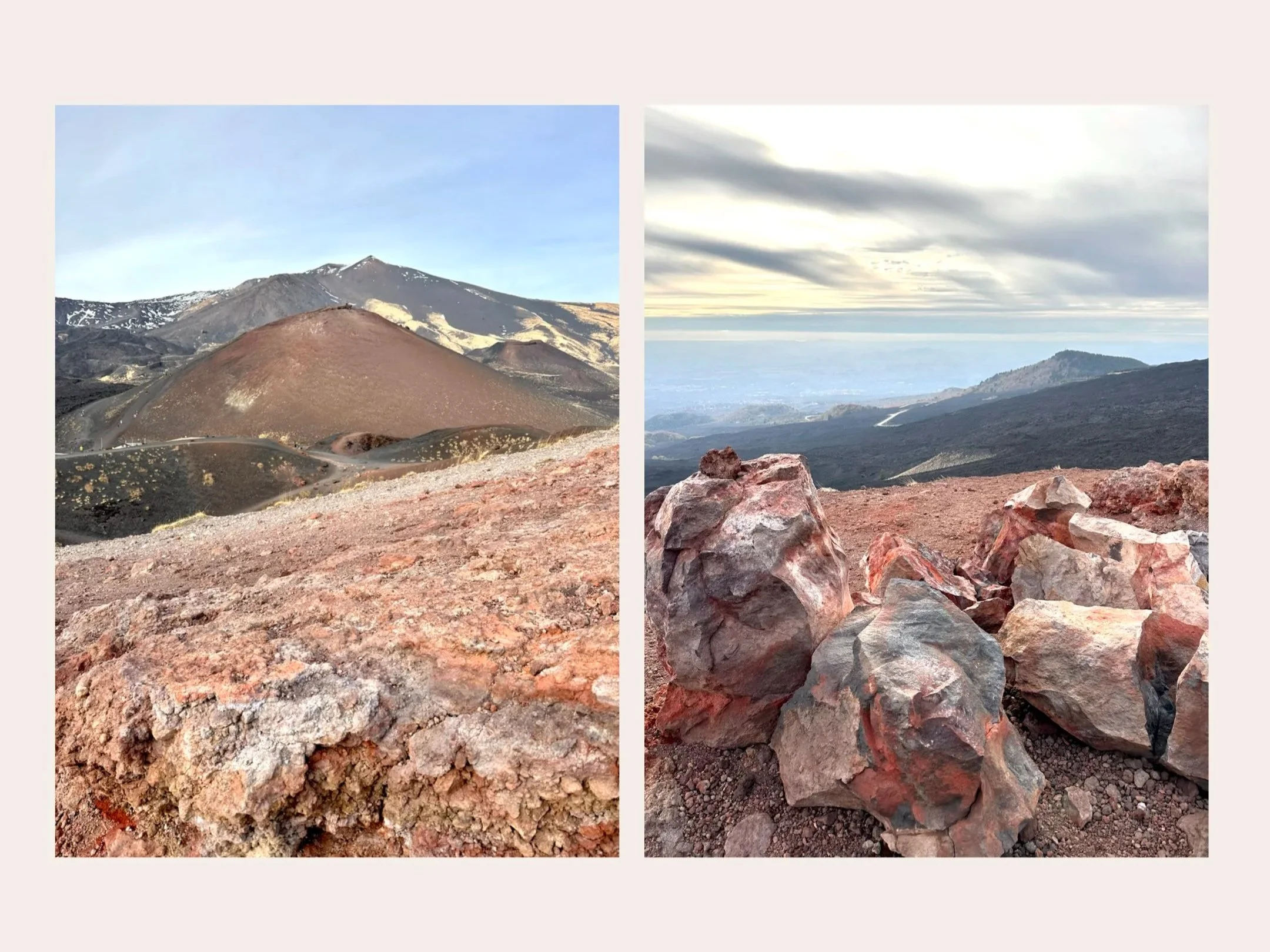
Standing there, it was difficult to imagine that this calm landscape belongs to one of the world’s most active stratovolcanoes.
Etna has shaped Sicily for hundreds of thousands of years, destroying and creating in equal measure. Its eruptions have altered coastlines, buried villages and rewritten maps. Yet the same volcanic activity has also produced remarkably fertile soil, allowing vineyards, olive groves, pistachios and citrus orchards to flourish across eastern Sicily.
Only a few hours earlier, we had stood among orange trees in Carlentini.
Now the connection became obvious.
The generosity of that orchard began here.
Every City Should Be Understood Through Its Market
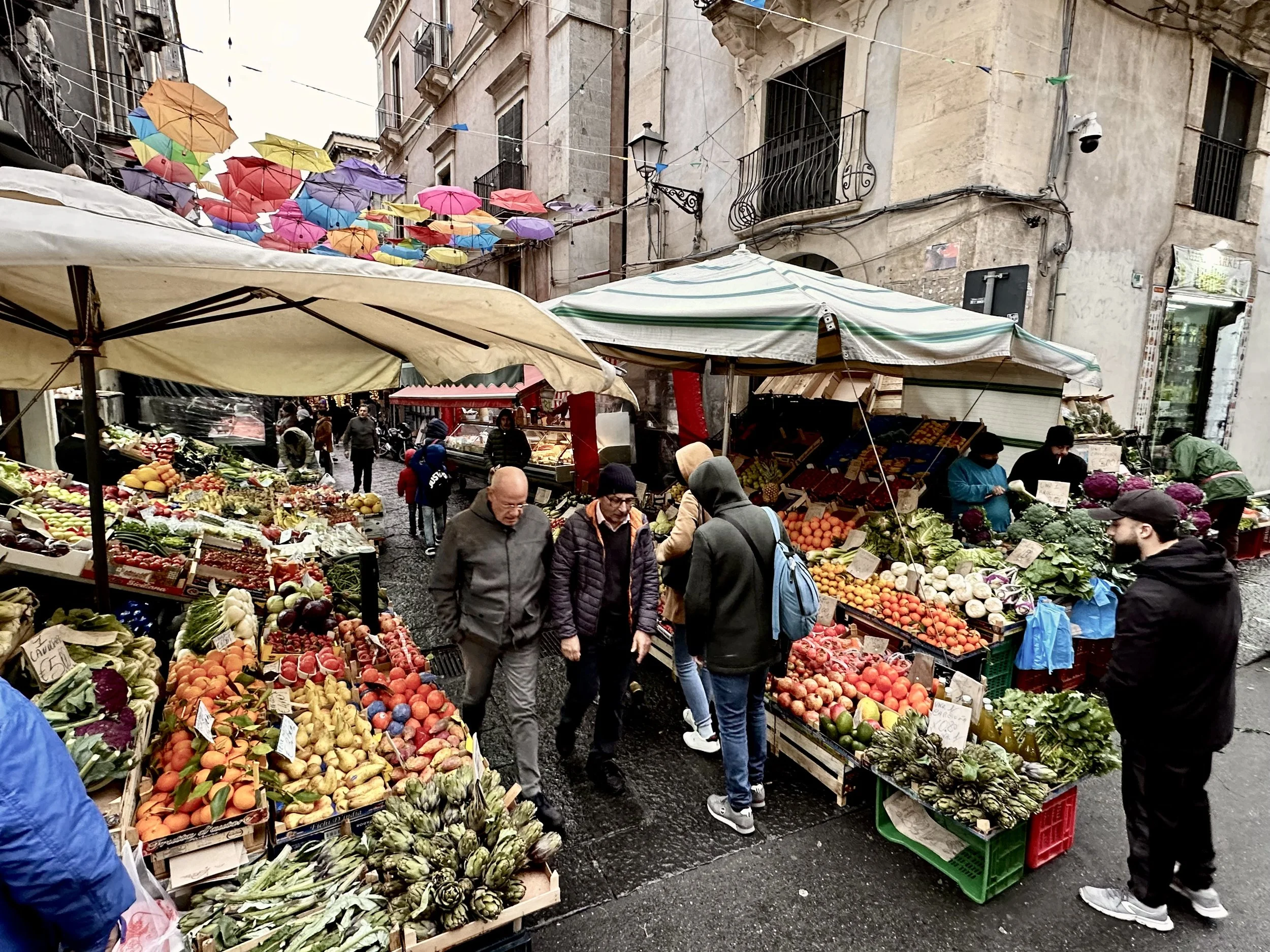
Our final morning began in Catania.
If I have only a few hours in a city, I rarely look for a museum first.
I look for its market.
Markets reveal the ordinary rhythm of a place in a way few attractions can.
They show what is in season.
What people cook.
What neighbours stop to discuss before heading home.
Long before guidebooks existed, markets were already telling visitors how a city lived.
Catania was no exception.
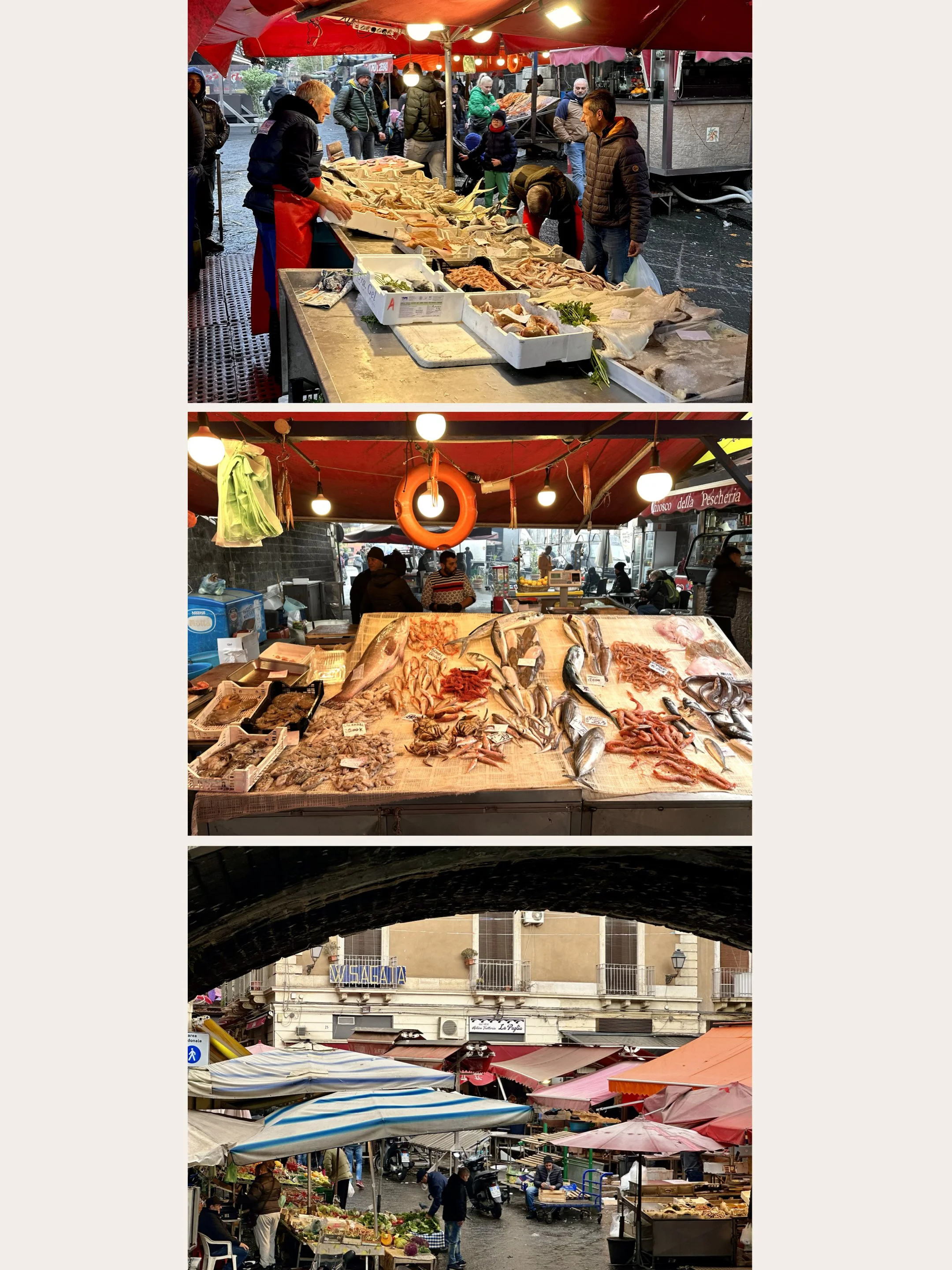
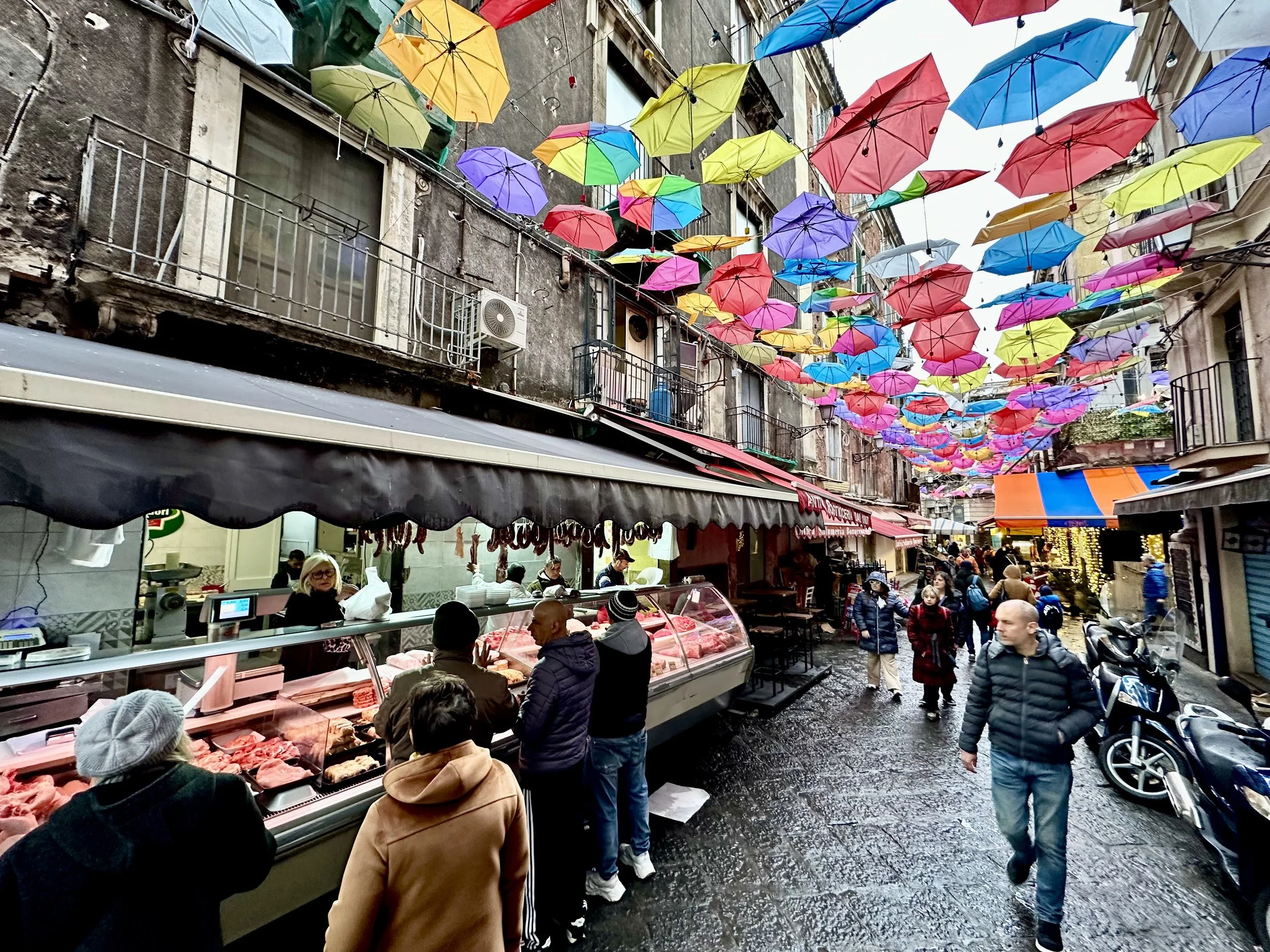
Around Piazza Alonzo di Benedetto, the city seemed fully awake.
Fishmongers arranged the morning’s catch across beds of ice.
Vegetables overflowed from wooden crates.
Citrus fruit appeared in almost impossible shades of orange.
Voices travelled effortlessly between neighbouring stalls while scooters somehow found space to weave through streets already busy with shoppers.
Nothing had been arranged for visitors.
That was precisely what made it interesting.
Like the island itself, the market reflects centuries of exchange. Sicily’s position at the heart of the Mediterranean made it a meeting point for traders, cultures and ingredients. Arab influences can still be seen in citrus cultivation, spices and sweets, while the surrounding sea continues to supply the fish that define so much of the local cuisine.
The market isn’t simply somewhere to buy food.
It is where Sicily continues to introduce itself every morning.
The Lunch We Didn’t Plan
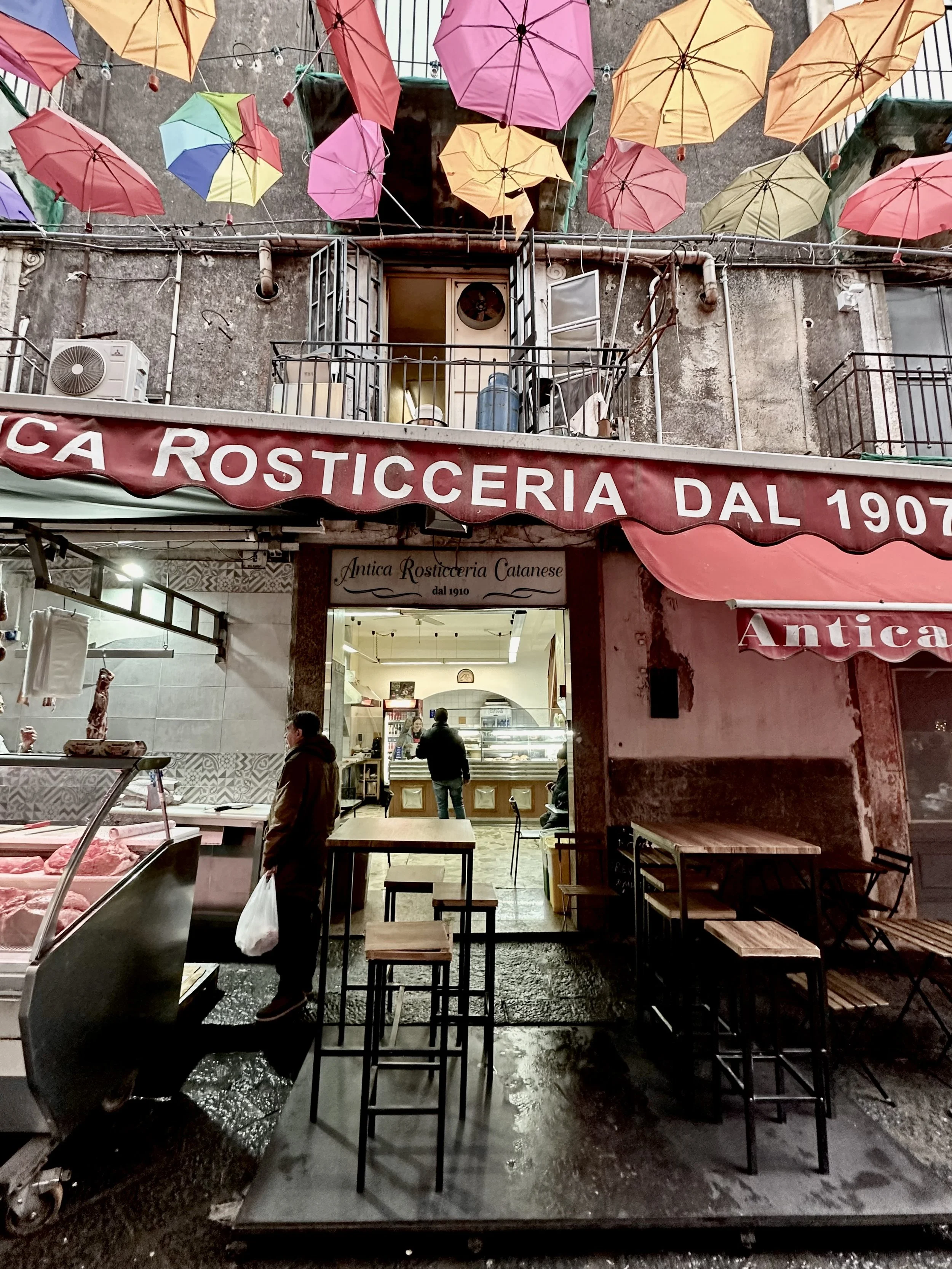
Before arriving in Catania, I had already bookmarked another restaurant.
It looked excellent.
Then we walked past Antica Rosticceria Catanese dal 1907.
Inside stood a smiling nonna behind the counter.
That settled the matter.
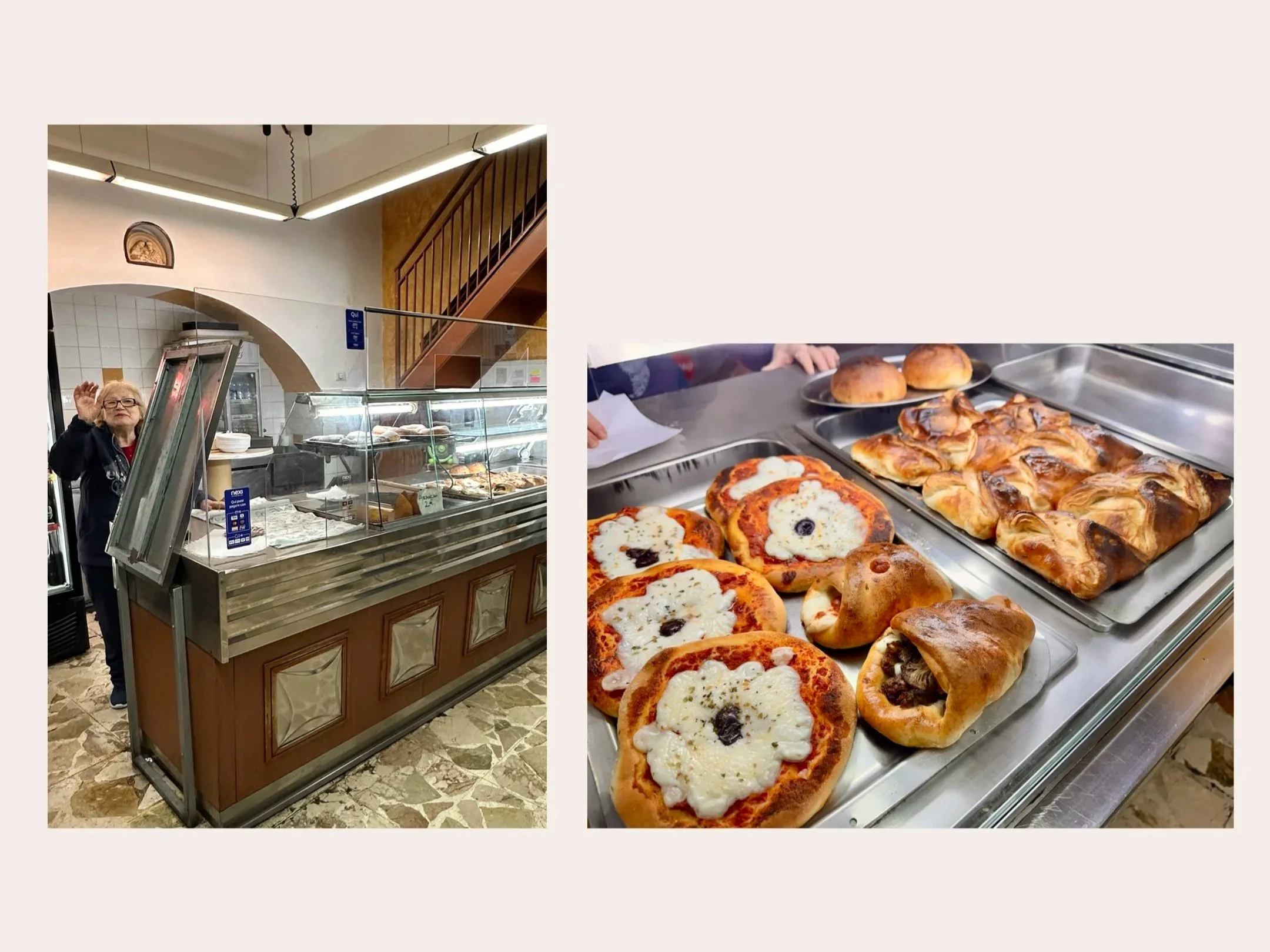
Restaurants are often remembered for their signature dishes.
I remember this one for its welcome.
There was an ease about the place.
Regular customers came and went without ceremony.
Orders were called across the room.
Nobody appeared interested in turning lunch into an occasion.
It was simply where people had been eating for generations.
So we joined them.
Looking back, abandoning the carefully researched plan felt like the right decision.
The best addresses are not always the ones you save before leaving home.
Sometimes they are the ones that find you instead.
One Last Observation
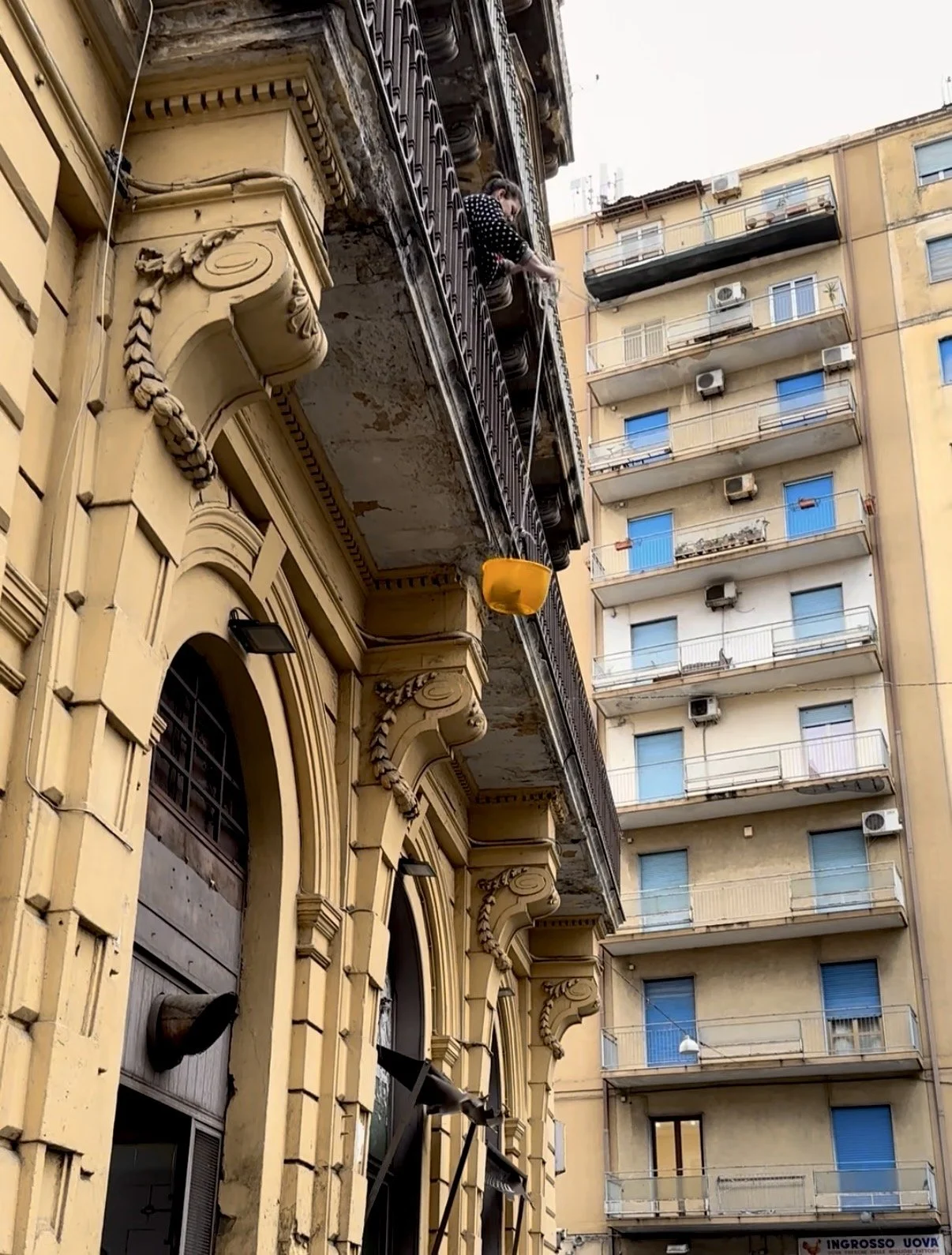
One final scene that stayed with me.
Standing in the street, we noticed a resident lowering a bright yellow bucket from an upper-floor balcony.
A shopkeeper placed groceries inside.
Moments later, the bucket disappeared back upstairs.
No elevators.
No unnecessary trips.
Just a simple solution that had probably worked perfectly for years.
It lasted less than a minute.
Yet somehow it felt like the perfect farewell.
Not because it was extraordinary.
Because it wasn’t.
It was simply everyday life continuing around us.
Looking back, I realised the journey I remembered wasn’t the one we had planned.
It was the one Sicily quietly arranged.
The island revealed itself through breakfast before monuments.
Through conversations before itineraries.
Through fishing villages before famous viewpoints.
Through oranges handed to strangers without expecting anything in return.
It reminded me that places are rarely understood by moving faster.
They reveal themselves when we allow curiosity to interrupt the schedule.
That, more than any individual destination, is what I brought home from eastern Sicily.
Not a checklist of places visited.
But a different way of travelling.
Sometimes the most rewarding journeys begin the moment we stop trying to lead them.
Sometimes, it is enough to let Sicily take the lead.
Editor’s Note
This journey took place over seven days across eastern Sicily in December 2023, covering Ortigia, Vendicari, Marzamemi, Noto, Modica, Ragusa Ibla, Carlentini, Mount Etna and Catania. All observations and photographs are based on first-hand experience.
Before you leave, you are invited to sign The Guestbook.
Continue Exploring
The Joy of Aperitivo - a refection on one of Italy’s most enduring rituals, and the perfect companion to your many evenings
Waiting for Tomatoes - continues the theme of seasonality and how ingredients are understood through time and place rather than recipes alone
A Summer Lasagna - another story about restraint in Italian cooking, where excellent ingredients are often allowed to speak for themselves
The Places We Carry - a quieter essay that complements the emotional thread of travelling through places that stay with us long after we leave
Understanding Umbria - if readers enjoyed seeing Italy through food, landscape and everyday life, this is the natural next destination
Unless otherwise credited, all photography and written content are original works by Foodie Goes Travel.
