A Summer Lasagna
Words and photograph by JJ Wong
One of the things I have gradually come to appreciate about living in Italy is how closely everyday cooking follows the rhythm of the seasons.
Traditional recipes are deeply respected, yet home cooks adapt them according to what is fresh, abundant and at its best. As tomatoes and basil reach their peak, the rhythm of the kitchen begins to change. Lighter dishes appear, richer winter meals quietly retreat, and familiar recipes take on a different character while remaining unmistakably themselves.
That thought came back to me while making a summer lasagna.
At first, the name sounded almost contradictory.
Lasagna has always belonged, in my mind at least, to colder months. It is generous, comforting and often unapologetically rich - a dish layered with ragù, béchamel and cheese.
This version shared little more than the idea of layering.
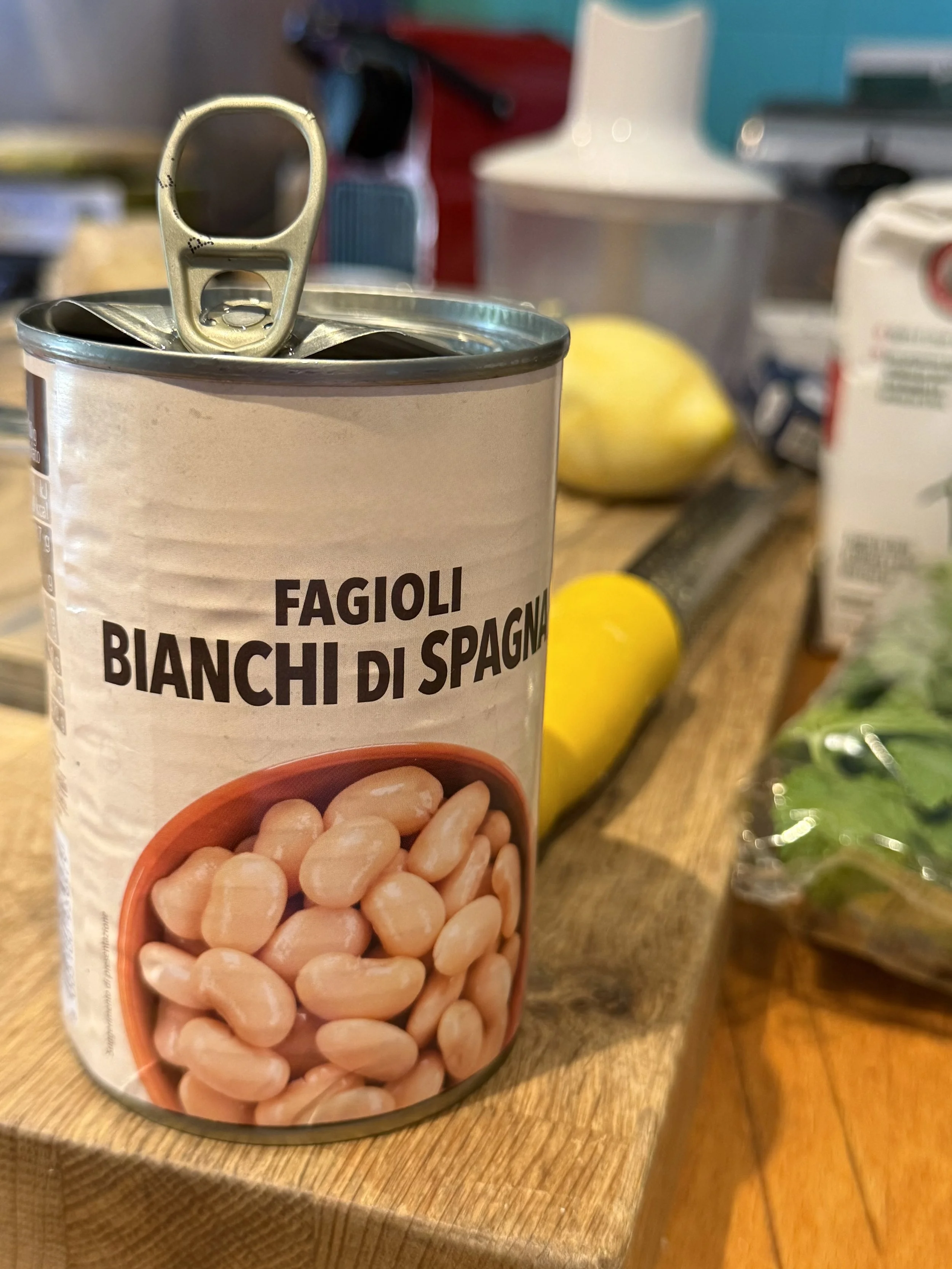
The first ingredient that caught my attention was a humble tin of fagioli bianchi di Spagna.
Blended with Greek yoghurt, a splash of soy milk, extra virgin olive oil, seasoning (salt & pepper) and a squeeze of lemon, the beans became a silky cream. It wasn’t intended to imitate béchamel exactly, but it fulfilled the same role, bringing richness while remaining surprisingly light.
Instead of replacing one ingredient with another, it changed the personality of the entire dish.
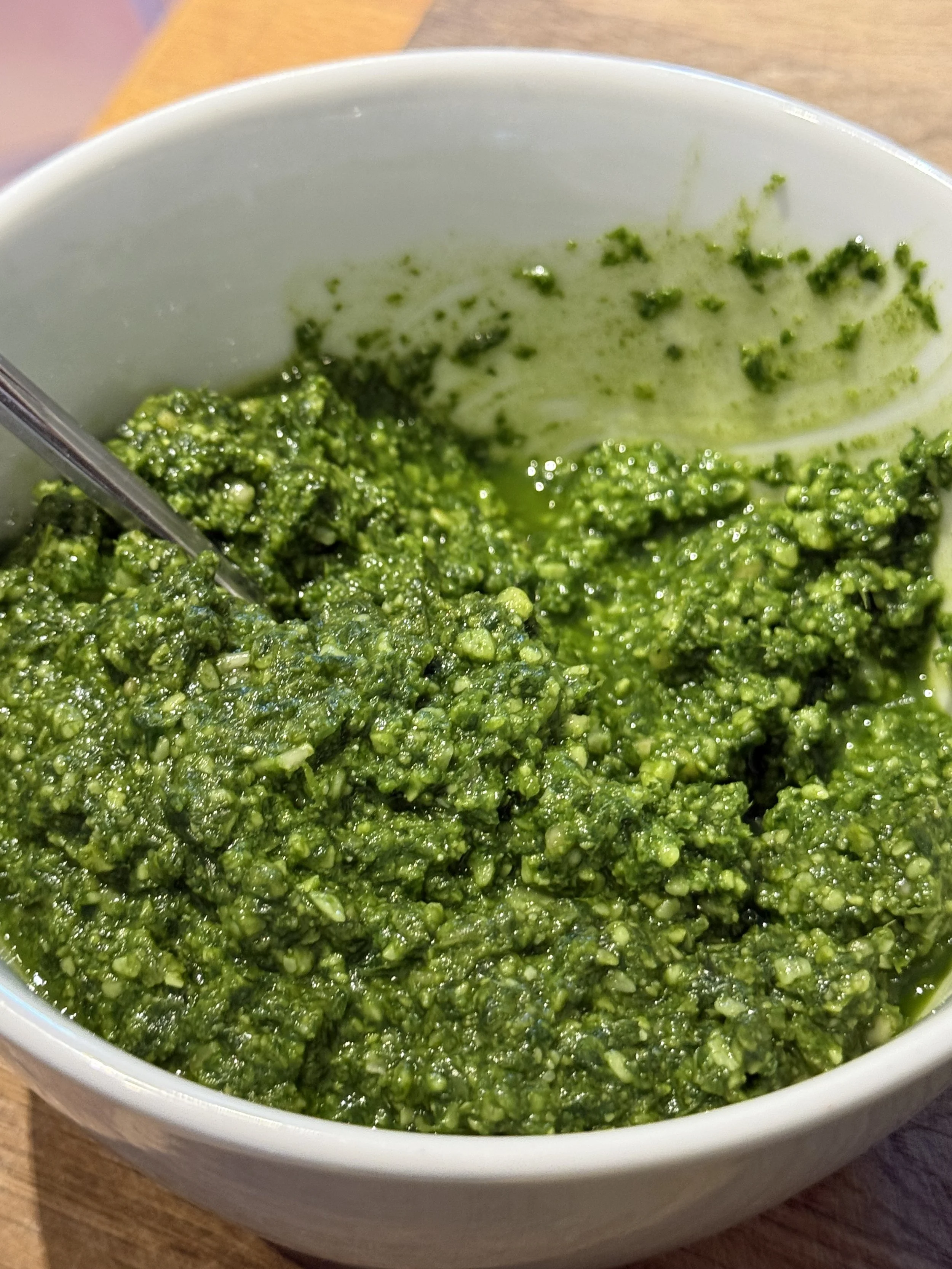
Then came the pesto.
Fresh basil, Parmigiano Reggiano, Pecorino Romano, pine nuts and garlic were blended only until coarse before the olive oil was gently stirred through.
The result wasn’t perfectly smooth.
Tiny pieces of basil and pine nuts remained throughout, giving the pesto texture and reminding us that handmade food rarely needs to look flawless.
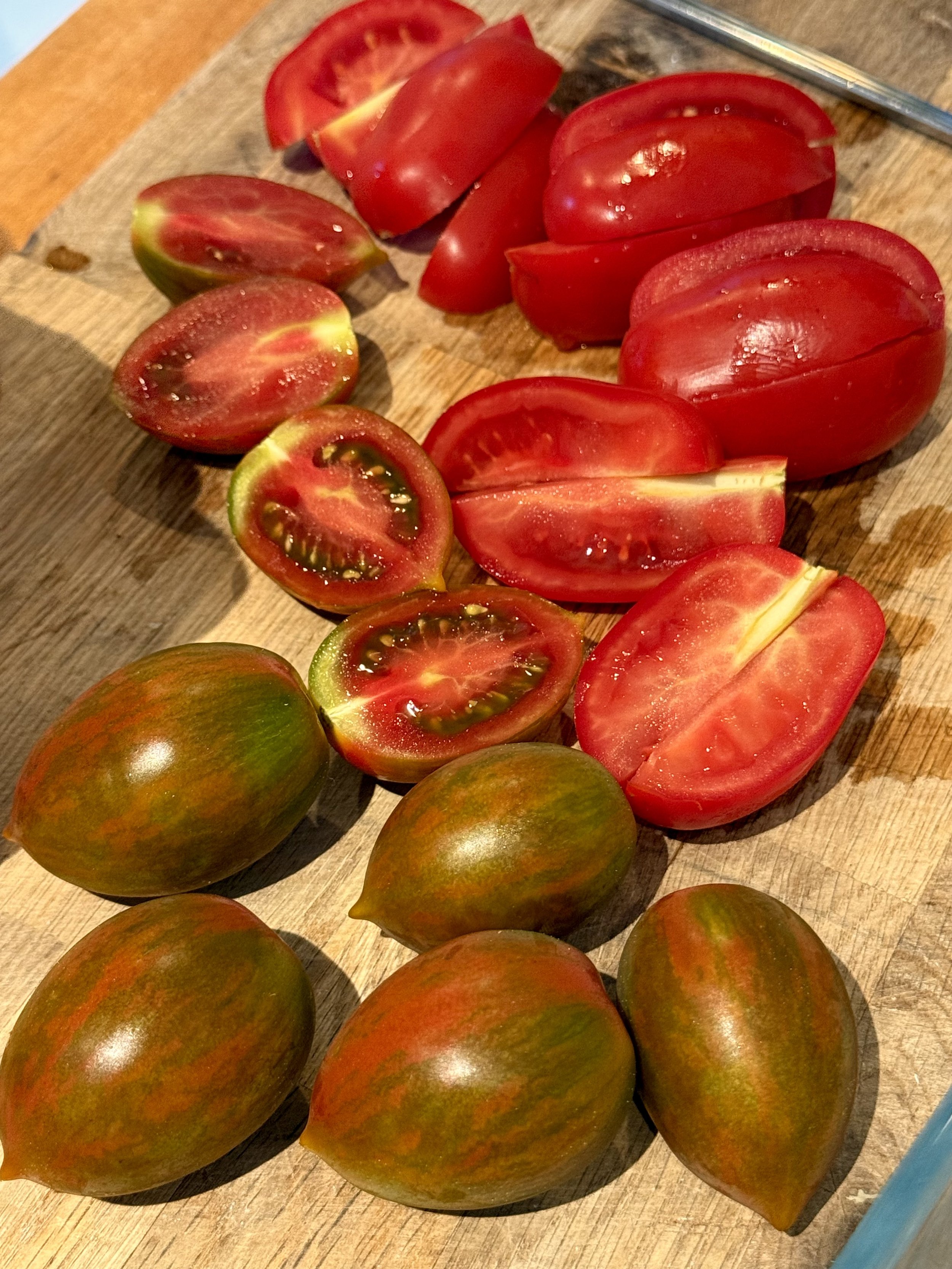
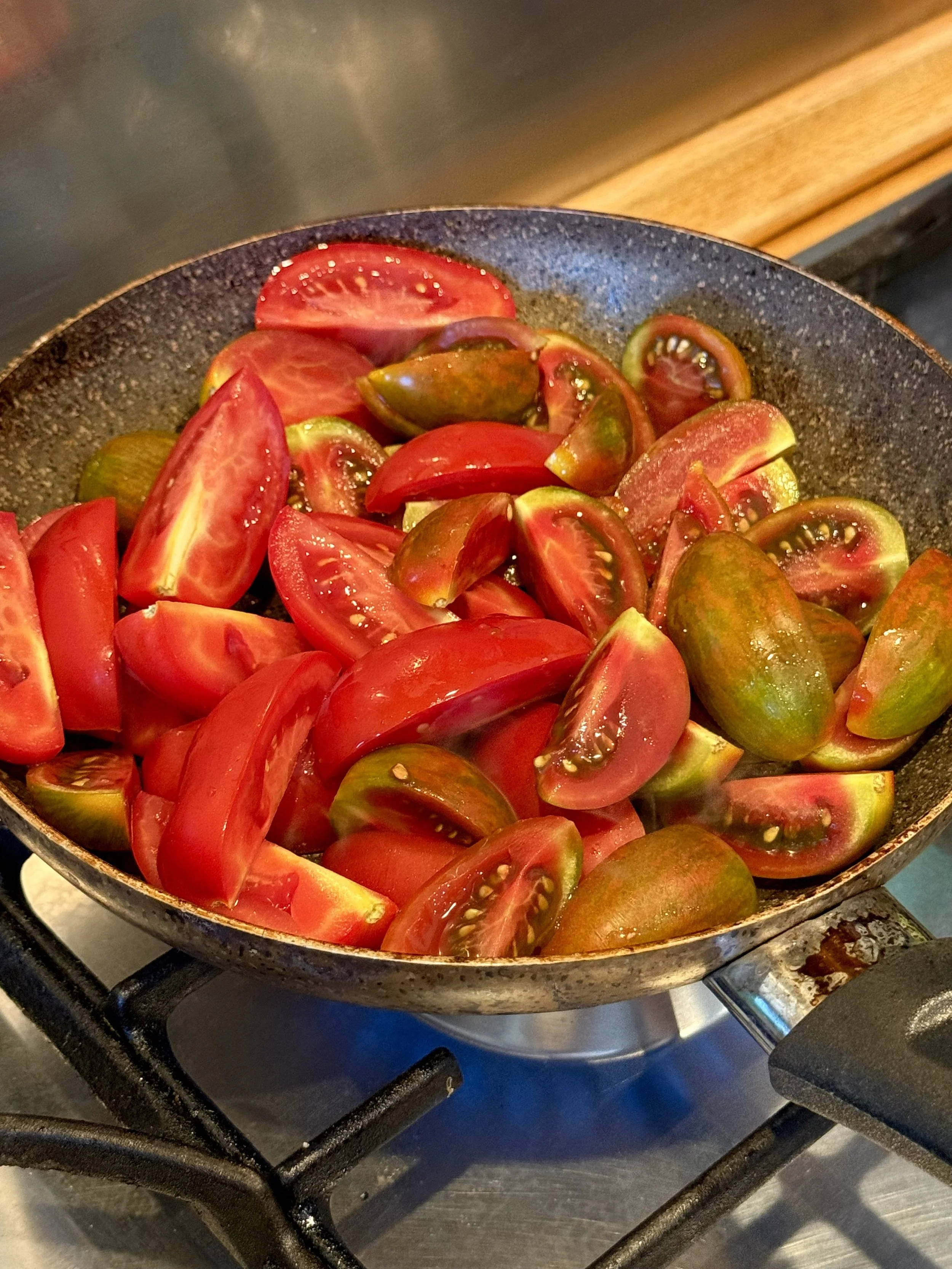
The tomatoes spent only a few minutes in the pan.
Just enough heat to soften them and encourage their juices to escape.
Not long enough to become a sauce.
That small detail somehow captured the spirit of the dish.
Nothing was overworked.
Nothing was hidden.
Each ingredient was simply encouraged to become the best version of itself.
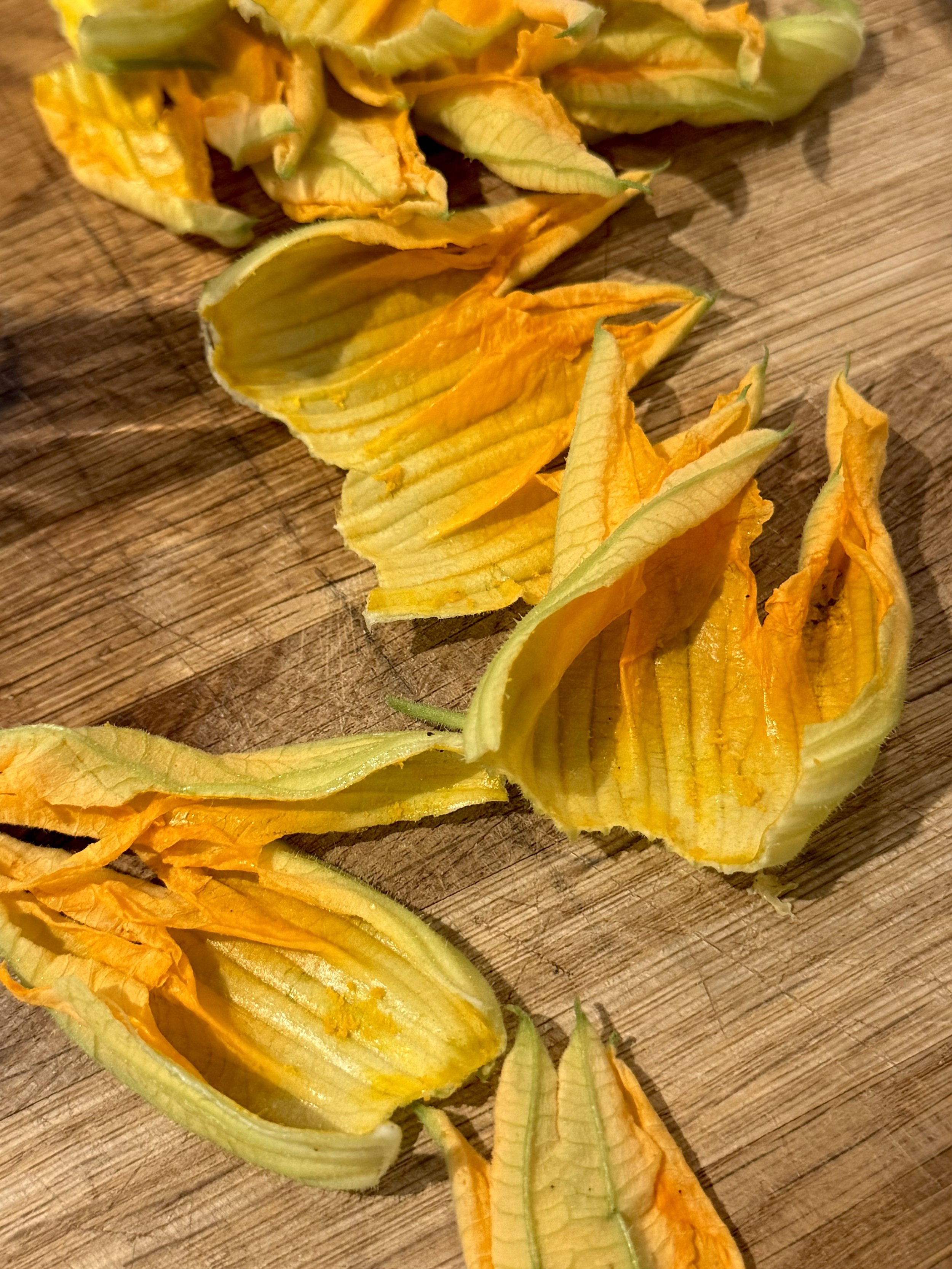
The zucchini flowers completed the picture.
Their appearance always feels like one of the quieter signs that summer has arrived in Italy.
Most people know them stuffed or lightly fried, but here they became another layer, delicate enough that their presence never overwhelmed the other ingredients.
Like everything else in the dish, they simply belonged to the season.
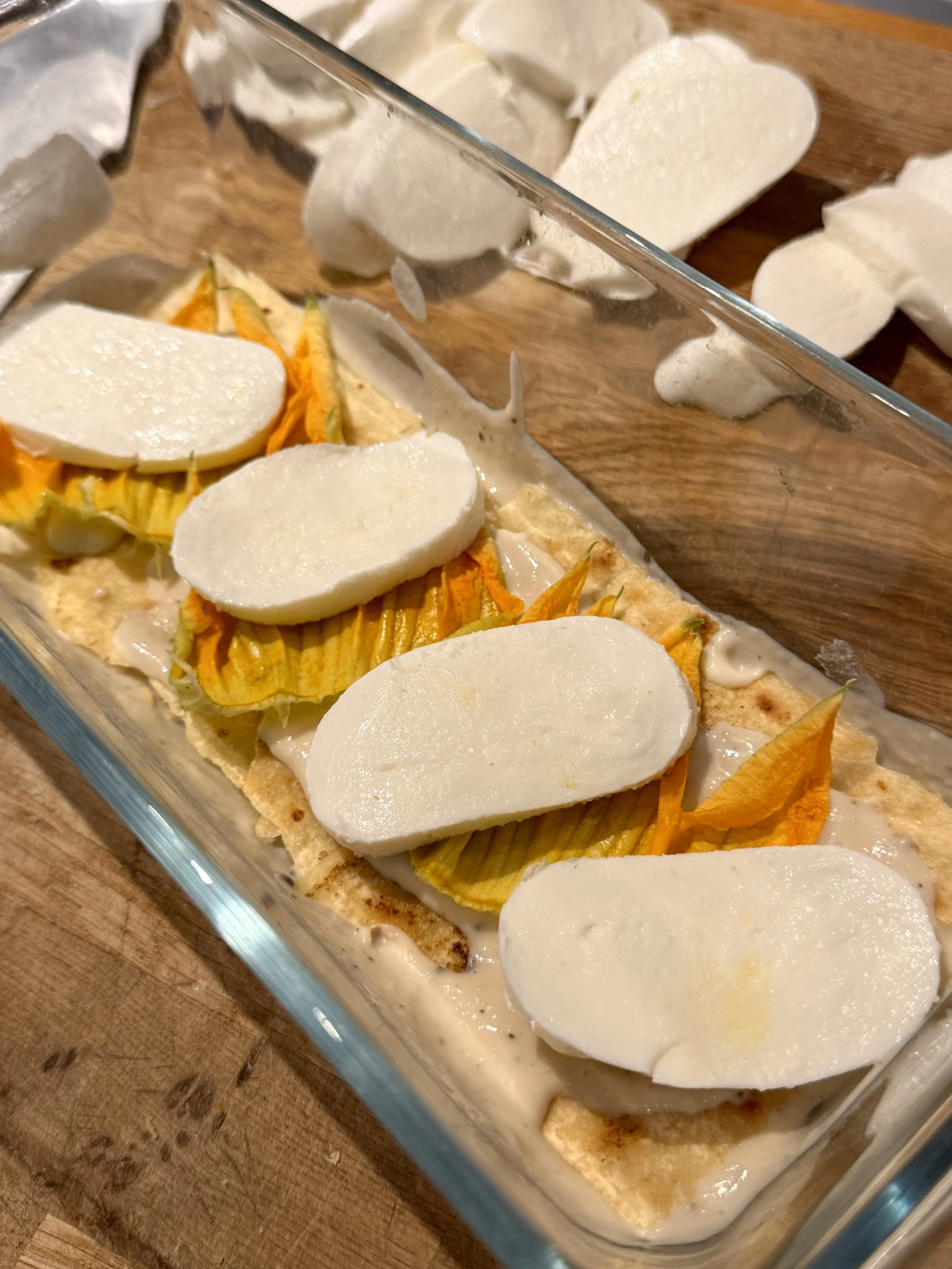
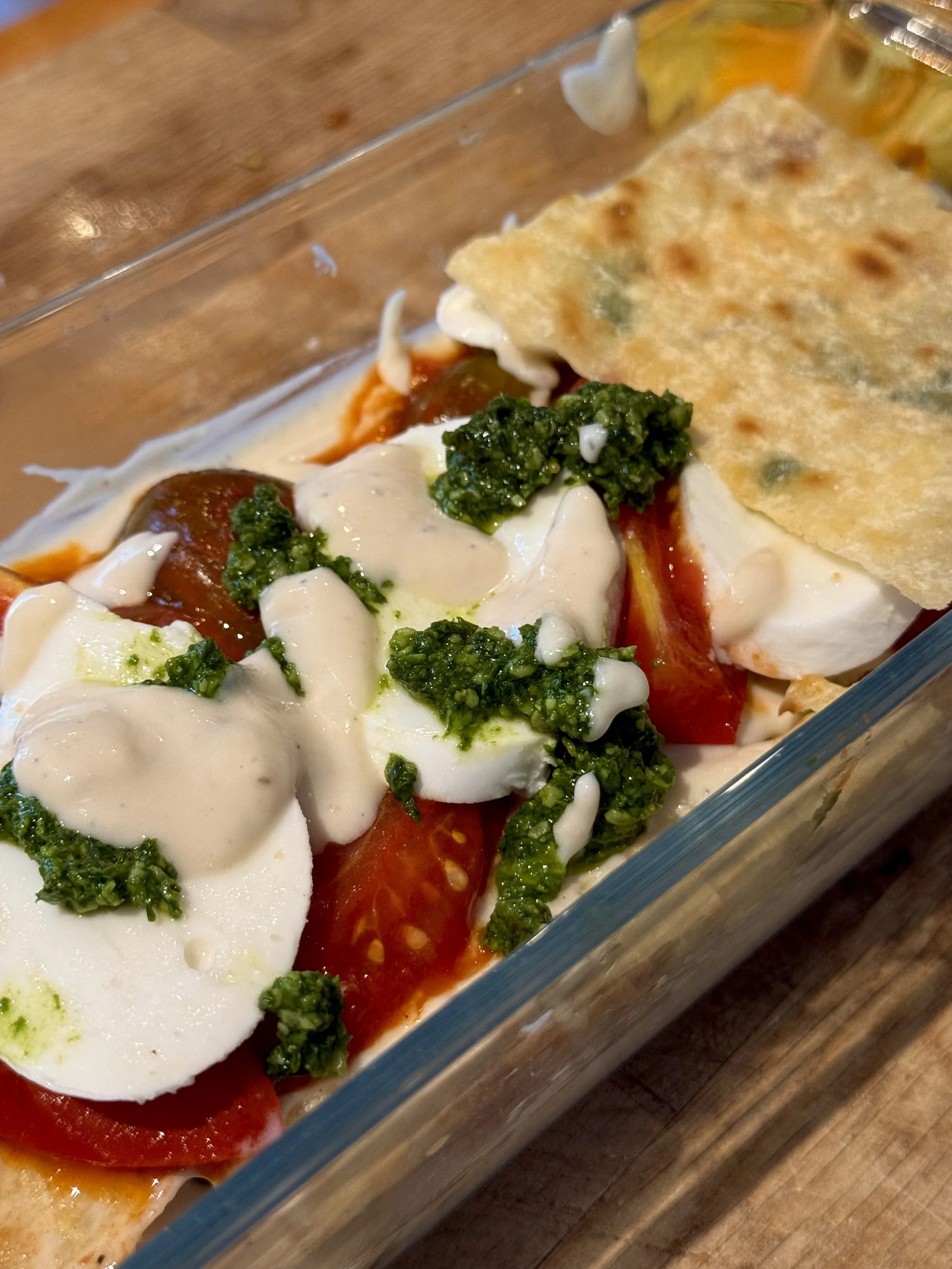
Assembling the lasagna felt almost meditative.
First came the white bean cream.
Then sheets of pane guttiau, an impossibly thin Sardinian crispbread that takes the place of traditional pasta sheets. As it rests, it gently absorbs the moisture from the filling, creating delicate layers without ever needing to be cooked.
Then came the zucchini flowers.
Fresh mozzarella.
Softened tomatoes.
Small spoonfuls of pesto.
Then everything began again.
Instead of disappearing beneath a baked crust, every layer remained visible through the glass dish.
It almost felt less like building a lasagna and more like arranging a landscape of summer ingredients.
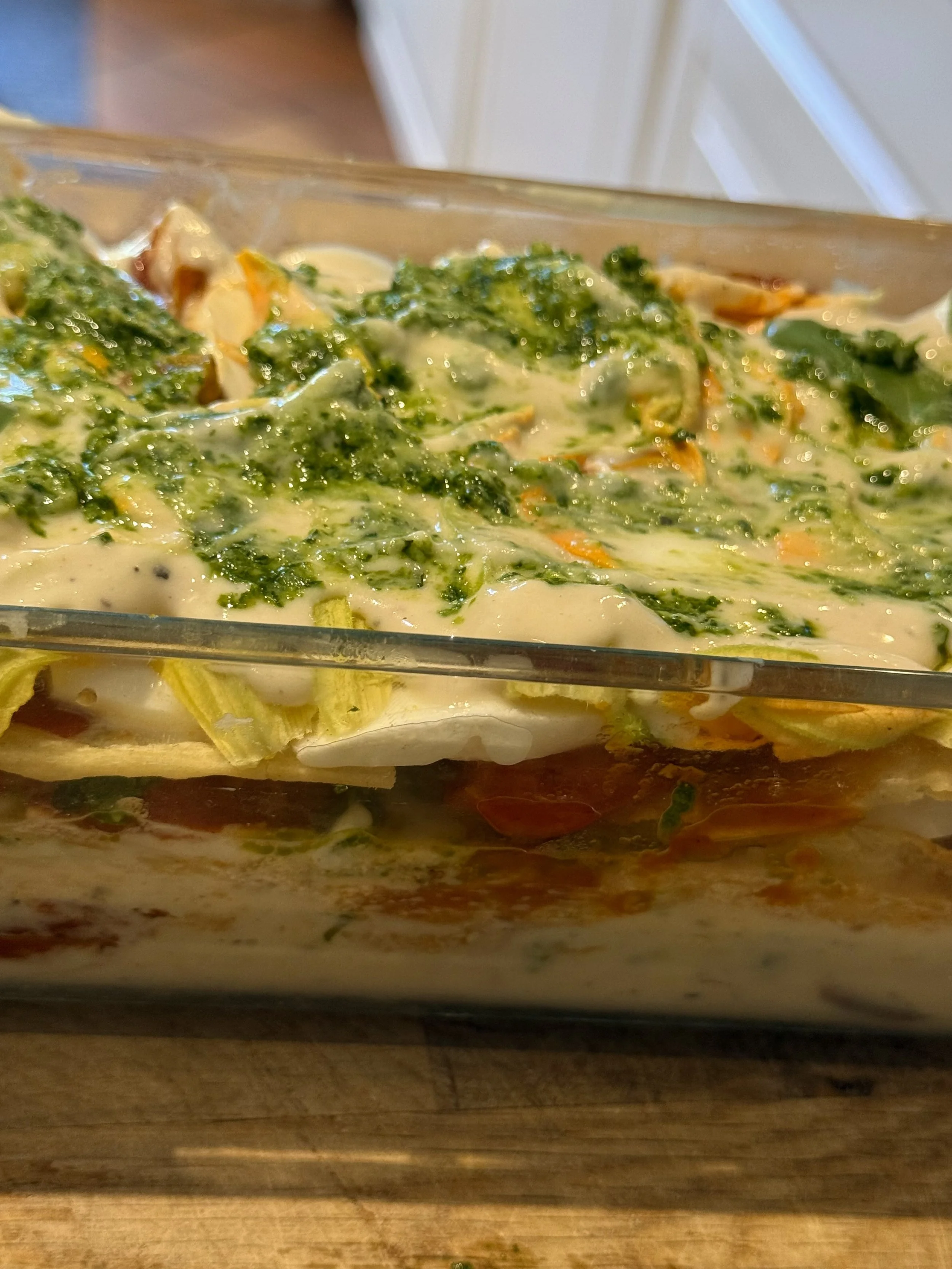
When the final layer was complete, the dish was covered with cling film and placed in the refrigerator for at least an hour.
That pause turned out to be just as important as the assembly itself.
As the pane guttiau slowly absorbed moisture from the white bean cream and tomatoes, the layers settled together naturally. The flavours became more harmonious while each ingredient retained its own identity.
Nothing needed the oven.
Time did the work instead.
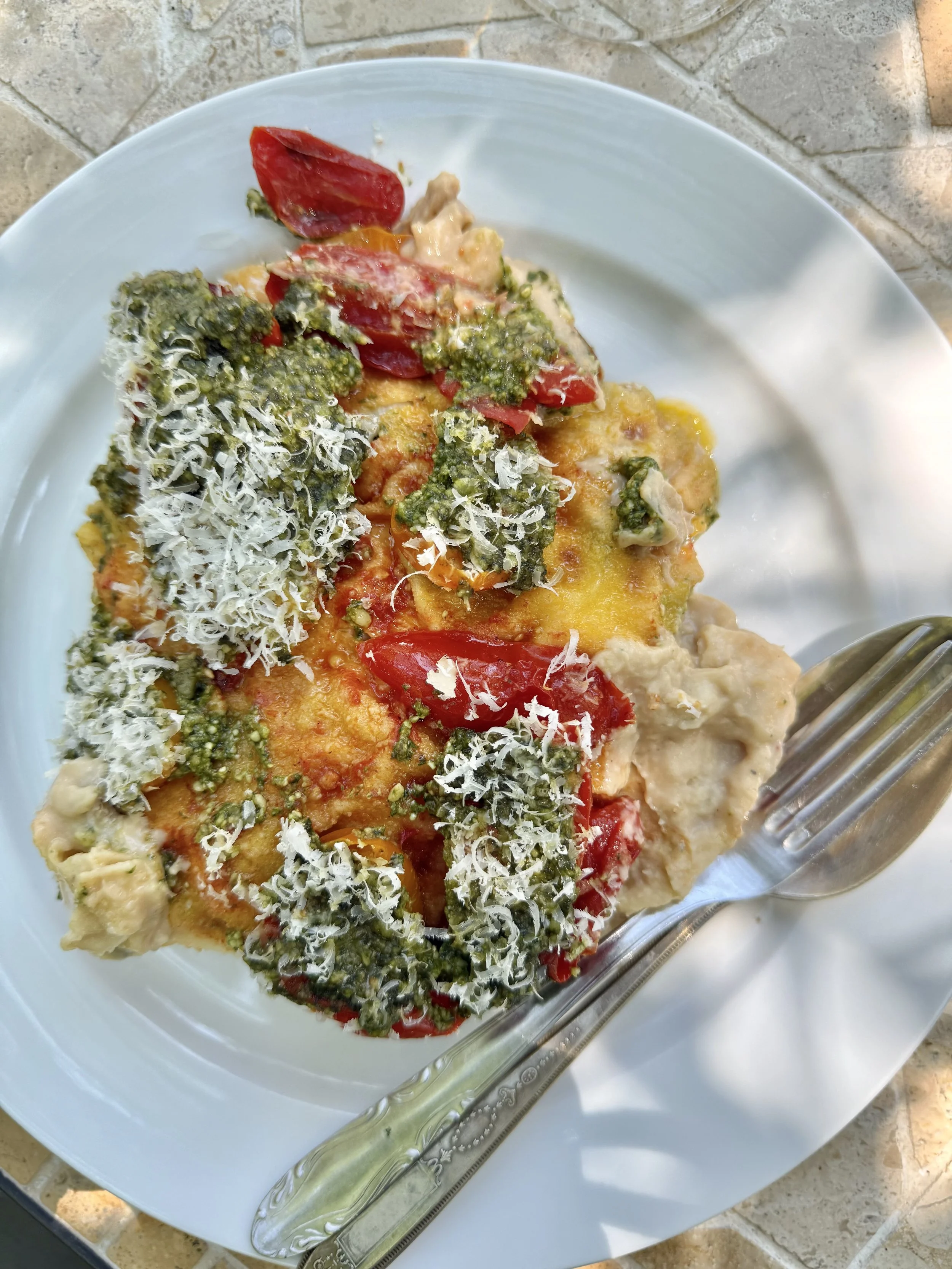
By lunchtime, the lasagna had become something entirely its own.
The white bean cream provided richness without heaviness.
The tomatoes remained bright and sweet.
The pesto brought freshness and perfume.
The mozzarella added softness, while the zucchini flowers completed a combination of ingredients that felt light, fresh and unmistakably suited to a warm summer’s day.
Perhaps that is what I enjoyed most.
Not that someone had found a new way to make lasagna.
But that even one of Italy’s most familiar dishes could gently adapt to the rhythm of the seasons without losing its identity.
I think recipes are often less about preserving tradition exactly as they are than about respecting its spirit while embracing the season.
Sometimes, all it takes is paying attention to what the seasons have placed in front of you.
Bring a Little Italian Summer to You Table
One of the reasons I wanted to share this recipe is because it feels wonderfully accessible. You don’t need to live in Italy to make it. As long as summer has arrived where you are and you can find fresh, seasonal ingredients, there’s every reason to make this dish your own.
Perhaps that’s one of the nicest things about cooking. A recipe may begin in one place, but it doesn’t have to stay there.
A note about pane guttiau
One ingredient you may find difficult to source outside Italy is pane guttiau, a paper-thin Sardinian crispbread that replaces the traditional pasta sheets in this recipe.
Don’t worry if you can’t find it.
What you’re really looking for is something light, crisp and fairly neutral in flavour that will soften slightly as it absorbs the moisture from the white bean cream and tomatoes.
Some good alternatives include:
Pane carasau (slightly thicker and easier to find)
Plain crispbread, such as Wasa Original
Unsalted matzo crackers
Thin artisan flatbread baked until crisp
Lightly toasted lavash, broken into suitable pieces
Each option will produce a slightly different texture, but the spirit of the dish remains the same.
Summer Lasagna with White Bean Cream, Pesto & Zucchini Flowers
Serves: 2 generously, or 3-4 when served alongside other dishes as part of a leisurely summer lunch.
Best enjoyed: After resting in the refrigerator for at least one hour before serving.
For the Basil Pesto
Ingredients
1 generous bunch of fresh basil
40g Parmgiano Reggiano, grated
40g Pecorino Romano, grated
40g pine nuts
2 cloves garlic
Extra virgin olive oil
Salt, to taste
Freshly ground black pepper, to taste
Method
Place the basil, Parmigiano Reggiano, Pecorino Romano, pine nuts and garlic into a food processor or blender. Pulse until the mixture reaches a coarse, grainy consistency.
Gradually add the extra virgin olive oil, mixing just until incorporated. Avoid blending it into a perfectly smooth paste - the slight graininess gives the pesto a more rustic texture.
For the White Bean Cream
Ingredients
1 can (approximately 400g) fagioli bianchi di Spagna (Spanish white beans), drained
2 tablespoons Greek yoghurt
A splash of soy milk
Salt, to taste
Freshly ground black pepper, to taste
A drizzle of extra virgin olive oil
Juice of half a lemon (optional)
Method
Combine all the ingredients in a bowl or jug and blend with a hand blender until smooth and creamy. The consistency should resemble a thick mayonnaise.
Adjust the seasoning to taste. If you prefer a brighter flavour, add a squeeze of lemon juice.
This white bean cream replaces the traditional béchamel, making the lasagna lighter while still providing a rich, creamy base.
For the Layers
Approximately 20 cherry tomatoes or small plum tomatoes, halved
Around 12 small zucchini flowers, gently opened
2-3 balls of fresh mozzarella, sliced
Pane guttiau (or pane carasau, plain crispbread such as Wasa Original, unsalted matzo crackers or lightly toasted lavash)
Extra virgin olive oil
A small pinch of salt
Prepare the Tomatoes
Warm a drizzle of extra virgin olive oil in a frying pan over medium heat.
Add the halved tomatoes and season lightly with salt.
Cook for just a few minutes, allowing the tomatoes to soften and release some of their juices while still holding their shape. Remove from the heat and allow them to cool slightly.
Assemble the Lasagna
Spread a generous layer of the white bean cream over the base of rectangular glass or ceramic dish.
Layer the ingredients in the following order:
White bean cream
Pane guttiau
Zucchini flowers
Fresh mozzarella
Warm tomatoes
Small spoonfuls of basil pesto
Repeat the layers until the fish is filled, finishing with a final layer of white bean cream and a few spoonfuls of pesto across the top.
Cover the dish with cling film and refrigerate for at least one hour before serving.
During this time, the pane guttiau gently absorbs moisture from the white bean cream and tomatoes, allowing the layers to soften slightly while the flavours meld together beautifully.
Serve chilled or at cool room temperature.
Continue the Italian Summer
Unless otherwise credited, all photography and written content are original works by Foodie Goes Travel.
