Coming Home Before Landing
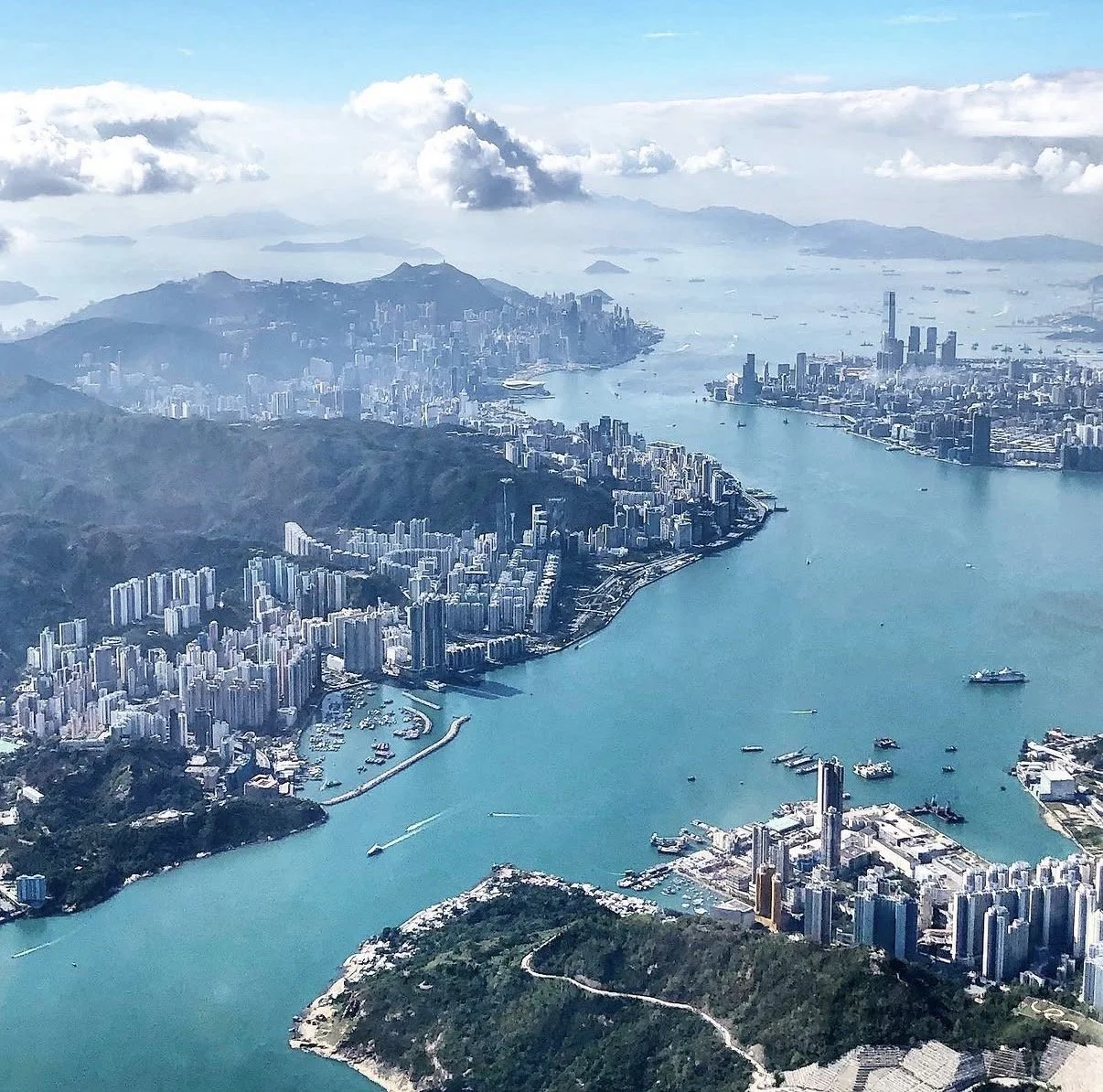
How Cathay Pacific became more than an airline to me - and why some journeys begin long before the aircraft leaves the ground.
By Foodie Goes Travel
Reading time: 9 - 10 minutes
When I wrote The Places We Carry earlier this year, I reflected on how certain destinations remain with us long after we have left them. A familiar street, the morning light through a hotel window, or the taste of something memorable can quietly accompany us home, becoming part of who we are.
Since then, I have realised that another kind of journey exists.
Sometimes, a place begins to welcome us before we arrive.
For me, that place is Hong Kong.
Not because I can already see Victoria Harbour through the aircraft window, nor because immigration is only moments away. It begins much earlier than that. It starts with the familiar shade of green at the departure gate, the sound of Cantonese spoken naturally between cabin crew, and a quiet confidence that feels reassuring rather than performative.
Long before the aircraft reaches Hong Kong, something unmistakably Hong Kong has already begun.
Over the years, I have come to realise that Cathay Pacific doesn’t simply fly me there.
In many ways, it carries Hong Kong with it.
A Familiar Journey
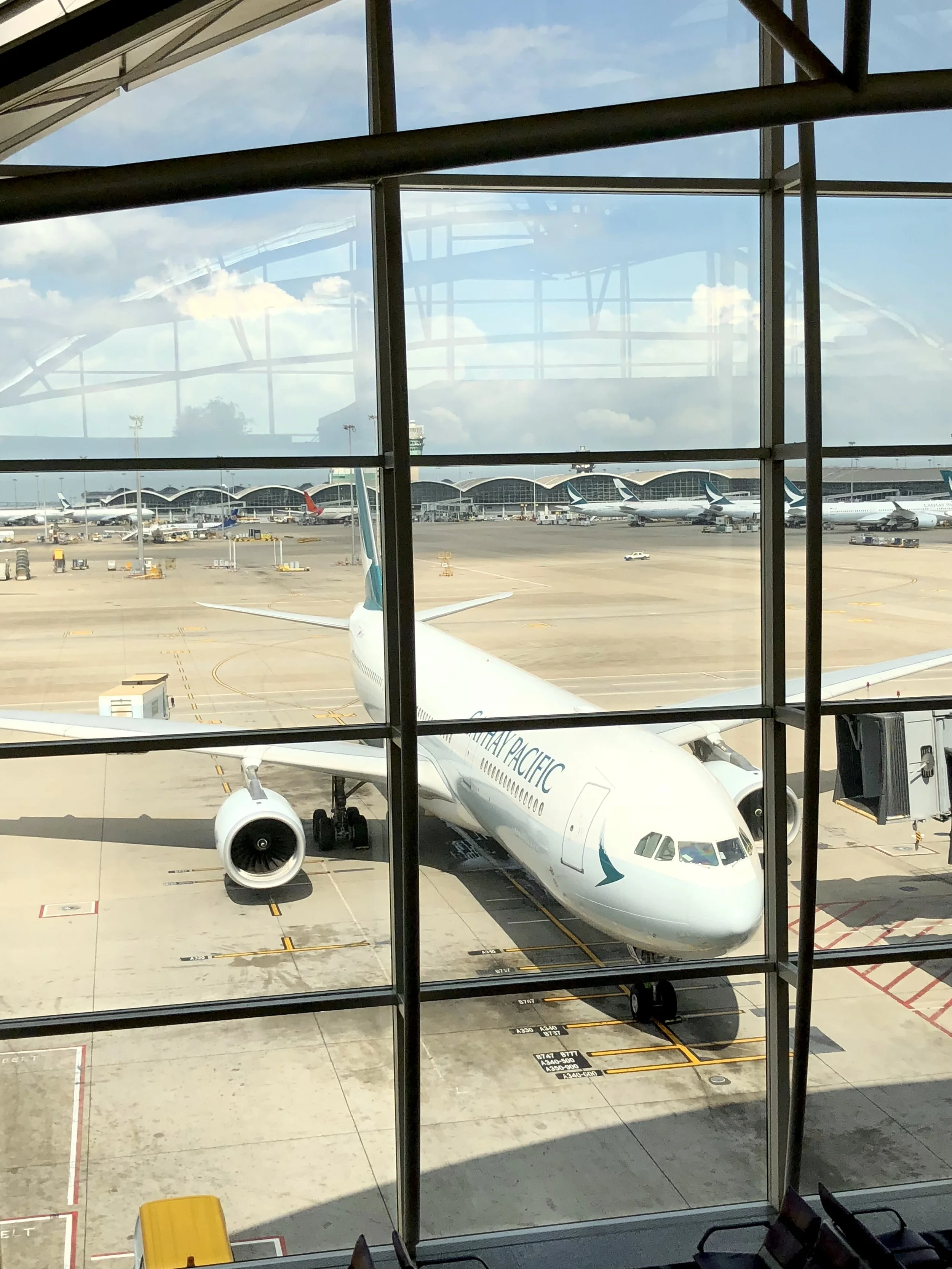
Some of my earliest memories of Hong Kong go back to when I was around nine years old.
Growing up in Malaysia, Hong Kong was never an unfamiliar destination. We had relatives and close family friends there, and almost every year my parents would bring me back to visit. Those trips became part of childhood. While other destinations have gradually faded into individual memories, Hong Kong became somewhere that quietly accompanied different stages of my life.
As an adult, my relationship with the city changed.
During the years I was based in Singapore, I travelled frequently to Hong Kong for work. Some visits lasted only a day or two. Others became opportunities to stay a little longer and reconnect with the city beyond meeting rooms.
I came to know the familiar rhythm of landing at Hong Kong International Airport, taking the Airport Express into the city, walking through Central, and returning again a few weeks later.
Today, my journeys begin somewhere entirely different.
I now live in a quiet village in Umbria, surrounded by olive trees, rolling hills and the gentle pace of rural Italy. It is a place where mornings are measured by birdsong rather than traffic, where neighbours greet one another by name, and where life encourages you to slow down.
Yet whenever my travels take me east towards Asia, Hong Kong still feels strangely familiar.
Perhaps because it has remained a steady presence throughout my adult years.
Or perhaps because one airline has consistently reminded me of the city long before I arrive.
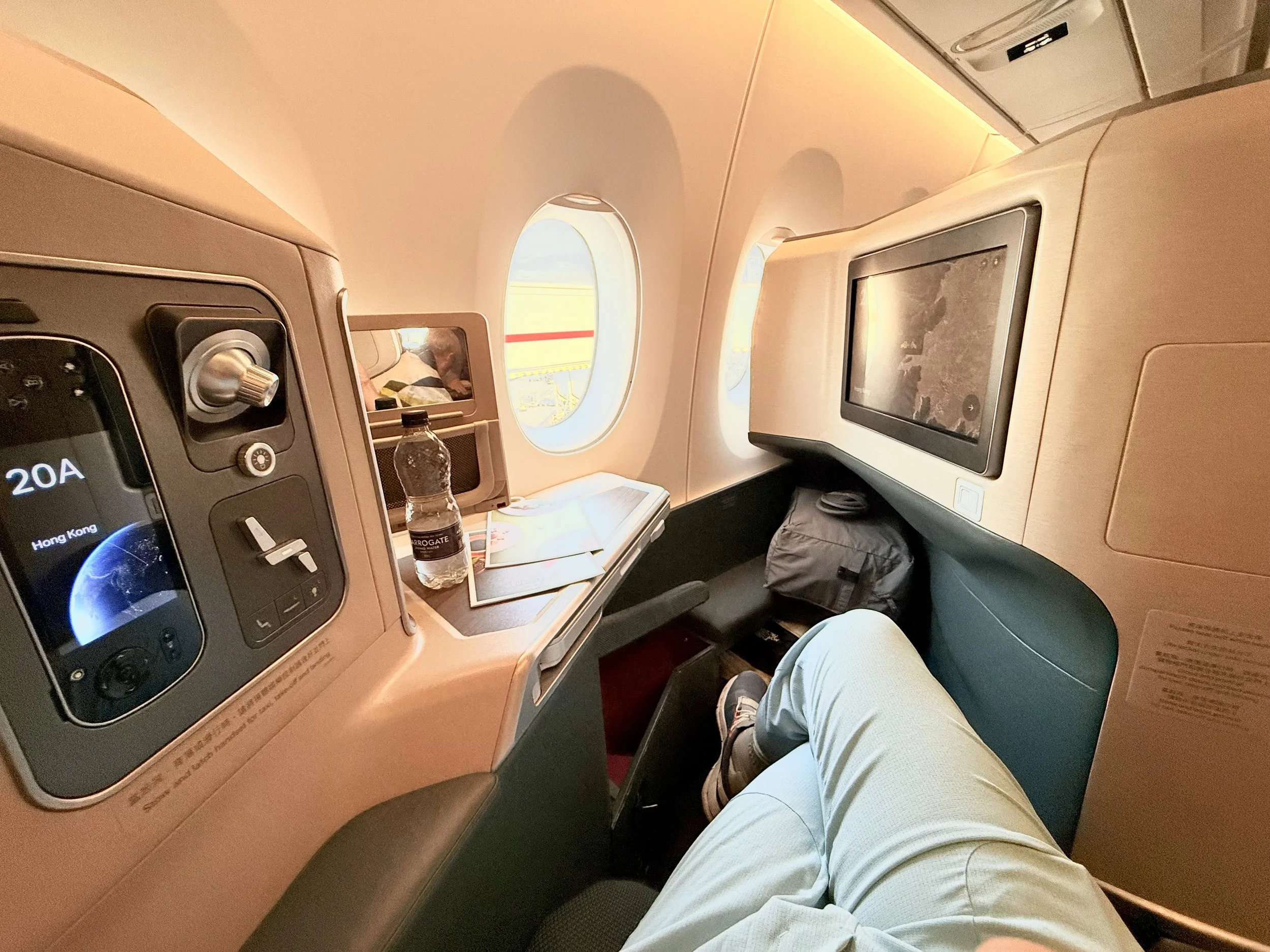
Over the years, I have flown Cathay Pacific in Economy, Premium Economy and Business Class.
Each experience has naturally been different.
The seats become more comfortable. The lounges become more refined. The culinary offerings remain exceptional.
Yet what has stayed with me has rarely been any single product or feature.
Instead, it has been something much harder to define.
A feeling.
The feeling that I am gradually returning to Hong Kong, even while sitting thousands of kilometers away.
Many airlines are exceptionally efficient.
Some are luxurious.
Some are memorable because of the seats they offer or the destinations they serve.
Cathay has become memorable to me for a different reason.
It has never felt like an airline trying to impress me.
It has always felt comfortable being itself.
Only recently did I begin asking myself why.
The answer arrived unexpectedly during one of my flights.
I was looking around the cabin, noticing the details that had become so familiar over the years. The calm tone of the announcements. The conversations in Cantonese between crew members. The understated interiors. The food that reflects where the airline came from.
None of these moments felt dramatic on their own.
Together, they created something much more meaningful.
I no longer think of Cathay Pacific simply as an airline based in Hong Kong.
I had begun thinking of it as an extension of Hong Kong itself.
Not through slogans.
Not through advertising.
But through hundreds of small observations accumulated over many years of travel.
That, I think, is what the strongest brands quietly achieve.
They stop needing to explain who they are.
You simply recognise them.
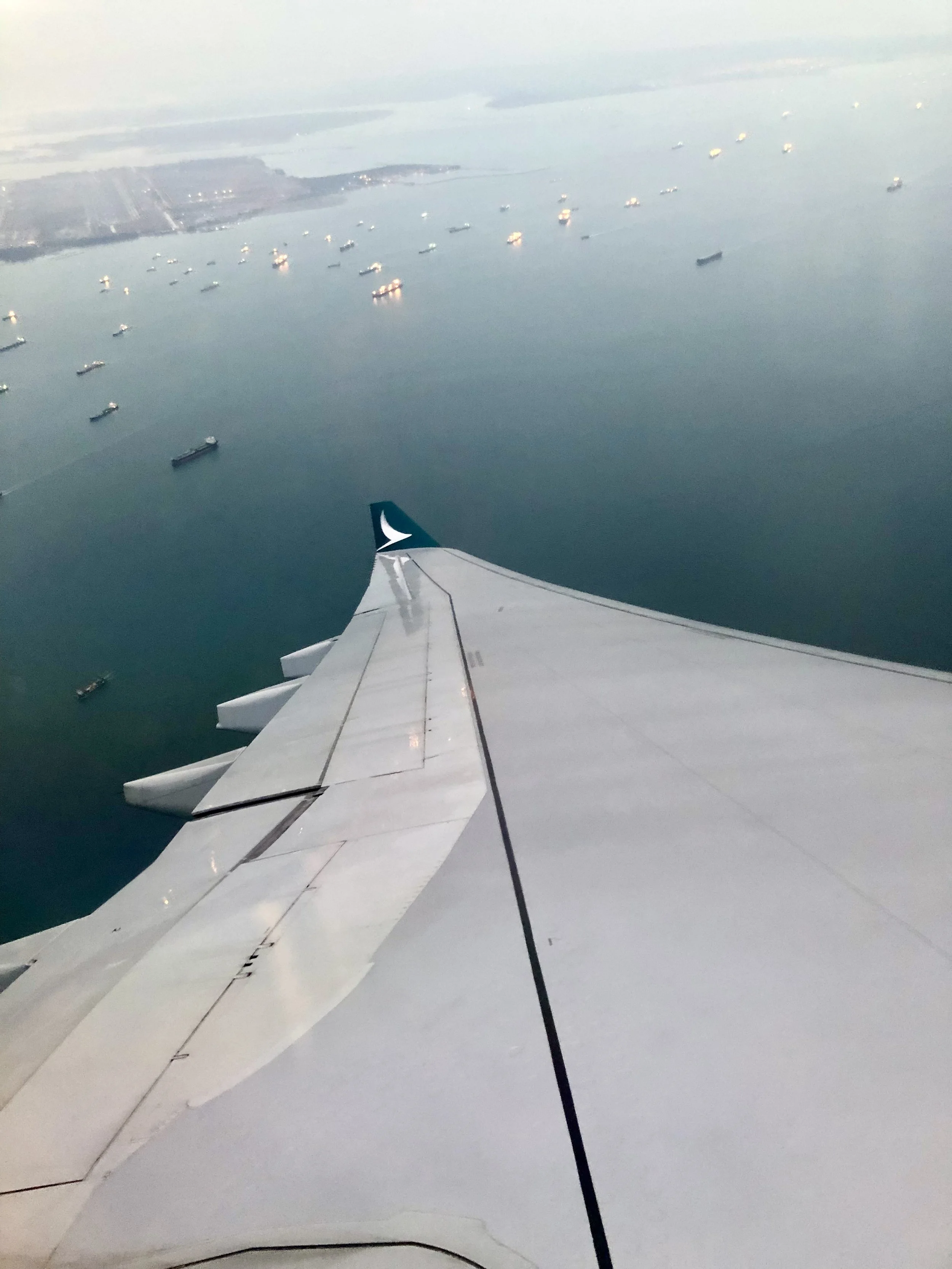
Perhaps that is why boarding a Cathay Pacific flight has gradually become something more than the beginning of another journey.
It has become the beginning of returning to a city that has accompanied me since childhood.
Before immigration.
Before the Airport Express.
Before the first glimpse of Victoria Harbour.
Before Hong Kong itself.
Some journeys begin long before the aircraft leaves the ground.
For me, this is one of them.
Designing Familiarity
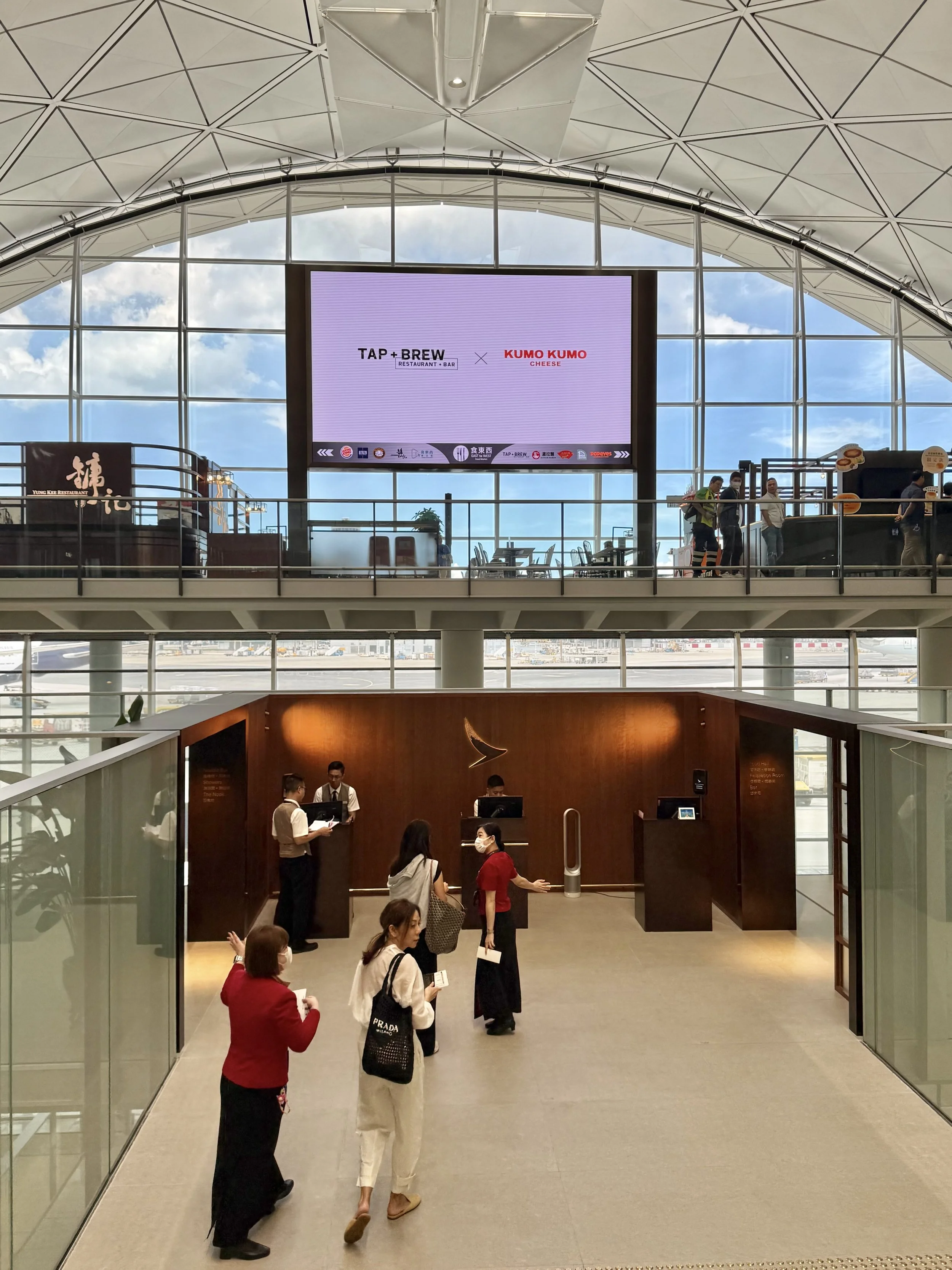
The first thing I notice whenever I enter a Cathay Pacific lounge is not a piece of furniture or a carefully chosen material.
It is how quickly I stop noticing that I am in an airport.
Airports are designed around movement. They encourage us to keep looking at departure boards, checking the time and thinking about what comes next.
A Cathay lounge somehow does the opposite.
It encourages you to stay.
Over the years, I have visited Cathay lounges in Hong Kong, Singapore, Bangkok, Shanghai and London. They are different spaces, shaped by different buildings, different cities and different passengers.
Yet none of them feels unfamiliar.
Not because they look identical.
Because they share the same language.
It is a language spoken through warm timber, soft lighting and carefully balanced proportions. Nothing feels excessive. Nothing asks for attention.
The design simply creates an atmosphere where you instinctively lower your voice, settle into your seat and allow the journey to unfold at its own pace.
Good hospitality rarely announces itself.
Good design behaves in much the same way.
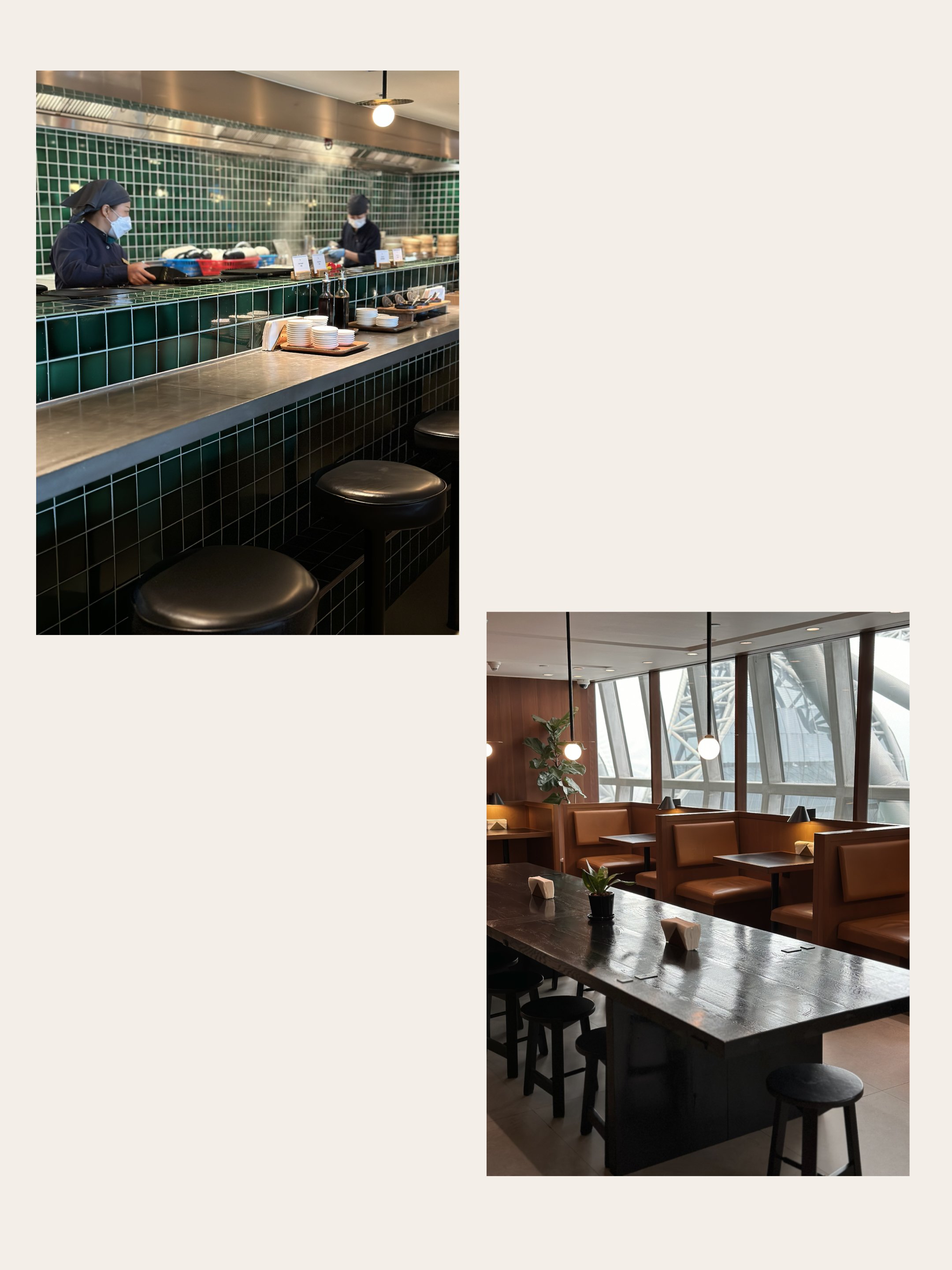
One lesson I have gradually learnt, both through travelling and through my work observing brands, is that consistency is often misunderstood.
Many people assume consistency means repetition.
The strongest brands know otherwise.
Consistency is not about making every space look the same.
It is about making every space feel unmistakably connected.
Whether I am in Hong Kong or London, I recognise a Cathay lounge within moments.
Not because I remember where each chair sits or what artwork hangs on the wall.
I recognise the atmosphere.
That is much harder to design.
And perhaps even harder to maintain.
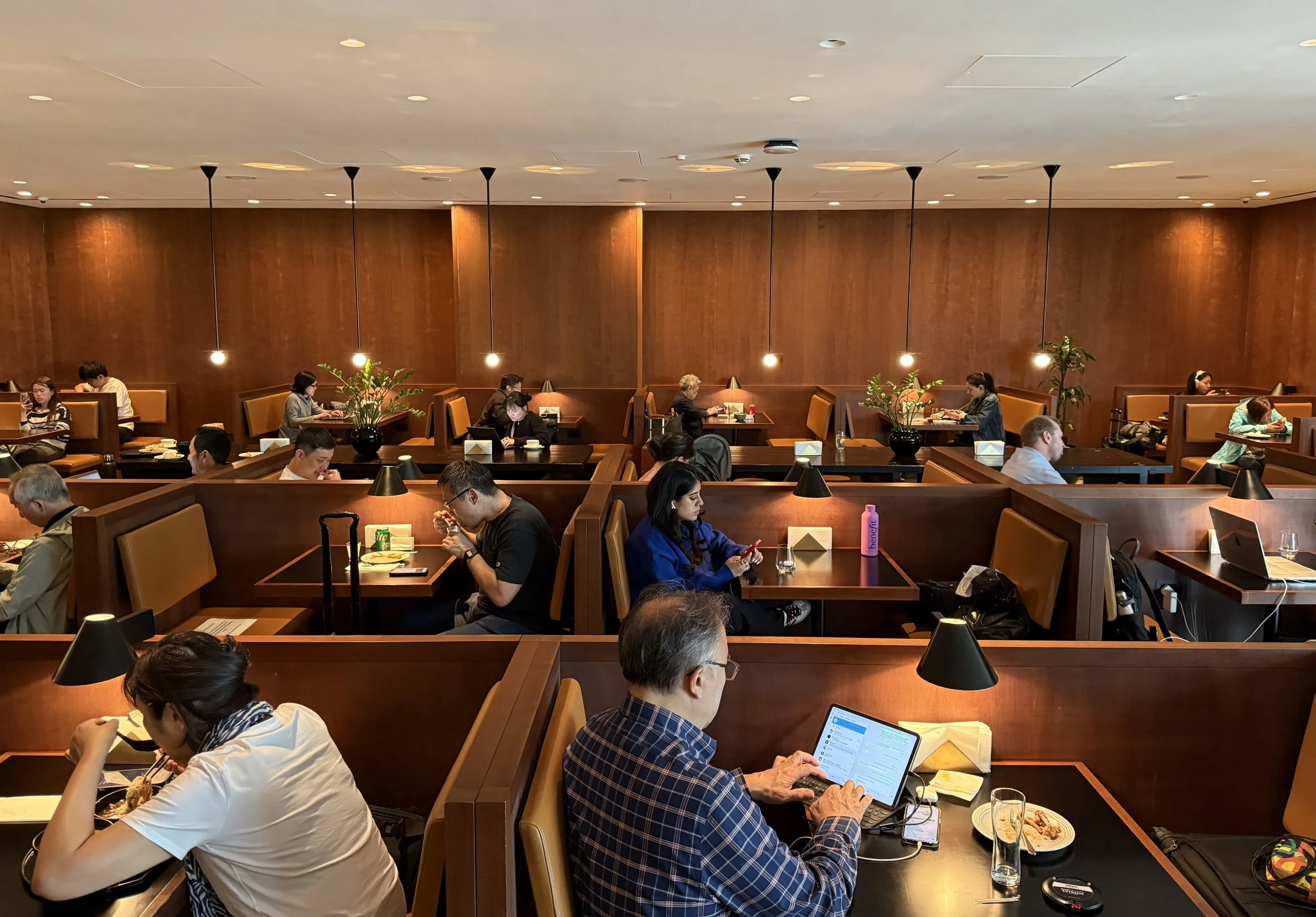
Living in Umbria has changed the way I look at spaces.
Villages here have evolved over centuries rather than decades. Buildings are repaired instead of replaced. Materials age naturally. Beauty often comes not from perfection, but from restraint.
Perhaps that is why I have come to appreciate interiors that don’t compete for attention.
Cathay’s lounges feel similarly understated.
They make me want to remain a little longer.
For a traveller, that may be one of the greatest compliments a space can receive.
Flavours That Take You Back
Food has always been one of the most immediate ways we experience a place.
Before we understand its history.
Before we learn its language.
Before we recognise its neighbourhoods.
We taste it.
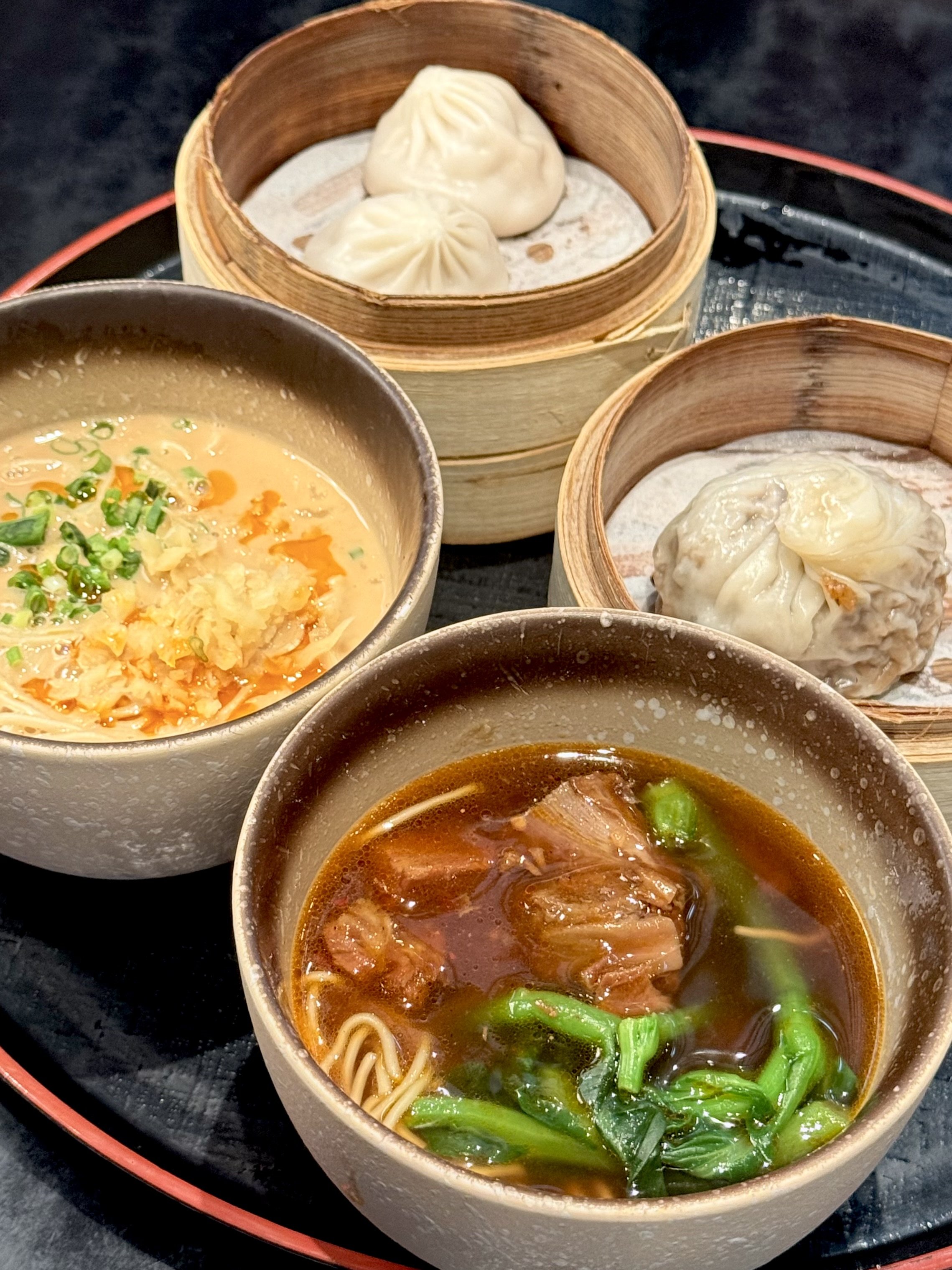
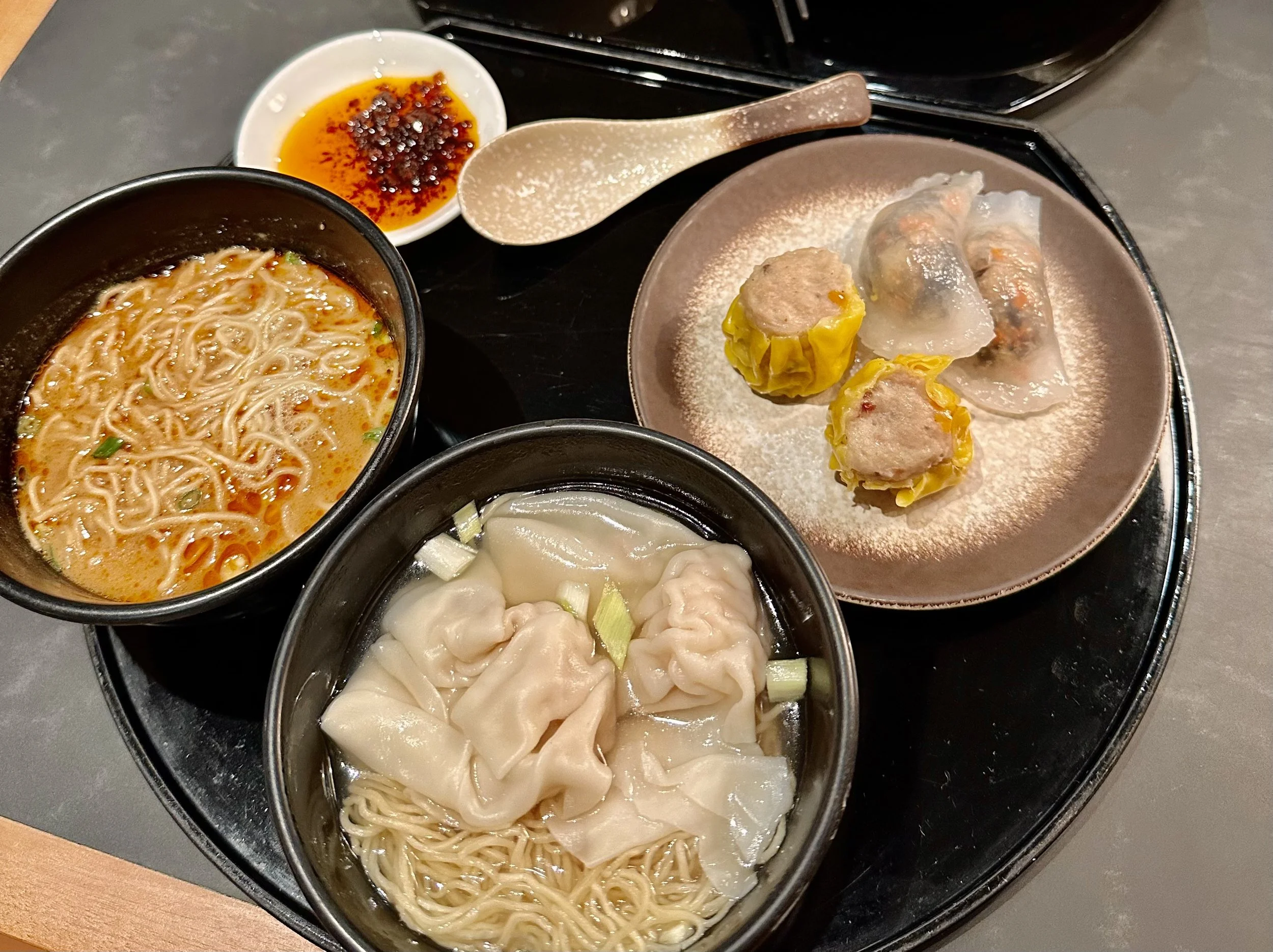
One of the small traditions I have developed over the years is ordering a bowl of noodles whenever I visit a Cathay lounge.
It almost feels incomplete otherwise.
Sometimes it is Dan Dan noodles (擔擔麵).
Other times, wonton noodles (雲吞麵).
Neither is elaborate.
Neither tries to reinvent anything.
They simply remind me that Hong Kong is a city where good food has never needed unnecessary complication.
Some of my favourite meals in Hong Kong have never taken place in expensive restaurants.
They have been bowls of noodles tucked inside street shops where people queue because they know exactly what they are coming back for.
That sense of familiarity exists in Cathay’s lounges too.
These are not dishes designed merely to impress international travellers.
They are dishes that feel as though they belong.
That distinction matters.
Authentic and simply feels natural.
Even something as familiar as siu mai (燒賣).
For many people, it is simply another dim sum dish.
For me, it reminds me of family meals during childhood visits to Hong Kong, conversations that lingered around the table long after the bamboo steamers had emptied, and the rhythm of a city where sharing food is often more important than finishing it quickly.
Travel has taught me that memories are often stored in surprisingly ordinary things.
Sometimes they are found in grand monuments.
Sometimes they are found in something as simple as a basket of siu mai.
Then, every now and again, something unexpected appears.
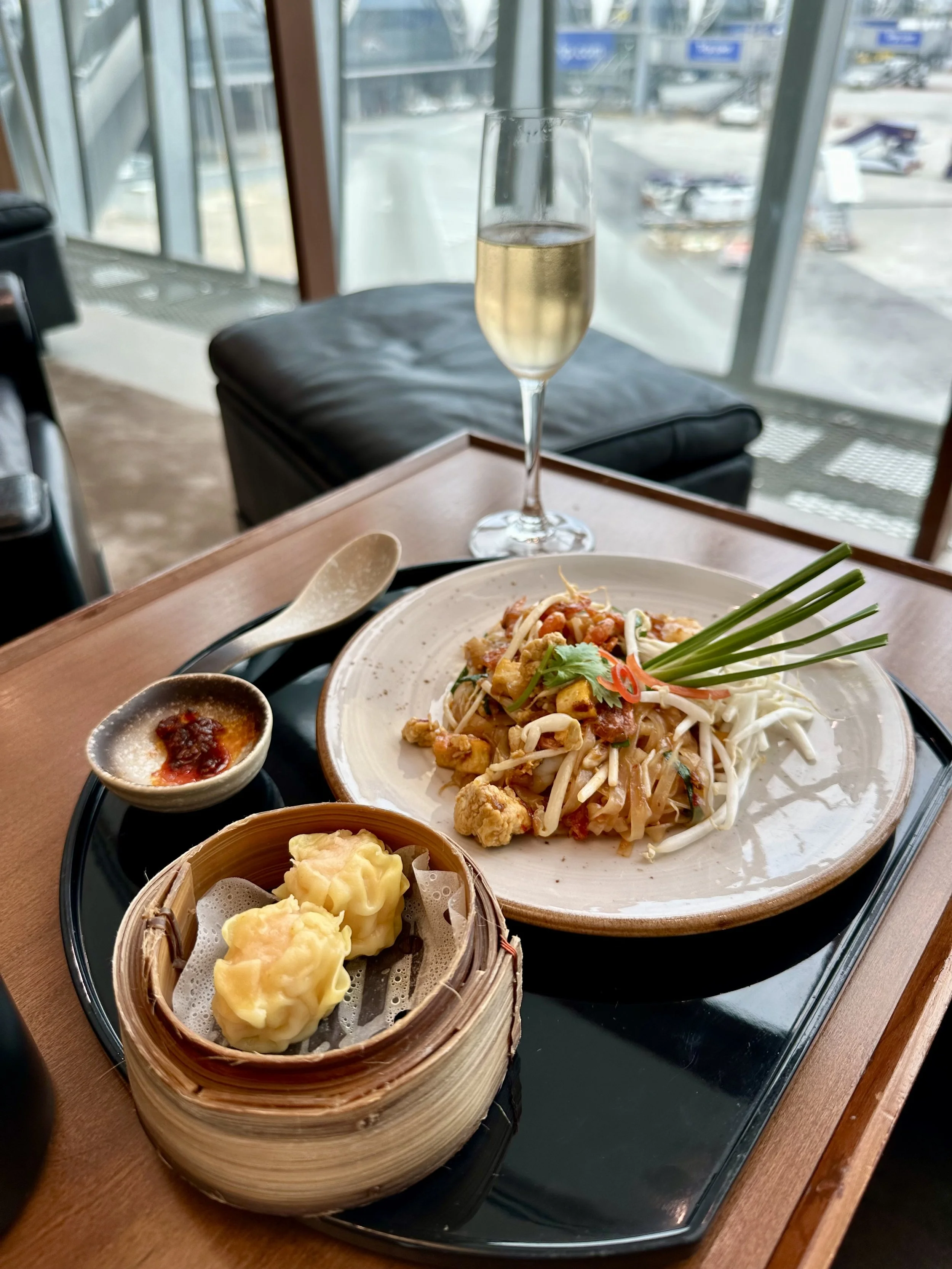
One morning in Bangkok Suvarnabhumi Airport, I ordered Pad Thai.
At first glance, it seemed completely unrelated to everything I had come to associate with Cathay.
But the more I thought about it, the more it made perfect sense.
Strong identities do not require uniformity.
Cathay remains unmistakably Hong Kong.
Yet it also understands where it is.
Serving Pad Thai in Bangkok is not a departure from its identity.
It is an acknowledgement of place.
The airline brings Hong Kong wherever it goes, while still making space for the culture that surrounds it.
Perhaps that is what thoughtful hospitality really is.
Not imposing your own identity everywhere.
But knowing it well enough that it can comfortably exist alongside someone else’s.
That, to me, is one of Cathay Pacific’s quietest strengths.
Hospitality Is Noticed
Hospitality is often described through grand gestures.
Exceptional hotels.
Beautiful suites.
Memorable meals.
Yet the moments I remember most rarely announces themselves in that way.
More often, they are so quiet that they almost pass unnoticed.
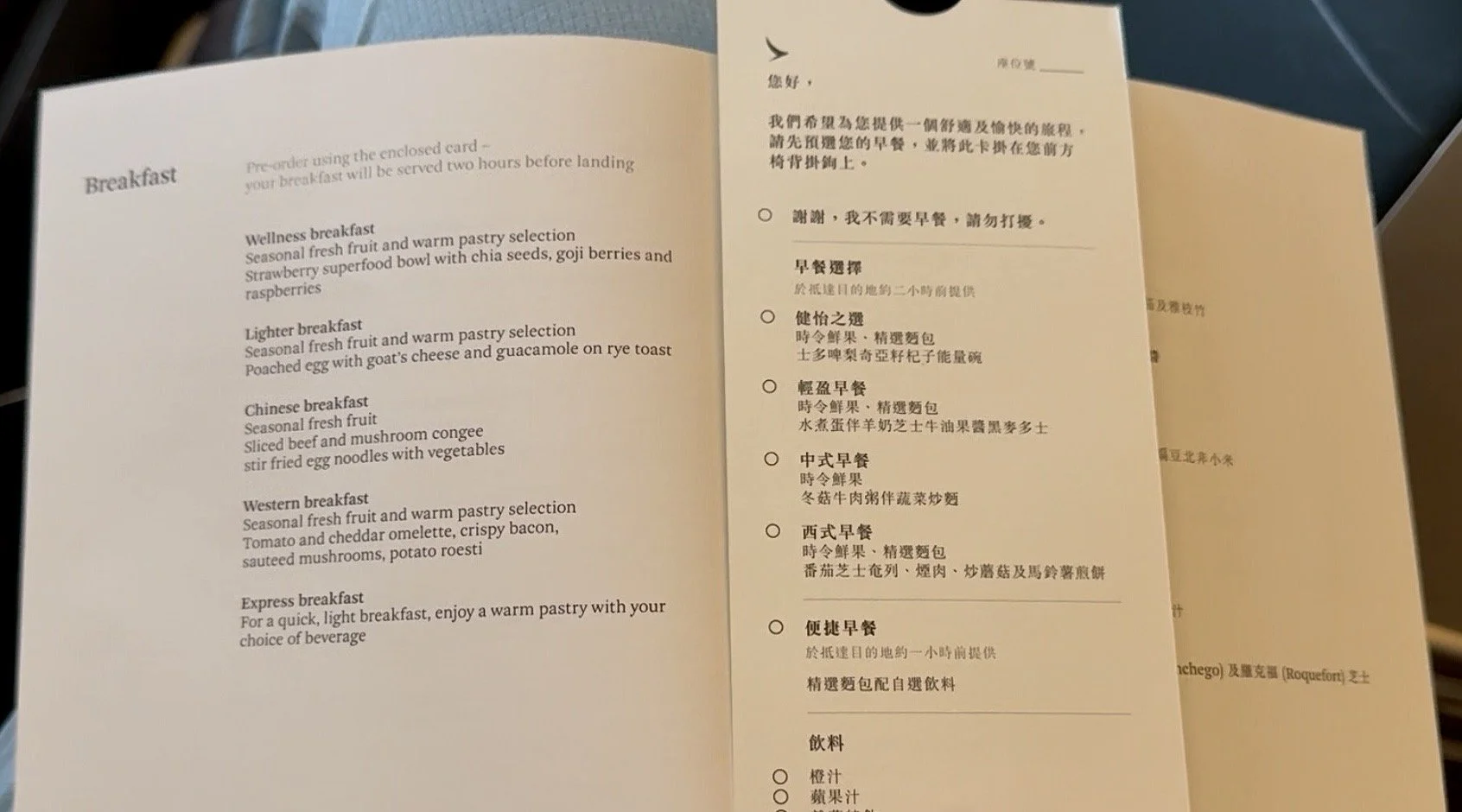
One such moment began with a small breakfast card.
Unlike many airlines today, where meal choices are entered directly into a tablet, Cathay Pacific still hands each Business Class passenger a printed card. You read through the breakfast options at your own pace, tick your choice with a pen and leave the card on your table for the crew to collect later.
It is a remarkably simple ritual.
Perhaps because it is so simple, I have come to appreciate it.
I still buy physical books.
I enjoy writing in the margins, folding a page to return to later, and feeling the weight of a book becoming more familiar each time I read it.
There is something reassuring about objects that invite us to slow down.
The breakfast card reminds me of that.
It asks for nothing more than a few quiet moments of attention.
No glowing screen.
No hurried interaction.
Just a small piece of paper that briefly becomes part of the journey.
In an age where almost everything has become digital, I find myself appreciating experiences that remain tangible.
Not just being nostalgic. They just feel more human.
One flight, in particular, has stayed with me.
I was reading the breakfast card, deciding what I would like to order. As I looked down, I realised I didn’t have a pen.
Before I had the chance to look around or ask anyone, a member of the cabin crew, who happened to be walking past, quietly noticed, smiled and handled me one.
There was no conversation beyond a simple “Here you are.”
The gesture lasted only a few seconds.
It would have been easy to forget.
Instead, it became one of the Cathay moments I remember most clearly.
Hospitality is sometimes misunderstood as responding well to requests.
The finest hospitality notices the request before it is spoken.
That difference is almost impossible to teach.
It comes from paying attention.
The crew member wasn’t waiting for me to ask.
He had simply noticed.
As someone who writes about travel through observation, I found that truly impressive.
It reminded me of something I have slowly learnt through Foodie Goes Travel.
The experiences that stay with us are rarely the loudest.
They are the ones that make us feel seen.
Always Looking Forward
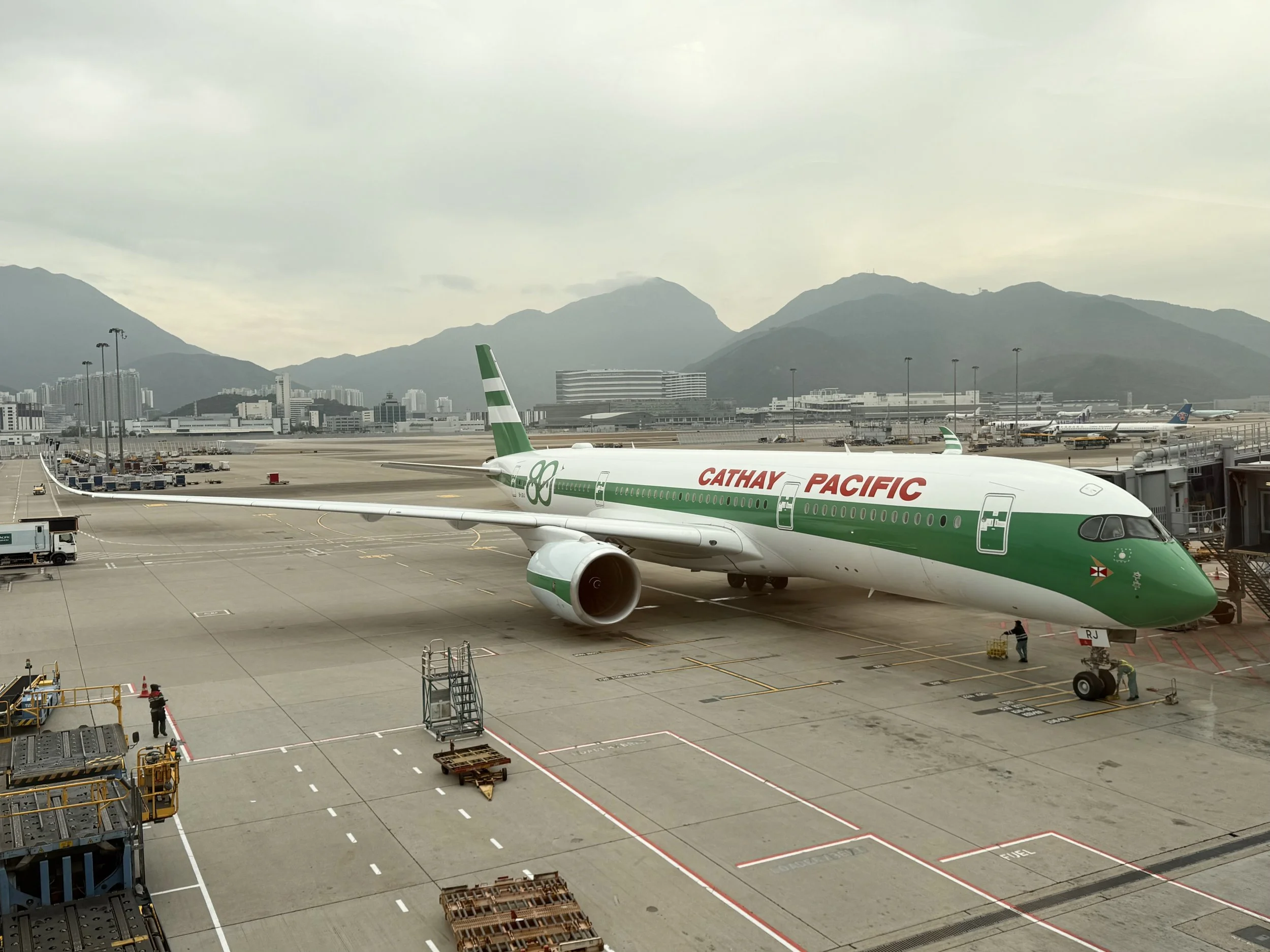
Every enduring brand eventually faces the same challenge.
How do you continue moving forward without losing in the qualities that made people recognise you in the first place?
It is a question I have often thought about while observing retailers, hotels and hospitality brands throughout my career.
Growth is not difficult.
Remaining recognisable while growing is.
Cathay Pacific has spent decades evolving its fleet, cabins, lounges and customer experience.
Yet despite those changes, it has never felt as though it was trying to become a different airline.
It has simply become a better version of itself.
That quiet confidence is something I admire.
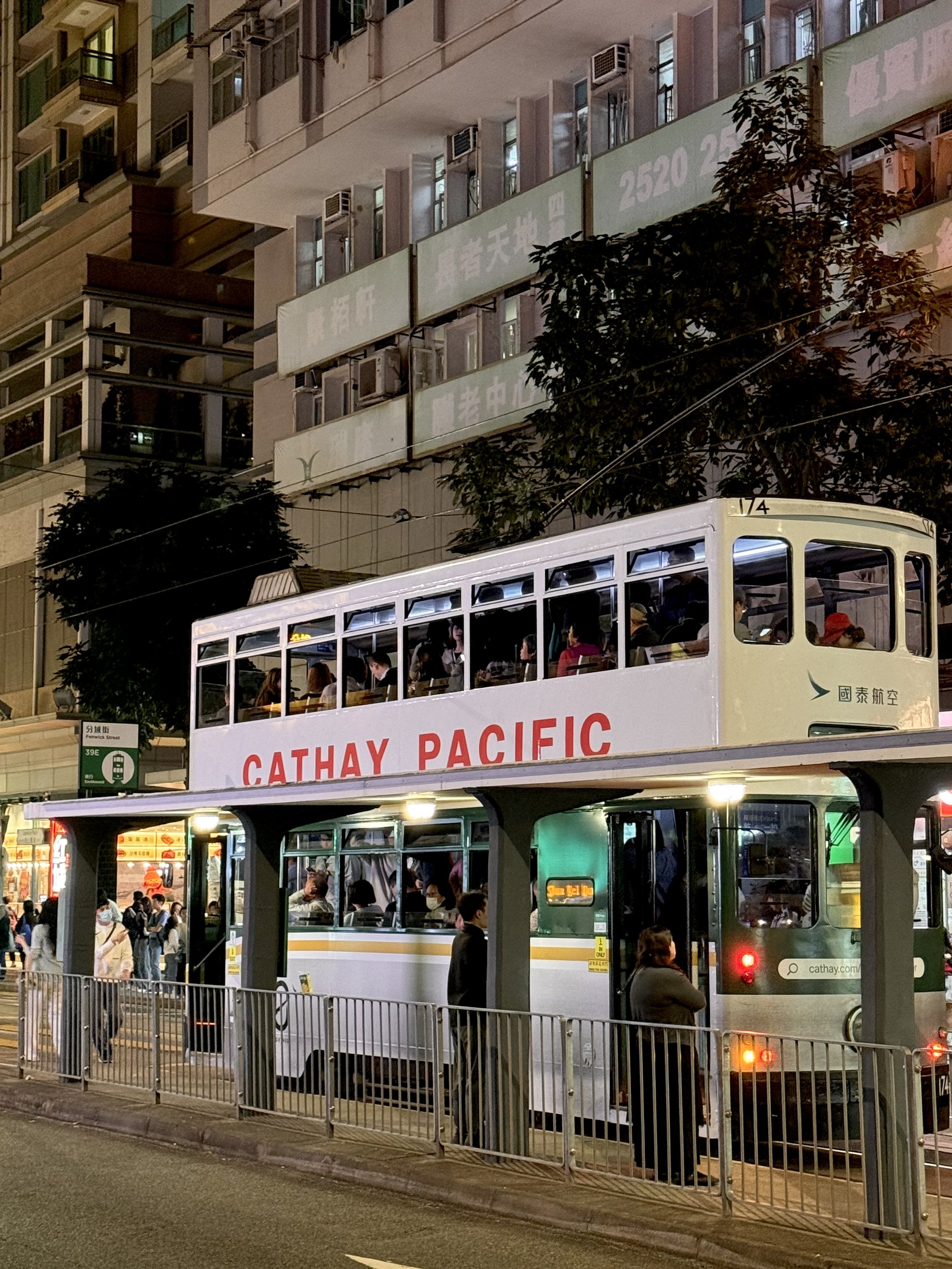
Hong Kong has always shared a similar character.
It is a city that constantly reinvents itself.
New towers rise.
Neighbourhoods evolve.
Restaurants come and go.
Yet certain things remain uniquely Hong Kong.
The sound of Cantonese drifting through the streets.
The rhythm of trams crossing Hong Kong Island.
The efficiency that somehow coexists with remarkable warmth. The place is full of 人情味.
The city continues to move forward without forgetting who it is.
Perhaps that is why Cathay feels like such a natural ambassador for its home.
They seem to understand one another.
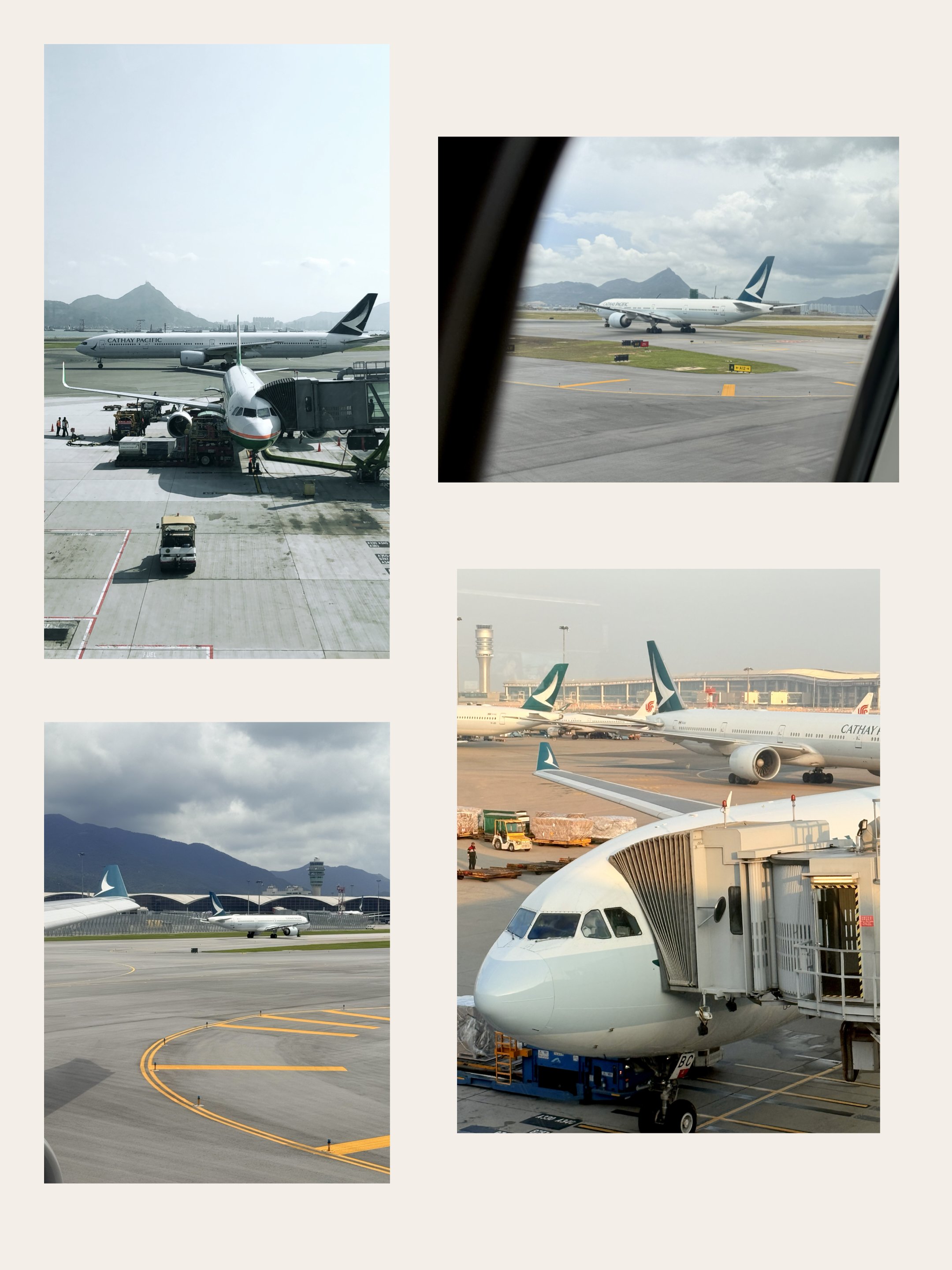
When Cathay introduced its “Move Beyond” campaign, I didn’t interpret it simply as an invitation to travel more.
I saw something broader.
Curiosity.
Remaining open to new ideas.
Continuing to improve without abandoning your identity.
Those are ideas that resonate with me.
This year, I started Foodie Goes Travel, not to review destination, but to pay closer attention to them.
At the same time, I have been learning Italian, discovering a different culture one conversation at a time, and slowly finding a new rhythm of life in Umbria.
None of those experiences has changed who I am.
They have simply expanded the way I see the world.
Perhaps that is what moving beyond really means.
Not becoming someone else.
But continuing to become more fully yourself.
There is one final detail I have often smiled about.
I’m not entirely sure whether Cathay had anything to do with my fondness for the colour GREEN.
Perhaps it’s coincidence.
Perhaps not.
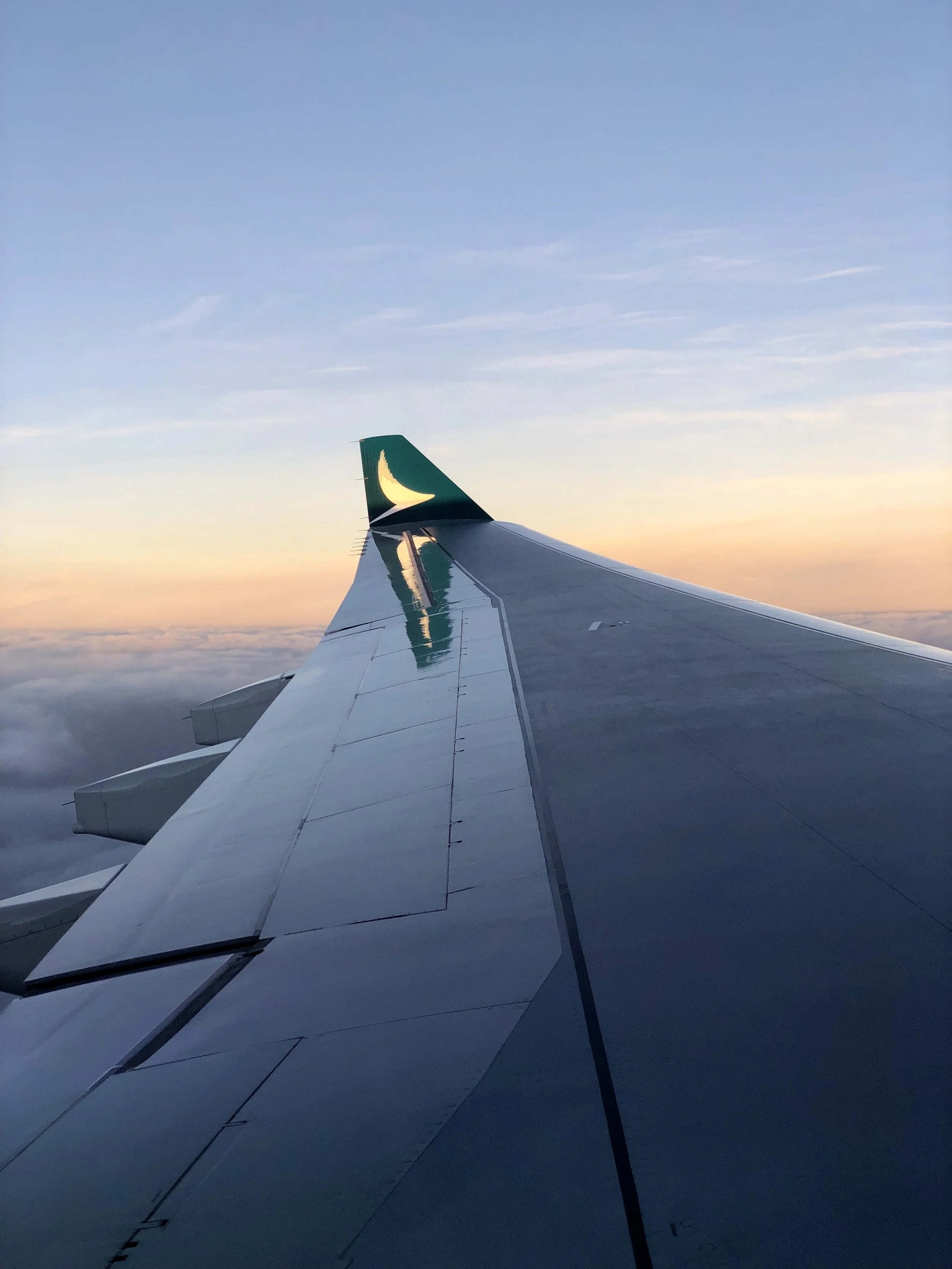
Either way, whenever I see that familiar shade on the tail of an aircraft or inside one of its lounges, I no longer think first of an airline.
I think of Hong Kong.
That, I suspect, is what every great brand hopes to achieve.
To become so closely associated with its home that one quietly reminds you of the other.
Coming Home Before Landing
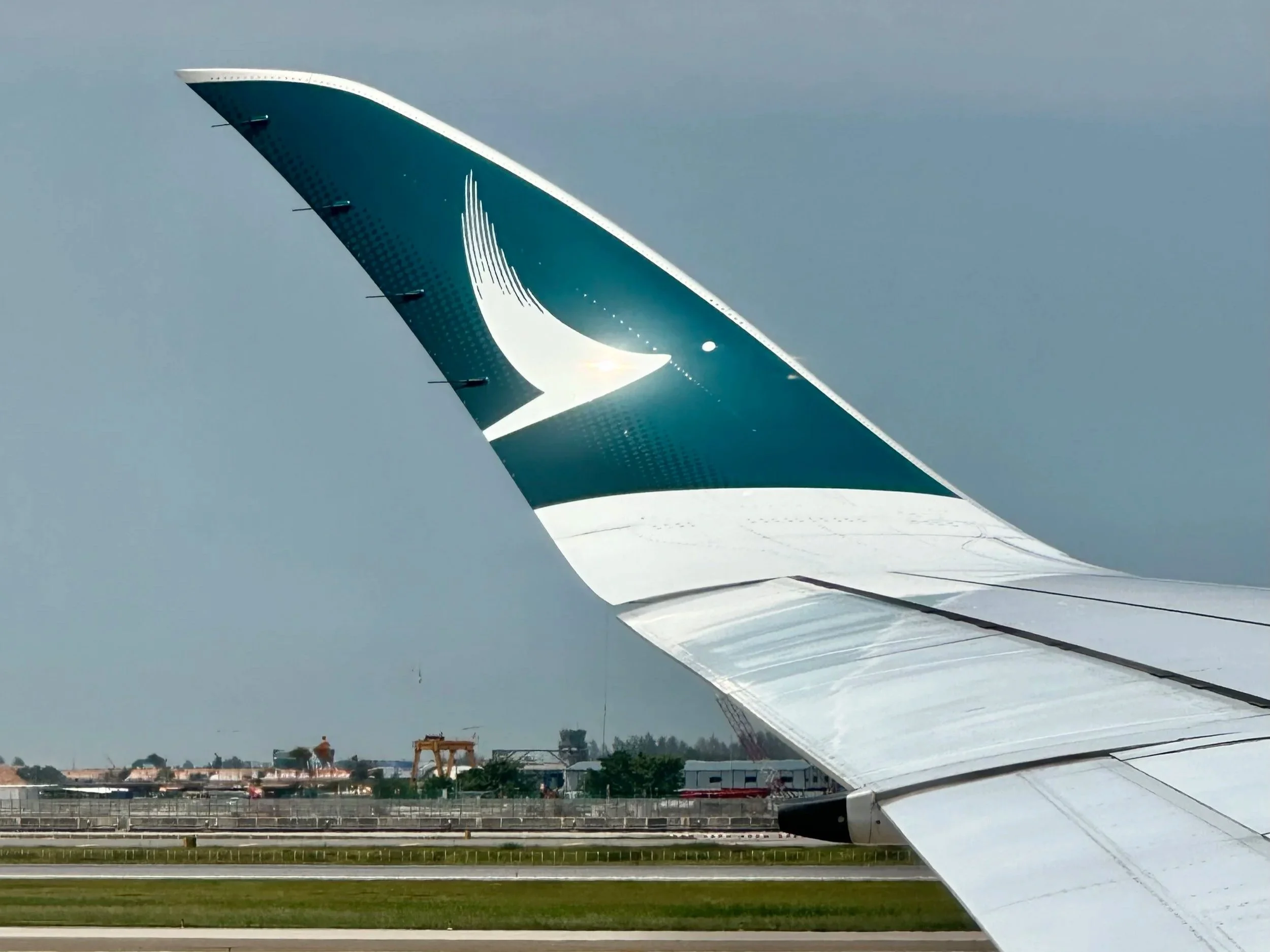
Travel has taught me that the journeys we remember are rarely defined by a single extraordinary moment.
More often, they are shaped by small details that quietly gather meaning over time.
A familiar route through an airport.
The warmth of a greeting.
The first bowl of noodles after a long flight.
The rhythm of a city beginning another morning.
Or simply the feeling that, somehow, you already know where you are going.
Looking back, I realise my relationship with Cathay Pacific has never really been about flying.
It has been about familiarity.
Not the kind that comes from routine.
The kind that grows slowly through years of returning.
As I grow older, the places I choose to visit have changed.
I am less attracted to seeing famous landmarks or to tick destinations off a list.
Instead, I find myself returning to places that allow me to notice something new each time.
Hong Kong has always been one of those places.
Every visit feels familiar.
Yet never identical.
Living in Umbria has unexpectedly deepened that appreciation.
The quiet rhythm of daily life here has taught me to slow down, to observe more carefully and to recognise that beauty often exists in things that ask very little of our attention.
That was of seeing has gradually shaped Foodie Goes Travel.
It has also changed the way I travel.
Today, I remember how places make me feel far more vividly than I remember how many attractions I visited.
I notice the morning light before breakfast.
The conversation at the next table.
The craftsmanship behind a beautifully designed space.
The thoughtfulness of someone who notices what you need before you ask.
Travel, for me, has become less about collecting destinations.
And more about collecting observations.
Perhaps that is why Cathay Pacific has remained such a constant presence throughout different chapters of my life.
Not because every flight has been perfect.
No airline can promise that.
But because the experience has always felt grounded in something recognisable.
An airline, like a city, cannot become everything to everyone.
The strongest identities never try to.
Instead, they understand who they are.
And quietly remain true to it.
The breakfast card, the bowl of noodles before boarding, the warmth of timber inside a lounge, the sound of Cantonese - all these are ordinary moments individually. Together, they create something much larger.
They remind me that places are not defined only by geography.
Sometimes they are carried by people.
Sometimes by traditions.
Sometimes by design.
And occasionally, by an airline that understands its home well enough to bring a small part of it wherever it goes.
There is a reason the final approach into Hong Kong still excites me, no matter how many times I have made the journey.
The skyline eventually appears beneath the wing.
Victoria Harbour catches the light.
The city begins to unfold below.
Yet if I am honest, Hong Kong has already been with me for hours.
It arrived with the first greeting.
With the quiet confidence of the cabin.
With familiar flavours.
With thoughtful design.
With countless small moments that, individually, might have passed unnoticed.
Together, they reminded me where I was going.
Some journeys begin long before the aircraft leaves the ground.
Some places stay with us long after we have returned home.
And every now and then, if we are fortunate, we discover a place that manages to do both.
For me, Hong Kong is one of those places.
Watch: The Journey Home
Cathay Pacific’s 80th anniversary film, The Journey Home 家在咫尺, reflects on memory, ambition, belonging and the meaning of home through the story of a mother and daughter. It complements many of the ideas explored in this article and is well worth watching after you’ve reached the end of the journey.
Before you leave, you are invited to sign The Guestbook.
Unless otherwise credited, all photography and written content are original works by Foodie Goes Travel.
