Before Umbria Becomes a Brand
What happens when one of Italy’s lesser-known regions begins attracting new hotels, international homeowners and travellers looking beyond Tuscany ?
Words and photograph by JJ Wong
Tell someone you are going to Tuscany and very little explanation is required.
Florence. Chianti. Cypress trees. Renaissance villas. Val d’Orcia. Brunello. Farmhouses with swimming pools overlooking vineyards.
The images are so familiar that it is possible to imagine Tuscany before setting foot there.
Umbria works differently.
Mention the region outside Italy and the conversation often requires another sentence.
You might explain that it sits immediately beside Tuscany. Or mention Assisi. Perugia might register because of chocolate or jazz. Occasionally someone knows Orvieto. Increasingly, travellers familiar with luxury hotels know Reschio.
Yet Umbria contains almost everything associated with the romance of central Italy: ancient cities, medieval hill towns, Renaissance painting, olive groves, vineyards, monasteries, truffles, forests, country estates and mountains.
Beneath some of those medieval towns lies another civilisation altogether, one that predates Rome’s emergence as the centre of the ancient world.
So why has Tuscany become one of the great international fantasies of travel while neighbouring Umbria still requires an introduction?
Living here has made me increasingly interested in that question.
More recently, another has followed it.
What happens when Umbria no longer needs an introduction?
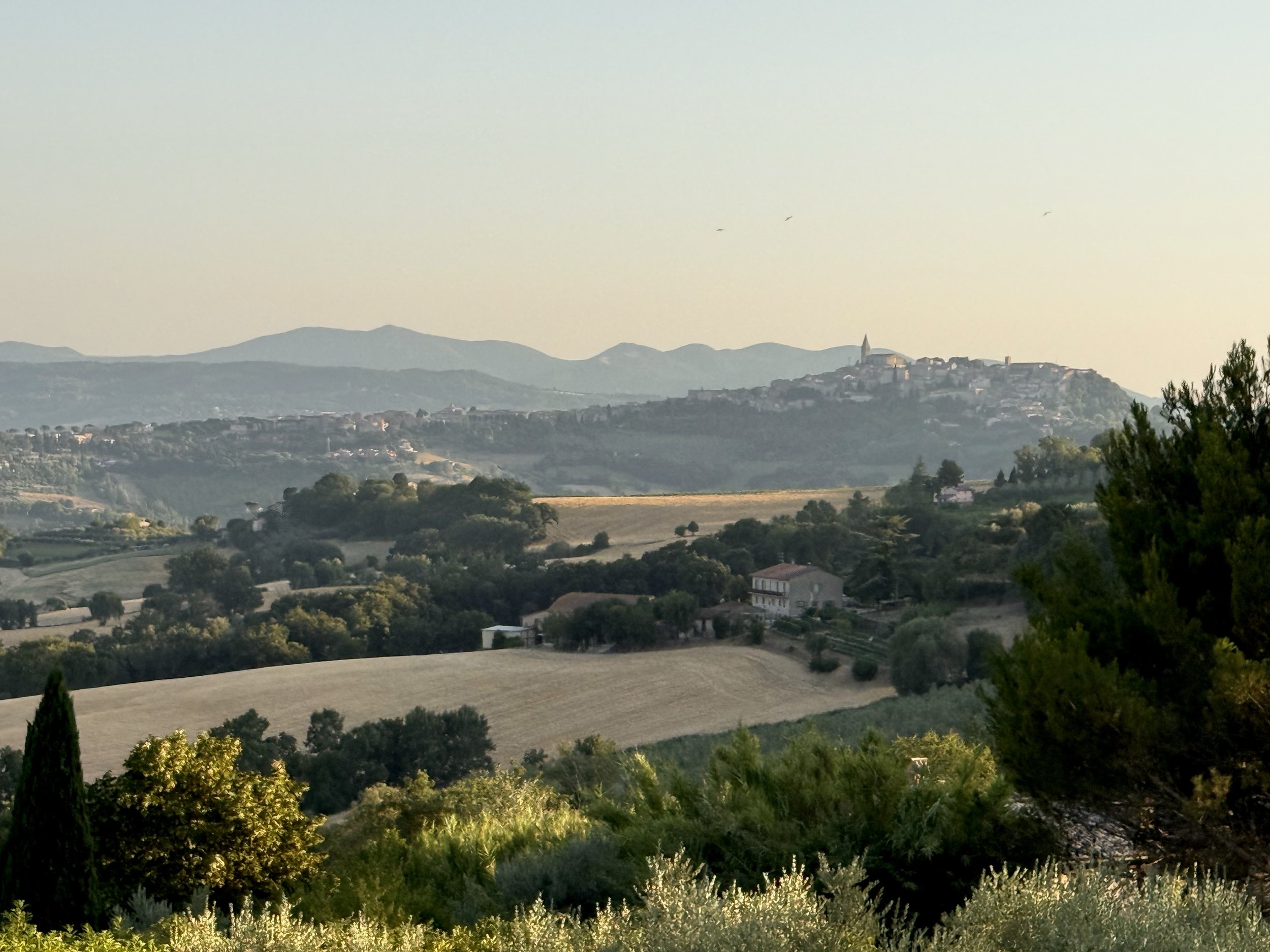
A region without shorthand
Part of Tuscany’s extraordinary success is cultural, but part of it is simply that Tuscany became very good at explaining itself to the world.
Florence gave the region an internationally recognised centre. Renaissance history gave the region enormous cultural authority. Chianti and Brunello turned agricultural landscapes into names recognised far beyond Italy. Villas became both a form of accommodation and an aspiration. Films, books, weddings, second homes and generations of international visitors added layer after layer to the mythology.
Eventually Tuscany became more than geography.
It became a brand.
That word can sound cynical when applied to a landscape, but a successful destination brand performs a useful function: it gives people an immediate idea of why they should go.
Umbria has never developed an equivalent shorthand.
Assisi is internationally famous, but primarily for religion and pilgrimage. Perugia is an important and compelling regional city, yet it has never played Florence’s role as a magnet around which international tourism could organise itself. There is no coastline. International air access remains limited. And much of what makes Umbria interesting does not reveal itself in a single photograph.
A traveller can walk through Perugia without fully appreciating that an Etruscan city survives beneath and around the medieval one.
A church that looks austere from outside may contain extraordinary frescoes.
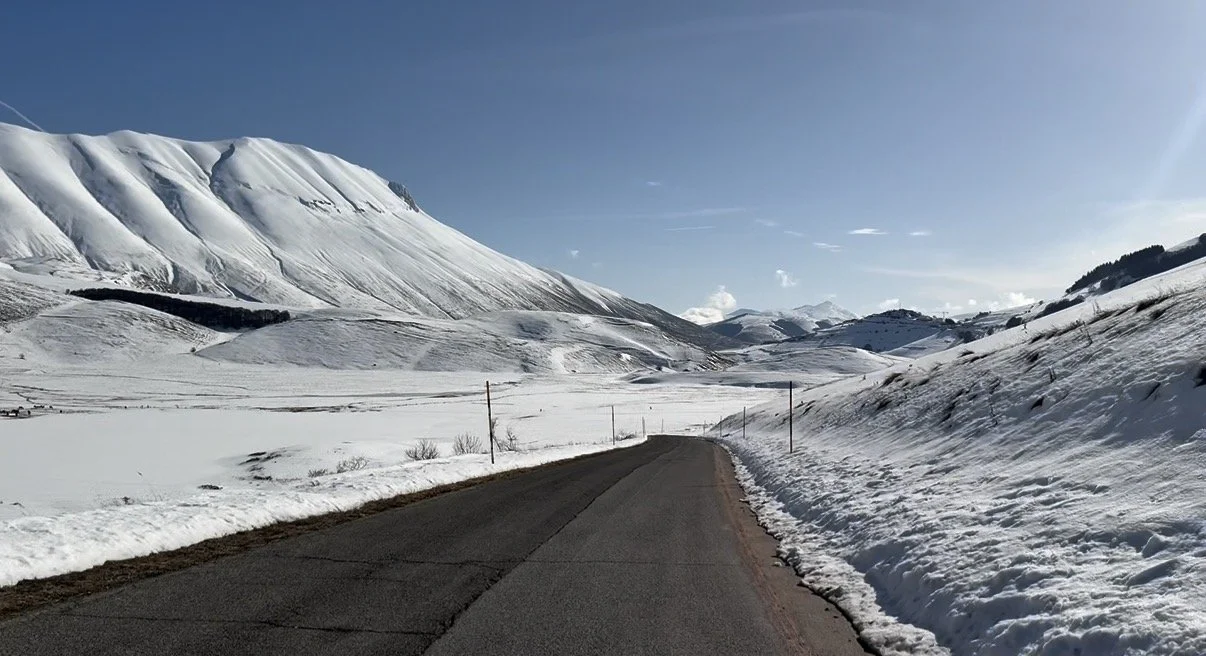
One valley can feel agricultural and gentle; forty minutes later, the road begins climbing through forests towards the Apennines.
Umbria requires context.
That has probably disadvantaged it commercially.
It may also have protected something valuable.
The region has not yet been reduced to a series of internationally recognisable visual codes.
For readers wondering what a holiday in Umbria actually feels like - its pace, practicalities and the expectations worth adjusting before arrival - I have written separately in Understanding Umbria.
This story is concerned with something slightly different.
Not simply how to understand Umbria as it exists today, but what it may be becoming.
Something is changing
Umbria is hardly undiscovered.
According to Regione Umbria’s 2025 tourism statistics, the region recorded 3.04 million arrivals and 7.94 million overnight stays. More revealing is where the growth came from: international arrivals increased by 23.5 per cent in a single year and were 72.4 per cent above their 2022 level.
There is another number I find more interesting.
The average visitor stayed for only 2.62 nights.
International travellers managed slightly longer, at 3.12 nights.
For a region whose appeal comes from understanding how towns, landscape, food and history connect to one another, that feels remarkably brief.
It suggests that Umbria’s challenge may no longer simply be convincing people to come.
It is helping them understand how to stay.
The accommodation landscape reinforces that idea.
Traditional hotel supply has remained remarkably stable: Umbria had 437 hotels and historic residences at the end of 2025, virtually unchanged from previous years. Meanwhile, tourist rentals increased by more than 43 per cent in a single year, and non-hotel accommodation now accounts for more than half of all overnight stays.
That is revealing.
A significant part of the new Umbrian hospitality economy is not being created through conventional hotels.
It is emerging through villas, restored farmhouses, agriturismi, independent properties and houses that have been given a second life.
At the same time, something very different is happening at the top of the hotel market.
When hotels begin interpreting the region
No property has done more to change international perceptions of Umbrian hospitality than Reschio.
Its importance goes beyond the presence of a thousand-year-old castle or the prices its rooms command.
The private estate now covers more than 1,500 hectares, centred around the castle and more than fifty historic farmhouses. Over three decades, the Bolza family has restored buildings, worked with local craftspeople and developed furniture and interiors through Benedikt Bolza’s own architecture and design studio.
The castle itself dates to 1050.
What interests me about Reschio is not simply whether one likes its aesthetic.
It has demonstrated something important for Umbria:
A hotel does not merely have to be located here. It can interpret the region.
Architecture, landscape, furniture, agriculture, craft and hospitality can become parts of the same conversation.
Other properties are approaching that conversation differently.
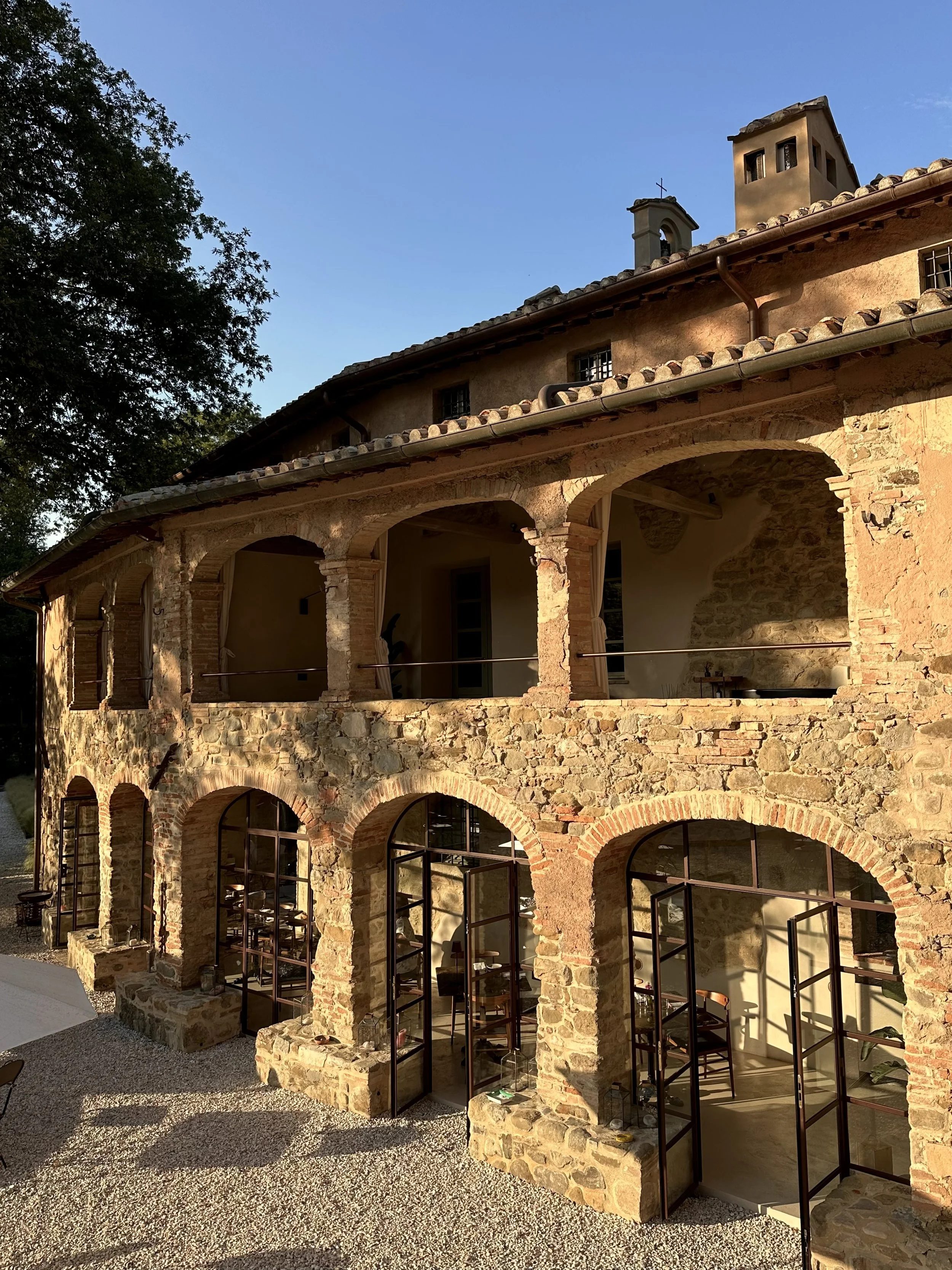
Vocabolo Moscatelli near Umbertide occupies a restored former monastery, pairing historic architecture with a much more contemporary design language.
Borgo dei Conti reopened after a substantial redesign, with interiors by Spagnulo & Partners, using Umbrian craft and artistic references within a more international resort environment.
And now the next wave is becoming visible.
Pellicano Hotels plans to open La Badia near Orvieto in 2027, transforming a former Benedictine abbey into just 24 rooms surrounded by more than 12 hectares of land.
That matters.
Pellicano already operates some of Italy’s most recognised luxury properties. It does not need Umbria for volume. Its arrival suggests that the region itself is acquiring a different kind of cultural value among sophisticated international travellers.
Antognolla represents another model altogether.
Its 540-hectare estate is being developed around a restored 12th-century castle and hamlet, with a planned 71-room hotel, wellness facilities, golf and residences.
These projects are very different from one another.
This is exactly what makes this moment interesting.
Umbria has not yet reached the stage where international hotel groups reproduce the same formula from valley to valley. Developers, owners, architects and operators are still deciding what contemporary Umbrian hospitality should look like.
And that creates an opportunity.
It also creates a risk.
Does Umbria need Tuscan luxury with a different postcode?
I hope not.
Umbria does not need to become Tuscany
Comparisons between the two regions are inevitable. They share a border, appeal to much of the same international audience and have enough visual similarities to make the comparison easy.
But describing Umbria as an alternative Tuscany - or worse, as a cheaper Tuscany - misunderstands both.
The landscapes are related, but they are not identical.
Travel east through Umbria and the region becomes more muscular.
The Valnerina follows the Nera between increasingly steep hills. Forest begins to dominate the landscape. Beyond Norcia, the Sibillini open into an Italy that bears little resemblance to the vineyards-and-cypress imagery through which much of Tuscany is sold internationally.
Even agricultural Umbria looks different.
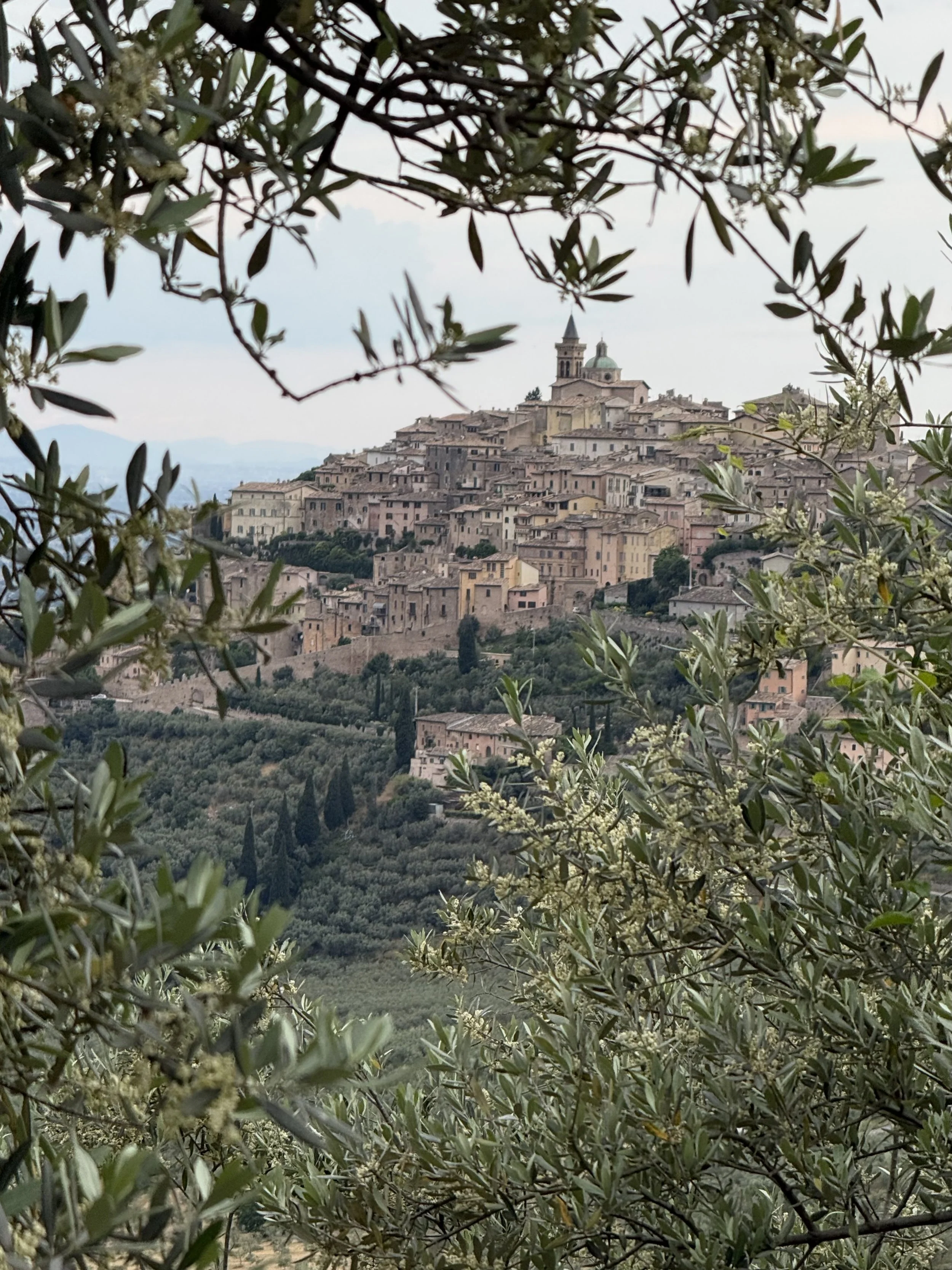
Olive trees frequently have greater visual presence than vines. Their silver-green colour gives entire hillsides a particular texture, especially between Spoleto, Trevi and Assisi.
And the towns behave differently.
Spoleto climbs dramatically beneath its Rocca.
Orvieto rises from a volcanic plateau.
Gubbio is monumental and almost severe.
Trevi appears to grow directly from its olive-covered hillside.
Bevagna, unusually for the standard Umbrian postcard, sits largely on the plain.
Perugia layers Etruscan, Roman, medieval and later architecture so densely that one period often interrupts another.
The pleasure therefore comes less from deciding which town is the prettiest than from understanding why each settlement exists where it does.
There is also something here that is becoming increasingly rare in famous European destinations.
Tourism is not the organising principle of everyday life everywhere you go.
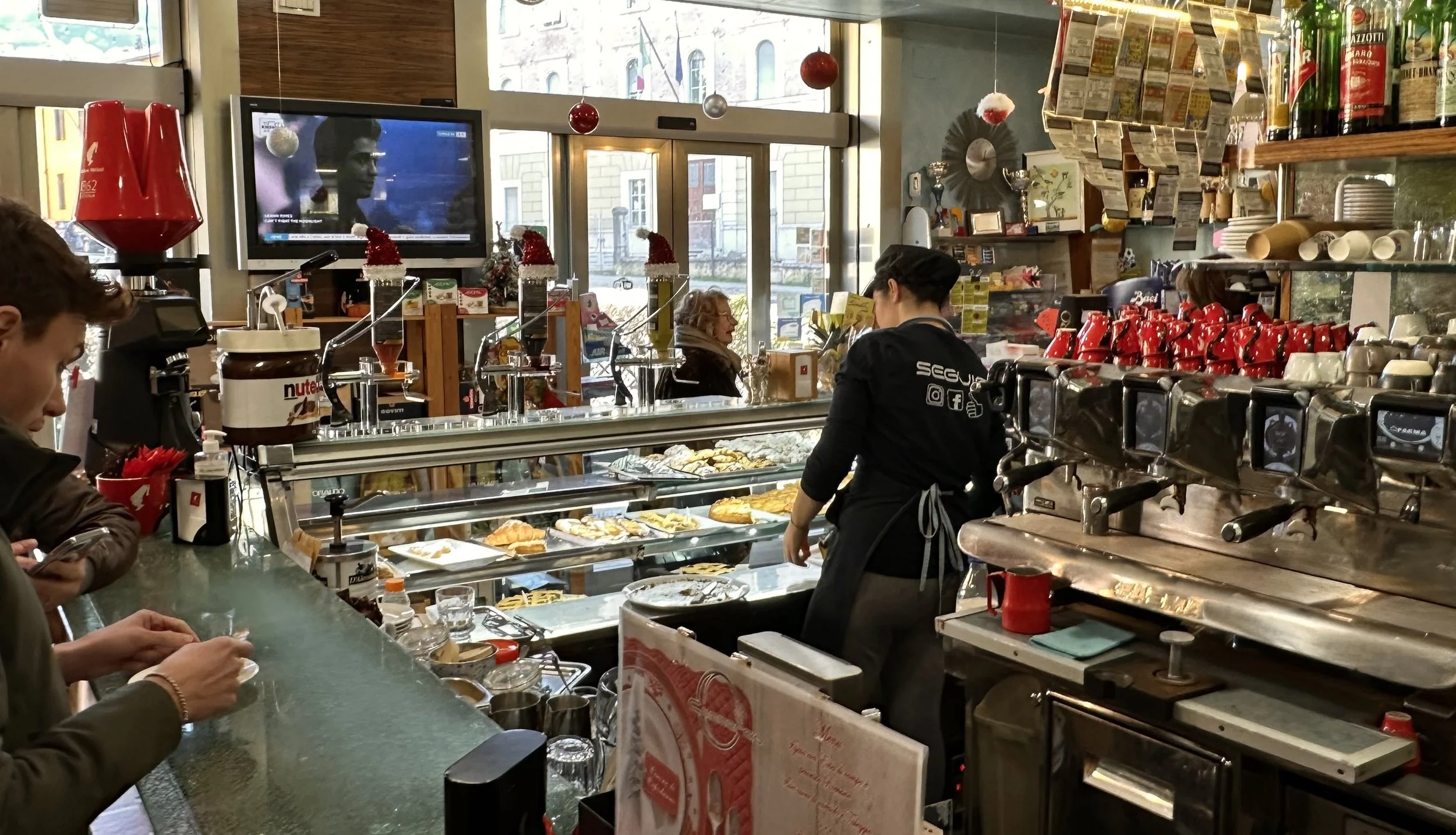
An extremely expensive country estate can exist twenty minutes from a bar where coffee remains simply coffee, the television is on, somebody is reading the newspaper and nobody cares which hotel you are staying in.
That coexistence matters.
It is one of the reasons Umbria still feels like a place where people live first and visitors arrive second.
Before Rome, another Italy
One of the most underused ways of understanding Umbria is through the Etruscans.
International visitors often arrive in Italy with a historical chronology dominated by Ancient Rome, followed eventually by the Renaissance.
Umbria complicates that story.
Orvieto is one of the most compelling places to experience it.
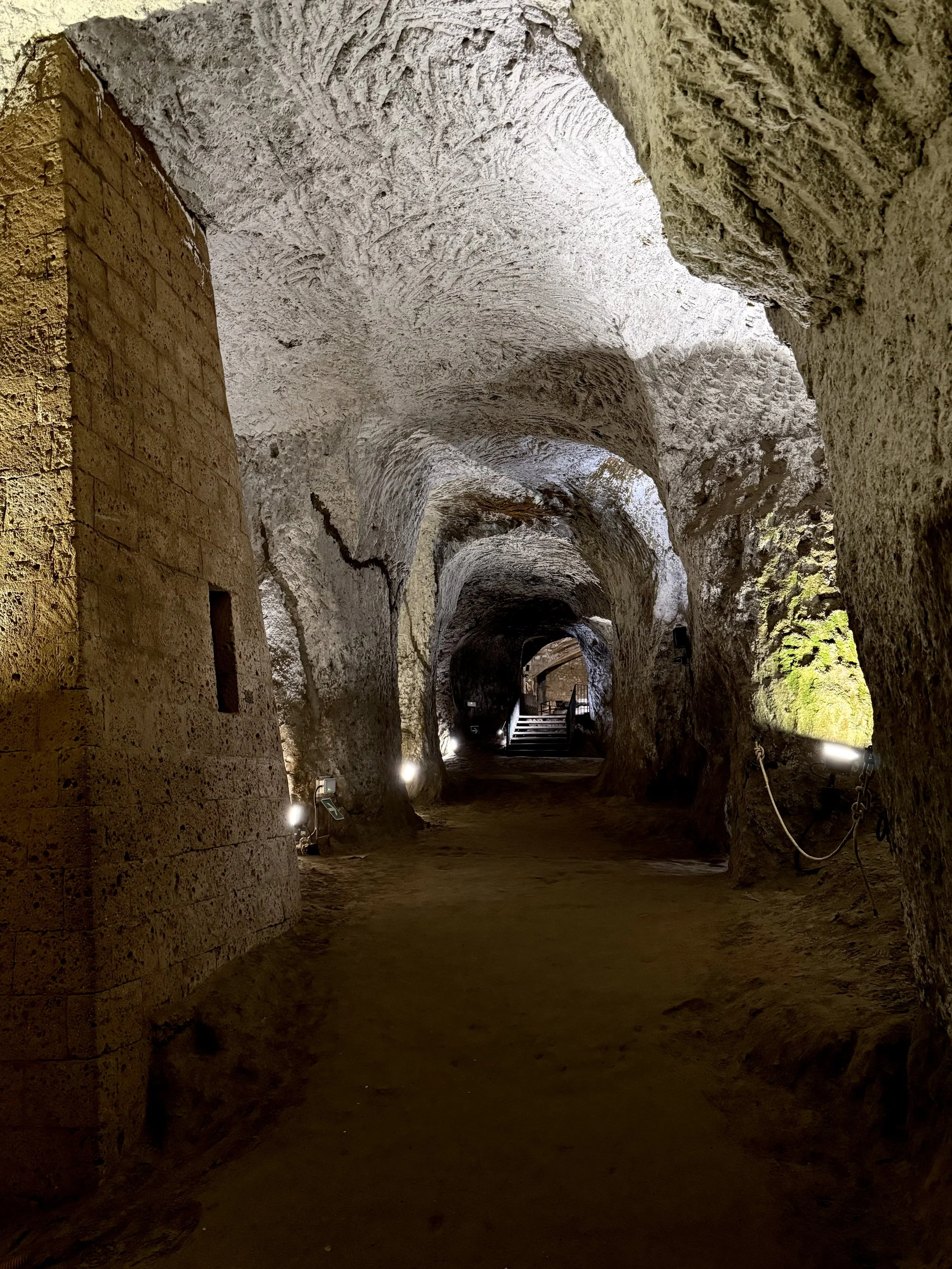
Below the city lies a remarkable network of approximately 1,200 underground cavities, created and expanded across some 2,500 years, with its earliest phases dating back to the Etruscan period.
Above ground stands one of Italy’s great Gothic cathedrals.
Below it are the traces of earlier inhabitants solving practical problems of water, storage, agriculture and survival inside volcanic rock centuries before imperial Rome reached its height.
That physical layering is something Umbria does exceptionally well.
Around Perugia, Etruscan walls and gateways were absorbed into the later city rather than existing solely as archaeological sites isolated from contemporary life.
This changes how you see the landscape.
The hill towns begin to look less like picturesque medieval decorations and more like settlements chosen strategically, occupied repeatedly, defended, expanded and rebuilt by successive civilisations.
It also reveals one of Umbria’s recurring contradictions.
Extraordinary cultural material exists here, but it is not always presented with the theatrical efficiency an international traveller might encounter elsewhere.
Sometimes you have to know why something matters before you arrive.
In one sense, that is attractive.
In another, it explains why the region can remain surprisingly opaque to visitors.
Food makes more sense when you understand the land
Writing about Umbrian food tends to produce the same collection of nouns.
Truffles. Porchetta. Sagrantino. Olive oil. Norcia. Lentils.
All are correct.
None explains very much on its own.
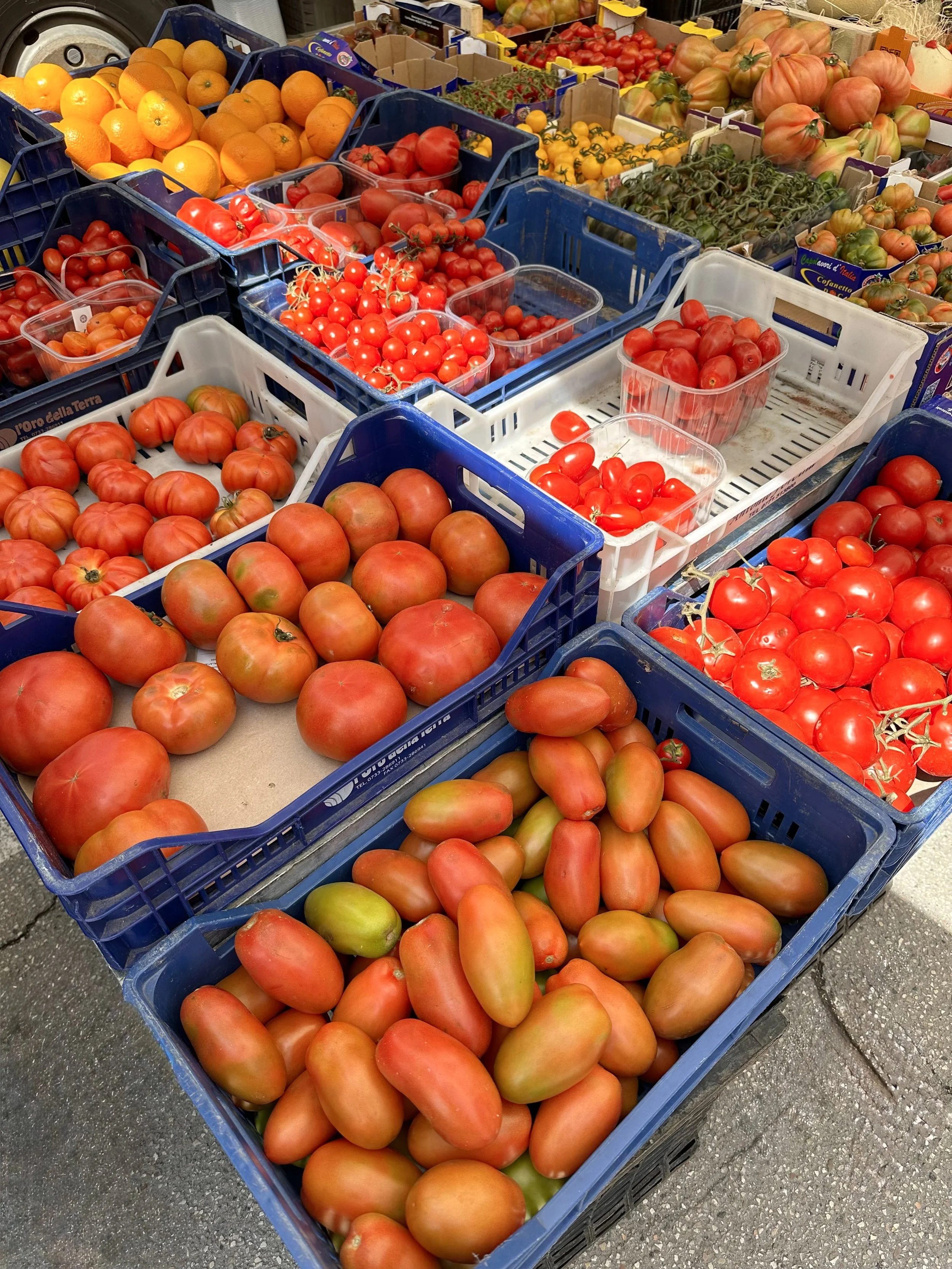
Umbrian cooking becomes more interesting when viewed as evidence of how people lived.
This is inland Italy.
The traditional table was shaped by agriculture, animals, forests and preservation rather than the sea.
Pork become a craft.
Legumes mattered.
Game and truffles came from woodland.
Olive oil could be produced almost within sight of the kitchen.
Different altitudes created different agricultural possibilities.
The lentils grown on the plateau around Castelluccio belong to a completely different landscape from the olive groves around Trevi or vineyards around Montefalco.
This is why some of the strongest food experiences in Umbria are not necessarily found in dining rooms with lengthy reservation lists.
Visiting an olive mill during harvest can explain more about the region than another tasting menu.
So can following somebody into the woods for truffles.
Or understanding the difference between Sagrantino and a more approachable Montefalco Rosso with the person who made it.
Or buying something from a norcineria in Norcia rather than treating norcineria as another word to add to an Italian food vocabulary.
At the same time, the contemporary restaurant scene is becoming increasingly interesting.
Umbria’s contemporary restaurant scene now includes Michelin-recognised names such as Une in Capodacqua, Vespasia in Norcia, Ada in Perugia and Elementi in Torgiano.
But the stars themselves are not the important part.
More interesting is the emergence of chefs who appear confident enough to treat Umbrian ingredients as material for contemporary cooking rather than something that must remain frozen within a rustic idea of regional tradition.
Preservation does not require repetition.
And regional identity becomes stronger, not weaker, when a new generation is confident enough to interrogate it.
The new villa landscape
There is another transformation taking place beyond hotels.
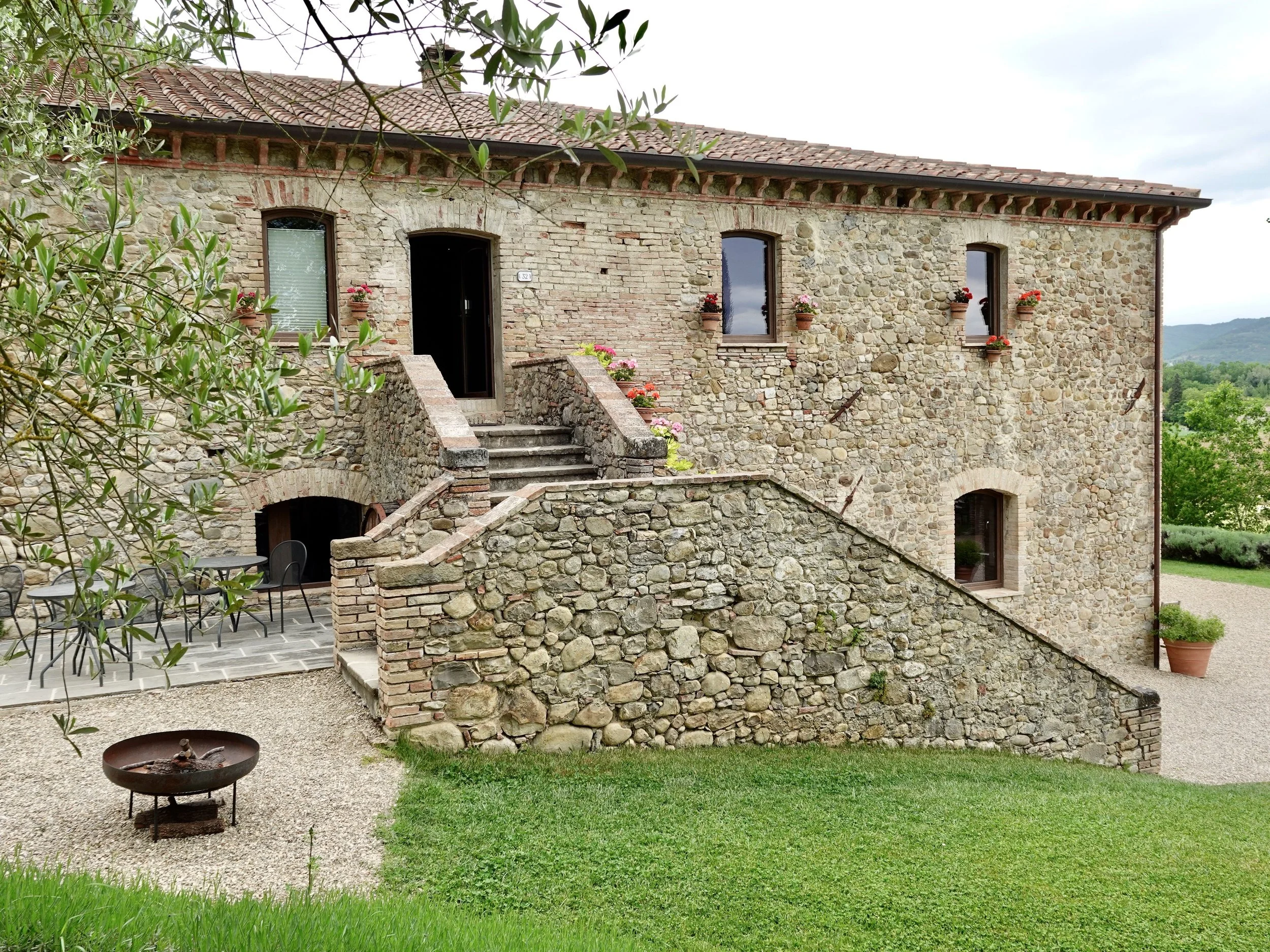
Drive through the Umbrian countryside long enough and you become aware of how many old farmhouses have acquired new lives.
Some remain with Umbrian families.
Some belong to Italians who came from elsewhere.
Others have been restored by international owners who spend part of the year here, rent the property while they are away or have made the region their home.
At its best, this process can be enormously positive.
Historic buildings are expensive to maintain.
Land needs tending.
Villages need economic activity.
Local builders, architects, stonemasons, carpenters, gardeners and agricultural workers all participate in the economy created when an abandoned building becomes inhabited again.
And the price difference with Tuscany remains significant.
According to Immobiliare.it , in June 2026, the average residential asking price across Umbria was €1,182 per square metre.
Across Tuscany it was €2,664 - more than twice as much.
Those regional averages need to be treated cautiously. A house in Terni cannot be compared meaningfully with a fully restored country estate near Todi, just as an ordinary Tuscan apartment tells us very little about a prime property in the Val d’Orcia.
But the gap still helps explain something.
Umbria retains more room for reinvention.
But reinvention should not be mistaken for a blank canvas.
Tenuta di Murlo, outside Perugia, offers one example of what that reinvention can look like: historic rural properties restored as private villas rather than conventional hotels, giving international guests a more residential way of experiencing the Umbrian countryside.
Part of the reason these landscapes and buildings retain their character is that changing them is not always straightforward. Depending on the property, its location and the extent of the work, restoration can involve municipal planning procedures as well as landscape or heritage approvals. Old buildings also have a habit of revealing structural questions only after work has begun.
For an international buyer accustomed to a different planning system, this can make the process slower than expected.
It is easy to see this simply as bureaucracy. Living here has made me see another side to it. The same protections that can complicate the enlargement of a window, alteration of a façade or substantial intervention on a historic property are also part of the reason an Umbrian valley has not been endlessly rewritten by whoever happened to own it most recently.
The more useful lesson for a foreign buyer is therefore not that restoration is difficult.
It is that local knowledge matters.
For an owner living in London, Singapore or Hong Kong, there is another layer that rarely appears in photographs of beautifully restored Italian houses: language.
Buying the property may be the easiest part.
Renovating and maintaining it involves architects, surveyors, builders, craftspeople, gardeners, technicians and local authorities, many of whom understandably conduct their working lives in Italian. Decisions also need to be made when the owner is several hundred or several thousand kilometres away.
This is where a capable local project or property manager becomes far more than someone who holds the keys.
The role is partly linguistic, but more importantly cultural and operational: understanding what the owner expects, communicating it accurately to the people doing the work, following progress, resolving misunderstandings and knowing which local specialist to call when something inevitably does not go according to plan.
For foreign ownership to contribute positively to Umbria, that layer of local expertise may become increasingly important.
And the work does not end when the builders leave.
Many international owners spend only part of the year in Umbria. If the house is also rented to holiday guests, somebody locally has to assume a role that begins to resemble hospitality: preparing the property before arrival, coordinating housekeeping and maintenance, responding when something goes wrong and becoming the point of contact between a guest who does not know the region and the network of people who keep the house functioning.
This is a side of Umbrian property ownership I have become increasingly familiar with through local businesses such as The Olive Tree, which manages and supports private homes in the region.
What interests me is less the individual company than the need it represents. As more Umbrian houses pass into international ownership, successful long-distance ownership will increasingly depend on people who can operate between two worlds: understanding the expectations of an owner abroad while maintaining trusted relationships with architects, tradespeople, gardeners, housekeepers and other professionals locally.
For a holiday villa, the role extends further still. Guests may need help with something as straightforward as a malfunctioning appliance or as personal as arranging a cook, restaurant reservations or local experiences. The owner may be thousands of kilometres away, but the responsibility for how the house is experienced remains very local.
In that sense, the future of the international Umbrian villa may depend as much on the network supporting it as on the architecture that first attracted its owner.
That reinvention can produce extraordinary architecture.
It can also produce sameness.
Once sufficient international capital enters a rural destination, restoration develops its own fashions.
The stone is cleaned to the same shade.
The shutters acquire the same colour.
The bathrooms begin looking identical.
Every pool occupies the edge of the same view.
Natural linen appears.
Ceramics appear.
The imperfections that originally gave the building character are sometimes polished away in pursuit of an international fantasy of Italian country living.
This is where architecture and hospitality carry responsibilities beyond aesthetics.
The most interesting Umbrian projects should not begin with:
How do we make this property look luxurious?
They should begin with:
What exists here that could only have come from this place?
The view from Asia
There is another reason I think about Umbria differently.
I grew up in Malaysia and spent much of my adult life moving between Asian cities before eventually making a home here.
That means my understanding of hospitality was shaped as much by Bangkok, Hong Kong and Singapore as by Italy.
At its highest level, Asian hospitality is exceptionally good at removing uncertainty.
A guest arrives and the hotel becomes an interface with the destination.
Transport is arranged.
Reservations are handled.
Preferences are remembered.
If you unexpectedly have an empty afternoon, someone can explain what is worth doing with it.
Rural Italy often expects a greater degree of independence.
In Umbria, a car is close to essential for the journey I would want someone to make.
Restaurants have precise opening days.
A forty-kilometre drive can feel very different depending on which mountain sits between you and dinner.
Some exceptional producers have rudimentary websites or none at all.
Opening hours do not always behave as Google expects them to.
A church you drove forty minutes to see can be locked.
There are places worth visiting that have done remarkably little to persuade you to visit them.
For experienced European travellers accustomed to driving through Italy, this may be part of the pleasure.
For someone flying twelve hours from Singapore, Kuala Lumpur or Hong Kong with only eight or ten days available in Italy, that can affect the destination decision entirely.
Tuscany feels easier to buy.
Umbria still needs to be understood.
I do not think the solution is to remove every inconvenience.
Nor should Umbria become a highly managed luxury environment where every interaction has been arranged in advance.
The opportunity is to create a better bridge between visitor and place.
This is where thoughtful hotels, villa owners and travel designers can add enormous value.
Not by filling an itinerary.
By understanding enough about the traveller to distinguish what matters from what does not.
The luxury is not being offered twenty activities.
It is knowing which three are worth doing.
So how should someone actually stay in Umbria?
I would not attempt to “do Umbria” in three nights.
Nor would I move hotels every evening simply to collect towns.
For a first journey, a stay of six and seven nights begins to make sense. Eight or nine is better if the objective is genuinely to understand the region.
Two bases are often enough.
Northern or central Umbria can provide access to Perugia, Gubbio, Lake Trasimeno, the Upper Tiber Valley and some of the region’s most ambitious new hospitality projects.
Another base around Spoleto, Trevi or the Valnerina opens a different geography altogether: olive country, Montefalco, Bevagna, Norcia and eventually the Sibillini.
Orvieto is worth considering as either a starting point or a conclusion, rather than simply as somewhere to stop between Rome and Tuscany.
And rather than constructing every day around three towns and six monuments, I would build the journey around one significant idea each day.
An Etruscan morning underground in Orvieto.
An afternoon around olive oil.
A day moving between Montefalco and Bevagna.
A walk in the Sibillini.
A winery where the conversation matters as much as the tasting.
A lunch that takes most of the afternoon.
A restaurant worth driving for.
And one day with enough empty space that plans can change.
Not because doing less has become another fashionable form of luxury.
Because towns start behaving differently when you stop treating them as objectives.
You notice where people buy bread.
You return to the same bar.
You understand which direction the valley faces.
You realise that the town you photographed at sunset yesterday is actually more interesting at eight in the morning.
The strongest Umbrian journey is therefore not a checklist.
It is a sequence of relationships:
town to countryside;
Etruscan to medieval;
agriculture to kitchen;
old architecture to contemporary design;
hotel to landscape;
visitor to resident.
Once those relationships become visible, Umbria becomes much easier to read.
Umbria’s hospitality opportunity
As international attention grows, the temptation will be to make Umbria easier to recognise.
There will be more restored villas.
More ambitious hotels.
More restaurants aimed at destination diners.
More international homeowners.
More weddings.
More wellness.
More travellers discovering that central Italy extends beyond Florence and the Val d’Orcia.
Some of that growth is necessary.
Umbria is not a museum.
Historic buildings need viable uses. Rural communities need investment. Hospitality creates employment. International buyers can restore properties that might otherwise deteriorate. Restaurants cannot survive on romantic ideas about local life.
The danger is not popularity.
It is sameness.
A successful tourism economy eventually creates expectations, and businesses learn to reproduce them.
You can already travel through parts of the world where almost every newly opened countryside hotel contains variations on the same ingredients: pale walls, linen curtains, handmade ceramics, sculptural baths, neutral furniture and an infinity pool pointing towards sunset.
The country changes.
The aesthetic barely does.
Umbria still has the opportunity to resist that.
Its strongest future hotels do not need to apologise for thick medieval walls, monastic severity, dark timber, Etruscan stone, winter fog, agricultural buildings or the more dramatic landscapes of the Apennines.
Its restaurants do not need to make rural cooking resemble Milan.
Its villas do not need to imitate an international idea of a Tuscan farmhouse.
And not every worthwhile local interaction needs to be packaged and sold as an “experience”.
The region’s sophistication could come precisely from knowing what not to standardise.
Before the story is written
There is something fascinating about living in a region while its international identity is still being formed.
Umbria is no longer outside the conversation.
Visitor numbers are growing.
Significant hospitality operators are arriving.
Old buildings are being restored.
International buyers are paying attention.
Travellers already familiar with Tuscany are beginning to look one region further.
All of this will change Umbria.
It should.
The question is what kind of change follows.
Becoming as famous as Tuscany would be a strange measure of success. The more interesting question is whether Umbria can become legible without becoming generic.
Can someone arrive from the other side of the world and understand why the region matters without every difficult edge being removed?
Can hospitality become more sophisticated without becoming more standardised?
Can international money restore buildings without replacing the culture surrounding them?
Can a region acquire a clearer identity without eventually having to perform that identity for visitors?
After living here, I have come to think that Umbria’s relative anonymity was never its greatest asset.
Its greatest asset is complexity.
The Etruscans beneath Orvieto.
Medieval Spoleto above Roman foundations.
A monastery transformed into a contemporary hotel.
A chef reinterpreting ingredients grown nearby.
International owners giving abandoned farmhouses another century of life.
Olive trees shaping both landscape and table.
A valley that looks gentle from one direction and becomes mountainous from another.
None of it fits particularly neatly into a postcard.
That is exactly why it is worth coming.
Umbria does not need to remain unknown.
It needs to be understood before the market decides what it is supposed to look like.
Before you leave, you are invited to sign The Guestbook.
Continue Exploring Umbria
Understanding Umbria - what should a holiday in Umbria actually feel like? A practical reflection on pace, expectations, distances and why the region rewards a different approach to travelling
Why Umbria Feels Like Italy’s Best-kept Secret - an introduction to the region through its town, landscapes and distinct corners - and why Umbria still feels less immediately understood than neighbouring Tuscany
Spoleto, Between Stone and Silence - a closer look at Spoleto through architecture, history and the rhythms of everyday life
Orvieto - an exploration of one of Umbria’s most extraordinary cities, where Etruscan, medieval and religious histories occupy the same dramatic landscape
Unless otherwise credited, all photography and written content are original works by Foodie Goes Travel.
