What Puglia made me reconsider about tradition and living in Italy
Words and photographs by JJ Wong
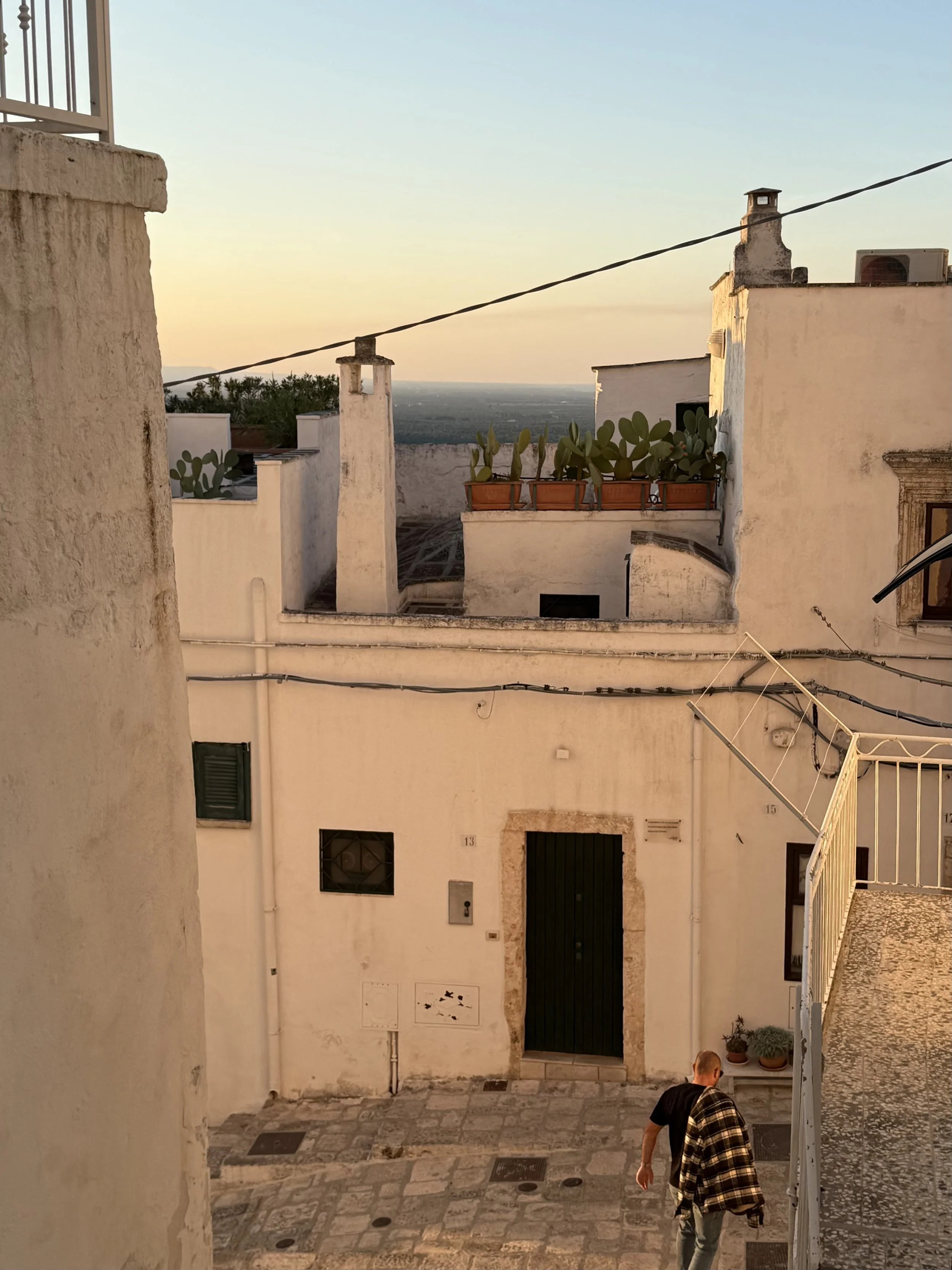
Evening light on the whitewashed streets of Ostuni.
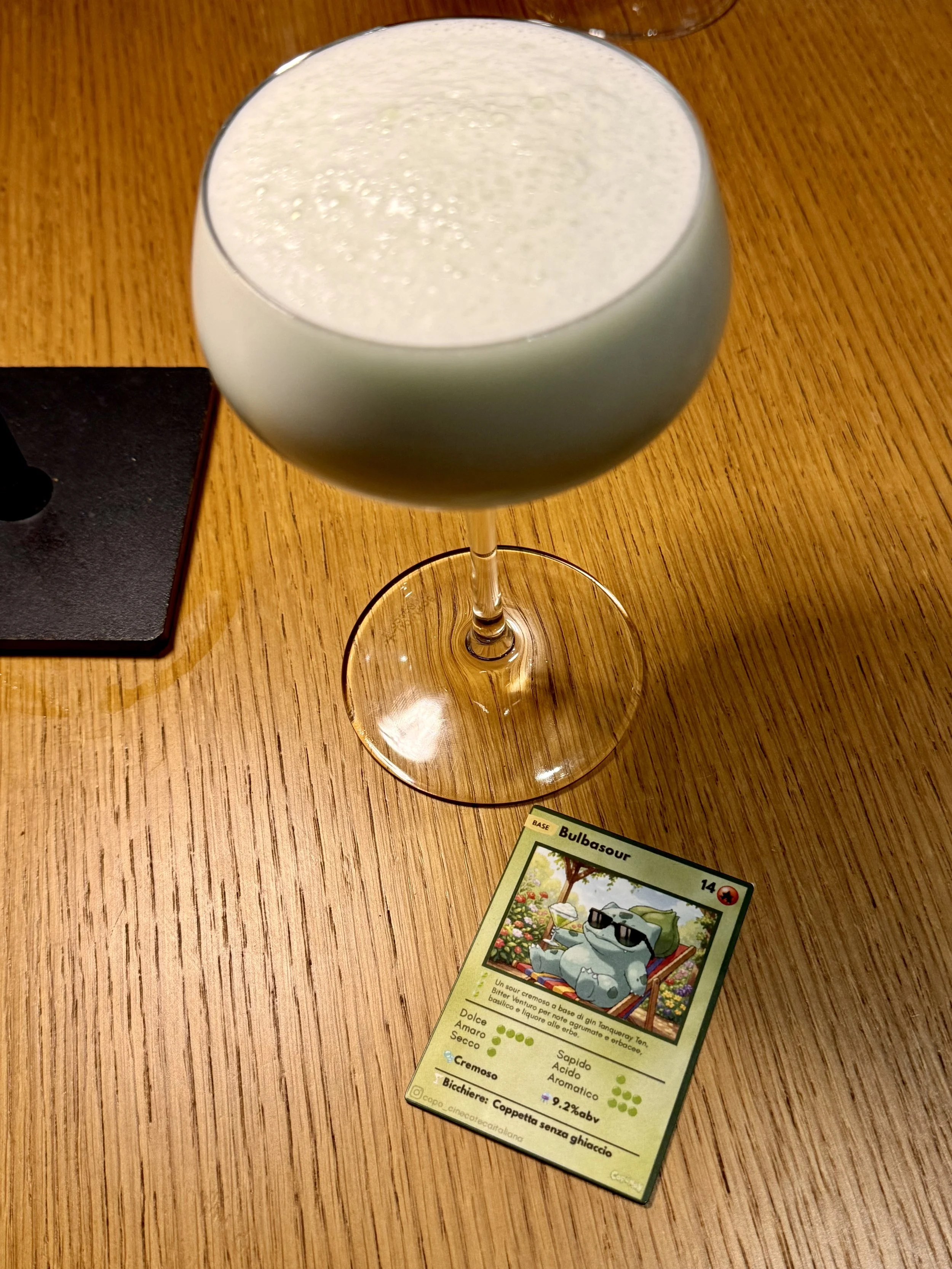
At Copo in Noci, my cocktail arrived with a small Pokémon-inspired sticker.
Around us were red cinema curtains, framed illustrations and a popcorn machine. The room was refined but playful, and I felt at ease within it. By the end of the evening, this had become my favourite overall dining experience of our Puglia trip.
What interested me extended beyond the restaurant. In Noci, I had noticed a florist, carefully designed signage and even a coffee-capsule vending machine. None was extraordinary on its own. Together, these small things gave me the impression of a town attending to contemporary life.
I found myself comparing it with Umbria, where I live. I disliked making the comparison, but the thought was persistent: parts of my life there can feel stuck in time. I admire the landscape and the depth of its food culture. I also miss a willingness to try something different.
One evening in Noci could hardly justify a judgement about two regions. It did, however, sharpen a question that followed us through Puglia.
When we say we love a place for being unchanged, how much room are we leaving for the people there to make something new?
We had begun our stay in Puglia in Ostuni. Evening light warmed its white walls, cacti lined rooftop terraces and the landscape opened beyond the houses. The familiar beauty was real. I wanted to enjoy it without letting it become the only version of the region I was prepared to recognise.
Days beside the Ionian Sea
In Santa Maria al Bagno, late October still allowed people to swim.
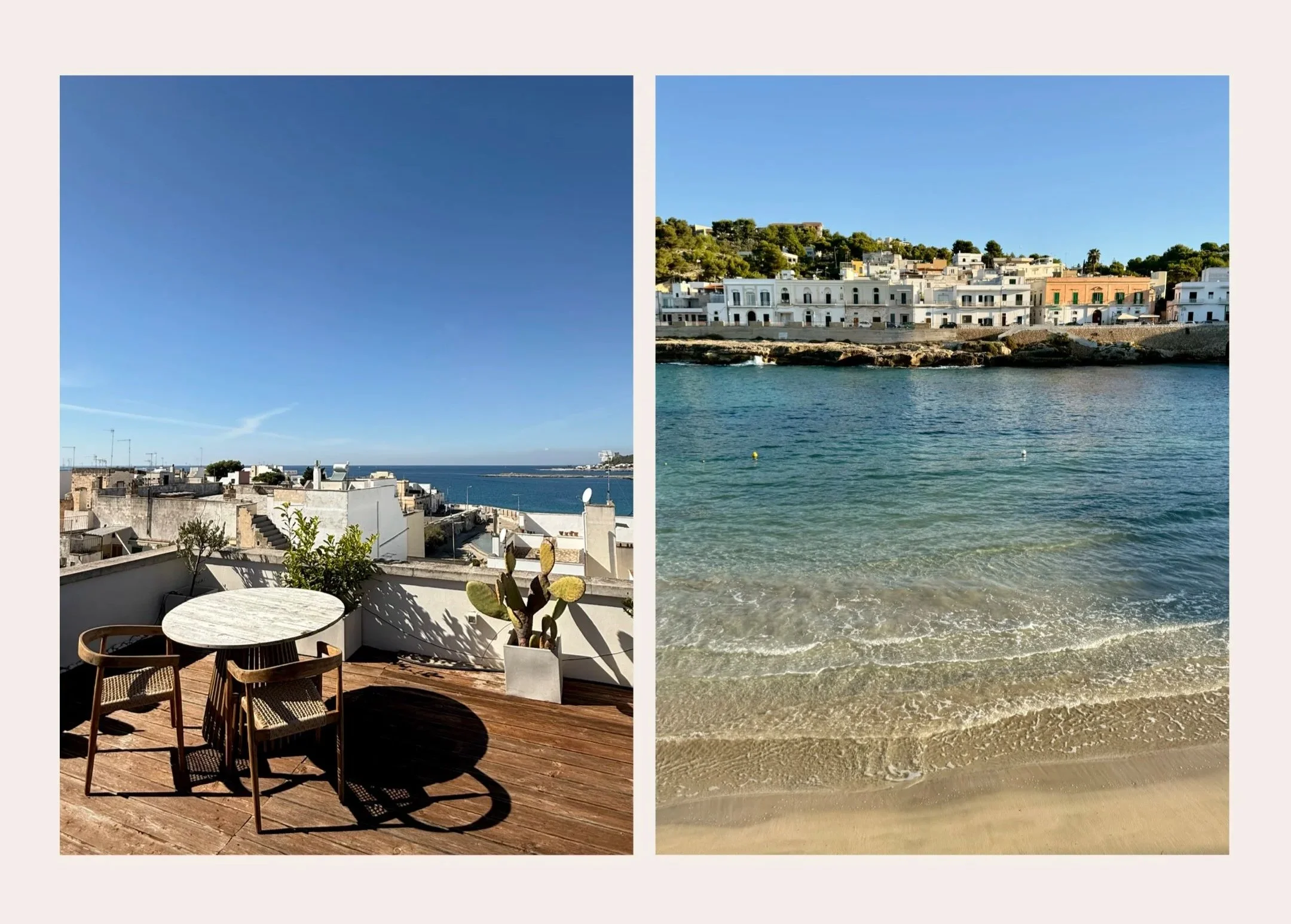
From our apartment, the small bay opened below us. Pale buildings followed the shoreline, and the water changed colour with its depth and the movement of the sun. Farther along the coast were rocks, low walls and the remains of a watchtower.
We had two terraces. One gave us somewhere to sit with coffee and look towards the sea; the other offered another angle on the village. With the doors open, air moved through the apartment.
We walked with the dogs, bought groceries and made simple dinners. On our first evening, I cooked pasta with lemon and tuna. Having a kitchen meant we could stay in without feeling we were missing something. A meal could simply be dinner, rather than another decision about where we ought to go.
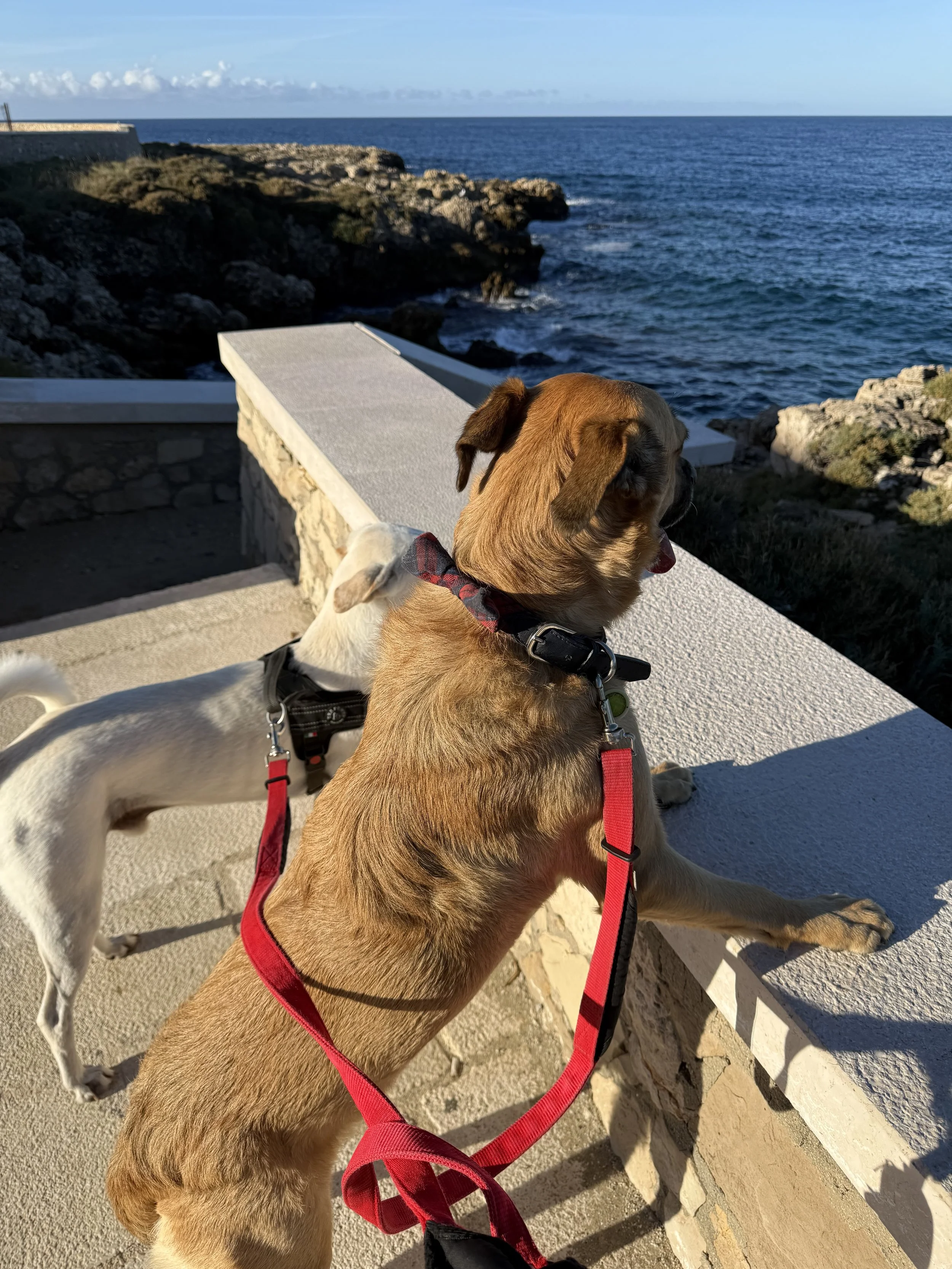
The days felt liberating. We could walk, stop for coffee and return to the water. Much of my happiness came from that temporary arrangement: the dogs, the breeze, somewhere to cook and a view I could return to without going anywhere.
It resembled domestic life closely enough to make it tempting to imagine we understood the place. Yet we had chosen these days and could leave when they ended. The freedom to do very little was part of our holiday. It told me how good it felt to be there under those circumstances, and much less about the demands of living there throughout the year.
Living in Umbria has made me more alert to that distinction. On a short visit, a limited range of choices can feel restful. Over months and years, the same limitation can become frustrating. Familiarity changes its meaning according to how much freedom one has to step outside it.
Alberobello beyond its architecture
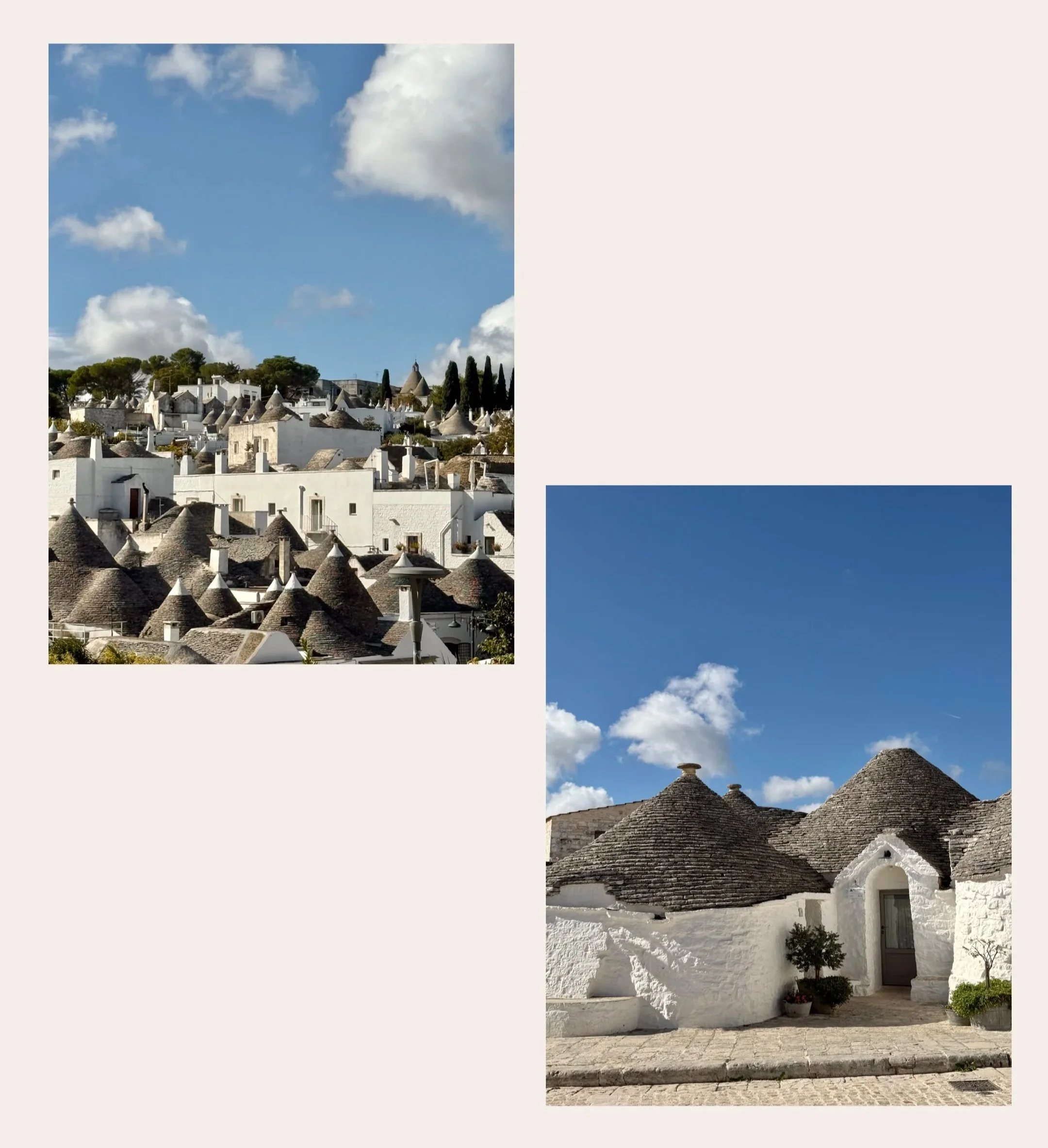
We spent about two hours walking around Alberobello before the crowds poured in. I thought it was really beautiful. I loved the shapes of the trulli, the way their conical roofs gathered above the white walls. Their appeal was immediate, and it held my attention.
The shops were another matter. Many seemed to repeat the same kinds of souvenirs, with much of the stock feeling tacky to me. I had hoped for more individual shops, with something of their own to contribute to such a distinctive setting.
I also noticed one property for sale with an asking price of €10,000 per square metre. It was a striking figure to encounter on the same walk. The asking price was one way of valuing a building. As a visitor, I was looking for something more immediate in the shops: a choice of goods that made me want to spend time there.
What disappointed me was the gap between the individuality of the architecture and the sameness of much of what was being sold. I wanted more reasons to walk into a shop beyond the fact that it occupied a trullo. The judgement and imagination of the person running it could have given me another way to engage with the town.
When beauty begins to repeat
Elsewhere, I was more restless.
In Lecce, I spent around twenty minutes studying the façade of the Basilica di Santa Croce. Flowers, faces and winged creatures crowded the stone around the rose window. The density of carving kept producing another detail to examine. Looking for longer changed what I could see.
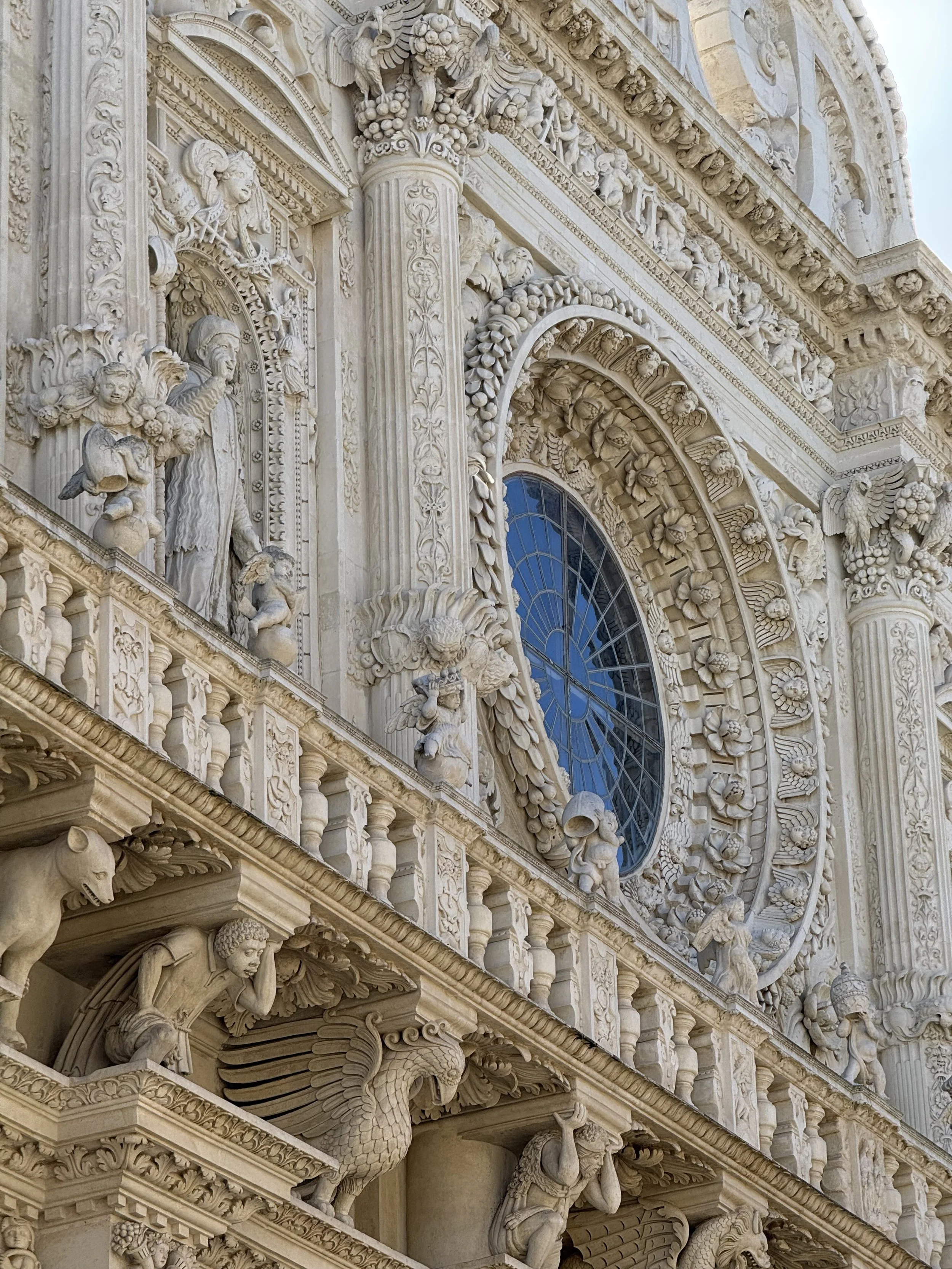
Around the rose window of the Basilica di Santa Croce in Lecce, there was always another detail to examine.
In Martina Franca, the Basilica di San Martino also caught my attention. The town around it felt empty during our visit, and I found myself starting to feel bored. After several historic centres, the towns were becoming same-ish in my mind.
That was an uncomfortable response to places I could plainly see were beautiful. I had travelled there willingly. Their buildings deserved attention. Yet admiration was no longer enough to sustain the afternoon.
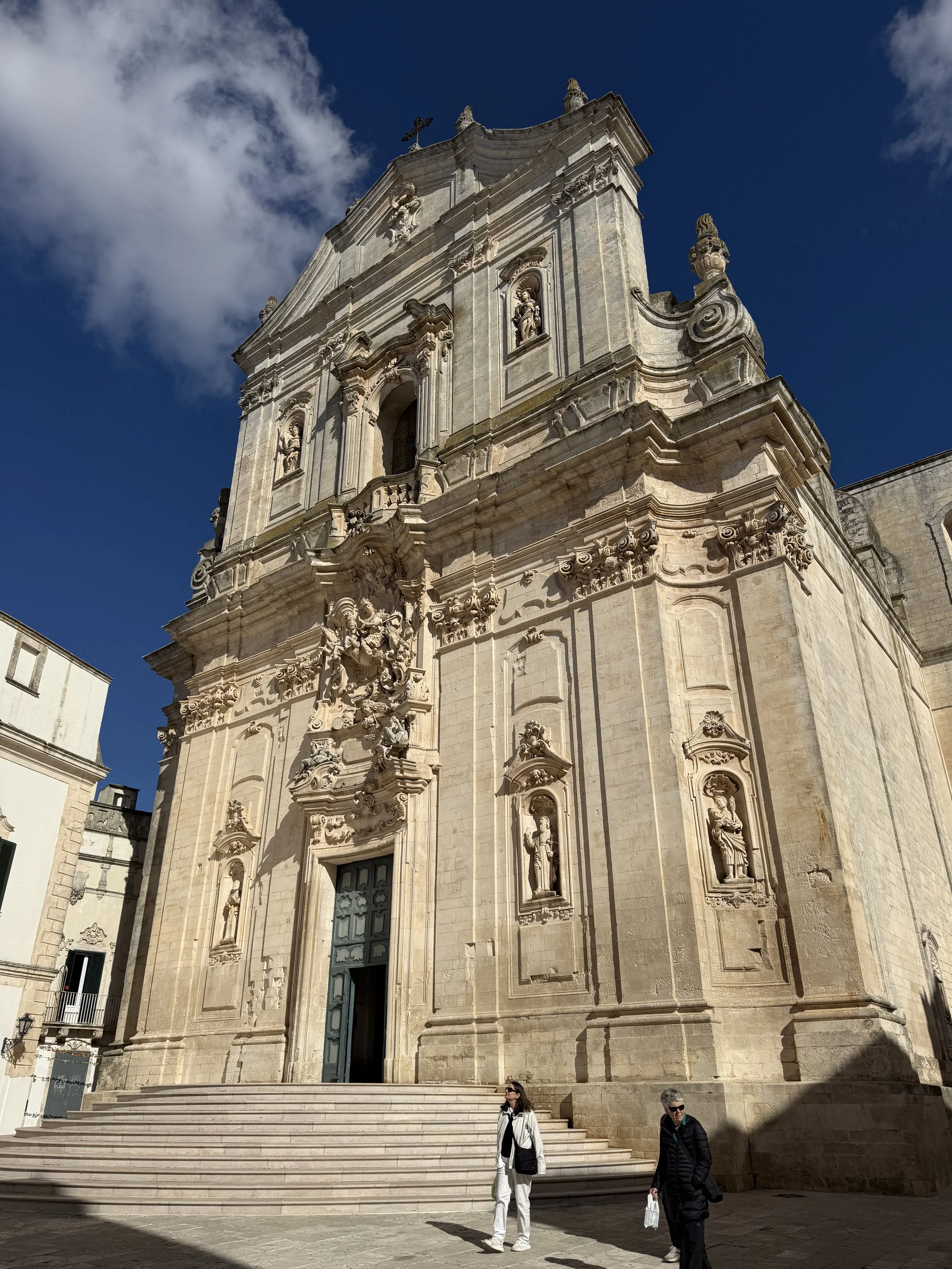
The Basilica di San Martino in Martina Franca. Its beauty was evident, even as my attention began to tire.
Part of the repetition came from my own routine: park, walk, admire a church, find a coffee, take photographs. I was asking different towns to provide similar experiences. Their histories had not become interchangeable; my way of visiting was making them feel so.
But I did not want to explain the boredom away entirely as a failure to look properly. That would make the beauty of the setting an obligation to enjoy whatever happened within it. There are afternoons when a remarkable façade holds my attention and the town beyond it does not. Admitting that seems more useful than writing another passage of admiration I did not feel.
After Martina Franca, we walked four or five kilometres along the aqueduct route. I enjoyed the scenery and the change of activity. It reminded me that an afternoon in Puglia could be organised around moving through the countryside as readily as looking at another historic centre.
At Martinucci in Monopoli, the gap was more straightforward. I liked the appearance of the café more than its pasticciotti, coffee or service. The setting could not compensate for an experience I found disappointing.
I could admire a town and still want more from the time I spent there. Good architecture gave me a reason to look. It could not decide how the rest of the afternoon would feel.
Bari with room for different appetites
Bari brought a welcome change of energy.
In the old town, women worked at tables covered with orecchiette. Small pieces of dough accumulated across boards and trays, their irregular shapes recording the hands that had made them. I photographed the scene, joining the visitors drawn to this familiar image of the city. On a side street, we bought four half-kilo bags at €2.50 each.
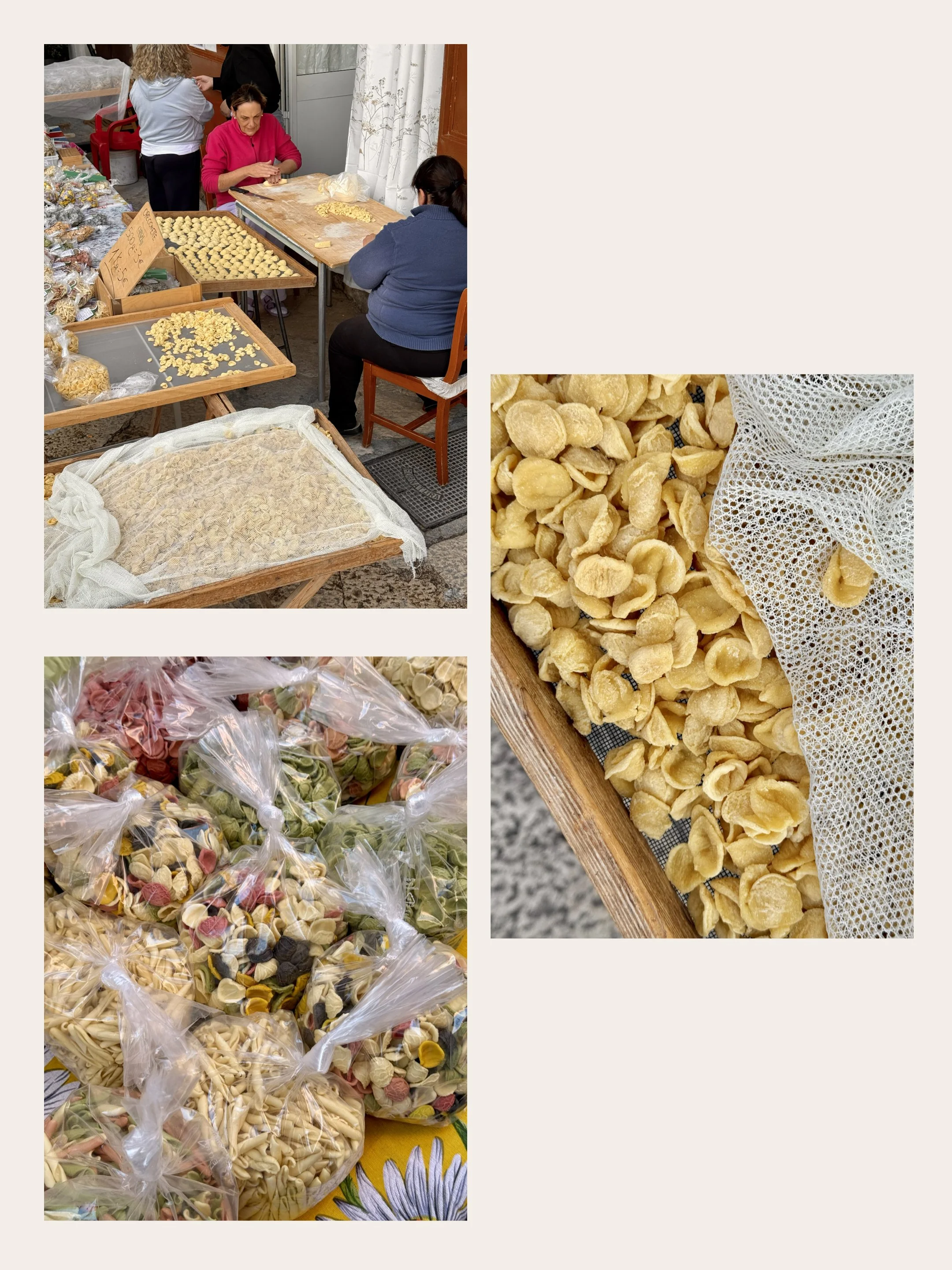
Orecchiette being made in Bari Vecchia. We bought several bags to cook during the trip.
It was easy to see why people stopped. The work was skilled, visible and immediately understandable. Watching dough become pasta offered a connection that a sealed packet on a shelf could not.
The attention of visitors did not make the work insubstantial. People were making something to sell, and tourism could be part of that transaction without cancelling the skill involved. I could enjoy watching without knowing how it felt to spend a working day being watched. Calling the scene authentic would not explain the lives within it; dismissing it as touristy would be just as reductive. We bought pasta we wanted to eat.
In another street, the cathedral rose beyond balconies with green shutters and a shop selling household supplies. Goods crowded the pavement beneath its awning. I liked having the shop and the church in the same view. It resisted the separation a photograph can create between the historic town we admire and the practical town people use.
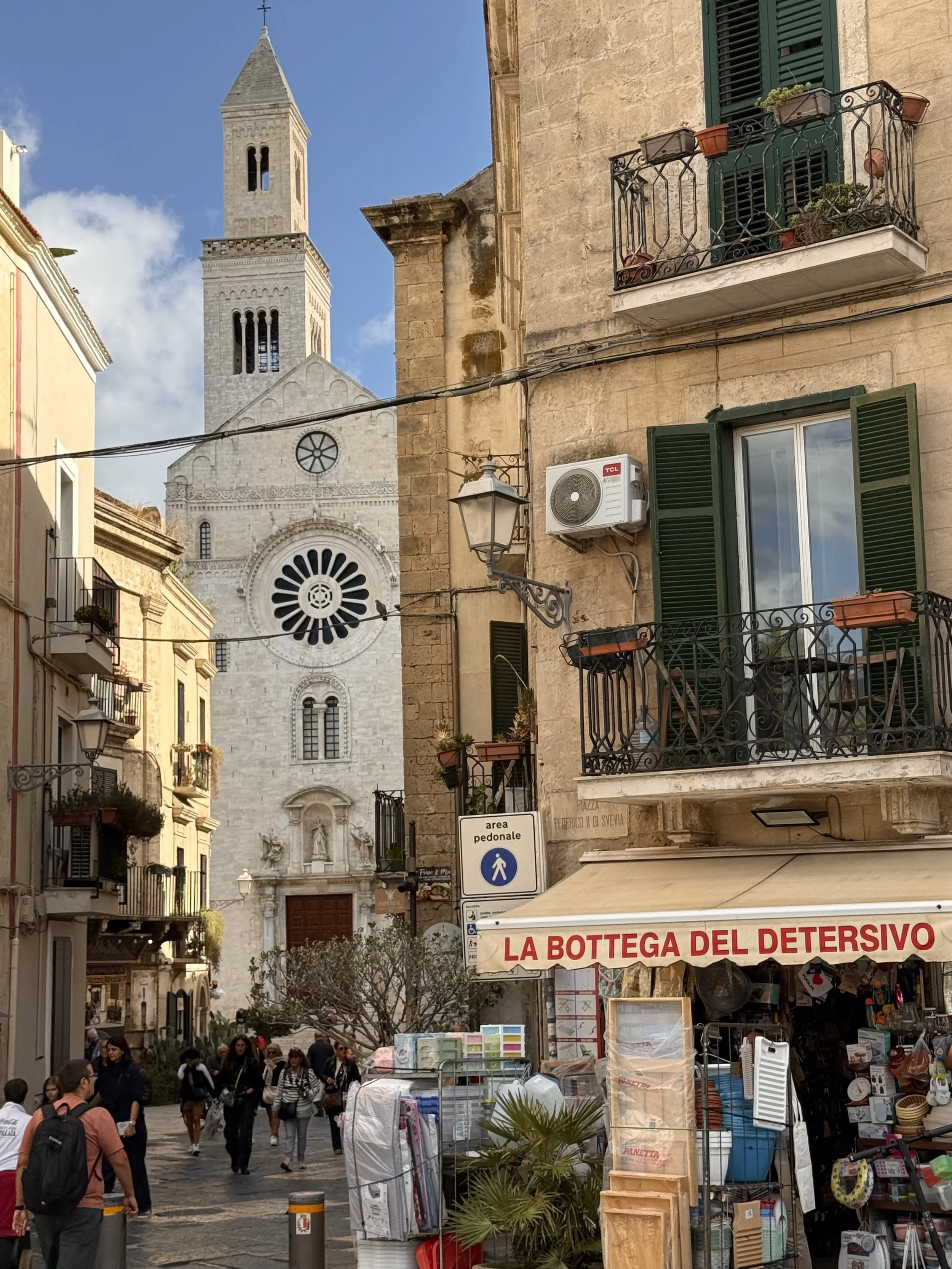
In Bari Vecchia, a household supplies shop shares the view with the cathedral.
Beyond the old town, the streets of the Murat district offered another way of looking at Bari. Palazzo Mincuzzi drew my attention upwards through its elaborate façade. At Caffè del Borgo, I drank a Colombian Red Papayo filter coffee. I enjoyed having a different kind of coffee to consider after so many espressos taken at Italian bars.
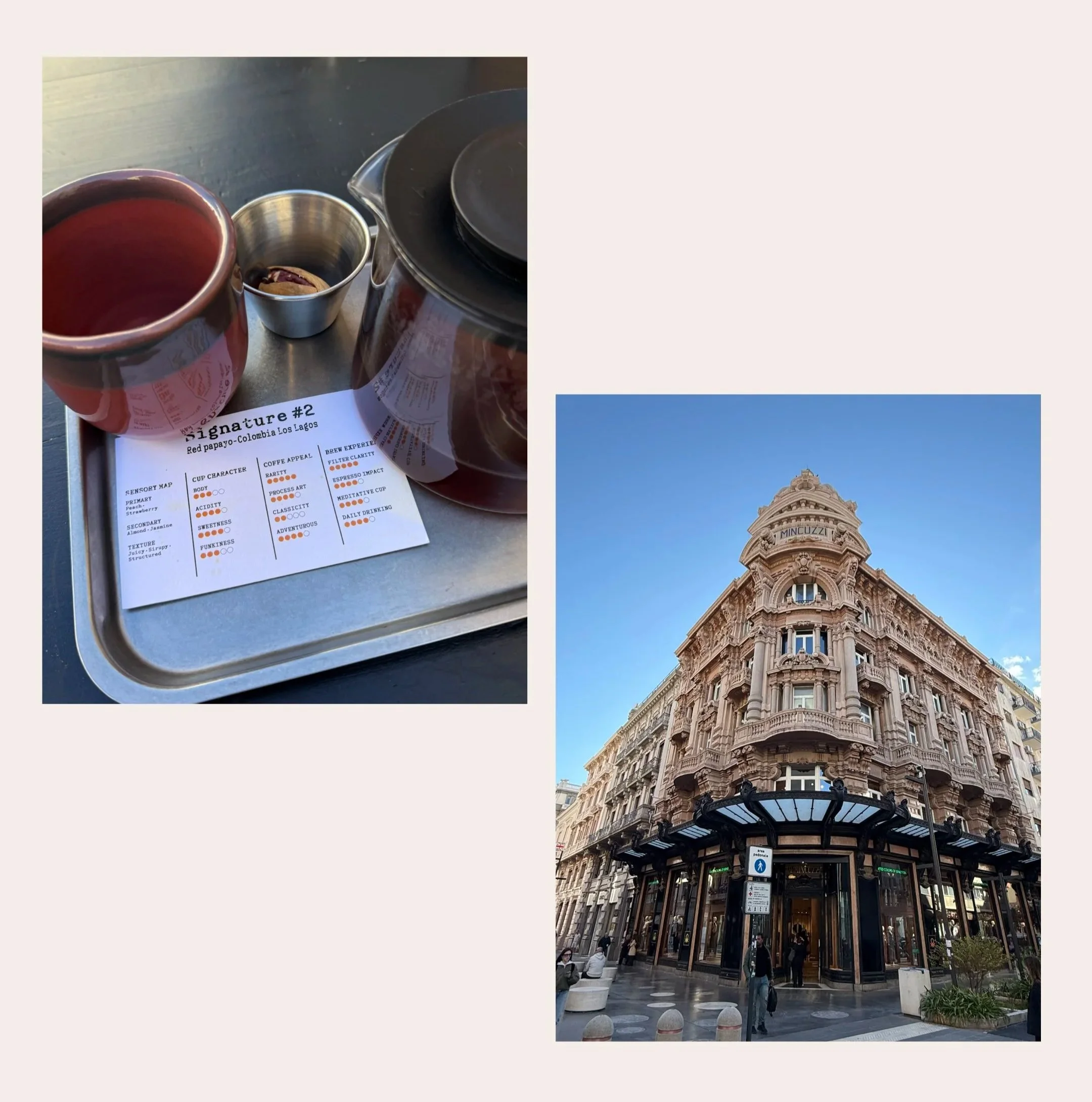
Bari allowed several pleasures to sit within the same day. Handmade pasta did not require me to lose interest in a Colombian coffee. Nor did enjoying the coffee make me less interested in the city around it.
A place can be understood through what people choose to bring into it as well as through what has long been made there.
An Airstream among the olive trees
For six nights, our base near Monopoli was Airstream Petrarolo. Around it, a narrow lane passed between low stone walls and olive trees with broad, twisted trunks. I photographed the landscape as well as the caravan.
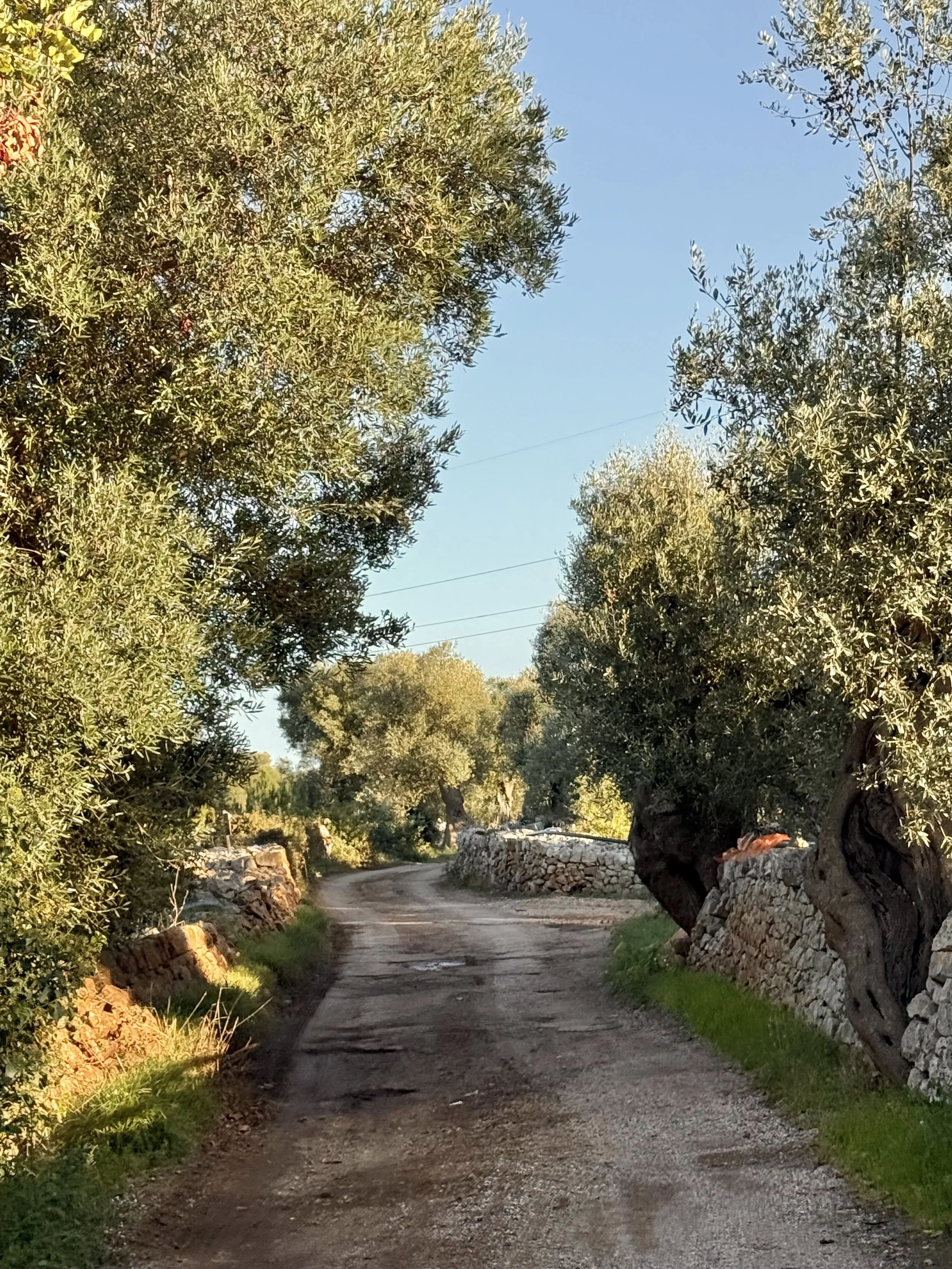
Olive trees and low stone walls around Petrarolo, near Monopoli.
I had never stayed in an Airstream before. The silver body stood beside a wooden deck, with the sea visible in the distance. Inside were pale cabinetry, a compact kitchen and a blue upholstered sitting area. It fulfilled a glamping dream I had carried for some time. The outdoor shower became one of the details I remembered most.
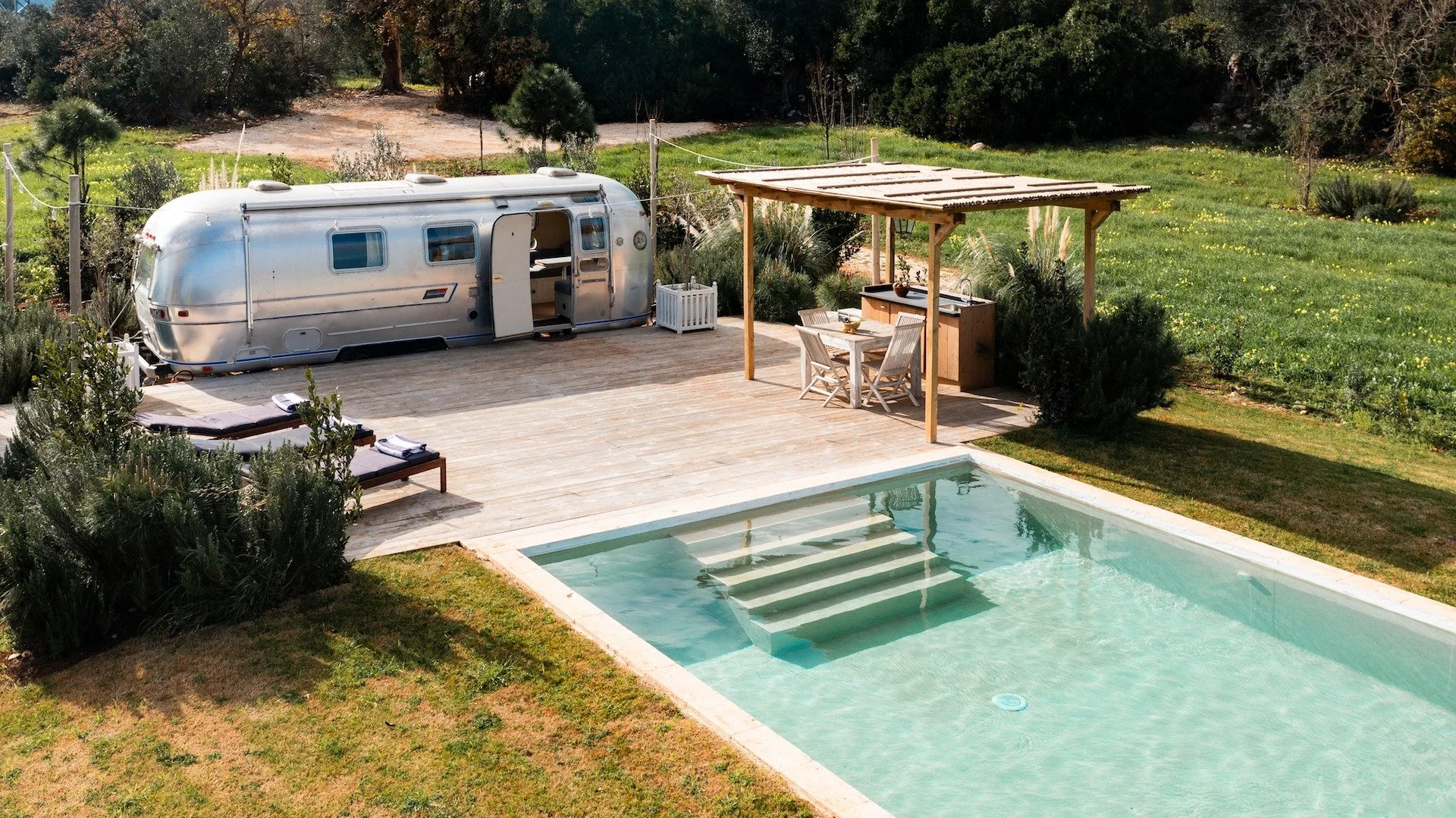
Photo credit: Airstream Petrarolo
In the welcome booklet, owner Constant Tedder described finding the Airstream in North Carolina and bringing it to the United Kingdom for a five-year restoration. An expert boatbuilding team had refitted the bare shell.
Its journey complicated any simple idea that accommodation must look traditionally Italian to belong within an Italian trip. An American caravan, restored in Britain, had given us a way to spend six nights among Pugliese olive trees.
What mattered to me was how we used it: driving out to a town, returning to the grove, cooking some evenings and spending time outdoors. The stay brought the surrounding landscape into the shape of our days.
That seemed a more useful test of its relationship with place than whether its appearance fulfilled an inherited image of the countryside.
Following the olive oil back
At Frantoio Pacello, we followed the olive harvest beyond the trees.
We met brothers Federico and Valerio, saw the traditional granite millstone and pressing equipment, and learnt about modern extraction methods. Olives arrived mixed with leaves, their skins ranging from green to dark purple.
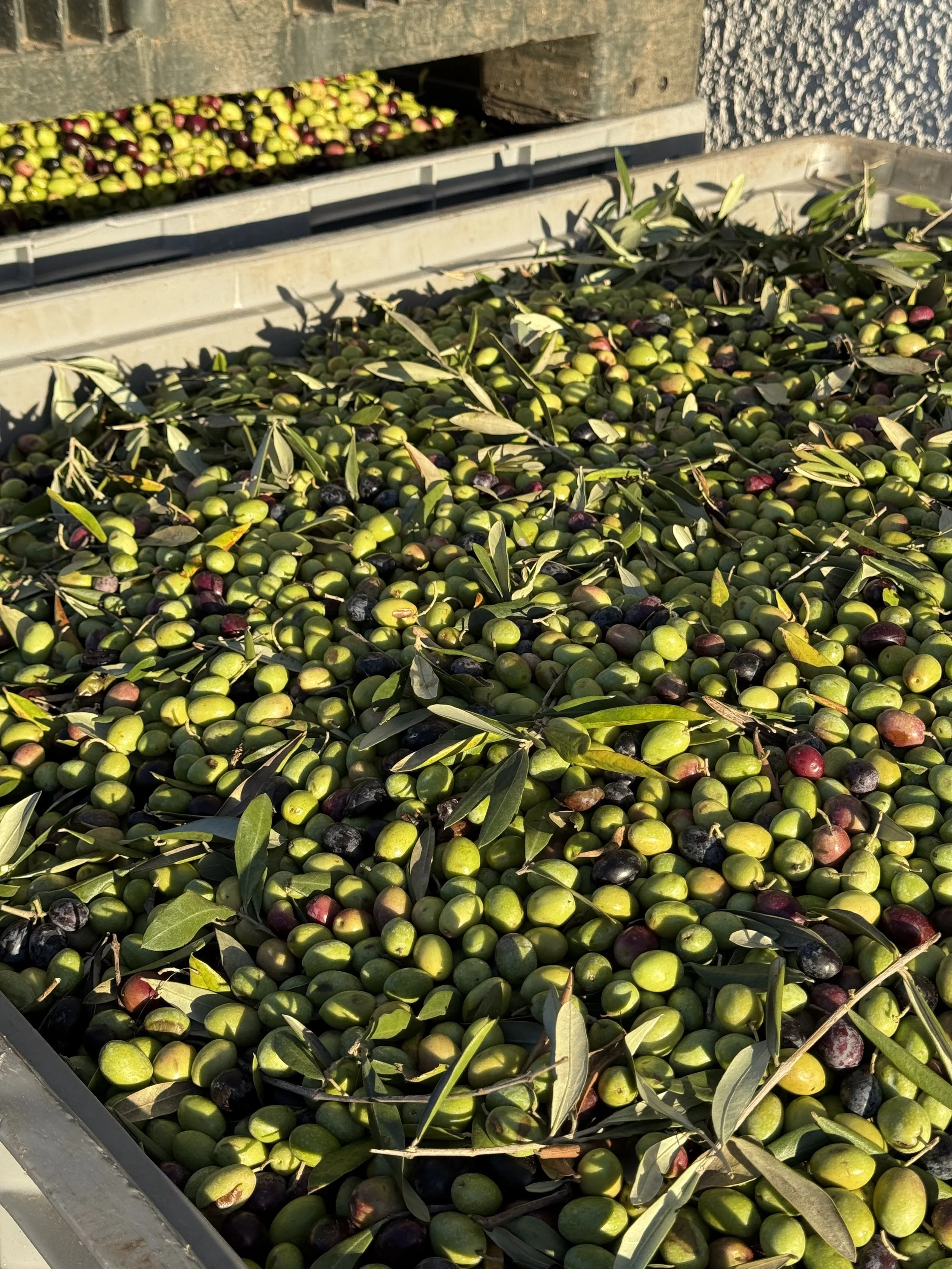
There was plenty to look at beyond the finished oil. Pressing mats were stacked in dark, oil-marked layers around a central shaft. Crates and machinery made the transformation of a harvest physically apparent.
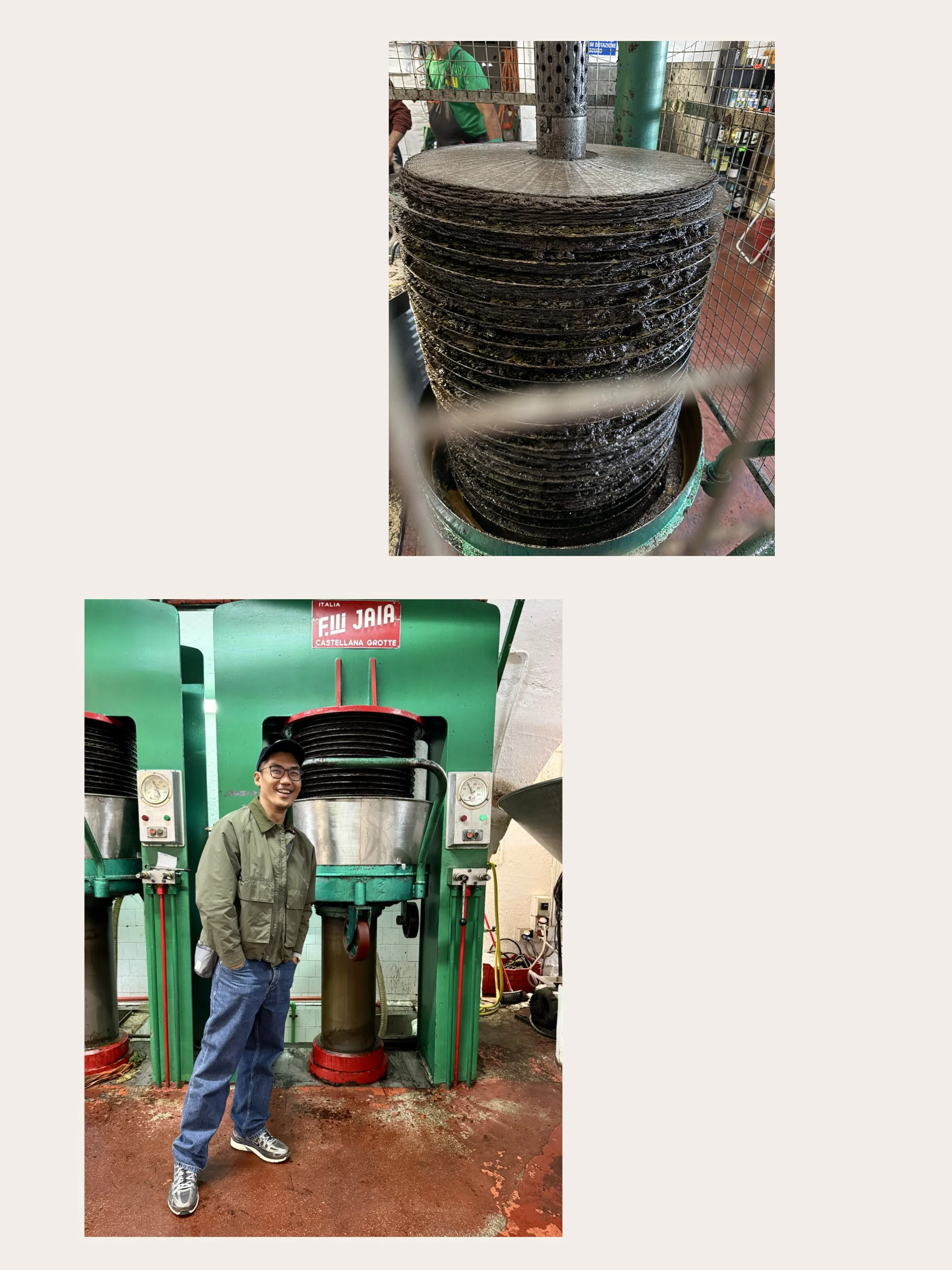
Beside the traditional pressing equipment at Frantoio Pacello.
The older equipment held my attention. Its scale and surfaces made it easy to photograph, and easy to associate with a reassuring idea of traditional production. But its appearance could tell me little about the quality of the oil.
Seeing traditional equipment alongside modern extraction made me more interested in the decisions behind the oil than in choosing the more romantic image. Continuing a craft can involve changing how it is practised. A producer needs knowledge of what to retain and what another method can make possible.
We tasted freshly produced oil alongside oil from the previous year. It was a comparison across time, rather than a test of the different extraction methods.
Helping with a grape harvest at Terramante in Umbria had made me aware of the work and uncertainty concealed by a finished bottle of wine. Those experiences became What a Bottle Leaves Out.
Meeting Federico and Valerio gave us people to remember when we used the oil we bought. The olive grove now brought to mind a harvest to handle and equipment to use, as well as the trees I had photographed.
The bread beyond its reputation
I found Antico Forno Santa Caterina in Altamura through Google Maps. Only afterwards did I learn about the two grandmothers whose online fame had brought it another kind of attention.
That made me wary. I dislike the way a place can become an obligation once enough people have watched the same video. I had wanted to visit a long-established bakery and eat its bread. I did not want to arrive measuring the encounter against an internet personality.
We reached it before the crowds, as bread was coming out of the oven. Stone, flour and long-handled tools filled the room. Light caught the flour in the air. The staff were warm and chatty, and the atmosphere felt magical to me.
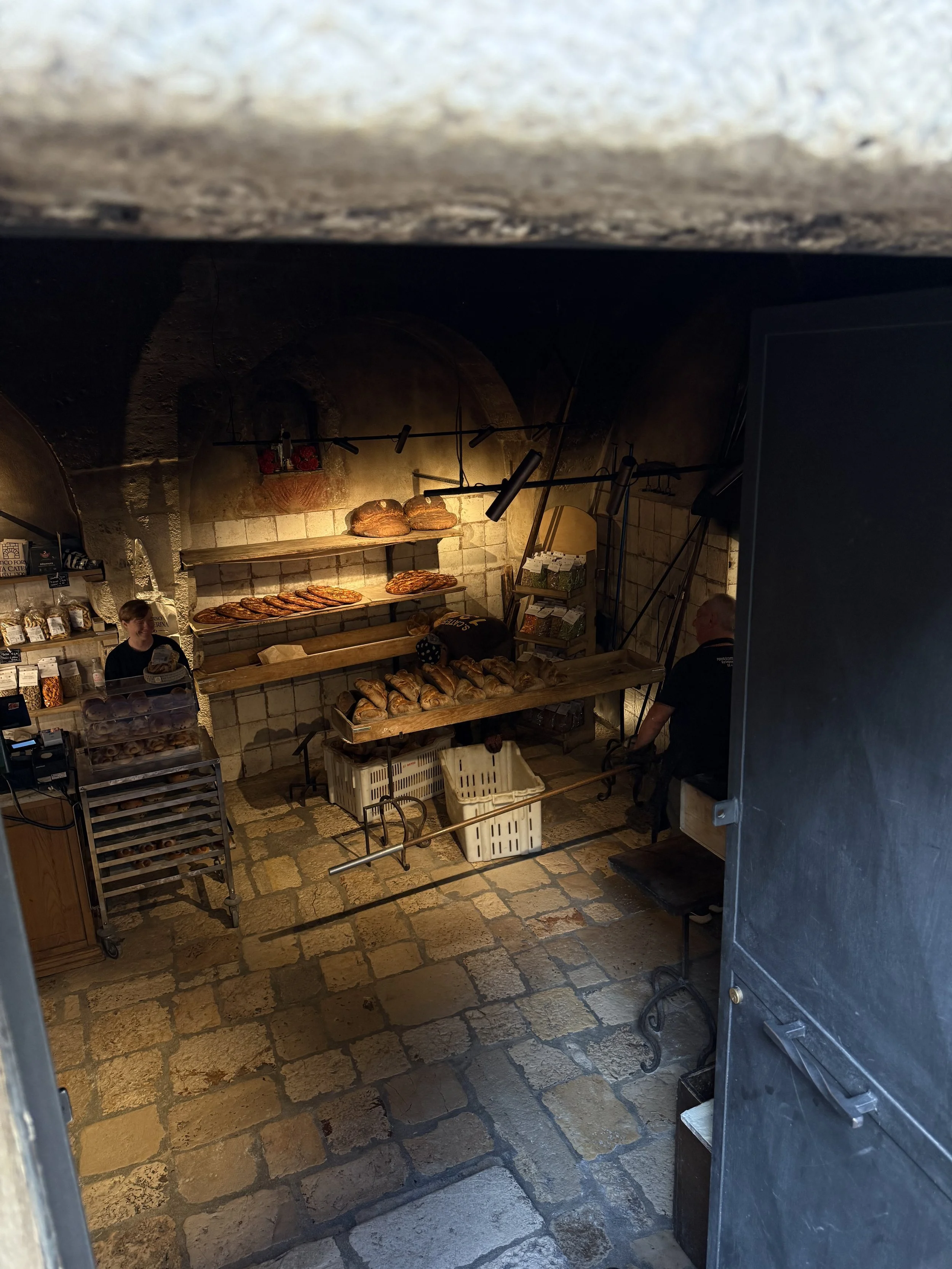
We did not see the grandmothers. It made no difference to my enjoyment. There was already more than enough to attend to: the bread coming out, the people working and the pleasure of being welcomed into the room at that moment.
We left with roughly a kilo of focaccia and half a kilo of traditional bread. The bread was crunchy outside and soft within, deeply savoury without seeming excessively salty. The focaccia remained excellent when we ate it later, after it had cooled. Its quality survived beyond the photogenic moment of leaving the oven.
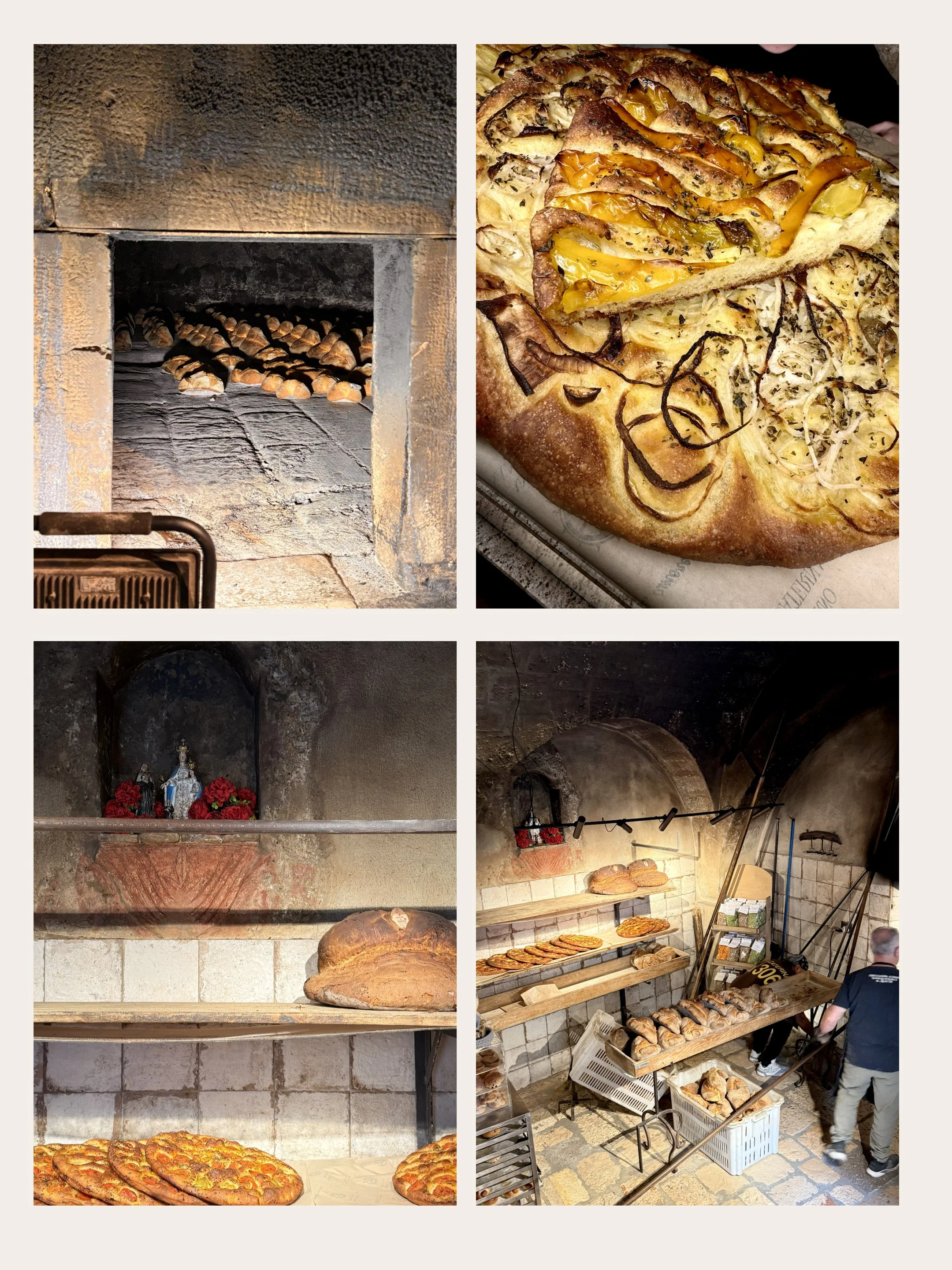
The visit made me reconsider my own resistance to viral places. Avoiding somewhere solely because it is famous would still allow its reputation to determine my decision. Popularity could neither explain the quality of this bakery nor invalidate it.
That was a version of the problem I had explored in Travel, Pre-experienced: expectations can occupy a journey before we arrive. My suspicion of the bakery’s fame had given me an expectation of my own. Once inside, I had found plenty to enjoy without needing the visit to follow the story I had encountered online.
What stayed with me was the flour in the light, the warmth of the staff and the bread we went on eating.
An evening in Noci
At Copo in Noci, the cinema references were apparent as soon as we entered. Red curtains ran along a wall, illustrations spelled out the name and popcorn appeared as part of the welcome. The room felt carefully considered, with enough humour to make the design enjoyable rather than solemn.
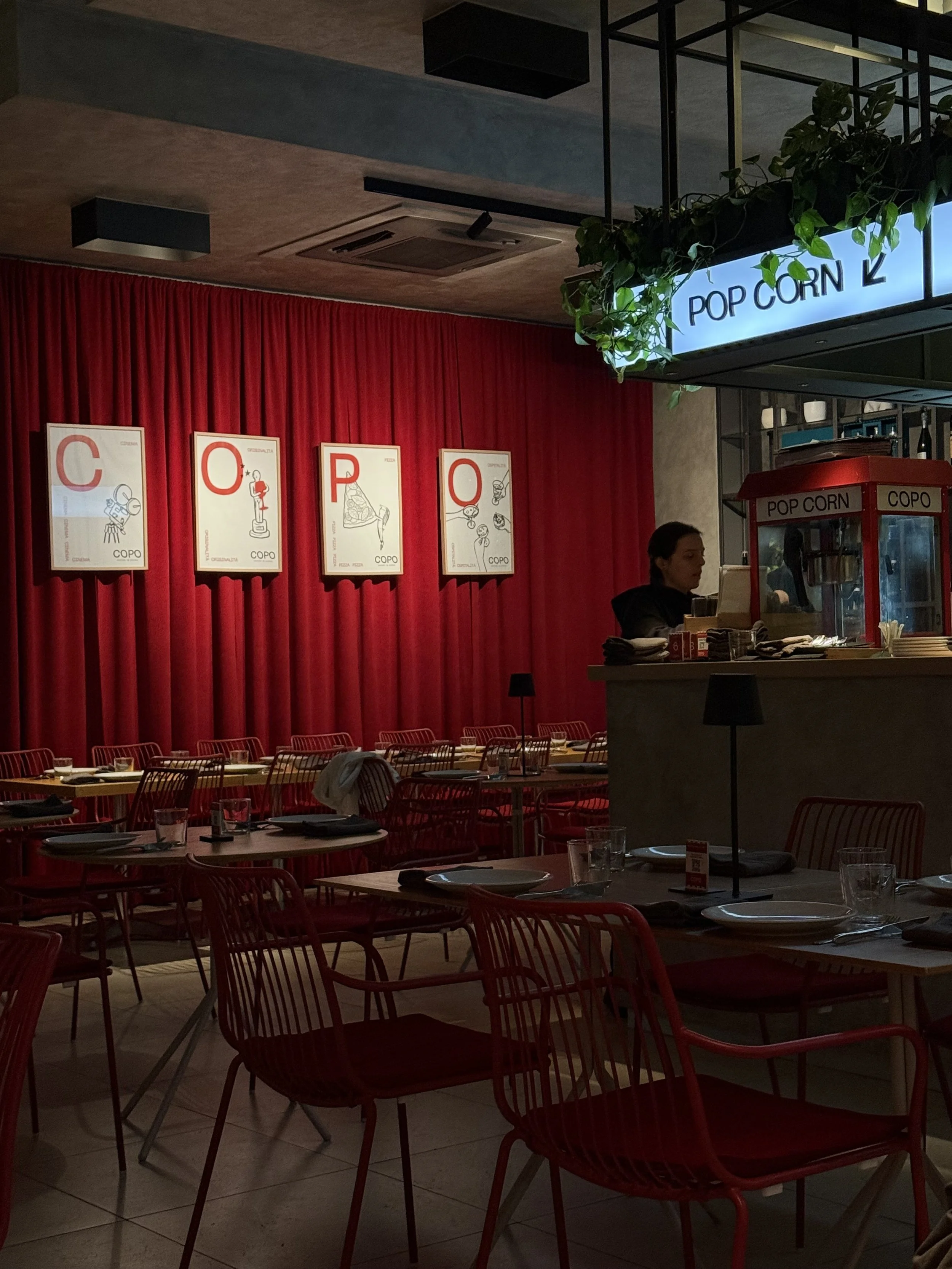
The aperitivo was phenomenal. The Pokémon-inspired cocktails came with illustrated stickers, adding a small, cheerful element to drinks that were already enjoyable. The staff and service made us feel comfortable in the room.
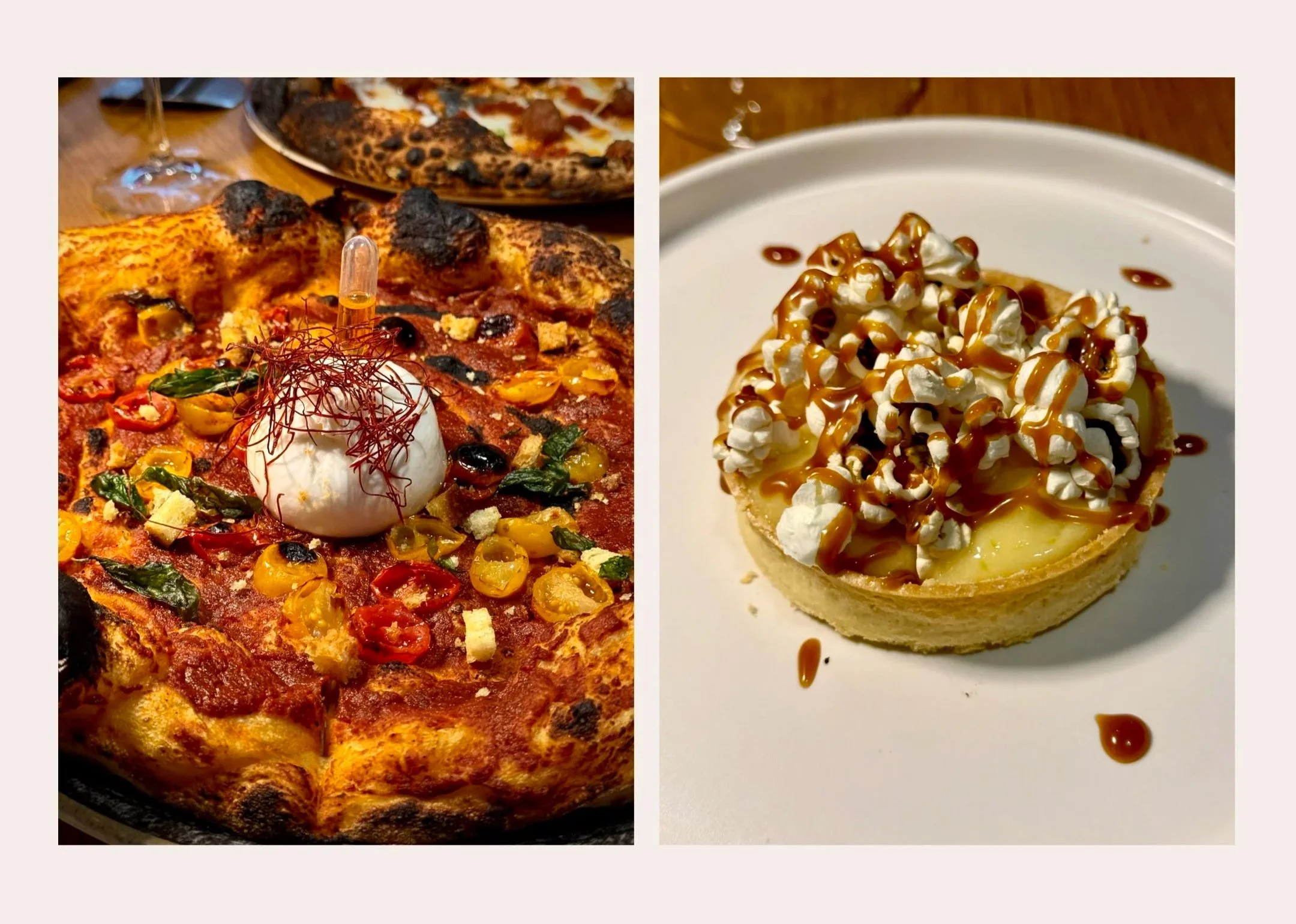
Then came pizza made with dough fermented for seventy-two hours. For dessert, the lemon-curd tart arrived under popcorn and salted caramel, carrying the room’s cinema references onto the plate. I liked the way the food, drinks and setting supported one another. There was no part of the evening I felt obliged to overlook in order to enjoy the rest.
Thinking back to the florist, the signage and the coffee-capsule vending machine, I could see why the evening had made such an impression. These were small observations, yet together they suggested that contemporary tastes and everyday conveniences had somewhere to belong in Noci.
Copo’s references travelled well beyond Puglia. Cinema and Pokémon did not tell a conventional story about regional identity. But I was spending an excellent evening in Noci because someone had chosen to make this particular place there. That contribution belonged to the town’s current life, however far its influences had travelled.
The old bakery in Altamura and this contemporary restaurant both gave me reasons to return. Copo had also expanded what I imagined possible in a small town.
What I was comparing with home
When I thought that home could feel stuck in time, I was describing a frustration I knew alongside real affection. I enjoy living among its landscapes. I value the familiar food and the ease of returning to places I know. Yet familiarity can become a limit when it leaves little room for curiosity, different tastes or another way of welcoming people.
I grew up in Kuala Lumpur and later lived in Hong Kong and Singapore. Moving between food cultures was part of ordinary life. Living in the Umbrian countryside suits me, but that earlier appetite has remained. I can want peace at home and still want somewhere nearby to surprise me.
That helps explain why a Colombian coffee in Bari and an evening at Copo stayed with me. Neither required the whole place around it to change. Each gave me another possibility within it.
Living somewhere involves more than preserving the qualities that first attracted me. A countryside can remain beautiful on a day when I am bored, disappointed by a meal or wishing someone would attempt something new.
UNE already gives me a reason to think differently about Umbria. Giulio Gigli brought knowledge gathered abroad into his native region, a relationship I explored in The Plural of One. Shiso grew in his garden against an Umbrian hillside; the mill, ingredients and relationships around the restaurant gave that wider experience a particular home.
What I value at UNE is that wider experience becoming useful to a specific place. Noci made me want more of that possibility in ordinary life as well as in exceptional restaurants. A small town can take contemporary tastes seriously without acquiring the same menu or design language as everywhere else.
The question of how Umbria might become more recognisable without becoming generic ran through Before Umbria Becomes a Brand. Puglia made me consider the pressure from another direction. Visitors can help fix an image in place by rewarding what fulfils it and treating departures as a loss of character.
My own writing participates in this. The photographs and places I choose tell readers what I consider worth their attention. If old façades and traditional food carry the entire story, contemporary life begins to look like an interruption. Showing a household supplies shop beside a cathedral, or giving a restaurant such as Copo the same attention as a historic bakery, changes the account I am offering.
Old buildings and inherited knowledge deserve care. So does the capacity of people living among them to decide what comes next. Protecting character becomes a narrower project if it protects only the part a visitor finds pleasing.
If I welcome contemporary creativity in cities, I should extend that curiosity to small Italian towns. Expecting them to satisfy me through their past alone would leave little room for the people who have a future to make there.
More than the beautiful part
One evening at the Airstream, I cooked the orecchiette we had bought in Bari with cime di rapa. By then, we had eaten versions of the dish in several places. My favourite had been at Mezzo Quinto in Lecce. Now it was our turn to make dinner.
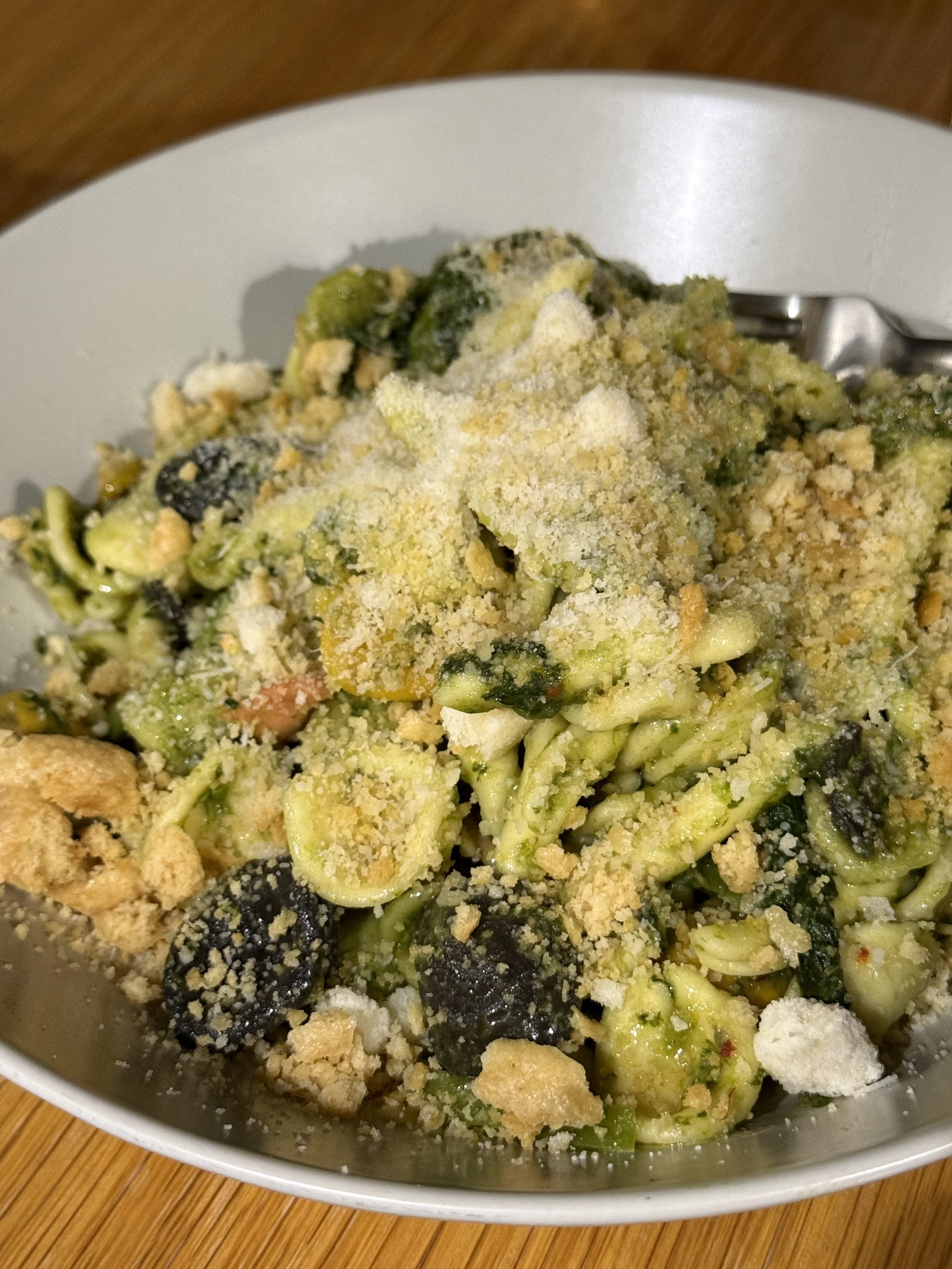
That small movement, from looking to using, was part of what I wanted from the journey. It gave one encounter a life beyond its photograph.
The longer I live in Italy, the less sufficient I find the language of quaint towns and perfectly beautiful lives. The beauty continues to give me pleasure. It exists alongside limitations, uneven service and habits that can become difficult to question. Admiring a place does not require me to turn those experiences into charming imperfections.
Visiting and living expose us to different parts of the same place. A visitor can choose an appealing room, a good meal and the hours in which the town gives the greatest pleasure. Living there means returning to what is available and encountering what is absent. The difference lies partly in repetition and partly in the ability to leave.
Even with a home in Italy, I was still a visitor in Puglia. I could move from a sea-view apartment to an olive grove, and from one town to another when my interest changed. My longer experience of Italy gave me questions to ask. It did not give me complete knowledge of somewhere I had visited for a few days.
A place does not have to remain unchanged to remain itself. But allowing it to change asks something of the visitor too: a willingness to encounter a present that may differ from the one we came hoping to find.
I would return for that bread. I would return to the sea. I would also return to Noci with an interest in what might have changed since the last time.
Stories shaped by the art of noticing.
Before you leave, you are invited to sign The Guestbook.
Further reading
Before Umbria Becomes a Brand - on welcoming change without making a region generic or reducing it to the image visitors expect
The Plural of One - at UNE, Giulio Gigli’s international experience becomes a way of working more closely with Umbria and the people around his restaurant
What a Bottle Leaves Out - a harvest at Terramante reveals the work, uncertainty and decisions behind a finished bottle of wine
Travel, Pre-experienced - on the expectations that can occupy a journey before we arrive, and what remains possible when the encounter exceeds them
Unless otherwise credited, all photography and written content are original works by Foodie Goes Travel.
