Spoleto, Between Stone and Silence
Words and photograph by JJ Wong
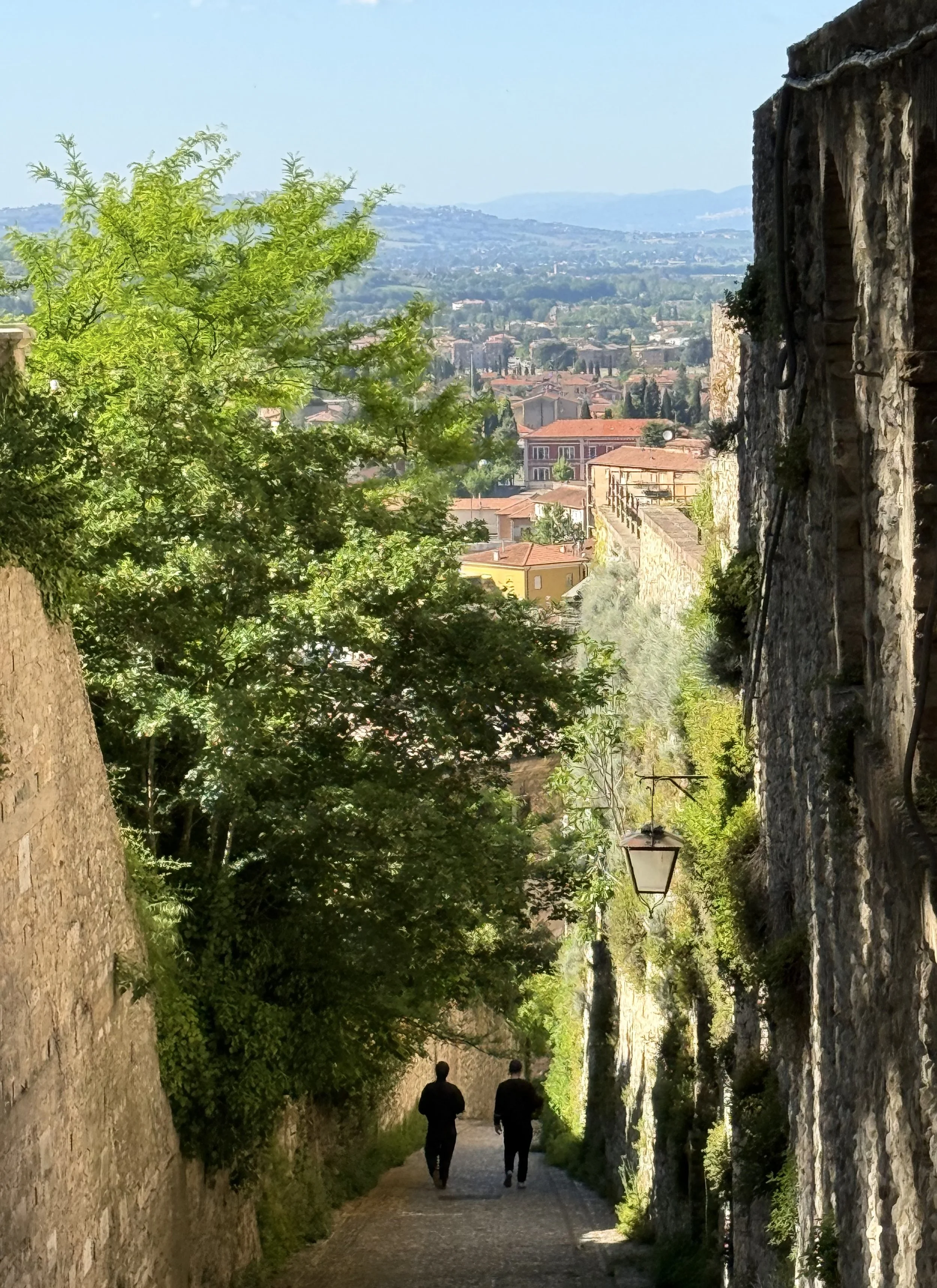
Spoleto reveals itself gradually.
Not through spectacle but through rhythm: stone staircases worn smooth over centuries, church bells moving through the valley air, forests beginning where the town ends.
In Umbria, many towns feel preserved. Spoleto feels inhabited.
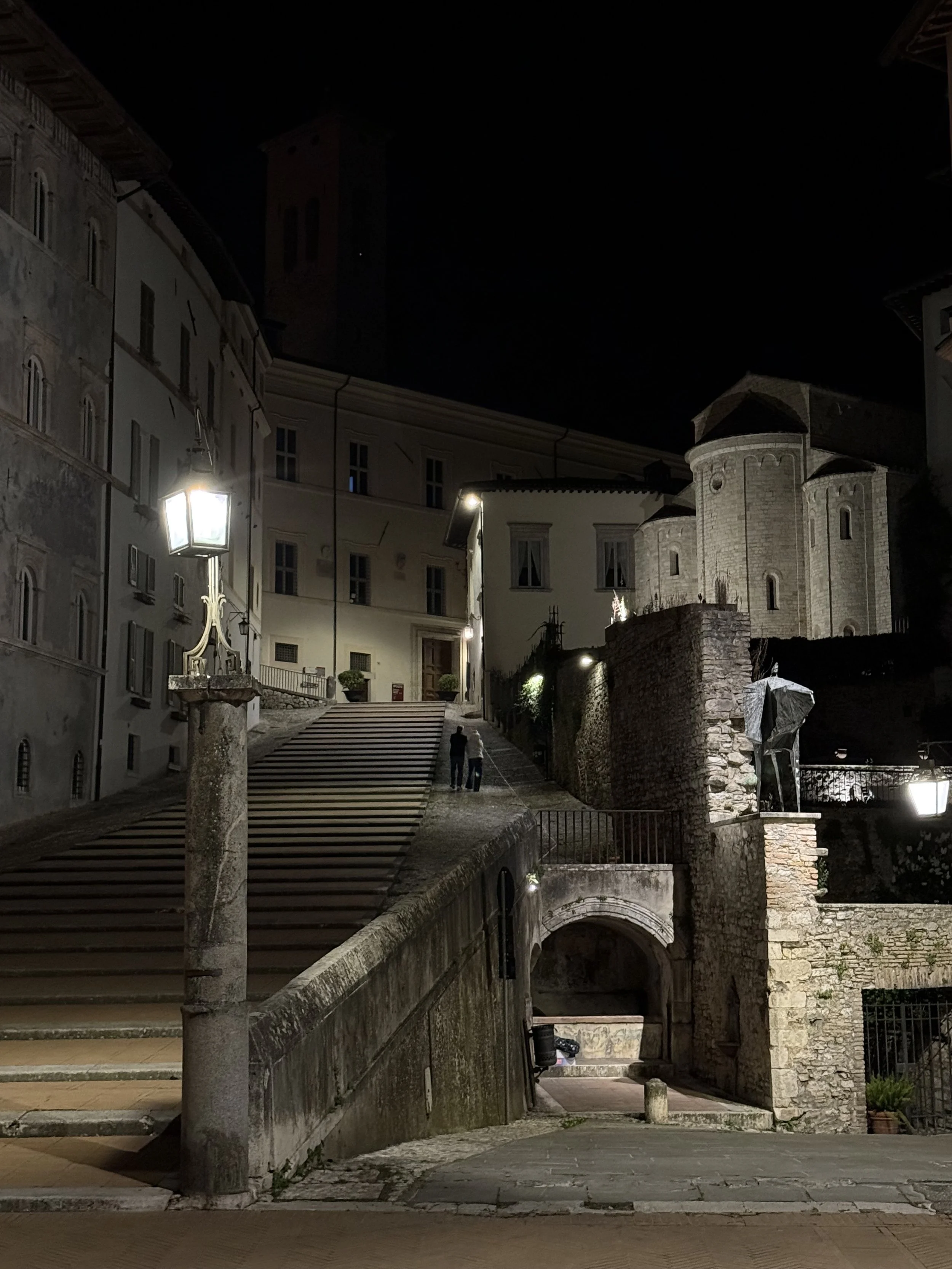
Morning light reaches the facades slowly. Elderly residents pause outside cafes before the heat arrives. By evening, the streets empty again into silence, interrupted only by footsteps disappearing into narrow lanes beneath Roman arches.
Set between mountains and woodland in southern Umbria, Spoleto exists in constant dialogue with the landscape around it.
Forest paths begin minutes from the medieval centro storico. Beyond the rooftops lie ridgelines, abandoned stone ruins, grazing horses, and valleys that stretch deep into central Italy.
This is not the Italy of urgency. Instead, it unfolds quietly over time.
Stone and Silence
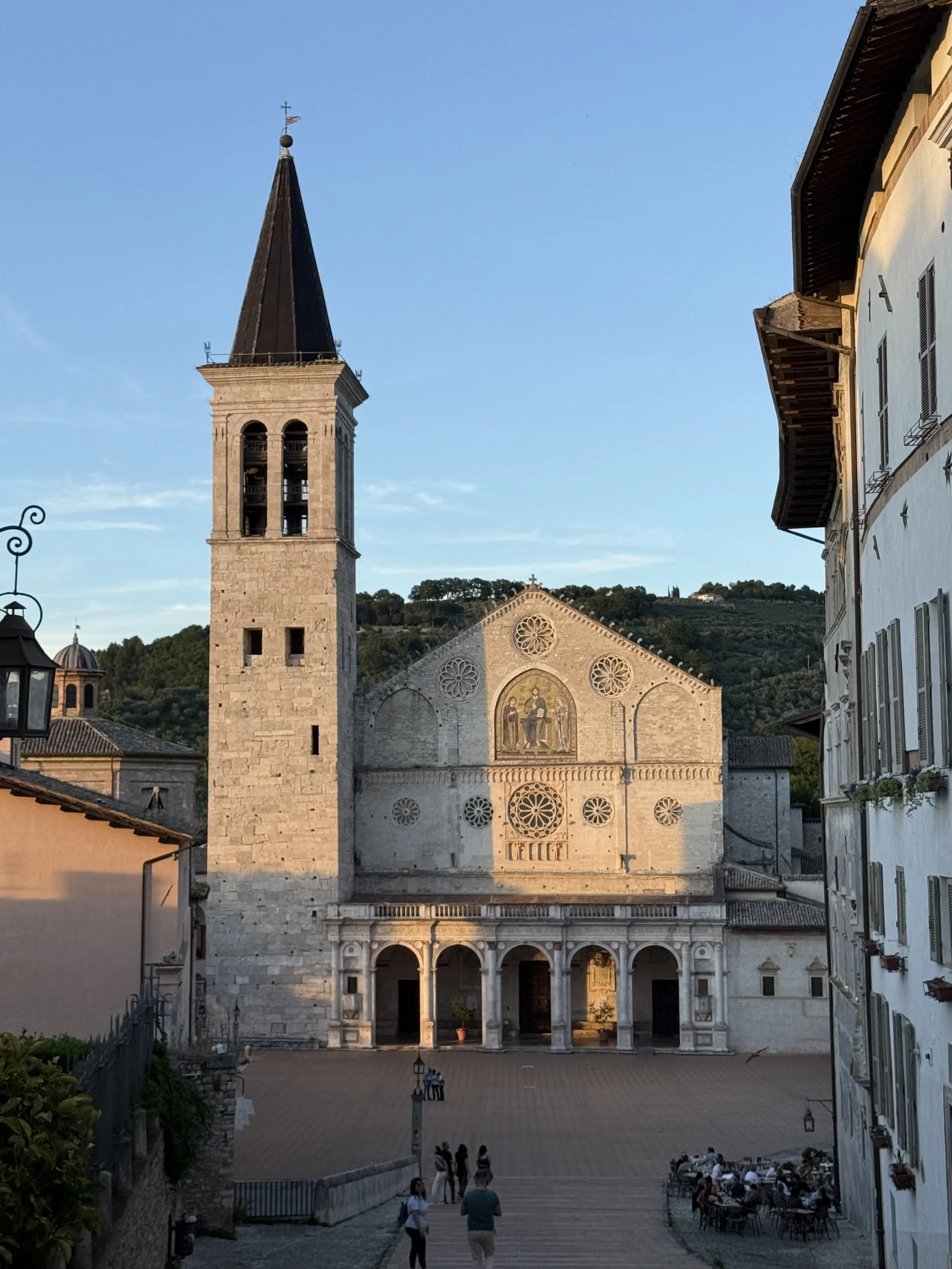
At the centre of Spoleto sits the Duomo, emerging unexpectedly at the end of a descending street like a stage set carved from pale stone.
Toward sunset, the facade changes color by the minute - ivory, then gold, then ash-grey as shadows climb across the square. Locals gather quietly along the steps while visitors linger longer than intended, held by the stillness of the piazza.
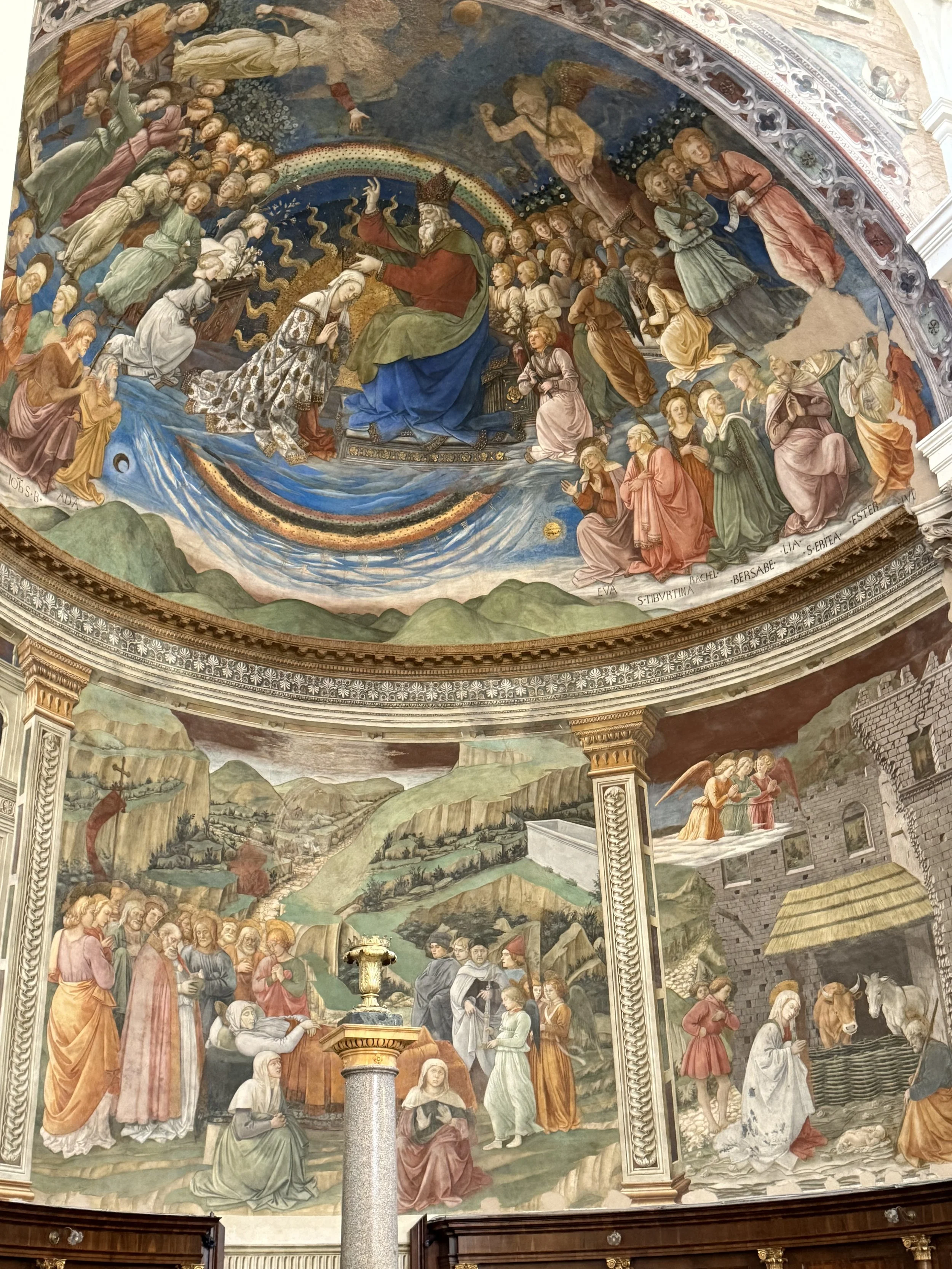
Inside, layers of frescoes cover walls and chapels accumulated across centuries. Art here does not feel isolated behind museum glass. It remains embedded within daily life. It becomes part of the town’s visual language rather than an interruption from it.
Spoleto carries its history lightly.
Etruscan traces, Roman foundations, medieval towers and Renaissance churches exist side by side without spectacle or reconstruction. Nothing feels preserved purely for display. The town continues to move at its own pace.
By night, this becomes even more apparent.
The streets empty. Light pools beneath old lamps. Stone staircases disappear into silence.
Daily Rhythm
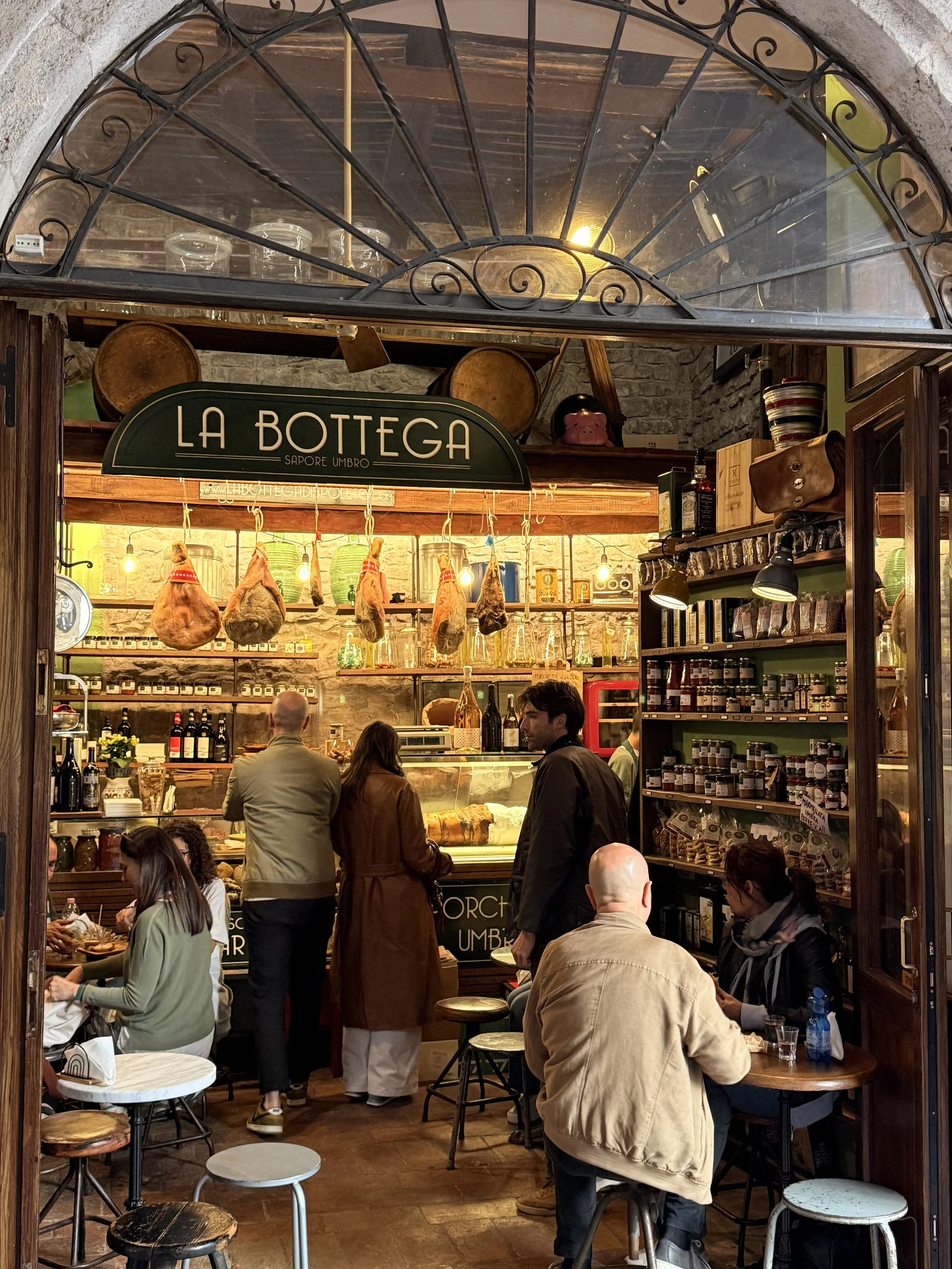
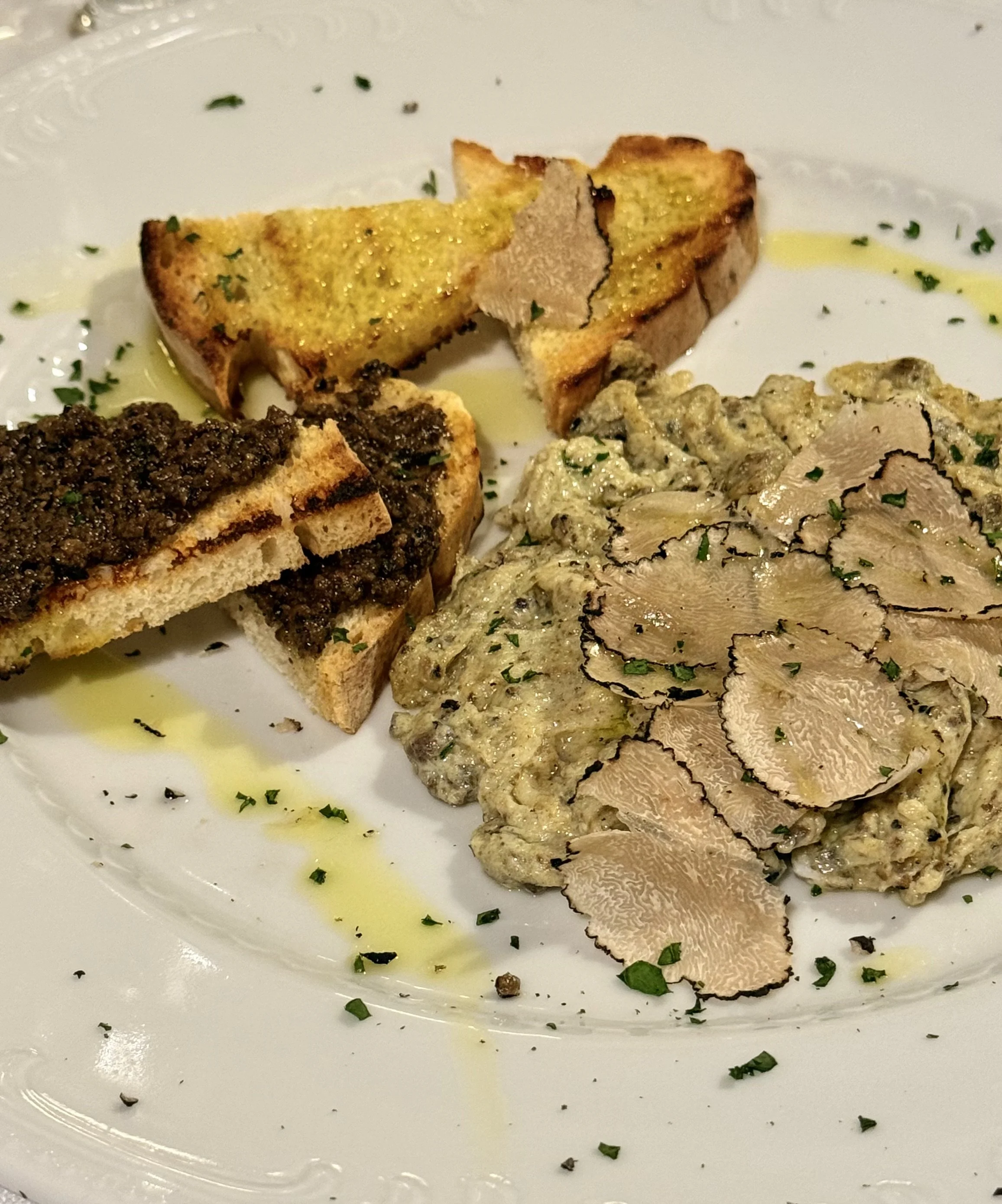
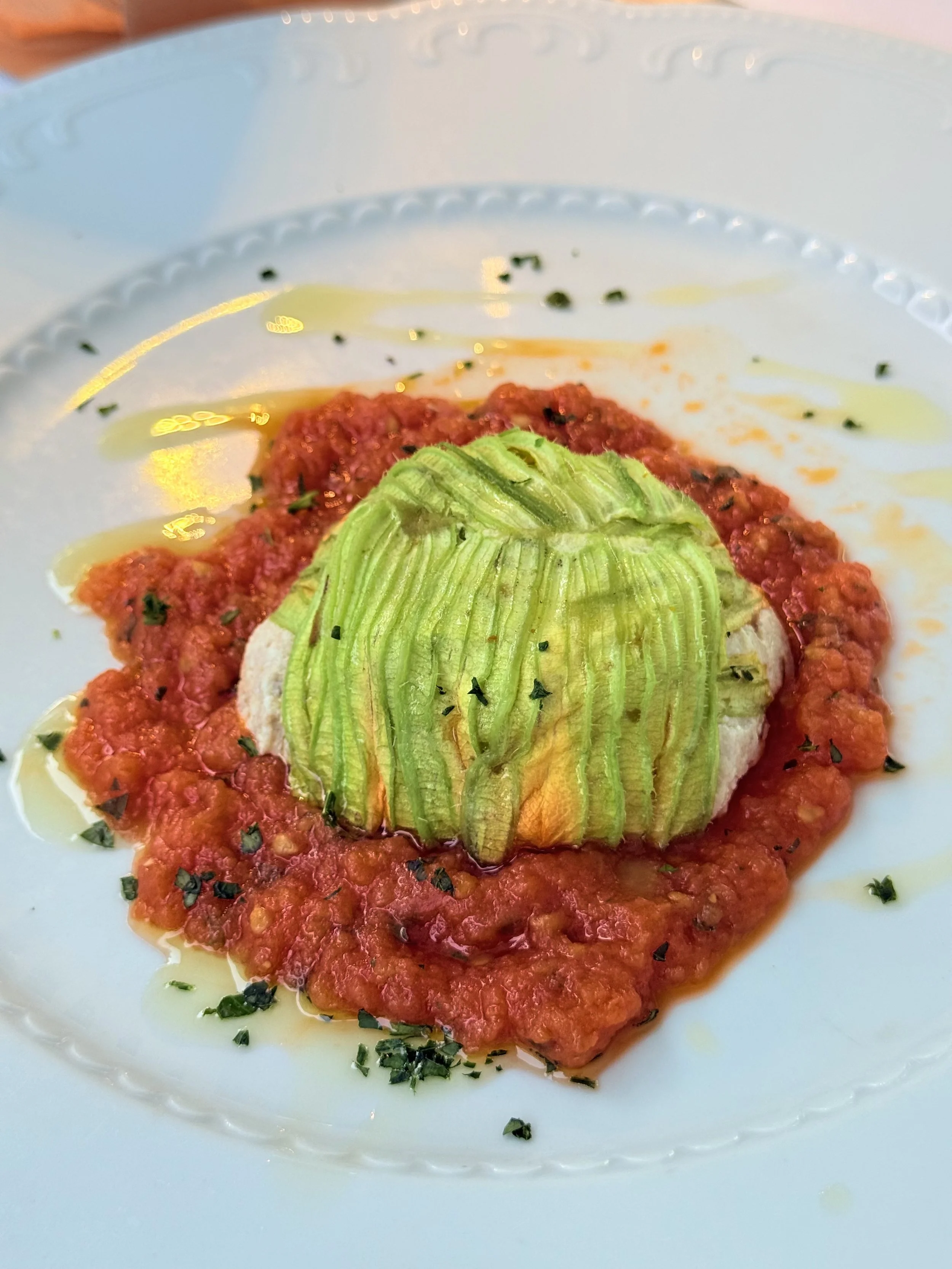
Like much of Umbria, Spoleto is best understood slowly and around a table.
Lunch often stretches well into the afternoon. Conversations move unhurriedly between courses. Seasonal ingredients appear without announcement: black truffle shaved over warm pasta and very often over scrambled eggs, toasted bread drizzled with local olive oil, delicate zucchini flowers and so on.
Restaurants here rarely rely on reinvention. The cooking is grounded in continuity - recipes are kept and respected.
In smaller trattorie, interiors remain unchanged for decades: framed photographs fading softly into the walls, handwritten menus, warm light reflected against wood and stone.
The experience is less about performance than familiarity.
Meals are the extensions of the town itself - restrained, generous and deeply rooted in place.
Beyond the Town
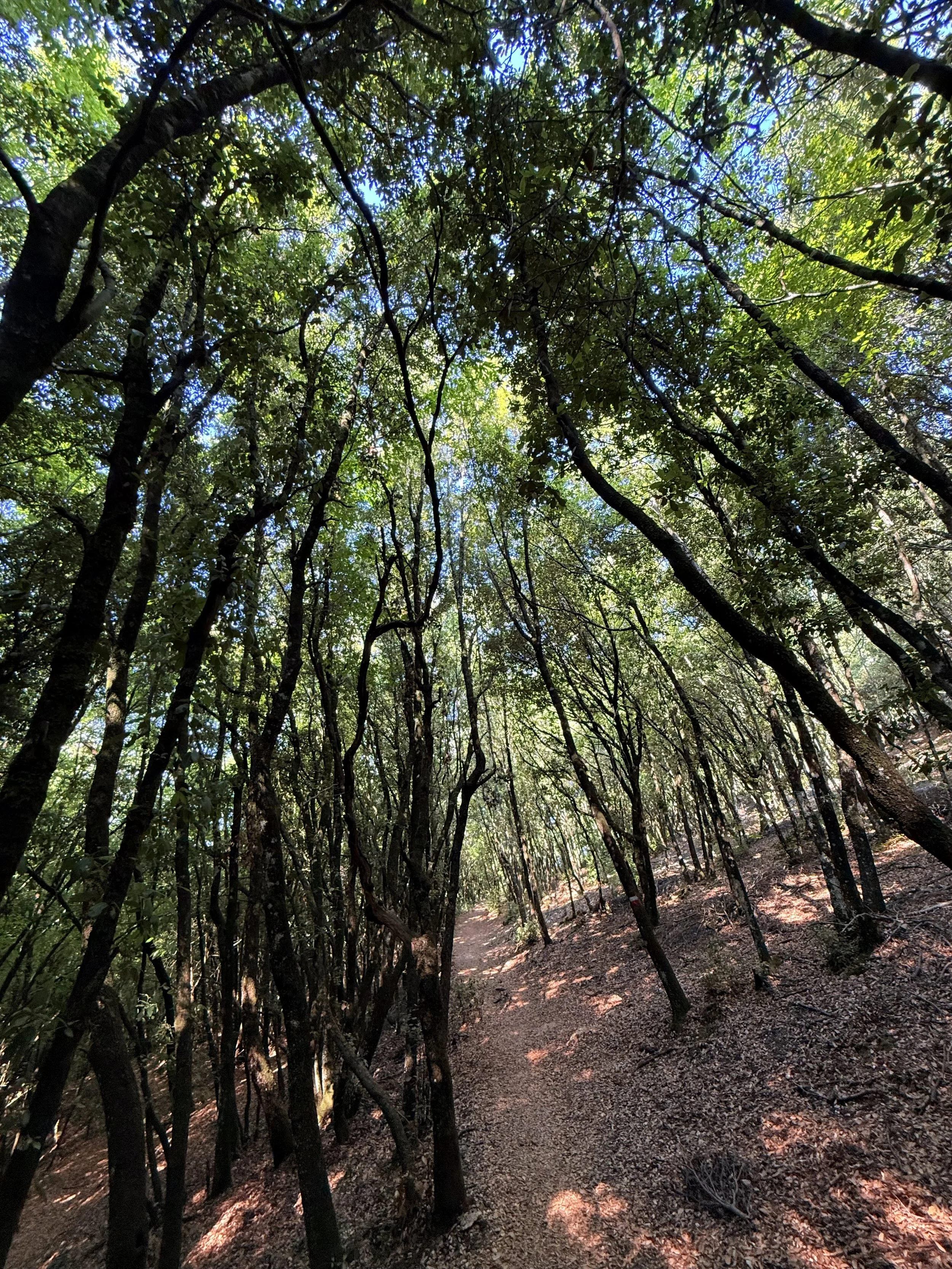
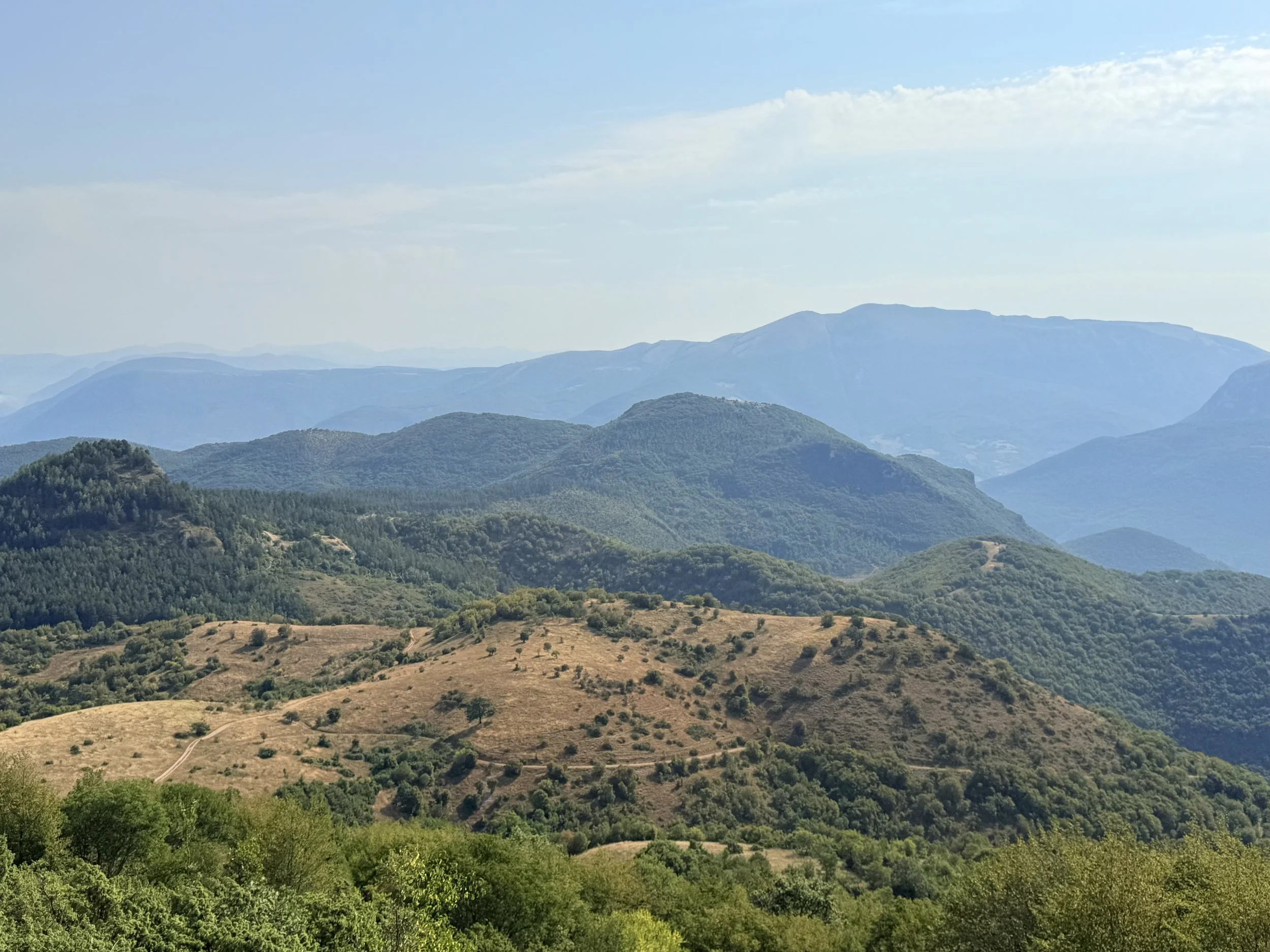
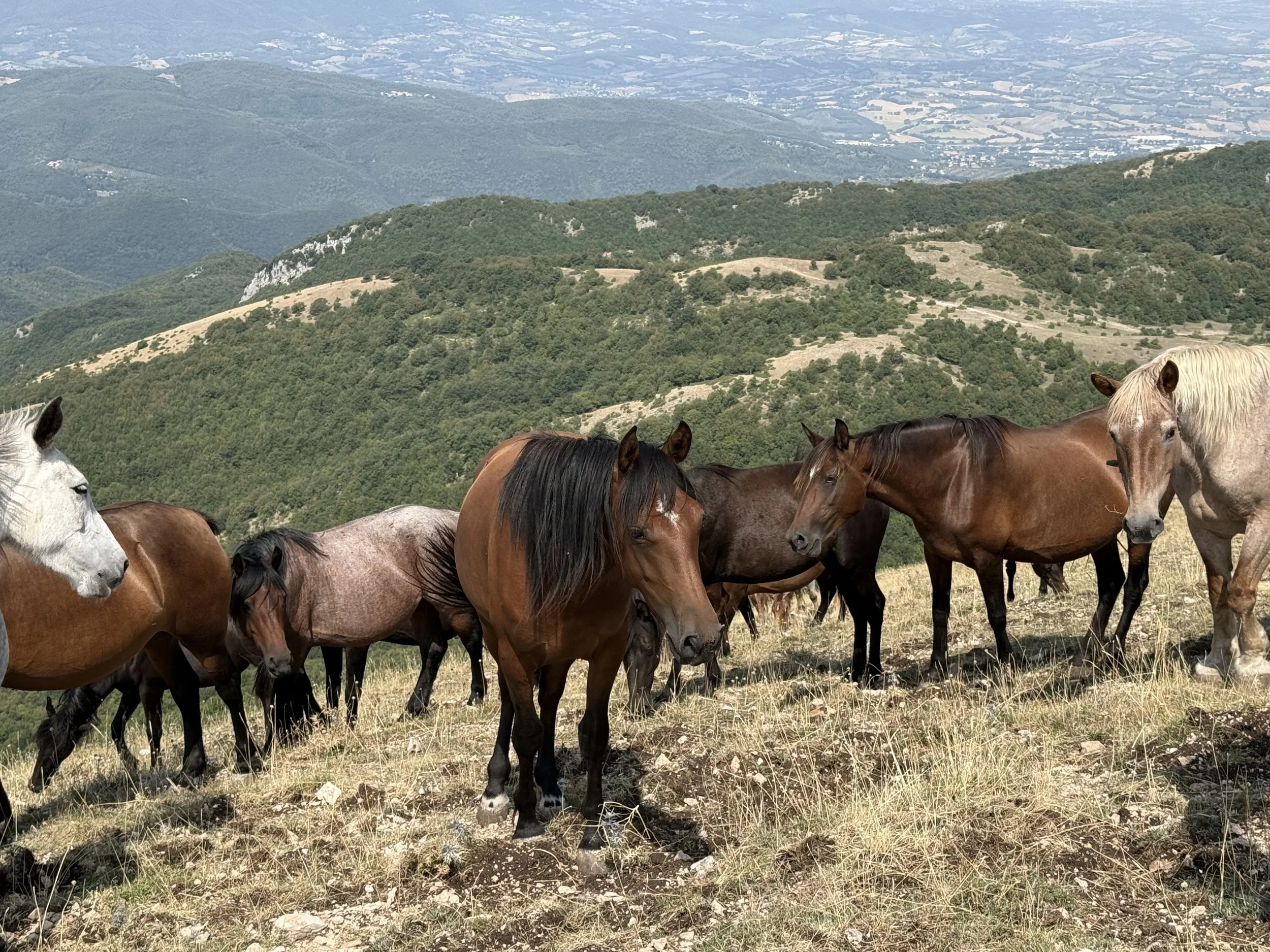
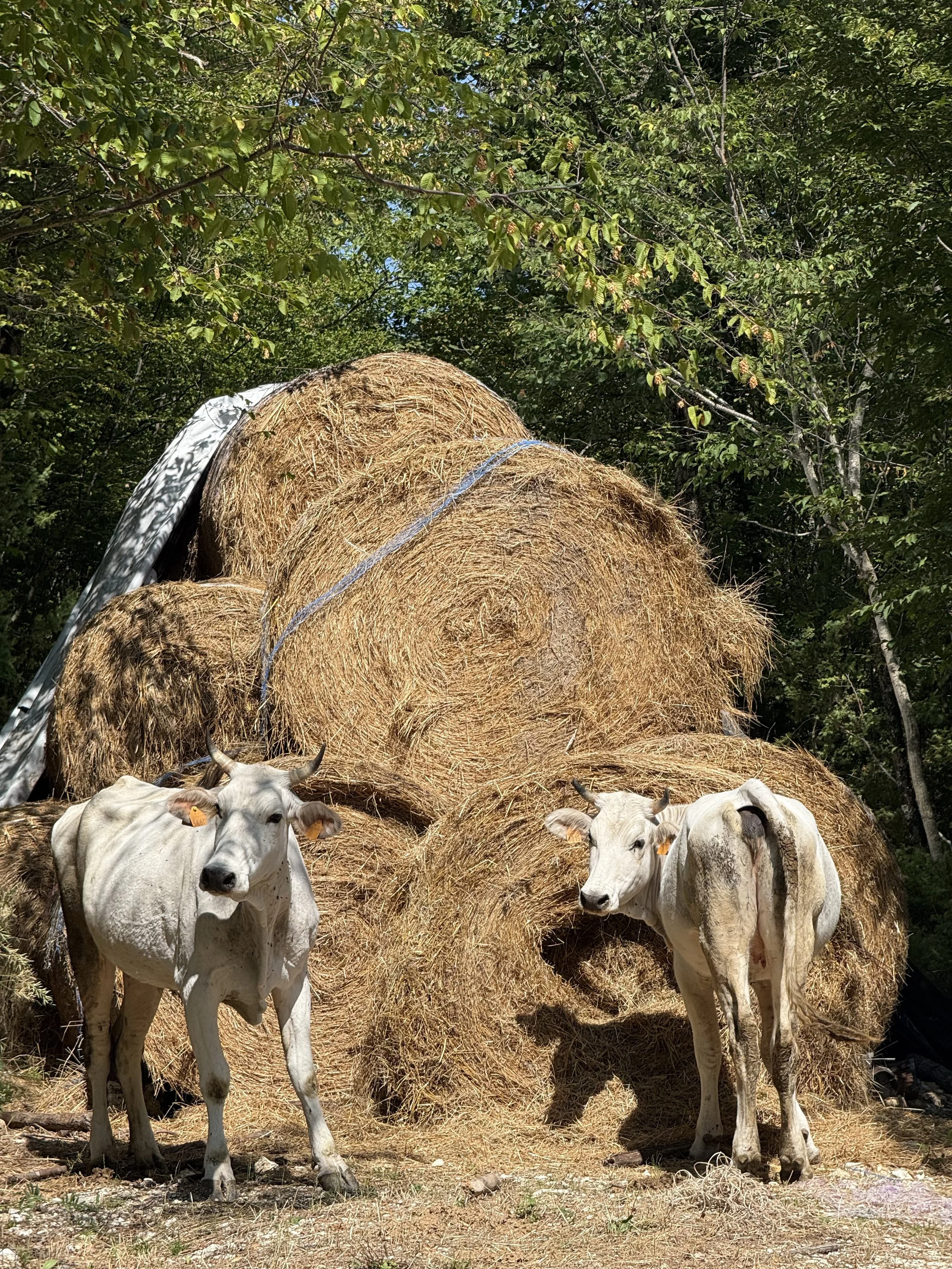
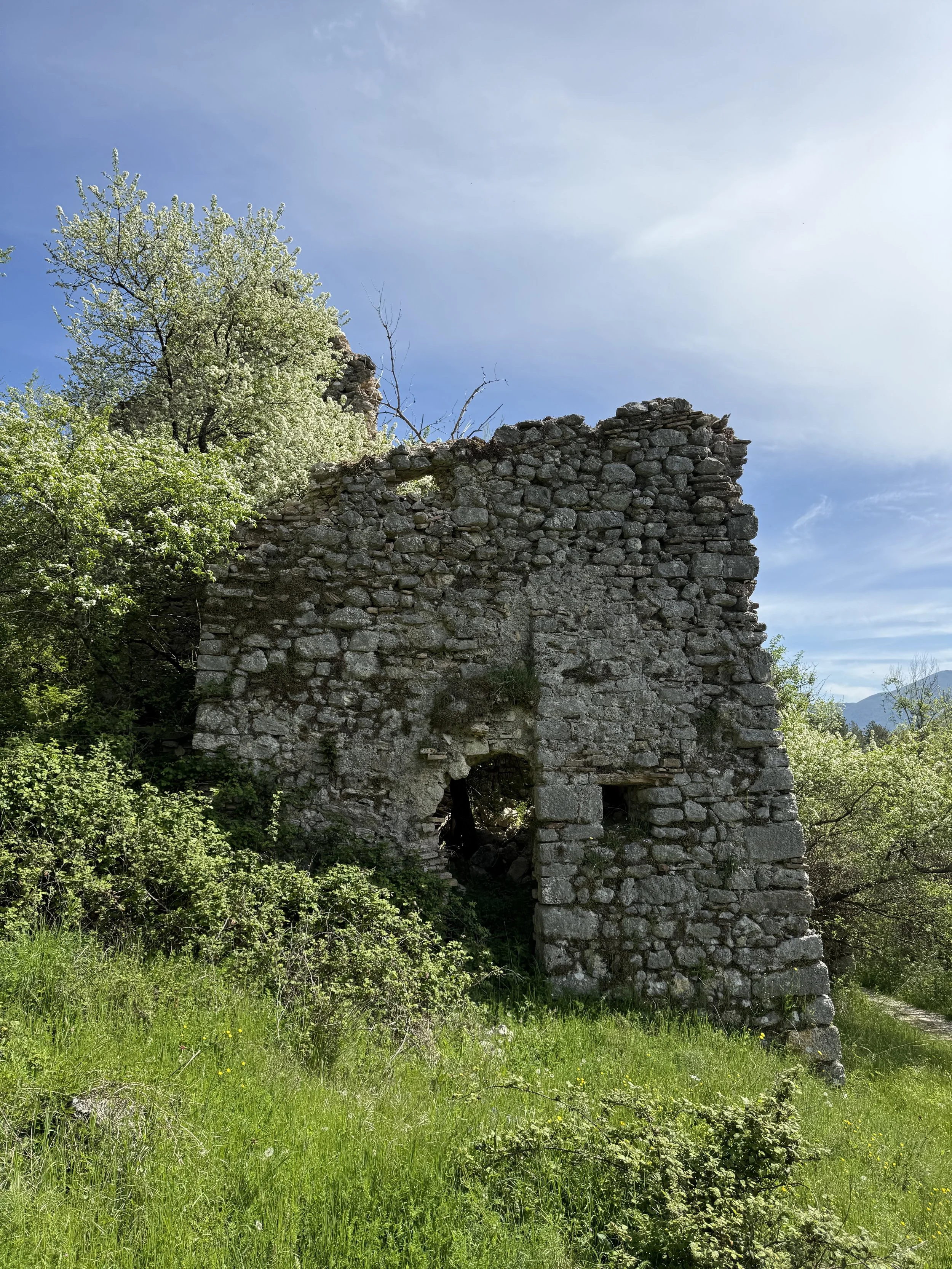
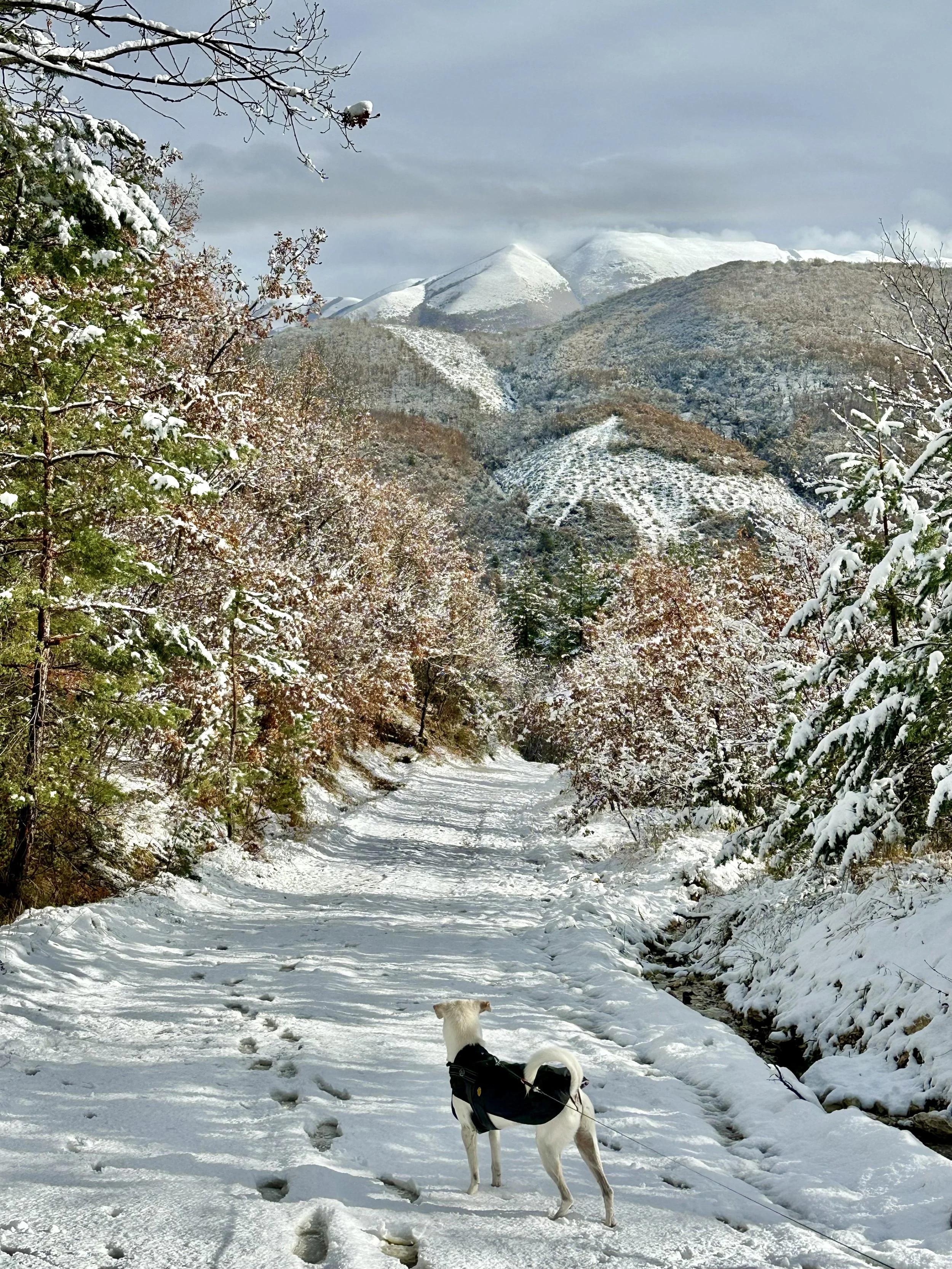
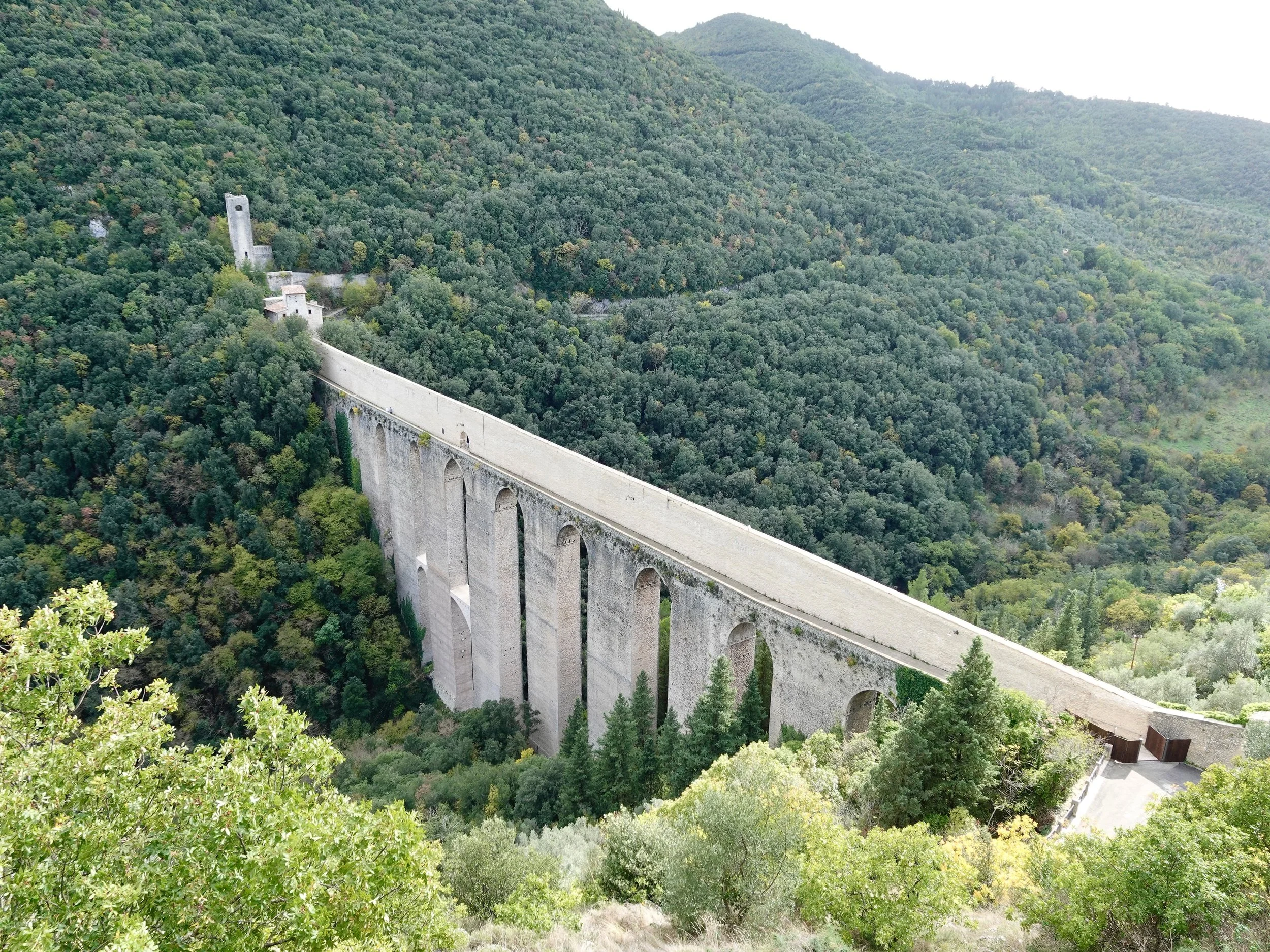
What makes Spoleto distinctive is not only the town itself, but its immediate relationship with wilderness.
Within minutes, medieval streets give way to forest trails climbing into the Umbrian-Appennine landscape. The transition feels unusually abrupt. Stone dissolves into woodland. Silence deepens.
Walking paths pass abandoned structure overtaken by vegetation, grazing horses scattered across mountain ridges and valleys layered in soft blue haze beneath the summer sun.
Even in winter, the surrounding landscape retains a quiet severity. Snow settles across the hills while the town continues almost unchanged beneath it.
There is little separation between cultivated and untamed here.
Spoleto remains connected to an older rhythm of agriculture, pilgrimage and movement through the land - something still visible in its forests, ruins and mountain roads.
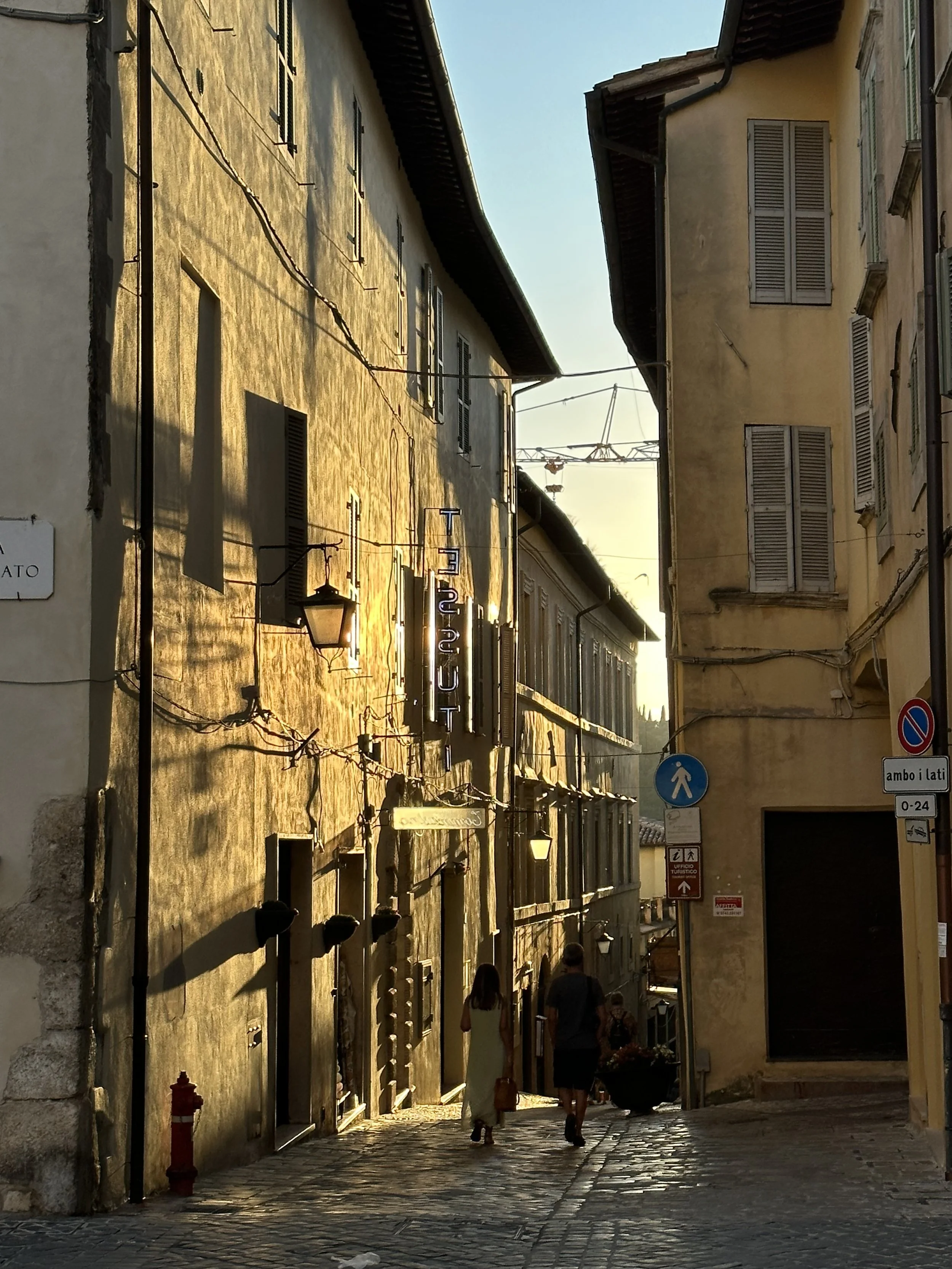
By evening, Spoleto returns to stillness.
The cafes empty gradually. Windows glow softly above narrow streets. Somewhere beyond the town, the mountains disappear into darkness.
What lingers most is not a single monument or view, but a feeling of balance. A balance between architecture and landscape, solitude and ritual, history and ordinary life.
Spoleto does not ask to impress immediately.
Its beauty accumulates slowly, through repetition: morning light on stone walls, footsteps echoing through empty lanes, forests beginning just beyond the edge of town.
Some places are remembered through landmarks while some others are remembered through atmosphere. Spoleto belongs to the latter.
From Umbria
Unless otherwise credited, all photography and written content are original works by Foodie Goes Travel.
