The Generosity of Da Niko in Milan
Dinner and a personal welcome at Bulgari Hotel Milano
Words and photograph by JJ Wong
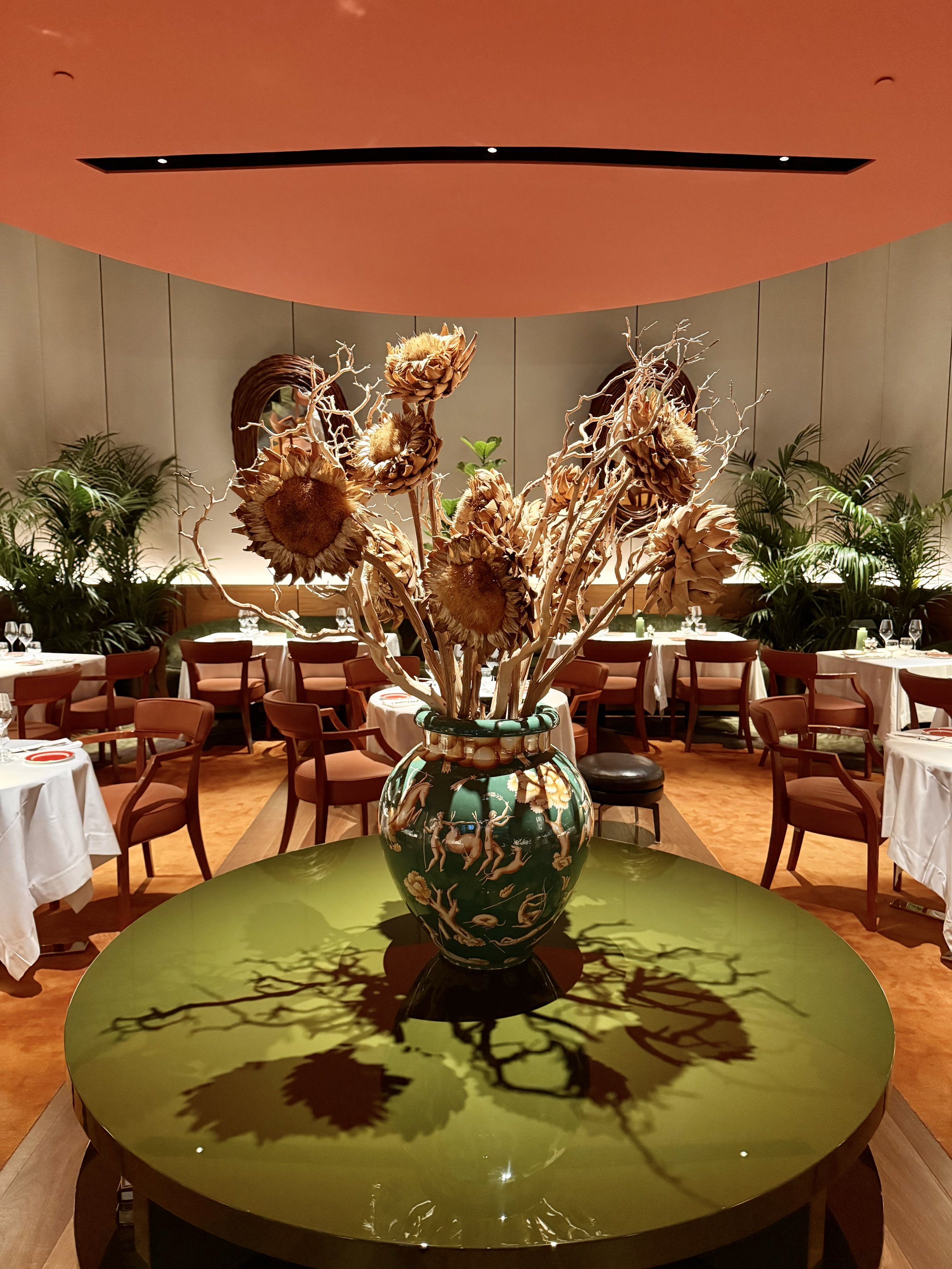
At the centre of Da Niko, a Richard Ginori vase sits beneath a broad terracotta-coloured ceiling.
I arrived at Bulgari Hotel Milano before my reservation, with enough time to settle at the bar. In front of me was a Bulgari Cocktail, its orange colour catching the light beside a lamp of almost the same shade. Made with gin, Aperol, orange, pineapple and lime, it was a delicious beginning to an evening I had been looking forward to.
The aperitivo came with a generous spread. There were slices of salame and cheese, little fried bites, crisps and olives. Beyond the bar, the garden was visible through the glass. I was happy to have arrived early. Already, there was plenty to enjoy before moving to the dining room.
My reason for being there began with a previous visit to Bulgari Hotel Roma, where I had met Chef Emilio Di Cristo. When I wanted to experience the newly opened Da Niko in Milan, Emilio arranged the reservation for me. Chef Giorgio Fuda, who leads the kitchen here, came personally to greet me. That introduction gave the evening a warmth that would continue through dinner.
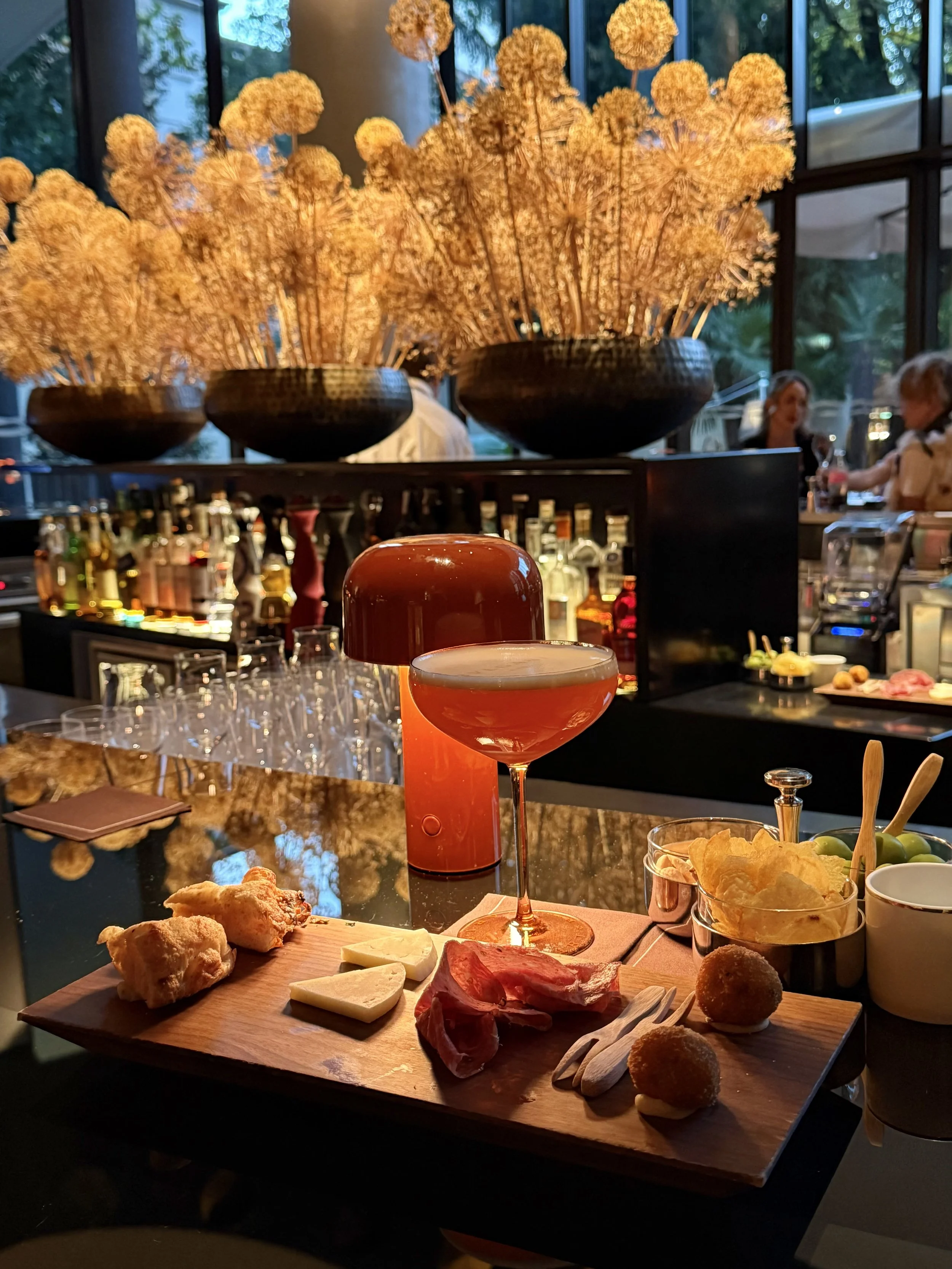
An early arrival left time for a Bulgari Cocktail and an abundant aperitivo at the bar.
An invitation to the table
Da Niko opened on 1 September 2026 as a new dining concept created by Bulgari Hotels & Resorts with Chef Niko Romito. The name carries the familiarity of going to someone’s place: dinner da Niko, at Niko’s. It sets an expectation of personal hospitality, of being welcomed around a table and enjoying the time spent there.
The cooking draws on Italian culinary traditions, with the careful ingredient selection and precision associated with Romito expressed through recognisable dishes. The menu makes room for crudi, pasta and preparations served at the table, including dishes intended for sharing. It is a broad invitation to eat according to appetite and company.
Inside the menu, a sentence gives the idea a more intimate form: “La felicità ha il sapore di un piatto condiviso.” Happiness has the flavour of a shared dish. Over the course of the evening, I found myself thinking about the hospitality surrounding that plate: who brings it, how they speak to you, and whether you feel comfortable responding honestly.
A Milanese dining room
The interiors, redesigned by ACPV Architects Antonio Citterio Patricia Viel, take an elegant Milanese home as their starting point. I loved the atmosphere. The broad sweep of the terracotta-coloured ceiling gave the room warmth, while green table lamps and upholstery introduced another layer of colour. White tablecloths and carefully arranged glassware made sitting down feel like an occasion.
Bookshelves helped divide the room into smaller settings. Art and design volumes were stacked across them, with a Gio Ponti title clearly visible. Wooden armchairs, framed drawings and small pools of lamplight brought the scale back to the individual table. There was enough detail to reward looking around, and a sense of comfort that made me want to stay.
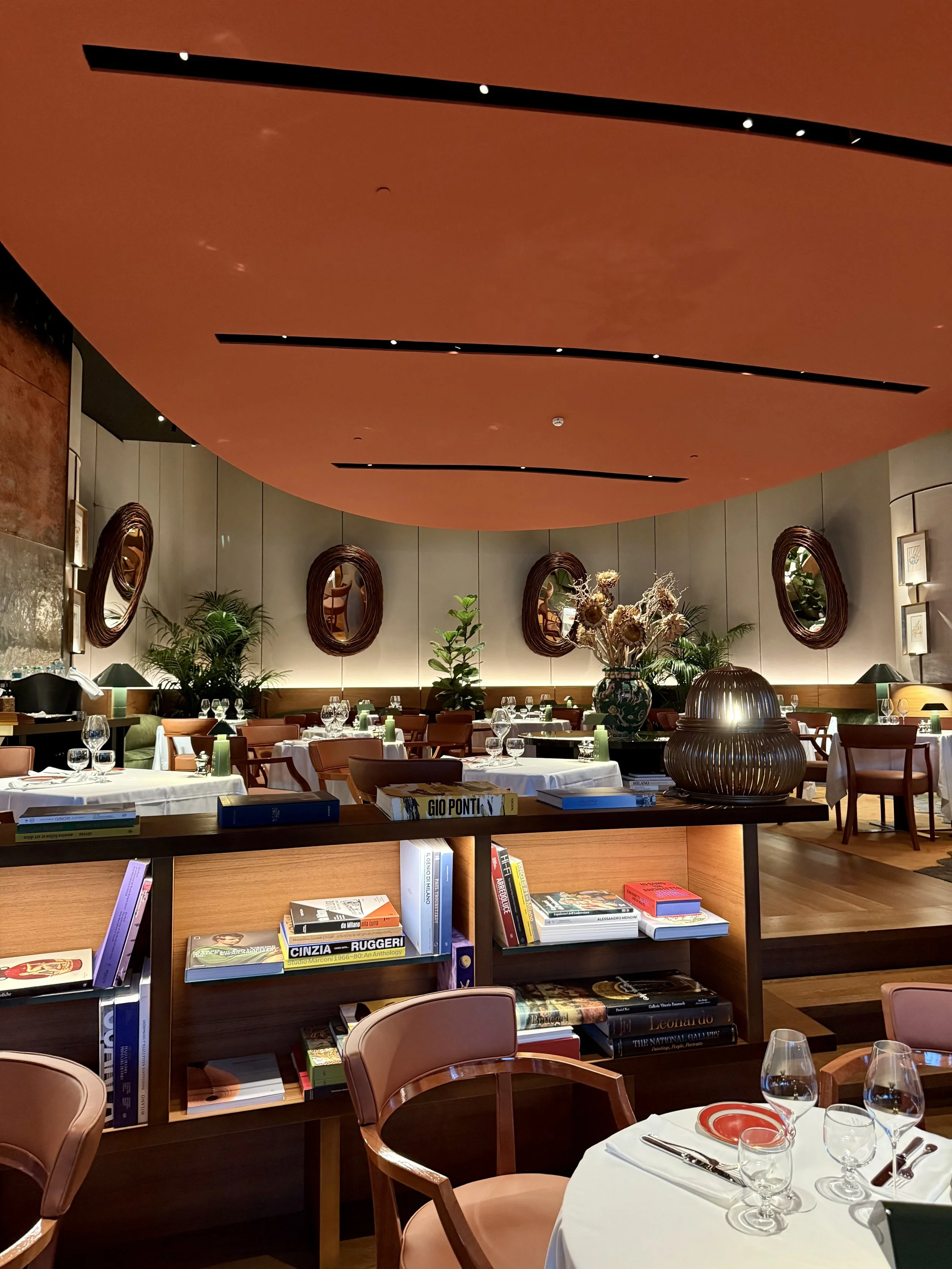
Bookshelves and warm colours give the dining room the character of a Milanese home.
Some of those details have their own histories. The willow-framed mirrors are by artist Emy Petrini. At the centre of the room stands La Venatoria, a Richard Ginori vase from the late 1920s, made during Gio Ponti’s artistic direction and decorated with the Triumph of the Amazons. Filled with a dramatic arrangement of dried flowers and branches, it becomes part of the life of the room.
The tableware continues that conversation with Italian design. Ginori 1735 developed a special variation of its Diva collection for Da Niko. During dinner, the red and gold rims brought a strong colour to the table; dessert would arrive on a plate with an additional band of yellow. I liked how the food sat within this larger arrangement of colours and objects.
For me, this is where the Milanese character of the restaurant became tangible. Books about design, ceramics with a history and contemporary furniture shared the same space. The idea of a home was expressed through things one could look at closely, while the tables gave those things a purpose in an evening spent eating.
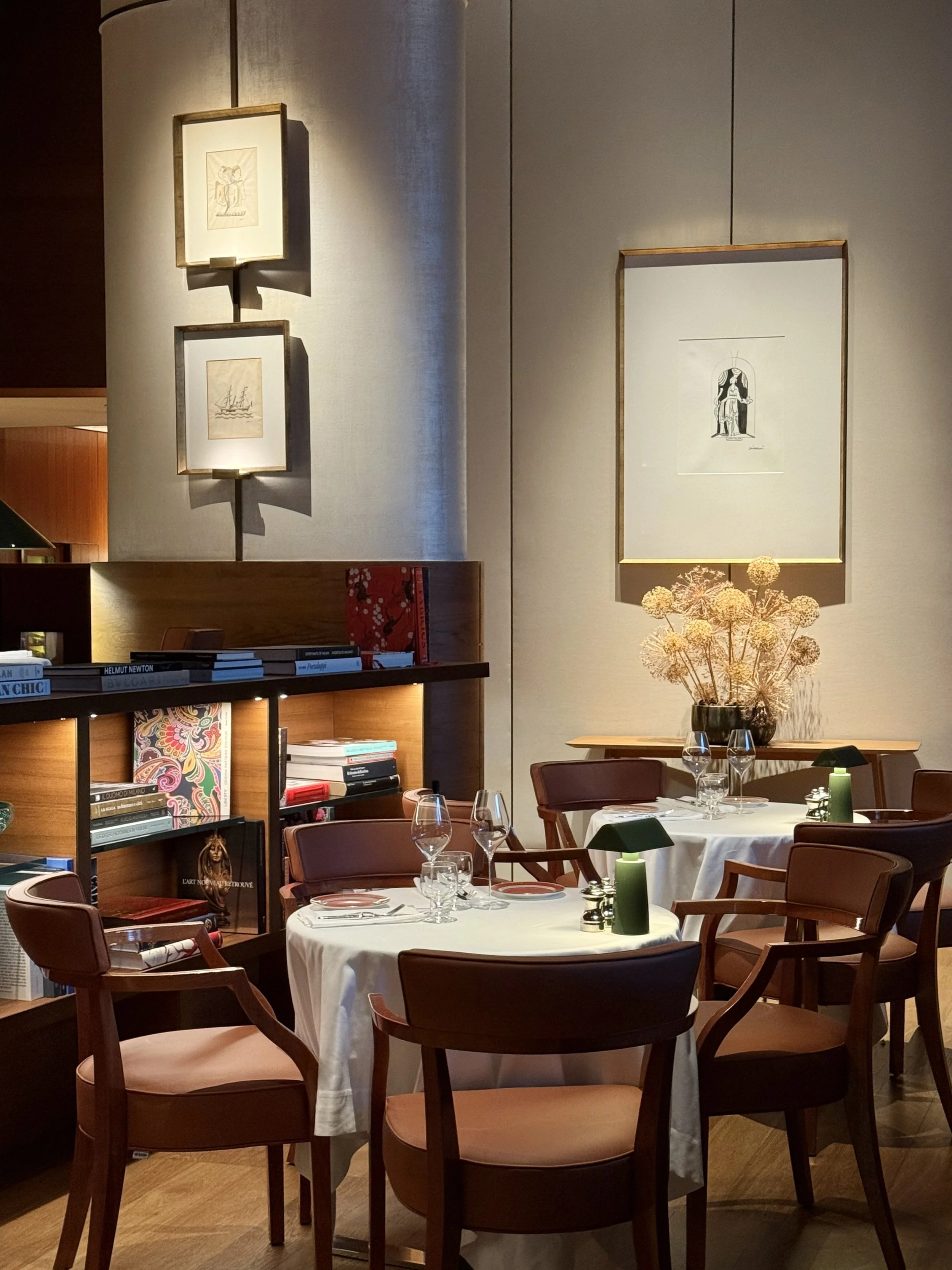
A lamp, an armchair and books close to the table make the room feel personal in scale.
Dinner with an appetite
I ordered a first course and a main, with a vegetable dish alongside. To drink, I chose a glass of Hofstätter’s De Vite 2024, a white blend from Alto Adige.
The mezzi paccheri came with langoustines and rosemary. The large tubes of pasta were glossed with sauce, with pieces of langoustine arranged among them. I enjoyed the flavour, although the seasoning was a little salty for my palate.
When Giorgio personally brought out the sole and escarole, he asked how I had found the pasta. I told him exactly that: the taste was great, but a little less salt would have suited me better. He received the observation graciously. I appreciated being asked, and being able to answer with the same ease as the rest of our conversation.
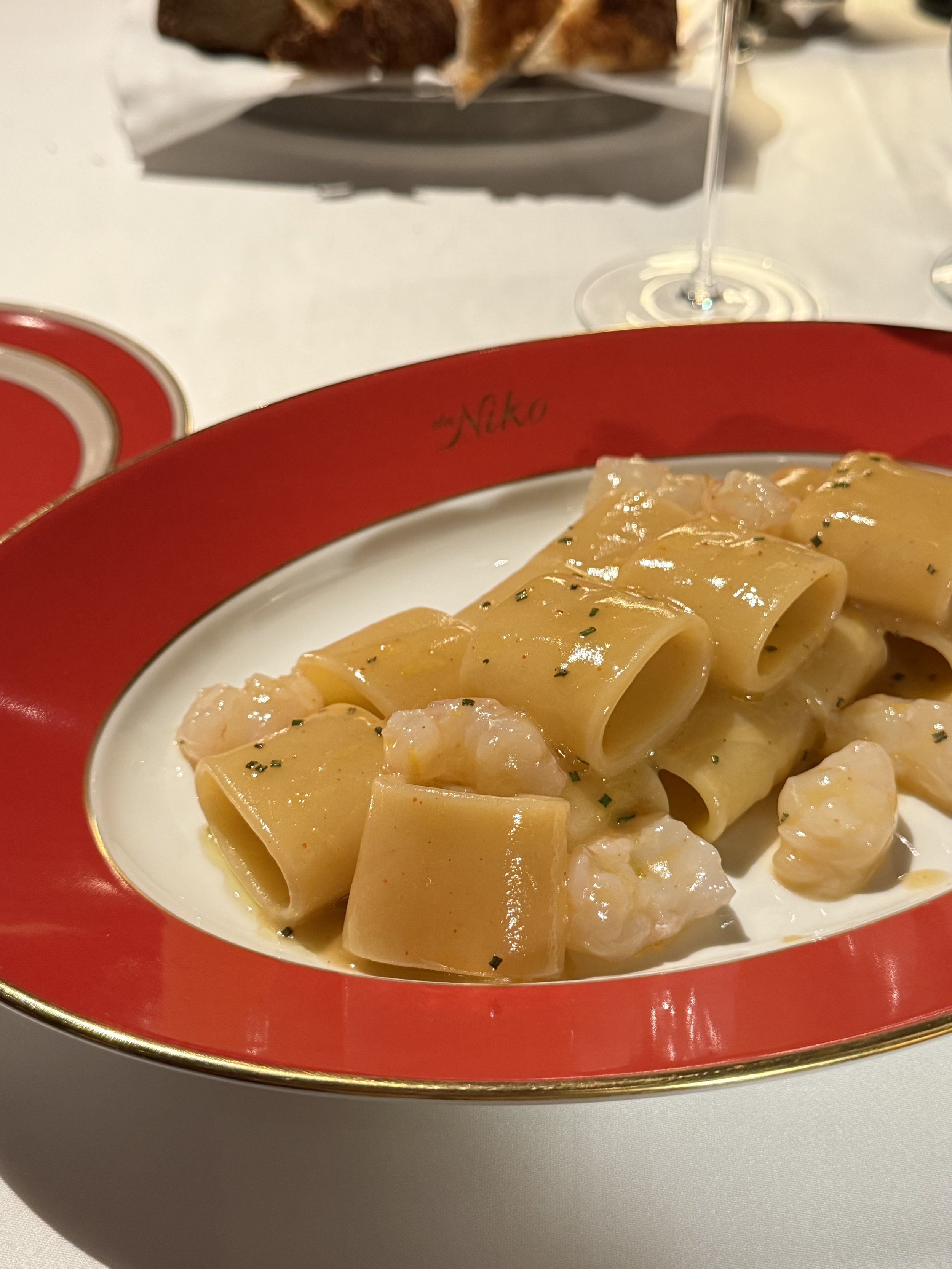
Mezzi paccheri with langoustines and rosemary, full of flavour, though a little salty for my palate.
The sole was a dish I loved. Listed with lemon, capers and parsley, it arrived with a buttery sauce that complemented the freshness of the fish. The lemon lifted the richness, and the caper leaf added an acidity that kept the buttery flavour in balance. Each element made sense alongside the others.
The escarole, sautéed with pine nuts, raisins and anchovies, was more gently seasoned. Even with the anchovies, it did not taste particularly salty to me. Alongside the sole, it provided a welcome balance to the richness of the sauce. I enjoyed the two together.
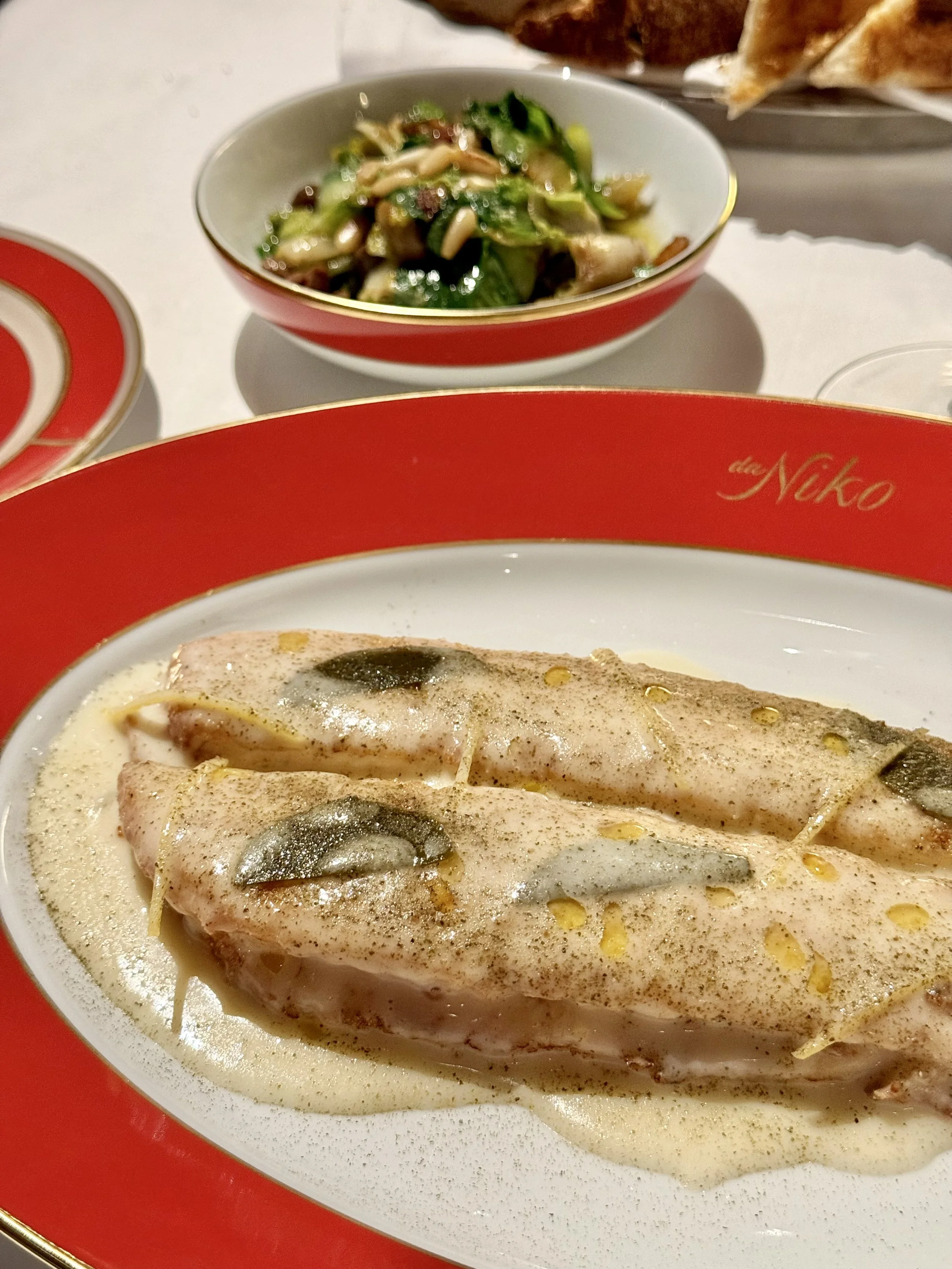
Sole with lemon, capers and parsley, accompanied by escarole with pine nuts, raisins and anchovies.
There was also the matter of quantity. The sole weighed 600 grams including the bone. After the aperitivo and pasta, I was struggling to finish the main course, however much I liked it. My dinner had become a small feast. Two courses and a side made a substantial meal, something to bear in mind when ordering after an aperitivo of this size.
Into the garden
Giorgio later took me around the garden. At night, globe lights illuminated the branches, and groups of terracotta-coloured chairs gathered around low tables. The planting enclosed these little places to sit. A gelato cart, with a yellow canopy carrying the Bulgari name, stood beneath the trees.
As we walked, he spoke about his years with Bulgari, how much he loved Shanghai and his personal interest in Chinese cuisine. It was a brief conversation, but one I enjoyed. As a Chinese Malaysian living in Italy, I was pleased to hear his curiosity about a food culture that is part of my own life.
Being shown the garden by the person cooking my dinner added another dimension to the visit. We had time to talk beyond the dishes I had ordered. The surroundings I had admired from the bar had become part of a shared conversation.
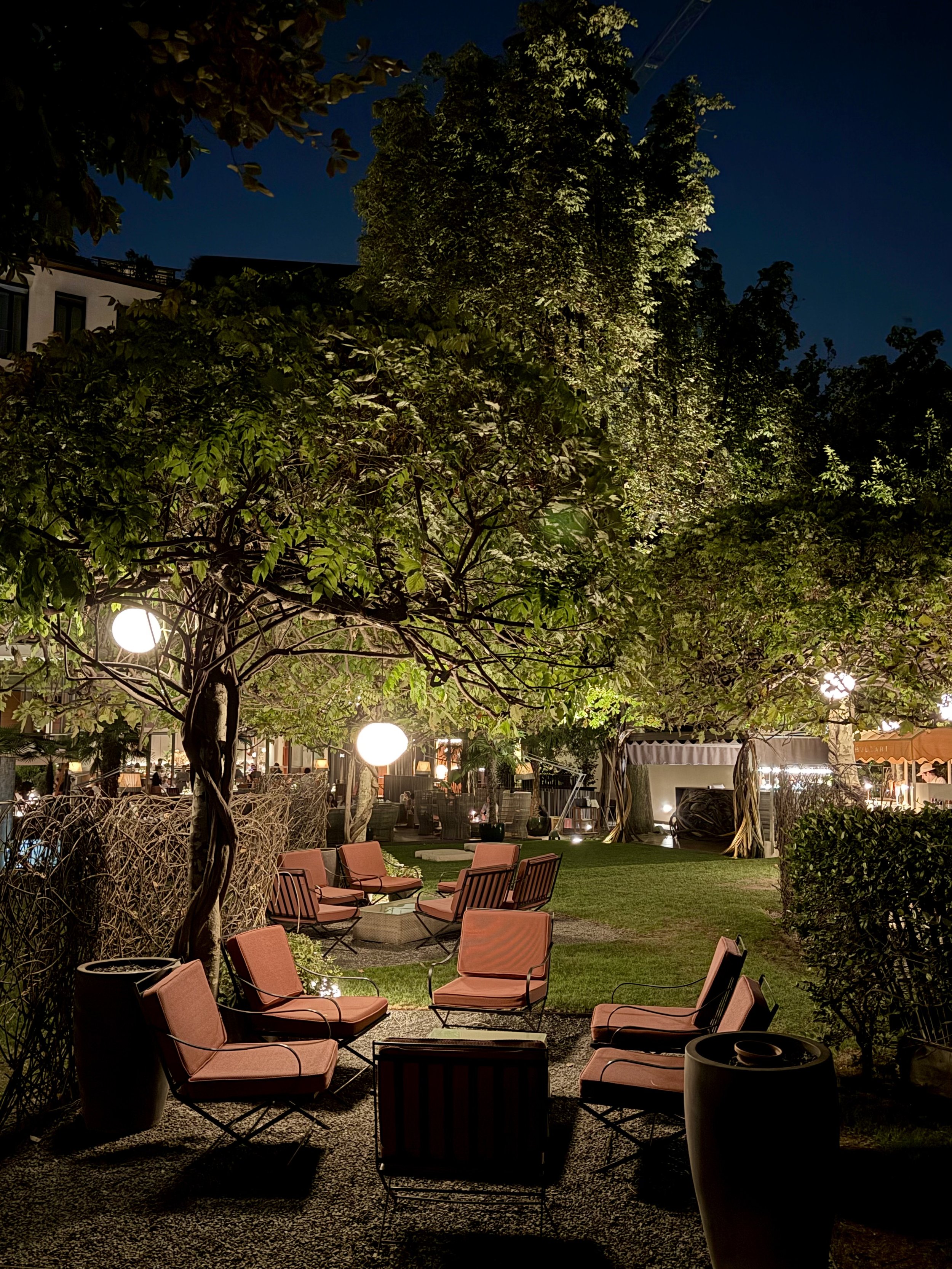
Giorgio showed me around the garden, where our conversation turned briefly to Shanghai and Chinese cuisine.
Later in the evening, “Parole Parole” came on in the background. It is one of my favourite songs. Recognising it added a small, unexpected pleasure to a place where I already felt very much at ease.
A half portion to remember
By then I was very full, and still wanted dessert. Giorgio prepared half a portion of brioche filled with pistachio gelato. He also replaced the zabaione listed on the menu with crema inglese, drizzled over the top, because I had already had a few drinks and did not want more alcohol. Both the portion and the sauce had been adjusted for me.
The brioche was flaky and layered, with a pronounced crunch. Against it, the gelato gave a cold, creamy contrast and a rich, deeply nutty pistachio flavour. The texture was central to the pleasure of eating it. There was something particularly satisfying about the crisp pastry around that filling.
It might be one of my favourite desserts I have eaten in Italy. That was my immediate reaction at the table, despite having spent the previous course wondering how I could possibly finish dinner. The half portion was a very good idea.
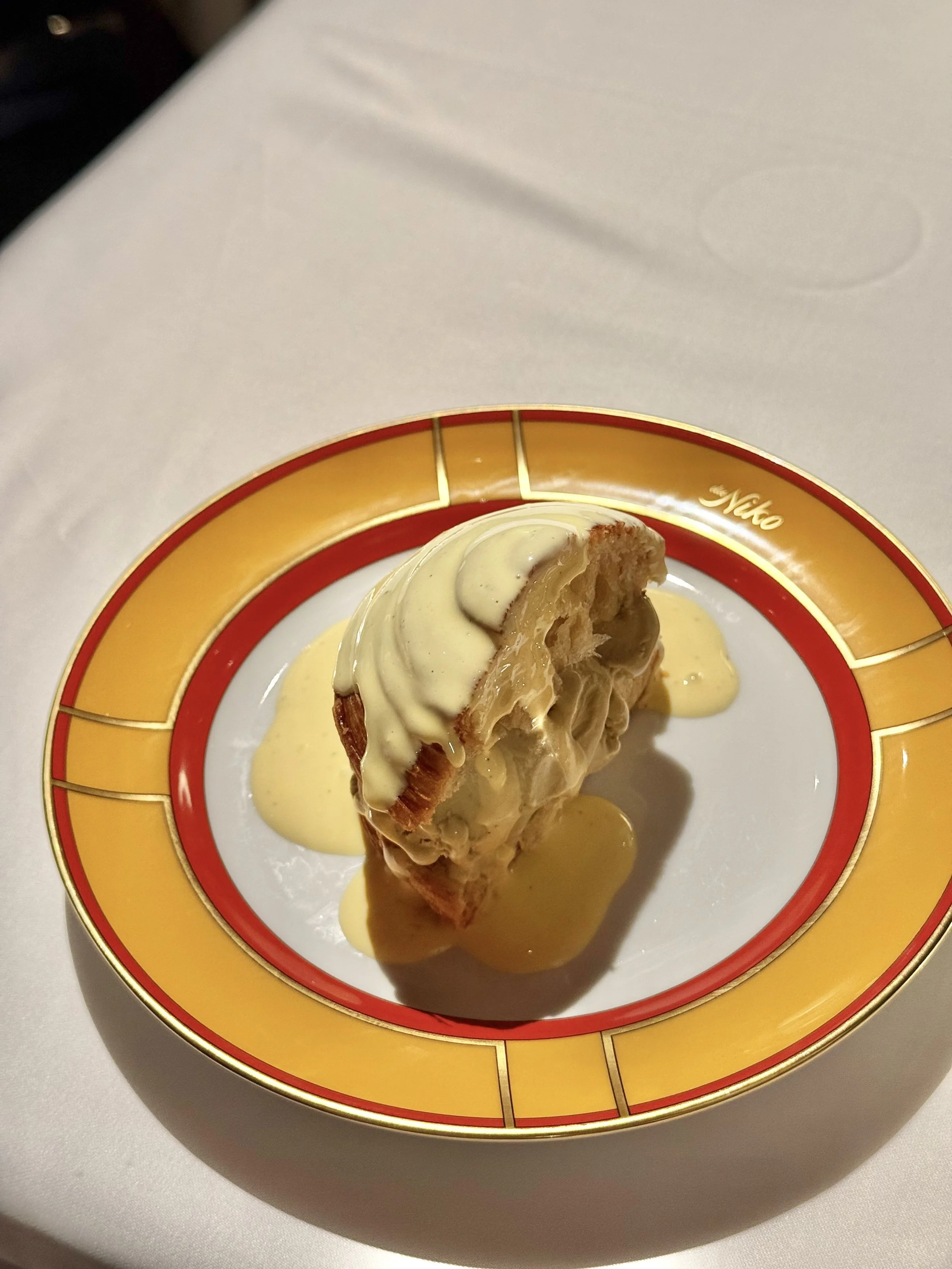
Crunchy brioche with pistachio gelato and crema inglese, adapted by Giorgio in both portion and sauce.
The evening left me thinking about how much difference the people behind a restaurant can make. The design had given me a room I loved spending time in. The food gave me dishes I would remember. Giorgio’s attention allowed those pleasures to unfold with a feeling of personal care.
My visit began with Emilio making a reservation on my behalf, and that connection is part of the story. I appreciated the welcome it led to. Through the conversation at the table, the walk in the garden and the dessert adapted to my appetite, I came to understand Da Niko’s idea of hospitality in very practical terms.
I will remember this evening in Milan with affection. There was abundance on the table, and there was time given to me by the people behind it. That combination left a mark.
Stories shaped by the art of noticing.
Some dishes and the glass of wine were complimentary, courtesy of Chefs Giorgio Fuda and Emilio Di Cristo.
Further Reading
The Plural of One - at UNE in Umbria, a walk through Chef Giulio Gigli’s garden begins an evening shaped by ingredients, place and the people behind the restaurant.
The Joy of Aperitivo - on the Italian pleasure of a drink before dinner, something to share, and an evening allowed to find its own rhythm.
The Sukhothai Bangkok - gardens, architectural memory and personal gestures of hospitality— and why feeling comfortable in a beautiful place matters as much as admiring it.
Unless otherwise credited, all photography and written content are original works by Foodie Goes Travel.
