Three Curries with Angkrit
Cooking in a private kitchen in Bangkok, with conversation travelling between London, Umbria and the places our families came from.
Words and photograph by JJ Wong
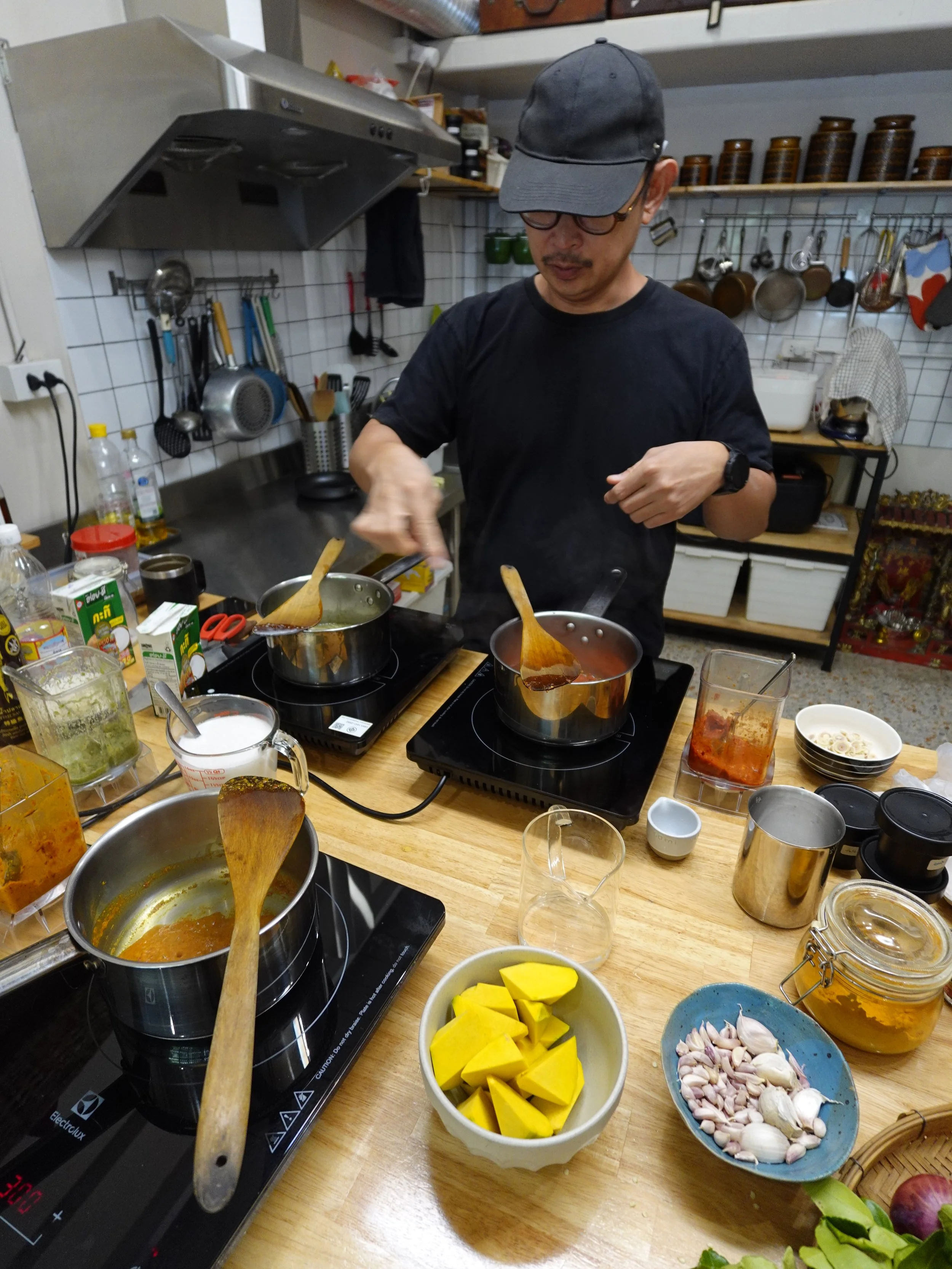
Cooking three curry bases with Angkrit in his private kitchen in Bangkok.
We were cooking when a vegetable vendor stopped outside Angkrit’s kitchen. The cart was packed with leafy greens, mushrooms and bags of produce suspended from a metal frame. Angkrit went to buy vegetables, and I followed the exchange with my camera. Through the glass behind them, I could still see the room where we would eat.
I liked the directness of it: someone arriving at the door with food to sell, and the person cooking stepping outside to choose. It was a small interruption in the session, but one I would remember.
I had come to Angkrit’s private kitchen in Bangkok to prepare three curry bases with him: green, red and yellow. Over the course of cooking and eating together, we also talked about London, my life in Umbria and a journey to China from which I had only recently returned.
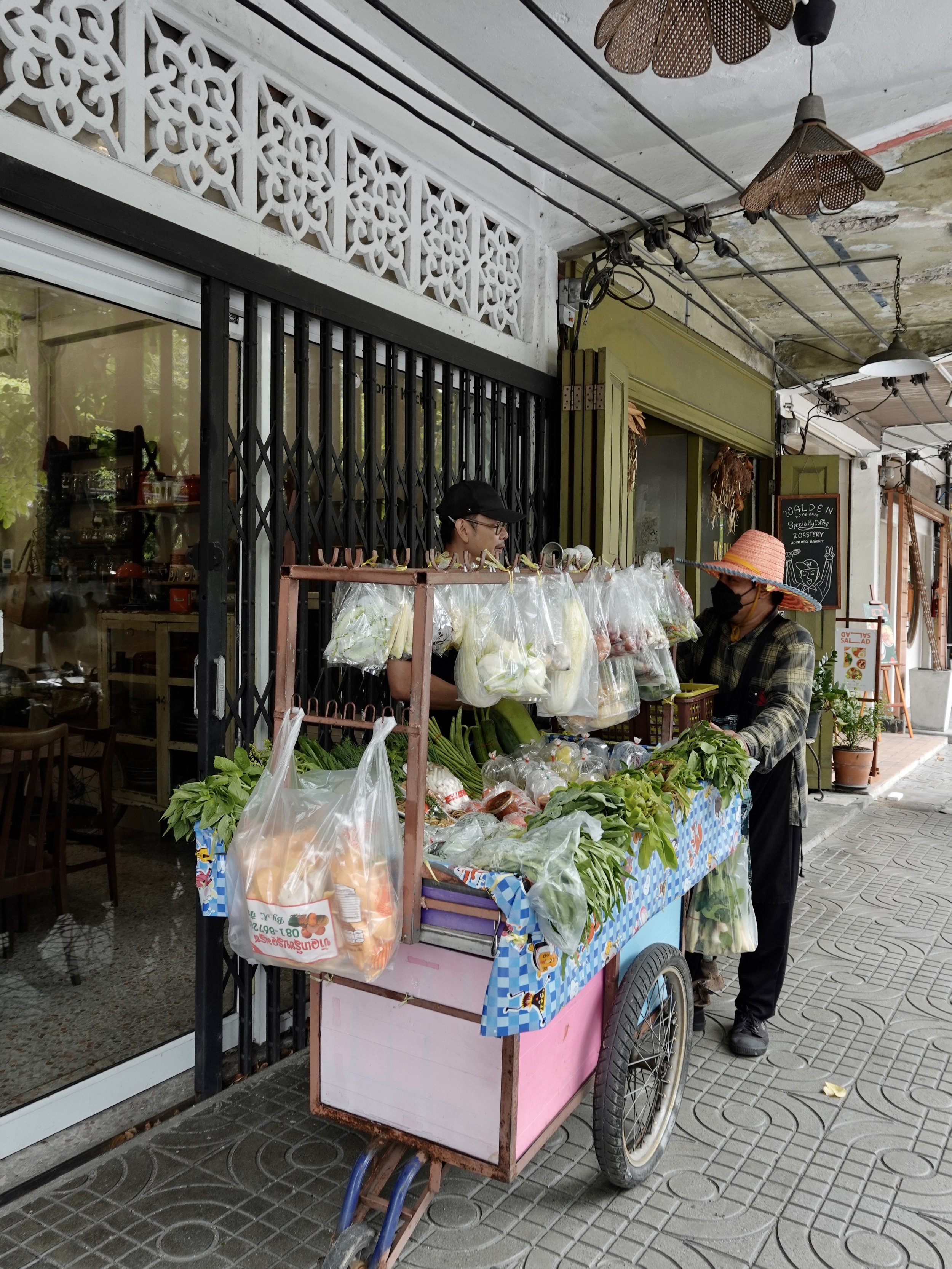
Angkrit buying vegetables outside the private kitchen during our cooking session.
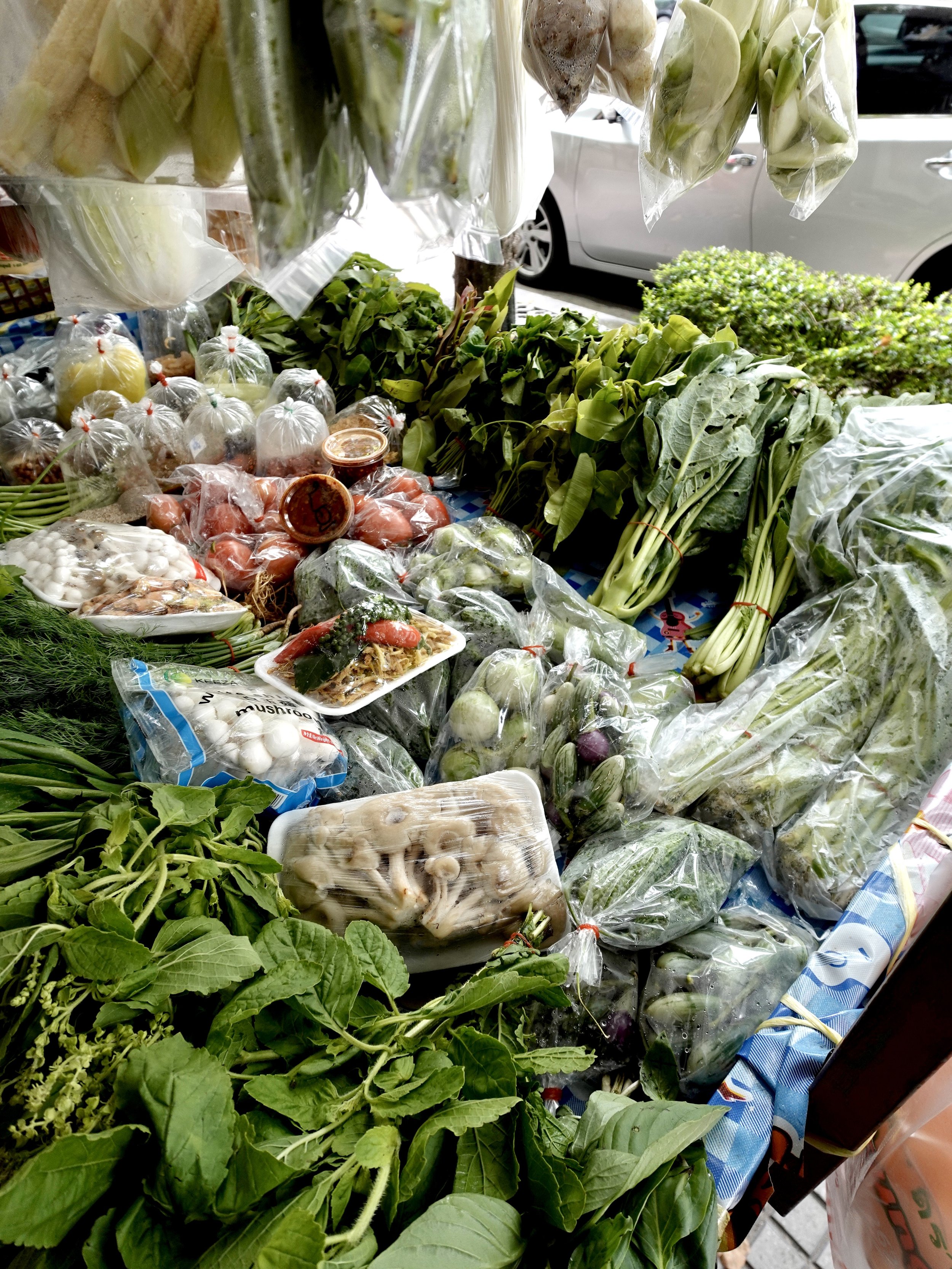
Leafy vegetables, mushrooms and bagged produce on the vendor’s cart.
A kitchen full of things
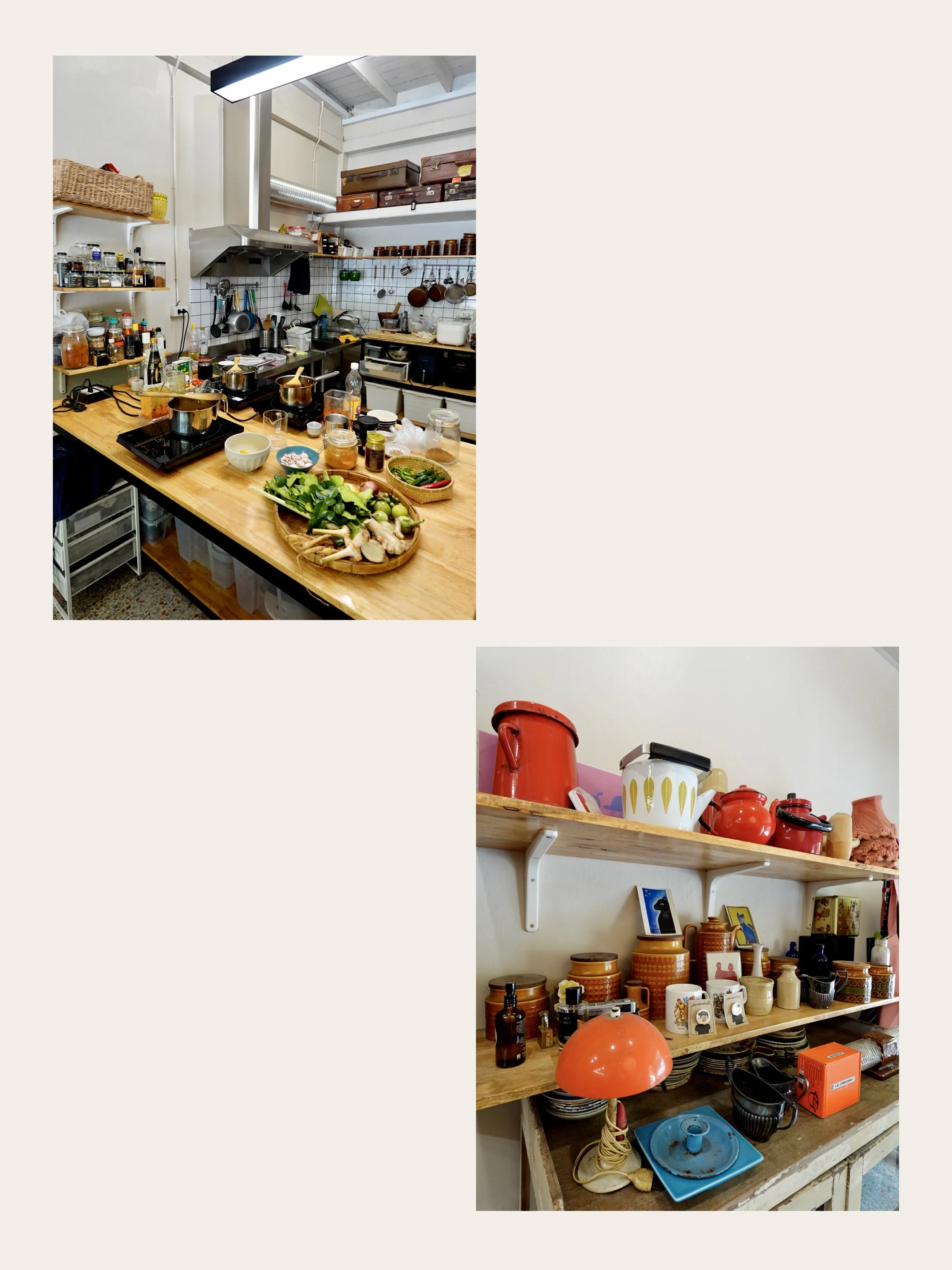
Inside, there was plenty to catch my eye. Old suitcases were stacked above the working kitchen. Enamel pots and patterned ceramic jars filled open shelves, alongside small pictures and an orange lamp. I collect objects too, and recognised something familiar in the pleasure of keeping all these different things around.
The dining area continued the arrangement. Cookbooks faced out from narrow shelves, with Thai titles alongside Flavour, Jerusalem, Simple, Tartine and Gjelina. A MasterChef trophy stood among them. Below were bottles, candlesticks and animal-shaped vessels; large illustrated faces looked out from the walls. It was a room with enough particular details to hold my attention long after a first glance.
A return from London
Angkrit told me he had taught himself to cook. He had studied and worked in London, and remained there during Covid, experimenting with recipes. Cooking gave him something to investigate at home, with time to try things and see what happened.
He also wanted to return to Thailand to be closer to his mother. A friend encouraged him to enter MasterChef Thailand, so he sent in a video of himself cooking. He was shortlisted and came back for the competition, which he went on to win.
His manner was modest and relaxed. He seemed as interested in hearing about my experiences as in explaining his own, and the conversation moved comfortably between us. The cookbooks and objects around us offered other glimpses of his interests as we got to know each other.
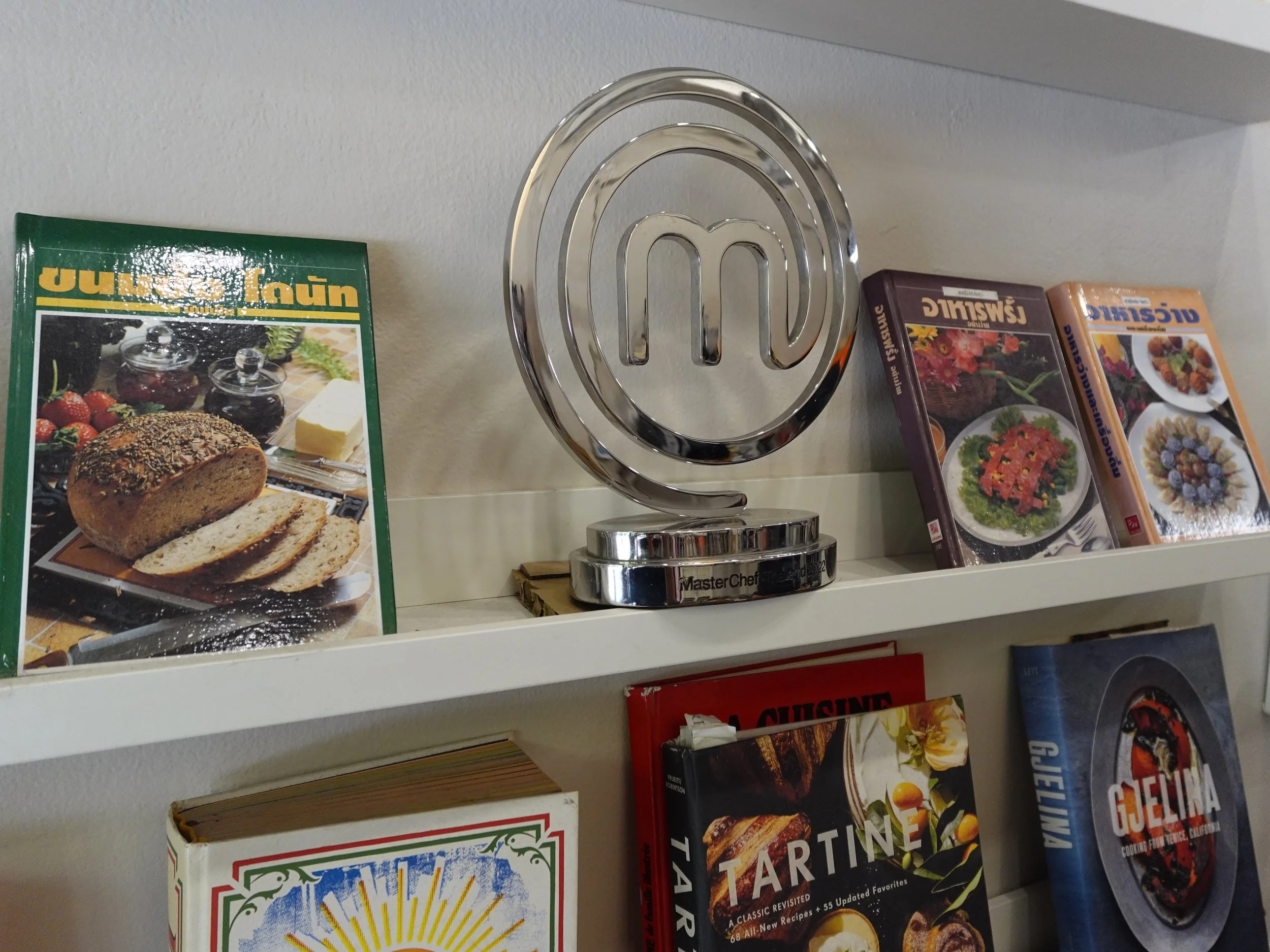
The MasterChef trophy shares a shelf with cookbooks.
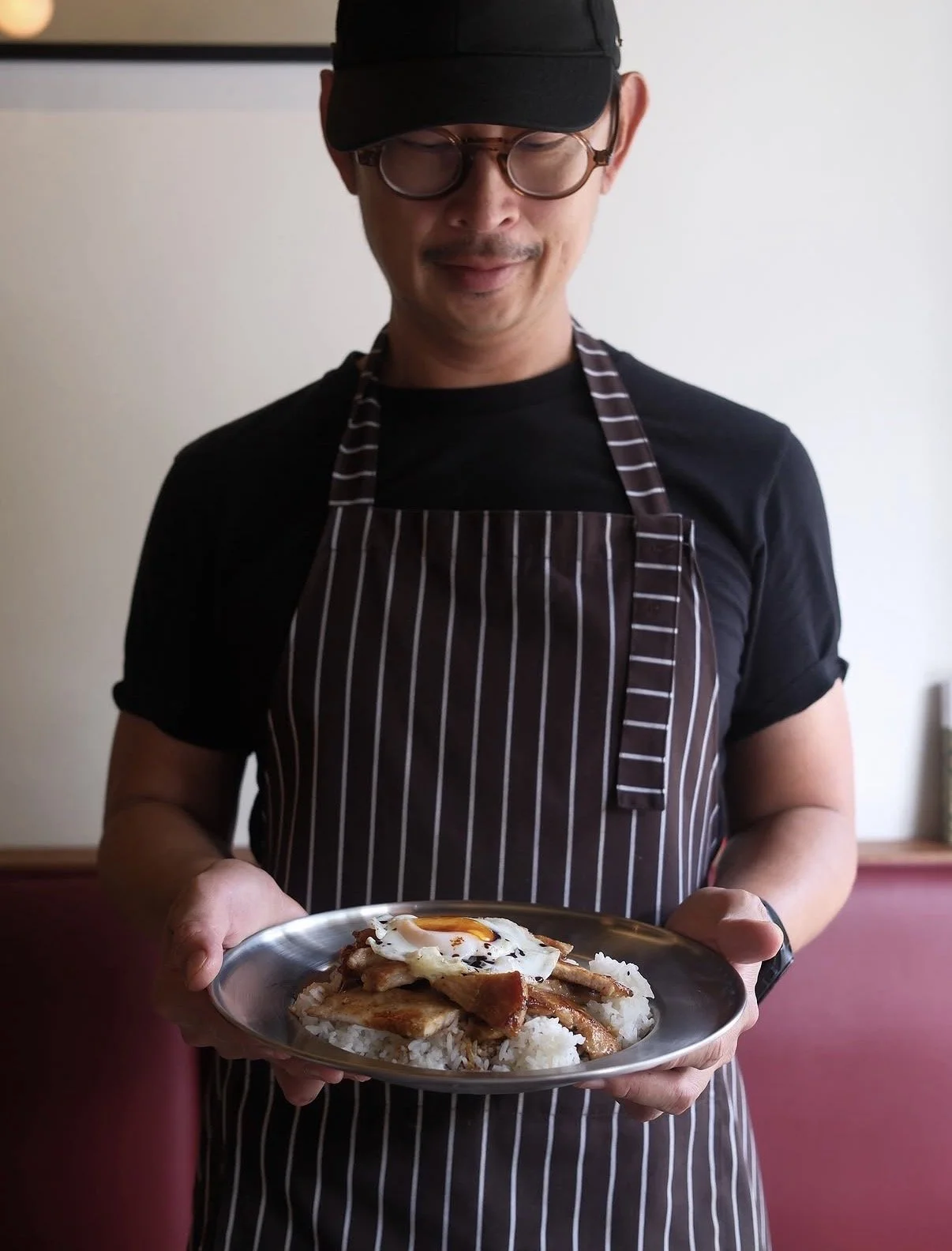
Angkrit with pork chop rice at Ang Kee. Image source: Ang Kee / @angkee.porkchop.
Green red and yellow
The ingredients were spread across the wooden counter in bowls and woven trays. There were chillies, garlic, green aubergines, leaves and roots, with pieces of pumpkin ready for one of the curries. We blended the bases and cooked them in separate pans, the colours becoming an immediate way of keeping track of what we were making.
Green curry would be paired with chicken and aubergine, red with pork, and yellow with pumpkin. Having all three in progress together gave me a view of the preparation that a finished bowl alone could not offer. The ingredients, the mixtures in the blender jugs and the pans on the counter were all there to look at as we worked.
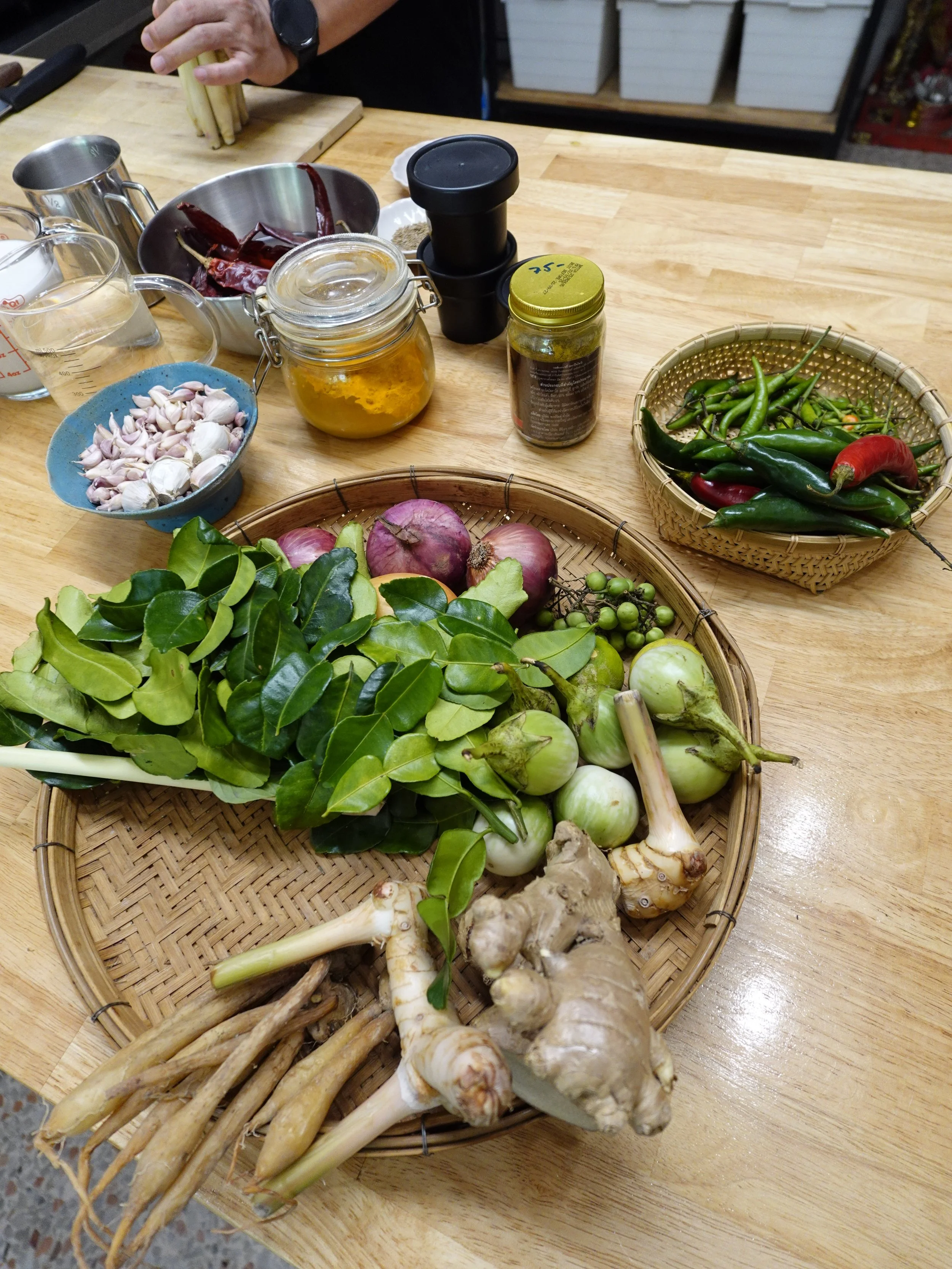
Ingredients laid out for our cooking session.
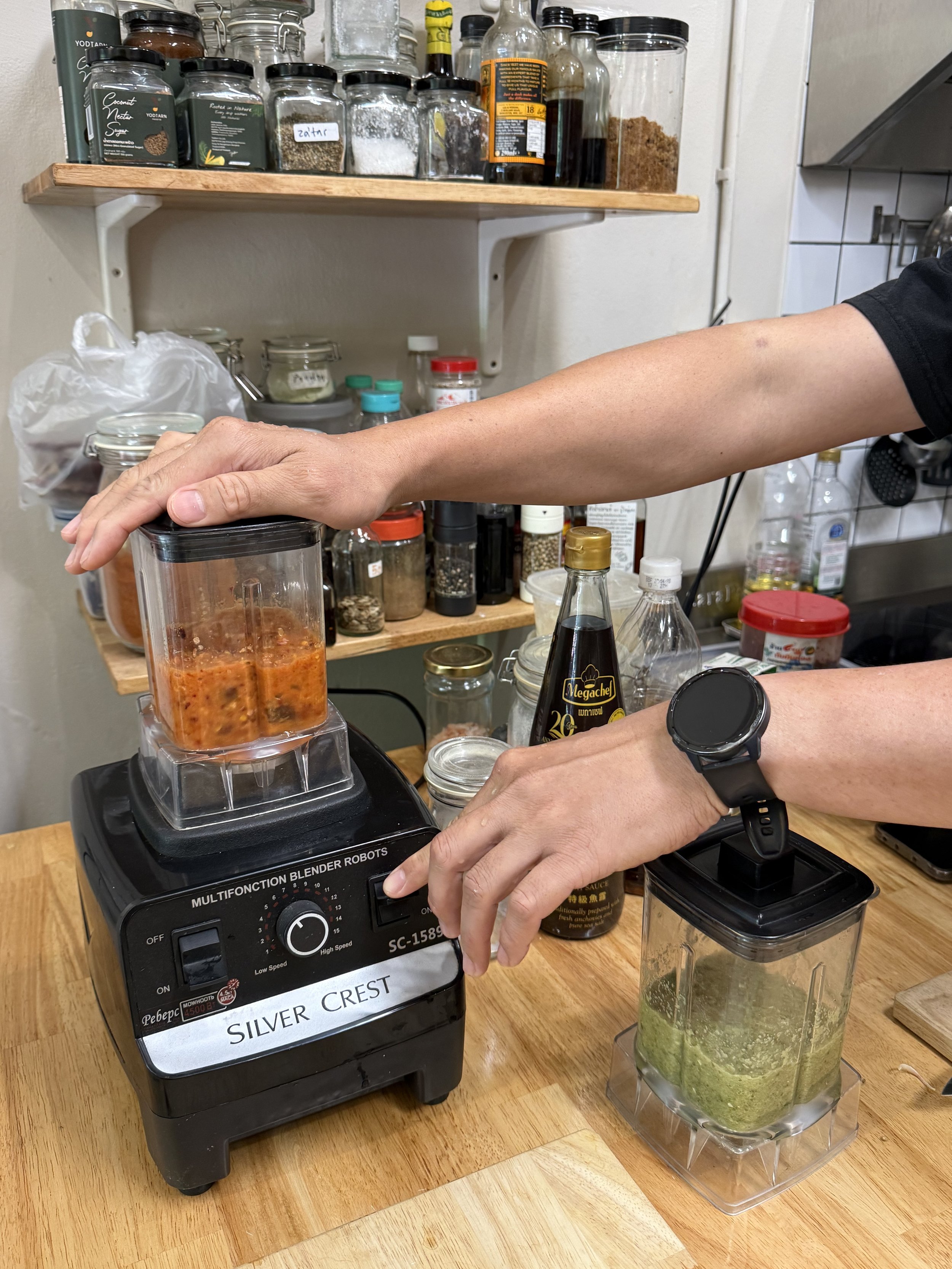
Blending a curry base, with the green mixture alongside.
The aromas were rich. What I particularly noticed was the seasoning: we added no separate salt, with the salty flavour coming from fish sauce and shrimp paste. It was one of those practical details that becomes more memorable when you are present for the cooking.
By the time we ate, the curries had the generous, thick gravy I remember from the session. I enjoyed their richness, and the experience of having followed them from their bases to the dishes on the table.
Where our families began
While the curries were being prepared, we talked about my life in Umbria and my recent trip to China. I had been visiting the places my paternal grandparents came from and learning more about my Hakka roots. The food I had eaten was still fresh in my mind, and I told him about Hakka cuisine.
Angkrit has Chinese ancestry too, although he knew little about exactly where his ancestors had come from. That gave the conversation a connection I had not anticipated. I had arrived with recent impressions of family places and food; he was interested in a history about which he had fewer details.
I enjoyed his curiosity about food beyond Thailand. There was room for me to talk about what I had seen and eaten, as well as to learn from what he was making. For someone who moves between Malaysia, Italy and the places I travel to, that exchange felt natural. Our different experiences gave us things to ask about.
The informal setting helped. We could follow a thought about family or food while continuing with the cooking. I came away with an impression of someone intelligent and interested in other people, at ease sharing what he knew while remaining open to what he might hear.
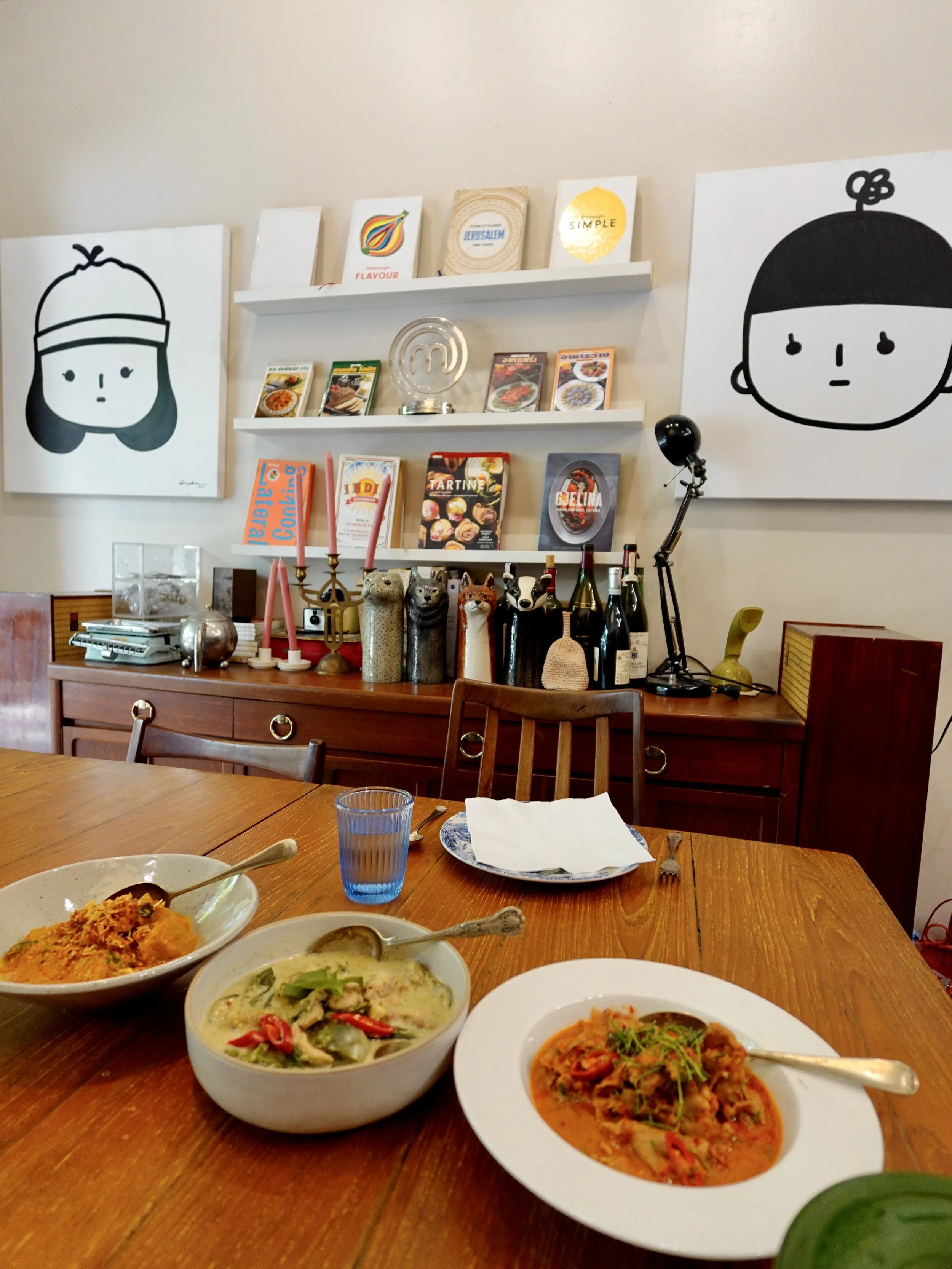
The three curries at the table in Angkrit’s private kitchen.
At the table
Ang Kee, the restaurant he started, was two doors away. He arranged for some pork chop to be brought to the private kitchen for me to taste alongside our curries. It was tender, savoury and gently sweet. He explained that he wanted Ang Kee to offer staple food people could afford to eat regularly. That intention made sense to me in the context of the meal we were sharing.
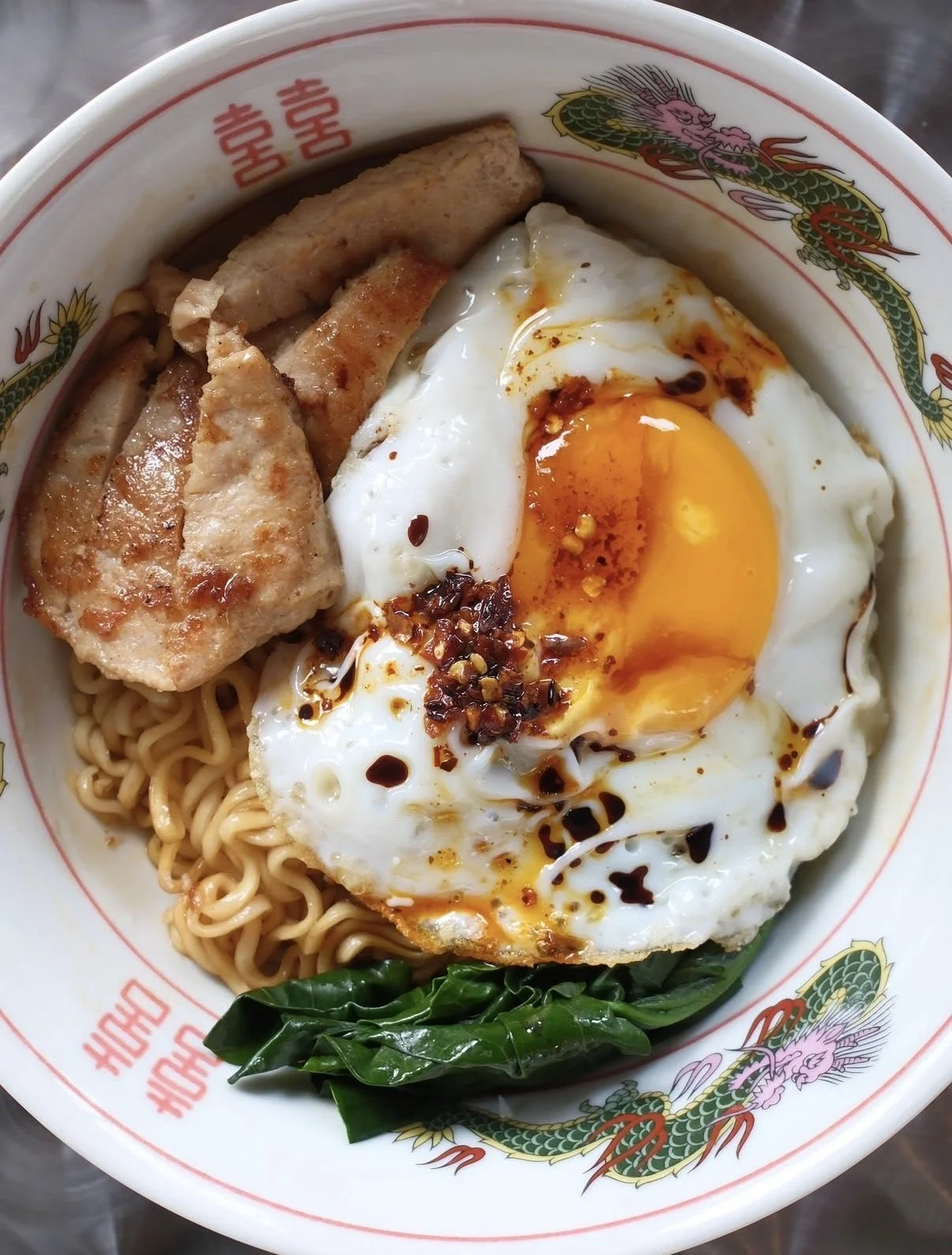
Noodles with pork chop, fried egg and greens at Ang Kee. Image source: Ang Kee / @angkee.porkchop.
The curries and our conversation remain my clearest memories of the day. I liked learning about Angkrit through the time we spent together: hearing about his mother and London, noticing the objects he kept, and discovering that my recent journey to China interested him.
In the photograph of us at the table, the bowls sit between us and the cookbooks and trophy are visible behind him. Looking at it now brings back the ease of that meal. I had arrived with questions about Thai cooking, and found myself talking about the food of my own family too.
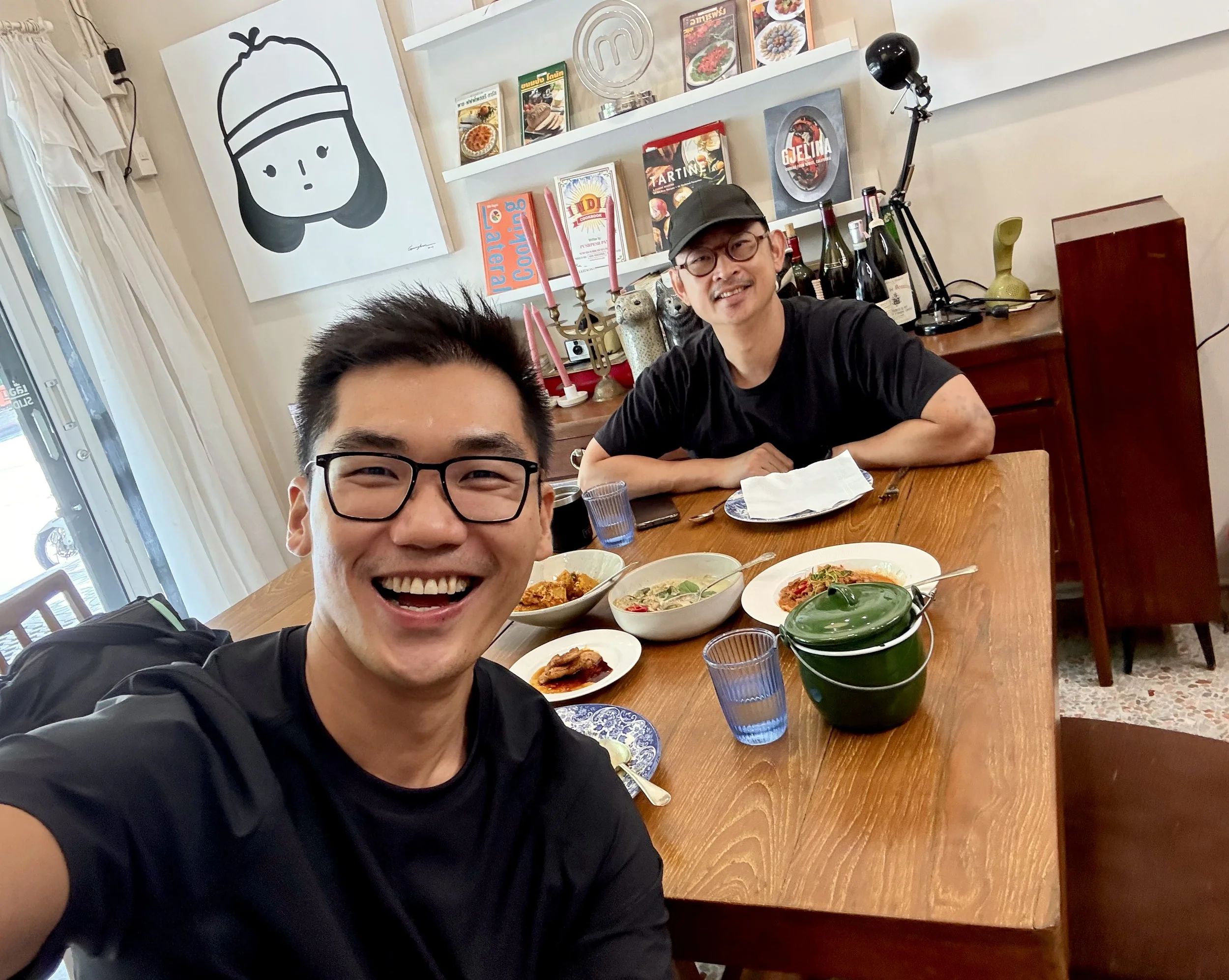
With Angkrit at the table after cooking.
Ang Kee also has a second location in Ekkamai. For current restaurant information, see @angkee.porkchop on Instagram.
Stories shaped by the art of noticing.
Before you leave, you are invited to sign The Guestbook.
Further Reading
The Source We Were Taught to Remember - the journey to my grandparents’ villages in China that became part of my conversation with Angkrit
The Craft of Gelato in Spoleto - an afternoon with Alessandro Crispini, where gelato, family and a jar of Malaysian kaya opened another exchange across food cultures.
The Plural of One - chef Giulio Gigli’s return to Umbria, bringing experience from kitchens abroad into a restaurant shaped by local ingredients and relationships.
Unless otherwise credited, all photography and written content are original works by Foodie Goes Travel.
