The Craft of Gelato in Spoleto
On pistachio, family and the art of making things slowly.
Words and photograph by JJ Wong
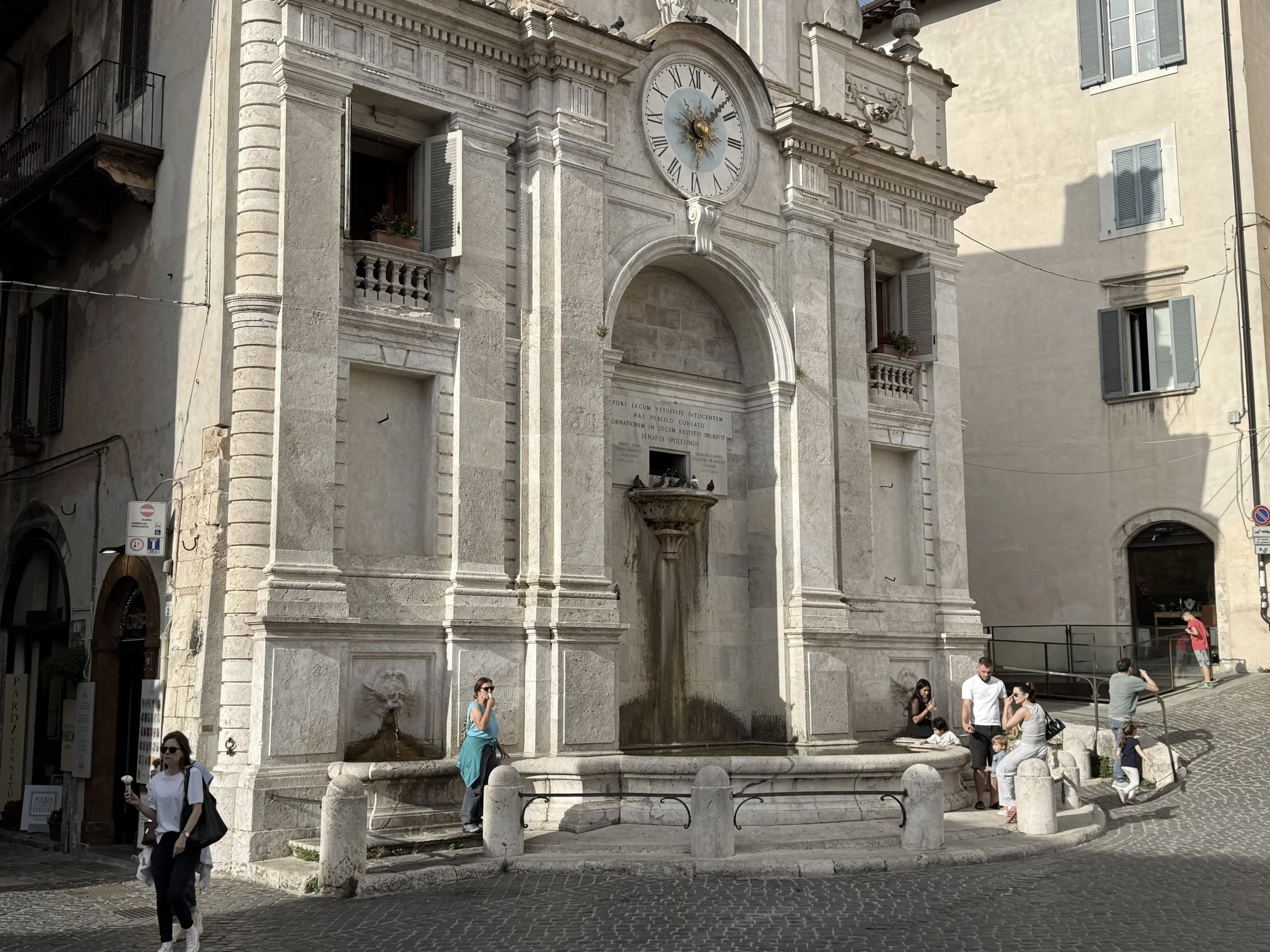
There are places where food feels designed primarily to be consumed quickly - photographed, marketed, expanded, replicated.
And then there are places like Crispini.
On a warm June afternoon in Spoleto, we arrived at Piazza del Mercato to find a long queue forming outside the small gelateria tucked beside the old fountain. It was a public holiday, the piazza lively but unhurried. Families stood chatting in the soft evening breeze, children held melting cones with complete concentration, and group of friends lingered in no particular rush to leave.
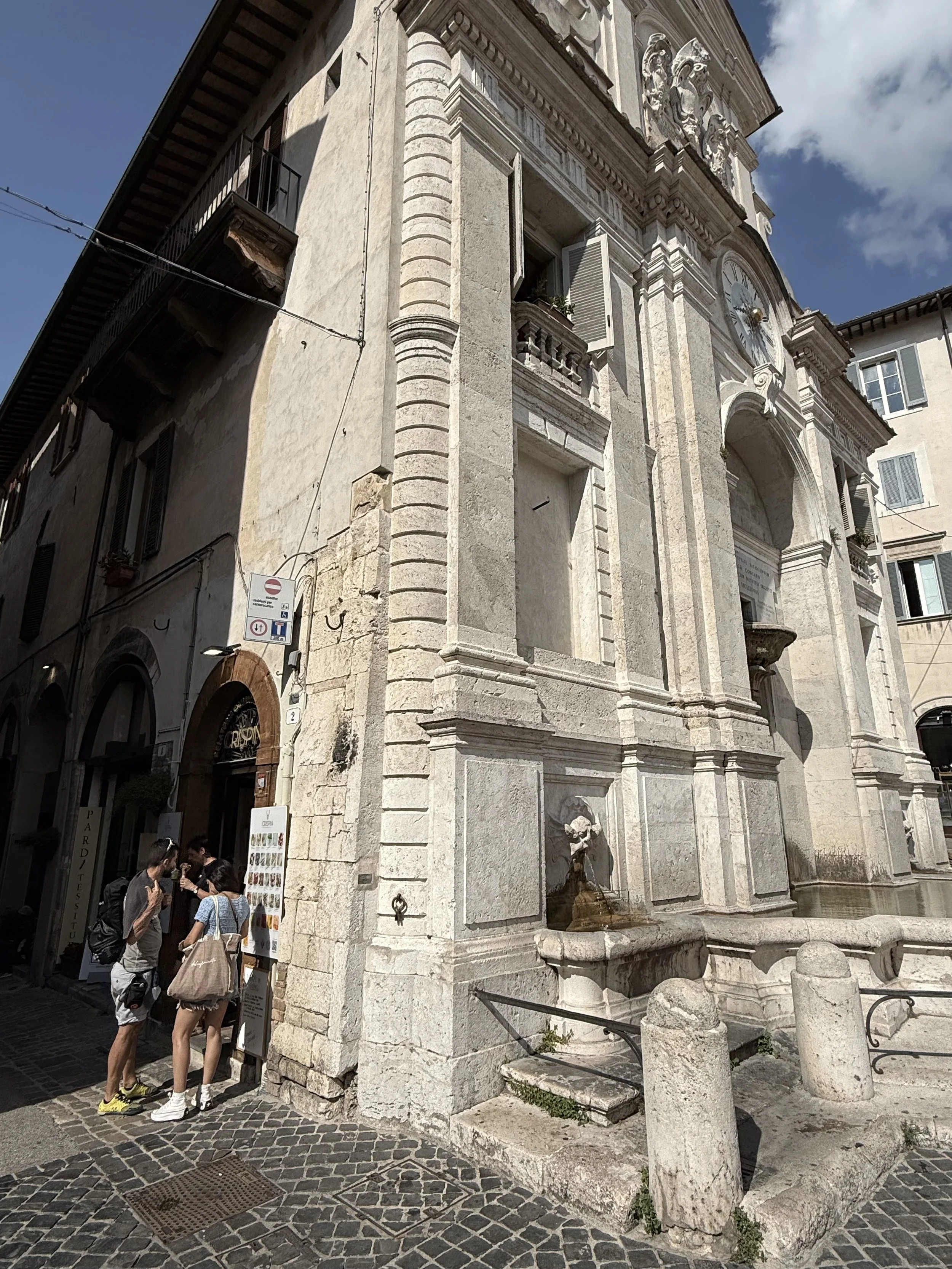
Before we even entered the shop, Alessandro Crispini briefly stepped outside to greet us personally.
Despite the constant flow of customers waiting behind us, he spoke with warmth and calmness, eager to share the philosophy behind his work. There was no sense of performance about him. No rehearsed branding language. Just genuine enthusiasm from someone who deeply believes in what he creates.
That sincerity stayed with me throughout the afternoon.
It is becoming increasingly rare to meet people who truly love what they do. Many businesses today prioritise visibility, scalability, profitability or marketing language before the product itself. Alessandro’s approach feels almost old-fashioned in the best possible way: an obsession with quality, ingredients, refinement and how his gelato can best be experienced by people.
Not how much can be sold.
Not how quickly the brand can grow.
Not how loudly success can be displayed.
He spoke repeatedly about constant refinement - how flavours continue evolving over time, how recipes are adjusted, how new ideas emerge seasonally. Even after international recognition, the process of improvement never seems finished.
Perhaps that is why Crispini feels so alive.
Alessandro began making gelato in his twenties after leaving his public sector job and opening his first bar-gelateria in Spoleto. Like many gelaterie at the time, he initially worked with semi-prepared industrial bases before gradually replacing them with real ingredients through years of study and experimentation.
What followed became less a business journey and more an artisan pursuit.
He spoke about ingredients the way chefs speak about terroir and texture. About chemistry, molecular pairing, balance, oxidation, sweetness and temperature. He researches flavour interactions with the same intellectual curiosity often associated with Michelin-starred kitchens rather than traditional gelaterie (plural form of gelateria).
At Crispini, milk-based gelati (plural form of gelato) are made using latte fieno - milk from hay-fed grazing cows - while sugar levels are deliberately reduced to allow the ingredients themselves to emerge more clearly. The decision increases production costs, but Alessandro spoke about this not as sacrifice, but as necessity.
For him, quality is not a marketing position.
It is the foundation of the work itself.
Alessandro described gelato as constant research, trial and error and continual refinement - no different from any serious artisan craft.
What became increasingly clear throughout the conversation was that Alessandro sees gelato not merely as a finished product, but as a living craft that must continue evolving through curiosity and shared knowledge.
He spoke passionately about wanting younger generations to learn the method behind true artisanal gelato - not simply recipes, but the philosophy of working with integrity, real ingredients and continual refinement. For Alessandro, preserving the craft means passing knowledge forward rather than guarding it possessively.
This openness also shapes how he thinks about the future of Crispini beyond Spoleto.
Rather than replicating identical flavours mechanically across different cities, Alessandro believes the true essence of Crispini lies in its method and philosophy: the pursuit of excellence through local ingredients, careful research, and deep respect for flavour. In his view, the spirit of Crispini could exist anywhere in the world - not by copying Spoleto exactly, but by applying the same obsession with quality to each local culture and ingredient.
It was one of the most thoughtful ideas expressed that afternoon:
That craftsmanship is not about replication, but about learning how to observe, refine and create honestly wherever you are.
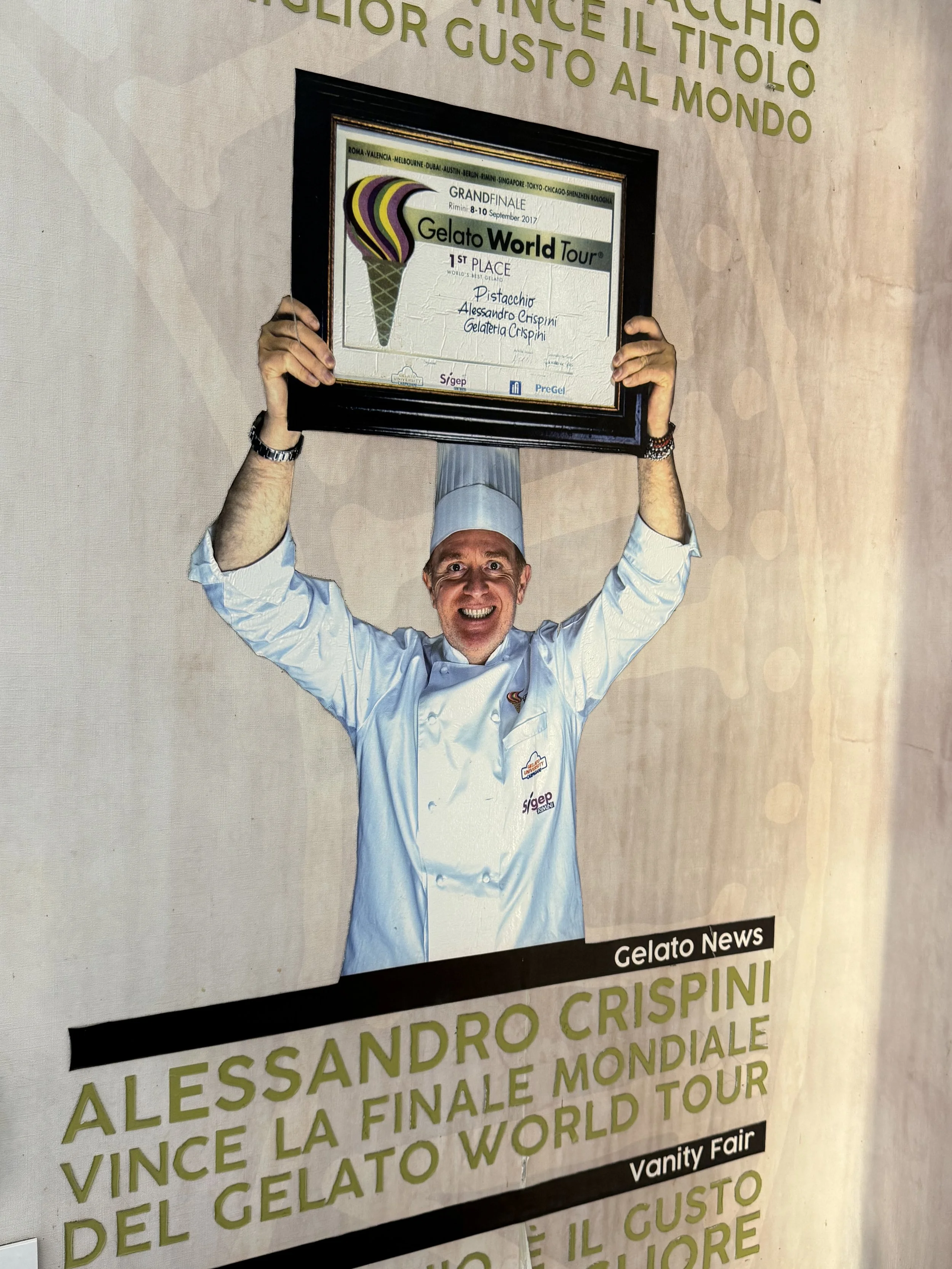
The world championship pistachio that eventually won the Gelato World Tour in 2017 was the result of years of experimentation. Alessandro travelled repeatedly across Sicily, tasting pistachio varieties from Bronte, Agrigento and other regions before selecting the final combination used in the recipe.
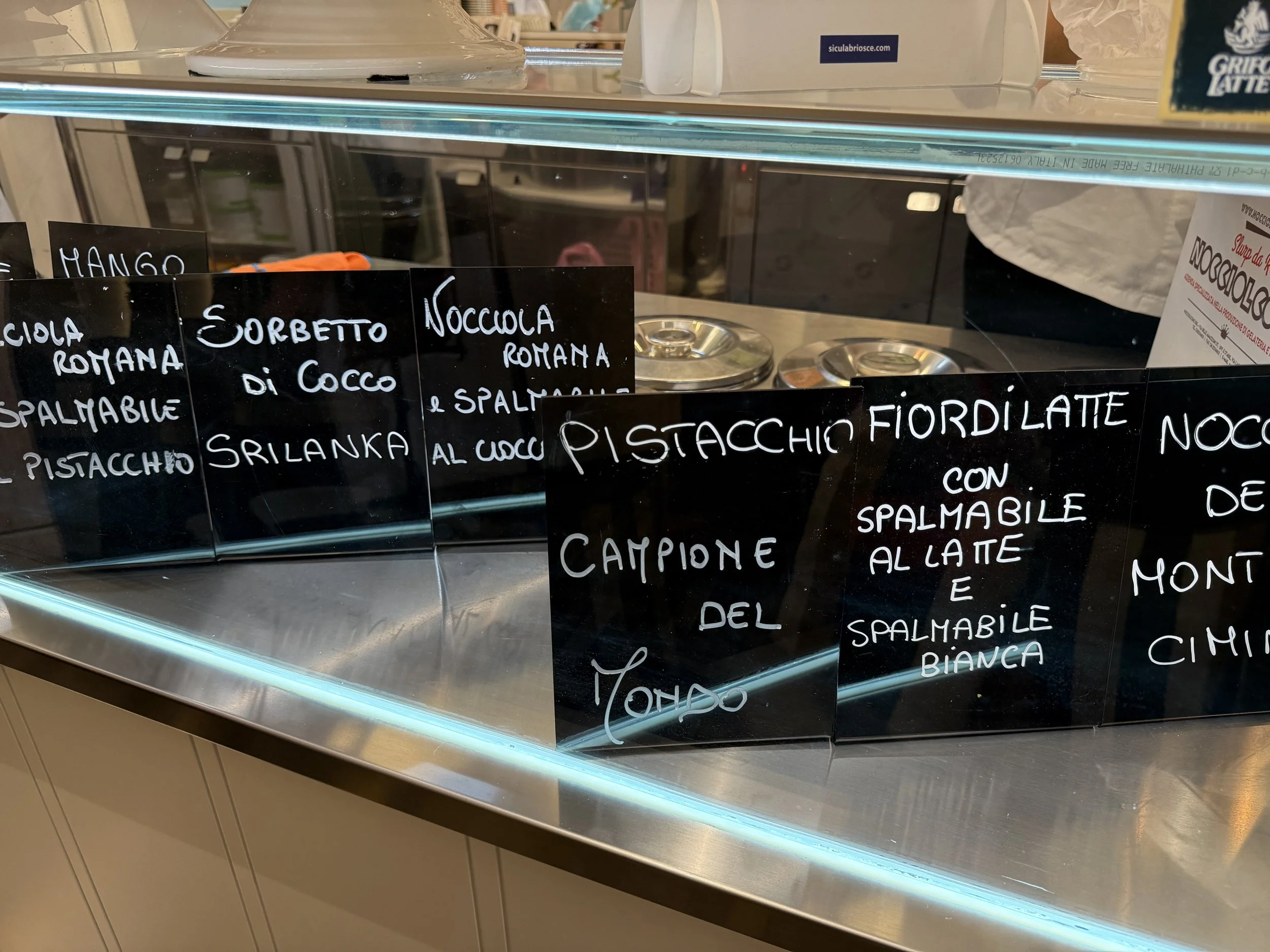
The famous pistachio flavour now appears quietly among the day’s offerings behind the glass - almost understated in a way that feels distinctly Umbrian.
In many cities, a world championship title would become a carefully commercialised spectacle. At Crispini, it still feels personal.
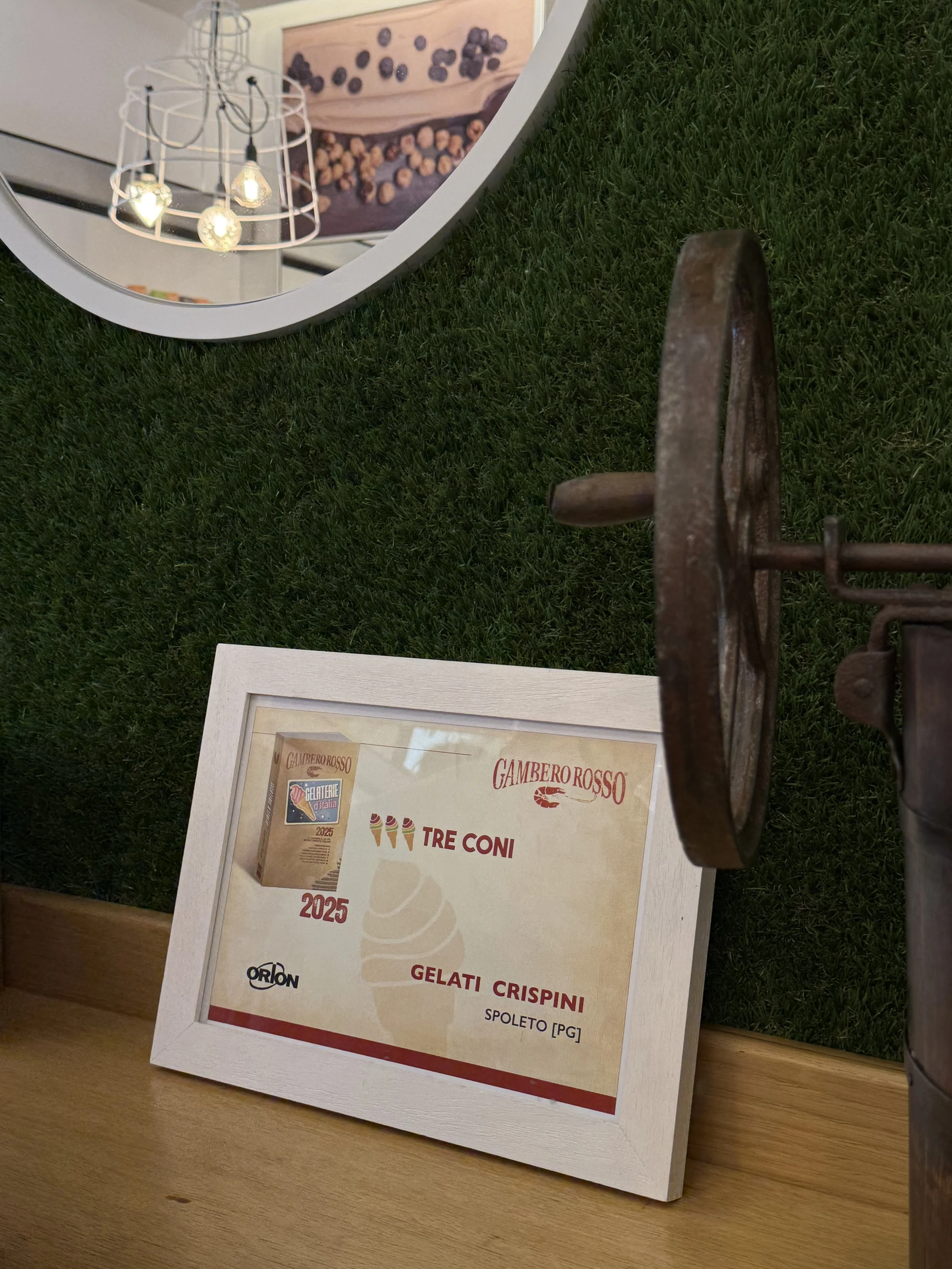
The same quiet seriousness is reflected in Italy’s most respected gelato guide, Gelaterie d’Italia by Gamberro Rosso, where Crispini currently holds the coveted “Tre Coni” recognition - the highest distinction awarded to artisanal gelaterie in the country. In 2025, only 72 gelaterie across all of Italy received the award, with Crispini remaining the sole Tre Coni gelateria in Umbria.
Yet even this level of recognition feels secondary when speaking with Alessandro himself. The awards matter not because they create prestige, but because they affirm a philosophy built slowly over years of continual refinement, ingredient research and respect for the craft itself.
What also distinguishes Crispini is its restraint.
Unlike many modern gelato chains where flavours are sculpted into oversized mountains beneath brightly lit glass displays, Crispini continues to use traditional pozzetti - stainless steel containers concealed beneath polished lids.
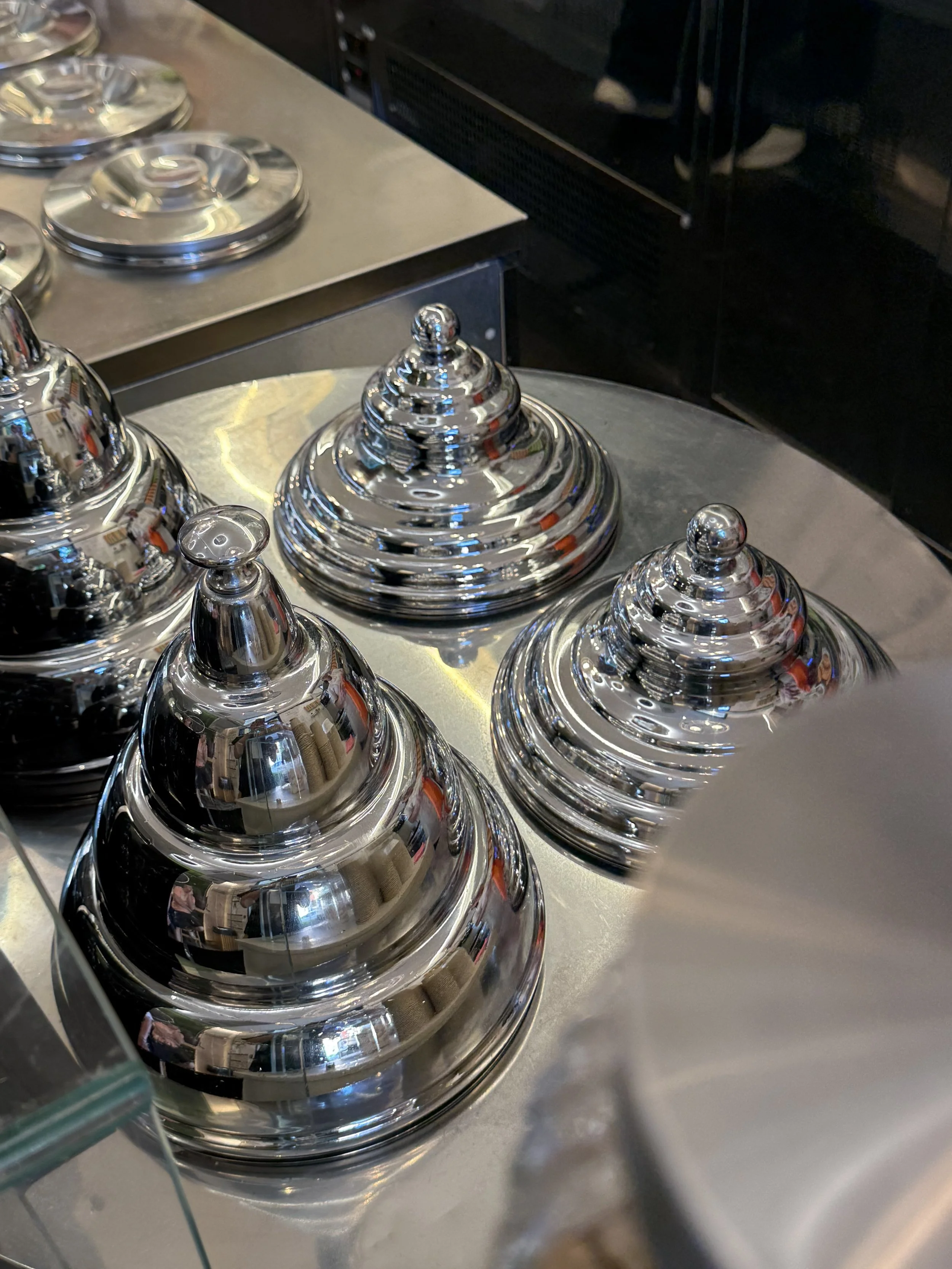
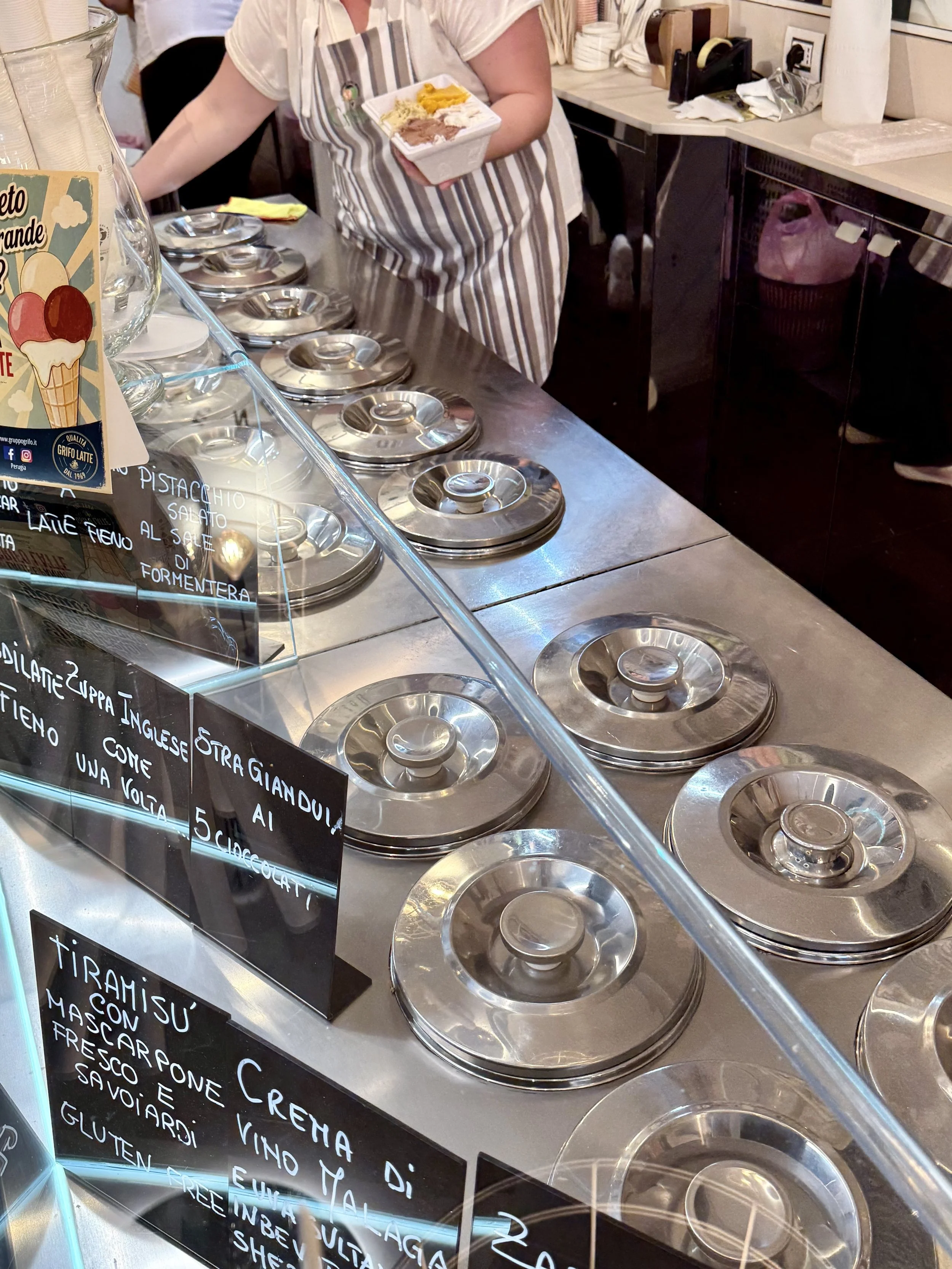
The system protects the gelato from oxidation and temperature instability while allowing it to be served slightly warmer, preserving creaminess and texture more naturally on the palate.
The philosophy becomes immediately clear: the product matters more than display.
And the taste reflects this immediately.
The textures feel cleaner, more balanced, less aggressively sweet than many commercial gelato brand that have expanded rapidly across international luxury malls in recent years. There is richness, but also precision. Nothing feels excessive.
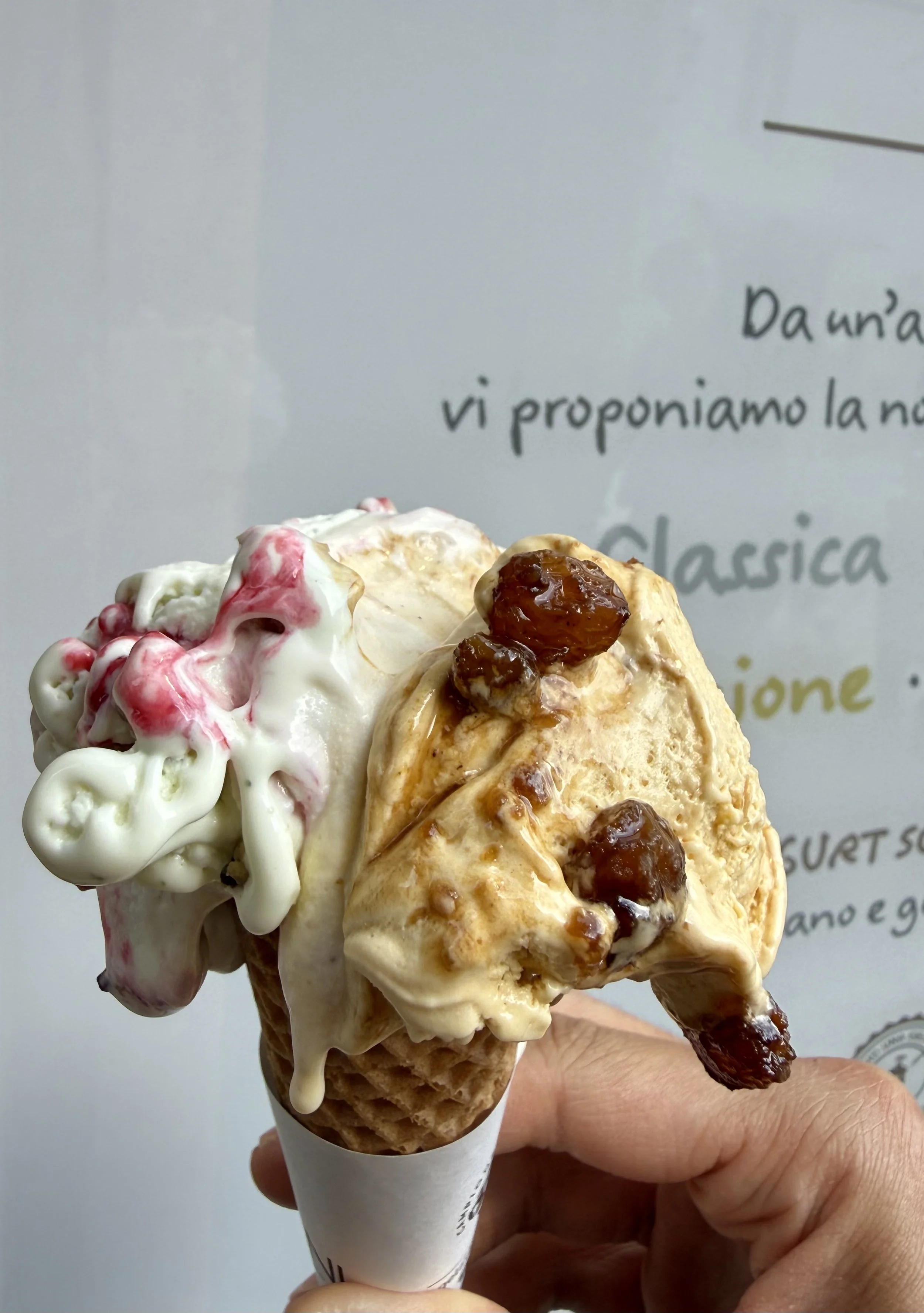
That evening, Alessandro selected several flavours for us himself - a strawberry cheesecake infused with basil and American cheese, a Malaga flavour layered with Pedro Ximénez sherry-soaked sultanas, and a tiramisu made with fresh mascarpone and coffee-soaked savoiardi biscuits.
Later, at Crispini’s another location near the tree-lined boulevard outside the historic centre, I found myself ordering frozen yoghurt topped with pistachio crumble and warm pistachio sauce despite already feeling completely full.
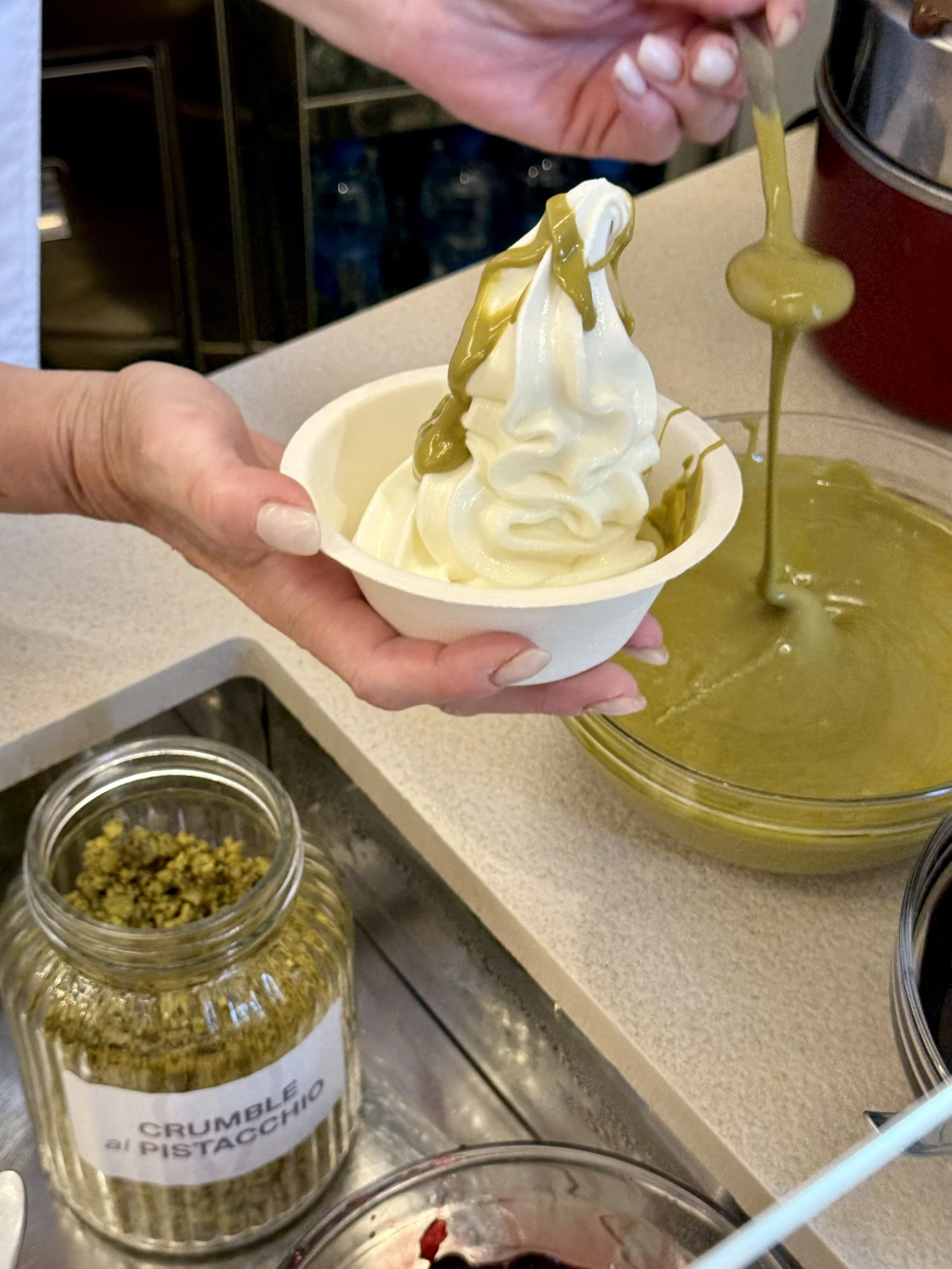
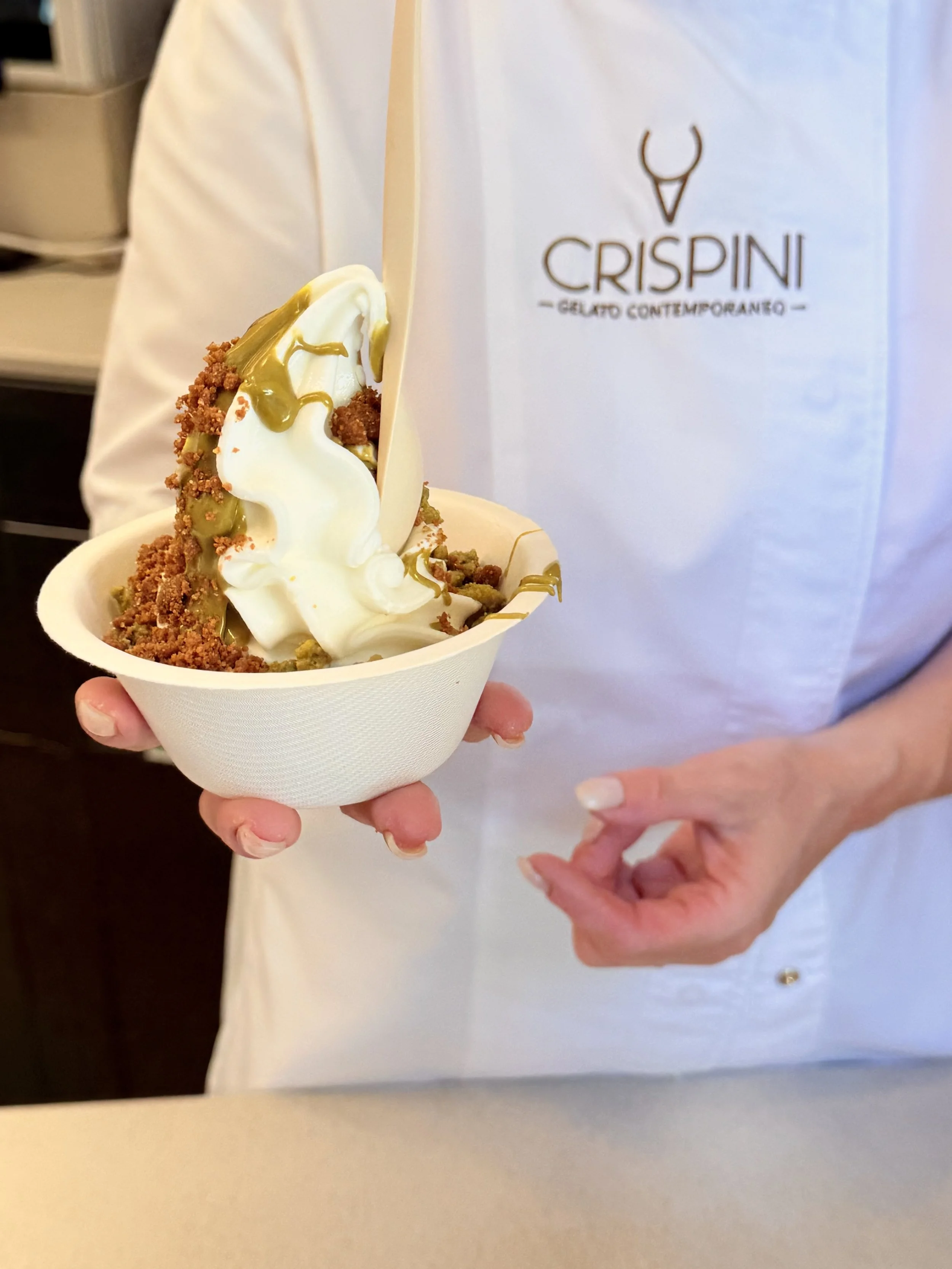
Even this felt thoughtful rather than excessive - creamy, nutty, balanced and elegantly presented.
What struck me equally was how deeply Alessandro’s philosophy appears embedded within the people around him.
His brother was the one who originally signed him up for the Gelato World Tour competition. His mother, a signora who always has this warm big smile on her face, still works at the shop. She happened to stop by briefly before heading to a family dinner that evening, visibly happy that we had spent time speaking with her son earlier in the day.
The staff moved with familiarity and warmth, confidently explaining flavour combinations and ingredients to customers. Alessandro later shared that he photographs ingredients daily for the teams across all three locations so they understand exactly what goes into each flavour.
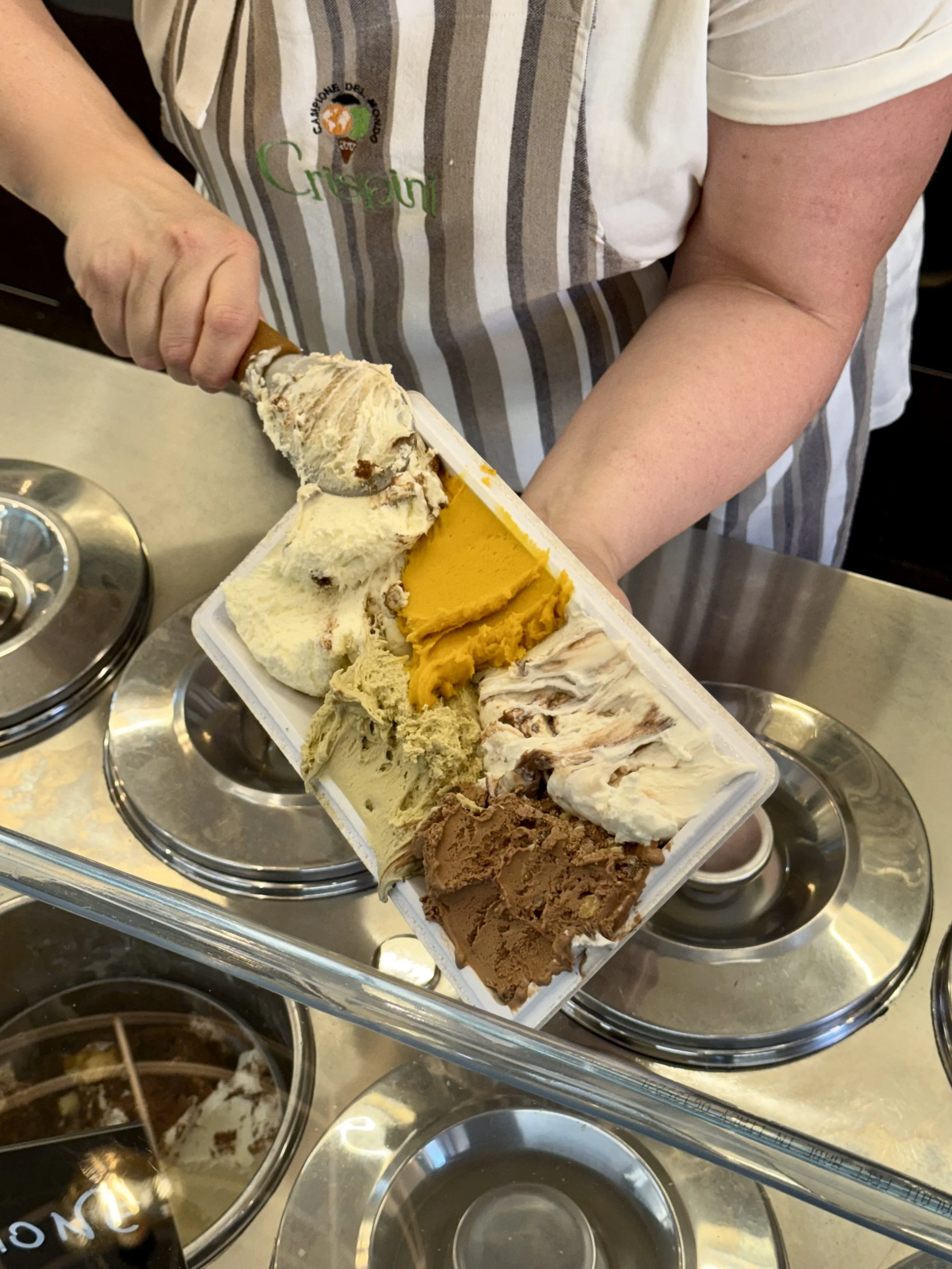
This attention to understanding - not merely selling - seems central to Crispini’s identity.
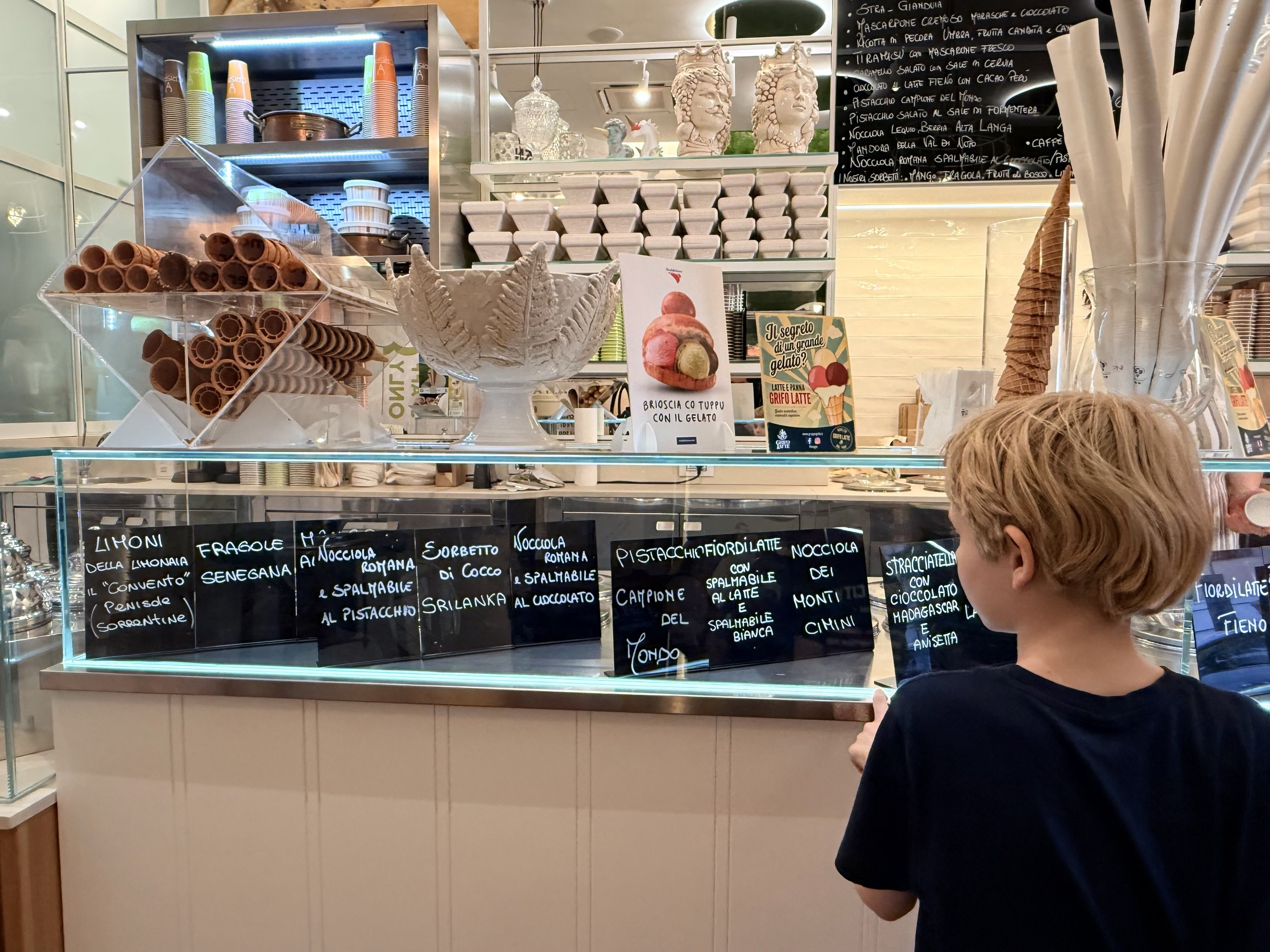
Not manicured.
Not theatrical.
Not overly polished.
Just people genuinely enjoying themselves on a summer evening in Spoleto.
As the light softened, families gathered outside with cones and cups in hand while conversations drifted through the streets surrounding the historic centre. The yellow facade of the shop glowed softly beneath the evening sky, while teenagers lingered casually nearby in no particular rush to leave.
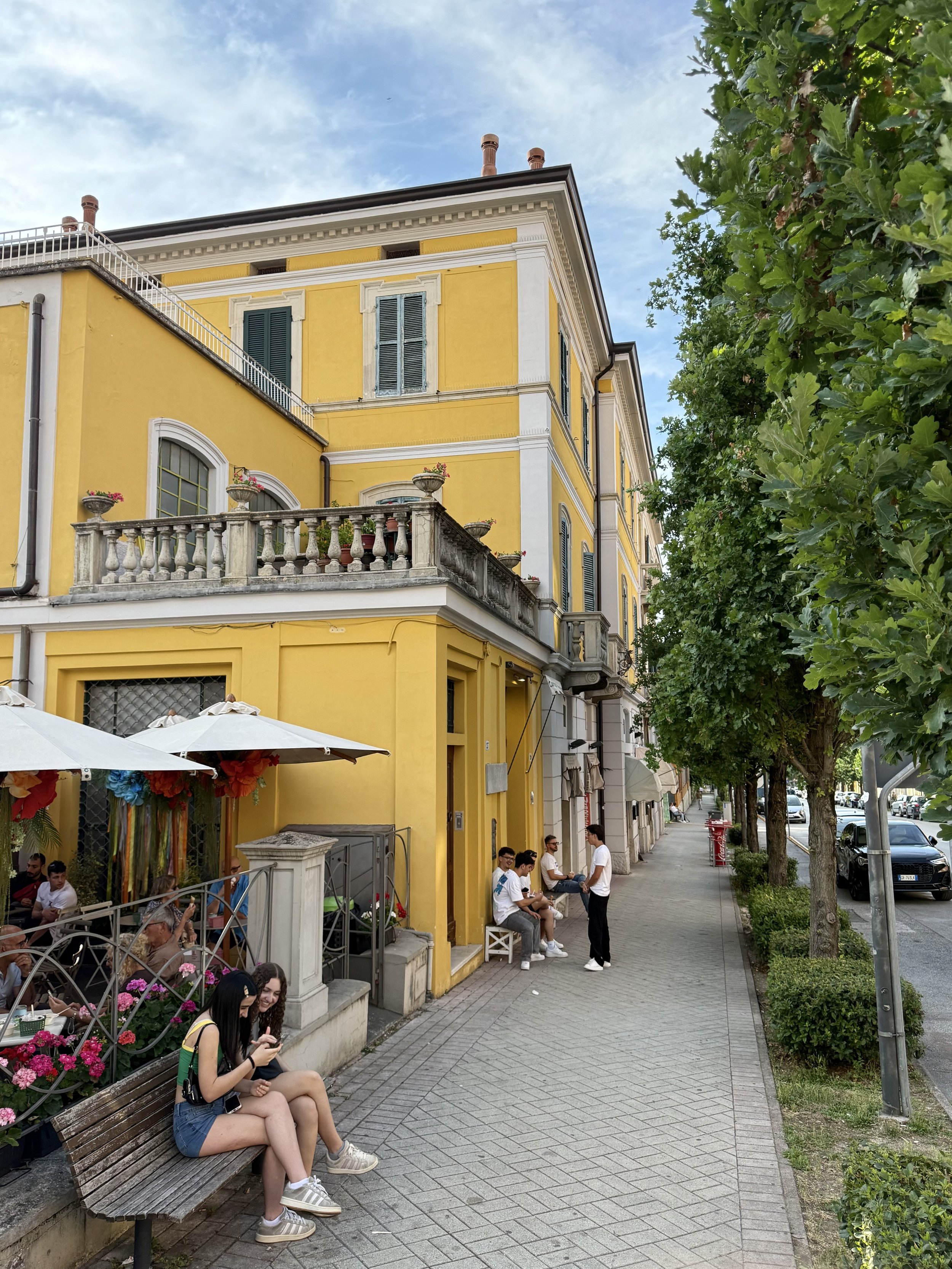
Before leaving, we shared a bottle of Kaya spread from Malaysia with Alessandro - a flavour many Malaysians and Singaporeans grow up eating with toast and coffee for breakfast. Rather than reacting with confusion, he immediately became curious, discussing how it might one day be interpreted into gelato.
That moment somehow captured the spirit of the afternoon perfectly: openness, curiosity, experimentation and the belief that craftsmanship is never truly finished.
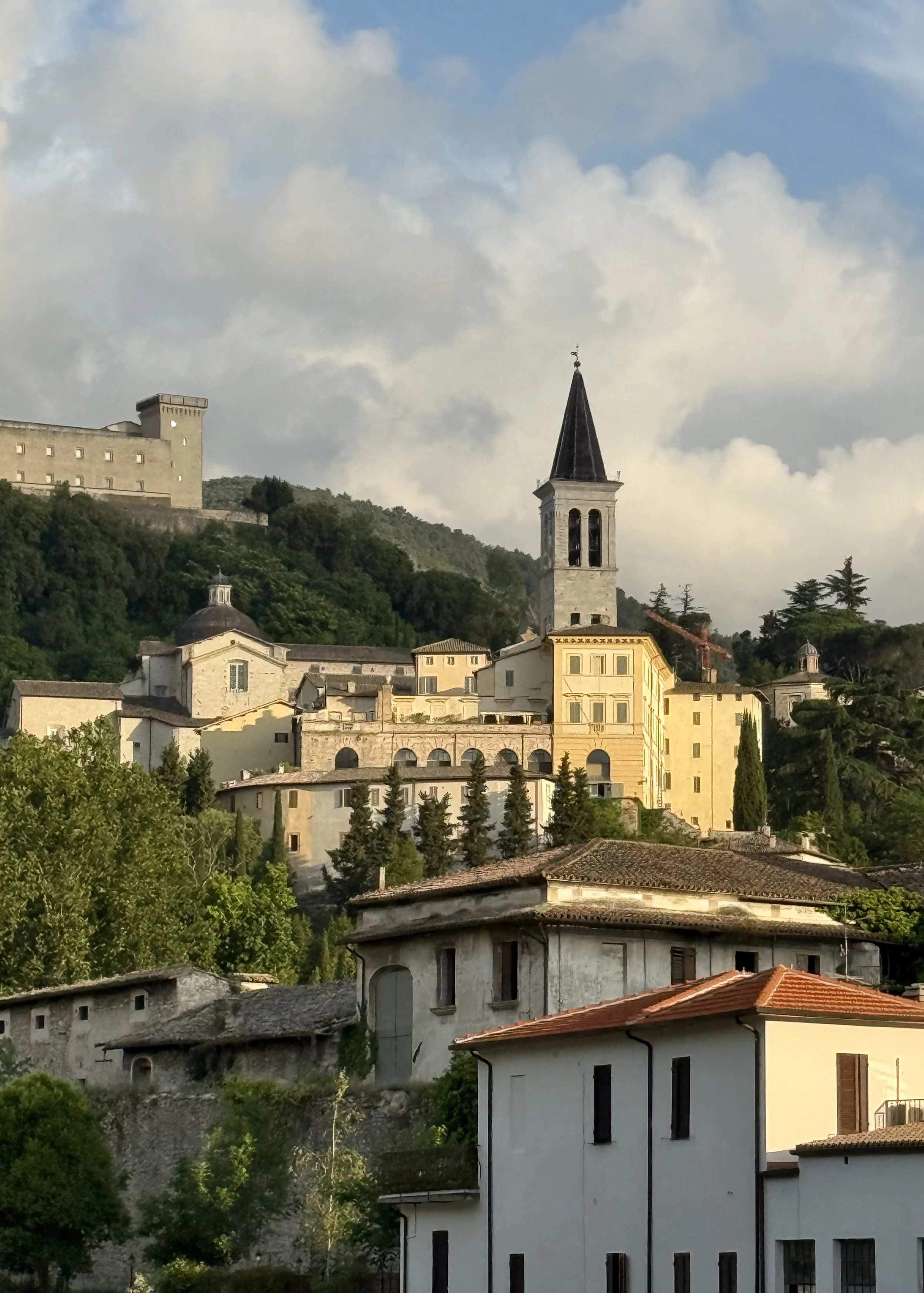
And perhaps that is what I will remember most.
Not simply a world-champion pistachio gelato.
But a quiet Umbrian evening where craftsmanship, family, warmth and the continual pursuit of excellence still seem capable of coexisting naturally.
Unless otherwise credited, all photography and written content are original works by Foodie Goes Travel.
