When the Duomo Became a Concert Hall
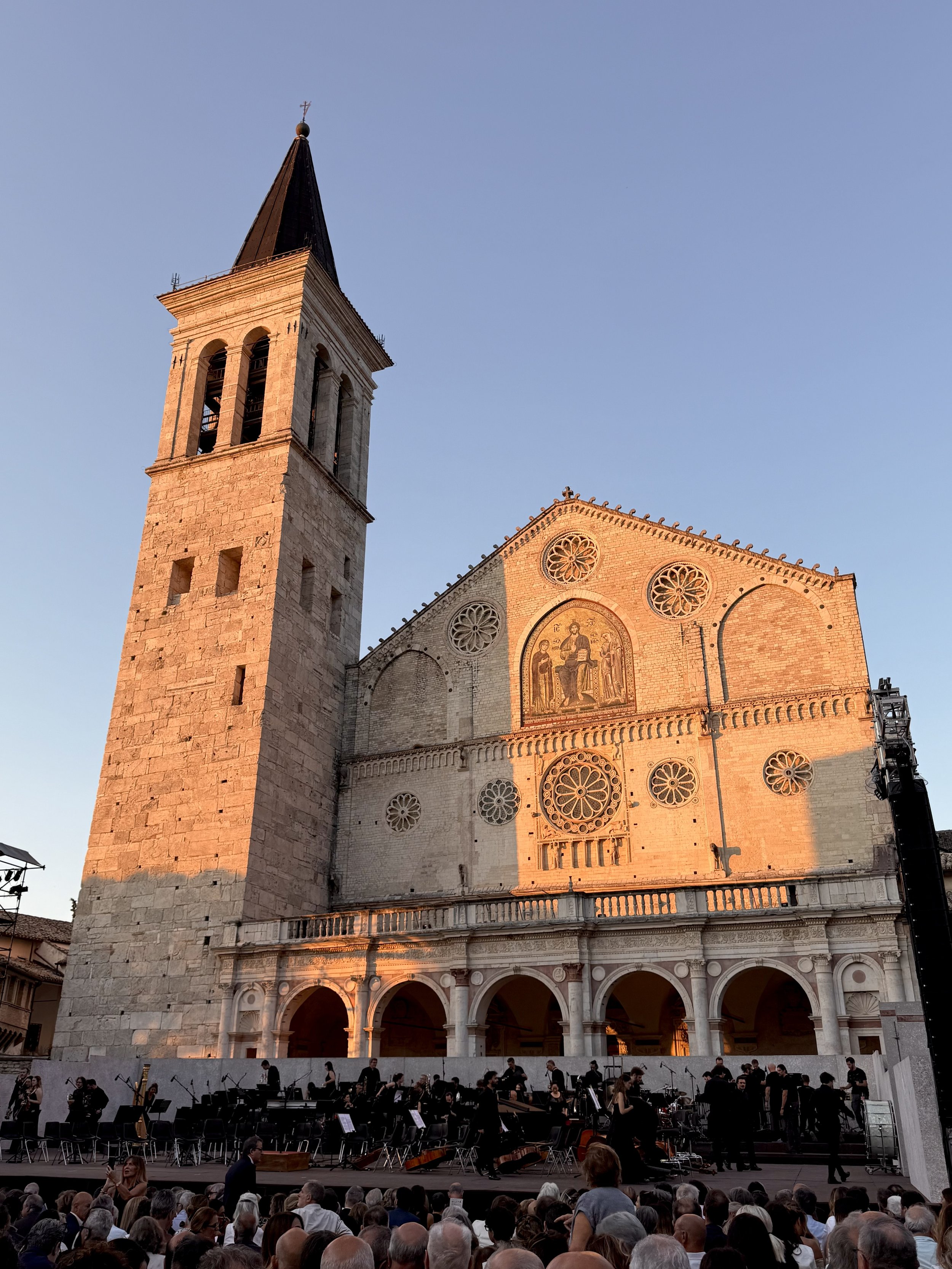
Founded in 1958 by the Italian composer Gian Carlo Menotti, the Festival dei Due Mondi was created to bring together artists and audiences from Europe and America - the “two worlds” of its name. Over the decades, it has grown into one of Italy’s most celebrated summer arts festivals, filling theatres and historic squares across Spoleto with music, opera, dance and theatre. The closing concert in Piazza del Duomo has become one of its defining traditions, bringing the festival to an end beneath the city’s Romanesque cathedral.
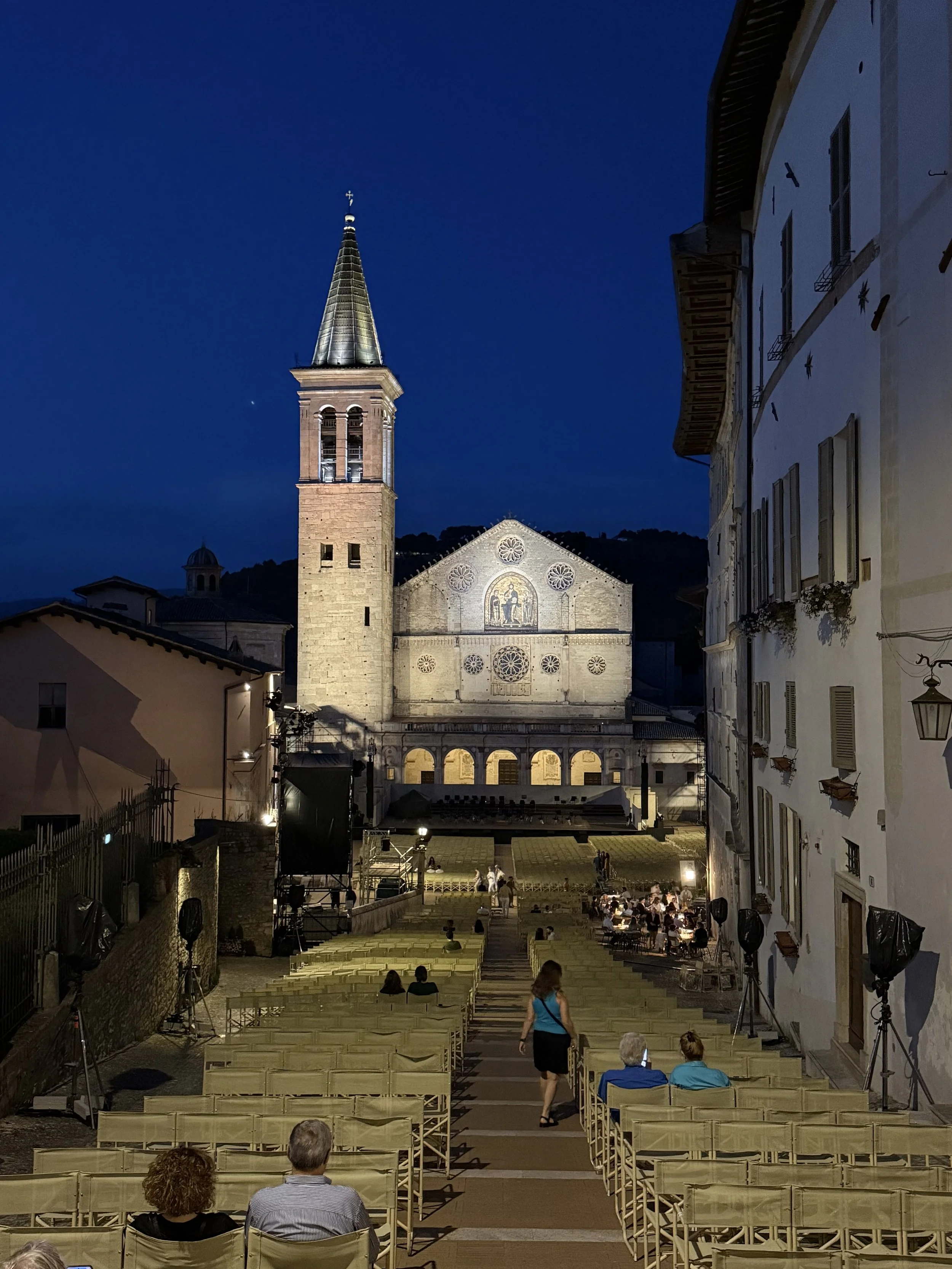
Rows of chairs had quietly transformed Piazza del Duomo into an open-air concert hall. Musicians wandered across the stage, adjusting music stands and tuning their instruments while the audience slowly filled the square.
Conversations floated through the warm evening air as friends greeted one another and searched for their seats.
For a few hours, one of Italy’s most beautiful piazzas would become a place for music.
Yet even before the conductor stepped onto the podium, it already felt as though the performance had begun.
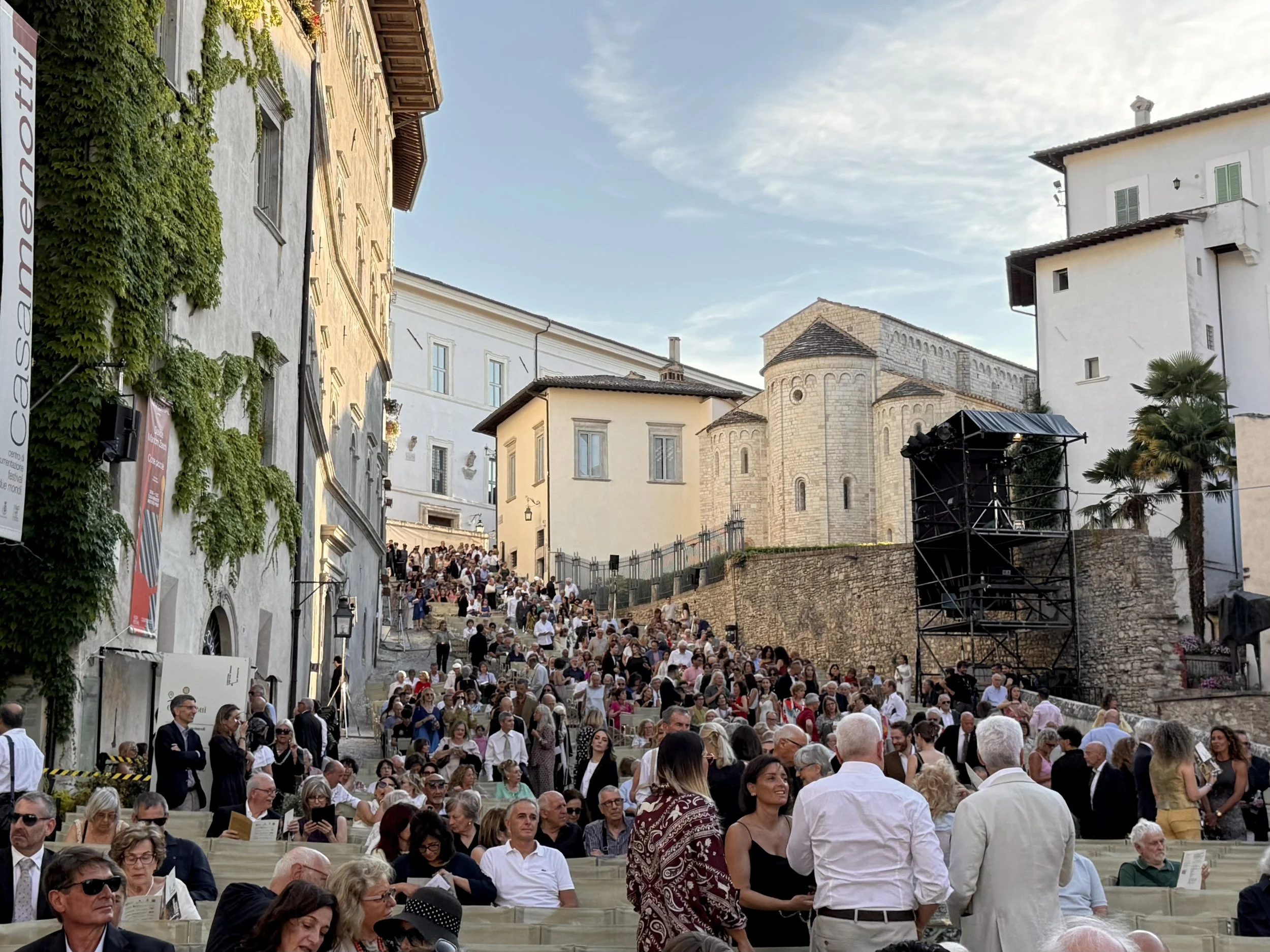
One of the pleasures of arriving early is watching a place change its purpose.
People weren’t rushing. Programmes were unfolded. Glasses of wine were finished in nearby Tric Trac before everyone drifted towards their seats. The square slowly settled into anticipation.
Nothing dramatic was happening.
Yet this quiet transition became part of the evening itself.
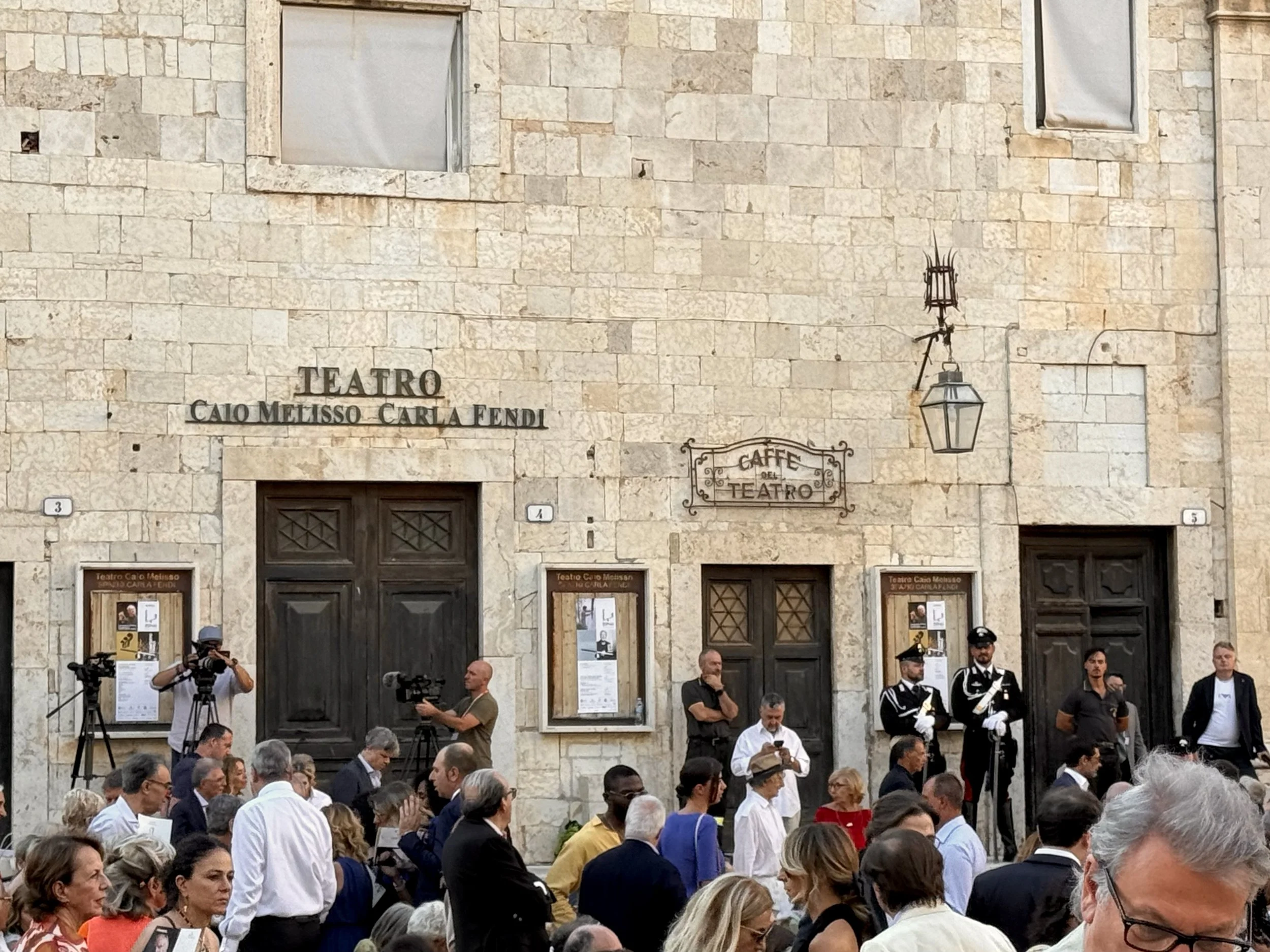
Just a few steps from Piazza del Duomo stands Teatro Caio Melisso Carla Fendi, one of Festival dei Due Mondi’s principal venues. During these weeks, it’s difficult to tell where one performance ends and another begins. People move between theatres, cafes and piazzas with programmes tucked beneath their arms, while conversations about the evening’s performances continue long after audiences have left their seats. The festival doesn’t feel confined to its venues; it becomes part of the rhythm of Spoleto itself.
Listening with my eyes
When the orchestra finally began, I expected my attention to remain on the musicians.
Instead, my eyes kept returning to the facade of the Duomo.
Perhaps music changes the way we notice things. That feeling reminded me of something I’ve been thinking about often while travelling - that sometimes slowing down allows us to see more than simply seeing more placed.
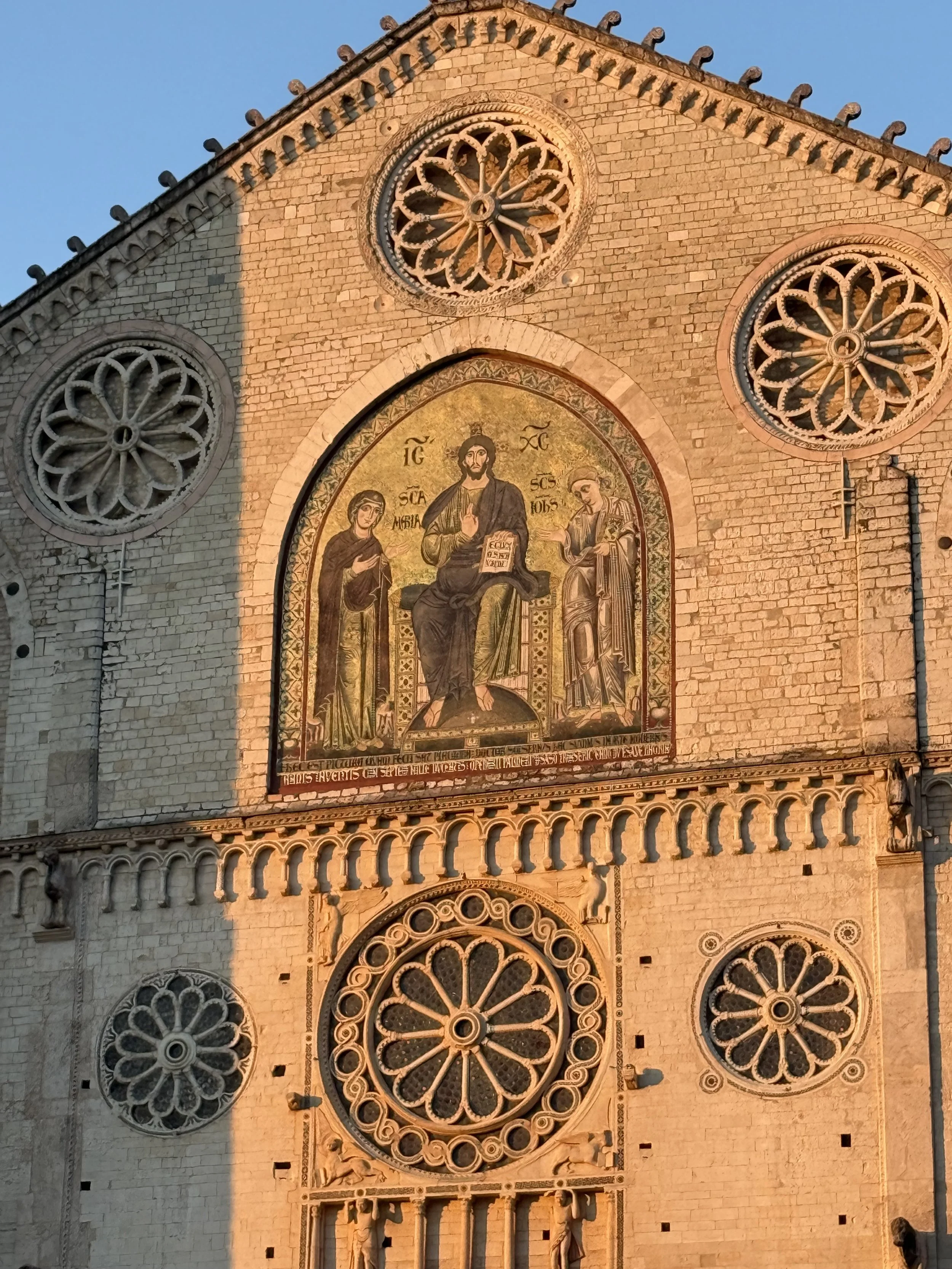
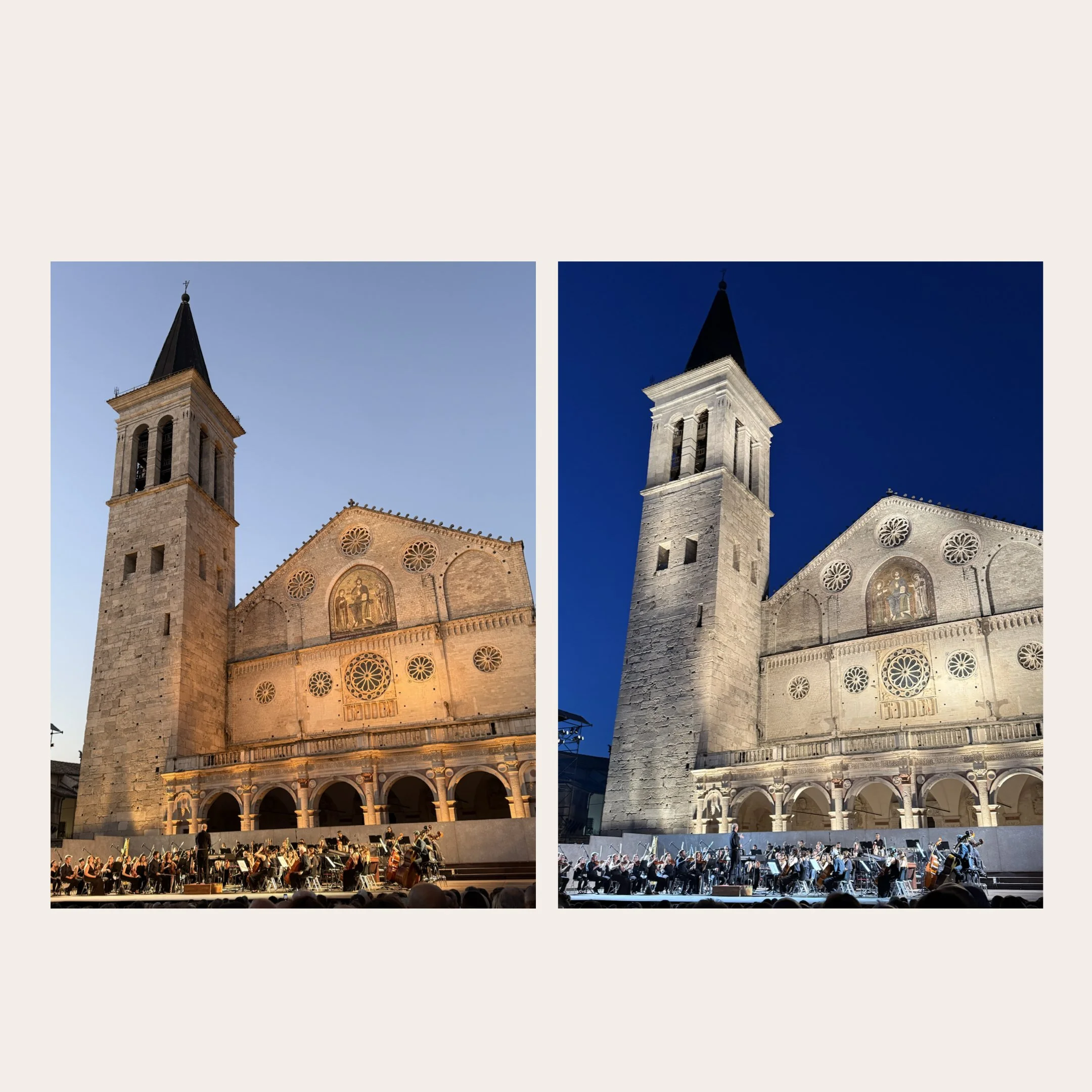
As the orchestra played, I found myself studying details I would normally walk past - the carved rose windows, the Byzantine mosaic glowing above the entrance, the centuries-old stone catching the last light of the day.
Listening and looking gradually became the same experience.
The cathedral was no longer simply the backdrop.
It had quietly become part of the performance.
As the evening unfolded, another performance began overhead.
The sky changed almost without anyone noticing.
The warm gold of magic hour slowly softened into pale blue before deepening into the rich blue hour that only seems to arrive during Italian summers.
The orchestra remained exactly where it was.
The Duomo never changed.
Only the light did.
Yet each piece somehow felt different as the colours of the evening quietly transformed.
The conductor was equally captivating to watch.
Even without hearing a single note, you could almost understand the music through the movement of his body. Sometimes his gestures stretched confidently across the stage, drawing the orchestra forward. Other times they became remarkably restrained, asking for silence instead of sound.
Against nearly eight centuries of Umbrian stone, every movement felt almost sculptural.
For long moments, I found myself watching him as much as I listened to the orchestra.
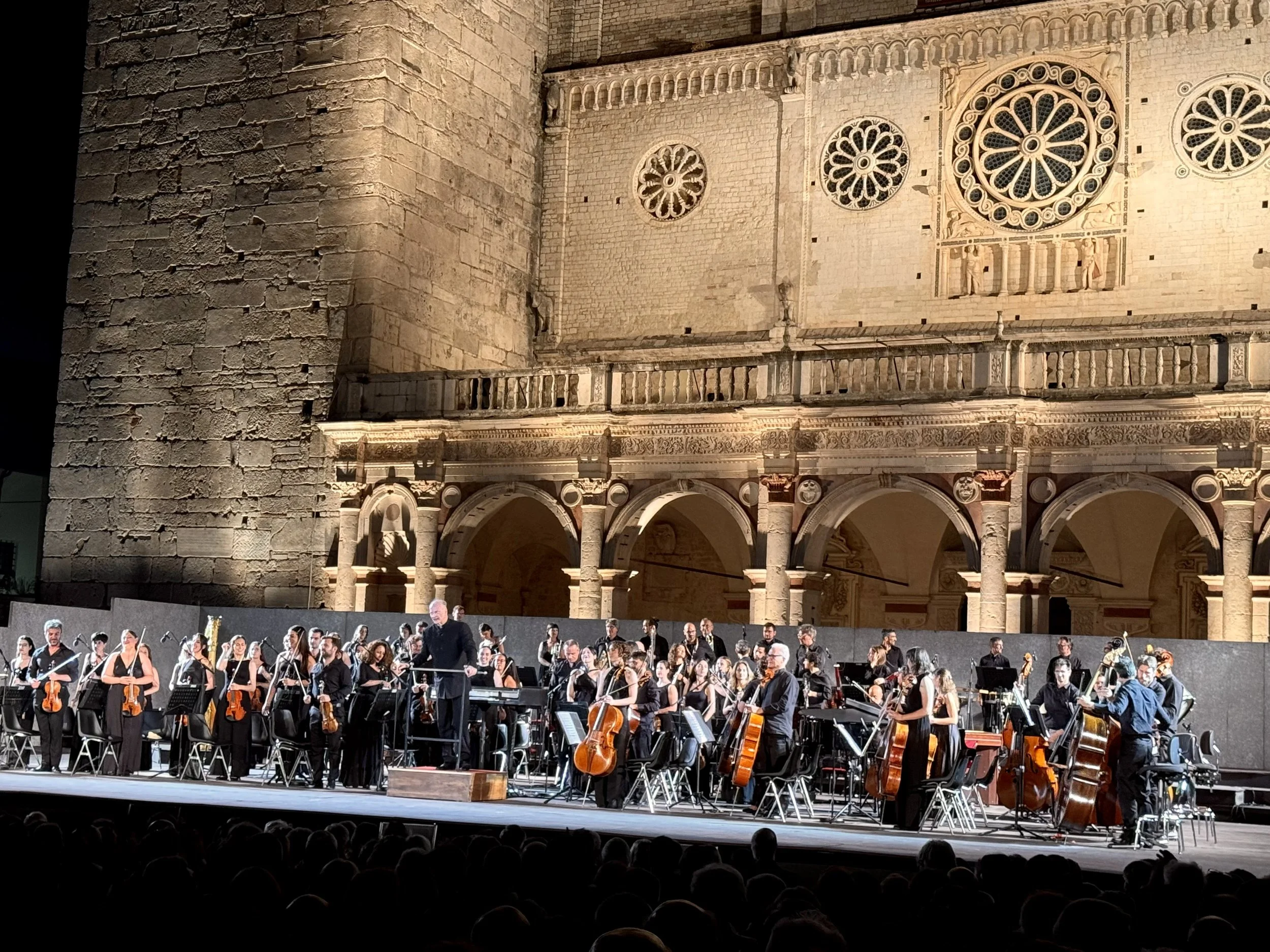
As darkness settled over the piazza, the cathedral seemed to glow even more brightly.
The ancient facade, illuminated against the deep blue sky, became the quiet centre of everything happening around it.
Music filled the square.
The Duomo simply stood there, as it has for centuries.
The final notes faded into the warm summer night.
For a brief moment, nobody moved.
Then the entire square rose together.
Applause echoed across the stone walls as the orchestra stood to acknowledge the audience. The conductor bowed. Musicians embraced one another. Another Festival dei Due Mondi had come to its close.
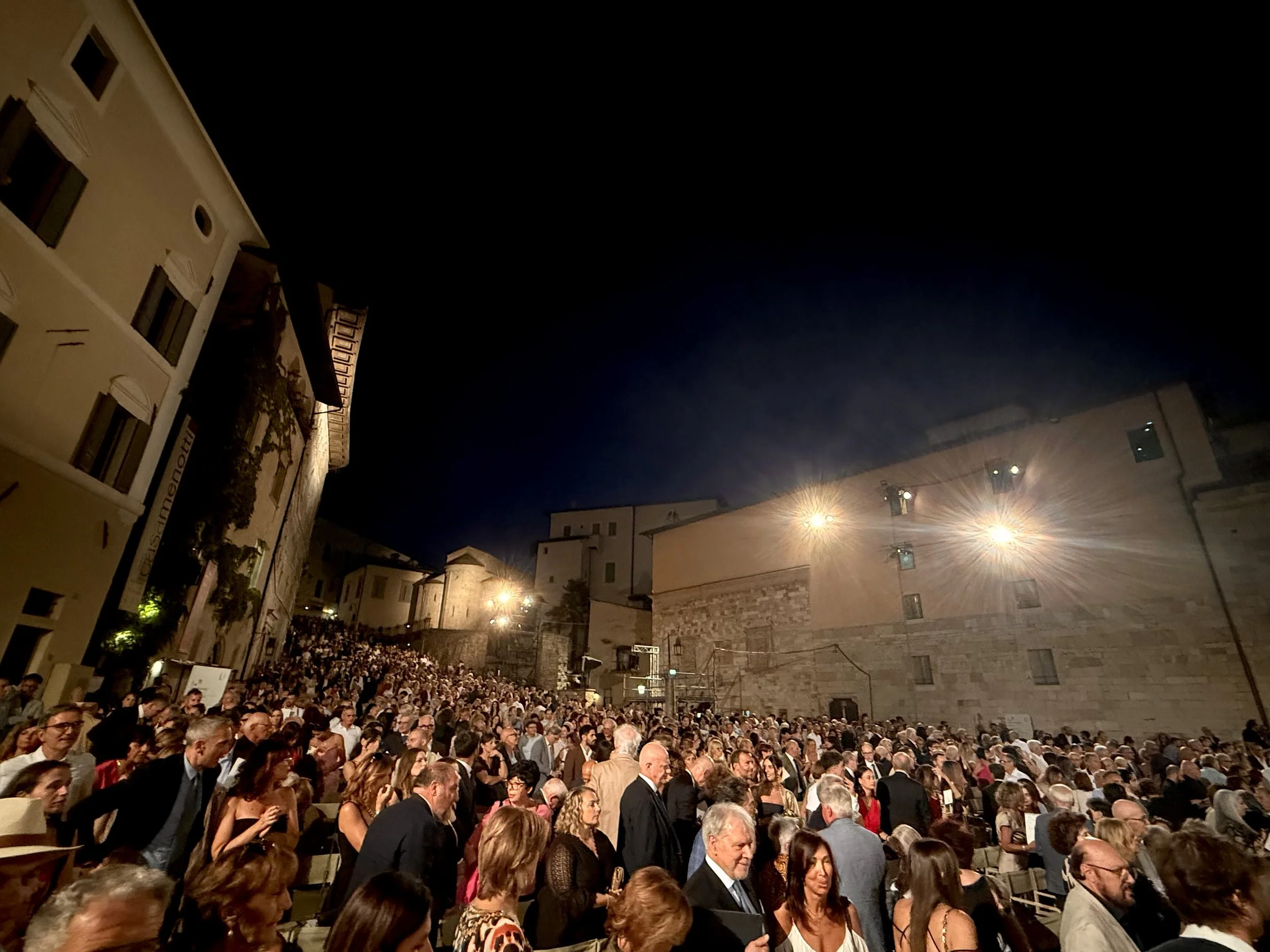
When the applause finally ended, people folded their programmes and slowly disappeared into the narrow streets of Spoleto.
By the following morning, the stage would be dismantled. The rows of chairs removed. Visitors arriving later that week might never realise that thousands of people had gathered here beneath the cathedral only hours before.
Yet the Duomo would remain exactly where it had always been.
Walking home, I realised that the memory I was carrying wasn’t a particular symphony or even a favourite movement.
It was the way the cathedral slowly changed colours as daylight gave way to blue colour. The quiet fascination of watching Gianandrea Noseda shape the music with nothing more than the movement of his hands. And the unexpected discovery that listening more carefully had also made me look more carefully.
Perhaps that is what I will remember most about the Festival dei Due Mondi - not only the music itself, but the way it invited me to experience a place I thought I already knew.
Before you leave, you are invited to sign The Guestbook.
Further Reading
Spoleto, Between Stone and Silence - Discover the town beyond the festival, in its quieter everyday rhythm
Why Umbria Feels Like Italy’s Best-Kept Secret - An introduction to the region I now call home
The Space Between - A reflection on how slowing down changes the way we experience a place
Colours of Umbria - Observing the landscapes and light that shape daily life in this part of Italy
Unless otherwise credited, all photography and written content are original works by Foodie Goes Travel.
