Colours of Umbria
A visual journal through seasons, silence and light.
Words and photograph by JJ Wong
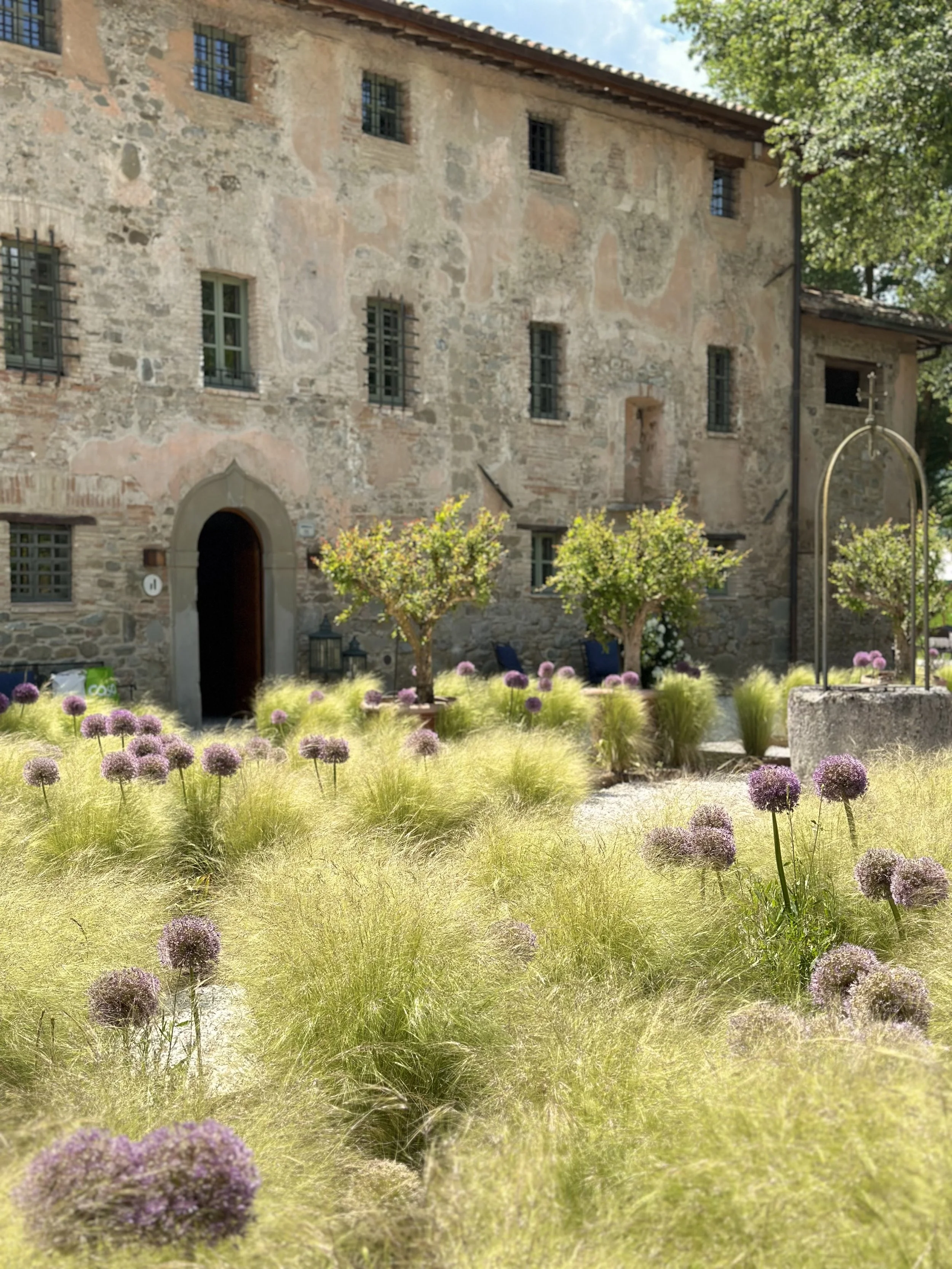
Before living in Umbria, I imagined the region mostly in shades of stone.
Hill towns built from pale limestone. Medieval walls weathered by centuries of rain. Quiet piazzas fading into soft earth tones beneath winter skies. Compared to the brighter imagery often associated with Italy, Umbria initially felt restrained - almost monochrome.
But over time, I began noticing that the colours here do not disappear.
They simply emerge more slowly.
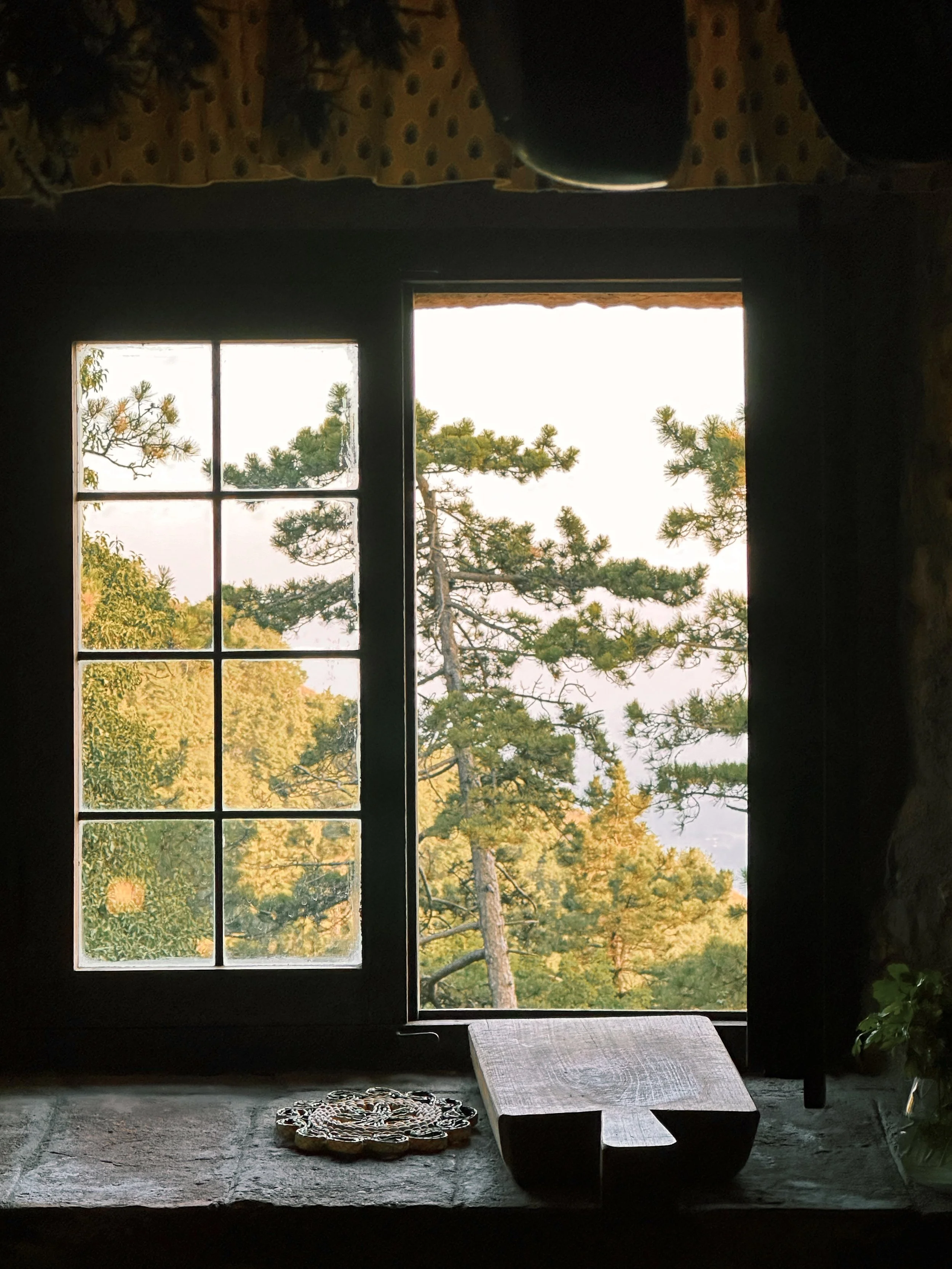
The colours of Umbria reveal themselves gradually through weather, temperature, memory and light.
Spring begins almost imperceptibly. The countryside softens first in fragments: pale blossoms appearing beside walking trails, sudden bursts of mimosa yellow beneath still-cold skies, wildflowers growing quietly against ancient stone walls.
During long morning treks before the summer heat arrives, the landscape feels suspended between seasons. The air remains cool, the hills still muted from winter, but colour begins returning in delicate layers.
Not dramatically. Never all at once.
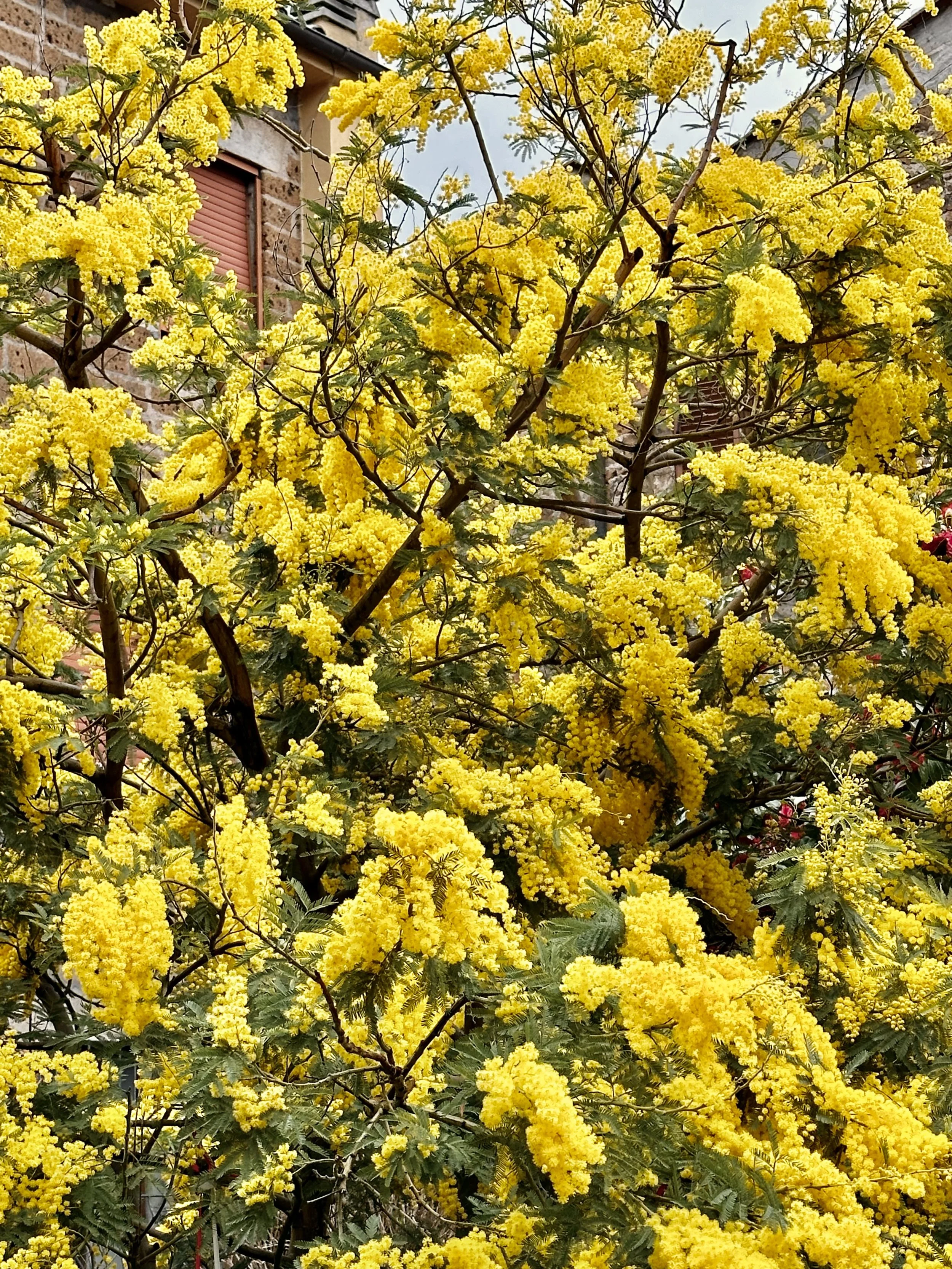
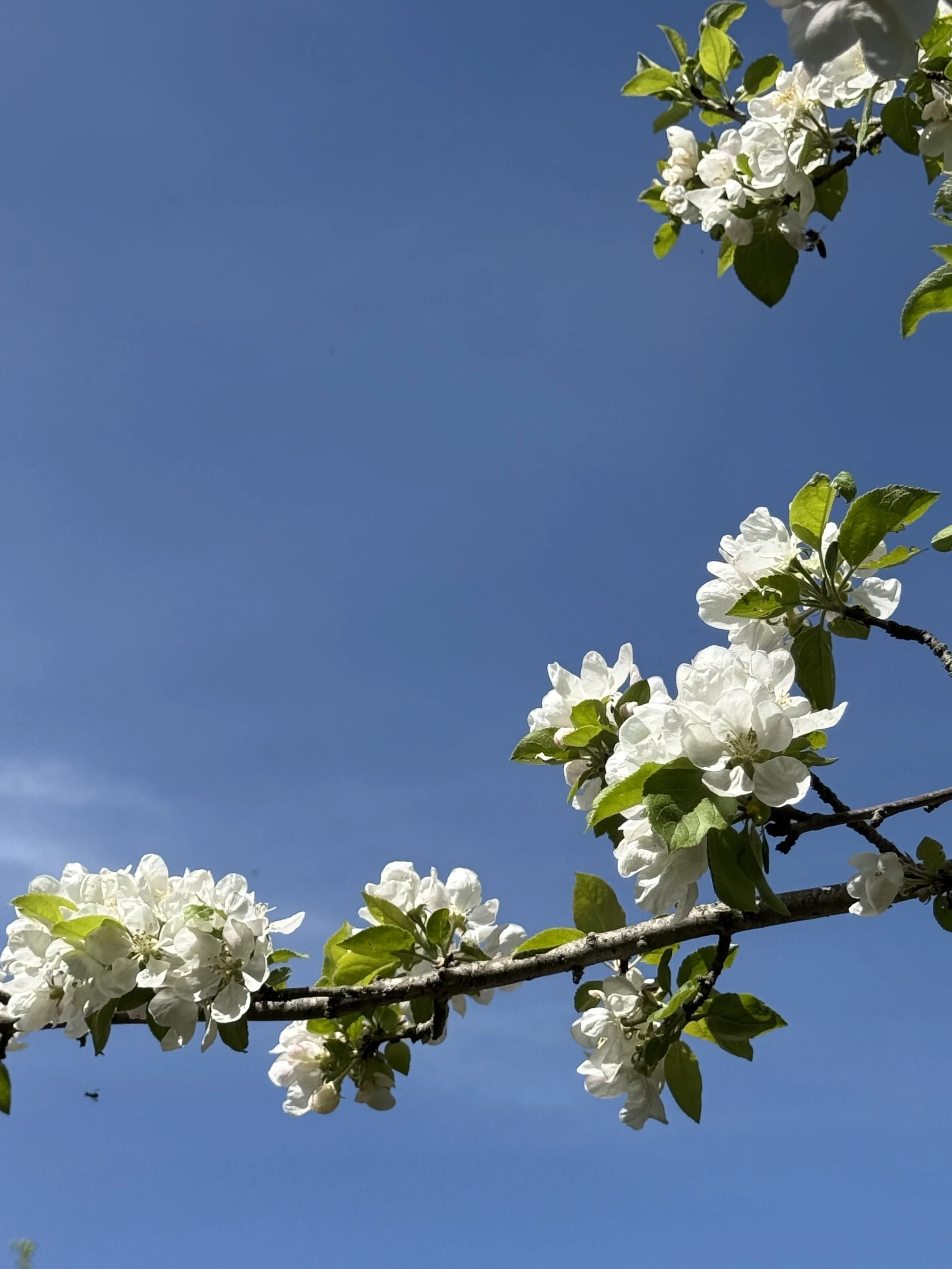
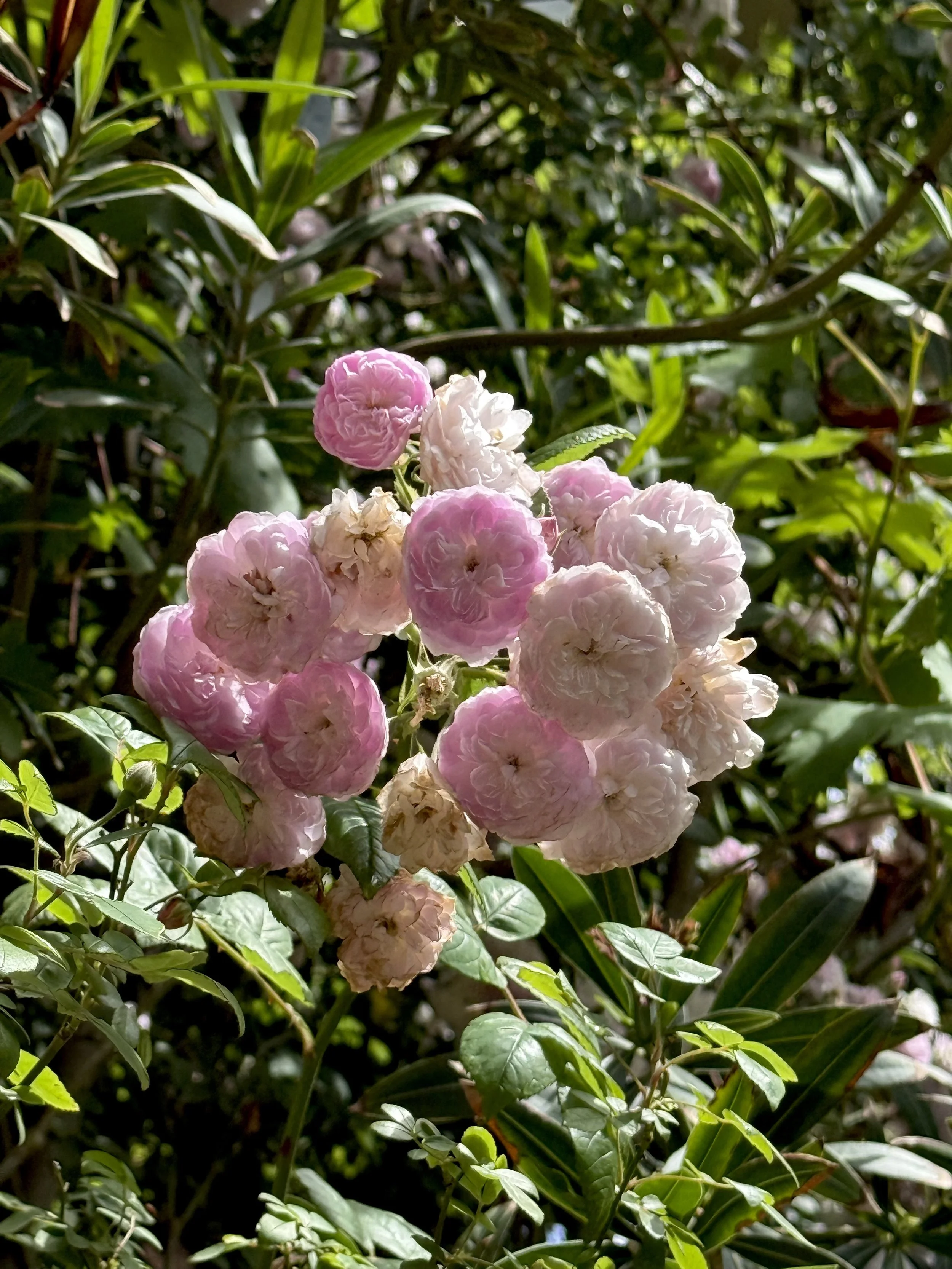
Some mornings are remembered entirely through colour.
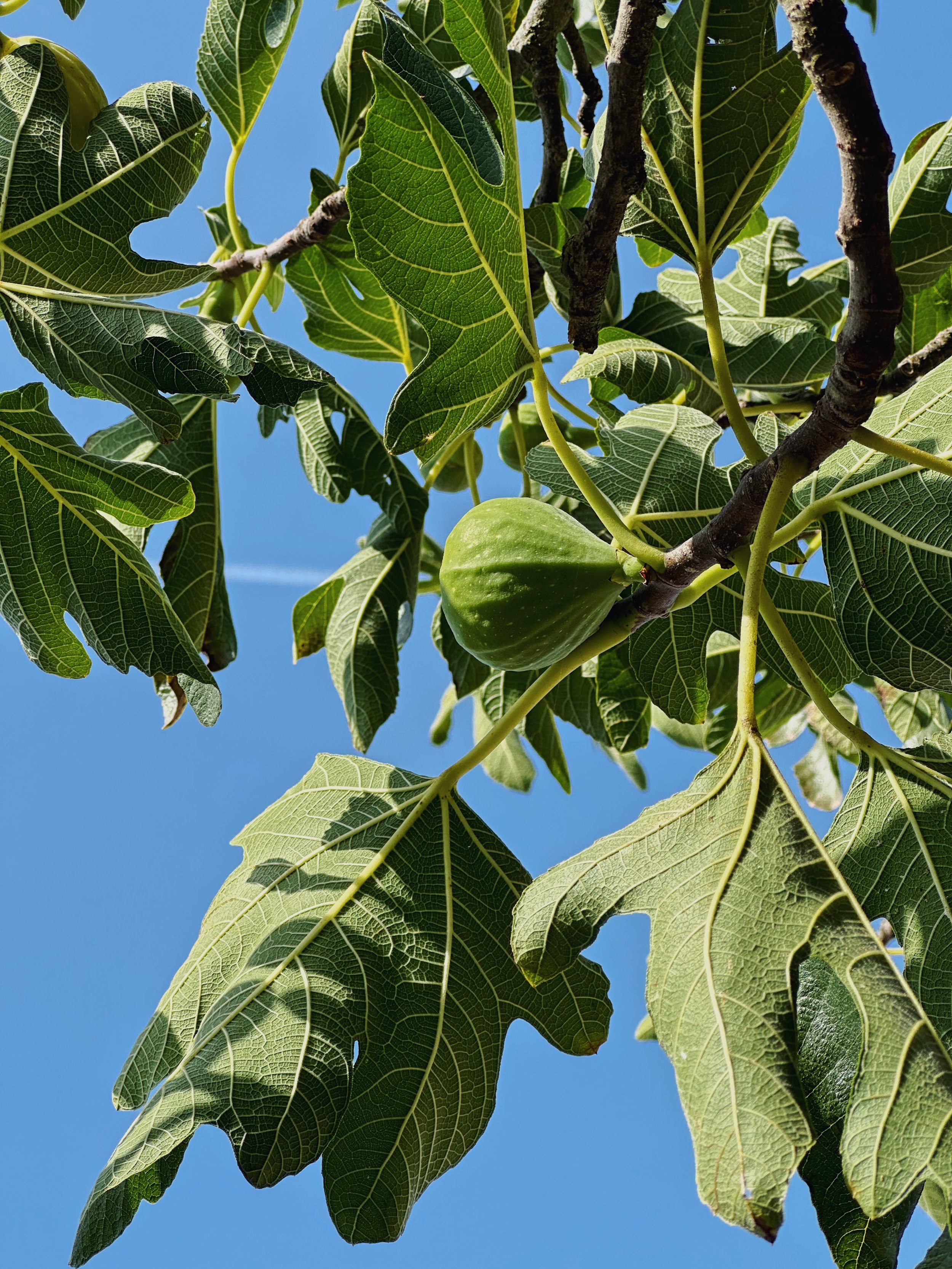
The deep blue skies that appear after rain. The soft green of fig leaves moving in warm wind. The silver tones of olive trees before evening storms. Even silence here seems to carry its very own palette.
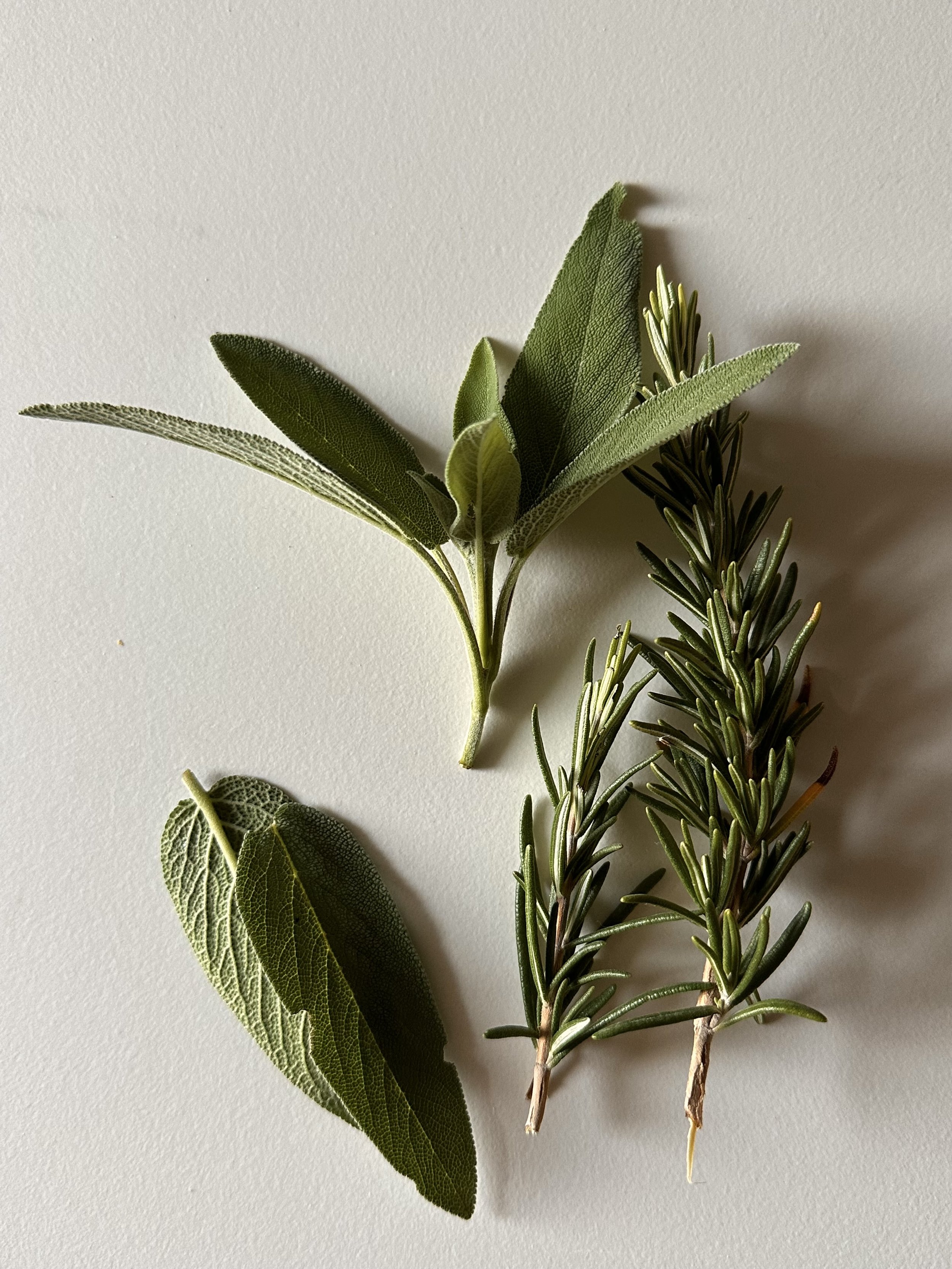
Living in Umbria has slowly changed the way I observe landscapes. I no longer search only for landmarks or scenery, but for atmosphere - what this really means is the emotional temperature of a place.
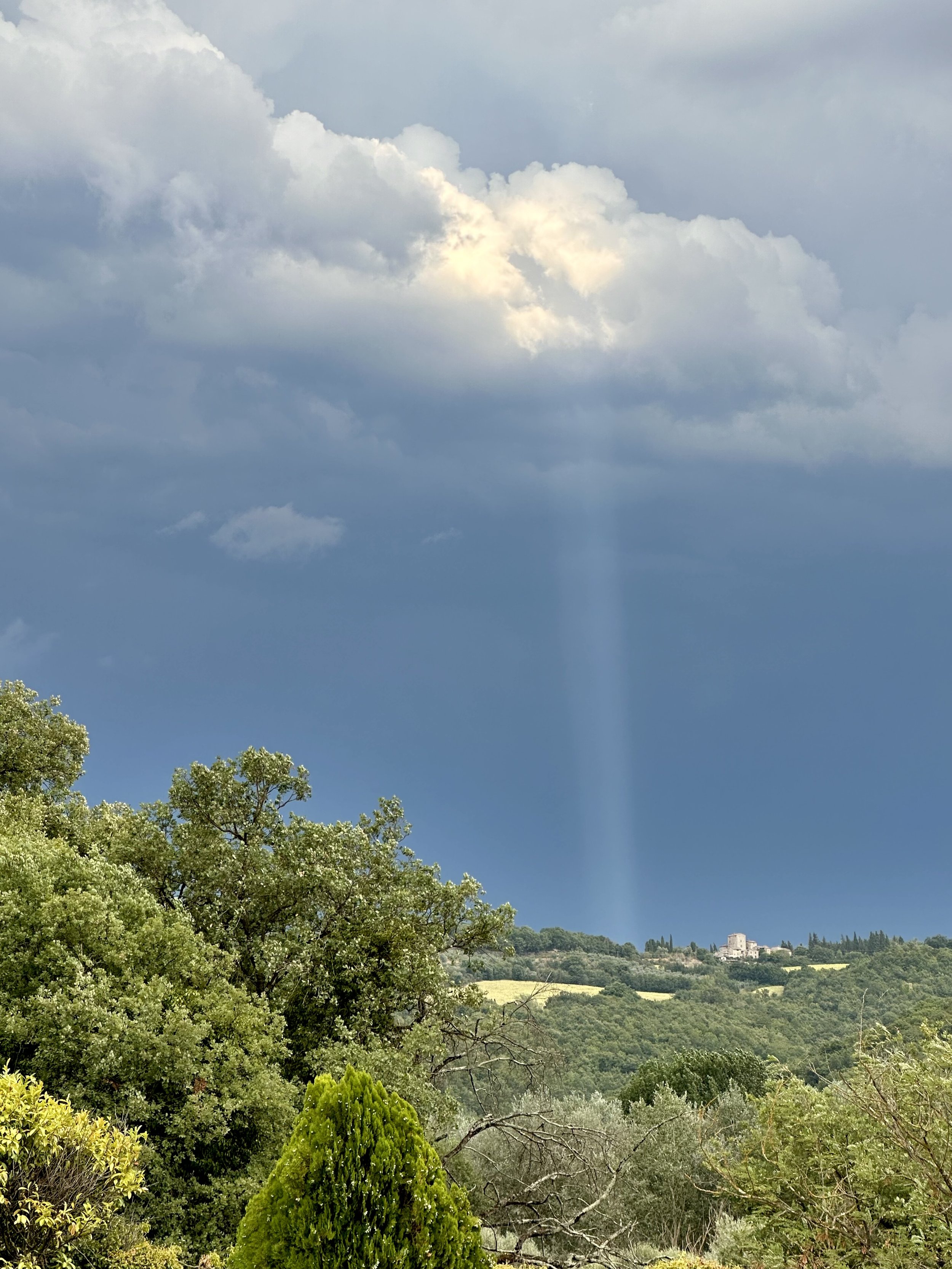
By summer, the colours become fuller, heavier, almost generous.
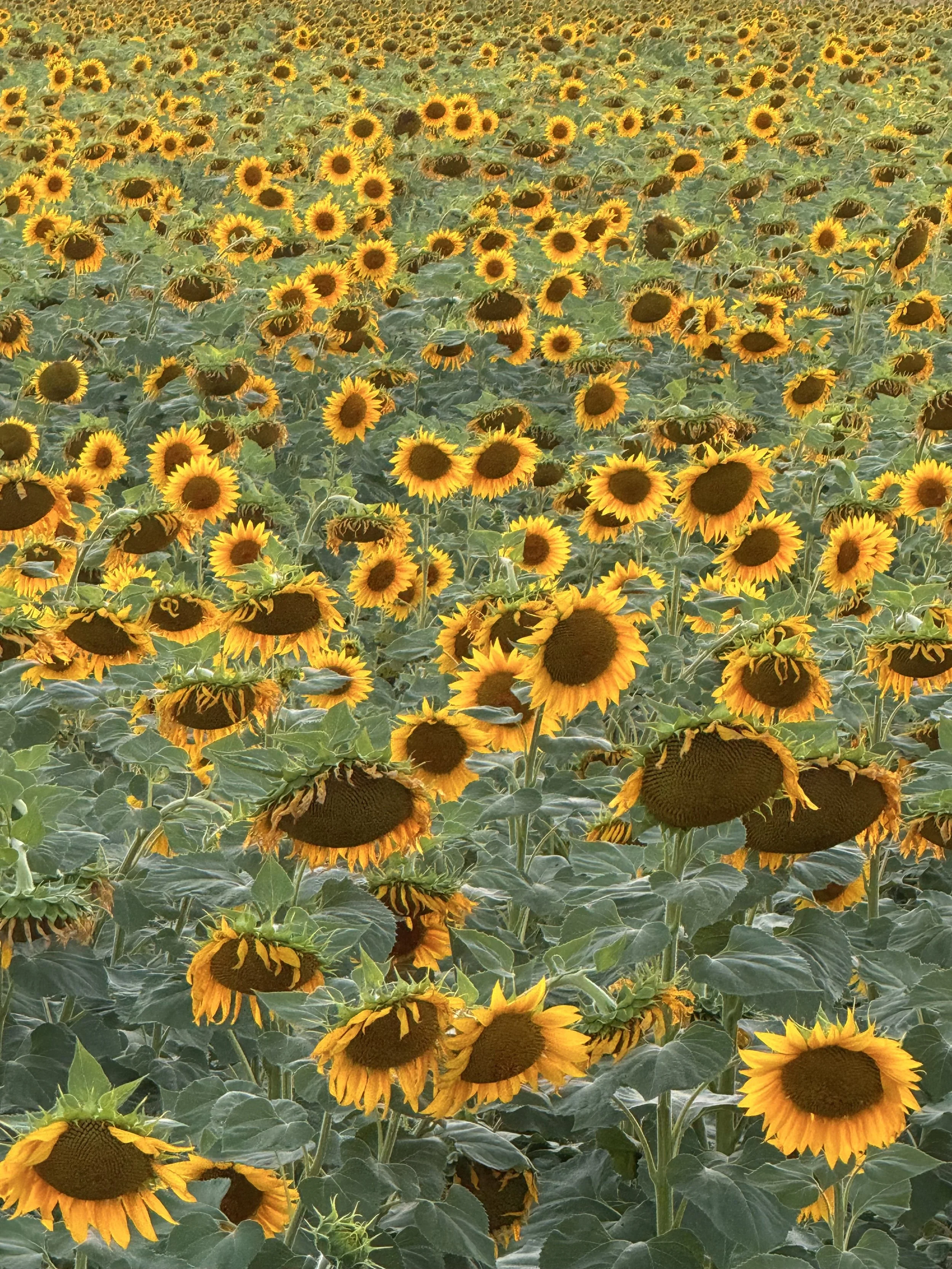
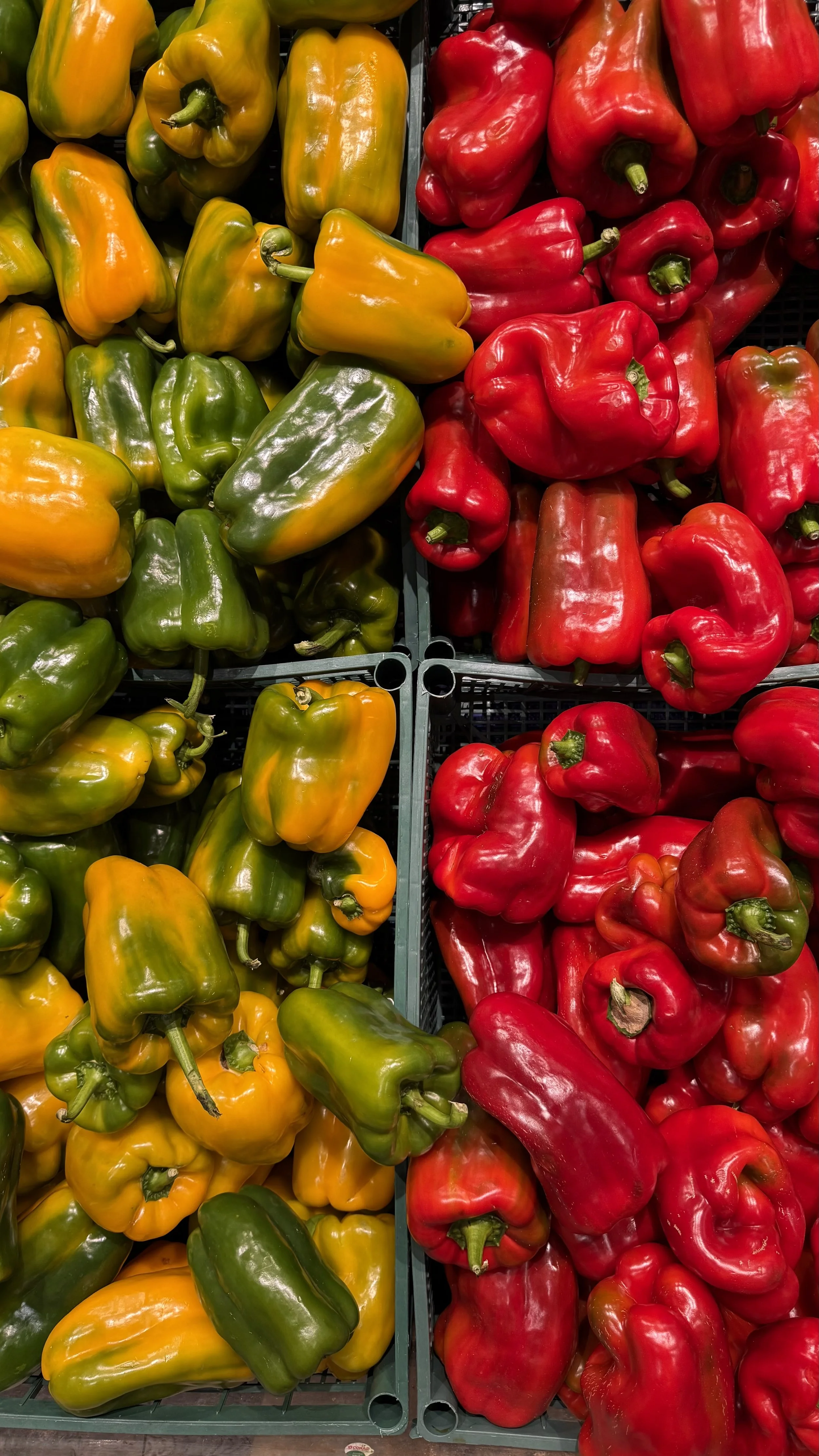
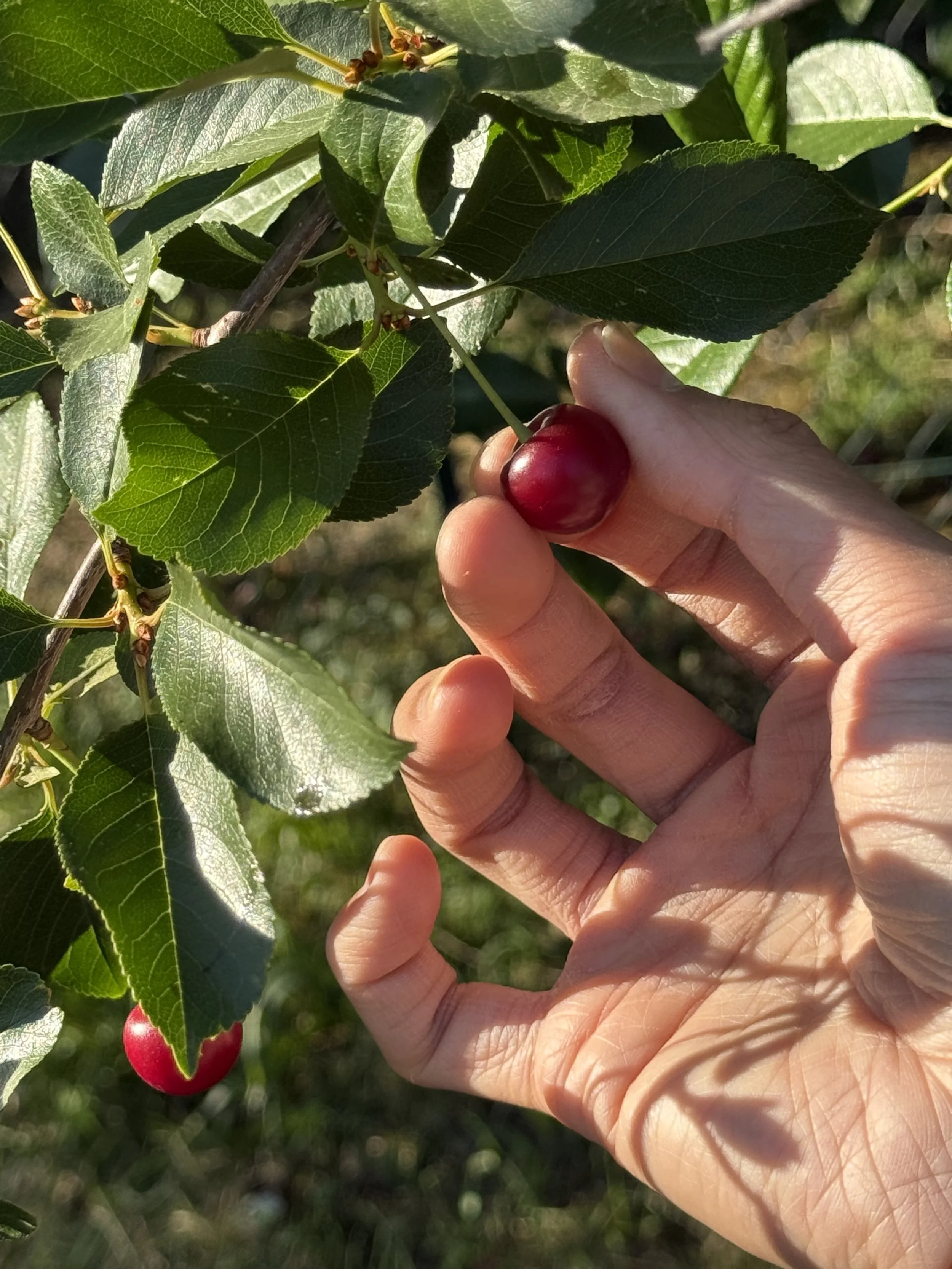
Fields of sunflowers turn slowly towards the light. Fruit trees bend under their own weight. Cherries, figs and wild berries appear carelessly along country roads and garden walls. The countryside smells of dry grass, herbs and warm earth beneath the afternoon sun.
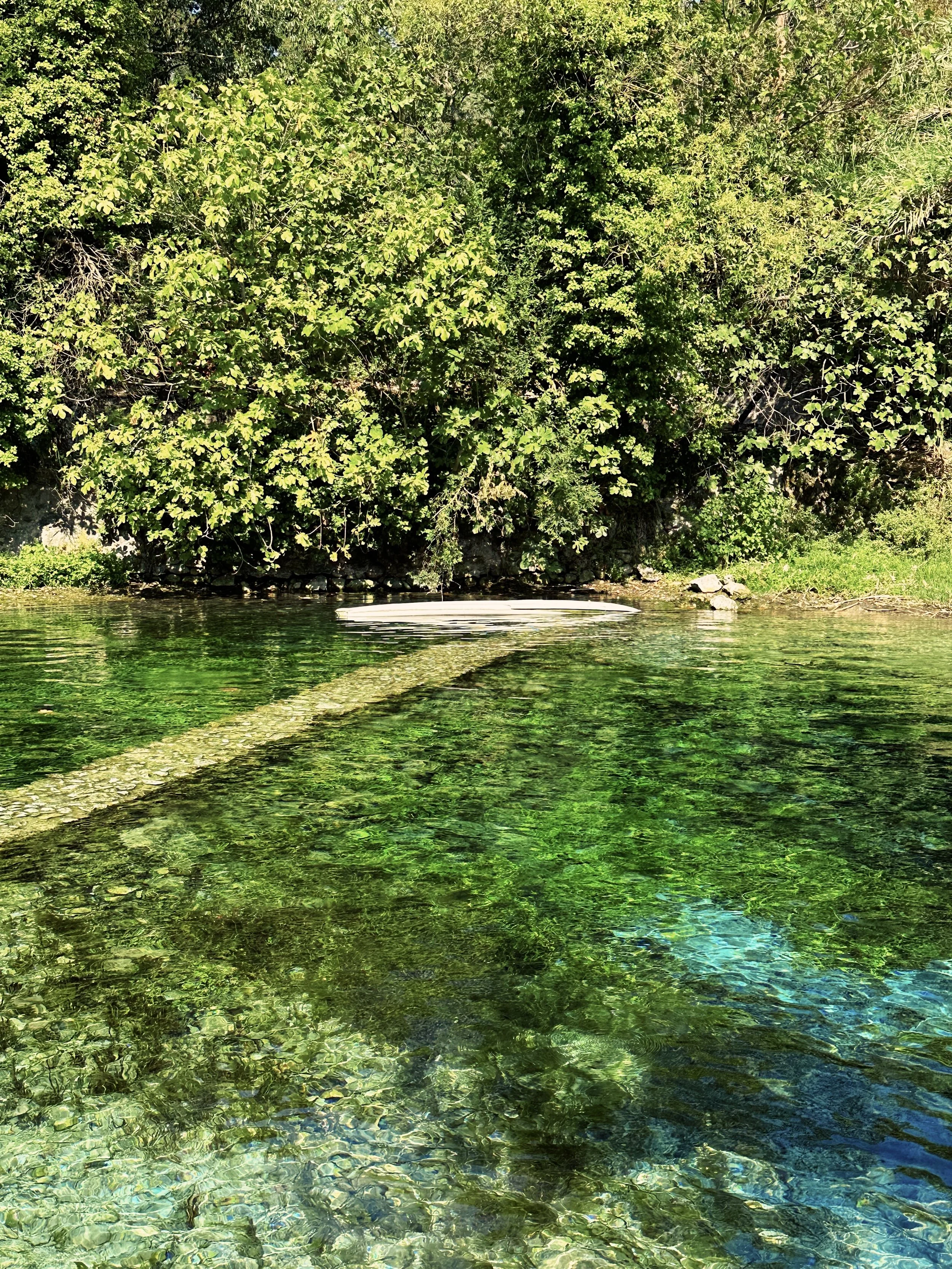
Some of my strongest memories of Umbria are simple ones.
Picking figs directly from the tree while the air still carries morning coolness. Holding cherries stained dark red by sunlight. Walking through sunflower fields under unbearable heat before escaping into the shade of cypress trees.
The season feels expansive - long lunches, open windows, fading golden evenings that often ended in crowded piazzas over gelato and slow conversation.
There is a particular warmth to Umbrian summers that feels less coastal and more agricultural. The colours are not polished or tropical.
They feel sun-faded, dusty, textured by heat and time.
Quiet beauty.
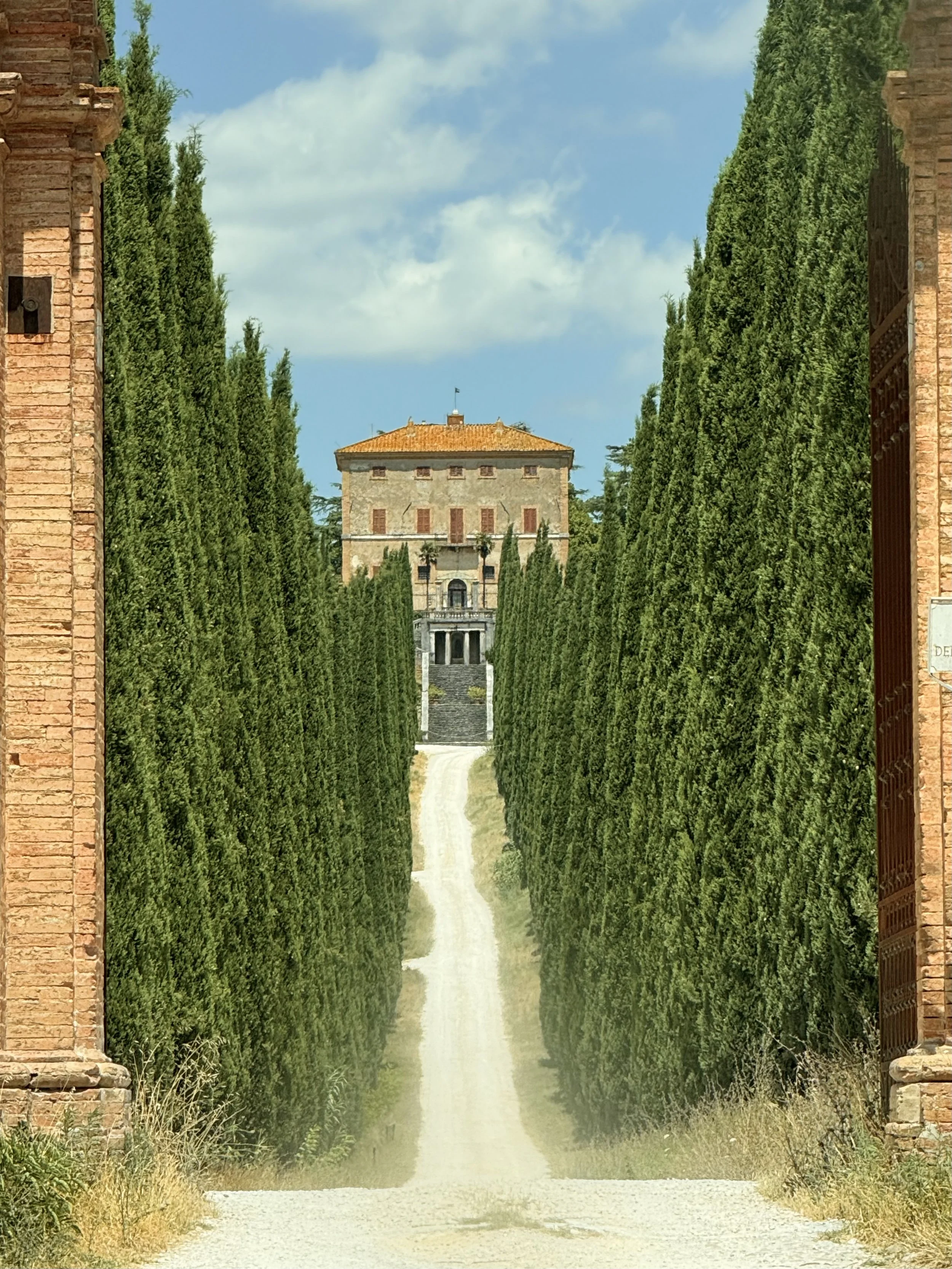
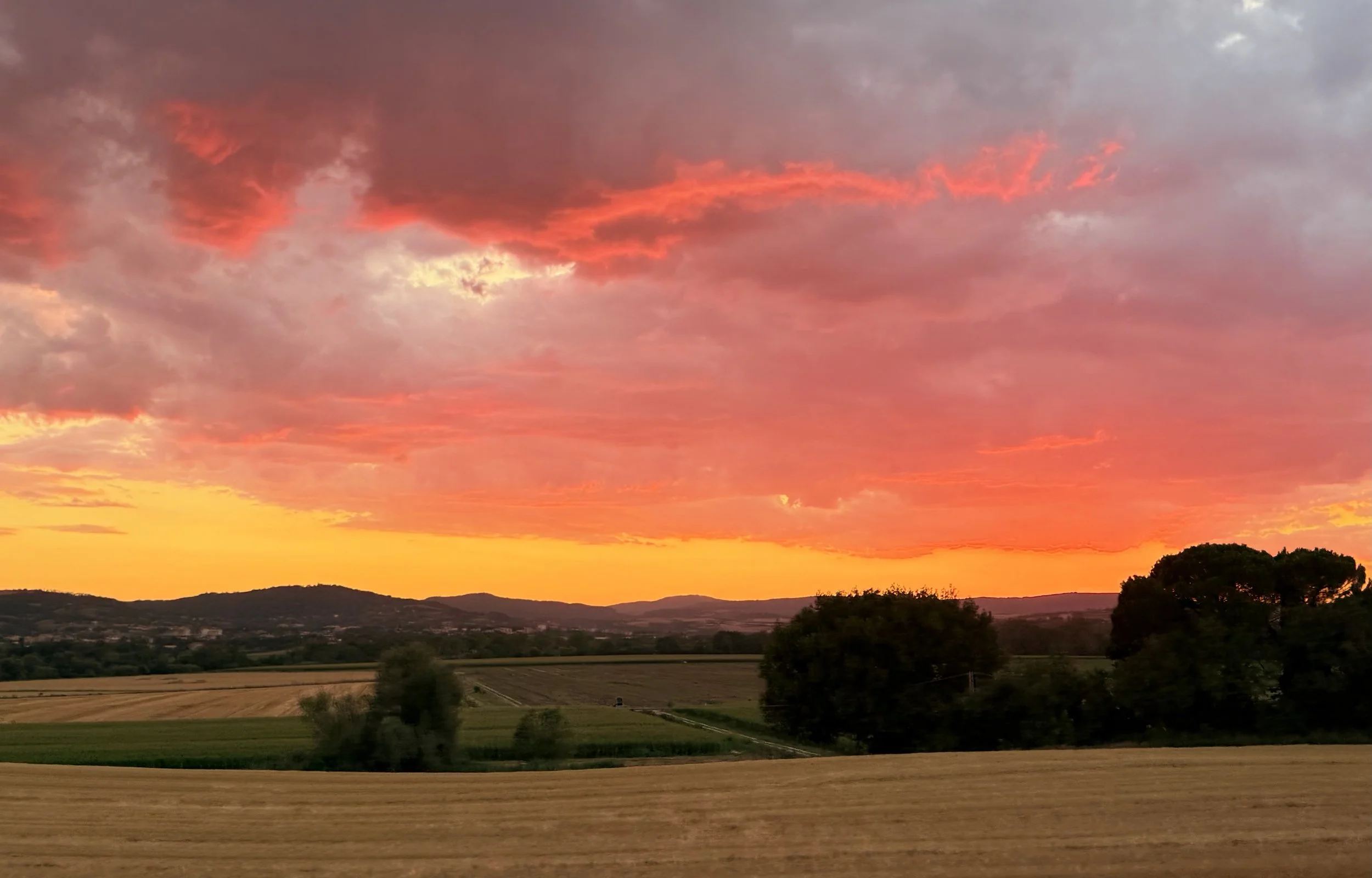
And then, almost suddenly, autumn arrives.
The air cools. Shadows lengthen earlier across the valleys. Hills once bright with summer heat begin softening into rust, amber and dark green.
Morning fog settles lower between the mountains. Fallen leaves gather beside old stone paths. The countryside retreats inward again.
Autumn in Umbria feels reflective rather than dramatic. The colours deepen emotionally as much as visually.
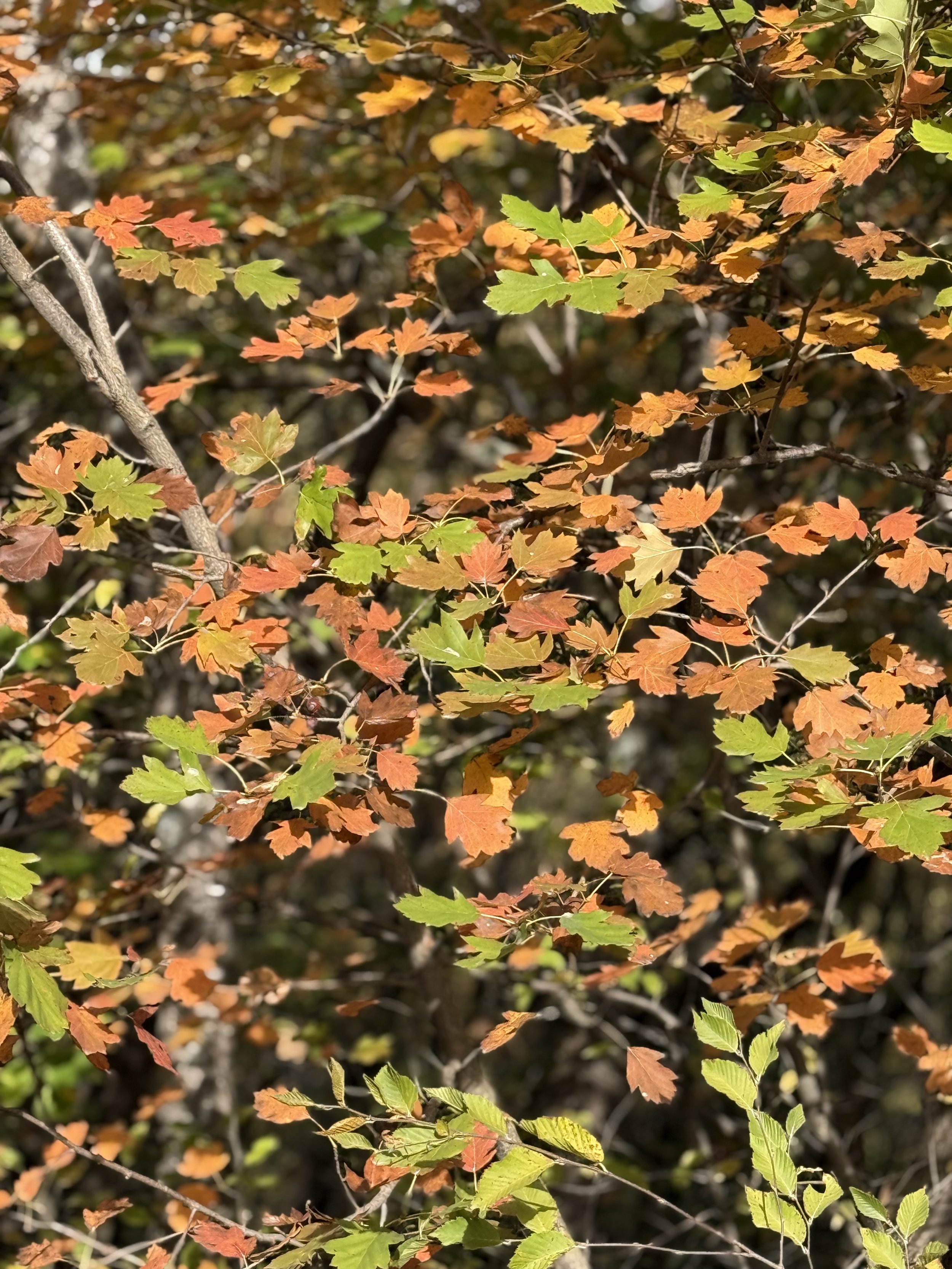
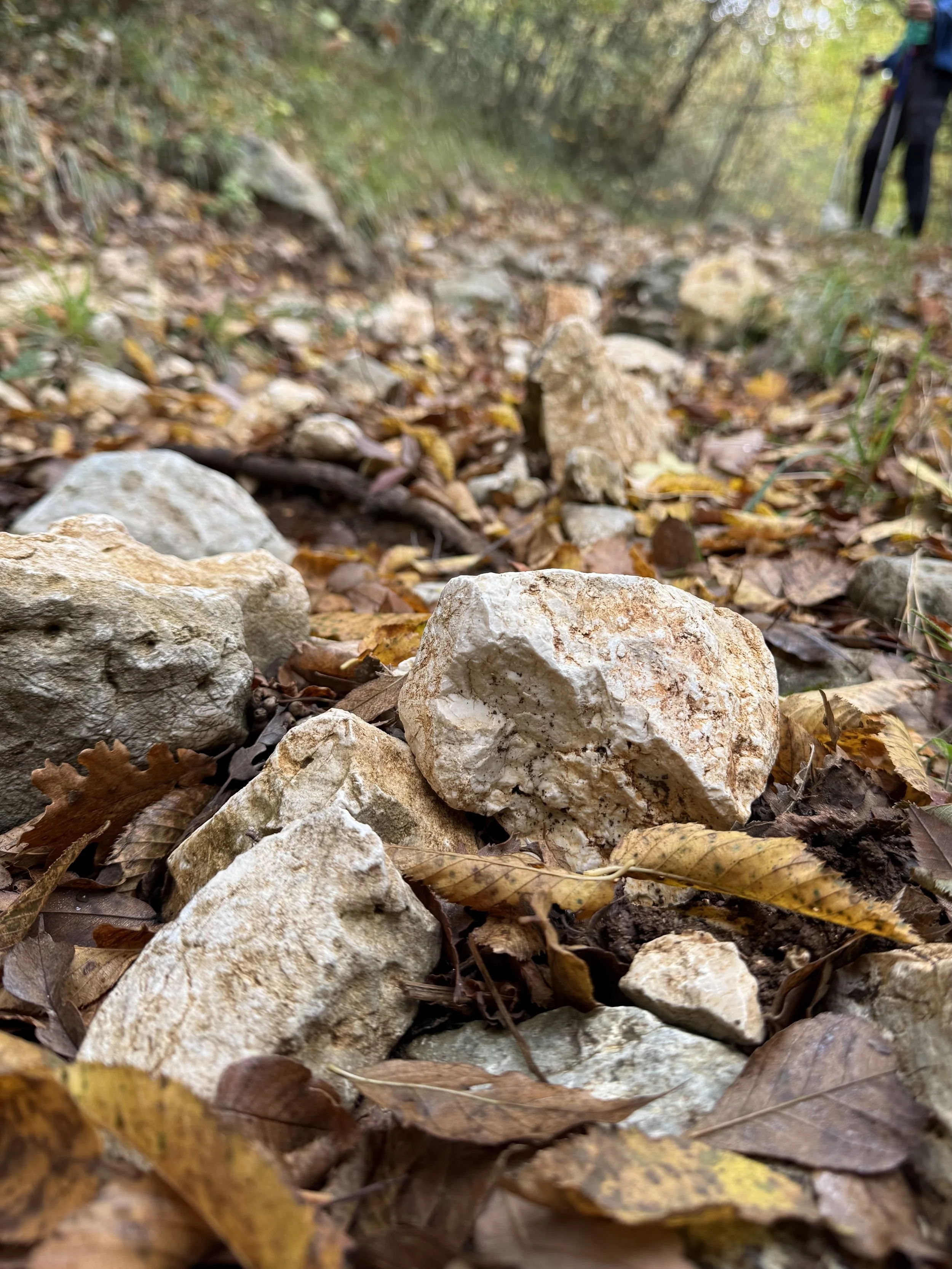
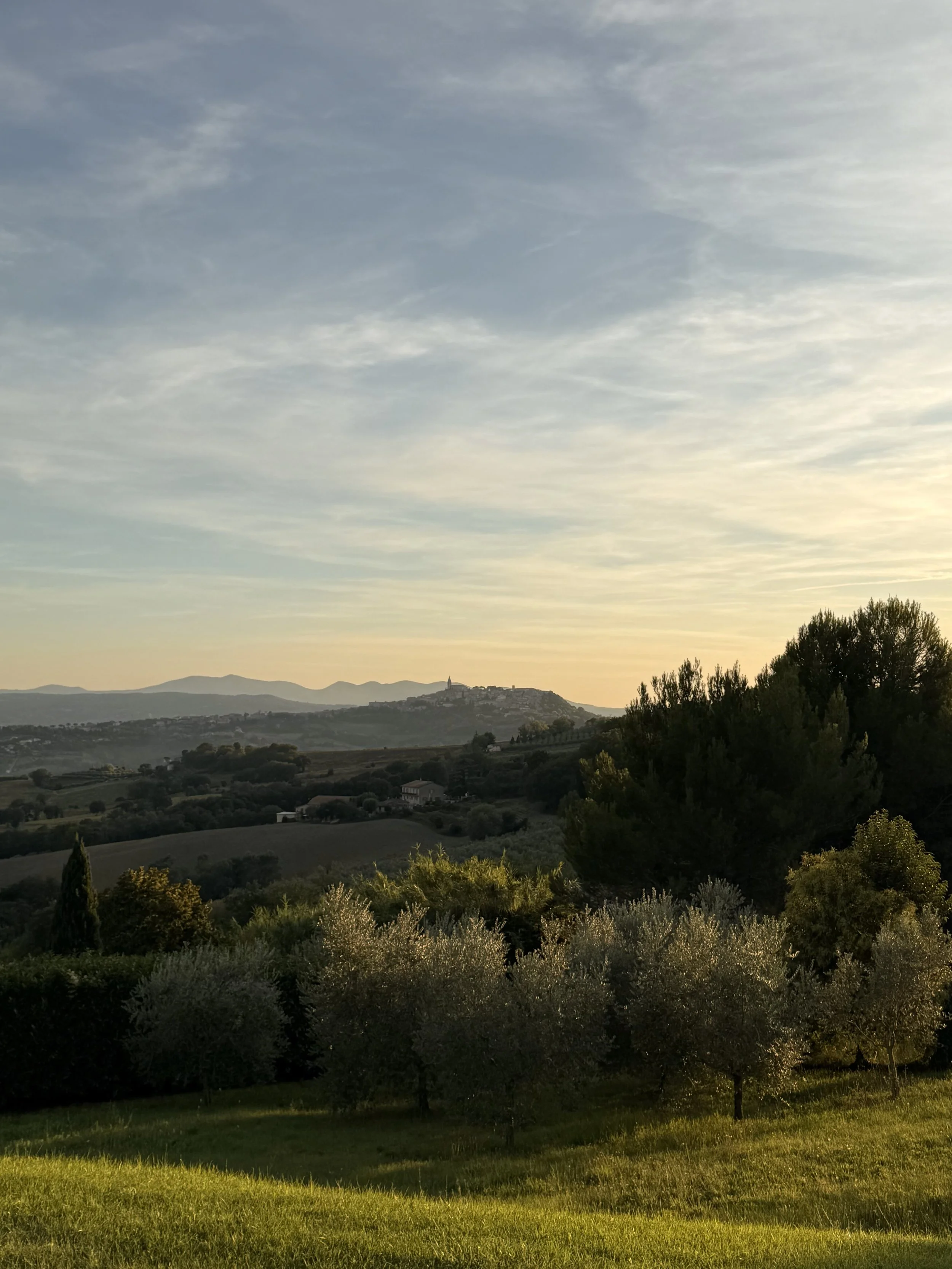
There are days when the landscape feels suspended between memory and disappearance.
The silence becomes more noticeable then.
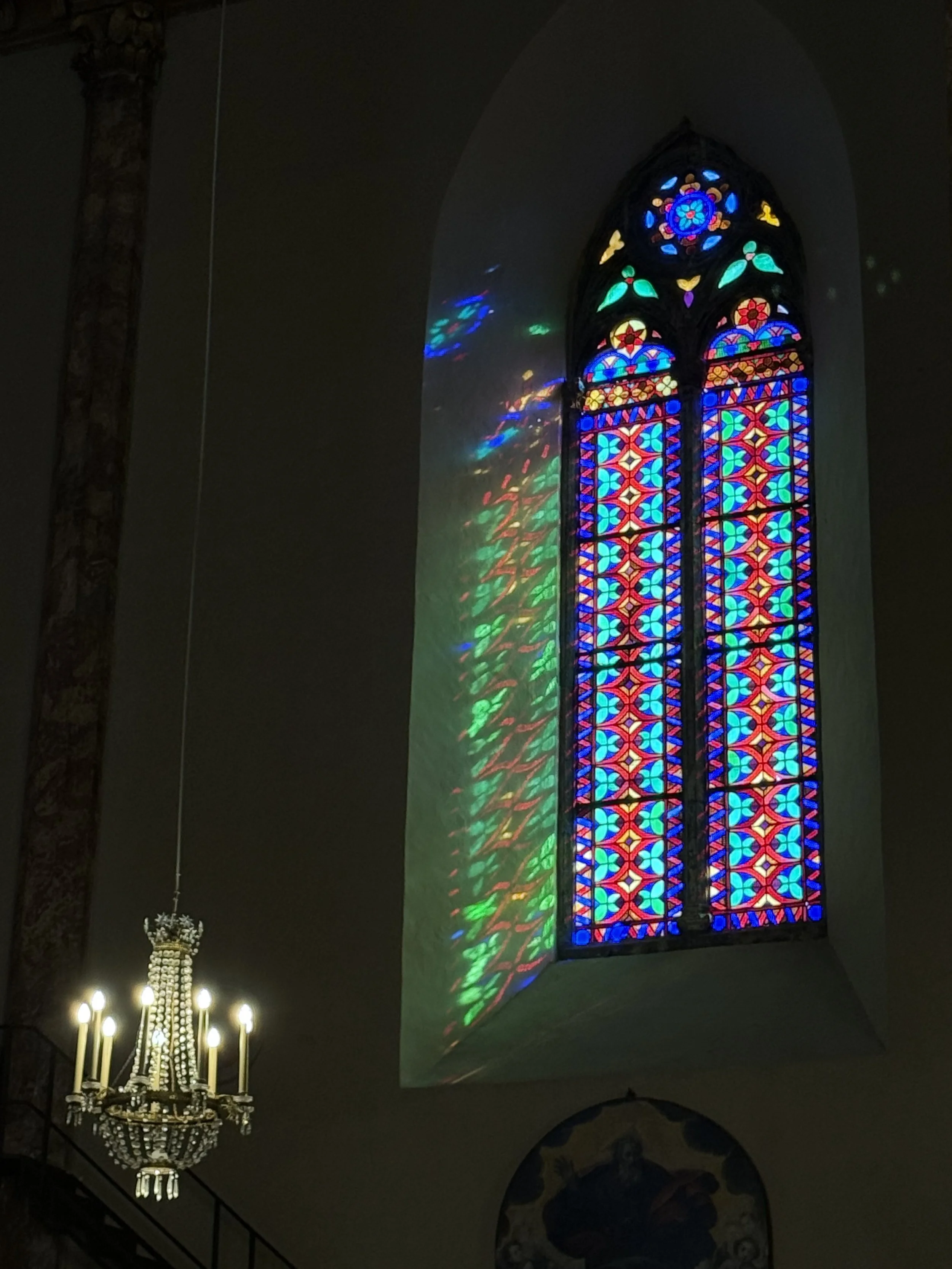
And finally, winter.
Snow arrives quietly in Umbria.
Not dramatically, but gradually.
The hills become softer beneath pale skies. Morning fog lingers lower between the valleys and the countryside retreats into muted tones of olive green, stone and bare branches. Most days, the snow remains visible only on distant mountain peaks beyond the town, while the valleys below stay cold, damp and silent beneath winter light.
On certain mornings, a light snowfall arrives unexpectedly and transforms everything for a day or two, sometimes a little longer than that. I would secretly wish that the snow stayed longer. Rooftops dusted white, olive trees outlined in frost, the familiar landscape briefly suspended in stillness before slowly returning to earth tones again.
Winter changes the emotional atmosphere of Umbria more than its appearance.
The villages feel even quieter. Roads empty earlier. Smoke rises slowly from chimneys against grey skies. Even colour seems to withdraw, but still present in fragments: dark espresso against pale mornings, candlelight through old windows, deep green cypress trees standing against fog.
And perhaps that is why spring feels so emotional when it returns again.
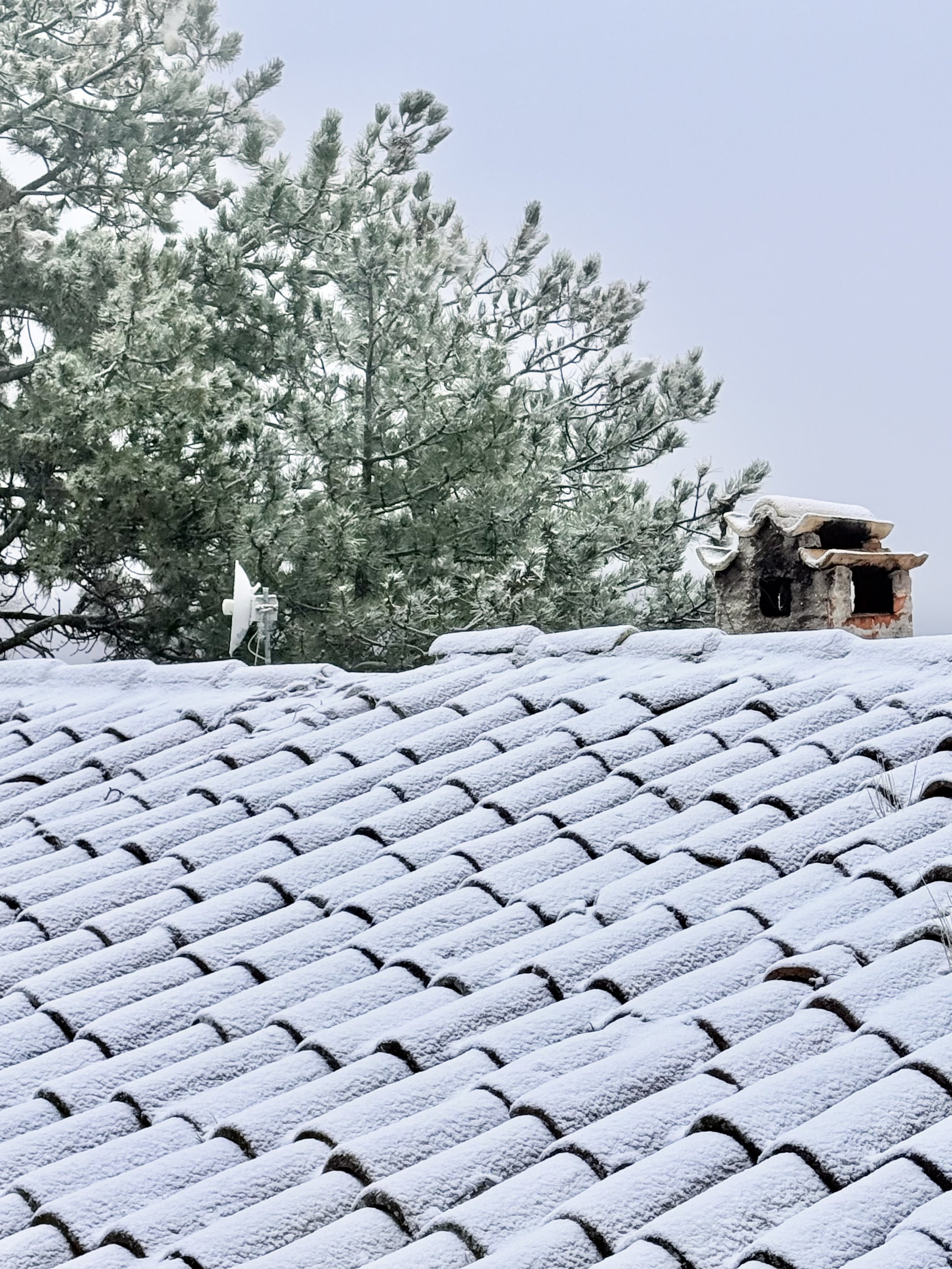
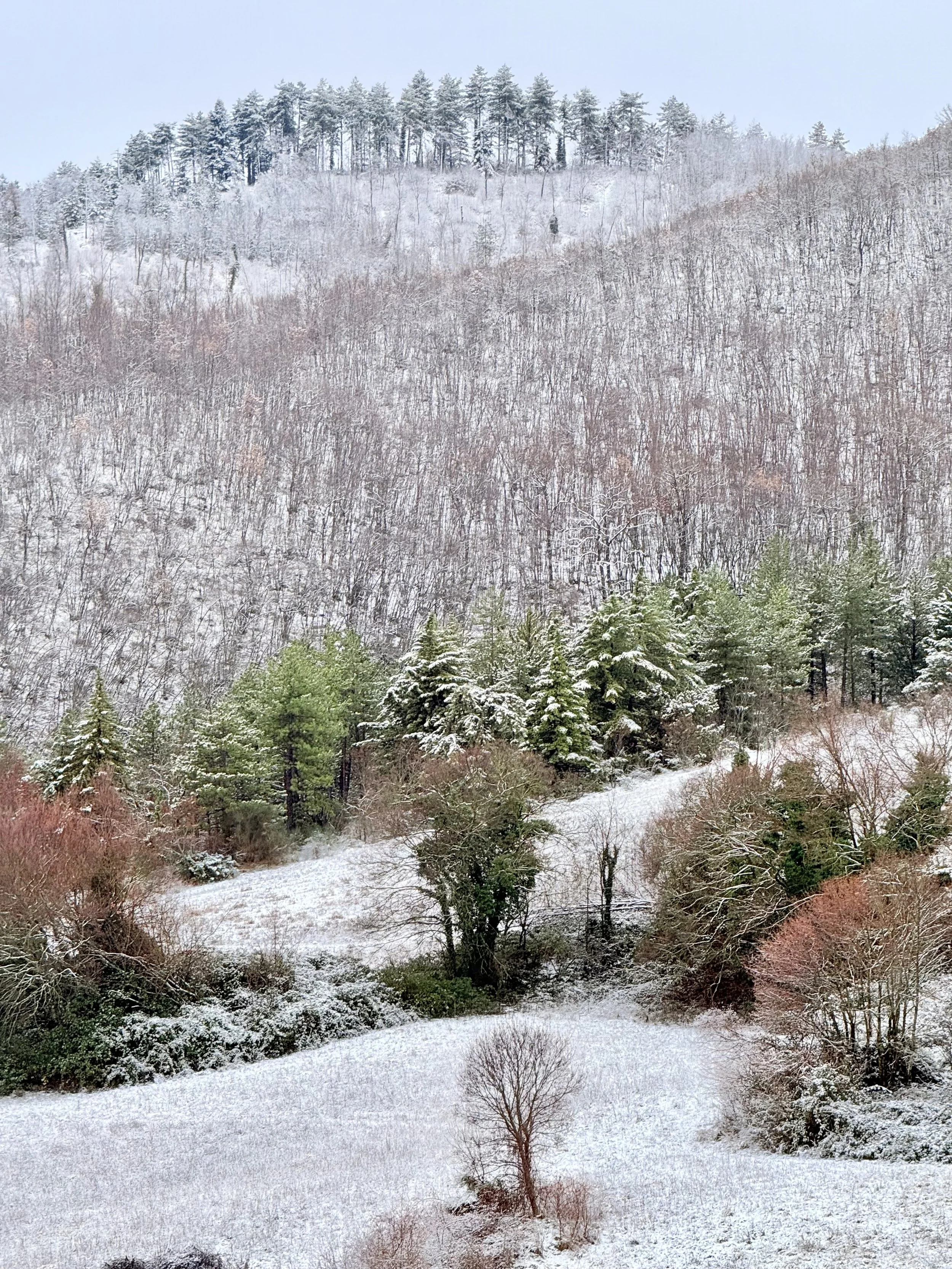
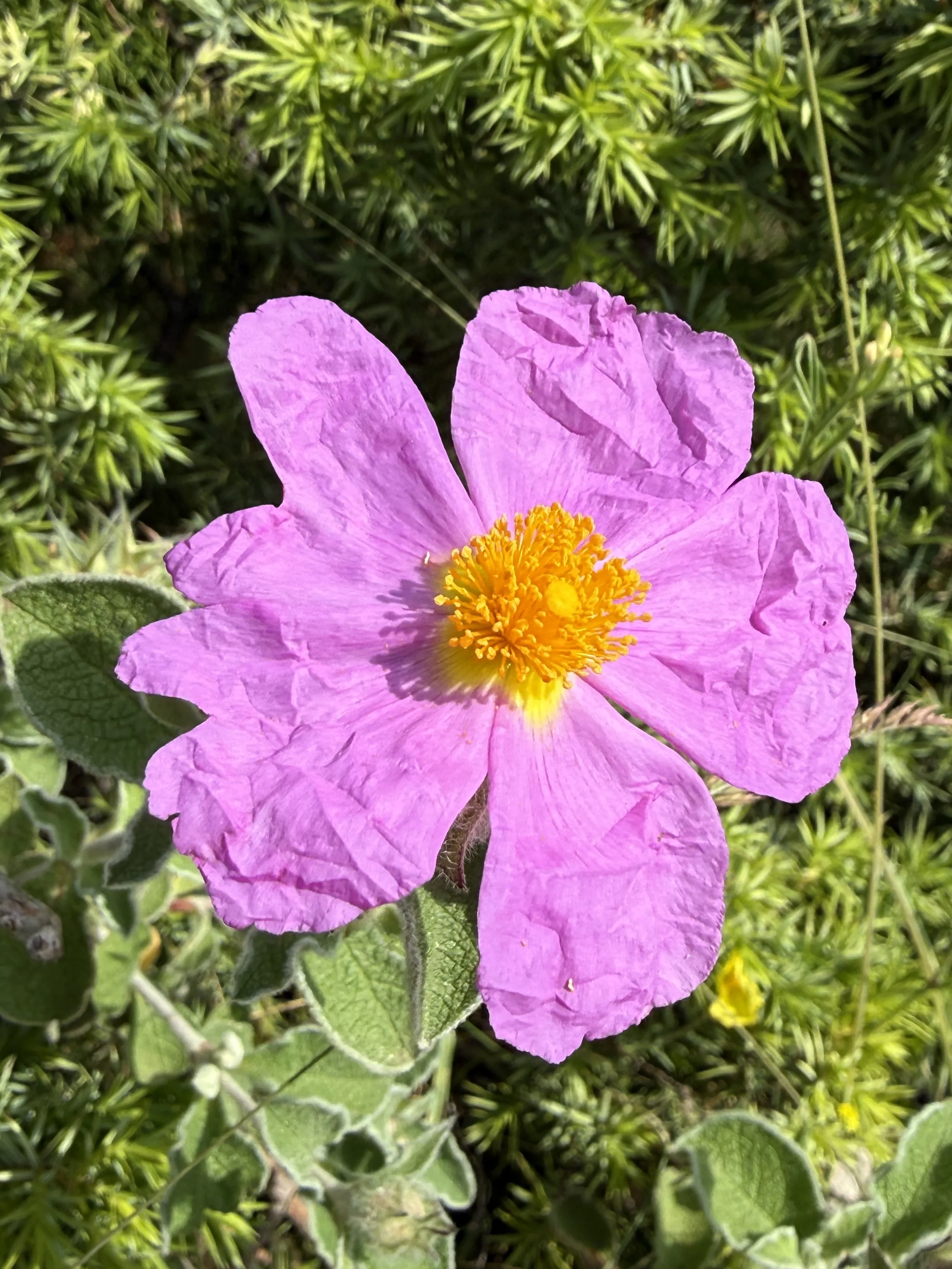
Living in Umbria has changed the way I understand colour.
Not as something immediate or attention-seeking, but as something discovered slowly through seasons, repetition and everyday life.
Perhaps that is also what continues to draw me towards the Italian way of living itself - the idea that beauty is not always found in spectacle, but in learning to notice what quietly returns over time: the changing light on stone walls, the first figs of summer, the silence of winter mornings, or the familiar landscape appearing slightly different with each season.
I hope this visual journal offers a different perspective on Umbria - beyond the romanticized imagery of central Italy so often repeated elsewhere. Not the postcard version of rolling Tuscan hills, but a quieter and more personal landscape shaped by weather, memory, slowness and lived experience.
A place where colour reveals itself gradually, to those willing to slow down enough to notice it.
From Umbria
Unless otherwise credited, all photography and written content are original works by Foodie Goes Travel.
