The Space Between
Finding the rhythm of a city by paying attention to the lives unfolding within it.
Words and photograph by JJ Wong
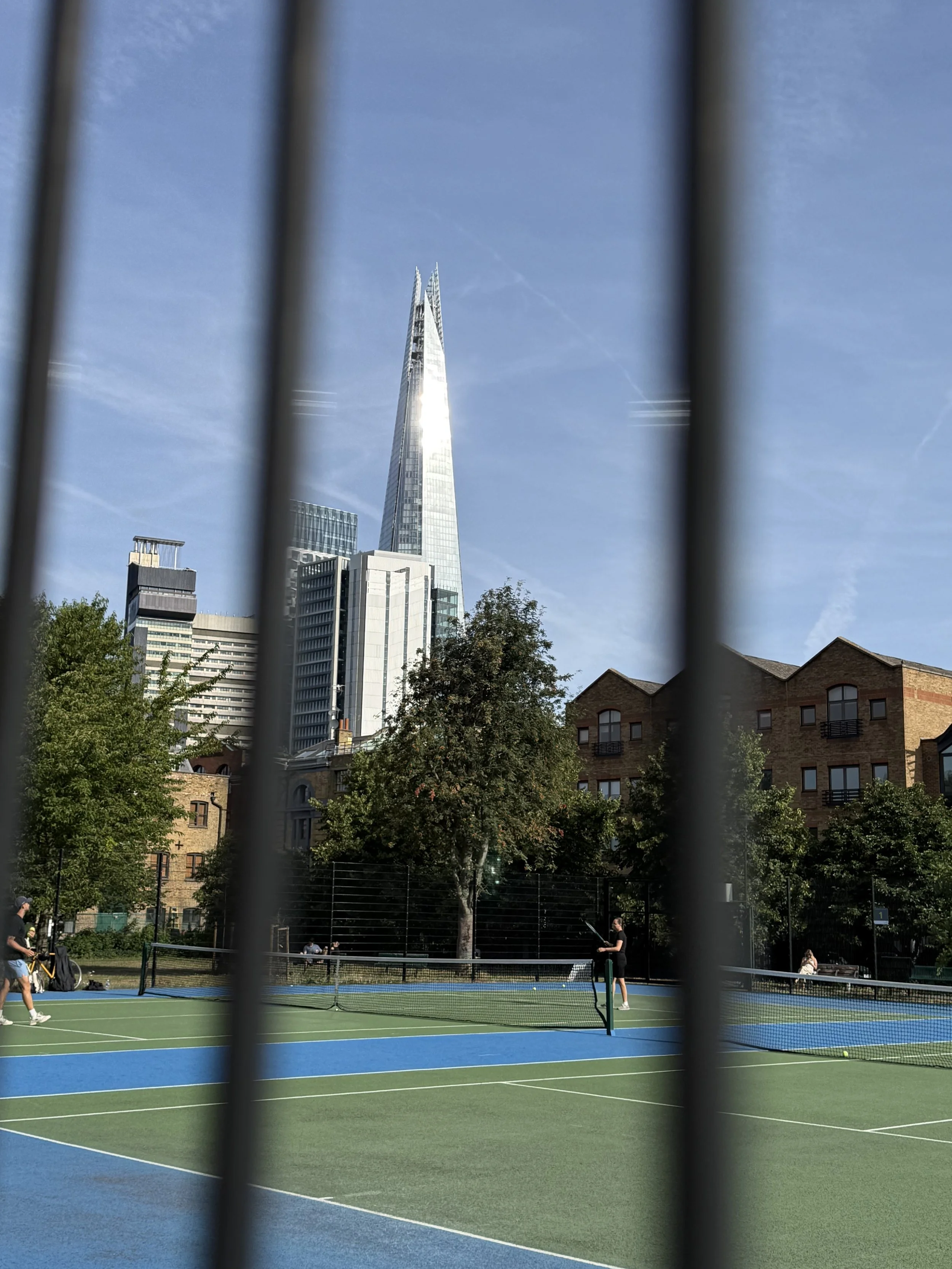
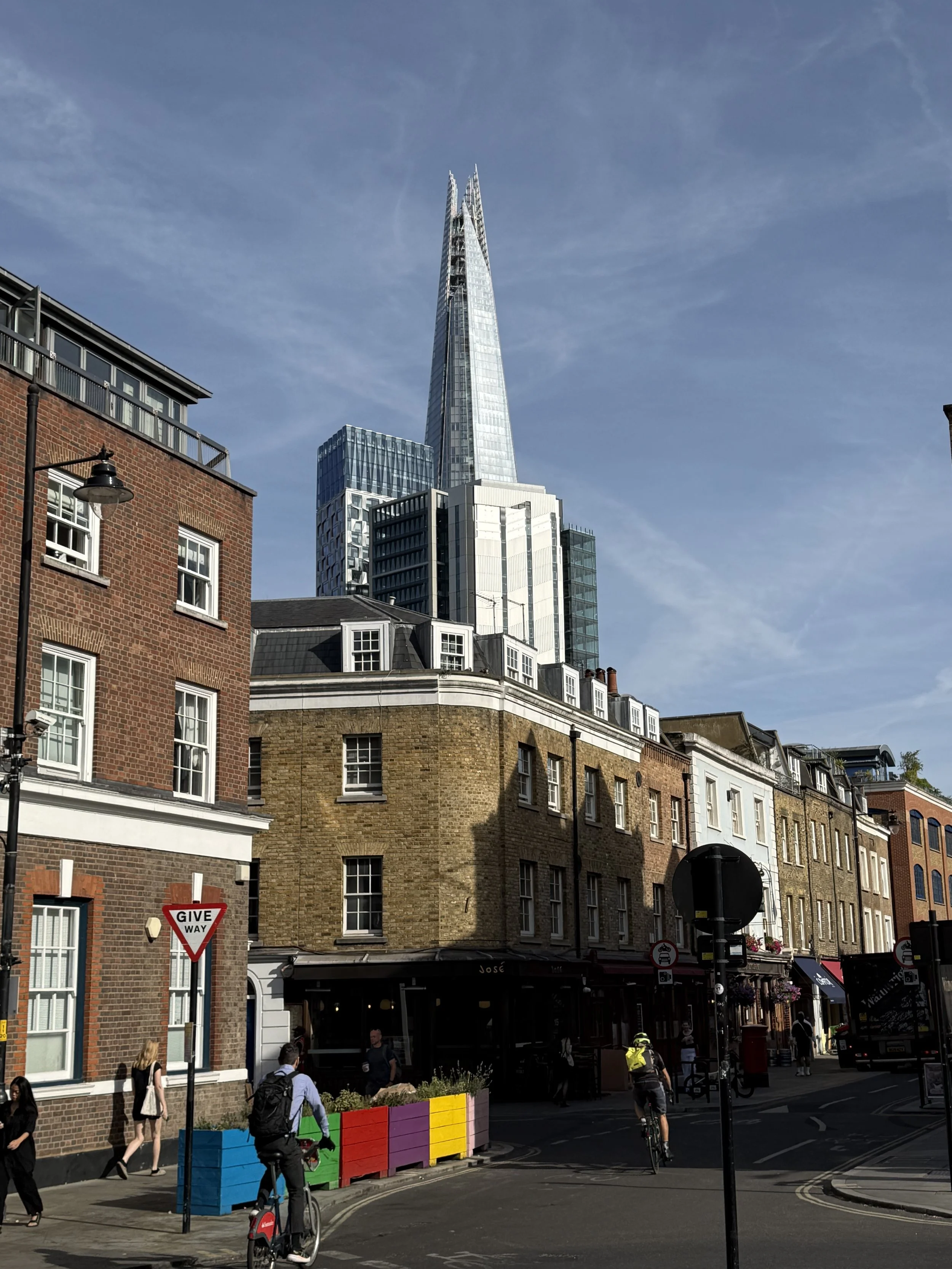
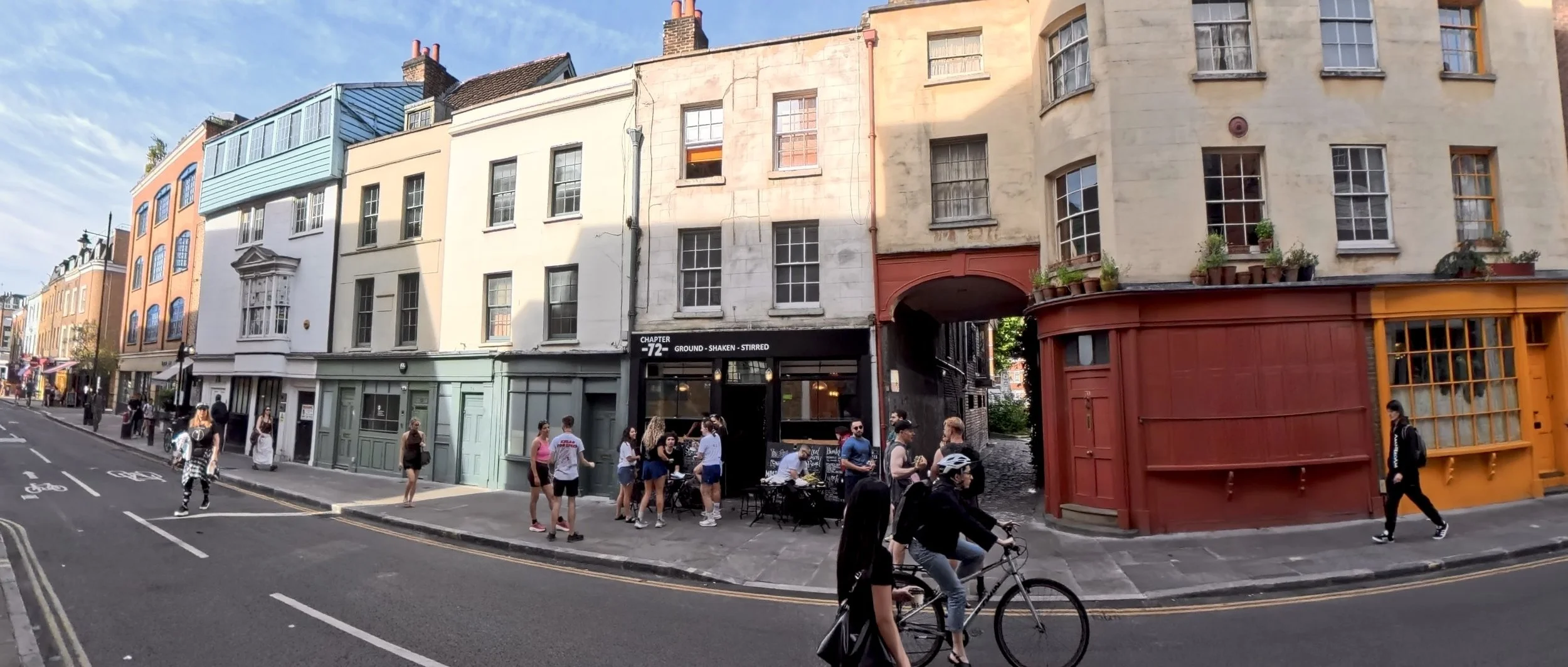
The first thing I noticed about Bermondsey wasn’t its cafes or its proximity to Borough Market.
It was the pace.
Not slow.
Not hurried.
Simply its own.
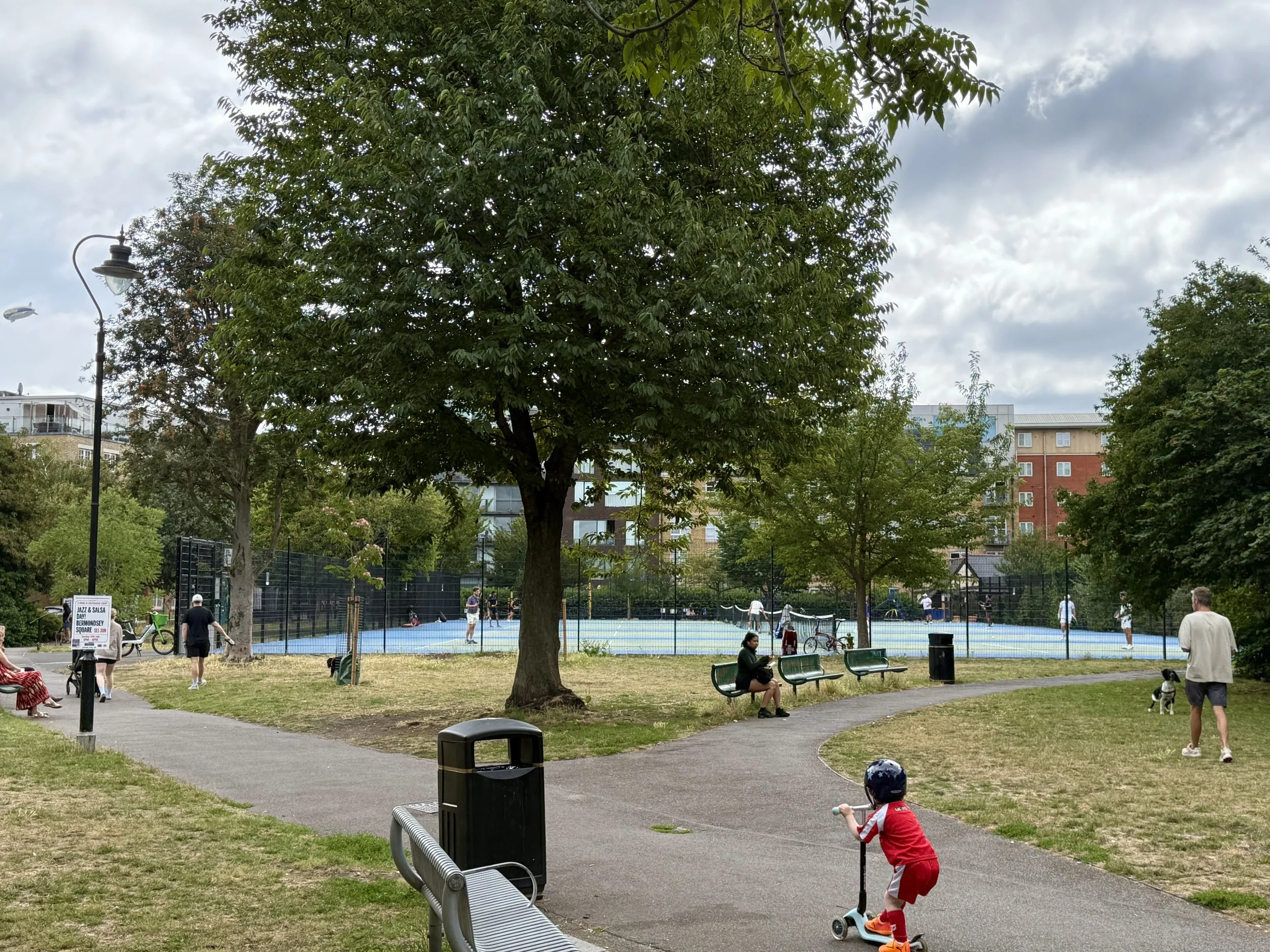
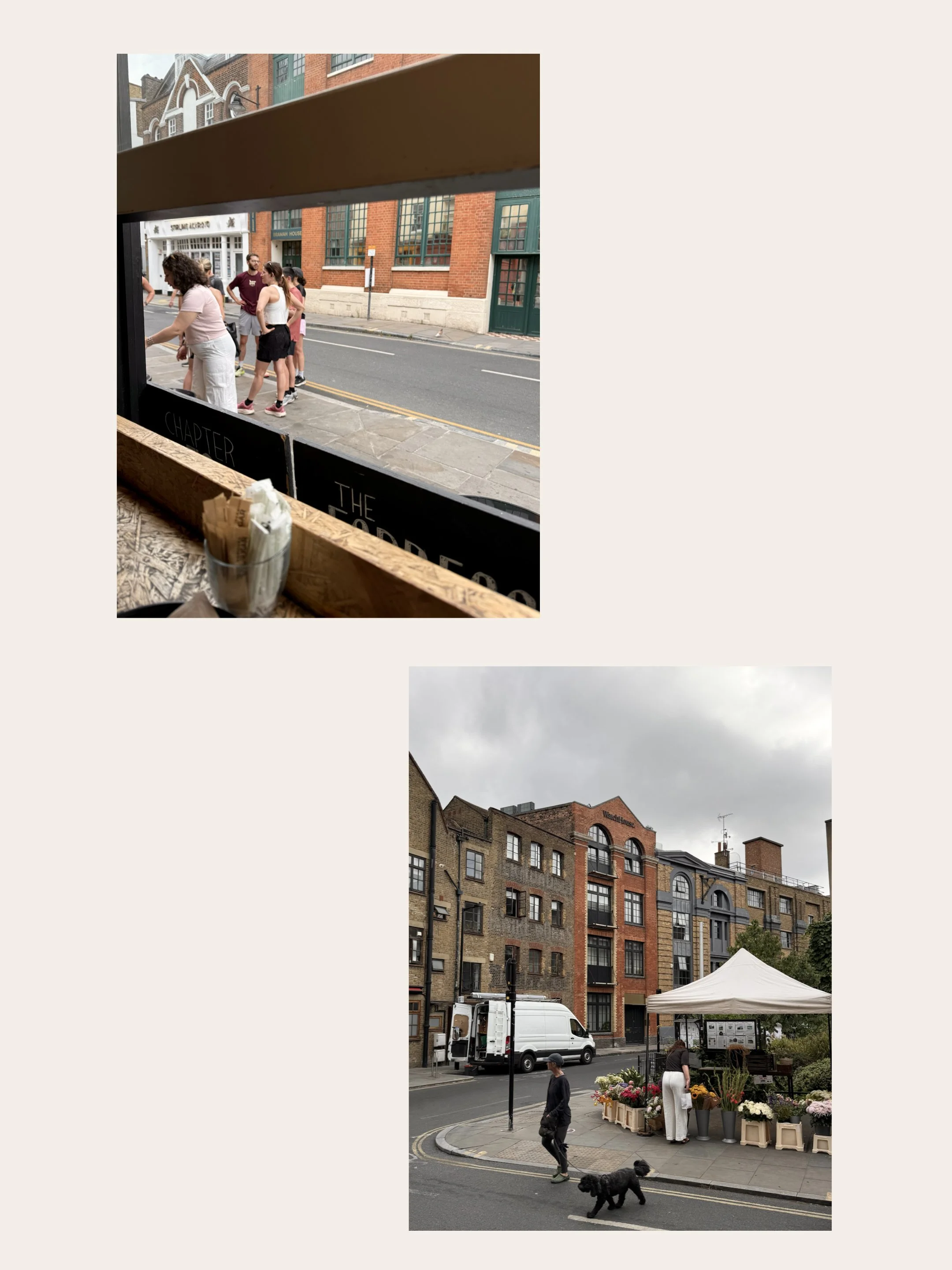
People stepped out of neighbourhood cafes carrying takeaway coffees without looking at their phones. A florist arranged buckets of fresh flowers outside the shop while a delivery van waited patiently behind her. Cyclists drifted past in both directions. Someone sat alone on a bench reading a paperback. Nearby, children chased each other across the grass while dogs ran freely between them.
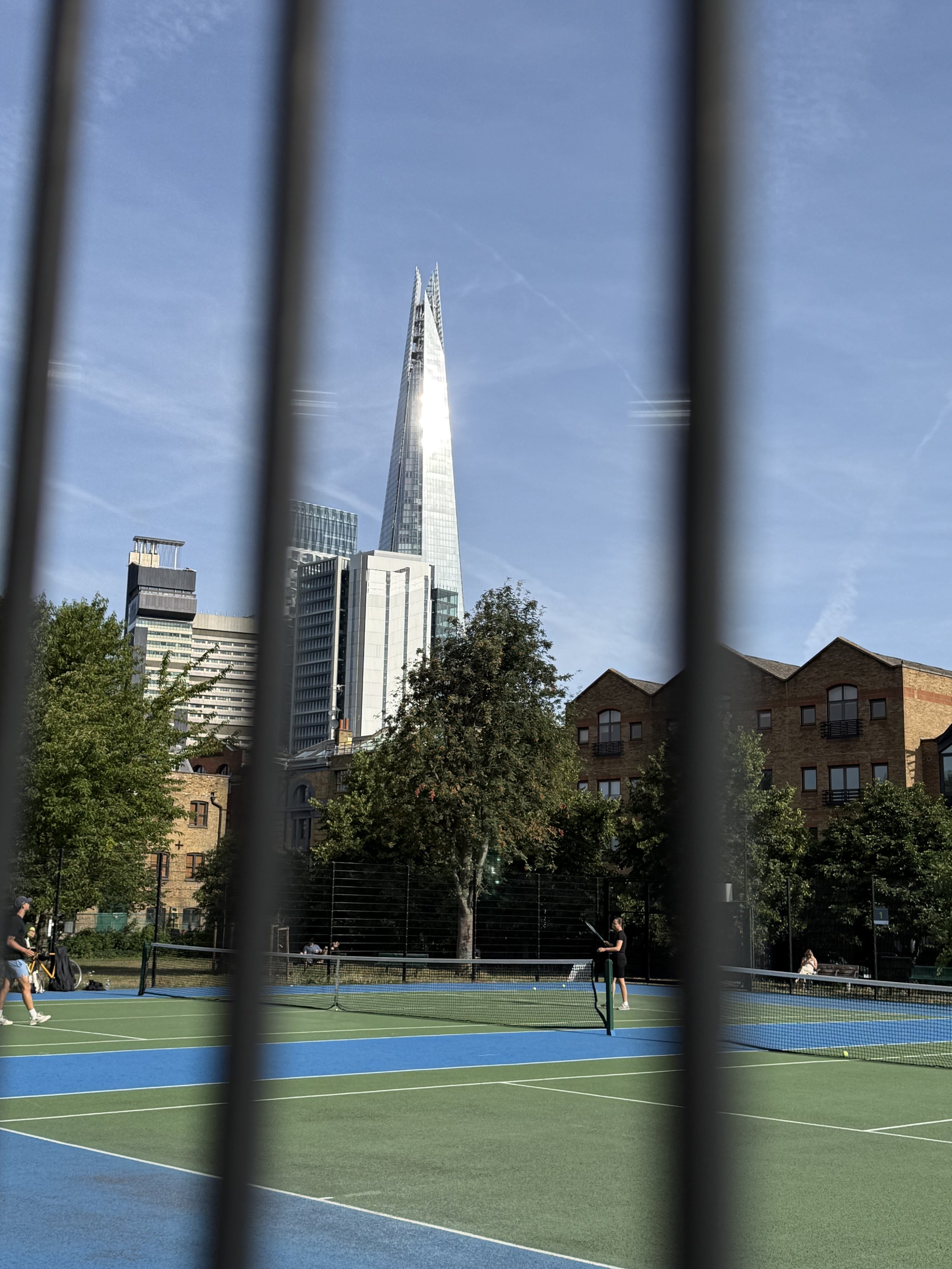
On the tennis courts at the park, a game was already underway.
Behind them stood The Shard.
Nobody looked up.
For the people who lived here, one of London’s most recognisable buildings had simply become part of the background.
I stood there longer than I expected.
Somewhere between the cafes and the park, a thought quietly crossed my mind.
If I ever lived in London, this is probably where I’d choose to be.
It surprised me.
I’ve visited London many times over the years. I know the museums, the theatre district, the restaurants friends insist I revisit whenever I’m in town. Yet I had never thought about where I might actually want to live.
Visiting a city and imagining an ordinary life within it are two very different ways of seeing the same place.
Most trips begin with a list.
A reservation.
An attraction.
A neighbourhood saved weeks earlier.
Mine usually do too.
But somewhere over the past few years, my relationship with travel has changed.
I no longer feel the need to account for every hour.
More importantly, I like finding my own space.
Not necessarily somewhere quiet.
Just somewhere that allows me to observe.
Every place has its own rhythm.
Sometimes it expresses itself through architecture.
Sometimes through light.
Sometimes through the conversations drifting across neighbouring tables.
Sometimes through nothing more than the way people begin their morning.
The following morning, I walked to Borough Market.
I’ve been returning to Monmouth Coffee for more than a decade.
The first photograph I have of myself outside one of their cafes dates back to January 2015.
Back then, I probably couldn’t have imagined that one day I would spend most of the year living in rural Umbria, writing about places and the people who shape them.
Yet somehow, every visit to London still seems to begin with coffee from Monmouth.
Some traditions quietly continue while everything else changes.
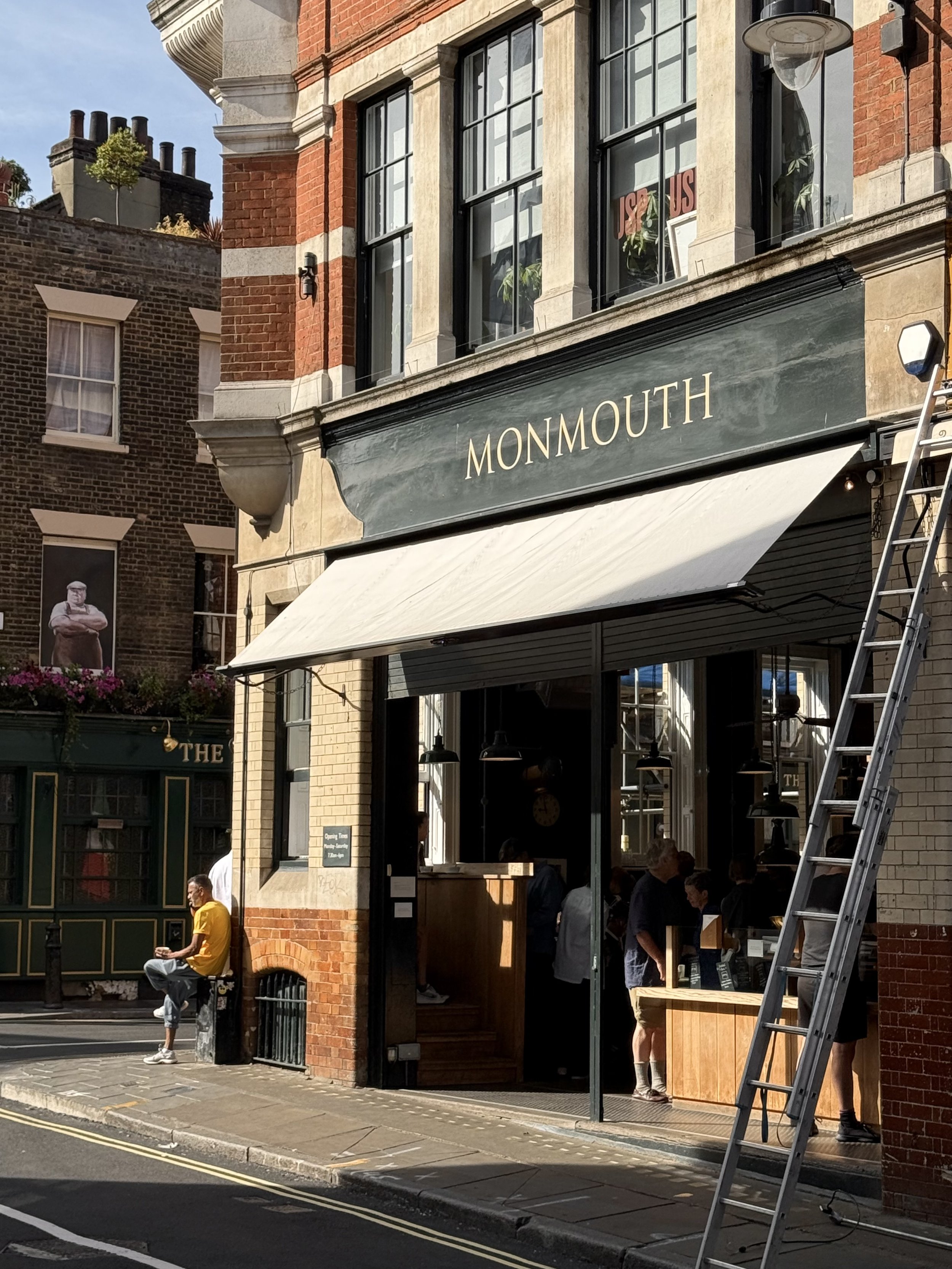
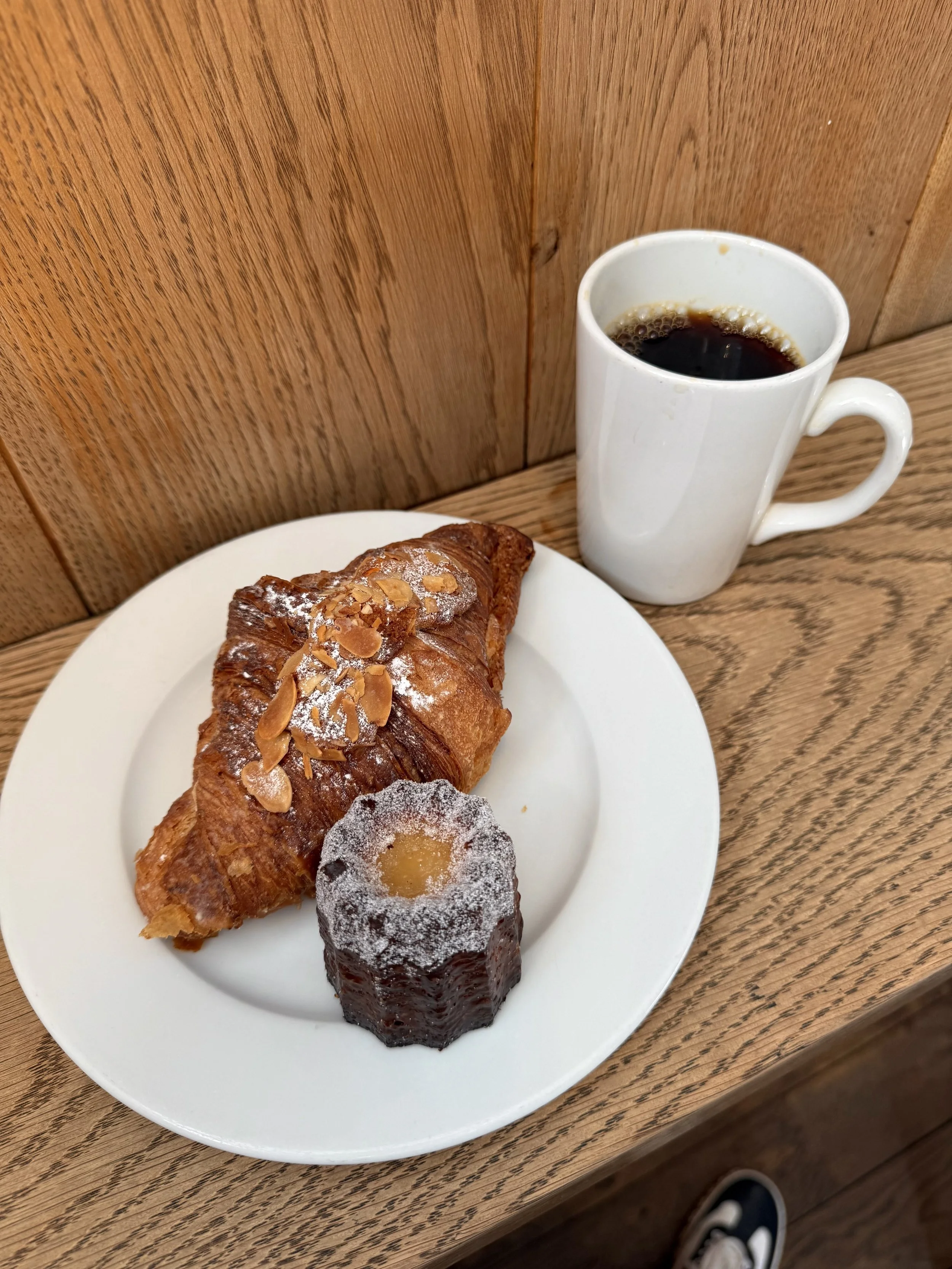
I arrived shortly after eight.
An Americano.
An almond croissant.
A canelé.
Then I found a seat by the window.
For nearly an hour, I barely moved.
Outside, Borough Market was slowly assembling itself.
Metal shutters rolled upwards one by one.
Boxes of fruit appeared on wooden counters.
Fresh loves were carried carefully from the bakery.
Someone swept yesterday’s leaves into a small pile before disappearing around the corner.
The first customers arrived without hurry.
There was no single moment when the market opened.
It simply became busier, almost without anyone noticing.
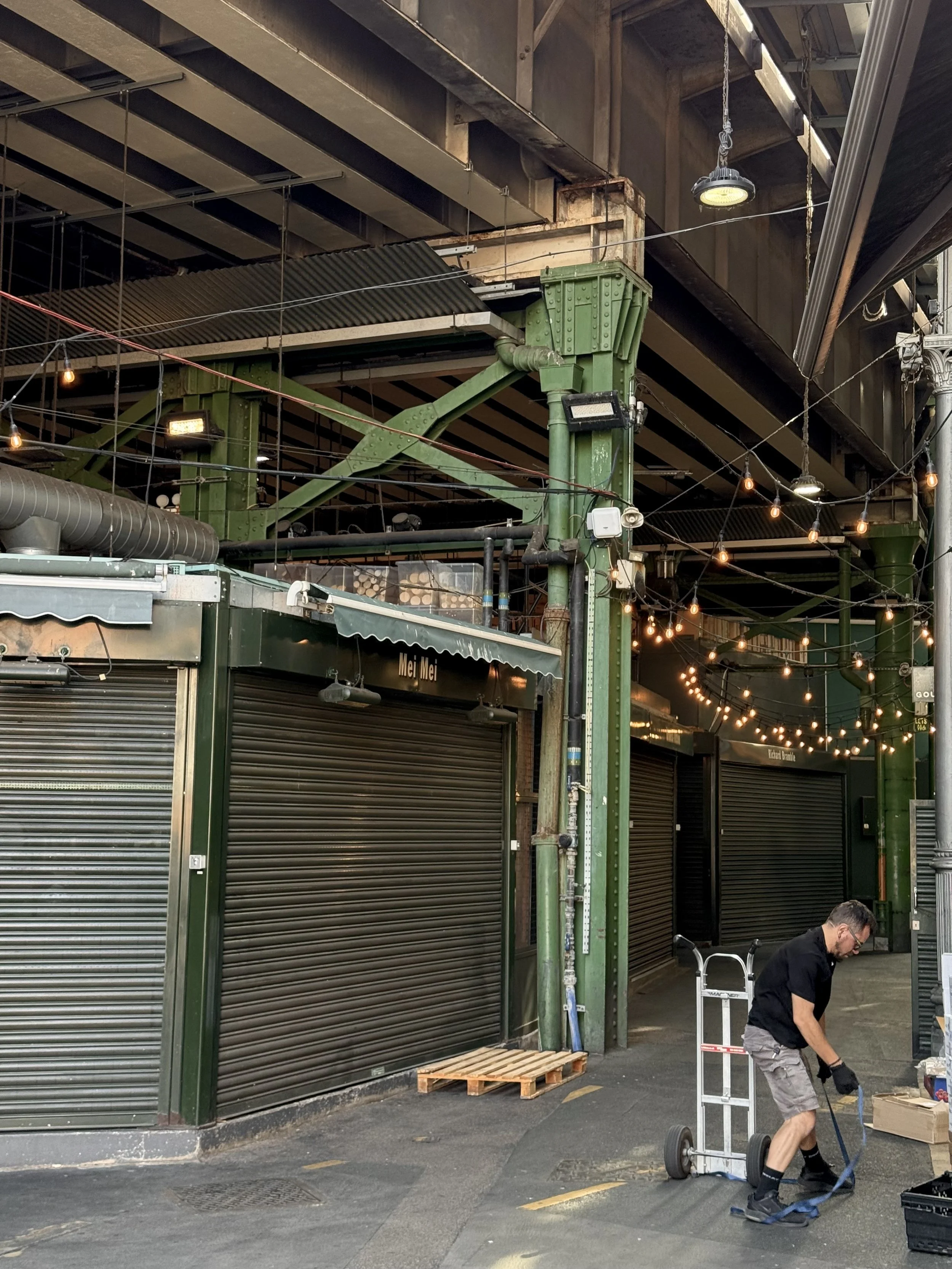
I realised I wasn’t watching Borough Market.
I was watching people return to familiar routines.
A chef inspecting vegetables before service.
Someone collecting bread before work.
Neighbours greeting one another across the market.
The market wasn’t performing.
It was simply beginning another ordinary day.
Perhaps that was why I stayed so much longer than I intended.
The longer I stayed there, the less interested I became in deciding where to go next.
I found myself paying attention to entirely different things.
The sounds of coffee cups being stacked behind the counter.
Morning light catching the brick arches above the market.
The geometry of cast iron against glass.
The rhythm of footsteps gradually replacing silence.
None of these moments would ever appear in a guidebook.
Yet together they revealed something far more interesting than another list of places to visit.
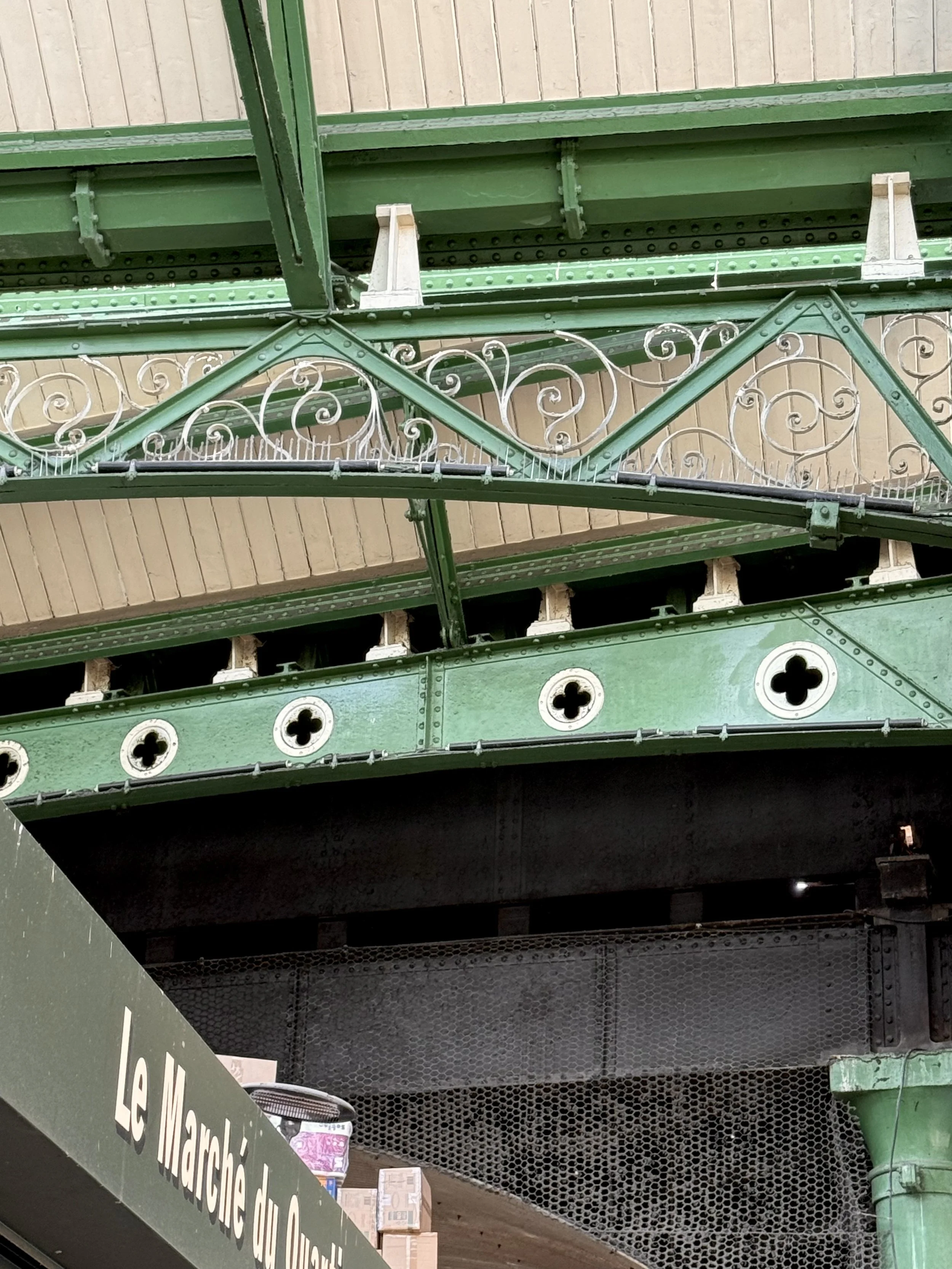
When I first started travelling, I collected destinations.
Today, I notice a shift in what I am attracted to.
Patterns.
Light.
Colours.
The way old brick sits beside modern glass.
How a neighbourhood changes between eight and ten in the morning.
How people inhabit the spaces they pass through every day without thinking twice about them.
Perhaps cities don’t become memorable because of the landmarks we photograph.
Perhaps they become memorable because, every so often, they allow us to notice the quiet choreography unfolding around them.
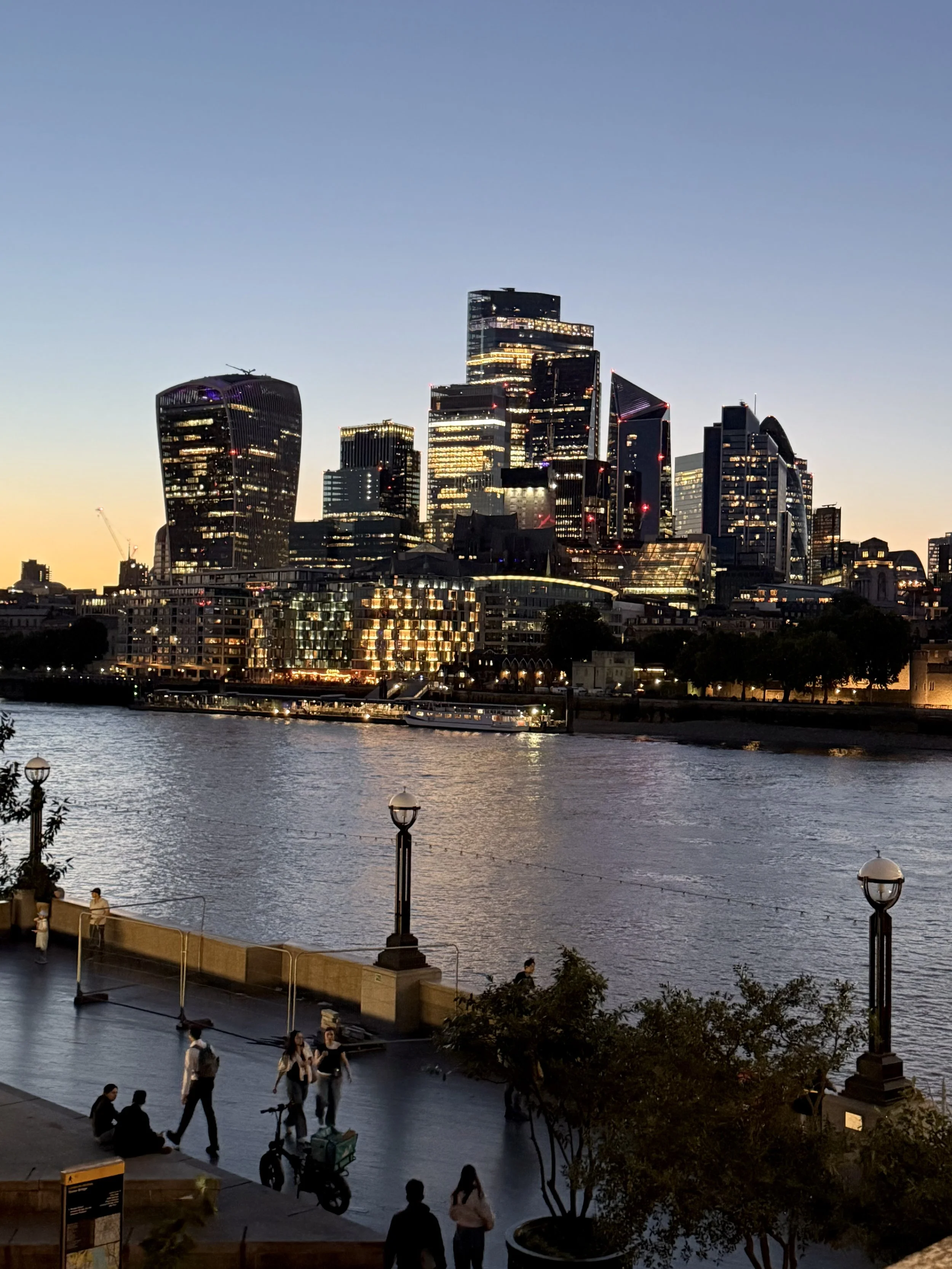
London is a city best understood on foot.
Not because it is small. Quite the opposite.
Walking simply allows the city to interrupt you.
A reflection in a shop window.
Morning light catching the brickwork beneath a railway arch.
The scent of fresh bread escaping from a bakery before you notice its sign.
A side street you would never have discovered had you stayed underground.
The city reveals itself in fragments.
Walking gives those fragments enough time to gather into something larger.
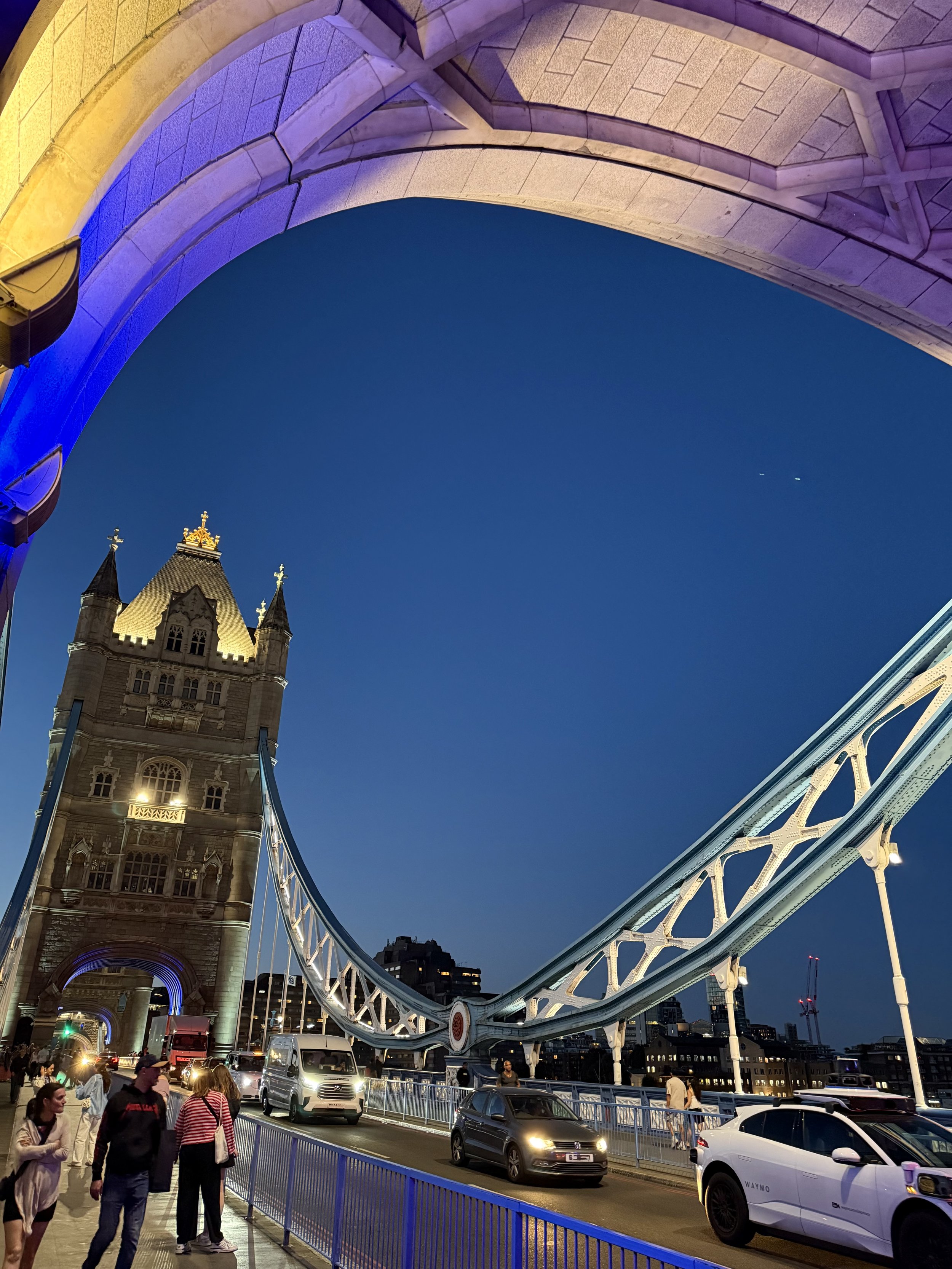
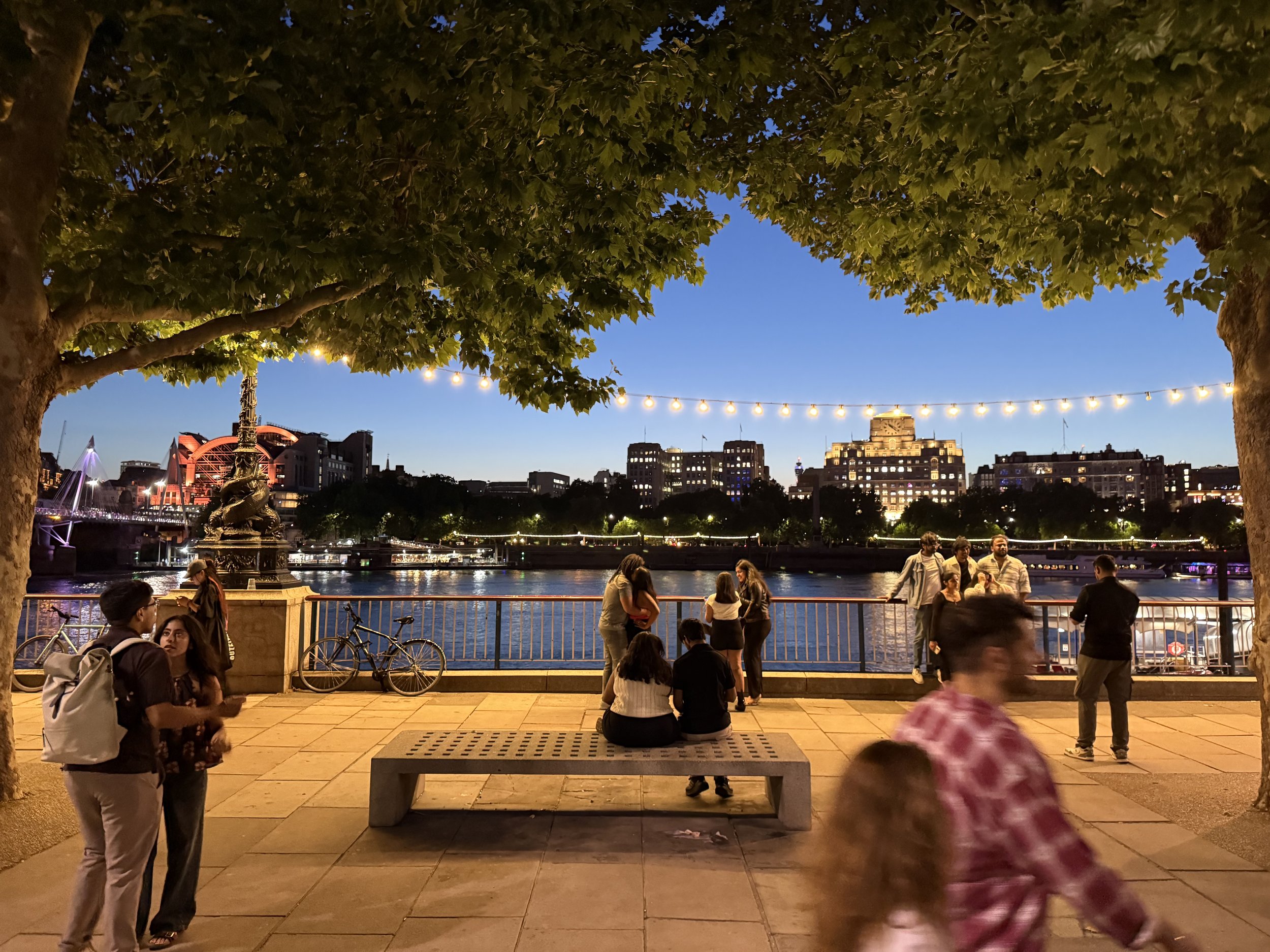
That evening, after the theatre, I walked all the way back instead of taking the Underground.
There was no particular reason.
It simply felt like the right way to end the day.
The river moved quietly beneath the bridges.
Office lights were slowly disappearing from glass towers while restaurants along the South Bank were beginning to fill.
Cyclists crossed the bridges with the confidence of people following familiar routes home.
Somewhere along the Thames, I stopped taking photographs for a while.
That moment I was just enjoying looking more than recording.
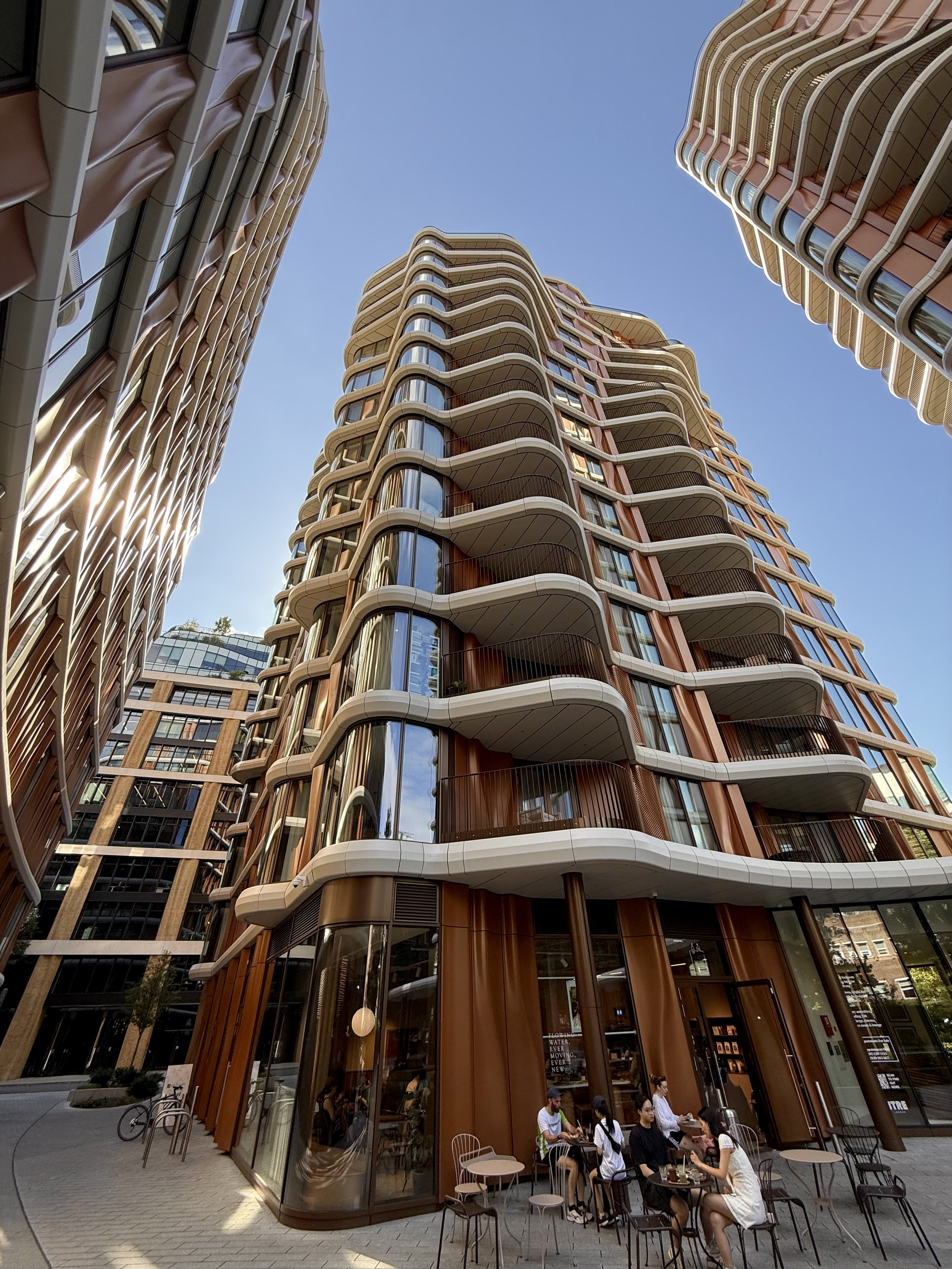
The following morning led me somewhere entirely different.
I first heard about Nagare through a YouTube interview featuring a young lady from Hong Kong who had built a new life in London.
The bakery serves Japanese/ Asian-inspired bread and pastries.
On paper, it sounds almost impossible to categorise.
In reality, it makes perfect sense.
Cities like London have always been shaped by people carrying pieces of home with them.
Sometimes those pieces become restaurants.
Sometimes bakeries.
Sometimes simply recipes prepared the way they have always been.
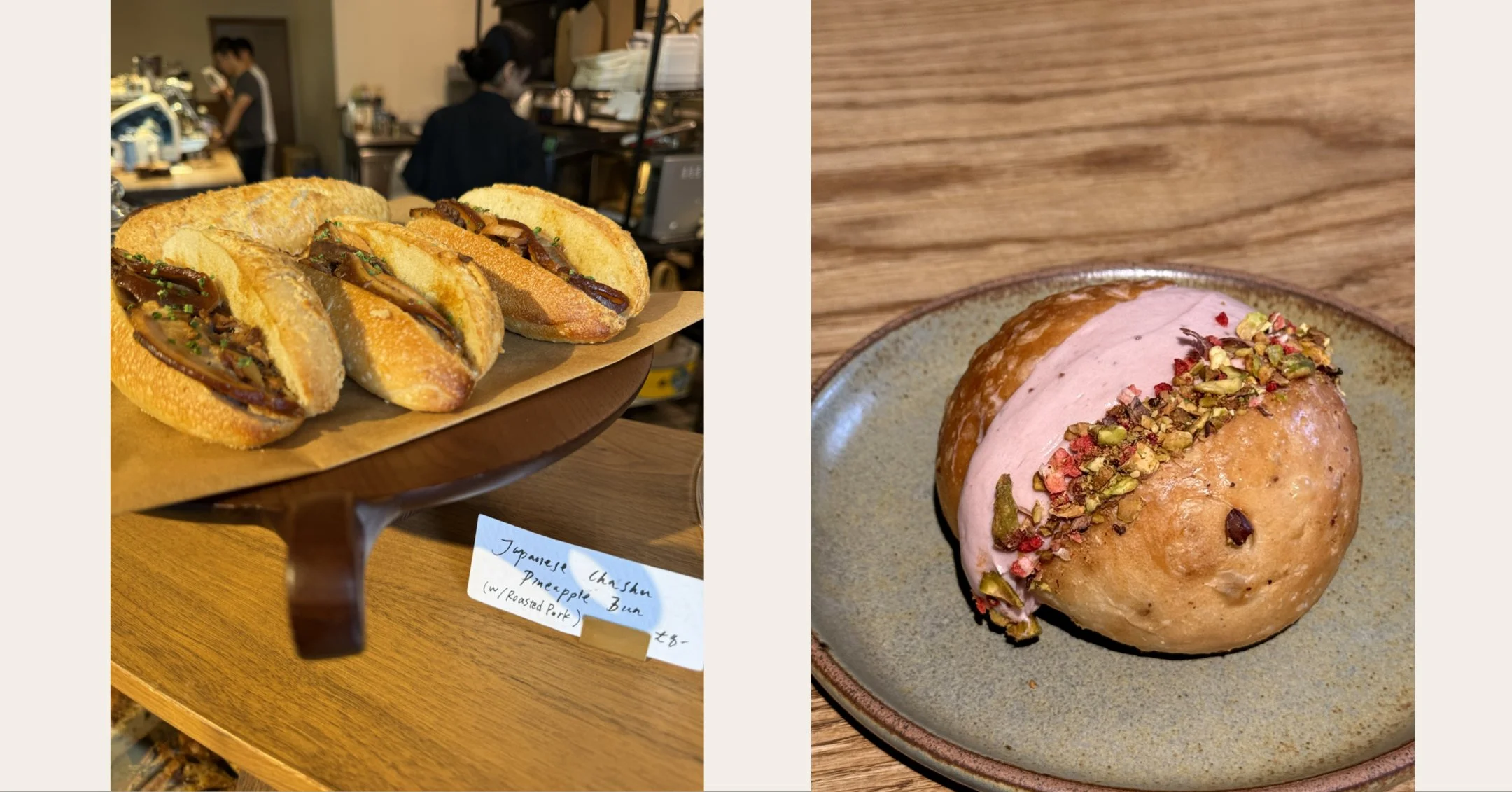
I ordered a Japanese Cha Shu Hong Kong-style pineapple (polo) bun and a strawberry pistachio cream bun.
The crisp crust of the polo bun reminded me of bakeries/ char chan teng I visited often in Hong Kong, while the generous filling of the second unexpectedly brought to mind a maritozzo from Rome.
Three places. One breakfast.
It occurred to me how naturally we carry places with us.
Sometimes through language.
Sometimes through memory.
Quite often through food.
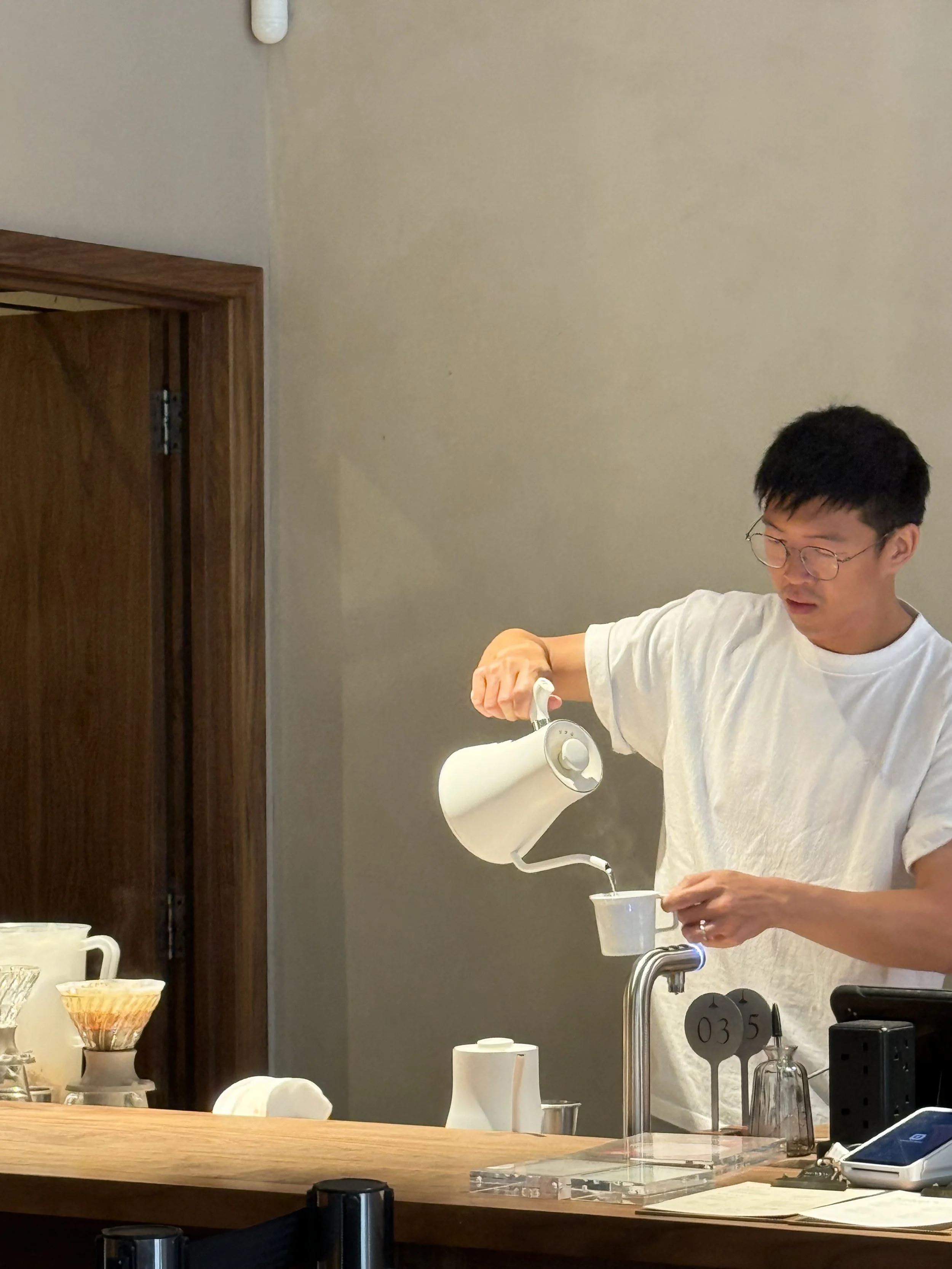
People arrived one after another.
Someone collected coffee before work.
A couple shared breakfast without saying very much.
The baristas worked with an ease that only comes from repetition.
Nobody seems to be performing.
They were simply getting on with another Saturday morning.
Once again, I found myself watching the rhythm rather than the destination.
By lunchtime, another story quietly unfolded.
Lahpet is one of the few Burmese restaurants in London.
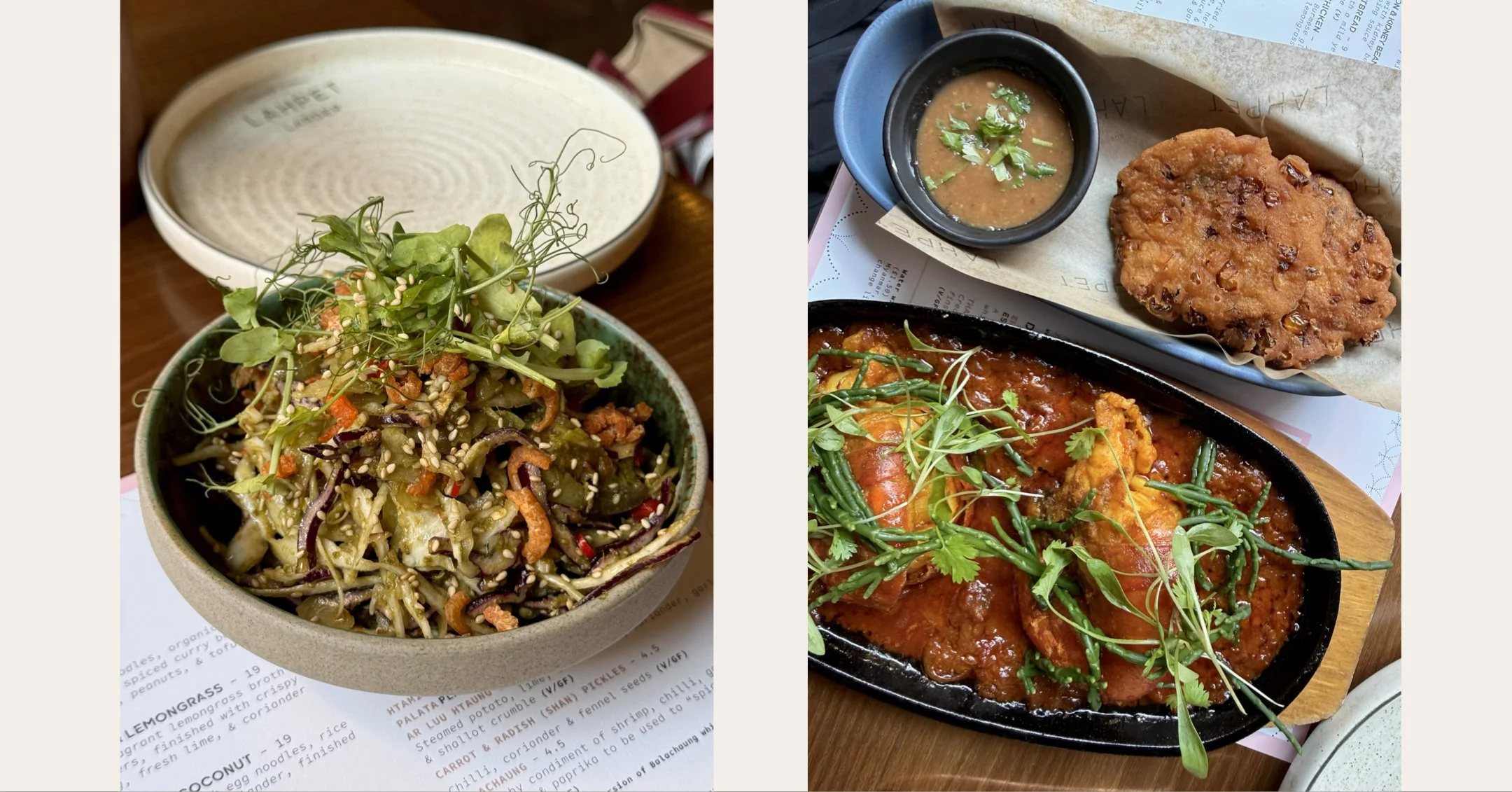
I ordered sweetcorn fritters, Sipyan king prawns and Lahpet thoke, Myanmar’s distinctive fermented tea leaf salad.
The food was unfamiliar enough to be interesting, yet comforting in a way that many family recipes often are.
It carried the confidence of a cuisine that had travelled a long way without feeling the need to reinvent itself completely.
While chatting with one of the staff, our conversation went beyond the menu.
He spoke quietly about Myanmar.
About parents still living there.
About young people building lives overseas.
About not knowing when returning home might become possible again.
There was no bitterness in his voice. Only uncertainty.
I listened more than I spoke.
The conversation stayed with me long after lunch.
Years ago, I travelled to Yangon for work.
I remember grand hotels standing in the city centre where children played barefoot beside the road.
Luxury boutiques existed alongside remarkable poverty.
The contrasts were impossible to ignore.
Yet sitting in London, those memories felt strangely distant.
The conversation wasn’t really about politics.
Nor was it about Myanmar alone.
It was about something much simpler.
The quiet hope that one day home will still be there when you are finally about to return.
Living on the other side of the world, I often think about my own parents in Malaysia.
I can board a plane whenever I wish.
See them.
Share a meal with them.
Return to Italy.
I had never really considered that such certainty is, in itself, a privilege.
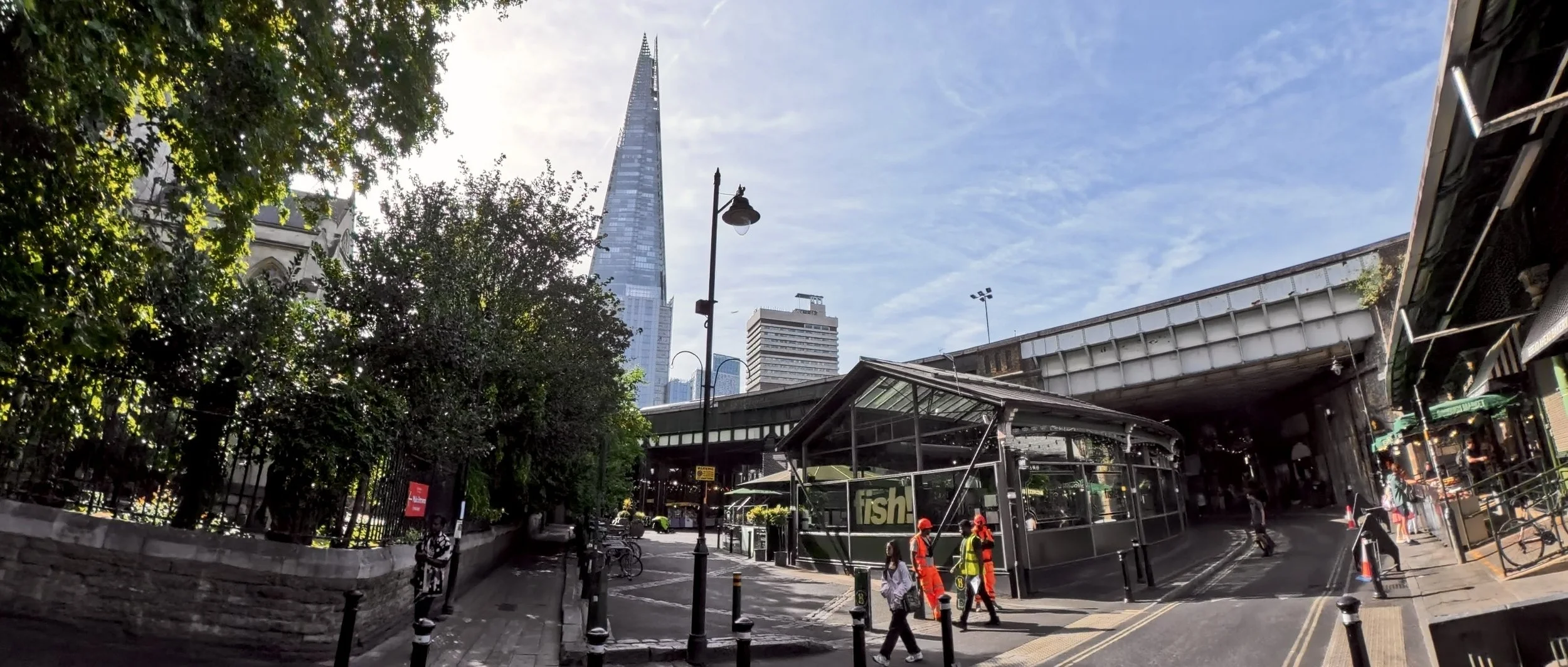
Walking back through London that afternoon, the city somehow looked the same.
Yet it felt different.
Perhaps because I had begun to notice that every neighbourhood carries stories far beyond the buildings themselves.
A Japanese bakery started by people from Hong Kong.
A Burmese restaurant preserving recipes from home.
A Malaysian walking quietly between them.
Cities are often described through skyline and architecture.
But to me they are remembered through the lives that quietly unfold beneath them.
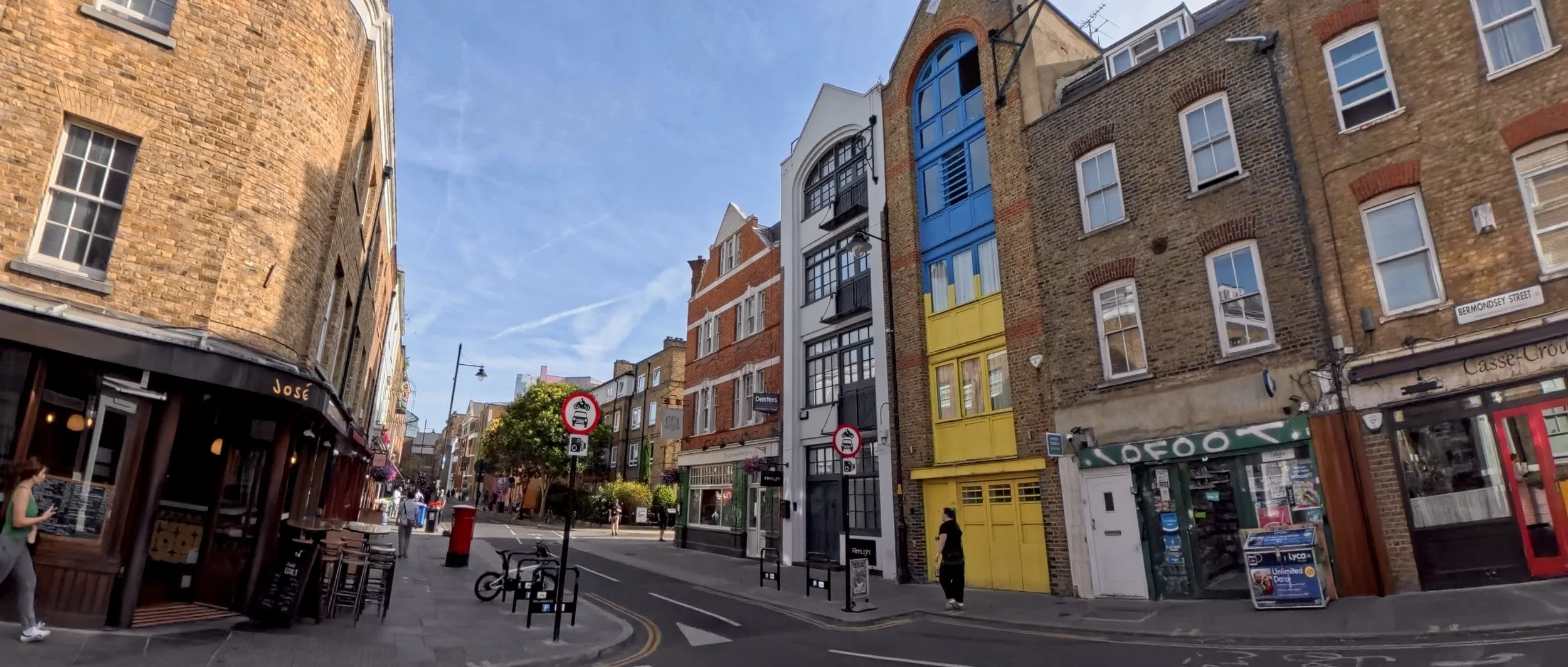
The following morning, I walked through Bermondsey once again.
Nothing had changed.
The florist was arranging flowers outside the shop.
Dogs waited patiently next to their owners inside the cafe.
Cyclists slipped past leisurely.
Someone was reading alone in the park.
The tennis courts were occupied once more.
The Shard stood exactly where it had been the day before.
Only now, I barely noticed it.
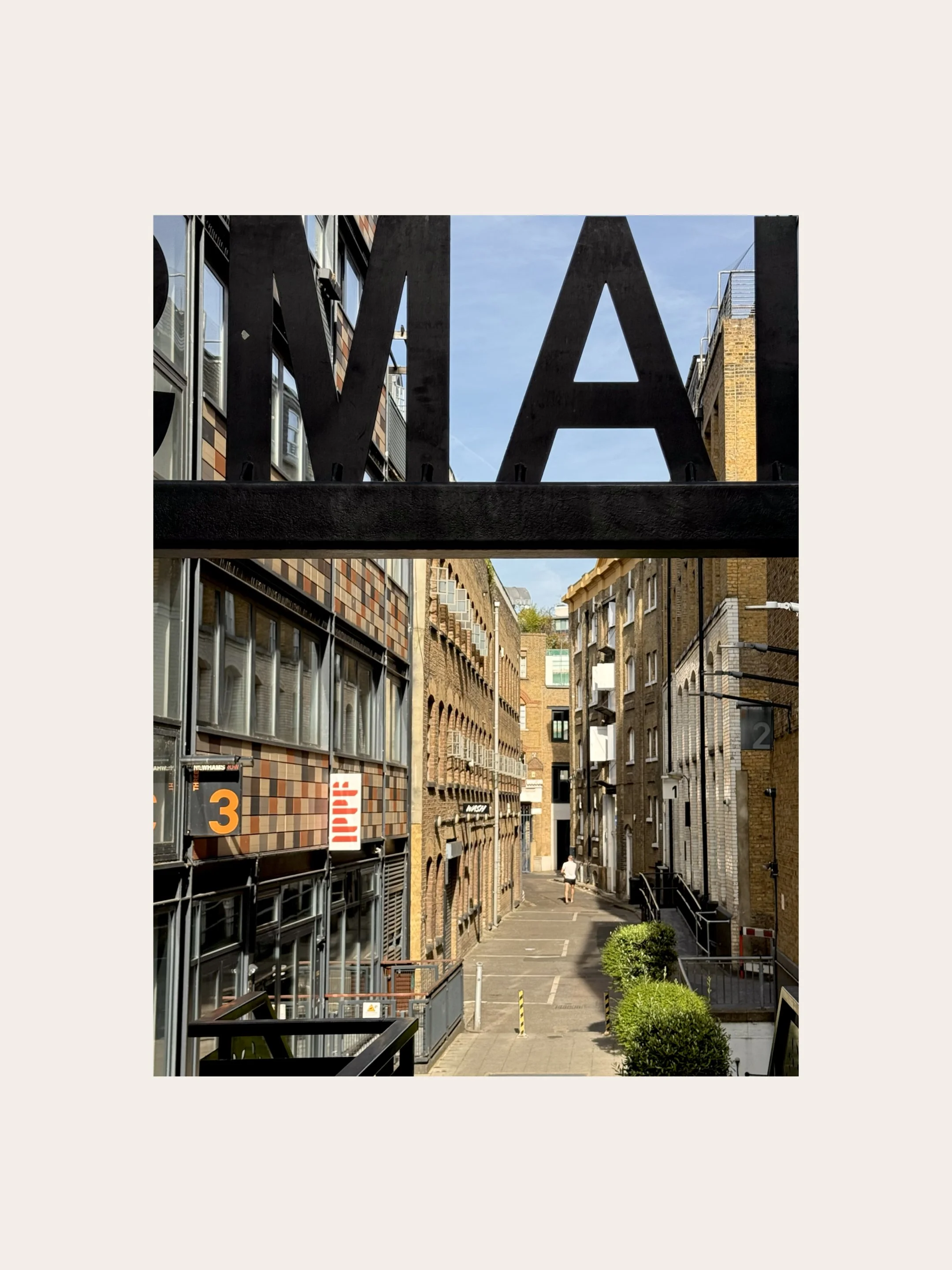
It made me wonder how often we travel without ever allowing a place to become ordinary.
We spend days searching for the extraordinary, only to leave just before the ordinary begins to reveal itself.
Perhaps that is why certain neighbourhoods stay with us while others quietly disappear from memory.
Not because they contain more attractions. But simply because, for a brief moment, we can imagine ourselves becoming part of their everyday rhythm.
When I arrived in London, I thought I already knew the city.
By the time I left, I wasn’t sure that had ever been true.
Perhaps knowing a place has very little to do with recognising its landmarks.
Perhaps it begins much more quietly.
With a morning coffee.
A conversation over lunch.
A neighbourhood where, for a brief moment, you stop wondering what to see next…
… and begin imagining what it might feel like to belong.
Before you leave, you are invited to sign The Guestbook.
Unless otherwise credited, all photography and written content are original works by Foodie Goes Travel.
