A Hotel That Leads Back to the Harbour
At The Fleming in Wan Chai, the Star Ferry is not simply a design reference. It becomes a way of reading Hong Kong — from brass, bamboo and bottle green to the ferry pier itself.
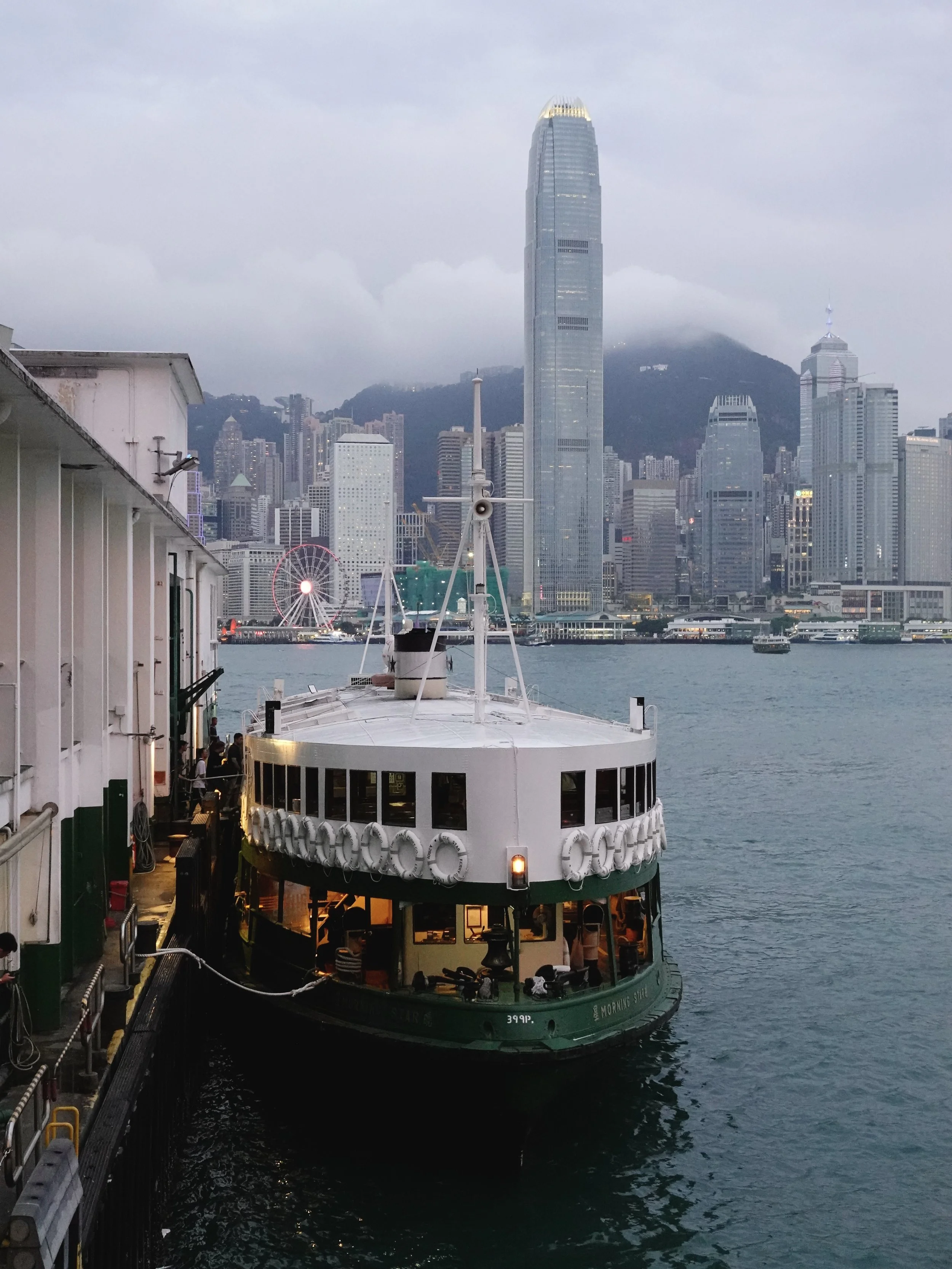
The source of the story: the Star Ferry, seen during my stay at The Fleming.
A hotel can borrow a city without understanding it.
A familiar colour appears on a wall. Old photographs are enlarged. Local objects are placed on shelves. Patterns are borrowed. Eventually, the references accumulate until you know exactly what you are supposed to think: this is Hong Kong.
The Fleming did something different to me.
I only fully understood the hotel after I left it.
During my stay, I walked from Fleming Road through Wan Chai towards the ferry pier. The MTR was close enough and certainly more practical for many journeys, but on this occasion I wanted the water.
I boarded the Star Ferry to Tsim Sha Tsui.
I have been coming to Hong Kong since I was little and later lived and worked here in my twenties. If I was not in a rush, crossing Victoria Harbour by ferry was always one of my favourite ways of moving between Hong Kong Island and Kowloon.
There is still something immensely satisfying about it. You leave one skyline and watch another approach. For a few minutes, Hong Kong rearranges itself around water rather than roads.
This time, though, I began looking at the ferry differently.
The green. The timber. The metal. The curves. The practical hardware. The ropes drawn towards the pier.
And suddenly, much of what I had been looking at inside The Fleming made more sense.
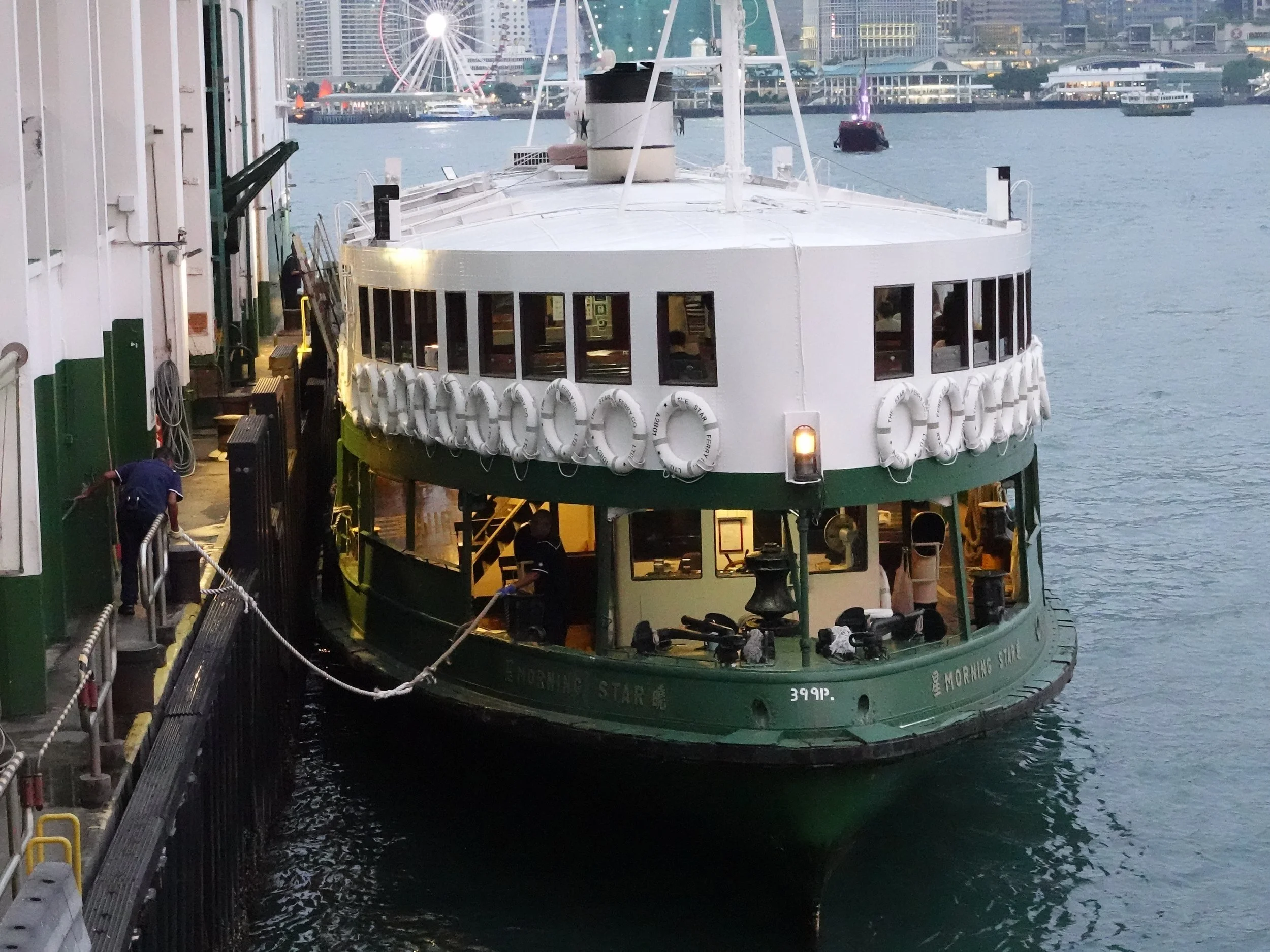
Watching the ferry arrive made many of The Fleming’s maritime details suddenly feel familiar.
A Design With Somewhere to Come From
The Fleming occupies a 1970s building in Wan Chai. The hotel originally opened in 2006 before being comprehensively redesigned by Hong Kong studio A Work of Substance, with the new design completed in 2017.
The designers describe the Star Ferry as the foundation of the project.
That distinction matters.
It would have been very easy to take one of Hong Kong’s most recognisable objects and turn it into a theme.
Instead, what impressed me throughout the stay was the sense that a great deal of time had gone into deciding not simply what to include, but when to stop.
At reception, a wall of red compartments reminded me of old Hong Kong letterboxes. Nearby, small cylindrical red tables echo the proportions of the mooring bollards found at ferry piers. Bottle green appears repeatedly. Brass runs along counters, signs, taps, switches and lighting. Inside the lift, the mood changes completely with walls of deep carmine red.
None of these details competes for attention.
More importantly, they belong together.
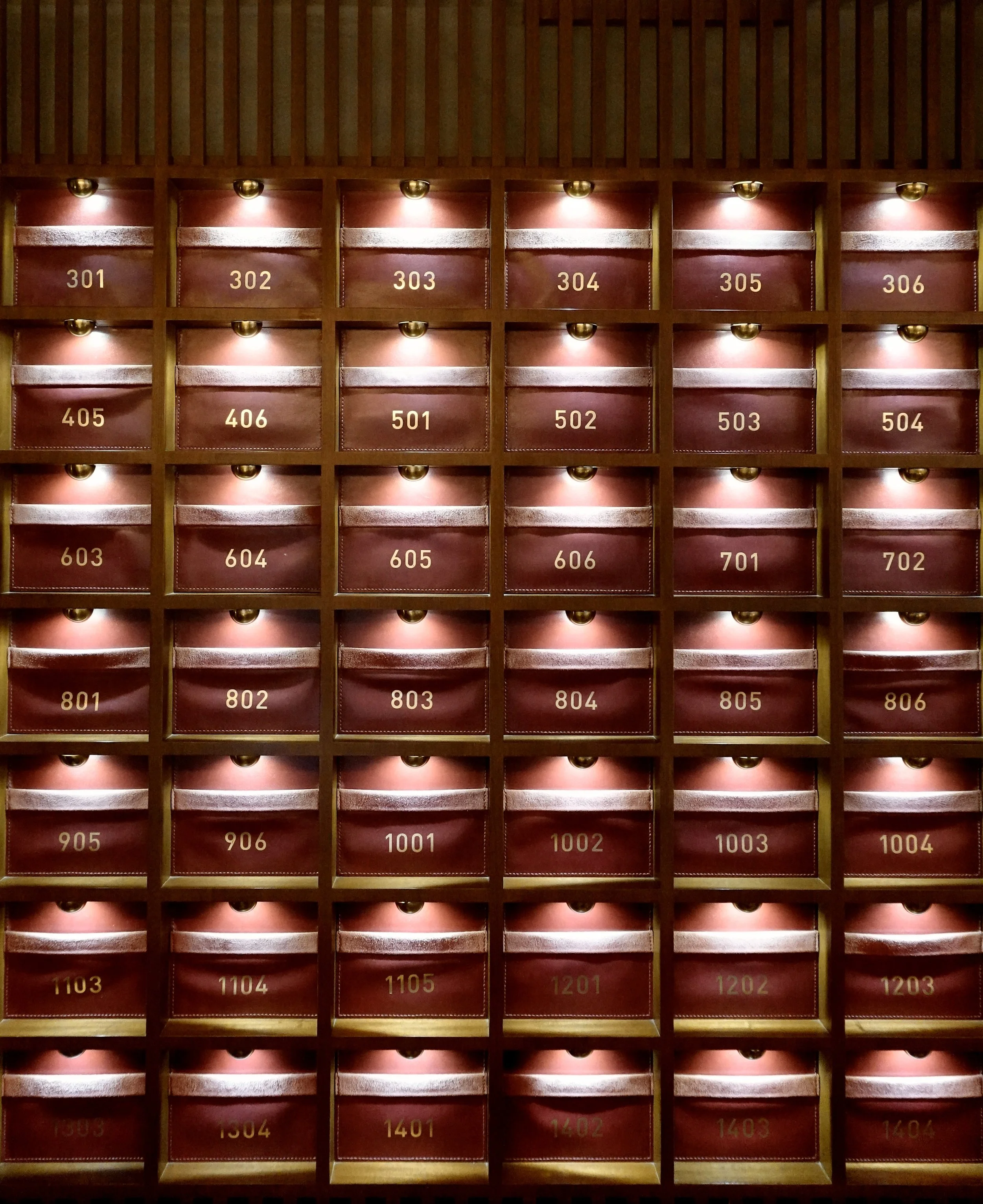
A familiar Hong Kong visual language, translated rather than reproduced.
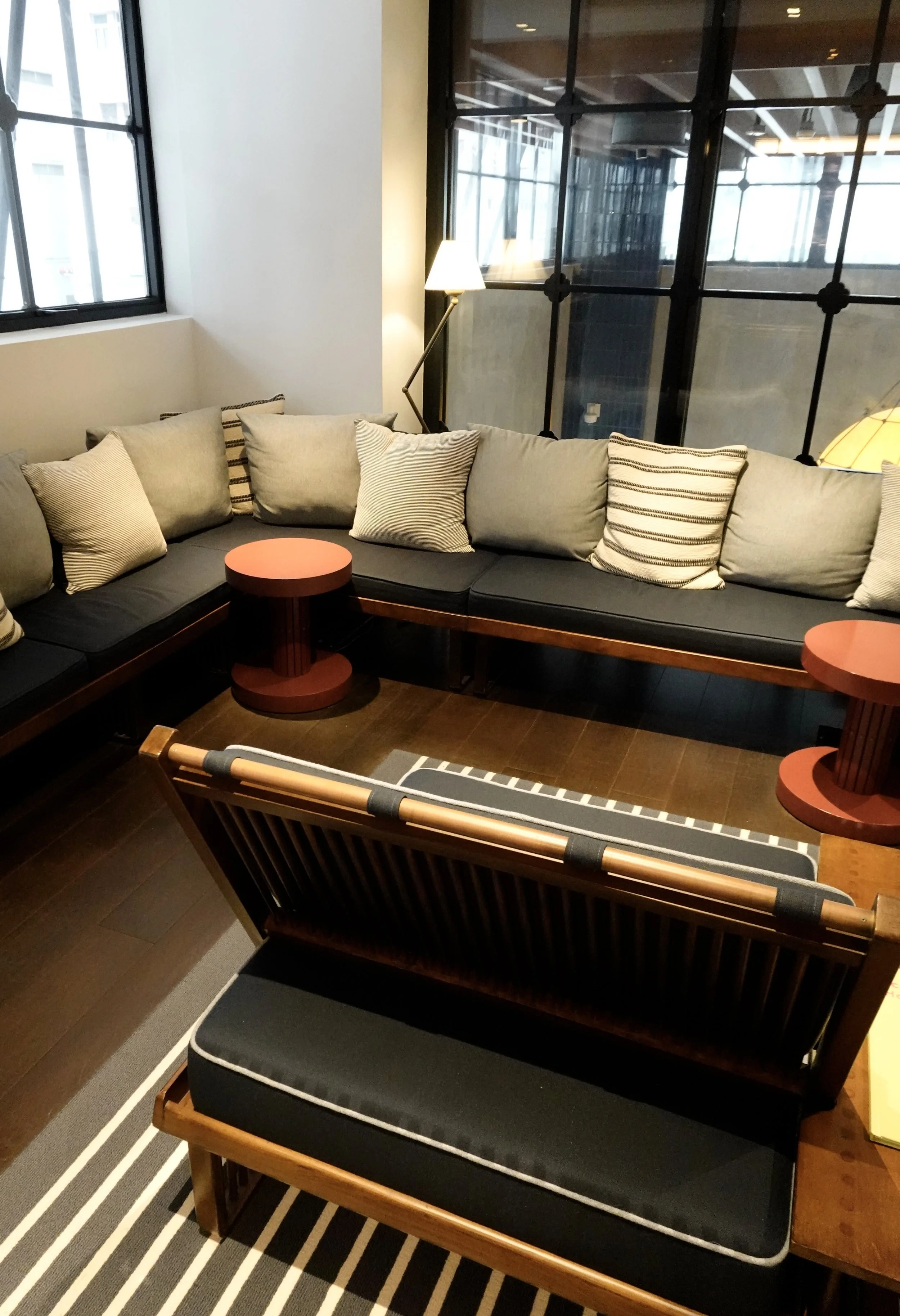
The small red tables recall the proportions of mooring bollards found at a ferry pier.
The colours are not arbitrary.
Bottle greens and carmine reds were drawn from a broader Hong Kong vocabulary that includes ferries, fishing boats, delivery vehicles and temples. Throughout the hotel, teak, bamboo, brass, woven materials and hand-glazed green ceramic tiles appear in different combinations.
Many elements were designed specifically for the project.
That helps explain something I felt before reading anything about the hotel afterwards: the finishes feel good.
The Fleming does not give the impression that somebody collected a series of objects that looked sufficiently “Hong Kong” and arranged them around the building.
There is a flow from one decision to another.
Material leads to colour. Colour leads to form. A maritime reference reappears elsewhere as something functional.
Even the concierge desk makes the point.
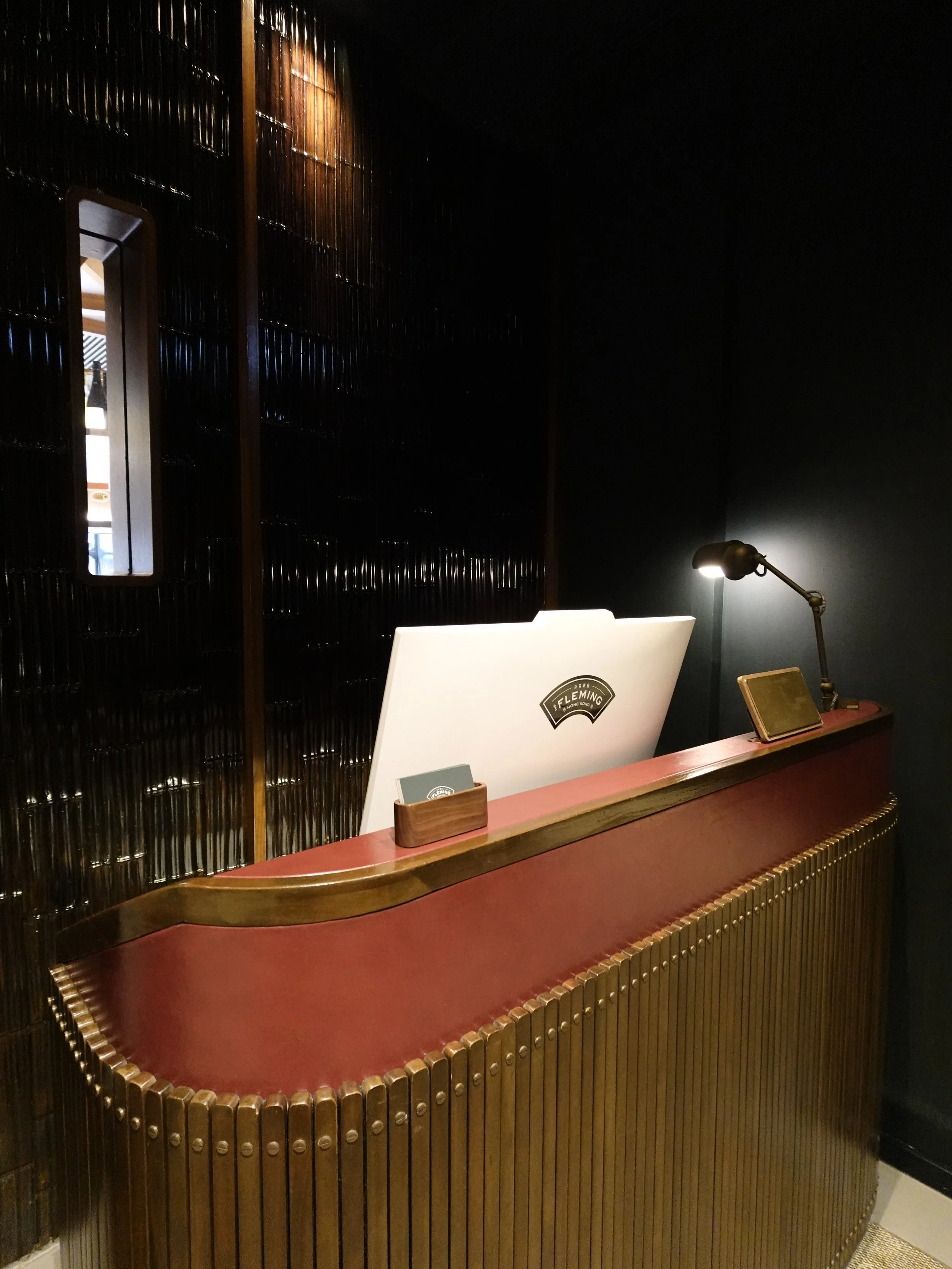
Brass, curves and repeated metal details carry the maritime language into the concierge area.
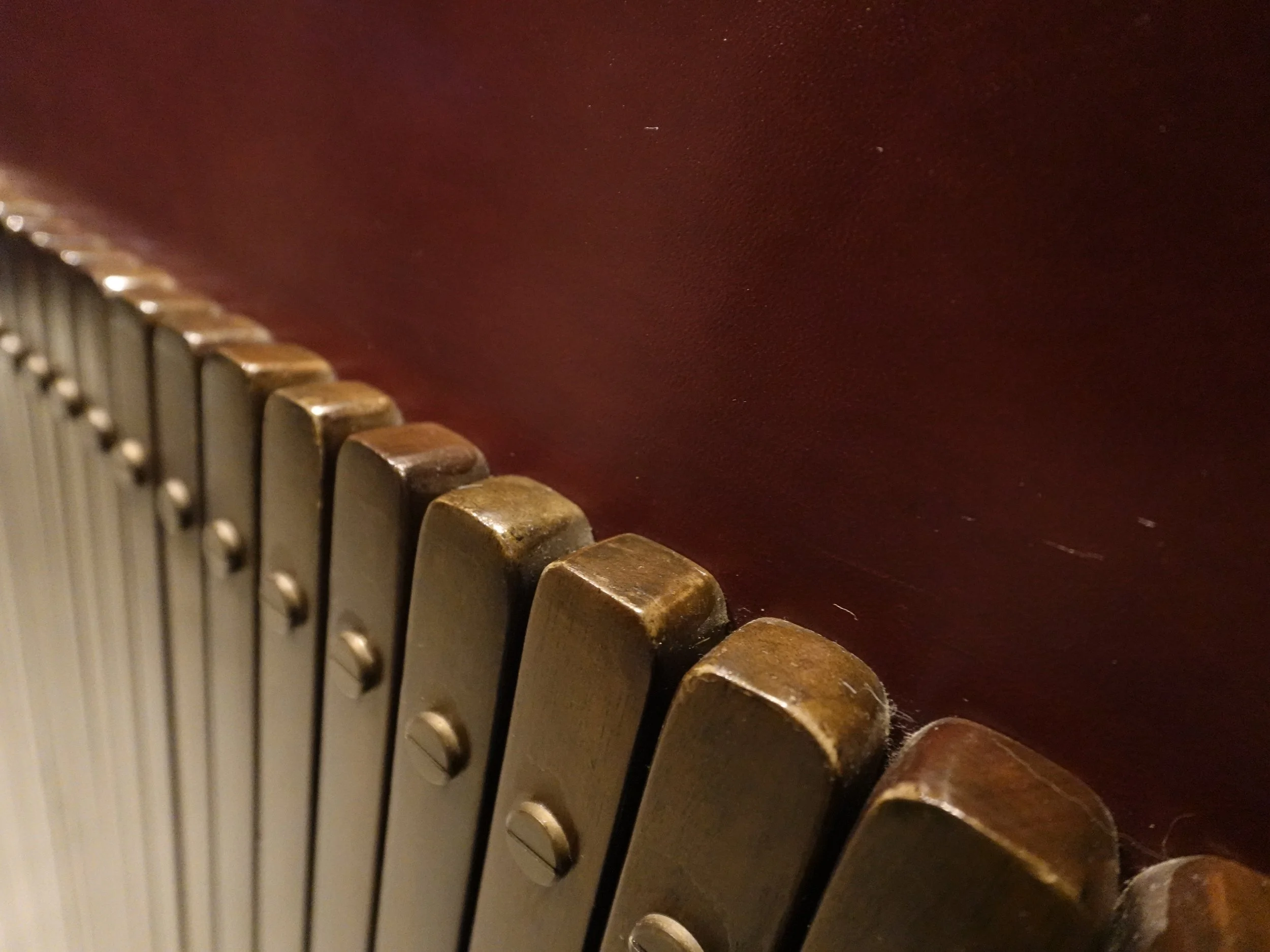
Up close, the materials have weight, texture and signs of use.
Elsewhere, a brass directory continues the same visual language.
Then come the smaller surprises.
Hong Kong 50-cent coins are embedded into part of the floor. Room numbers glow from compact wall lights. Real bamboo lines sections of the corridor, interrupted by small timber niches holding the hotel’s house fragrance.
I liked that the design rewards looking.
It does not require it.
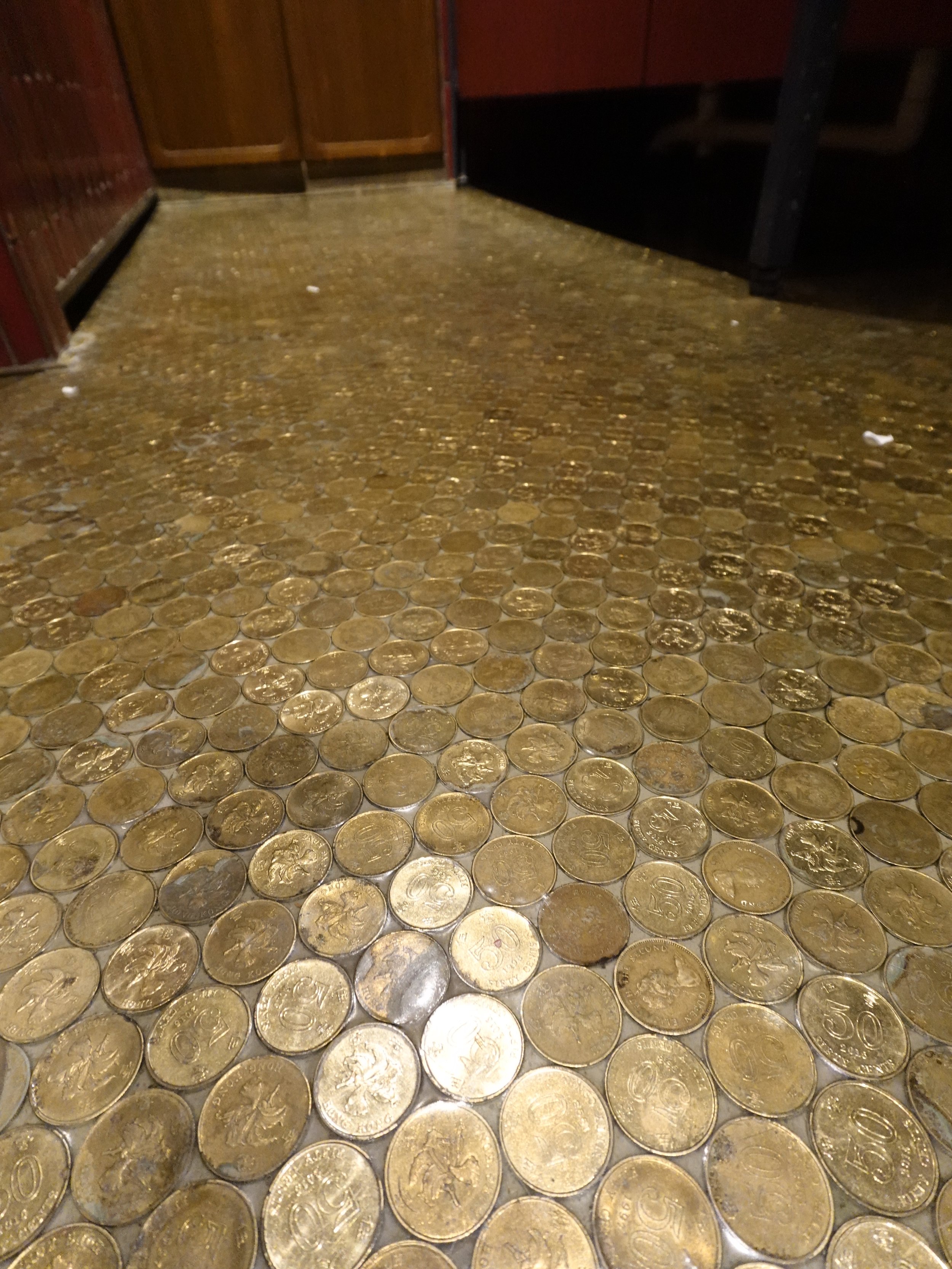
Even the floor contains a small piece of Hong Kong.
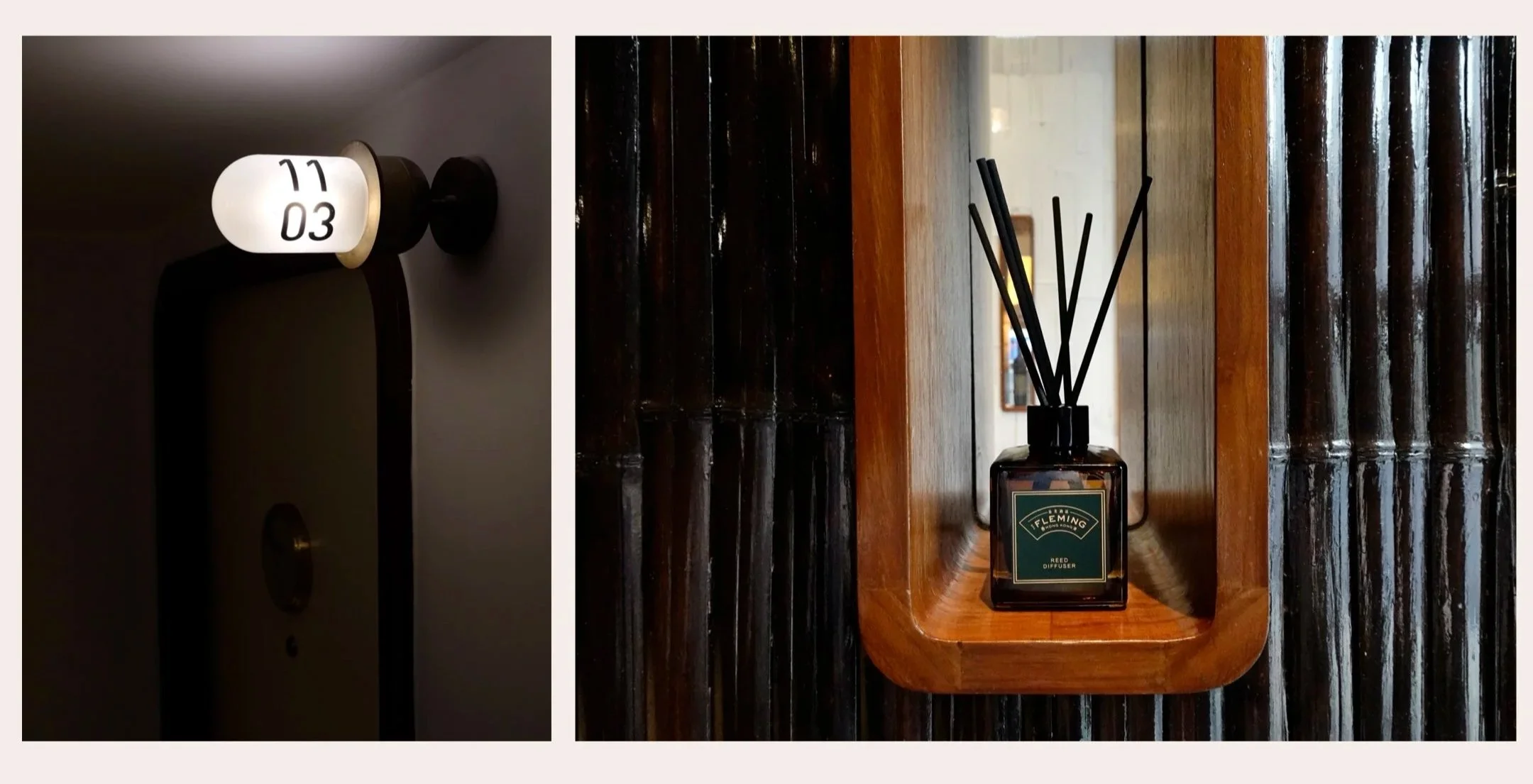
Wayfinding becomes another designed object.
Bamboo, timber and scent continue the material story into the corridors.
Bamboo, Translated
One of the most interesting references sits outside the building.
The Fleming’s façade carries a projecting arrangement of metal rods and lights. When I first looked up at it, I immediately thought of something I had been seeing elsewhere in Hong Kong: bamboo scaffolding.
That association was intentional.
The structure was conceived as a geometric abstraction of Hong Kong’s bamboo scaffolding.
This is where The Fleming’s approach becomes particularly interesting to me.
There is a difference between copying a local object and understanding its visual language.
The hotel does not attach bamboo poles to the façade in order to announce that it is in Hong Kong. Instead, it takes the repetition, intersections, apparent lightness and irregular geometry of scaffolding and translates them into something else.
The reference remains recognisable.
But it has become architecture.
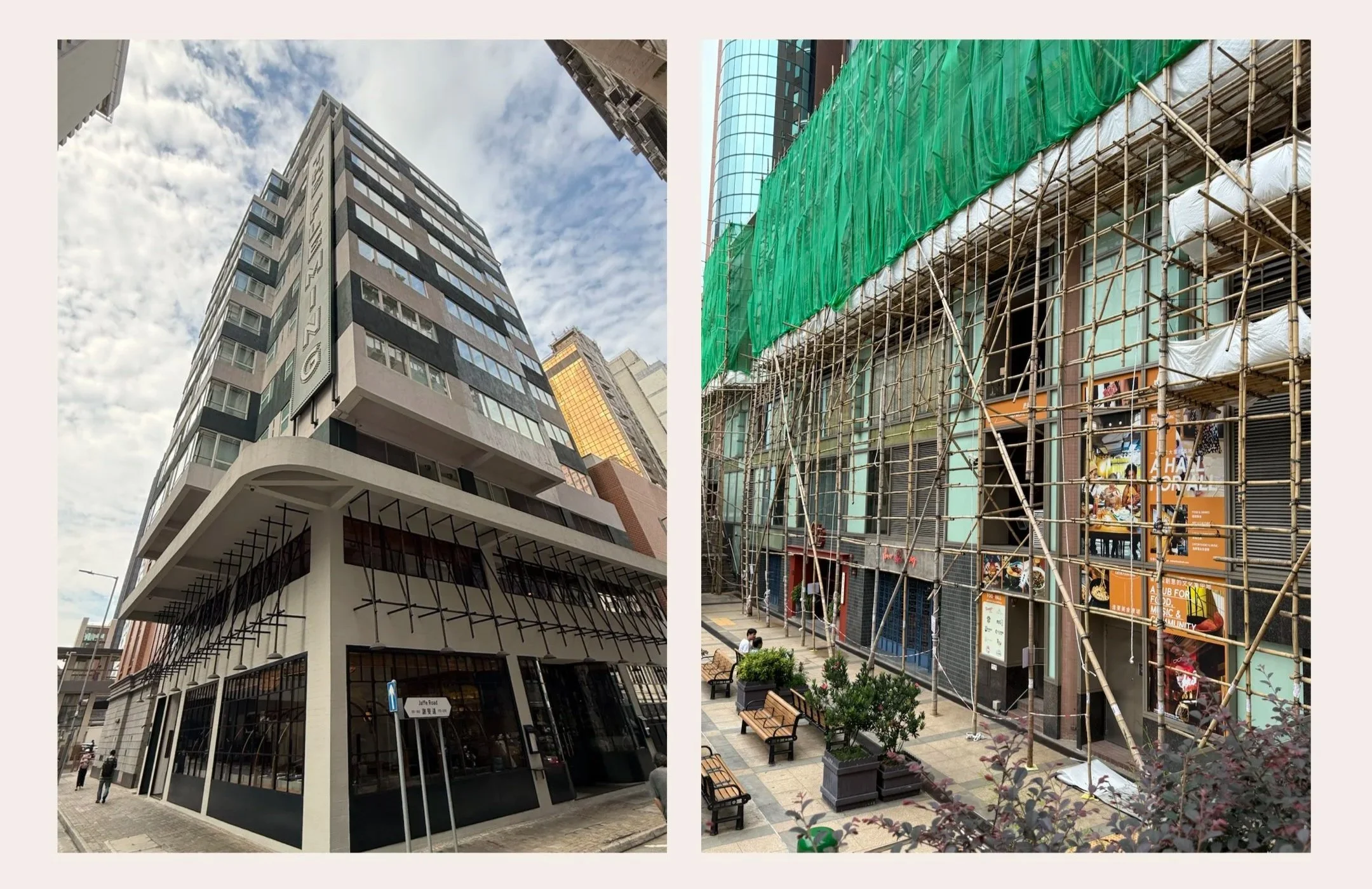
The metal structure on The Fleming’s exterior abstracts the geometry of Hong Kong bamboo scaffolding.
Bamboo scaffolding photographed during a walk in Kowloon — not at The Fleming — showing the everyday structure behind the hotel’s architectural reference.
I like the two images together because they show how something completely ordinary in one city can become the beginning of another idea.
The Fleming does not reproduce the scaffolding.
It understands its rhythm.
When 25 Square Metres Do Not Feel Small
I stayed in a Medium room, measuring 25 square metres.
In Hong Kong, that number can make you prepare for compromise.
It did not feel particularly small.
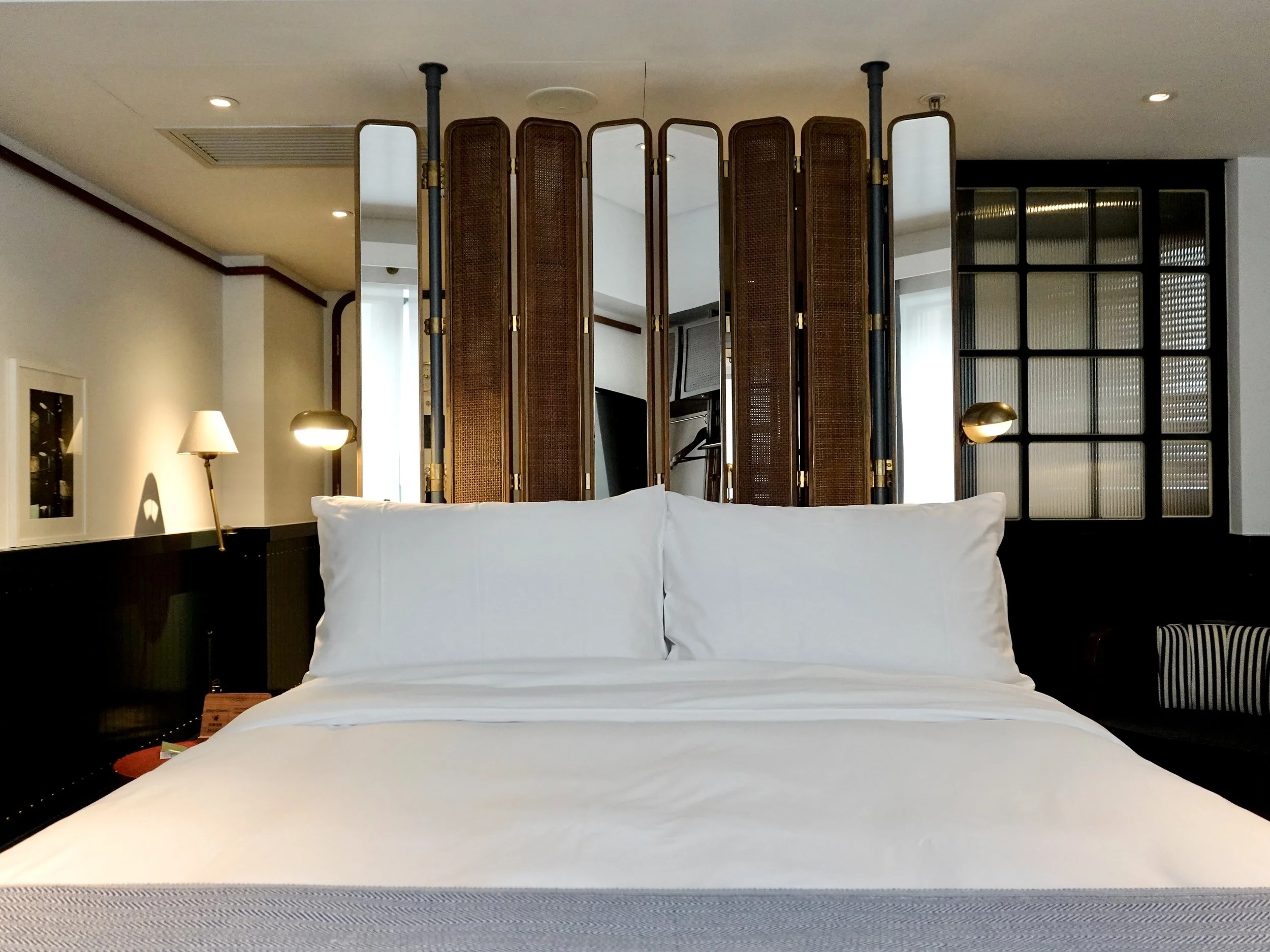
At 25 square metres, my Medium room felt larger than the number suggests.
Part of that comes from how the room is divided.
Ribbed glass allows light to move between spaces without revealing everything. Cane screens give definition without the visual weight of solid walls. Mirrors create depth. Furniture feels integrated into the architecture rather than placed into whatever space remained afterwards.
Again, the details follow the same vocabulary without simply repeating themselves.
Dark timber. Woven cane. Striped textiles. Brass controls. Green ceramic tiles.
There is an almost mechanical quality to some of the fittings, which makes sense when you discover how closely the designers studied maritime equipment.
My favourite example may be the device used to indicate whether the room should be cleaned or left undisturbed.
Instead of hanging a conventional sign outside the door, you turn a circular brass dial inspired by an engine-order telegraph — an instrument historically used aboard ships to communicate instructions between the bridge and engine room.
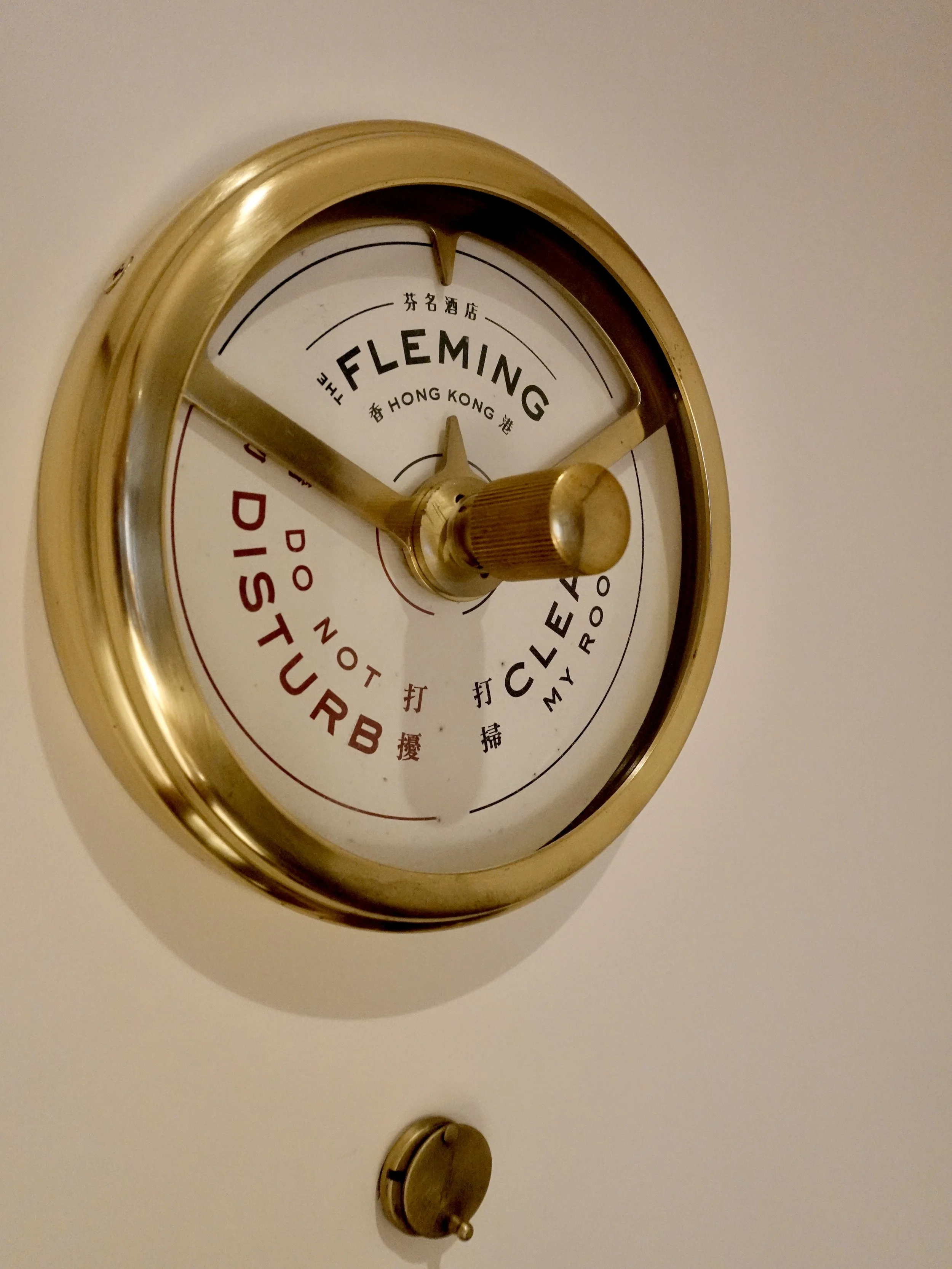
A functional detail with a maritime origin: the room-status control takes its cue from an engine-order telegraph.
It is creative and slightly playful.
But it also works.
And that may be one of the best tests of the design throughout The Fleming. The concept is present, but you can still live comfortably inside it.
The bathroom was another favourite part of my room.
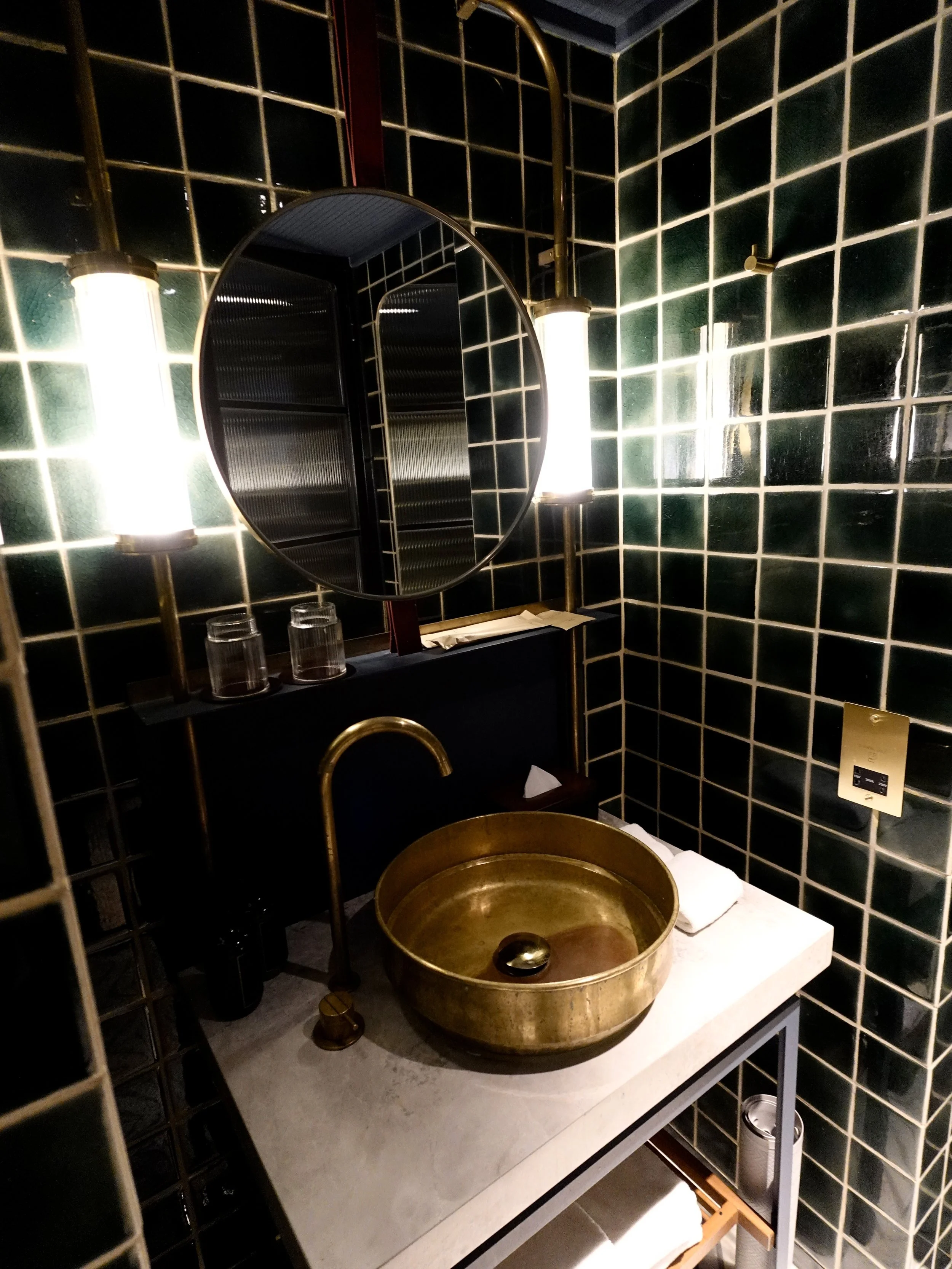
Bottle green, brass, marble and dark metal — materials that feel substantial rather than decorative.
Glossy bottle-green tiles meet marble, brass and black metal. The basin has the satisfying imperfection of a material that is allowed to look like metal rather than something polished into anonymity.
I liked the mixture of surfaces: metal against ceramics, timber against glass, polished brass beside woven cane.
And the shower had excellent water pressure — a less poetic detail, but one that matters considerably more after a day walking around Hong Kong.
There are hotels where you admire the bathroom.
There are hotels where you enjoy using it.
This was both.
For a hotel sitting in the middle of Wan Chai, I also heard remarkably little of the city from the room, both during the day and at night.
The design catches your attention.
The room still allows you to switch it off.
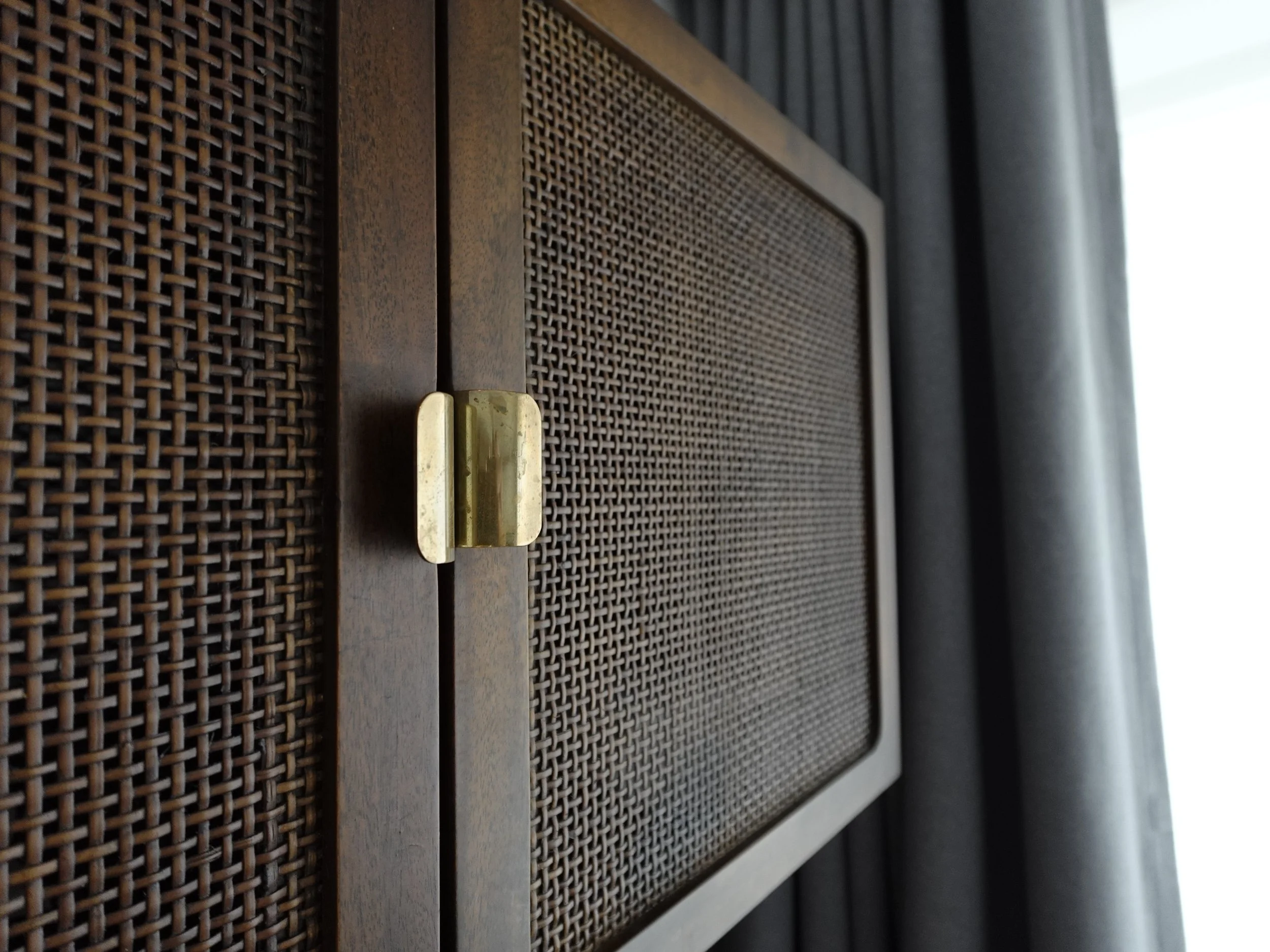
The quality becomes most apparent in details that could easily have been ordinary.
Morning, From Somewhere Else
Living in the Umbrian countryside has changed the way I notice mornings.
There, the day often begins with distance. The landscape is already there before you are fully awake. There may be birds, changing light and very little indication that anybody needs to be anywhere immediately.
Hong Kong is almost the opposite.
And at breakfast, I realised that I enjoy both for entirely different reasons.
Osteria Marzia occupies the ground floor of The Fleming. Large windows keep Wan Chai present even when you are sitting inside.
I would look out occasionally and see someone walking past, likely on the way to work. A bus would appear. Another person would cross the street. Gradually, the city gathered momentum.
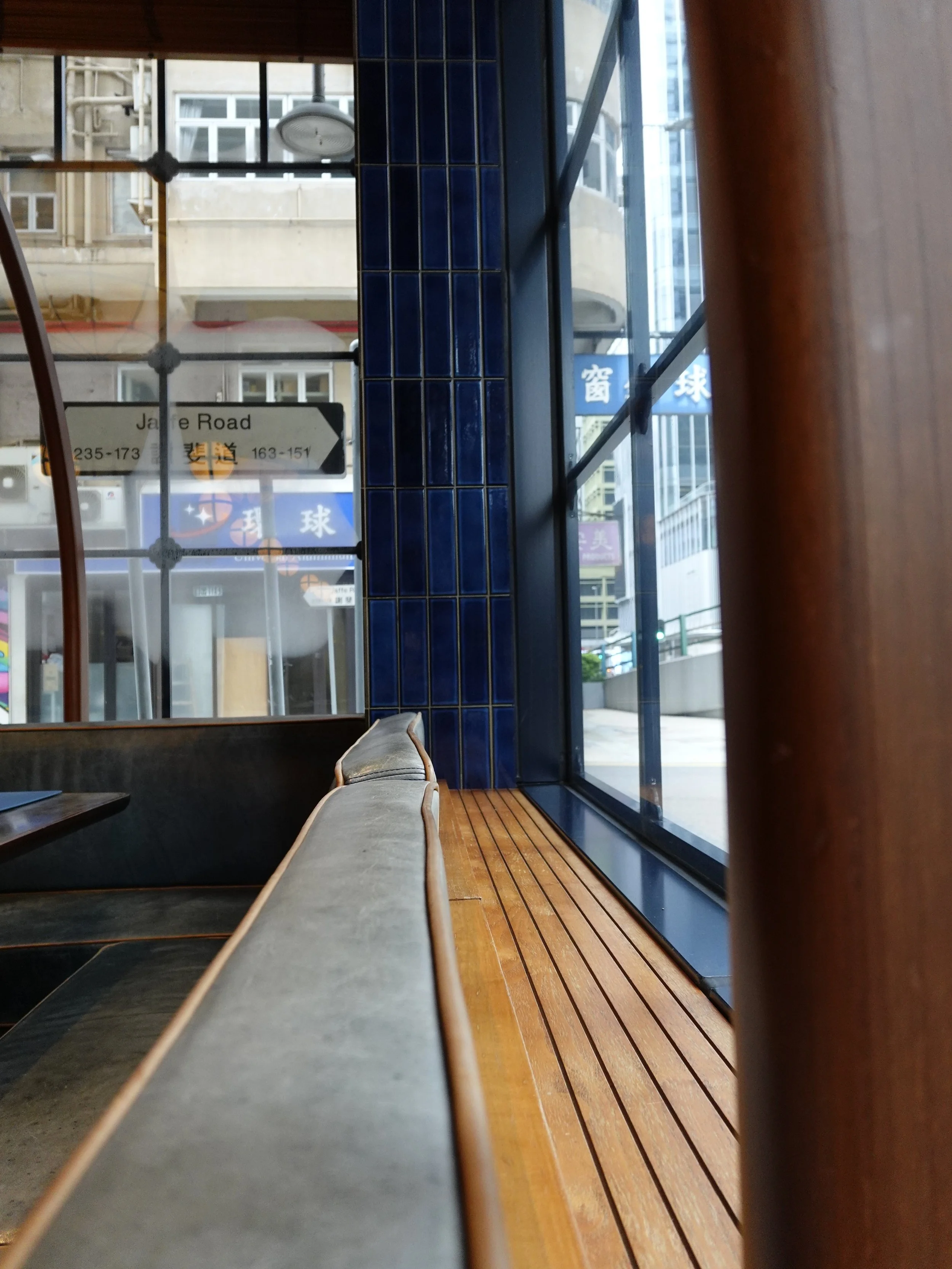
Breakfast came with a view of Wan Chai beginning its day.
I am quite particular about breakfast atmosphere.
I do not want to start the day surrounded by too much noise, movement or a buffet that feels like an operation requiring strategic planning.
Here, breakfast was calm.
The selection was not enormous, and I liked it that way: Parma ham, salads, fruit, frittata, roasted potatoes, bacon and eggs prepared in different ways.
Enough choice without abundance becoming the point.
I never felt hurried. I could finish my coffee, sit for a little longer and look through the window again.
There is something I have always enjoyed about seeing a city wake up.
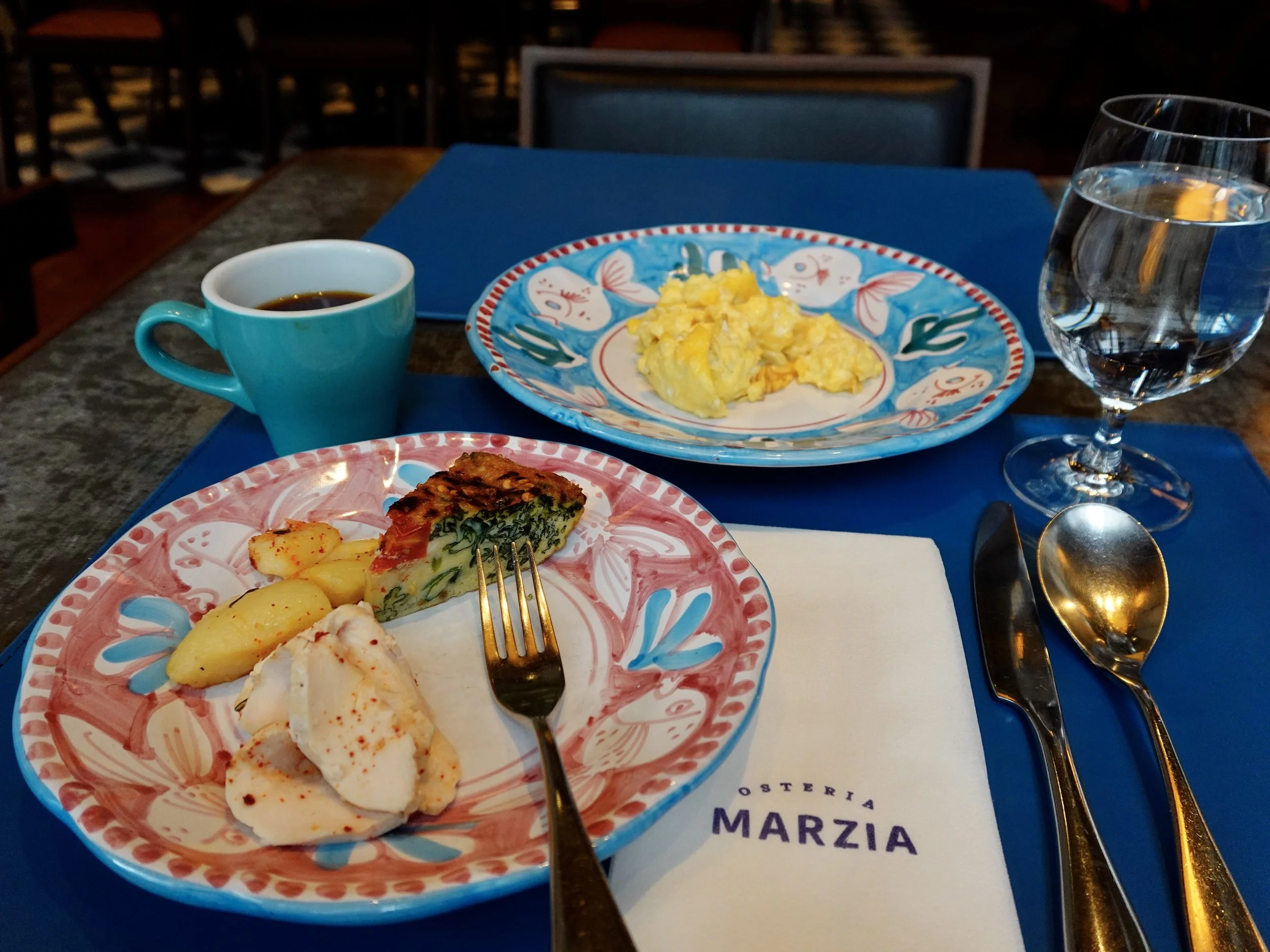
A smaller breakfast selection, and an atmosphere that made me want to stay at the table.
One morning, Alessandro, a chef from Rome whom I had started chatting with in Italian, made me yoghurt with Manuka honey and extra virgin olive oil.
I had never thought of combining the three.
It worked beautifully.
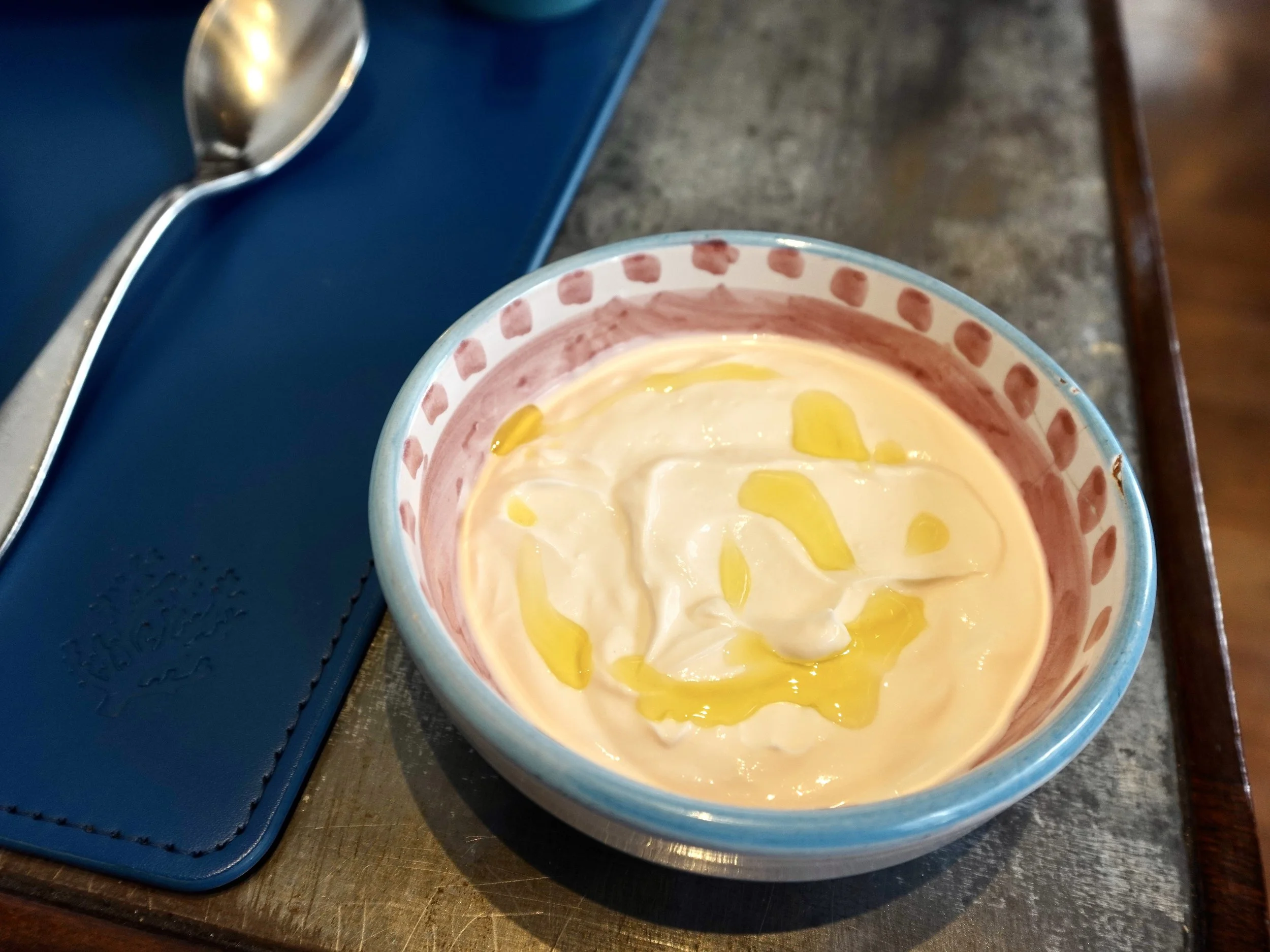
Yoghurt, Manuka honey and extra virgin olive oil — a combination Alessandro made for me one morning.
There was something pleasing about beginning a Hong Kong morning with an Italian gesture while looking through a window at Wan Chai starting its day.
In Umbria, a morning gives me space.
Hong Kong gives me momentum.
I do not think one needs to choose between them.
The Restaurant and the Street
Osteria Marzia is more than the restaurant attached to the hotel.
Its design continues the maritime thinking in another direction. Boat-building techniques informed parts of the interior, while teak, bamboo, deep blue tiles and a series of bespoke spherical lamps carry the idea of being close to water into the dining room.
Those lamps were among my favourite objects in the entire building.
Their forms were inspired by fishing lanterns.
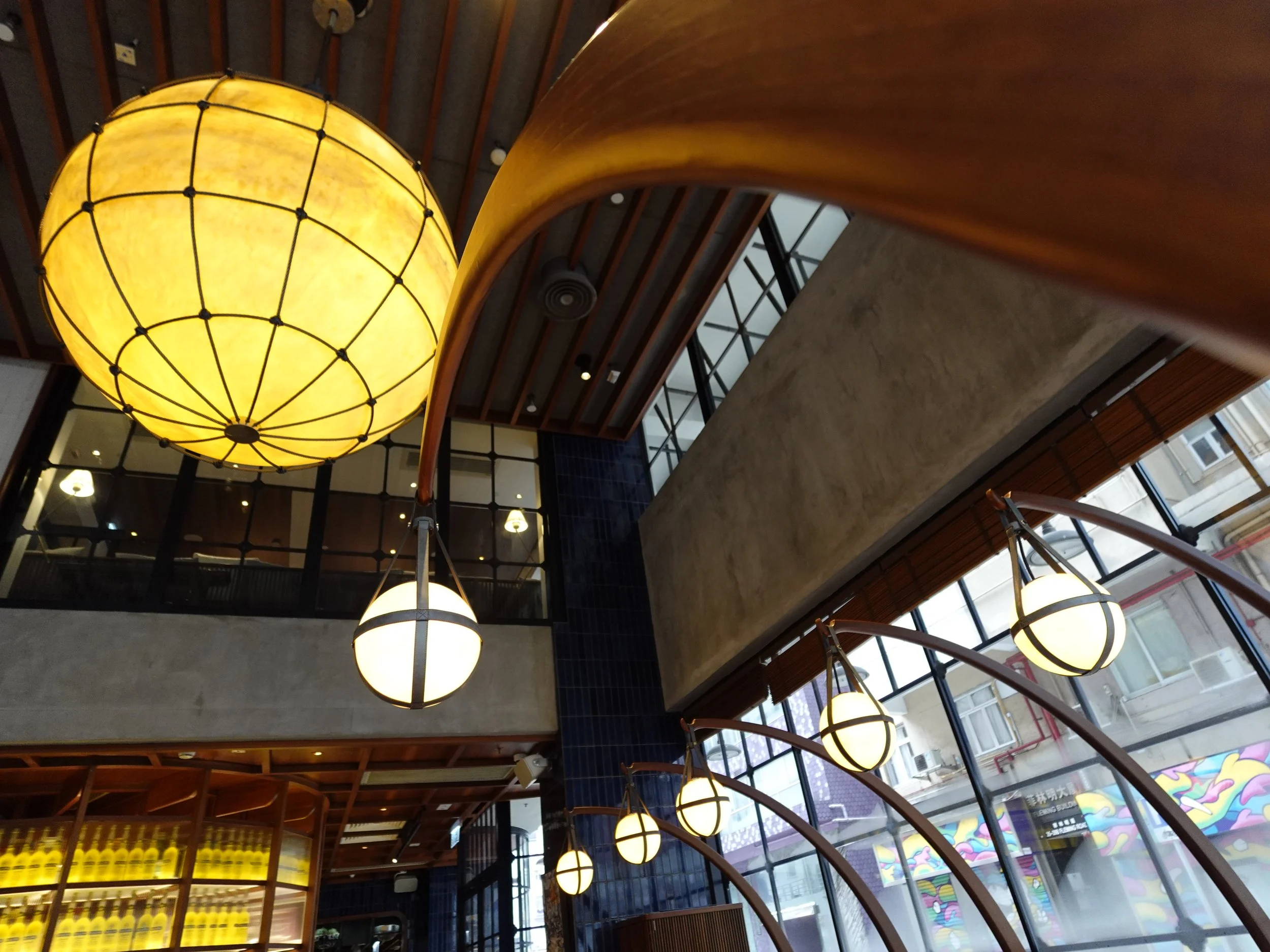
The bespoke lights at Osteria Marzia take their cue from fishing lanterns.
Osteria Marzia’s menu follows the coastal regions of Italy, moving from Campania and Amalfi towards Puglia and southern Sicily, with seafood at the centre of the cooking.
That makes sense inside this particular hotel.
Even the Italian restaurant maintains a relationship with the sea.
But what I enjoyed most was its relationship with the street.
The windows are large enough that Wan Chai never disappears.
One afternoon, I sat beside them for aperitivo with a Negroni, calamari fritti and taralli — something I would happily eat back in Italy — and watched the restaurant gradually fill.
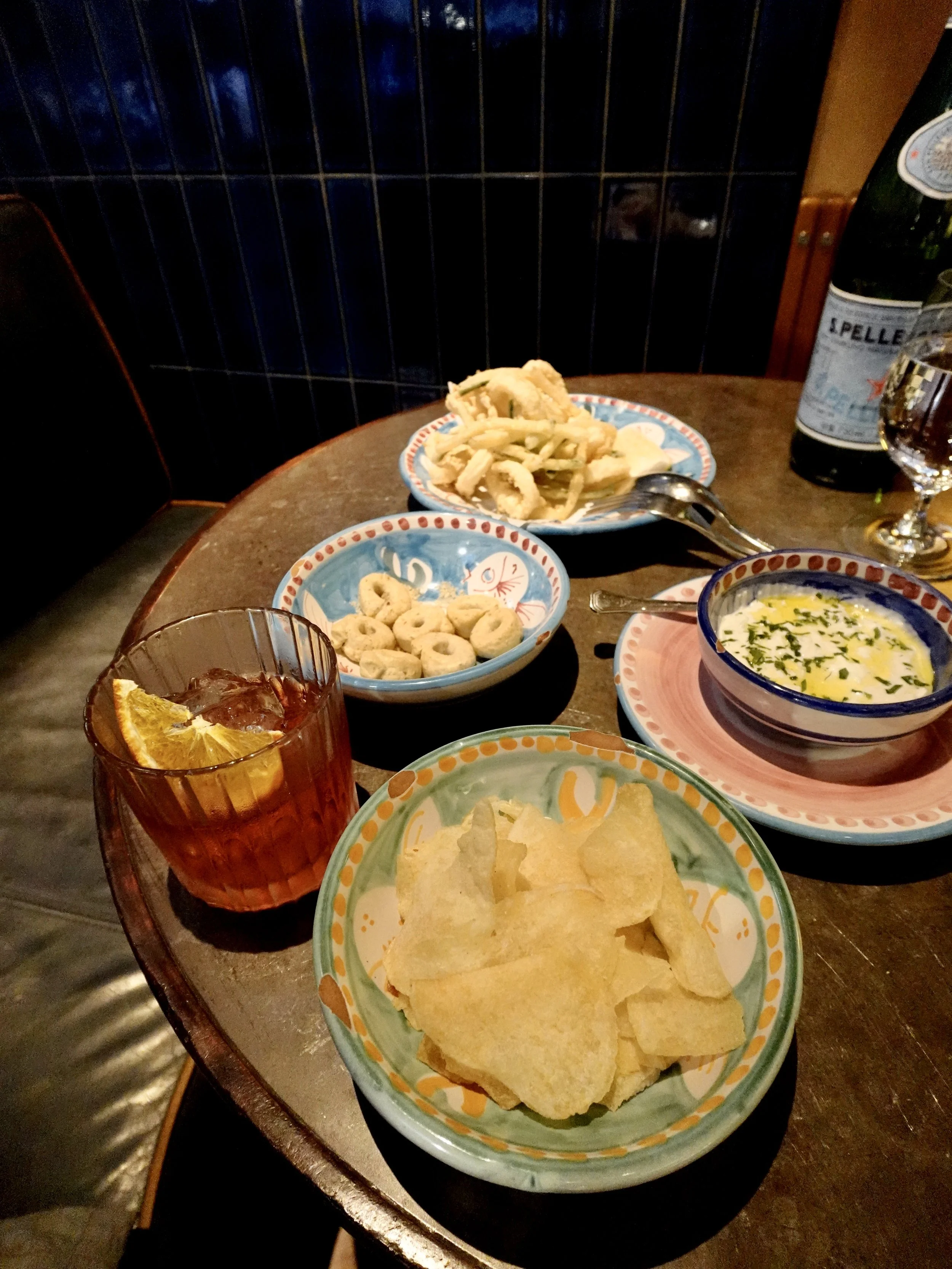
Aperitivo in Wan Chai: a Negroni, calamari fritti and taralli beside the window.
Several groups of friends arrived.
Light music played.
Julian, the restaurant manager, moved warmly between tables. Originally from Mauritius, he told me that he had lived in mainland China and speaks Mandarin.
Then there was Alessandro.
Every so often, I saw him emerge from the kitchen carrying dishes himself, stopping at a table to explain what he had brought.
That stayed with me.
Not because it was presented as a grand chef interaction. It wasn’t.
It simply made the restaurant feel more human.
The Fleming is unquestionably a design-led hotel. But good hospitality eventually has to survive without design terminology.
Someone remembers you.
Someone stops for a conversation.
Someone brings a dish out of the kitchen.
You sit beside a window with a drink and realise you have no particular reason to leave yet.
Then I Took the Ferry
There is one fact about The Fleming that brought everything together for me.
When the building was originally constructed in the 1970s, before further land reclamation altered this part of Wan Chai’s shoreline, designer Maxime Dautresme has said that the ferry pier was only about a minute’s walk away.
That changes the Star Ferry story.
This is not simply one of Hong Kong’s most famous icons being borrowed to give a hotel an identity.
The reference belongs to the geography of the building.
The shoreline moved.
The relationship remained.
Today, both Wan Chai MTR and the ferry pier are easily reached from the hotel.
The MTR makes the location practical.
The ferry makes it meaningful.
The Star Ferry traces its origins to 1880, with the company as we know it established in 1898. Its traditional ferries continue to cross Victoria Harbour between Tsim Sha Tsui and both Central and Wan Chai.
So during my stay, I walked down to Wan Chai Pier and boarded one for Tsim Sha Tsui.
It was only then that I felt I had completed the design story.
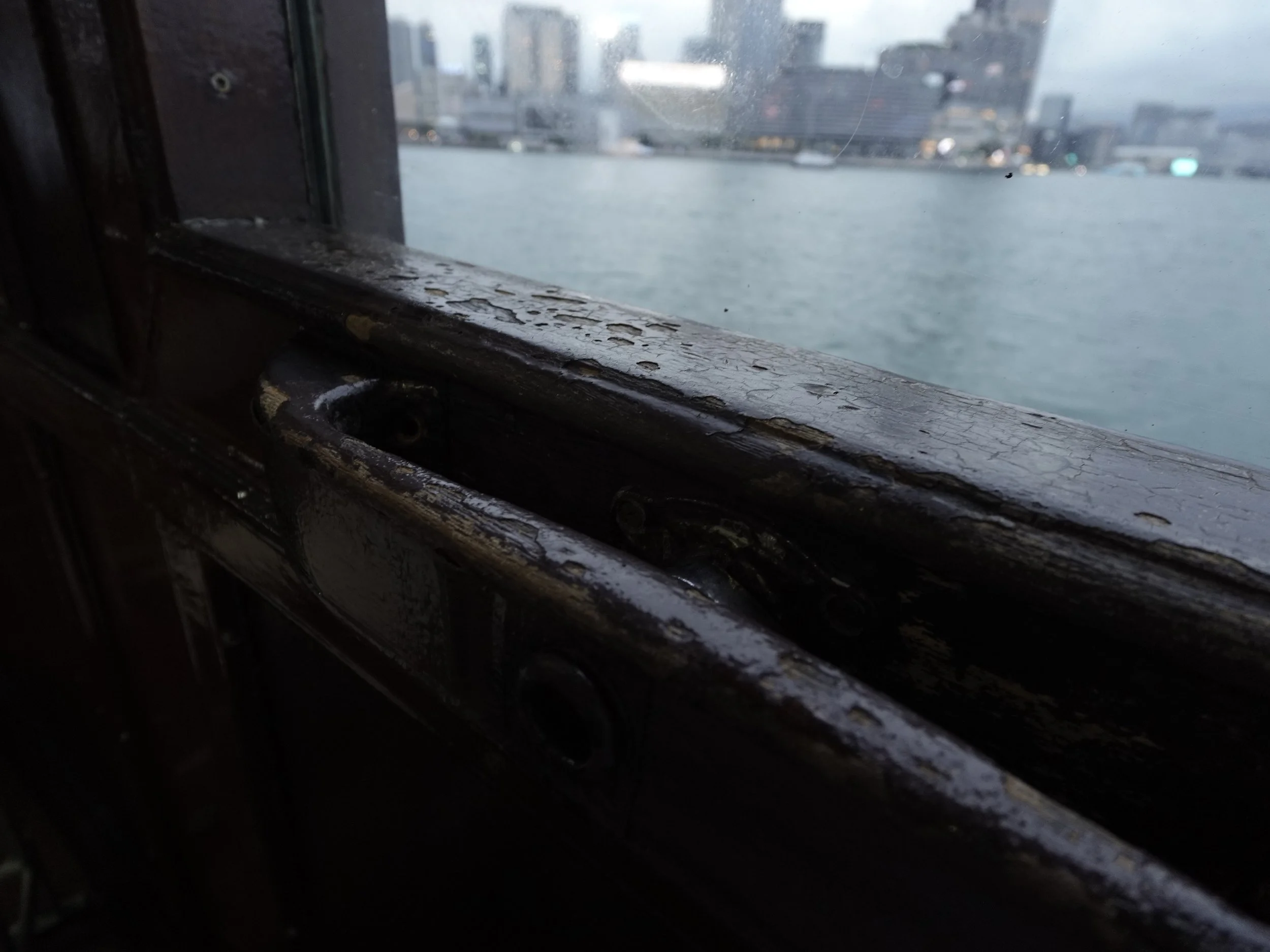
The original has wear, history and purpose. The Fleming does not copy it; it translates it.
The difference between the real thing and its interpretation is immediately apparent.
The ferry has worn timber.
Layers of paint.
Scratches.
Hardware that exists because somebody needs it.
Ropes that actually hold a vessel against a pier.
The Fleming does not pretend to possess that age.
Instead, it takes proportions, colours, mechanisms and materials and asks what they could become somewhere else.
A lamp.
A chair.
A switch.
A table.
A bathroom fitting.
A red elevator.
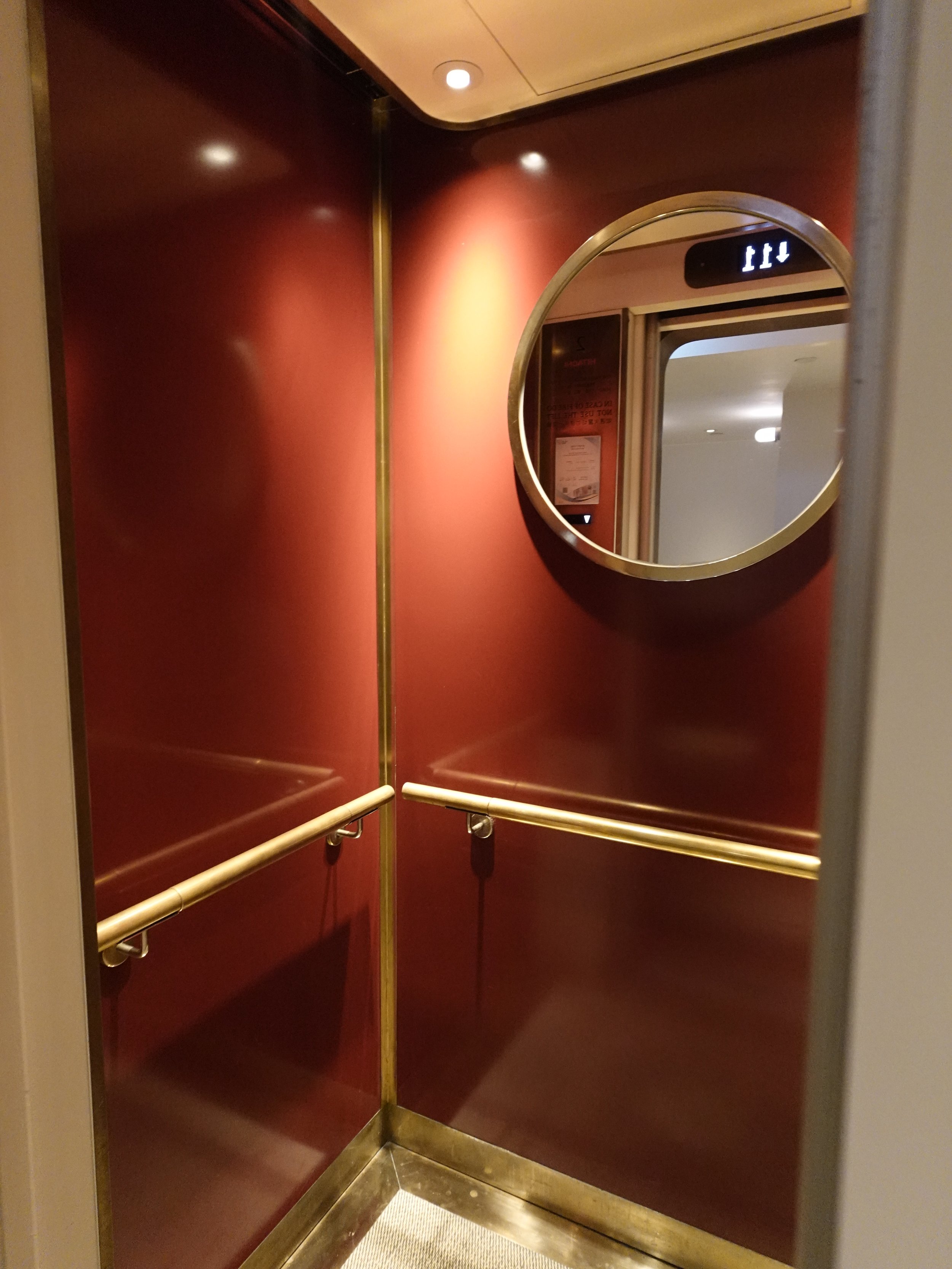
Even the lift carries the palette elsewhere in the hotel: carmine red against brass.
And because I had spent time noticing those details inside the hotel, I found myself looking at the Star Ferry with greater attention too.
That relationship works in both directions.
The hotel sends you towards the city.
The city then explains the hotel.
The Detail That Matters Most
There are many things I could recommend about The Fleming.
The Medium room felt generous for its size. The bathroom was particularly well resolved. The materials felt substantial. The staff at both the concierge and restaurant had warmth and personality. Breakfast had the atmosphere I wanted. Osteria Marzia made it very easy to stay for one more drink.
But those things still sound suspiciously like the conclusion of a hotel review.
What stays with me is something else.
The Fleming gave me a reason to look again at something in Hong Kong that I already loved.
It did not need to explain the Star Ferry to me.
It gave me clues.
Then it allowed me to walk out of the door, continue through Wan Chai, reach the harbour and find the original for myself.
That, to me, is a much more convincing form of place-based design.
Not a hotel that tries to contain its city.
One that sends you back into it.
The best detail at The Fleming, in the end, was not inside the hotel at all.
It was waiting at the pier.
Stories shaped by the art of noticing.
Before you leave, you are invited to sign The Guestbook.
Stay at The Fleming
If you are considering staying in Wan Chai, you can check current room rates and availability for The Fleming through the link below.
CHECK RATES & AVAILABILITY AT THE FLEMING →
I booked and paid for this stay independently. The Fleming kindly provided a complimentary upgrade to a Medium room. FGT may receive a small commission if you make a booking through the Trip.com link above, at no additional cost to you. All observations and opinions in this article are my own.
View All Stays →
Further Reading
A Work of Substance — The Fleming
The designers explain how the Star Ferry became the foundation for the hotel’s identity, furniture, lighting, colours and materials.
The Star Ferry Company — Company Information
The history of Hong Kong’s Star Ferry, from its origins in 1880 to the establishment of the company in 1898 and its continuing services across Victoria Harbour.
Unless otherwise credited, all photography and written content are original works by Foodie Goes Travel.
