Park Hyatt Bangkok in a Different Light
A short stay above the city, and the conversations that made a carefully designed hotel feel more personal.
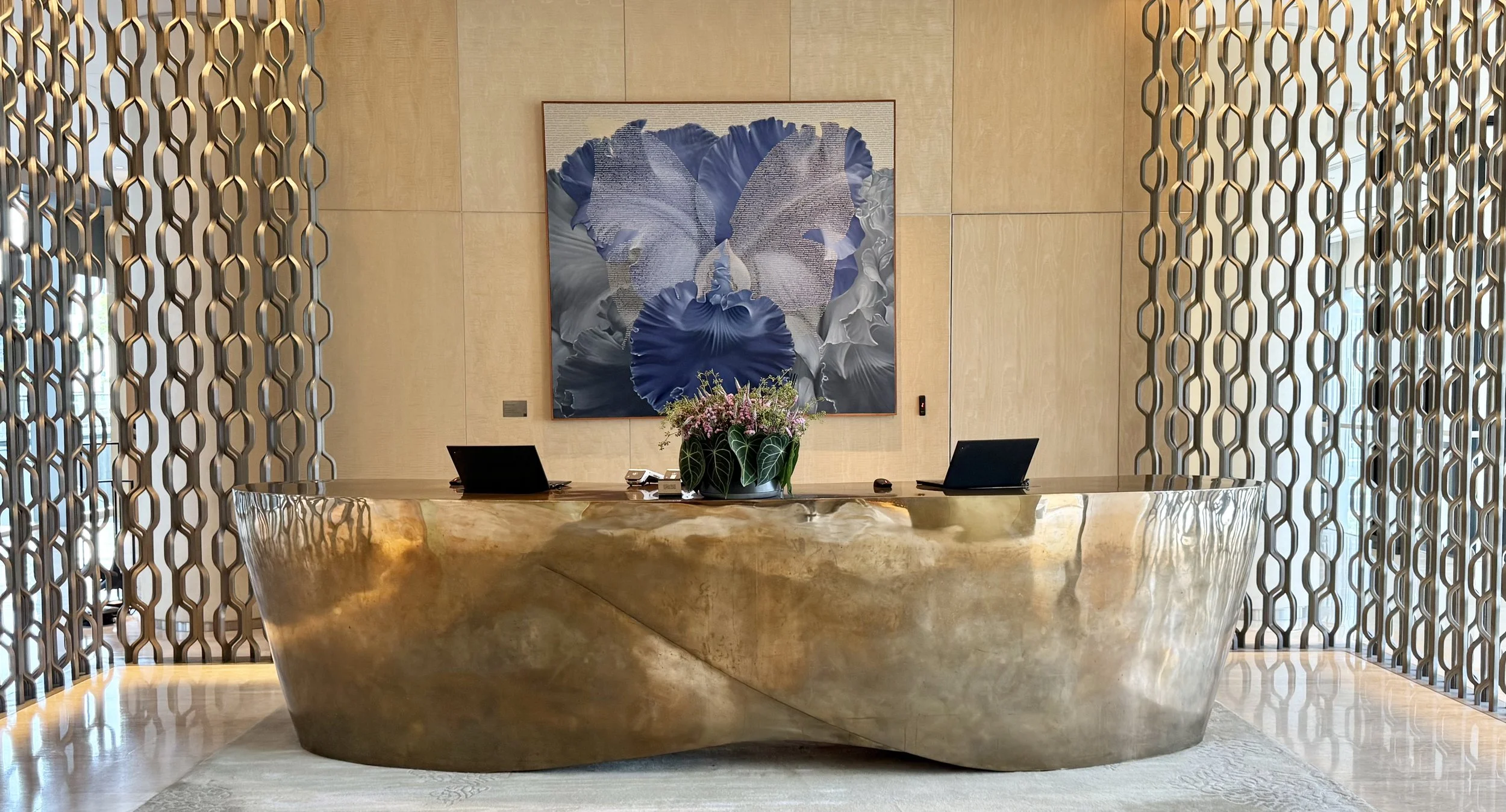
The sculptural reception desk on Level 10.
At first, I found Park Hyatt Bangkok easier to admire than to feel close to.
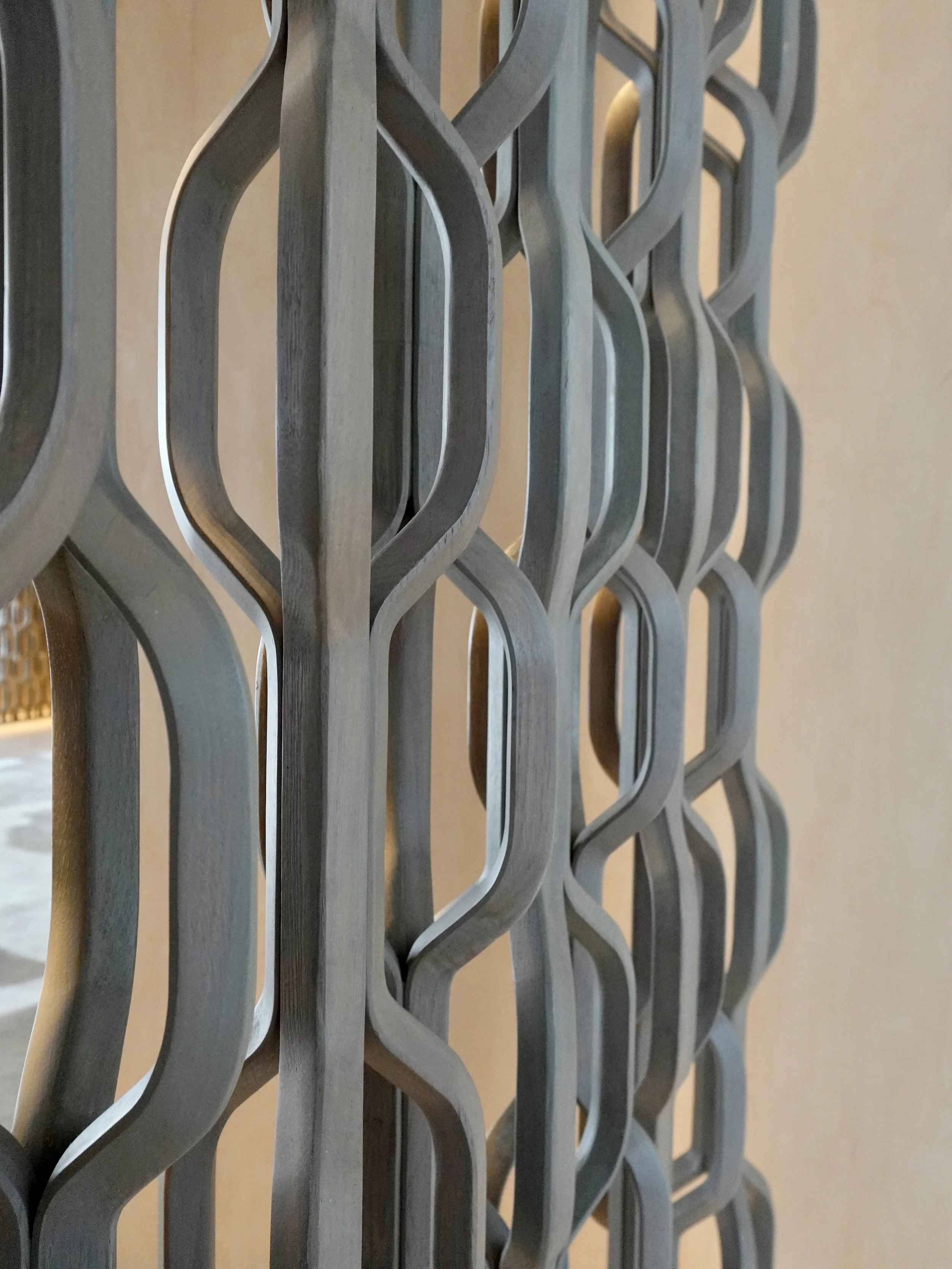
I had arrived from The Sukhothai, where the gardens and lotus ponds had made me feel immediately comfortable. Moving into a high-rise hotel required a change of perspective. At the Level 10 check-in area, a sculptural, gold-toned desk sat between patterned screens. There was much to look at, yet in the strong daytime light, the pale interiors felt almost white-washed. I was a little underwhelmed.
The welcome was another matter. From arrival through to check-out, the service was attentive and, with one exception, almost flawless. I had booked the stay myself, curious to experience the hotel and understand its story. An upgrade from a King room to a King Deluxe was an unexpected kindness.
Over the course of the stay, I began to find more that held my attention. Some of it came from looking again at the spaces. Much of it came from the people who introduced me to them.
Above the city
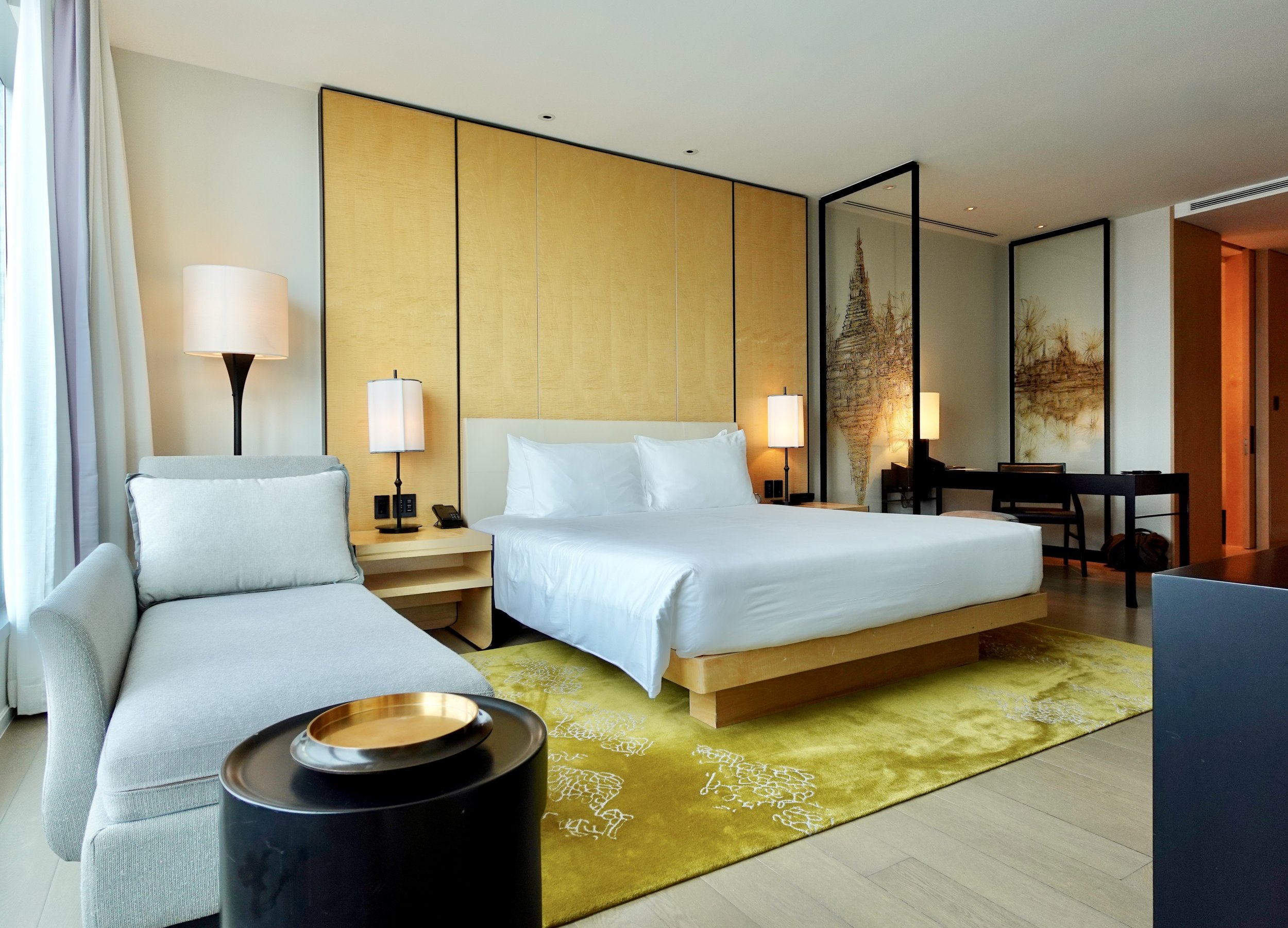
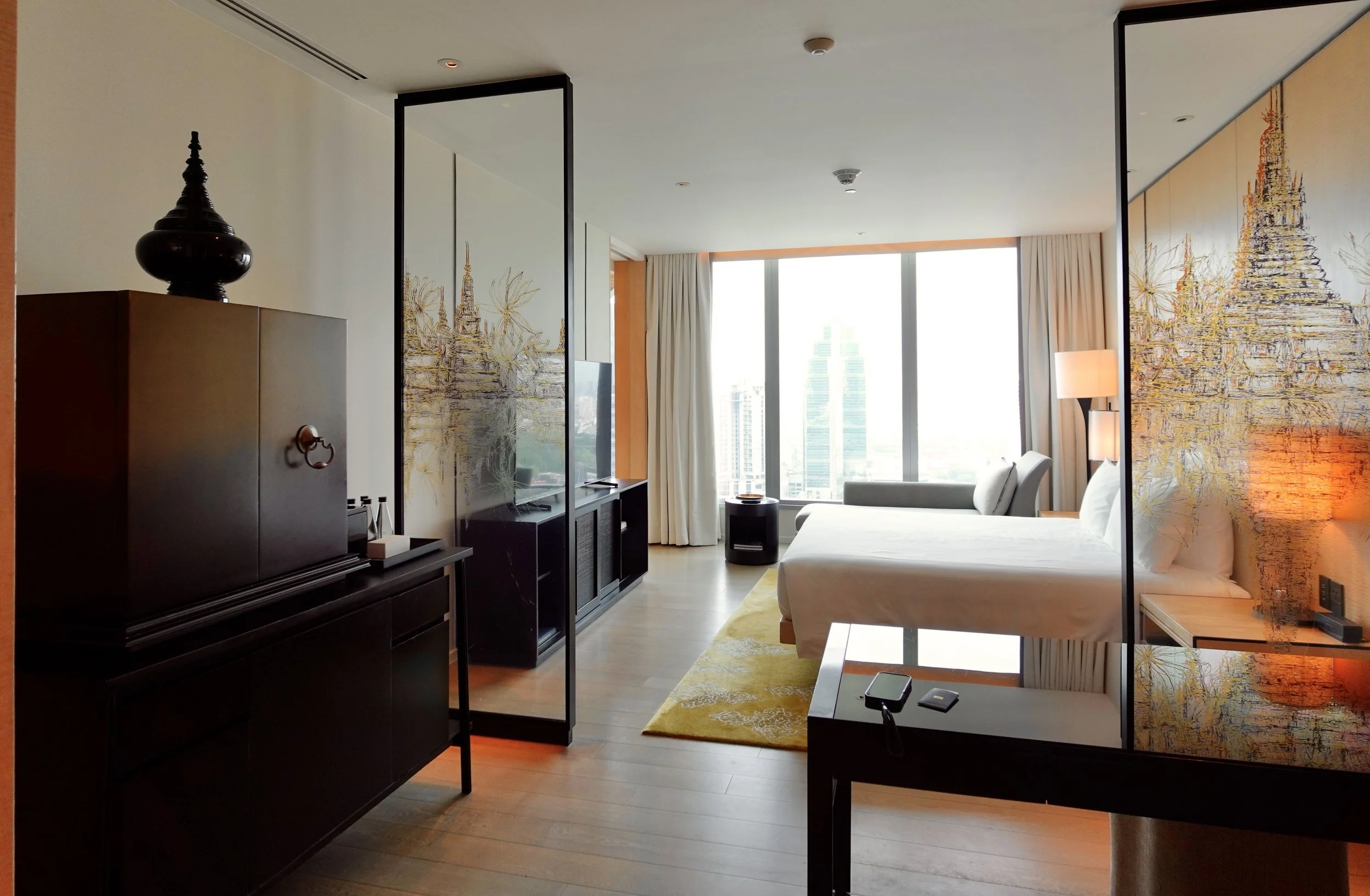
My room was generous, light and welcoming. A chaise longue stood beside the windows, with Bangkok spread beyond the glass. Against the pale floor and bedding, the yellow-green rug and warm-toned wall behind the bed gave the room colour without overwhelming it. Tall, patterned glass panels marked out the desk area while allowing the room to remain visually open.
The minibar was a favourite detail. Enclosed within an elegant wooden cabinet, it felt like a piece of furniture worth noticing in its own right. I liked the domestic quality of that decision: an everyday hotel function given a considered place in the room.
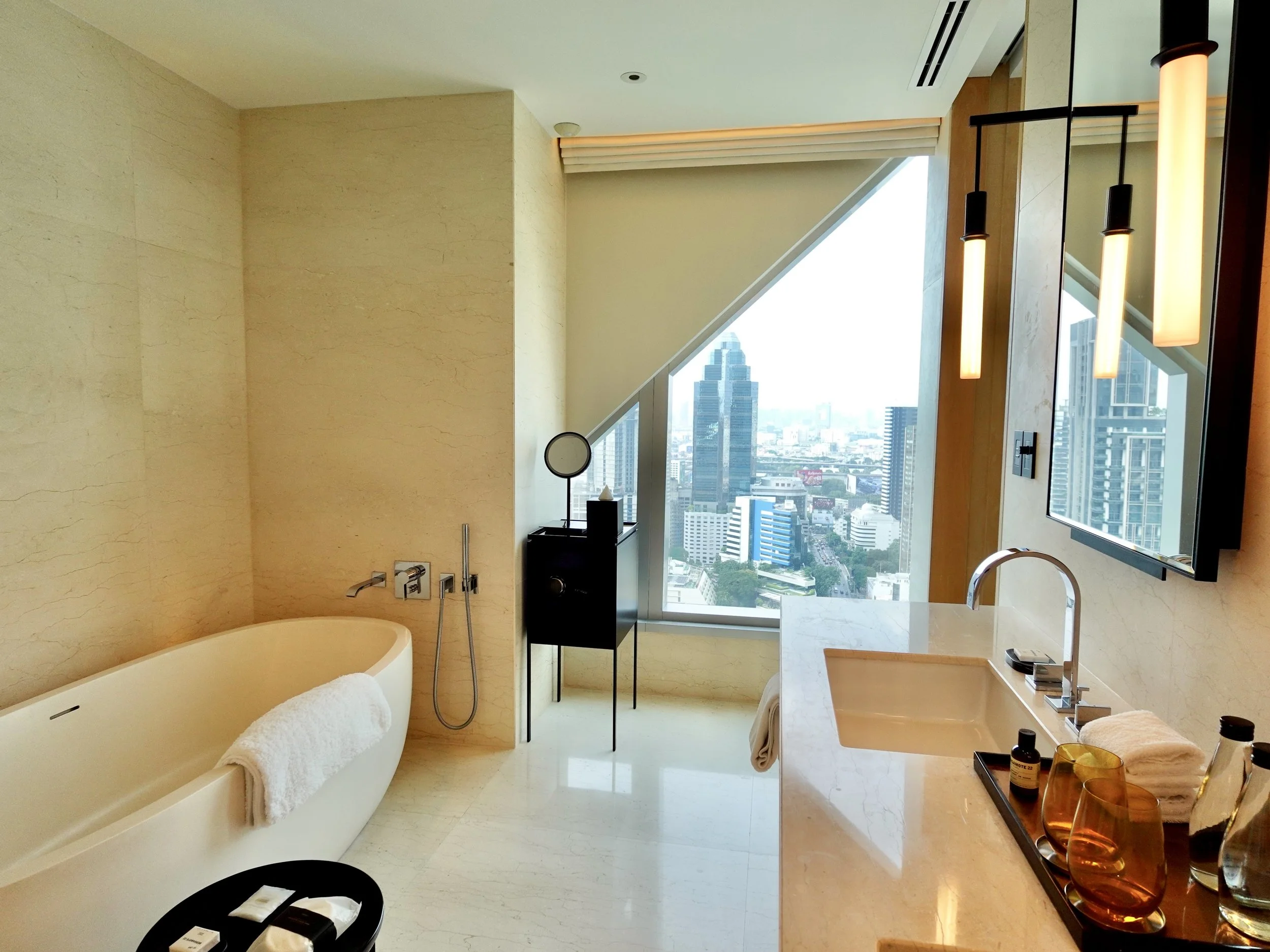
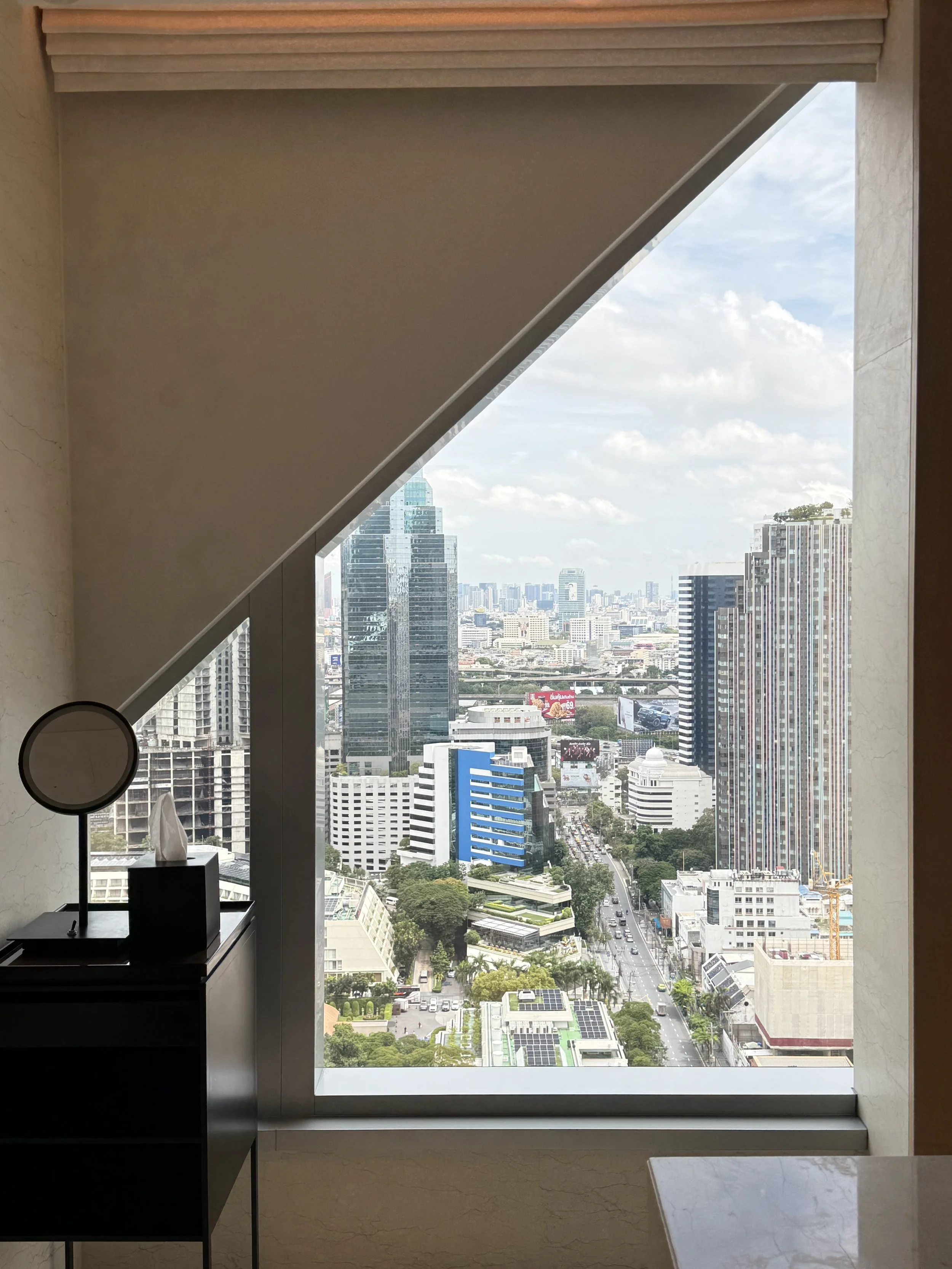
The bathroom arrangement was less intuitive to me. The toilet was immediately to the right of the entrance, while the bathtub, twin basins and shower occupied a separate room beyond the bedroom. The bathing space itself was beautiful, with a large tub and an angular window framing the skyline. But the distance between the two areas puzzled me. I did not ask about the design intention, so I can only describe how the layout felt to use.
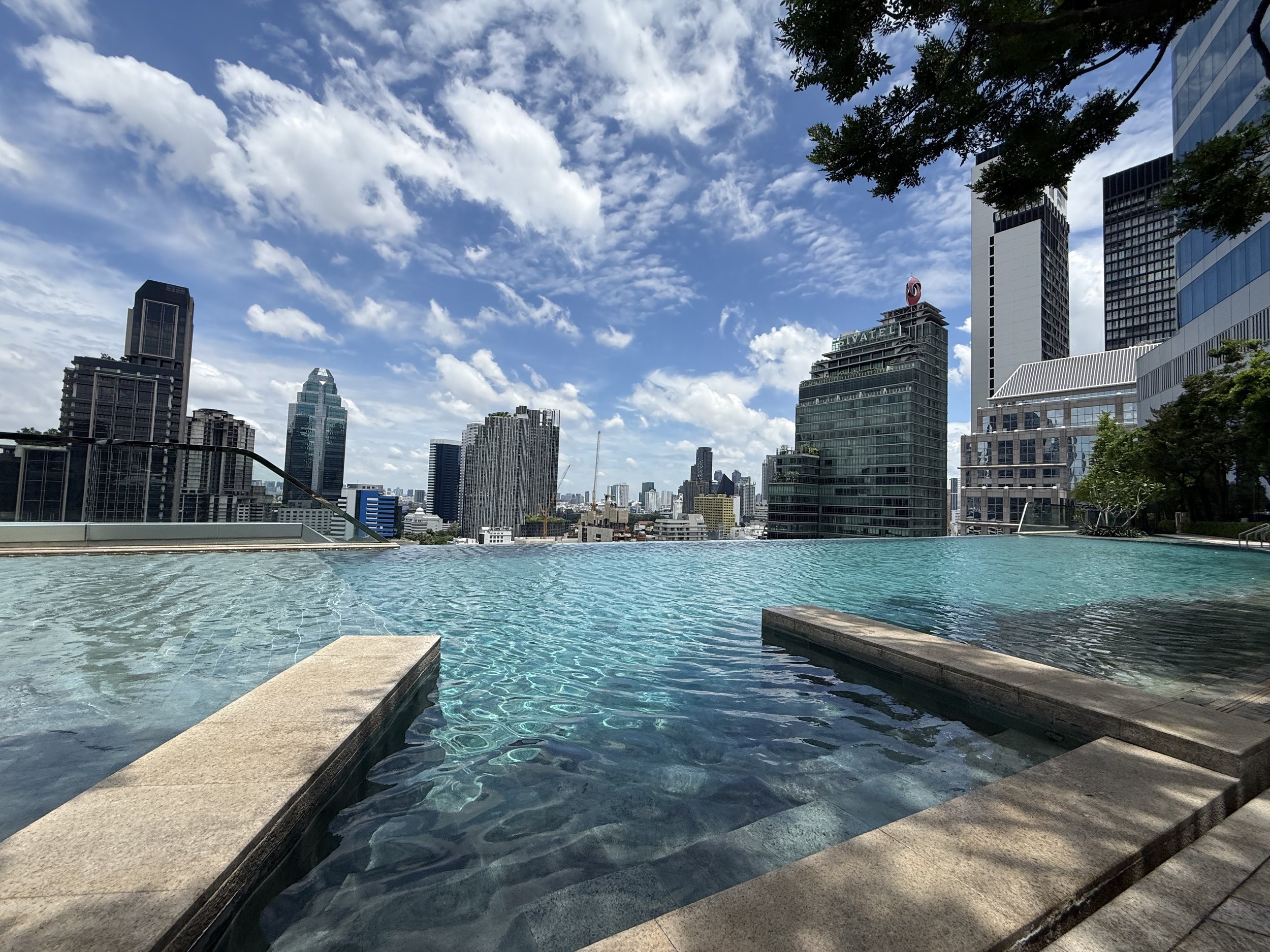
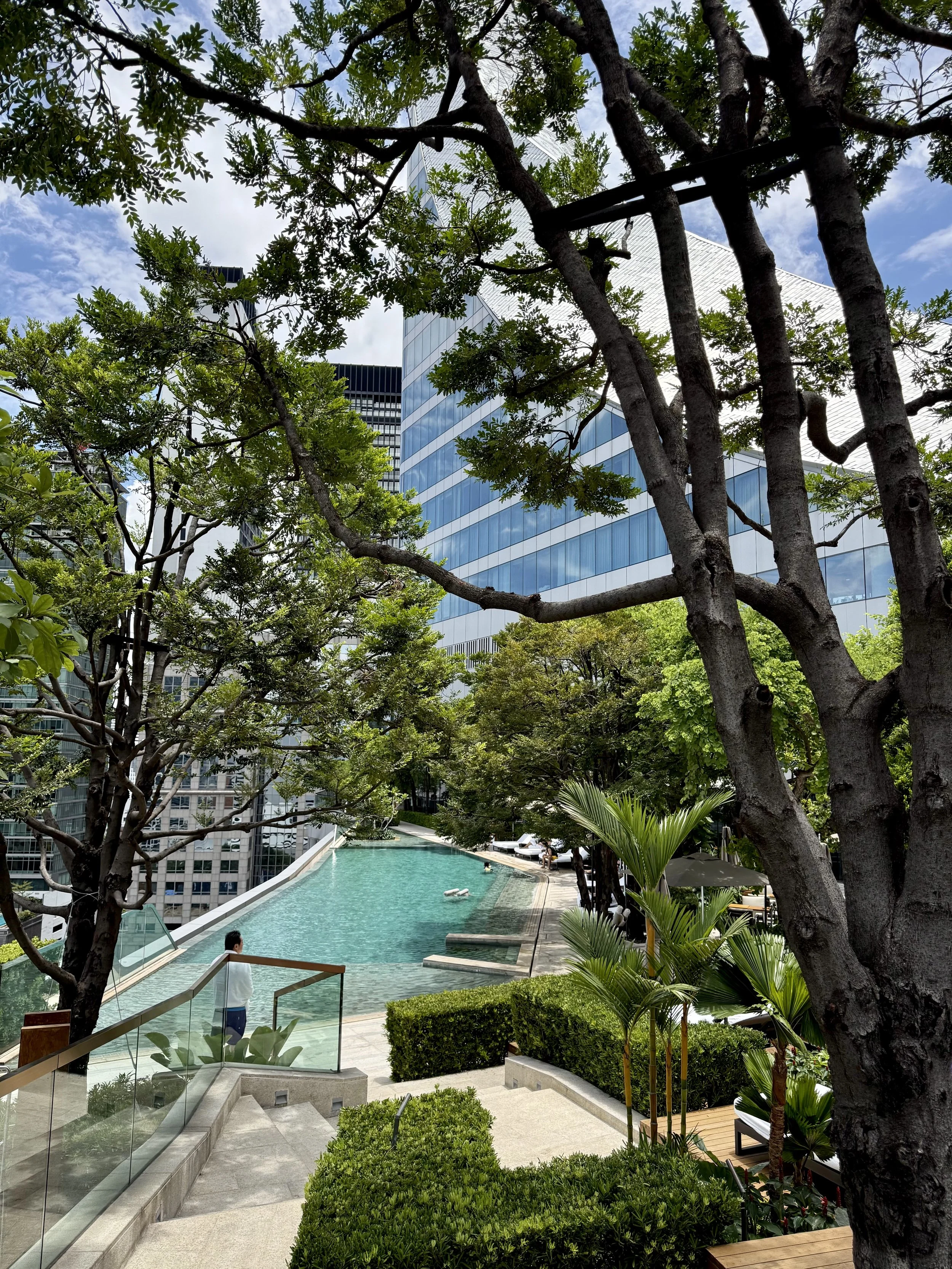
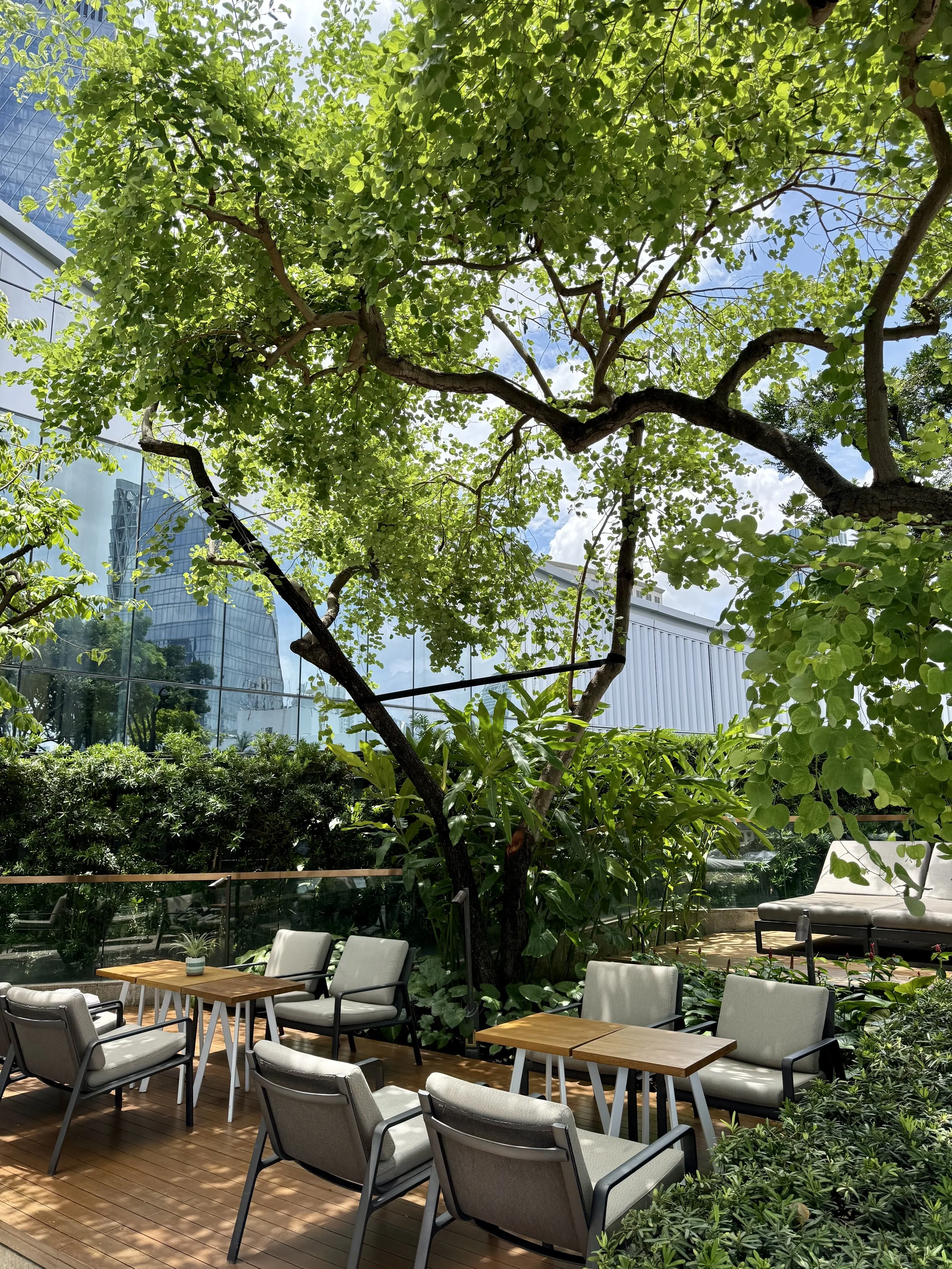
Outside, the pool offered another view of the city. Trees and dense planting softened the surrounding buildings; from the water's edge, the skyline remained very much part of the scene. It looked like an elevated garden with a striking pool at its centre. I recognised that this was a different proposition from The Sukhothai's spacious grounds.
When I visited, families and young children were enjoying the area. I tend to prefer a less busy pool, so I did not swim on this occasion. My short stay and existing commitments also left no time for the PAÑPURI spa. That is something I would like to return for, rather than an experience I can assess here.
An explanation and an evening
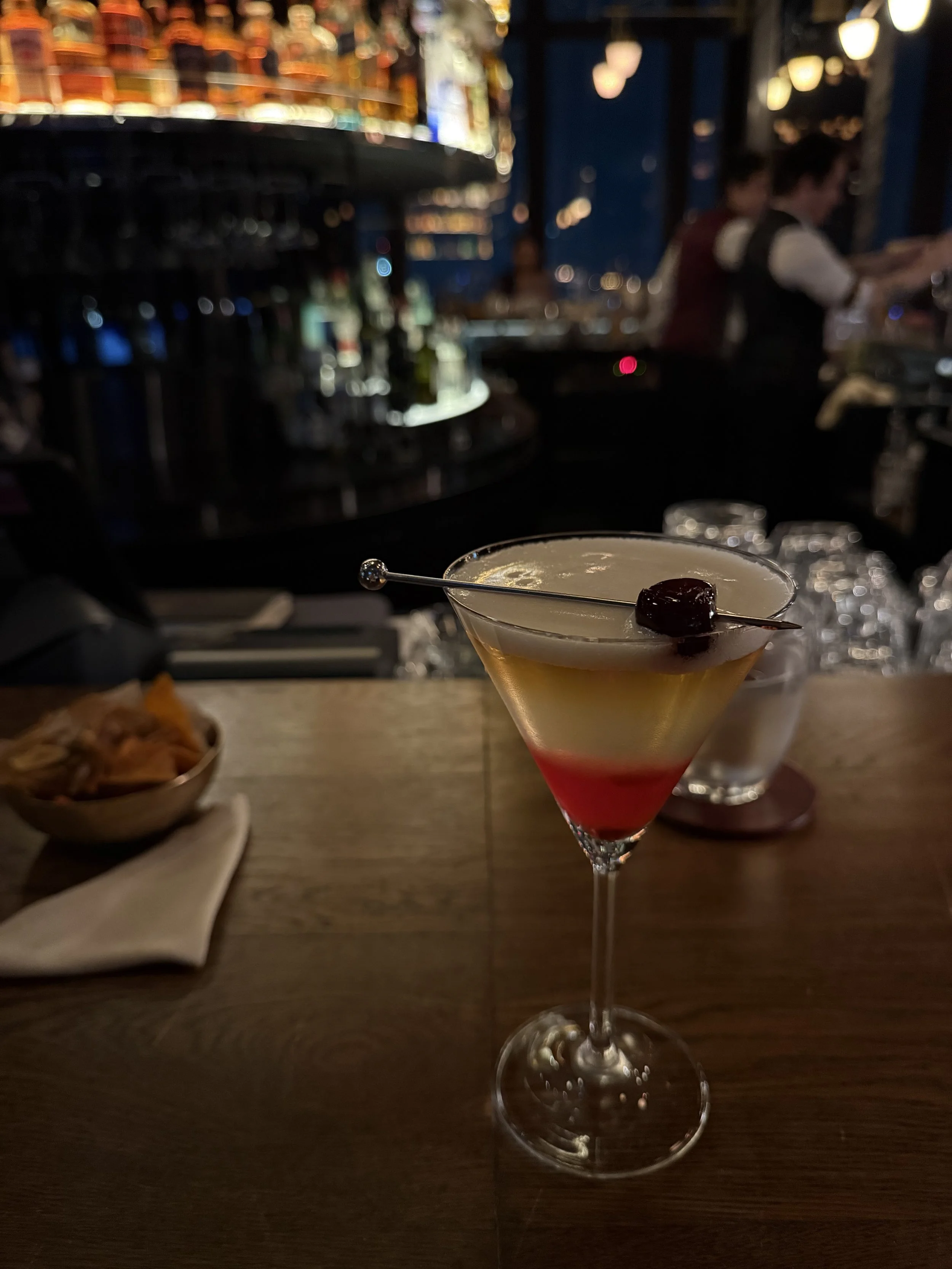
The one awkward moment concerned Executive Retreat on Level 9. I had understood that my friend could join me for the aperitif offering. The benefits applied only to registered guests, however, and her order was charged separately. Once the policy was explained, I understood it. The frustration had been in the communication.
Khun Bowie at the front desk apologised and took the time to explain. She waived my friend's prosecco and invited me for a complimentary drink at Penthouse Bar + Grill. I appreciated the gestures, but what mattered most was feeling that she had listened. It was a brief lapse in an otherwise very well-handled stay, and her response helped put it in proportion.
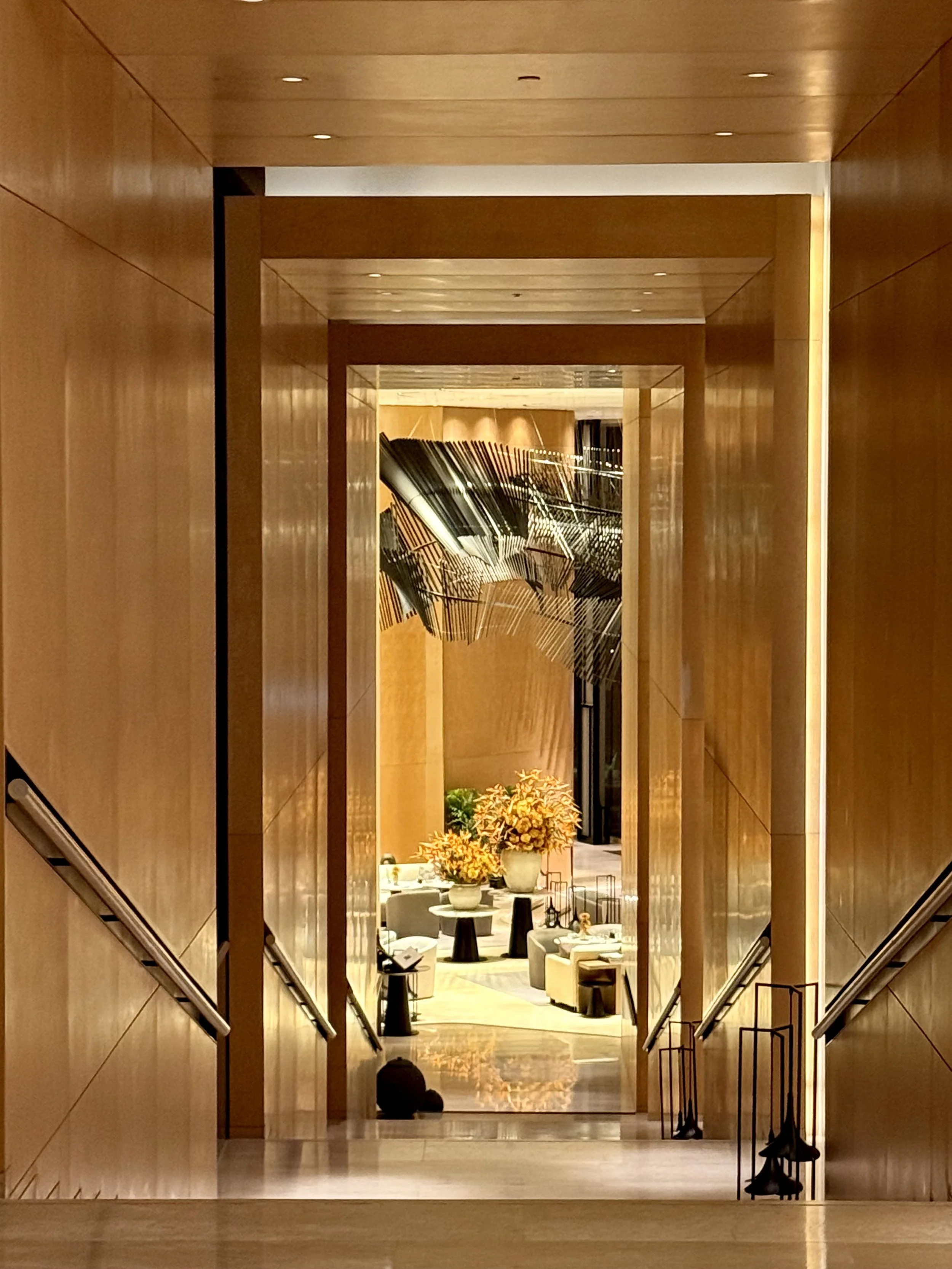
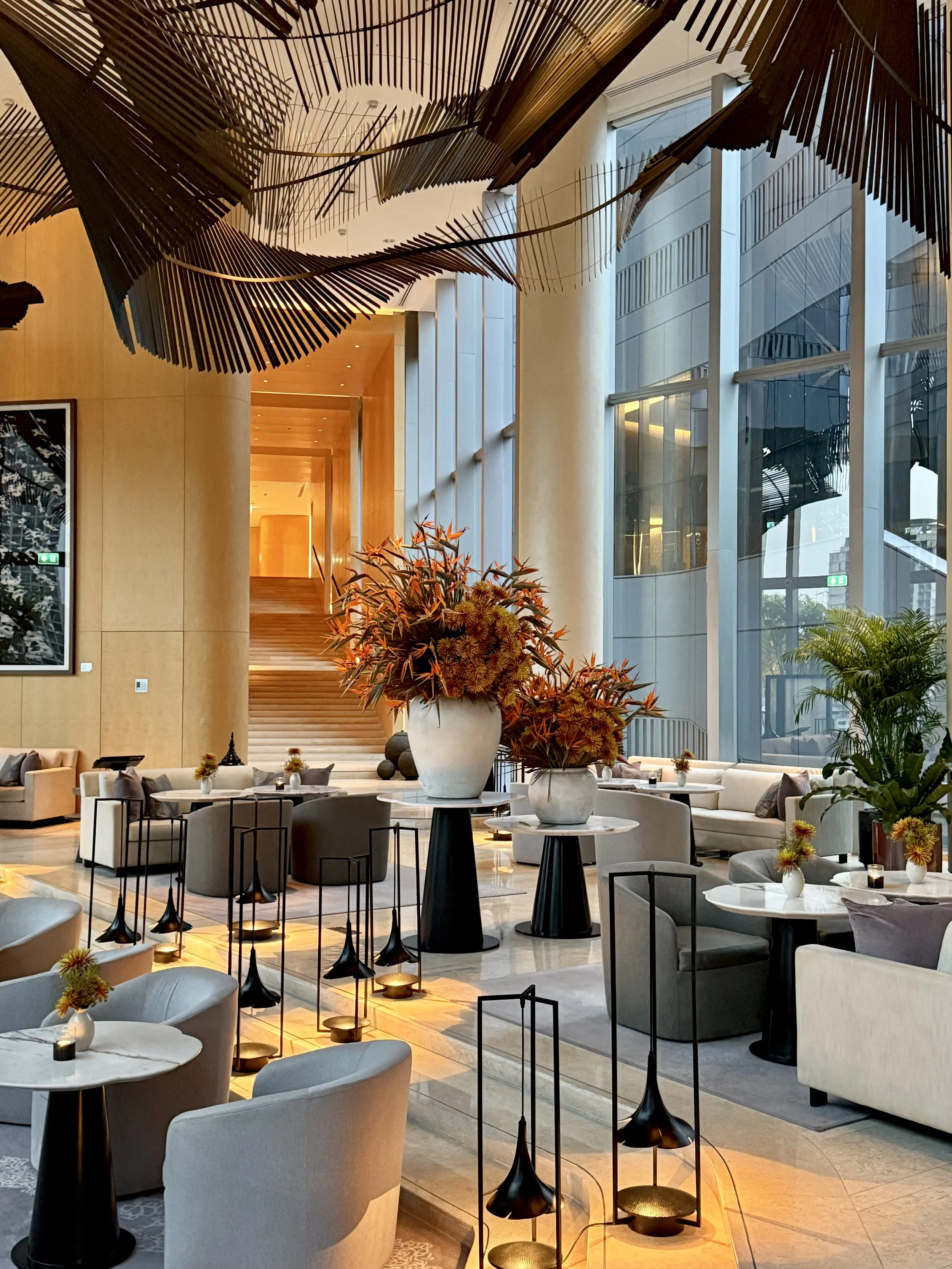
By evening, I was also responding differently to the hotel itself. The pale surfaces that had felt washed out earlier acquired warmth and depth under the lighting. Spaces I had admired at a distance began to feel more intimate.
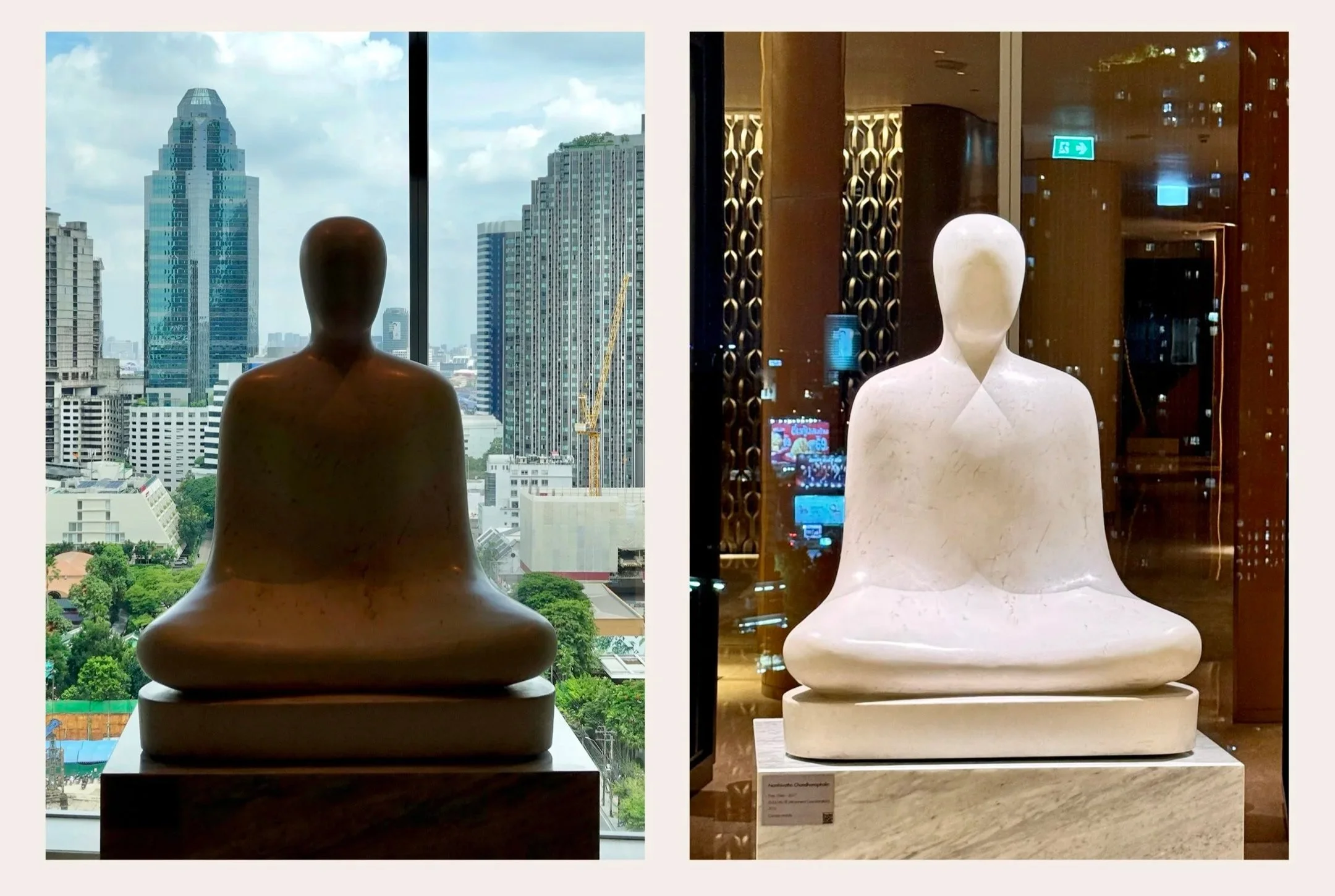
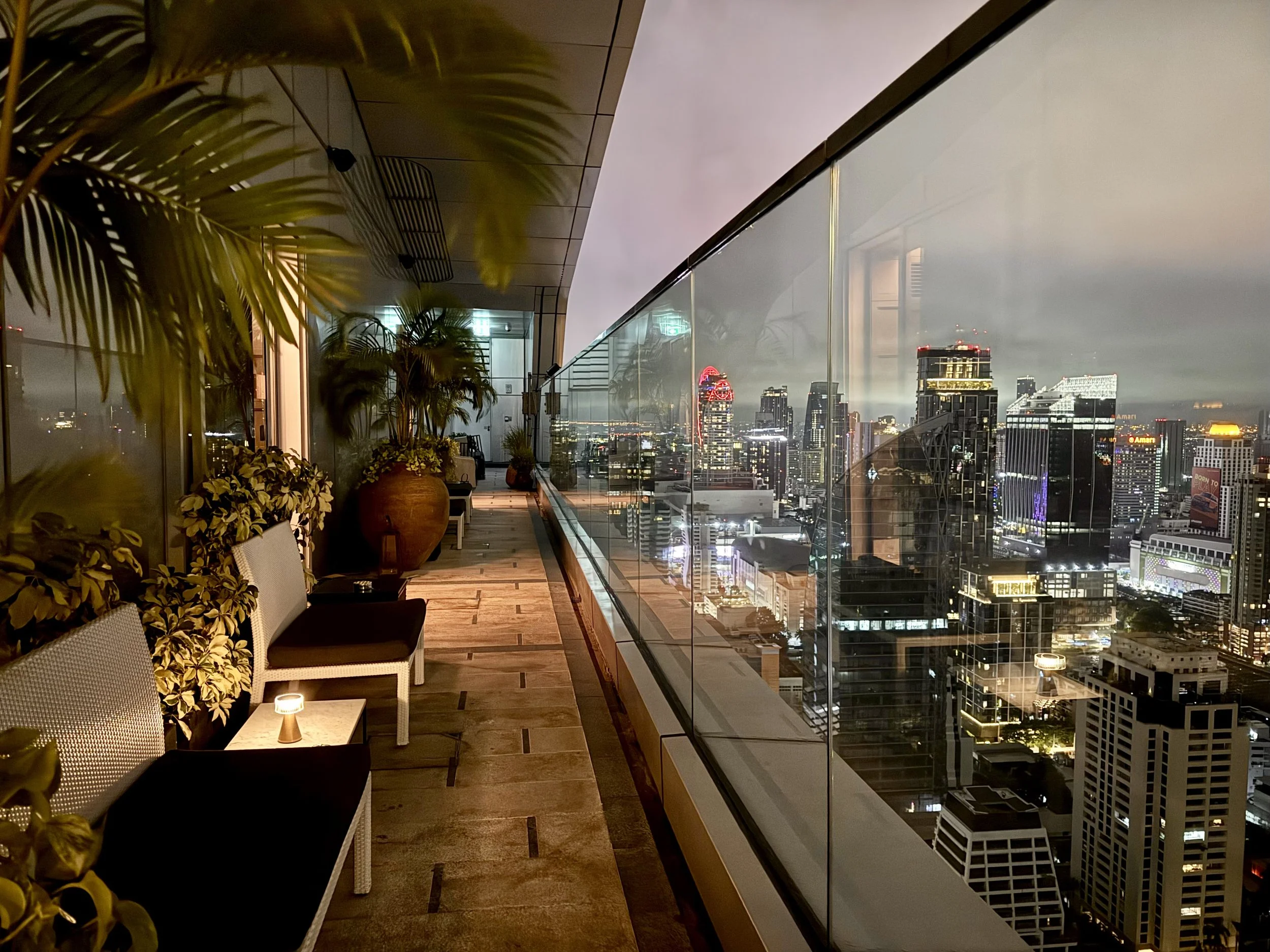
A seated figure against Bangkok in daylight and after dark.
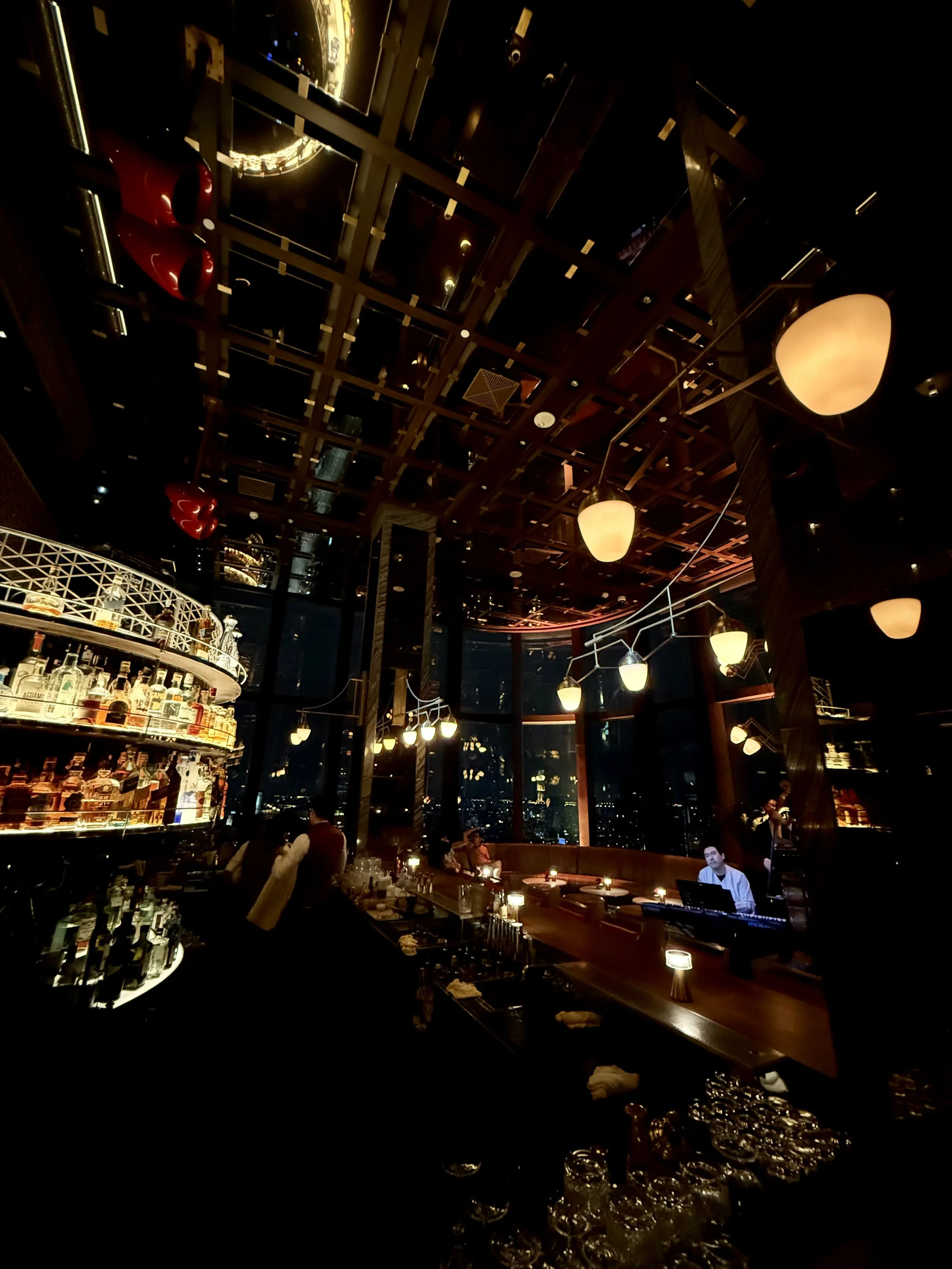
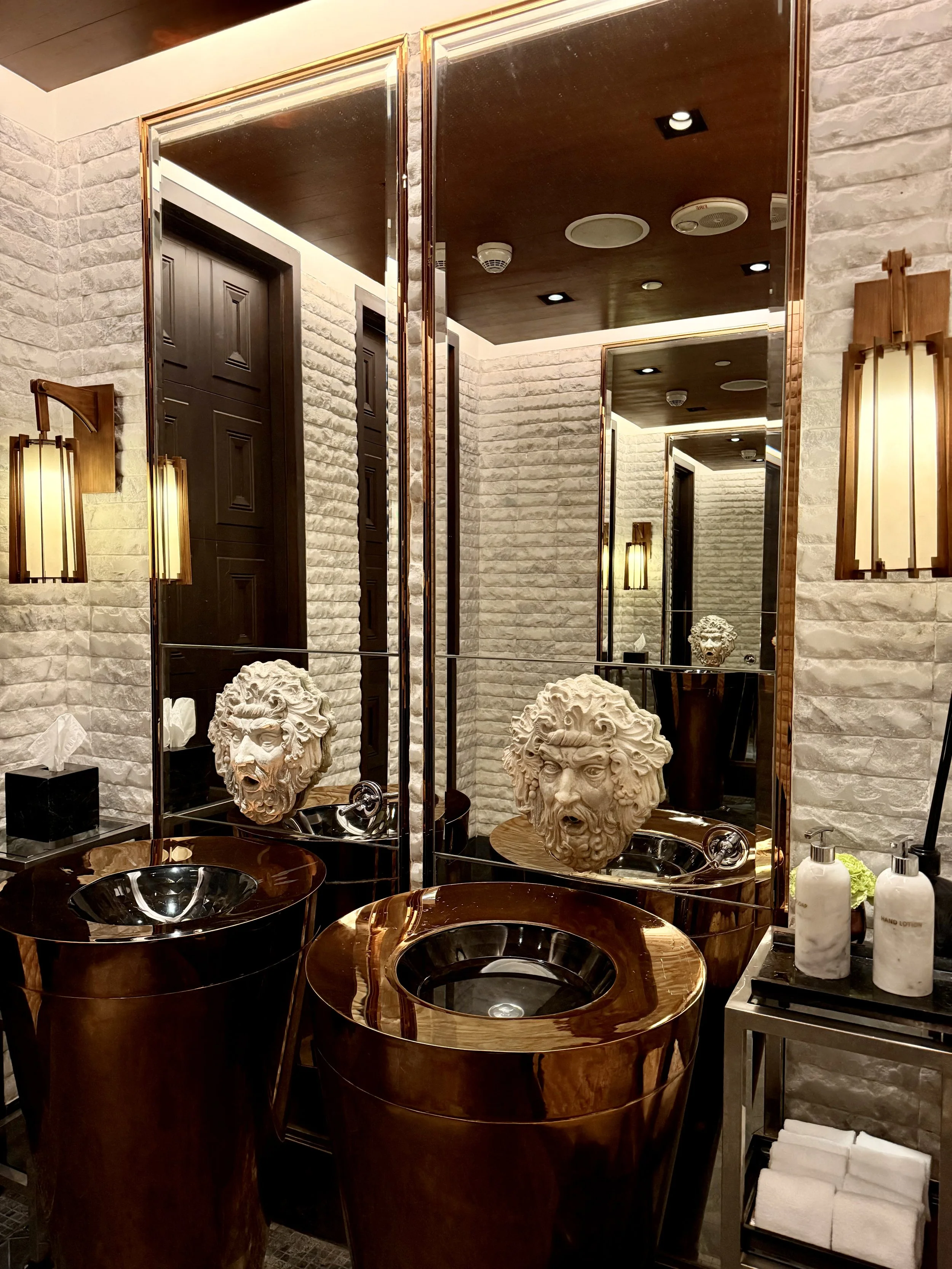
Penthouse had a more playful character. Live music, layered lighting and the illuminated city gave it an energy quite different from the daytime lobby. Even the washroom joined in: water poured from a sculpted face into a dark, metallic-looking basin. It was wonderfully over the top.
Khun Guar showed me the rooftop, where Bangkok opened out in lights. I enjoyed this more theatrical side of the hotel. The contrast with the restrained interiors below made it feel like a change of mood within the same address.
Breakfast with personality
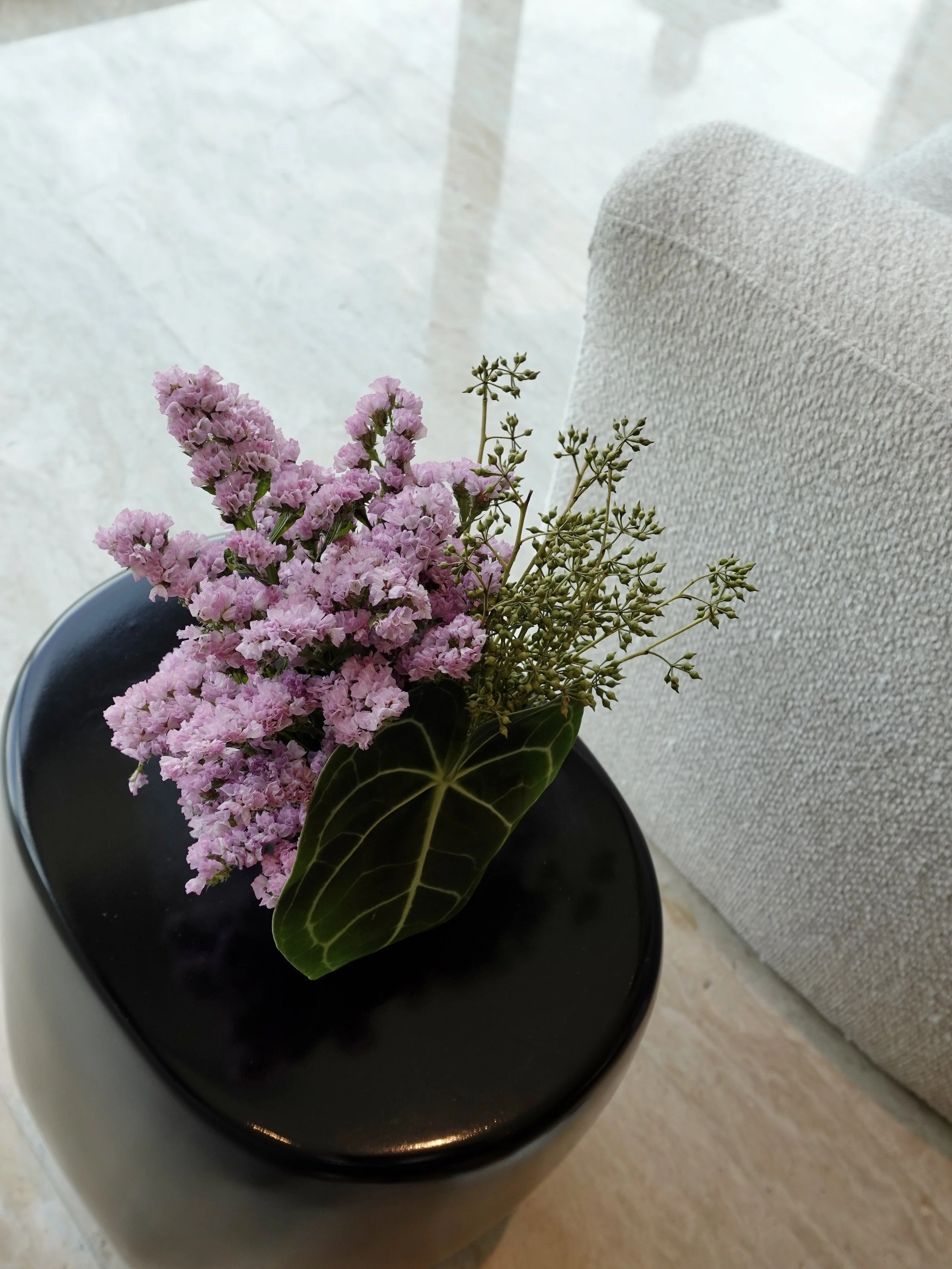
At breakfast, the room looked delightful. Daylight filtered through patterned screens, pale chairs gathered around tables, and yellow flowers gave the setting a cheerful note. Here, the lightness of the interiors suited the morning.
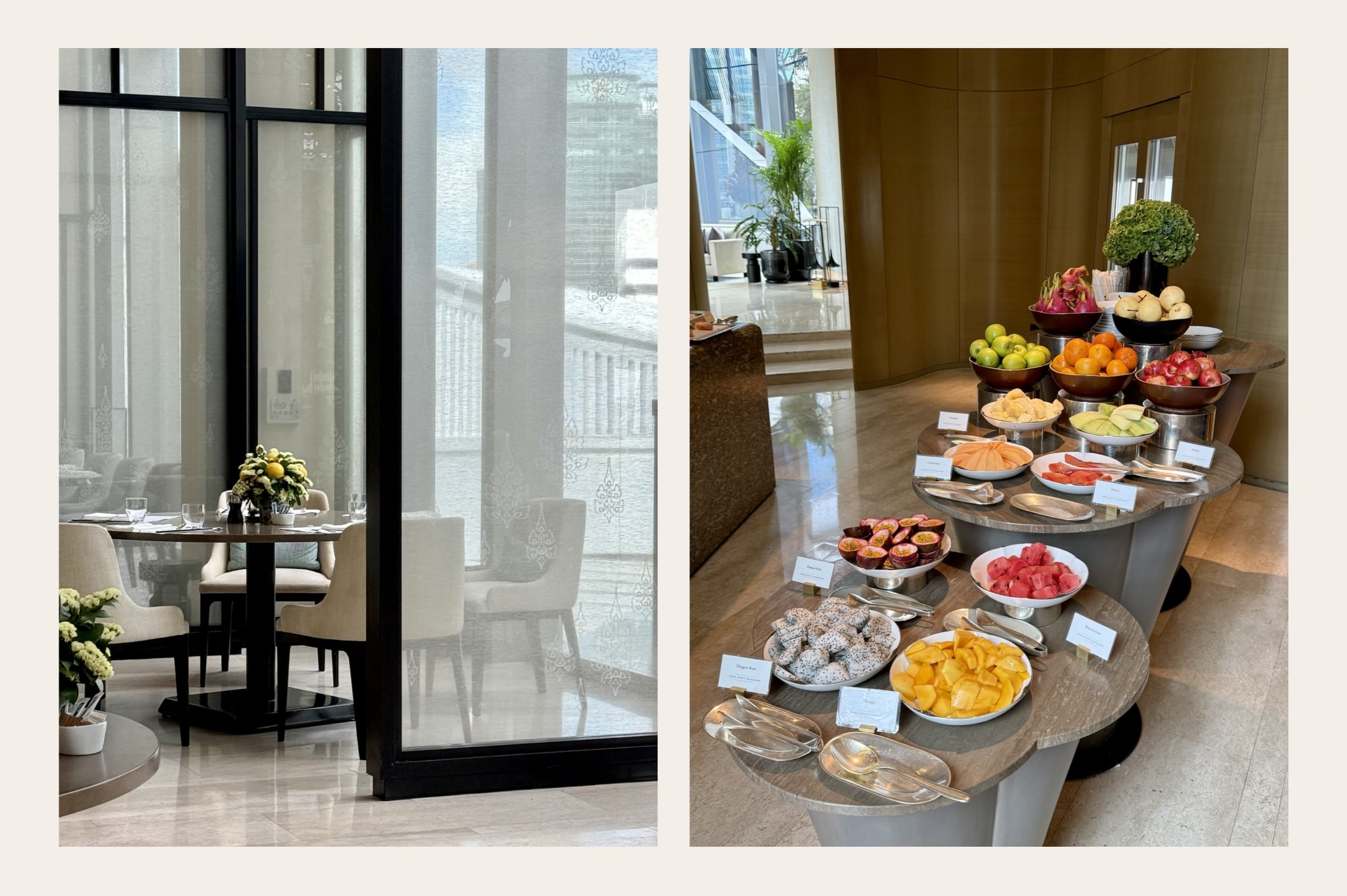
Khun Paz brought her own warmth to the table. "You can order everything unlimited," she told me, with the humour of someone encouraging enjoyment rather than merely explaining an entitlement. When she learned I was Malaysian, she did not push the Laksa Nyonya. Instead, she helped me explore other dishes, arranging tasting portions so that I could try more of the menu.
The khao tom pla was especially good: sea bass in a light, gingery broth with rice. It was the dish I found most satisfying that morning. The crispy Thai omelette, khao kai jiaw, with chicken and garlic, was tasty too, although a little greasier than I personally wanted. That was a matter of preference as much as the nature of the dish.
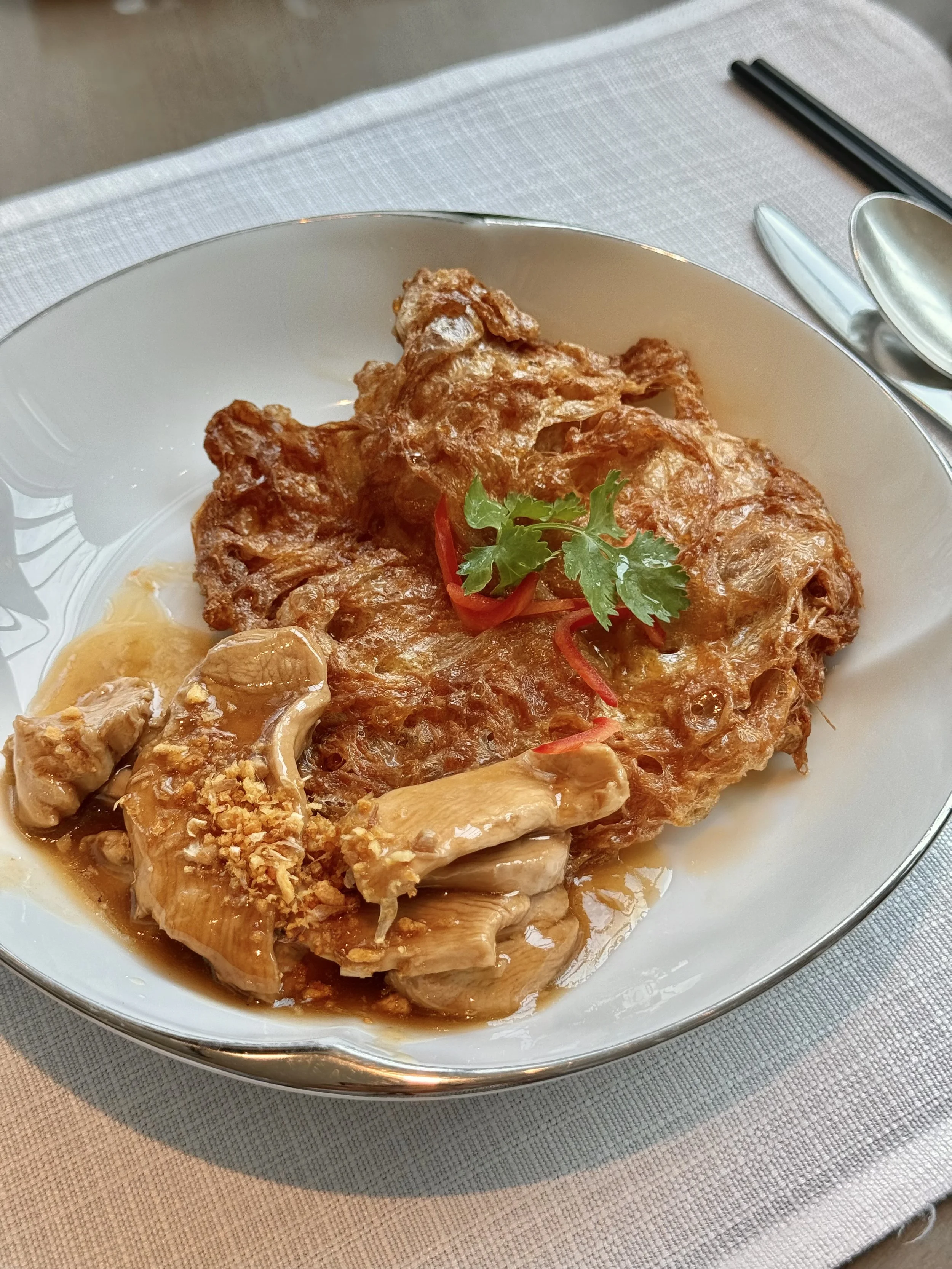
Khao kai jiaw, the crispy Thai omelette with chicken and garlic.
The phad mee Korat made less of an impression. My own reference is the fuller-flavoured version at my friend Khun Jom's restaurant, Baannok Thai, made to a recipe from Jom's mother. It is the flavour I have come to associate with the dish, and the hotel's version did not displace it.
Then there was the mango sticky rice counter. A friendly member of staff scooped glutinous rice from a traditional woven basket and paired it with a generous portion of sweet mango. I loved the presentation. The pleasure began with watching it being served, before the plate reached my table.
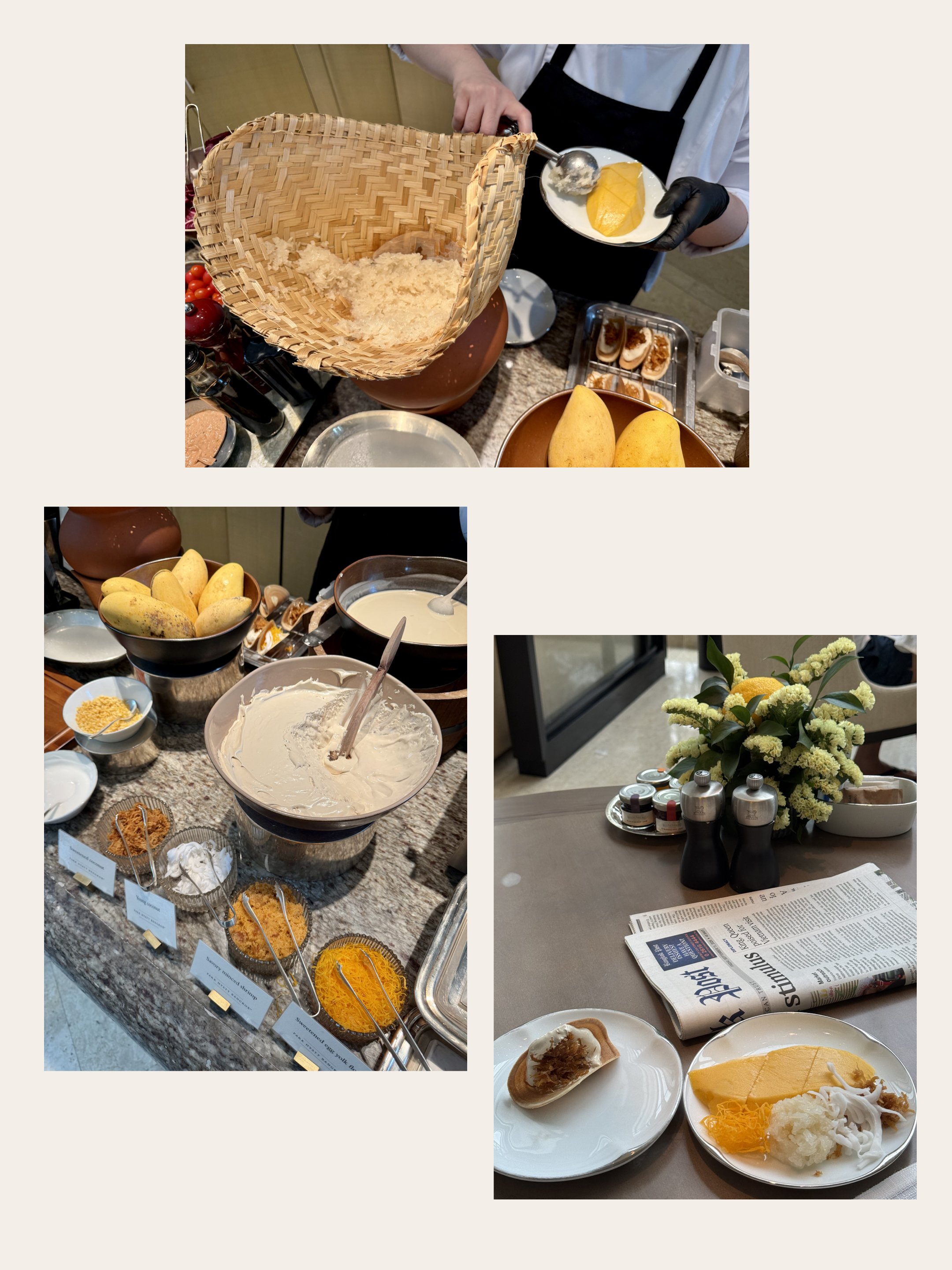
Between Paz's conversation and that simple exchange at the counter, breakfast had a human presence that I remember as clearly as the food.
Looking again with Nichpim
Walking around with Khun Nichpim from the communications team gave me another way into the hotel. She was relaxed and chatty, and our tour felt conversational. We briefly revisited the previous day's misunderstanding. I told her I understood that miscommunication could happen; she said she would look into it so the service could be improved.
She also showed me The Bar on Level 10, a room she particularly loved. Hearing which spaces appealed to the people who worked here made the tour more engaging. I was interested in their attachments as well as the objects themselves.
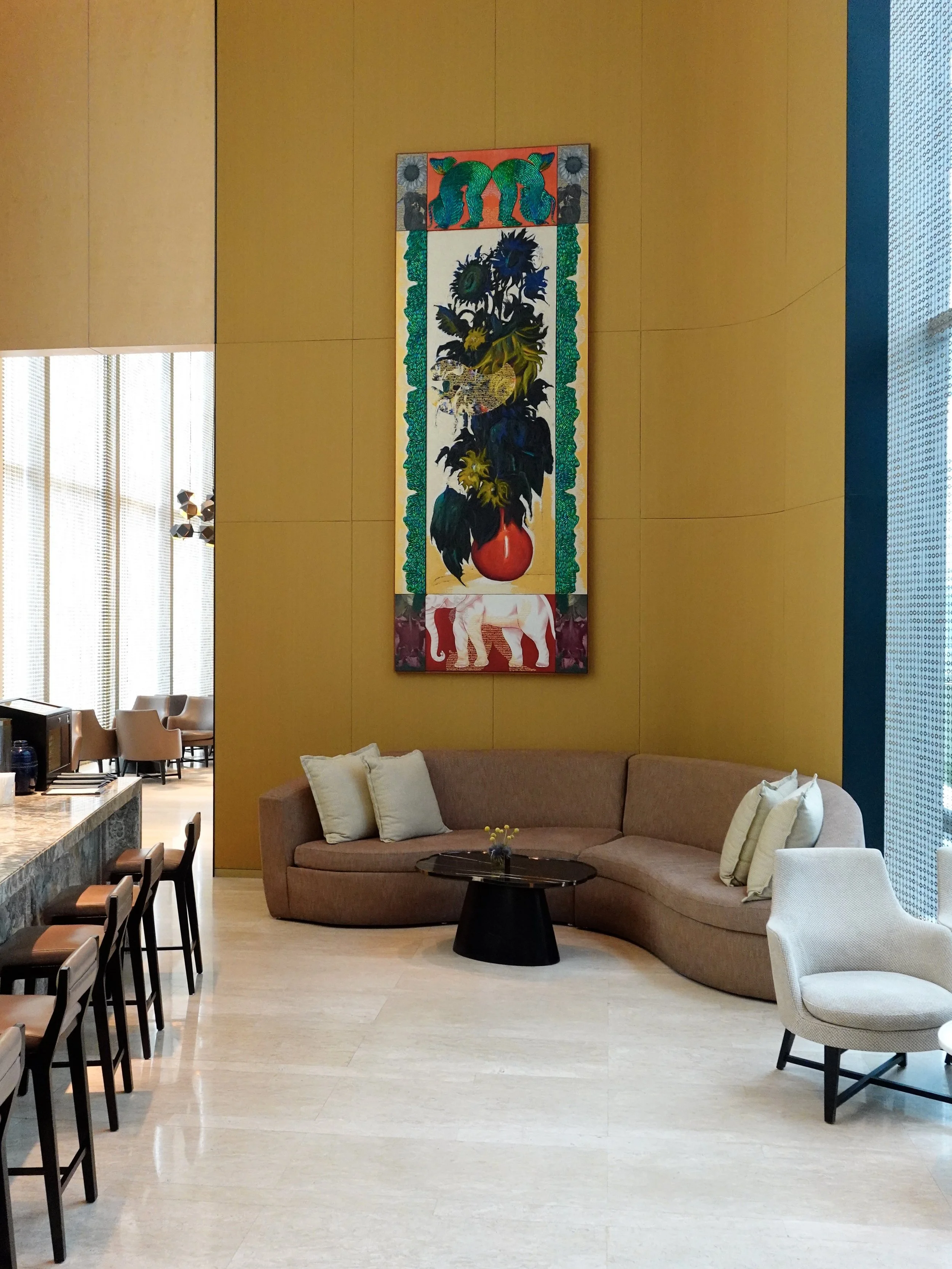
The Bar on Level 10, a favourite room of Nichpim’s.
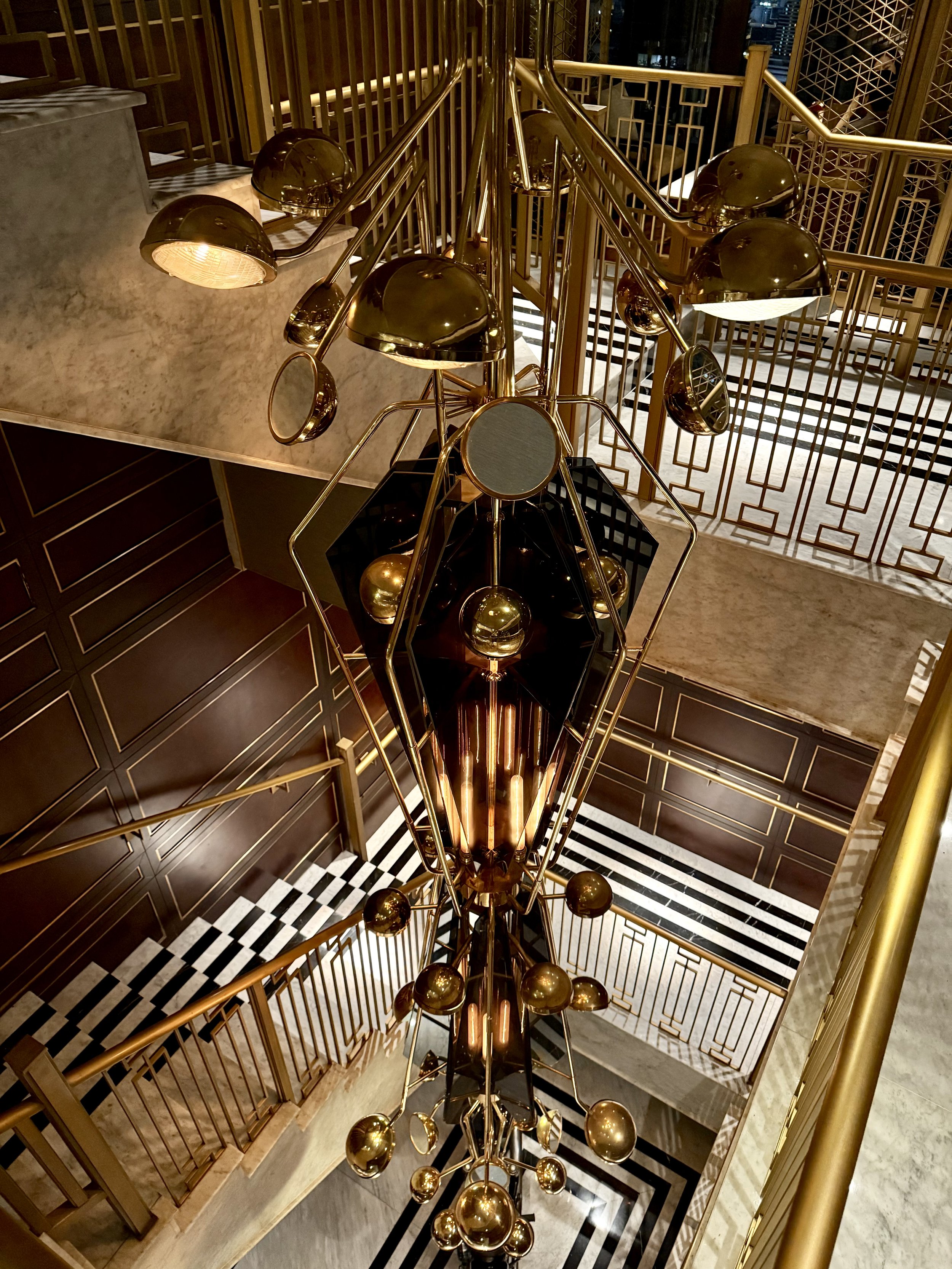
Among the works that caught me was Zhang Wang's Scholar's Rock from 2010. Its irregular, reflective form had an energy I found compelling against the ordered architecture around it. Hirotoshi Sawada's Pagoda Mirage struck me through scale: hundreds of small copper swirls suspended above the staircase leading to the ballroom, gathering into a form that evokes a Thai pagoda. It was a favourite of Bowie's too.
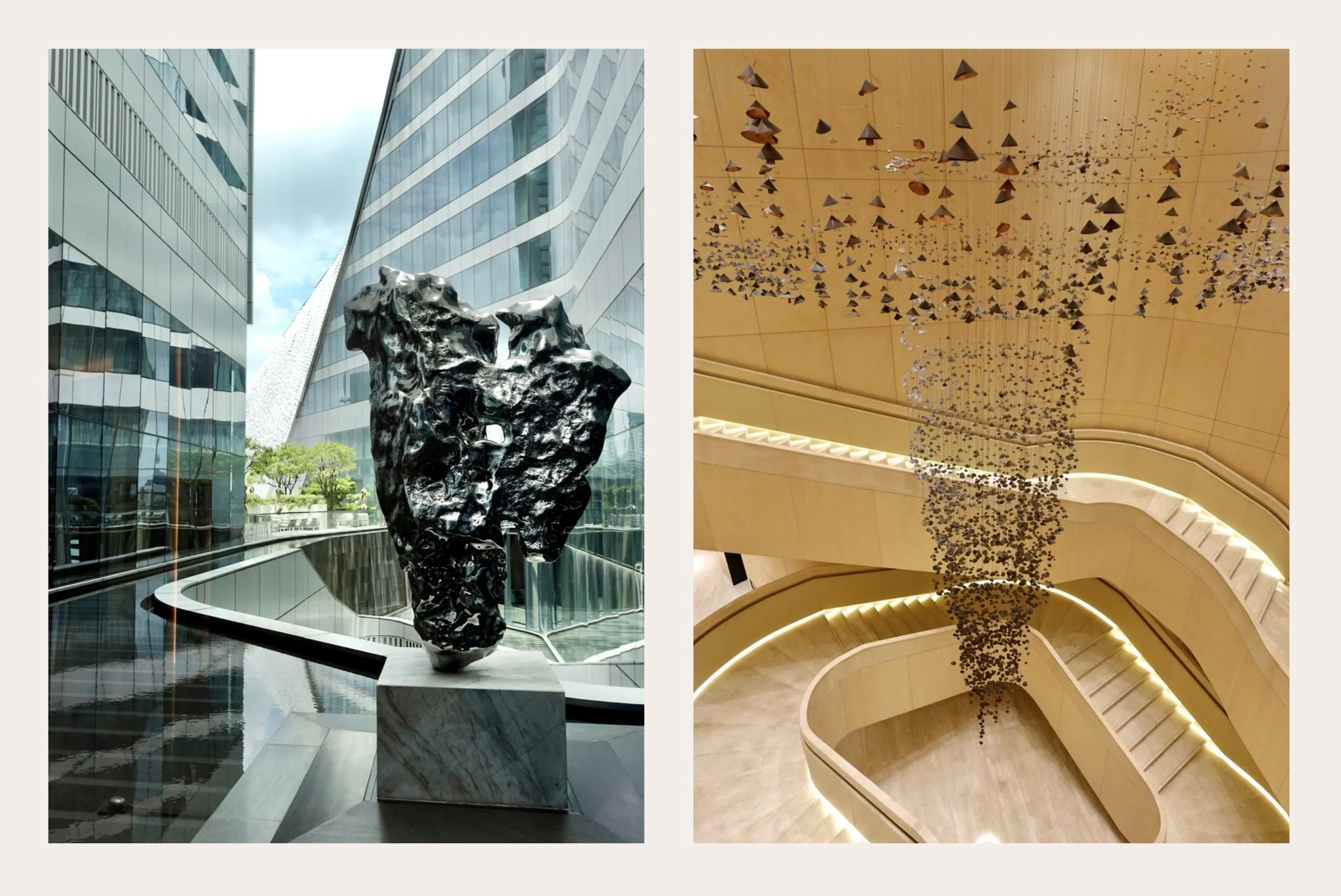
L: Scholar’s Rock (2010) by Zhang Wang.
R: Pagoda Mirage by Hirotoshi Sawada above the ballroom staircase.
At closer range, Khun Chatchai Puipia's beetle-shell works were astonishing. I had noticed a butterfly piece earlier; in The Bar, a tuk-tuk appeared in Thai silk and iridescent shells. The green and blue surfaces drew me towards the individual elements. There was a particular pleasure in recognising something so familiar from Bangkok's streets and then discovering how it had been made.
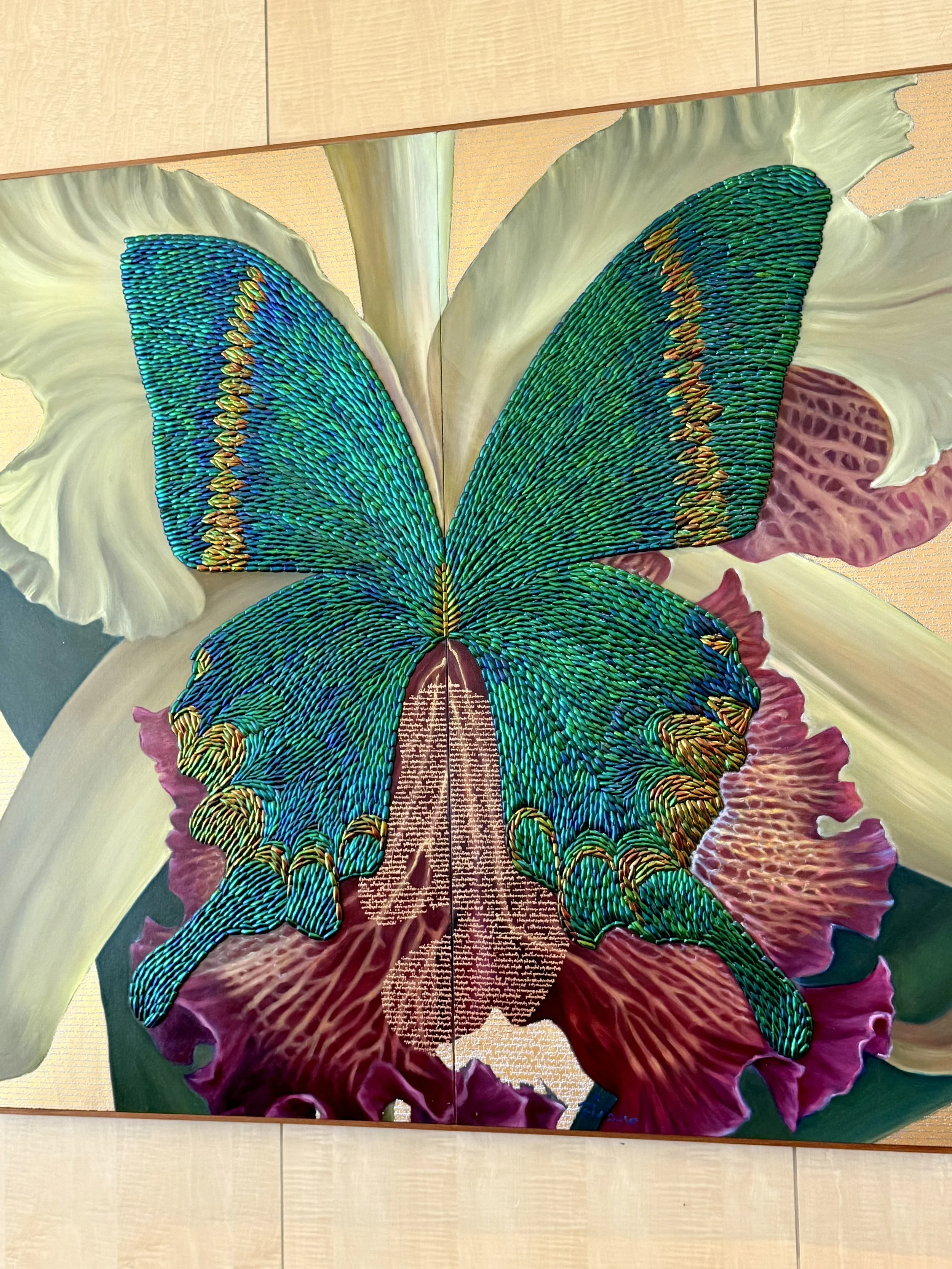
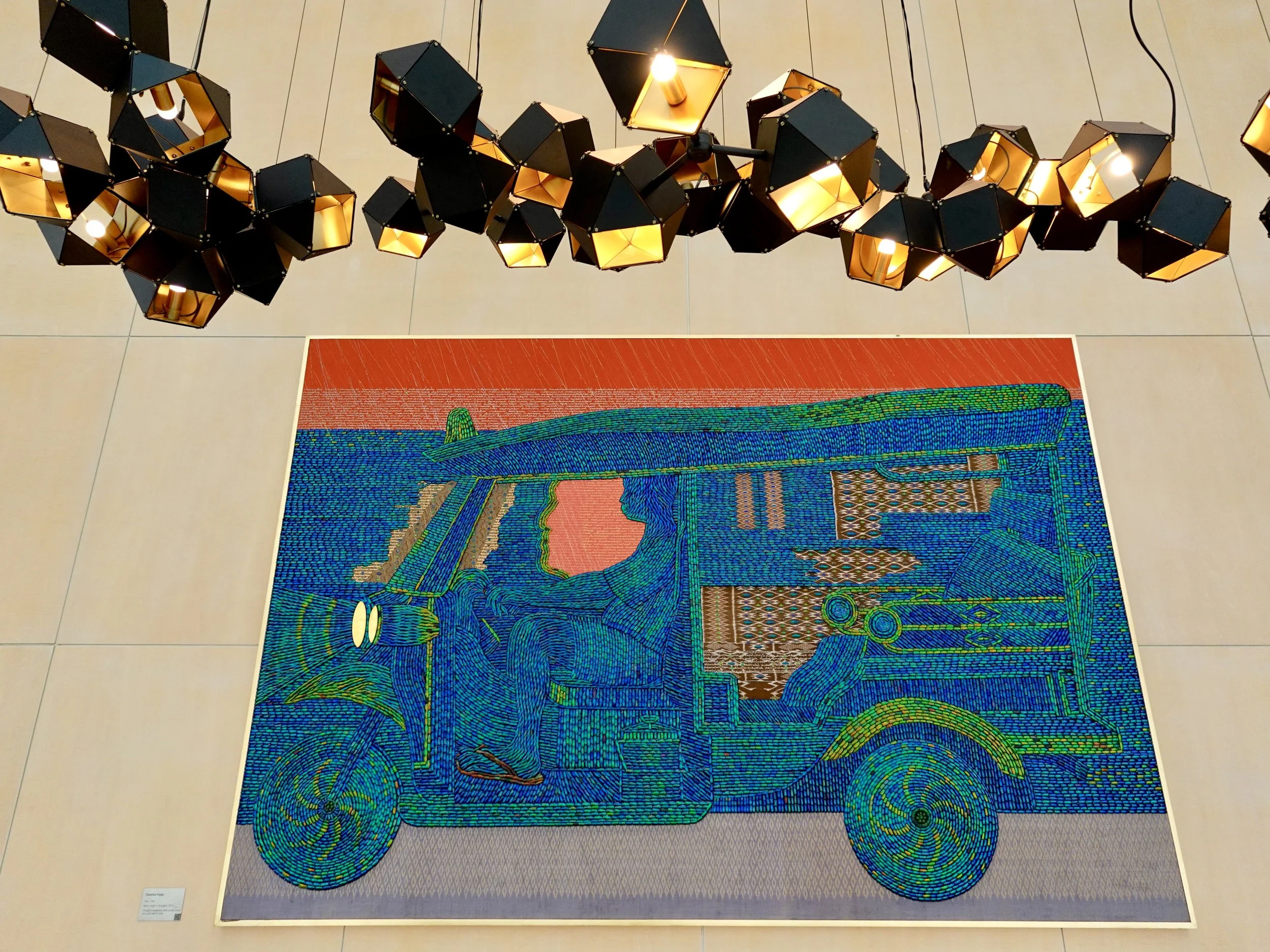
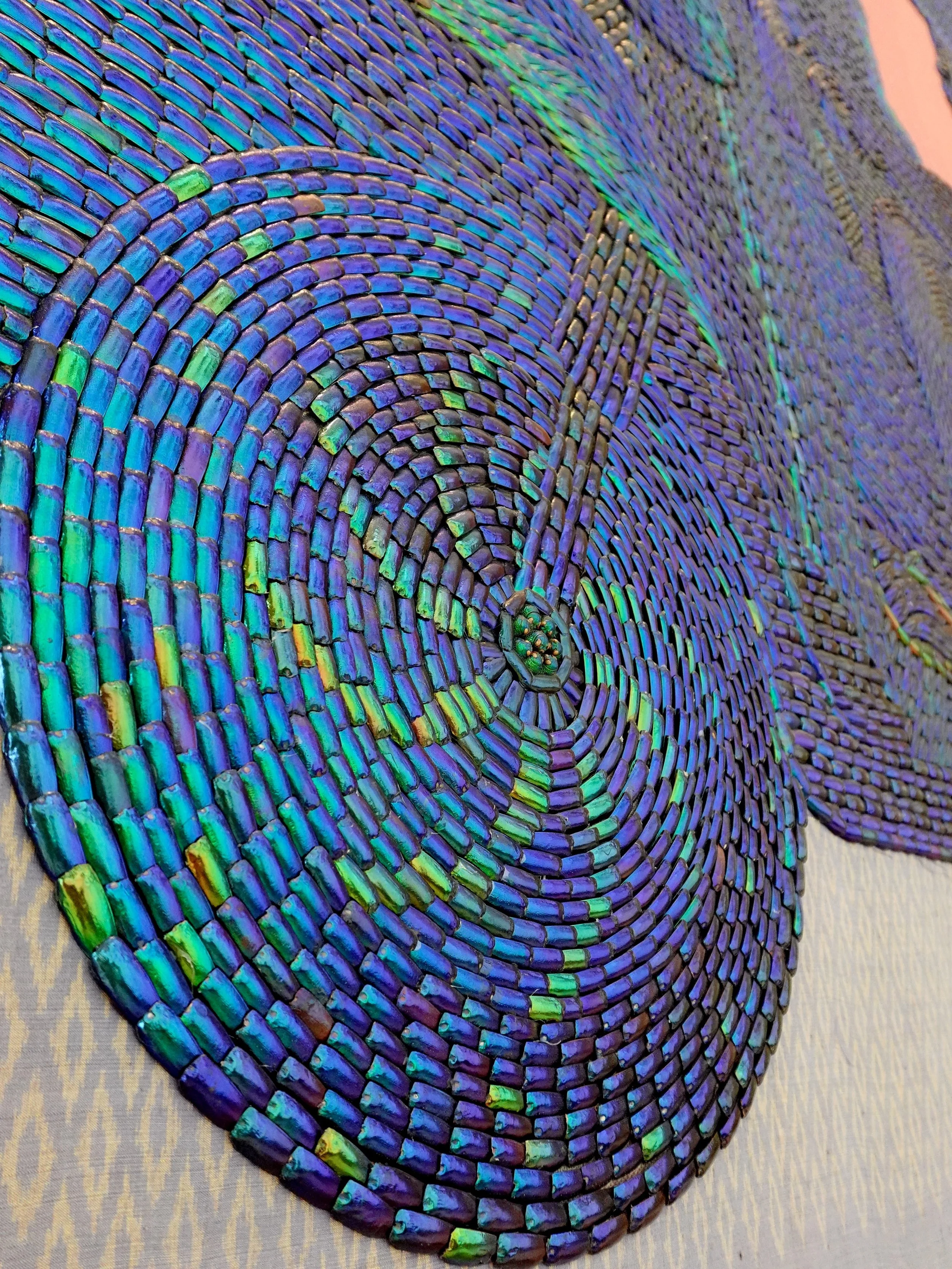
These were the works that stayed with me. The art brought Thai references into contemporary forms, while pieces from elsewhere in Asia broadened the conversation. For me, the hotel became more interesting at this closer distance, with Nichpim sharing a favourite room and Bowie a favourite installation.
Lunch at Embassy Room La Marina
Before I left, Nichpim kindly invited me to lunch at Embassy Room La Marina. It was complimentary and had not been something I expected when I booked. I had come to experience the hotel; the additional hospitality was a generous surprise.
Khun Tat, the restaurant's assistant manager, was Thai-Italian and had grown up in Milano. He recommended the homemade pappardelle al ragù. The chef, Alessio Banchero, is from Genova, and the dish arrived with substantial pieces of meat among the broad ribbons of pasta.
It was delicious. I told Tat it was as good as the pasta I remembered eating in Bologna. He answered with a broad smile: "Uguale."
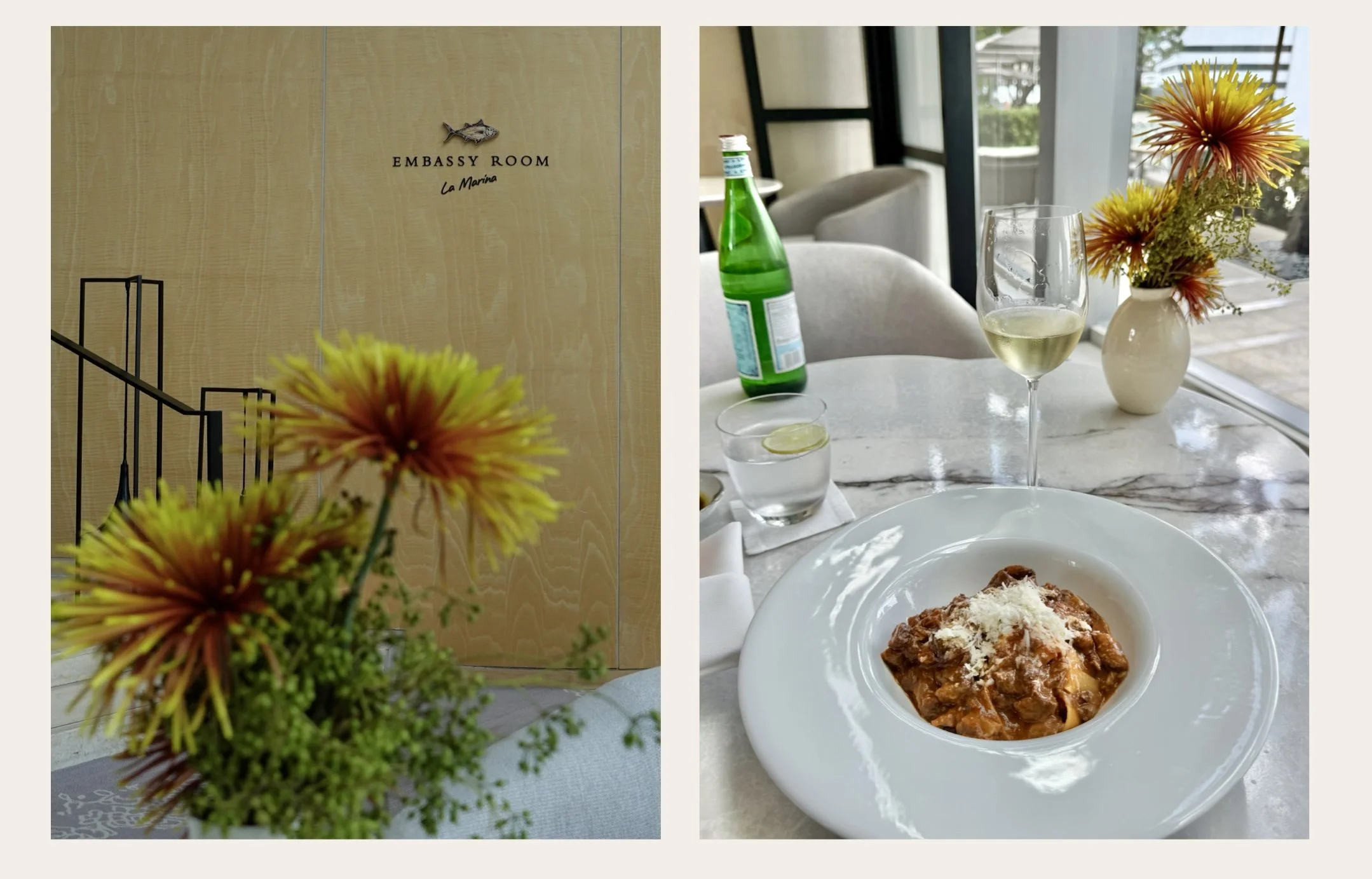
L: Embassy Room La Marina, where Nichpim invited me to lunch.
R: Homemade pappardelle al ragù at Embassy Room La Marina.
I had arrived wanting to understand a hotel whose appearance did not immediately move me. By the time I left, I could place people within its rooms: Paz at breakfast, Nichpim showing me The Bar, Bowie explaining something that had gone wrong. Their presence gave the spaces a familiarity that my first look had missed.
The art and the skyline remain vivid. So does that plate of pappardelle, and Tat's smile across the table.
Stories shaped by the art of noticing.
Before you leave, you are invited to sign The Guestbook.
I paid for my accommodation at Park Hyatt Bangkok. The hotel provided a complimentary room upgrade, drinks and lunch, including waiving my friend’s prosecco charge. This account reflects my own experience during my stay in September 2026.
Stay at Park Hyatt Bangkok
If you are considering staying in Bangkok, you can check current room rates and availability for Park Hyatt Bangkok through the link below.
CHECK RATES & AVAILABILITY AT PARK HYATT BANGKOK →
I booked and paid for this stay independently. FGT may receive a small commission if you make a booking through the Trip.com link above, at no additional cost to you. All observations and opinions in this article are my own.
View All Stays →
Further Reading
The Sukhothai Bangkok - lotus ponds, recurring geometry and personal gestures of welcome reveal another expression of Thai hospitality—the stay that preceded my arrival at Park Hyatt.
A Hotel That Leads Back to the Harbour - at The Fleming, Hong Kong’s maritime identity finds its way into the materials, colours and everyday details of a hotel in Wan Chai.
The Generosity of Da Niko - an Italian dining experience at Bulgari Hotel Milano, connected through the pleasure of conversation and hospitality that feels personal.
Three Curries with Angkrit - cooking with MasterChef Thailand winner Angkrit in Bangkok, where three Thai curries accompany conversations about food, family and shared Chinese roots.
Unless otherwise credited, all photography and written content are original works by Foodie Goes Travel.
