A Quiet Redesign in the Heart of Bangkok
Inside COMO Metropolitan Bangkok’s New Chapter
Bangkok is a city that rarely pauses. Streets pulse late into the night, new restaurants appear almost weekly and hotels often compete through spectacle rather than restraint. Yet tucked quietly along South Sathorn Road, COMO Metropolitan Bangkok continues to move in a different rhythm.
Long regarded as one of the city’s more understated luxury hotels, the property underwent a redesign less than a year ago - not one centered around grand gestures, but around texture, light, proportion and atmosphere.
Rather than reinventing itself completely, the hotel seems to have refined what it already understands well: calmness.
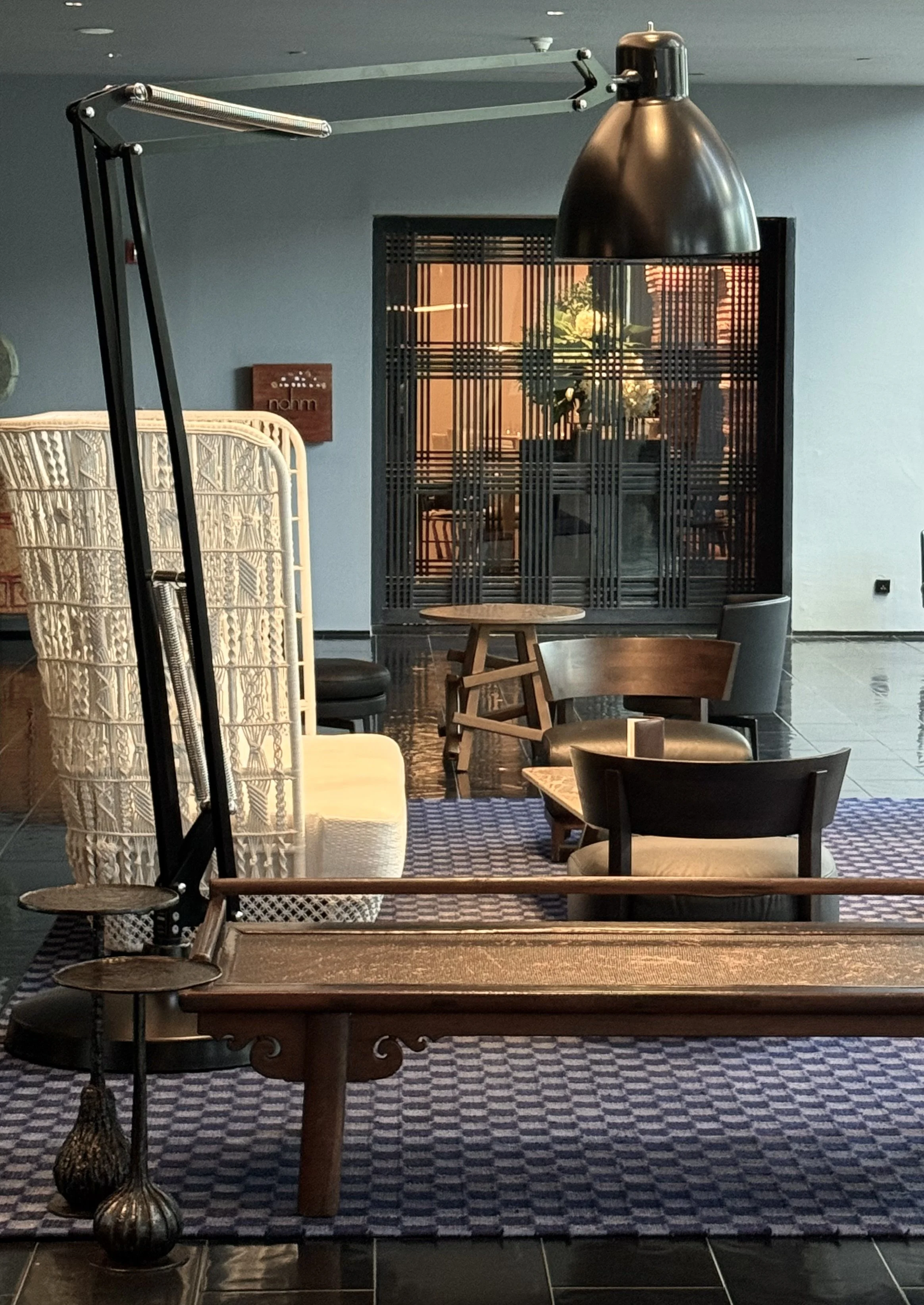
Walking through the newly refreshed spaces, what stood out most was not any singular statement piece, but the layering of materials and the deliberate quietness of the interiors. Dark stone floors reflect soft light across the lobby, while woven textures and hand-crafted surfaces soften the scale of the architecture.
There is a distinctly tactile quality throughout the hotel. Bamboo lattice screens, textured paper lighting, weathered ceramic vessels and muted fabrics create an atmosphere that feels more residential than theatrical. This is the kind of atmosphere I seek when travelling.
In a city often drawn to excess, the restraint feels intentional.
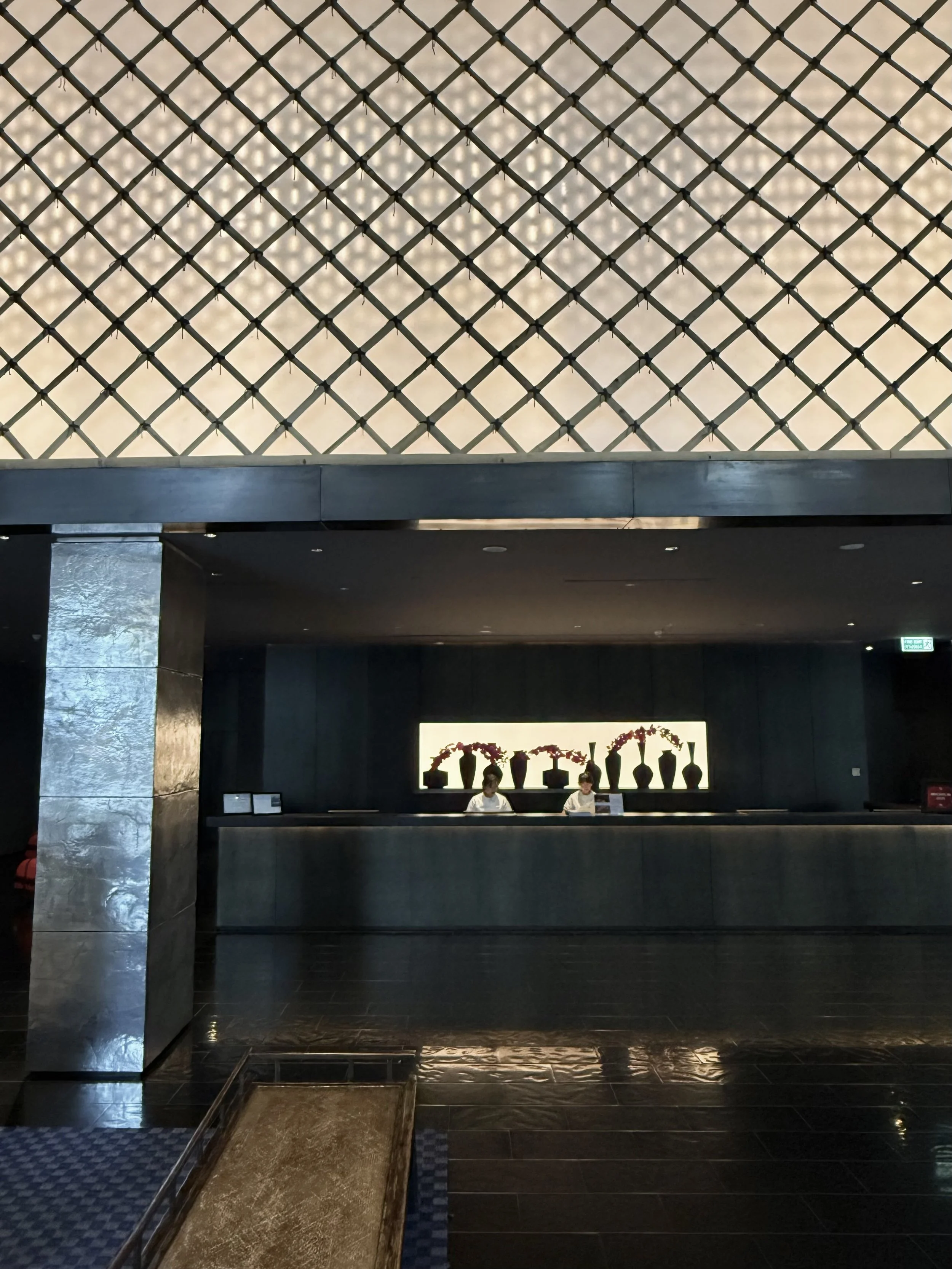
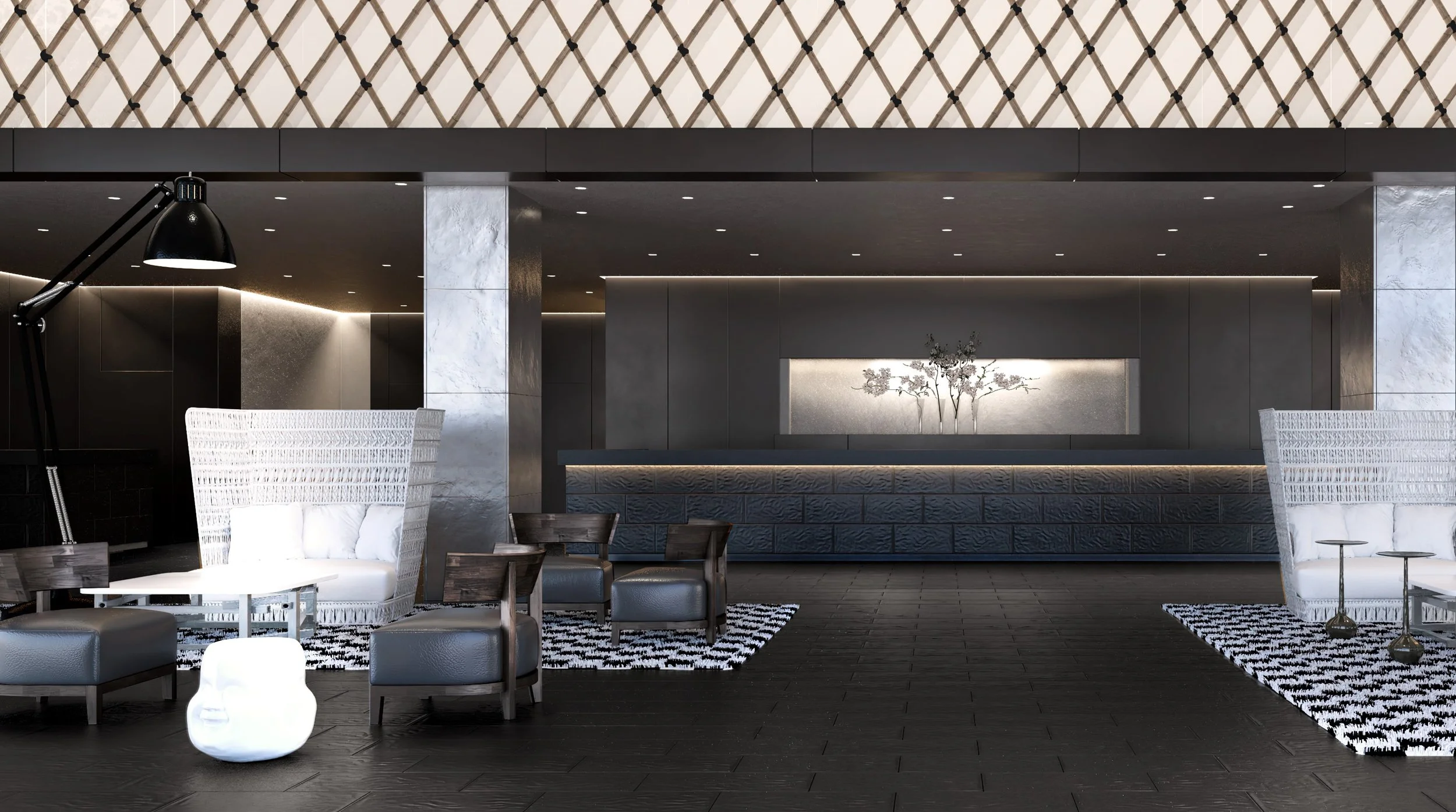


What I appreciated most was how the redesign avoids feeling aggressively contemporary. Instead, it draws subtly from regional craft traditions without becoming overly literal or decorative.
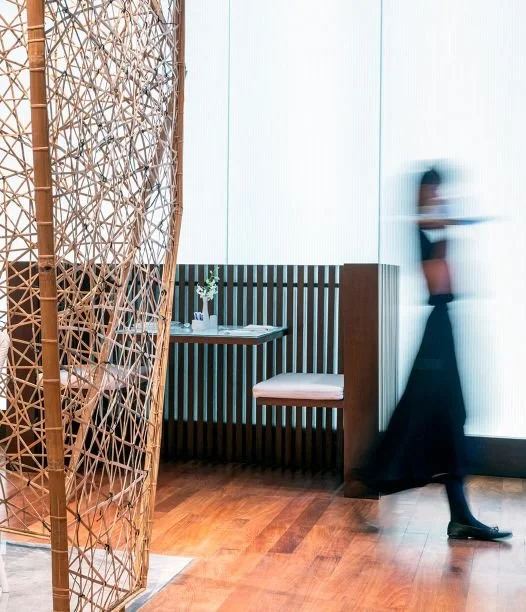
The woven partitions inside the restaurant, for instance, introduce transparency and intimacy at the same time - filtering movement, light and sound through handcrafted geometry.
Elsewhere, organic materials soften the precision of the architecture, allowing the spaces to feel grounded rather than sterile.
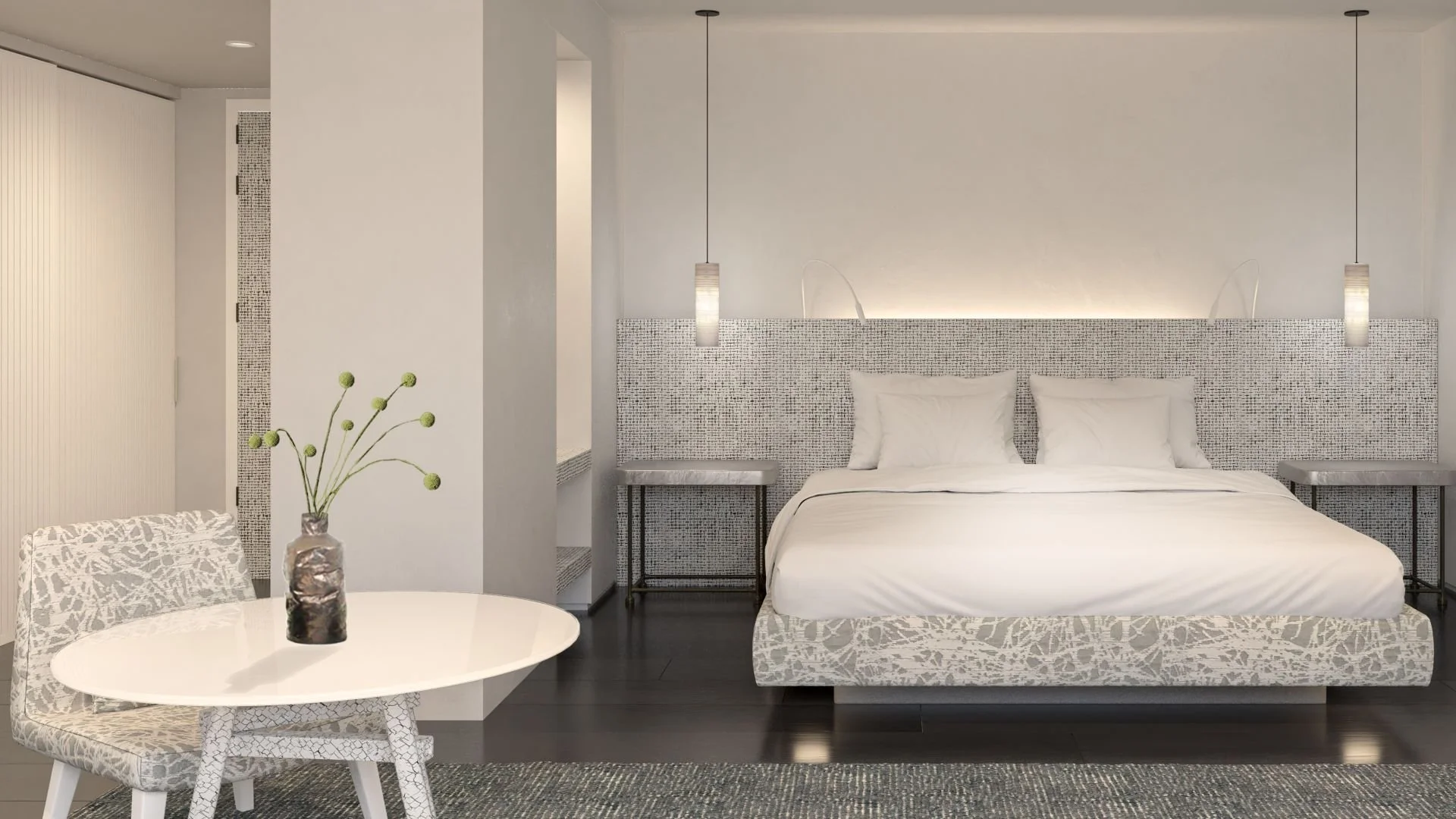
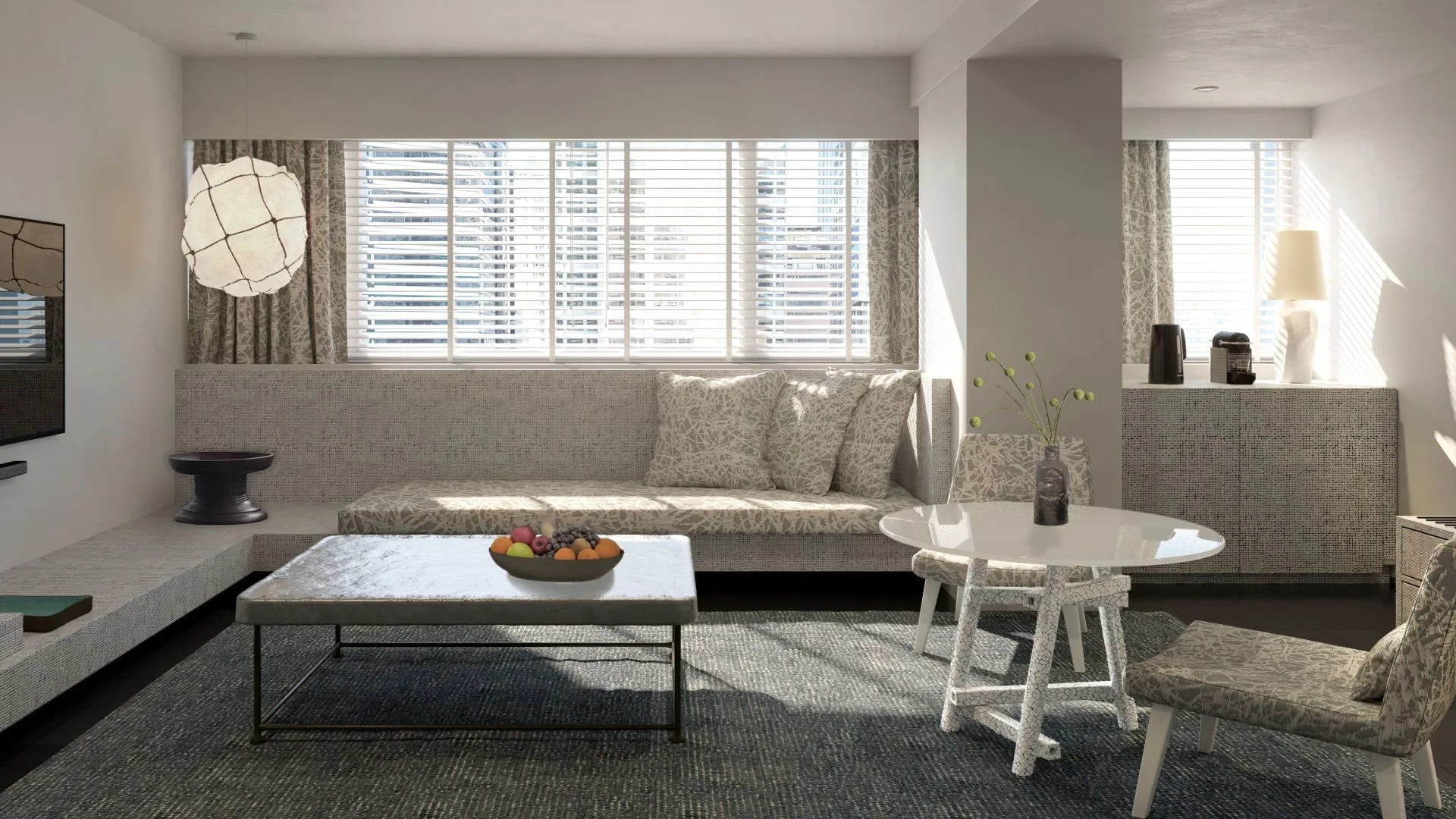
Looking through the renderings shared by the hotel after my stay, it became clear how intentionally these details were considered during the redesign process. The visual language consistently revolves around filtered light, natural tactility and spatial calm.
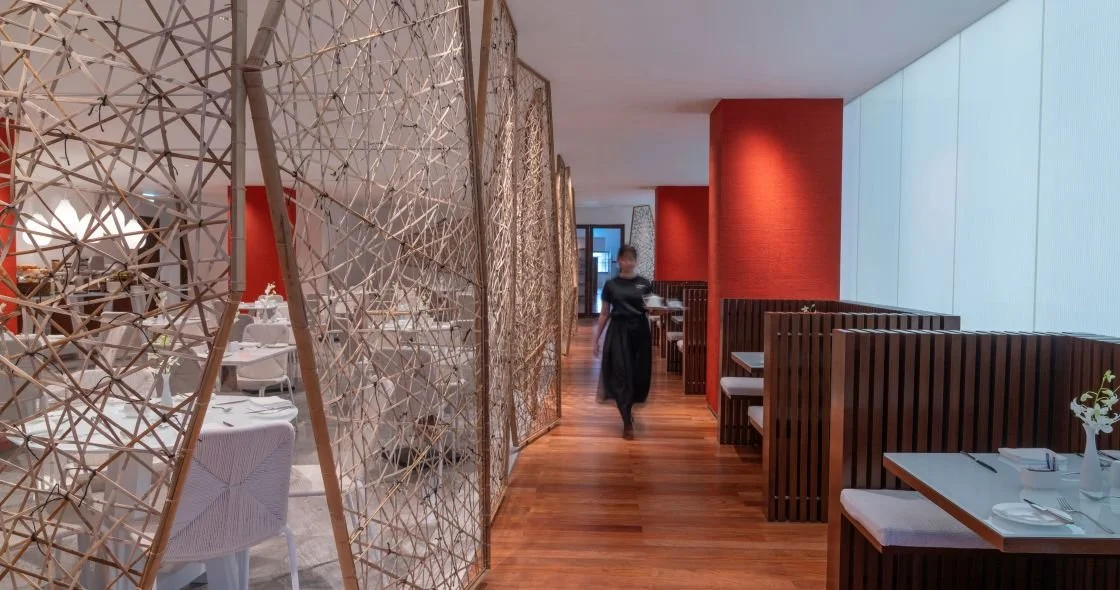

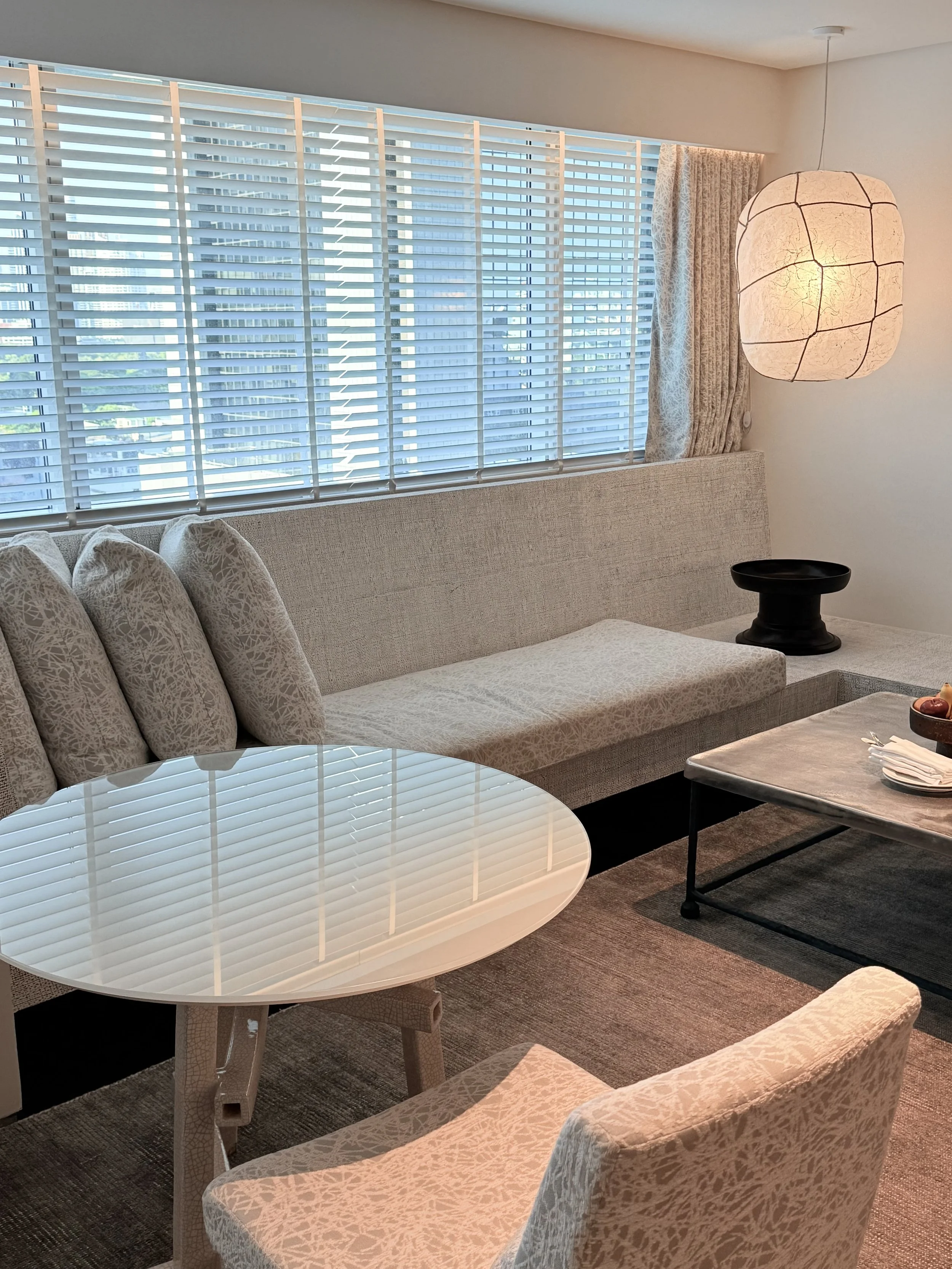
The rooms continue this same philosophy. Neutral palettes, low furniture profiles, textured upholstery and diffused natural light create rooms that feel almost meditative during the daytime.
There is very little visual noise. Nothing feels unnecessarily added.
Even the lighting - particularly the sculptural paper lamps - contributes more to atmosphere than decoration.
What emerges is not minimalism in the cold, austere sense, but rather a softer interpretation of luxury. It is based on ease, proportion and emotional quietness.
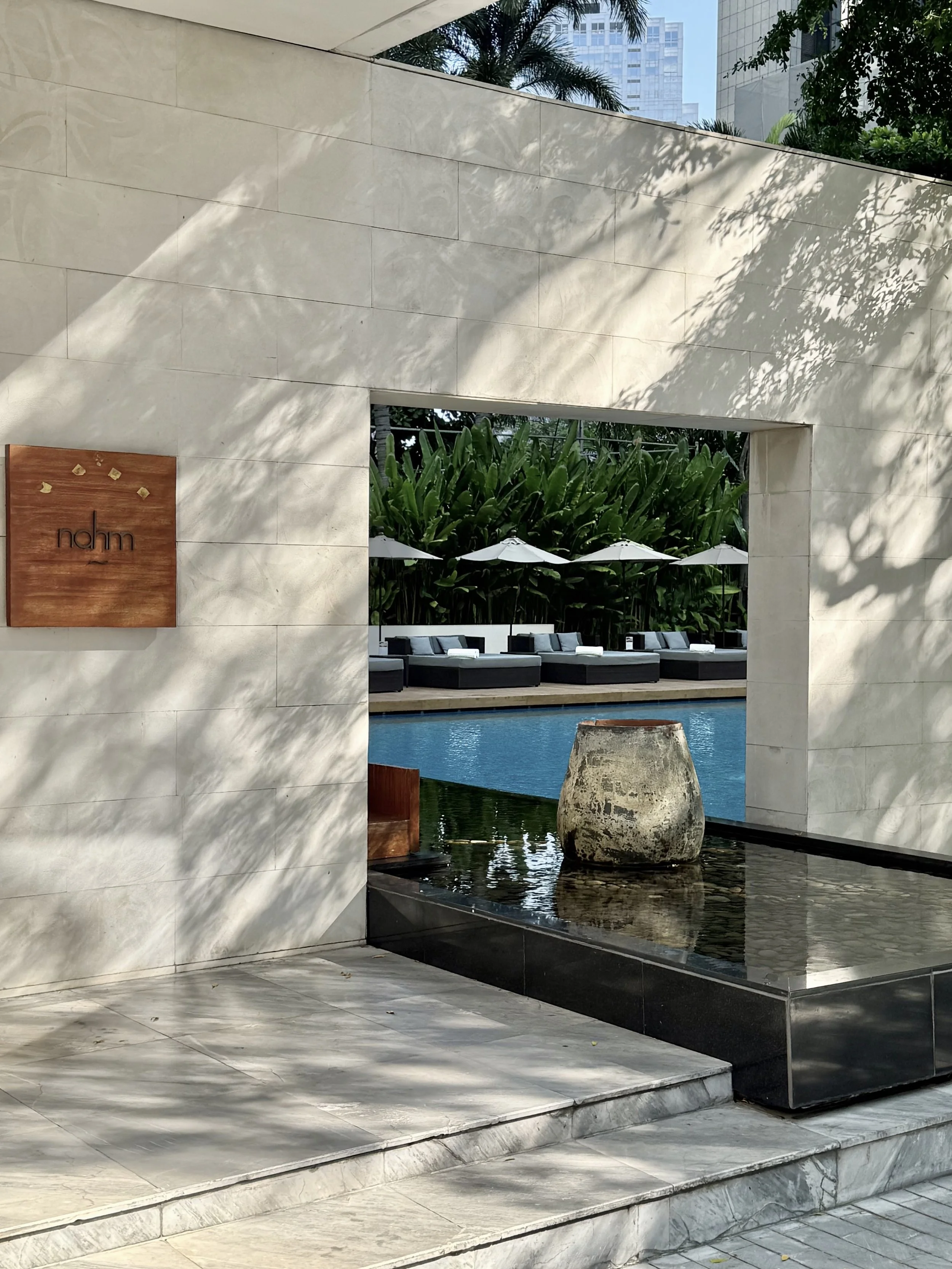
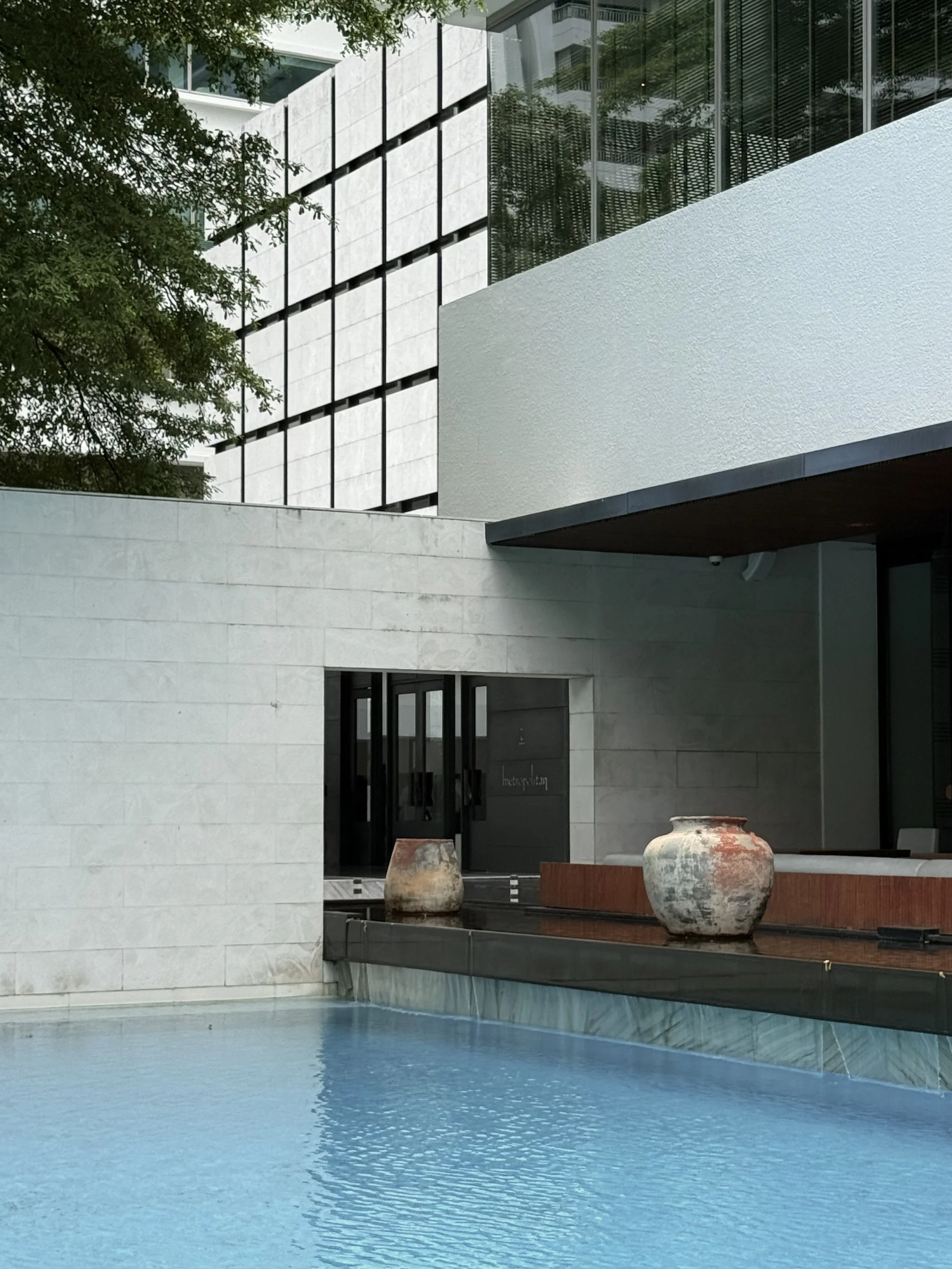
Outside, the pool area remains one of the hotel’s strongest spaces. Shielded from the intensity of Bangkok beyond its walls, it carries a calmness that feels increasingly rare in large cities.
Stone, water and tropical greenery are handled with restraint rather than resort-like exuberance. The atmosphere is quiet, almost contemplative in the early morning light.
Even after the redesign, the hotel’s greatest luxury may still be this sense of pause.

Yet what continues to draw me back to COMO Metropolitan Bangkok is not design alone.
I first stayed here nearly a decade ago and despite Bangkok’s constant cycle of new hotel openings, I still find myself returning once or twice a year. Over time, certain familiar details have become part of my experience: the scent that lingers through the corridors, the calmness of the lobby after the heat outside, the familiarity of faces that have remained over the years.
During this stay, I found myself chatting again with a staff member who has been at the property since my very first visit. On earlier mornings, I would often see him quietly collecting fallen leaves around the grounds and delivering cold drinks by the pool on particularly hot afternoons. “Welcome back Mr Wong, very good to see you again.”
It was a small moment, but perhaps one that explains the hotel better than the redesign itself.
Luxury hospitality is often discussed in terms of aesthetics, scale or exclusivity. But increasingly, what feels rare is genuine familiarity - the feeling of being remembered.
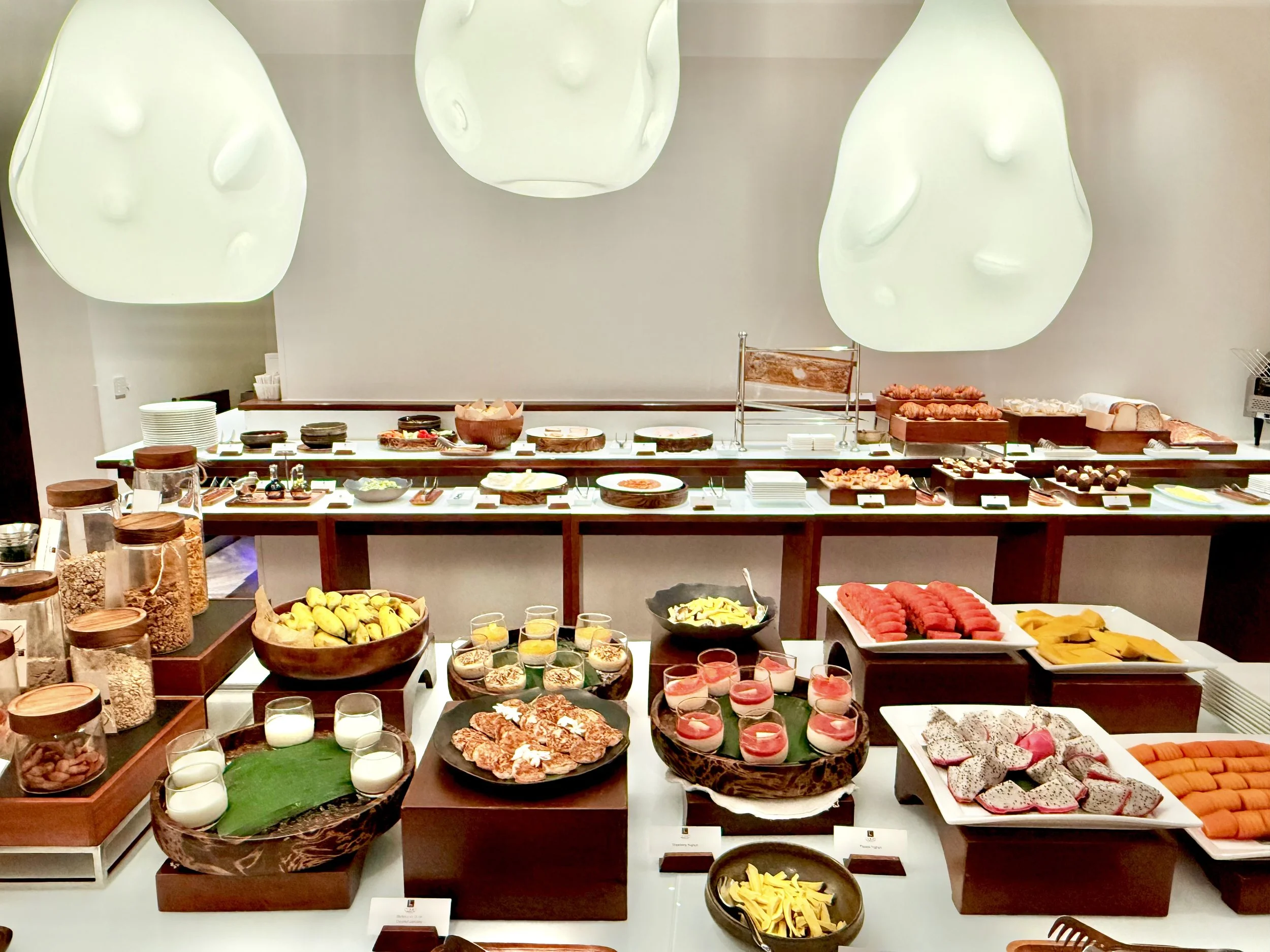
Breakfast at the hotel follows the same philosophy as the rest of the property: understated, calm and quietly well-executed.
Served within the softly lit dining room, the experience feels unhurried. Tropical fruits, fresh juices, homemade pastries and a selection of Asian and Western à la carte dishes are presented with simplicity rather than abundance, allowing quality and atmosphere to take precedence over spectacle.
In a city constantly reinventing itself, COMO Metropolitan Bangkok remains true to its identity.
The redesign refines rather than reinvents, preserving the calmness and understated elegance that long-time guests have always returned for.
And perhaps that is precisely why the hotel still feels relevant today.
Not because it competes for attention - but because it never needed to.
Stories shaped by the art of noticing.
Before you leave, you are invited to sign The Guestbook.
Unless otherwise credited, all photography and written content are original works by Foodie Goes Travel.
Selected interior renderings and supporting imagery courtesy of COMO Metropolitan Bangkok.
Stay at COMO Metropolitan Bangkok
COMO Metropolitan Bangkok remains one of my favourite places to stay in the city for its calm atmosphere, understated design and thoughtful hospitality.
Location
Sathorn, Bangkok
Best For
Design-conscious travellers seeking a quieter side of Bangkok
Why I Chose It
I was curious to experience how one of Bangkok’s longstanding design hotels had quietly evolved over time
Atmosphere
Contemporary, calm and understated
Ideal Stay Length
2 - 4 nights
If you are considering staying in Bangkok, you can check current room rates and availability for COMO Metropolitan Bangkok through the link below.
CHECK RATES & AVAILABILITY AT COMO METROPOLITAN BANGKOK →
I booked and paid for this stay independently. FGT may receive a small commission if you make a booking through the Trip.com link above, at no additional cost to you. All observations and opinions in this article are my own.
View All Stays →
More from the Journal
The Performance of Living Well
On quiet luxury, modern performance and the search for slower rhythms.
Orvieto: The Ancient Umbrian Town Suspended Between Sky and Stone
Stone alleys, hidden courtyards and the quieter rhythm of central Italy.
Spoleto, Between Stone and Silence
An Umbrian town unfolding through light, texture and slower days.
Why Umbria Feels Like Italy’s Best-Kept Secret
Hill towns, long lunches and slower ways of living.
